André-Marie Ampère: Electromagnetism's Mathematician
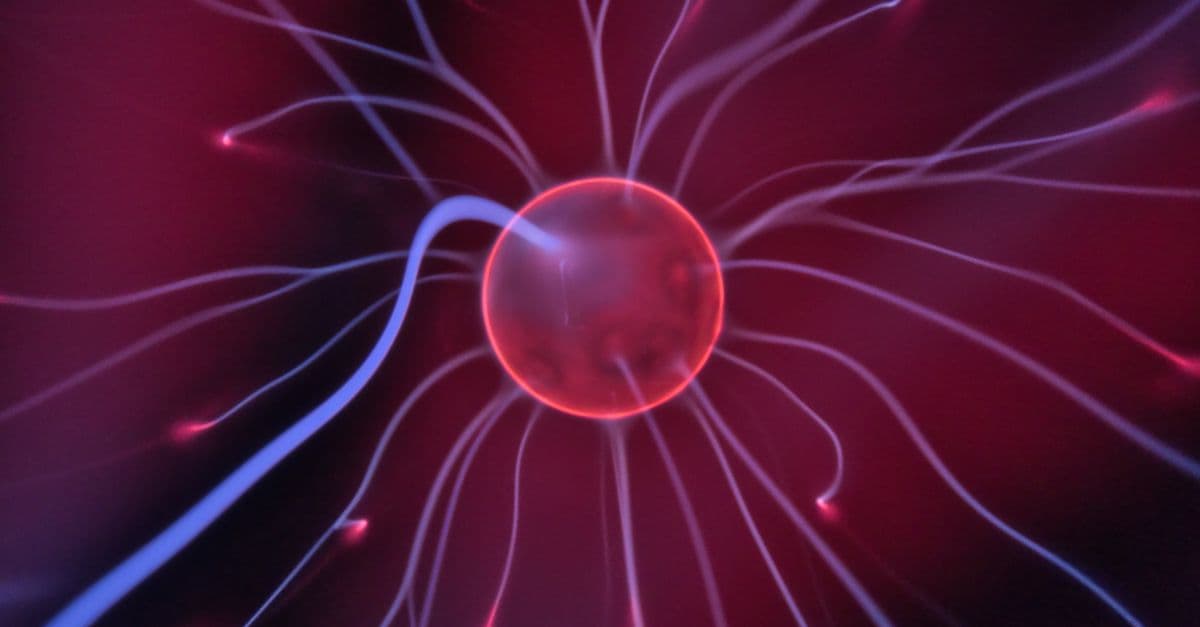
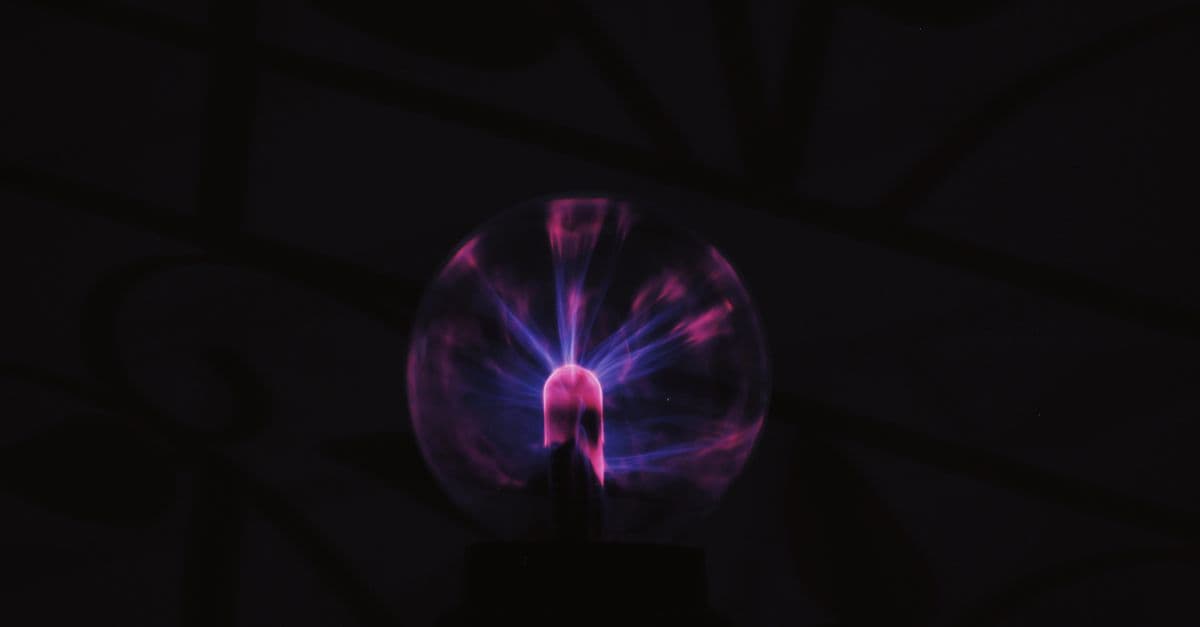
Photo: R Bude / Pexels
On April 21, 1820, Danish physicist Hans Christian Ørsted was setting up a lecture demonstration when he noticed something that should not have happened: a compass needle near a live wire swung away from magnetic north. Electricity, it turned out, could push a magnet without touching it. Within a week of hearing about Ørsted's result, French mathematician André-Marie Ampère had begun turning that strange observation into precise, testable equations — the work that would eventually put his name on the unit of electric current itself.
The Ørsted Discovery That Started Everything
Ørsted was not looking for a connection between electricity and magnetism. He was demonstrating heating effects of an electric current to students at the University of Copenhagen when he noticed a compass sitting nearby had drifted while the circuit was live (National MagLab, Ørsted's Compass — 1820). He experimented further using a voltaic pile — the copper-and-zinc battery invented by Alessandro Volta twenty years earlier — and confirmed the pattern: current on, needle deflects; current off, needle returns to north.
The deflection followed a specific geometry. The needle did not point toward the wire, the way it would toward another magnet. It swung to line up perpendicular to the wire, and it reversed direction if the current reversed. Ørsted published his findings in July 1820 in a short Latin paper, and news spread across Europe within weeks (IOP Spark, Oersted, electric current and magnetism).
For nearly two centuries, electricity and magnetism had been treated as separate subjects, studied by separate researchers, with separate instruments. Ørsted's compass needle proved they were connected. What he had not done — and could not do, by his own admission — was explain the connection mathematically. That took a different kind of mind.
Ampère's Insight: From Observation to Law
Ampère was 45 years old and a professor at the École Polytechnique in Paris when news of Ørsted's discovery reached him in September 1820. He recognized immediately that the phenomenon was more than a curiosity. Less than a week later, he presented the first of a series of papers to the French Academy of Sciences proposing a mathematical theory of the relationship between electric currents and magnetic force (StudySmarter, Oersted's Experiment: Main Observation).
Where Ørsted had observed a pattern, Ampère derived a rule. He proposed that a current-carrying wire is surrounded by a magnetic field arranged in concentric circles around the wire — not a vague "influence," but a field with a specific direction and a specific strength that could be calculated for any point in space. This is now taught as the right-hand rule: point your right thumb in the direction of current flow, and your curled fingers trace the direction of the magnetic field circling the wire.
Over the following months, Ampère ran a systematic experimental program to test and refine this idea. He suspended current-carrying wires above compass needles and varied the current, the distance, and the geometry, recording how the deflection changed each time. He also discovered something Ørsted's original experiment had not revealed at all: two parallel wires carrying current exert forces on each other directly, attracting when the currents flow the same direction and repelling when they flow opposite directions — with no magnet involved anywhere in the setup.
How Ampère's Law Actually Works
Ampère's Law describes the relationship between electric current and the magnetic field it generates. In its classic form for a long, straight wire, it is written as:
B = μ₀I / (2πr)
Here, B is the strength of the magnetic field at a given point, I is the current flowing through the wire, r is the distance from the wire to that point, and μ₀ (the permeability of free space) is a fixed physical constant that describes how easily a magnetic field forms in a vacuum. The equation says the field gets stronger as current increases and weaker as you move farther from the wire — a relationship any electrician still uses today when calculating safe clearances around high-current cabling.
A useful analogy: think of the current as the source of a whirlpool, and the magnetic field as the water circulating around it. Close to the "drain" (the wire), the current in the water is fast and strong. Move farther out, and the same total swirl is spread over a bigger circle, so the flow at any one point is weaker. The field doesn't disappear with distance, it just spreads thinner across a larger loop — precisely what the 1/r term in the equation captures.
The more general, modern form of Ampère's Law is written as a line integral:
∮ B · dl = μ₀ I_enclosed
This says that if you walk all the way around any closed loop and add up the magnetic field along your path, the total equals the current passing through that loop, times the permeability constant. The loop does not have to be circular, and it does not have to be centered on the wire — any closed path around the same current gives the same answer. That universality, independent of the loop's exact shape, is what makes the law genuinely elegant rather than merely descriptive.
Why does a current-carrying wire create a circular magnetic field instead of one pointing straight out from the wire?
Moving electric charge generates a magnetic field that is inherently perpendicular to the direction of motion, a consequence of how electric and magnetic fields relate under Maxwell's later, more complete equations. A charge moving in a straight line has no preferred sideways direction, so the field it produces wraps symmetrically around the line of motion, forming closed circles rather than radiating outward like the electric field around a stationary charge.
From Equation to Machine: How Electromagnets Changed Engineering
Ampère's Law was not just descriptive, it was predictive. If current in a straight wire creates a circular magnetic field, then coiling that wire into a loop should concentrate the field inside the loop. Stack many loops into a coil (a solenoid) and wrap it around a piece of soft iron, and the iron becomes magnetized as long as current flows, and demagnetizes the instant the current stops. That single insight — a magnet you can switch on and off — became the electromagnet, and the electromagnet became the workhorse of the entire 19th-century electrical industry.
The practical consequences arrived fast, within a decade or two of Ampère's papers:
| Technology | Decade introduced | Role of Ampère's electromagnet principle |
|---|---|---|
| Electric telegraph | 1830s | Electromagnet pulls a lever to click out Morse code at the receiving end |
| Electric relay | 1830s–1840s | A weak signal current switches a stronger power current on or off |
| Early electric motor | 1830s | Alternating electromagnetic attraction and repulsion drives rotation |
| Electric bell / buzzer | 1830s–1850s | Electromagnet repeatedly pulls and releases a striker |
| Induction generator | 1830s (Faraday, building on Ampère's field concept) | Rotating magnets in coils convert motion into current |
Table: Ampère's Law made the electromagnet possible, and the electromagnet defined the first wave of practical electrical technology.
The telegraph is the clearest case study. Samuel Morse's 1830s telegraph system worked because an electromagnet at the receiving station could be switched on and off from hundreds of kilometers away by opening and closing a distant circuit — the electromagnet pulled a metal arm that scratched or clicked out a pattern of dots and dashes. None of that works with a permanent magnet, which cannot be turned off. Ampère's mathematics is what told engineers exactly how many turns of wire, and how much current, they needed to get a given amount of pulling force.
Relays extended the idea further. A relay uses a small electromagnet, powered by a weak signal, to physically close a separate switch carrying a much stronger current. This let 19th-century engineers control high-power circuits (or long-distance ones, where signal strength degrades) with a low-power trigger — the direct ancestor of the transistor's role in modern electronics, before transistors existed.
Maxwell's Correction and the Discovery of Electromagnetic Waves
Ampère's Law, as he wrote it, had a gap that only became visible under a specific test case: a charging capacitor. Current flows into one plate of a capacitor and out of the other, but between the plates, in the gap, no actual current flows at all — just charge accumulating. Ampère's original formula could not account for the magnetic field that still forms around that gap.
James Clerk Maxwell resolved this in the 1860s by adding a term called displacement current, represented as μ₀ε₀∂E/∂t — the idea that a changing electric field, not just a moving charge, can also generate a magnetic field. With that addition, what had been "Ampère's Law" became the "Ampère–Maxwell Law," one of the four equations that make up Maxwell's complete description of electromagnetism, alongside Gauss's Law and Faraday's Law.
The consequence of that one added term was enormous. A changing electric field creates a changing magnetic field; that changing magnetic field, in turn, creates a changing electric field; and the two sustain each other, propagating outward through space without needing a wire or a charge to carry them at all. Maxwell calculated the speed of this self-sustaining wave from two purely electrical and magnetic constants, and got approximately 3 × 10⁸ meters per second — the already-measured speed of light. Light itself, Maxwell realized, is an electromagnetic wave. Our full explainer on Maxwell's unification of electricity, magnetism, and light walks through that derivation and the radio-wave experiments that confirmed it. Microwave ovens are an everyday use of such waves; see how microwave ovens work.
It is worth being precise about credit here: Ampère discovered that currents create magnetic fields and gave that relationship its first rigorous mathematical form. He did not, and by his own working methods could not, predict electromagnetic waves — that required Faraday's later discovery that changing magnetic fields induce electric fields, plus Maxwell's mathematical synthesis of both effects into a symmetric pair of equations. Ampère supplied one essential half of a two-part discovery that took two more generations of physicists to complete.
Ampère's Life: Genius Forged by Tragedy
André-Marie Ampère was born in Lyon, France, on January 20, 1775, into a comfortable merchant family. His father, Jean-Jacques Ampère, was an admirer of Enlightenment philosopher Jean-Jacques Rousseau and deliberately kept his son out of formal schooling, letting him instead teach himself from the family's substantial library — mathematics, history, philosophy, and natural science, absorbed largely on his own initiative (MacTutor History of Mathematics, André-Marie Ampère biography).
The French Revolution shattered that comfortable childhood. Jean-Jacques Ampère was drawn into public service as a local magistrate, but when the Jacobin faction seized control of the revolutionary government in 1793, he was arrested for resisting their policies and guillotined on November 24, 1793. André-Marie was eighteen. By his own later account and that of biographers, the loss devastated him so completely that he stopped studying entirely for roughly a year (The Famous People, André-Marie Ampère biography).
He eventually returned to mathematics as both livelihood and refuge, working as a private tutor in Lyon starting in 1797 before securing a formal teaching post in 1799. Personal tragedy did not let up: his first wife, Julie Carron, died in 1803 after a short marriage, leaving Ampère to raise their young son alone while building an academic career. He went on to hold professorships at the École Polytechnique, France's premier institution for training scientists and engineers, and later at the University of Paris and the Collège de France. Colleagues consistently described him as brilliant but visibly marked by grief — a scientist whose intensity of focus seemed inseparable from the losses that shaped him.
Ampère died in Marseille on June 10, 1836, at 61, while on an official school-inspection tour. He is buried in Montmartre Cemetery in Paris. His scientific legacy is often summarized with a single title historians still use: the "father of electrodynamics," the name given at the time to the emerging science of how electric currents and magnetic fields interact — the field we now simply call electromagnetism.
The Ampere Today: From Named Unit to Fundamental Constant
The base unit of electric current, the ampere (commonly shortened to "amp" and abbreviated A), is named directly for him. It joins a short list of SI units named after individual scientists, including the volt (Alessandro Volta), the watt (James Watt), the ohm (Georg Ohm), the coulomb (Charles-Augustin de Coulomb), and the farad (Michael Faraday) — a list that reads almost like a roster of the founders of electrical science.
For most of the unit's history, the ampere was defined operationally: one ampere was the current that, if maintained in two straight parallel wires one meter apart in a vacuum, would produce a force of exactly 2 × 10⁻⁷ newtons of force per meter of wire between them — a definition built directly on Ampère's own discovery of the force between parallel current-carrying wires. That definition depended on a physical apparatus that was difficult to realize with high precision in a laboratory.
On May 20, 2019, the International System of Units was redefined so that all seven base units, including the ampere, are tied to fixed values of fundamental physical constants rather than physical artifacts or laboratory setups (NIST, Ampere: Introduction). Under the current definition, the ampere is fixed by defining the elementary charge, e — the charge carried by a single electron or proton — to be exactly 1.602176634 × 10⁻¹⁹ coulombs. One ampere is now defined as the current corresponding to a flow of 1 divided by that number of elementary charges passing a point every second (BIPM, ampere). It is a more abstract definition than "force between two wires," but it is more precise and more stable, because it depends on a constant of nature rather than a physical setup that has to be maintained and periodically recalibrated.
Why is the unit named "ampere" instead of something tied to Ørsted, who made the original discovery?
Ørsted observed the phenomenon, but Ampère was the one who converted the observation into a quantitative, predictive law that engineers could actually calculate with — and he went further, discovering and explaining the force between parallel current-carrying wires that the modern ampere definition was historically built on. Naming conventions in physics tend to favor the scientist who supplies the mathematical framework a field is built on, not necessarily the one who made the first qualitative observation. Ørsted is still honored: the CGS unit of magnetic field strength is called the oersted.
Ampère's Law in Modern Engineering
Ampère's Law is not a historical curiosity confined to textbooks; it is a working design tool in several branches of electrical and electronic engineering today.
Transformer design. A transformer's primary coil creates a magnetic field proportional to the current flowing through it, governed by Ampère's Law. That field, in turn, induces voltage in a secondary coil through Faraday's Law. Engineers calculate the number of wire turns in each coil directly from these two laws working together to hit a target voltage ratio.
Electric motor torque calculation. In a motor, current-carrying coils sit inside an external magnetic field and experience a force (the Lorentz force). Motor designers use Ampère's Law to calculate the field strength a given winding configuration produces, which determines how much torque the motor can deliver at a given current.
High-voltage transmission line safety. Power lines carrying thousands of amps generate magnetic fields around them strong enough to induce measurable current in nearby conductors — a real concern for anyone working near substations or transmission corridors. Engineers use Ampère's Law to calculate these stray fields and design shielding and clearance distances that keep exposure within regulatory safety limits.
Antenna and wireless design. Antenna engineers calculate radiation patterns using the Ampère–Maxwell form of the law, since it governs how oscillating currents in an antenna element launch electromagnetic waves into space. Every cell tower and Wi-Fi router antenna is engineered around this same mathematics, more than 200 years after Ampère first wrote it down for a straight wire and a compass needle.
MRI magnet engineering. Medical MRI scanners depend on precisely controlled magnetic fields generated by current flowing through superconducting coils; the field strength and uniformity engineers need is calculated using the same Ampère's Law framework, scaled up to enormous currents in a superconducting environment. Our explainer on how MRI machines work covers how that magnet physics translates into an actual medical image.
What People Get Wrong About Ampère's Contribution
A common misconception is that Ampère "discovered electromagnetism" outright. He did not: Ørsted made the founding observation, Ampère supplied the mathematical law governing current and magnetic field, Faraday later discovered the reverse effect (changing magnetic fields inducing current), and Maxwell unified all of it, plus light, into a single coherent theory. Ampère's specific and durable contribution was translating a qualitative observation into a precise, testable, predictive equation — a different and, in some ways, harder task than the original discovery itself.
Another frequent confusion is treating "Ampère's Law" and "Ampère's circuital law" as though they describe two different things, or as though Ampère's original 1820s formula is identical to the version taught in physics courses today. In practice, Ampère derived the relationship for steady currents in specific geometries; the general line-integral form, and especially the Maxwell-corrected version that includes displacement current, came later and is properly credited jointly. When textbooks write "Ampère's Law," they usually mean this later, more general and more correct version, not the narrower one Ampère himself first published.
A third mistake is assuming the force between parallel wires is a minor footnote. It is, in fact, historically central: that force measurement was precise and reproducible enough that it served as the literal operational definition of the ampere for most of the 20th century, until the 2019 redefinition replaced it with the elementary-charge-based definition described above. Ampère's own experiment quietly defined a fundamental unit of physics for well over a century.
Frequently Asked Questions
Q: What did André-Marie Ampère actually discover? A: Ampère discovered that electric currents exert forces on each other directly — two parallel current-carrying wires attract or repel depending on the relative direction of current flow, with no magnet present in the setup. He then generalized this into a mathematical law, now called Ampère's Law, describing the magnetic field produced by any current-carrying conductor.
Q: How is Ampère's Law different from Ørsted's discovery? A: Ørsted discovered the phenomenon in 1820: a current-carrying wire deflects a nearby compass needle. Ampère, working within days of hearing about that result, converted the qualitative observation into a precise mathematical relationship (B = μ₀I/2πr for a straight wire) that could be used to calculate field strength at any distance from any current.
Q: Why is the electrical unit named after Ampère rather than Ørsted or Volta? A: Naming conventions in physics generally favor the person who supplies the durable mathematical framework a field is built on. Ampère's law of force between parallel current-carrying wires was precise and reproducible enough that it served as the literal operational definition of the ampere for most of the 20th century, until the 2019 SI redefinition.
Q: How is the ampere defined today? A: Since May 20, 2019, the ampere has been defined by fixing the value of the elementary charge (the charge of a single electron or proton) at exactly 1.602176634 × 10⁻¹⁹ coulombs. One ampere corresponds to a current flow of 1 divided by that number of elementary charges per second, replacing the older definition based on force between two wires.
Q: Could Ampère have predicted electromagnetic waves or radio? A: No. Ampère's original work covered steady currents and static magnetic fields, not time-varying ones. Predicting self-propagating electromagnetic waves required Faraday's later discovery that changing magnetic fields induce electric current, plus James Clerk Maxwell's mathematical synthesis of both effects — work that came a full generation after Ampère.
Q: What is the difference between Ampère's Law and the Ampère–Maxwell Law? A: Ampère's original law relates steady current to the magnetic field circulating around it. Maxwell later added a term called displacement current, accounting for magnetic fields produced by a changing electric field even where no actual current flows, such as the gap between capacitor plates. The corrected version, used in physics and engineering today, is properly called the Ampère–Maxwell Law.
Q: Why did electromagnets become so important so quickly after Ampère's work? A: An electromagnet can be switched on and off by controlling current, unlike a permanent magnet. Ampère's Law gave engineers the exact relationship between coil turns, current, and field strength needed to design electromagnets for a specific job, which is why the telegraph, the relay, and the early electric motor all appeared within a decade or two of his papers.
Q: Is Ampère's Law still used in real engineering, or is it mainly historical? A: It is still used directly. Transformer winding calculations, electric motor torque design, high-voltage transmission line safety clearances, antenna radiation-pattern modeling, and MRI magnet engineering all rely on Ampère's Law, in its Maxwell-corrected form, as an active design equation rather than a historical footnote.
The Takeaway
Ampère did not stumble onto electromagnetism, he built the mathematics that made it usable. Ørsted's compass needle showed that current and magnetism were connected; Ampère's Law told engineers exactly how strong that connection was, in numbers precise enough to design a telegraph, a motor, or a transformer. That combination of speed (a working theory within a week of hearing the news) and rigor (equations still used unmodified in engineering today) is why his name sits on the unit every electrician, physicist, and electrical engineer reaches for every day: the amp.
Read next:
Follow new articles
Add SciHub101 to your feed reader to see new science and technology stories.
About the Author
SciHub101 is an independent science and technology publication founded and edited by Buğra Sözeri, a software engineer and app developer based in Türkiye. AI tools assist with drafting and research. Source documentation in the existing archive is uneven, and articles are being reviewed and corrected. The Editorial Team byline identifies editorial responsibility; it does not certify specialist or independent human review. Where we compare products, anything built by our own team is labelled as such — see the editorial guidelines and About page for how corrections and disclosures work.
Related Articles
Graph Neural Networks in Chemistry: Reading Molecules as Math
Molecules are naturally graphs—atoms as nodes, bonds as edges. Graph neural networks exploit this structure to predict chemical properties with striking accuracy.

How the Scientific Revolution Changed Everything
In 144 years, European thinkers traded inherited doctrine for measurement, experiment, and proof, and built the method science still runs on.
Faraday's Induction: From Magnets to Electricity
In 1831, Michael Faraday discovered that changing magnetic fields induce electric currents. This fundamental discovery enabled electric motors, generators, and transformed civilization.

What Is Light? Photons and Wave-Particle Duality
Light is both wave and particle. Explore photons, the electromagnetic spectrum, polarization, lasers, and quantum entanglement explained simply.
How Magnetism Works — From Atoms to Earth
How magnetism works: electron spin, magnetic domains, ferromagnetism, Earth's geodynamo, animal navigation, and MRI, explained mechanism by mechanism.