Galileo Galilei: The Finger in the Museum and the Man Who Talked Back to Rome
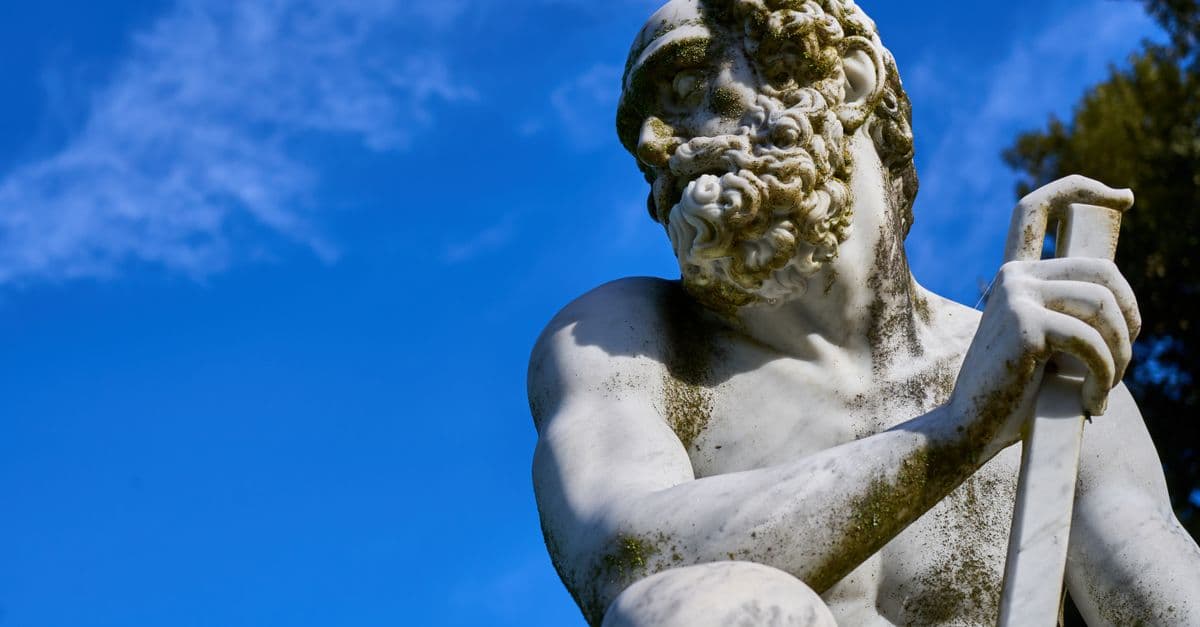
Photo: Gotta Be Worth It / Pexels
Galileo Galilei (1564–1642) was an Italian astronomer, physicist, and mathematician who transformed the practice of science by insisting that nature must be interrogated through observation and experiment rather than deduced from ancient texts. He built telescopes that showed Jupiter had moons, Venus had phases, and the Moon was mountainous — none of which the prevailing cosmology could accommodate. He was tried by the Roman Inquisition, forced to recant his support for the Copernican heliocentric model, and spent his final years under house arrest. He never married but had three children. One of his fingers is on permanent display in a museum in Florence. He is, in almost every particular, stranger than the myth.
Quick Biography
Galileo di Vincenzo Bonaiuti de' Galilei was born on February 15, 1564, in Pisa, in the Duchy of Florence — the same year as the birth of William Shakespeare, a coincidence he could not have appreciated. His father, Vincenzo Galilei, was a musician and music theorist of some distinction, whose experimental work on string tension and pitch demonstrated that theoretical claims about music needed to be tested against actual sound. This empirical sensibility passed directly to his son.
Galileo enrolled at the University of Pisa in 1580 to study medicine, on his father's practical advice. He found mathematics more compelling and, with his father's reluctant consent, switched fields. He taught mathematics at Pisa from 1589 and at the University of Padua from 1592 — eighteen years in Padua that he later described as the best of his life. He never married. His companion for many years was Marina Gamba of Venice, with whom he had two daughters, Virginia and Livia, and a son, Vincenzo. Both daughters were placed in a convent, San Matteo in Arcetri, largely because their illegitimate status made them unmarriageable by the standards of the time. Virginia, who took the name Sister Maria Celeste, maintained a remarkable correspondence with her father until her death in 1634. Their letters survive and were published as Dear Father: The Letters of Sister Maria Celeste to Galileo and examined by Dava Sobel in Galileo's Daughter (1999).
In 1609, Galileo heard of a Dutch device that made distant objects appear closer. He built his own version, improved it substantially — magnifying up to 30 times — and turned it on the sky. What he saw dismantled the existing picture of the cosmos. In 1610 he published Sidereus Nuncius (The Starry Messenger), reporting mountains on the Moon, four moons orbiting Jupiter, and far more stars than the naked eye could detect. The Medicis of Florence became his patrons; he relocated to become Chief Mathematician and Philosopher to the Grand Duke of Tuscany.
His support for the Copernican heliocentric model brought him into conflict with the Church. In 1616 he was instructed not to hold or defend the Copernican theory. In 1632 he published Dialogue Concerning the Two Chief World Systems, which despite its formal neutrality clearly argued for Copernicus. He was tried by the Inquisition in 1633, found vehemently suspect of heresy, forced to abjure, and sentenced to house arrest for the remainder of his life. He lived out his final years in his villa at Arcetri, near Florence. He lost his sight in 1638 and died on January 8, 1642, aged 77.
Major Scientific Contributions
The Telescope and Astronomical Discoveries
Galileo did not invent the telescope — Dutch opticians had the basic instrument by 1608 — but he was the first to systematically turn an improved version on the sky and publish the results. His observations directly contradicted the Aristotelian-Ptolemaic cosmology: the Moon was not a perfect sphere but had mountains and craters; Jupiter had four moons (now called the Galilean moons: Io, Europa, Ganymede, Callisto), demonstrating that not everything in the sky orbited Earth; Venus showed phases like the Moon, which was only possible if Venus orbited the Sun; the Milky Way resolved into individual stars too faint for the naked eye. Each observation was a datum that the received cosmology could not explain. His telescope work followed the precise naked-eye measurements of Tycho Brahe.
The Venus phases observation was arguably the most decisive. The Ptolemaic model — Earth at the center, Venus orbiting between Earth and the Sun on an "epicycle" — could not produce a full cycle of phases. If Venus always stayed between Earth and the Sun, it would only ever show a crescent. Galileo observed the full cycle, including a nearly full disc, which is only geometrically possible if Venus orbits the Sun on the far side. This single observation proved the Ptolemaic model geometrically impossible, regardless of any theological consideration. For a broader account of how astronomical observation transformed our understanding of the cosmos, see How the Scientific Revolution Changed Everything.
Kinematics and the Laws of Motion
Galileo established through careful experiment and mathematical analysis that falling objects accelerate uniformly regardless of their mass — contradicting Aristotle's claim that heavier objects fall faster. He also discovered the parabolic trajectory of projectiles, and established the principle of inertia: that a body in motion continues in motion unless acted on by a force. These results, published in Two New Sciences (1638), written during his house arrest, provided the empirical and theoretical scaffolding that Isaac Newton formalized in his laws of motion and universal gravitation.
The inclined-plane experiments behind this conclusion were ingenious. Galileo could not directly time free-falling objects — no clock of the era was accurate enough. Instead, he slowed the effective "fall" by rolling balls down inclined planes at various angles, timing them with water clocks. He could then extrapolate to the vertical case. The relationship he found — distance covered is proportional to the square of elapsed time — holds for any angle of incline, confirming it is a property of gravity, not of the specific setup.
The Moons of Jupiter
The four moons Galileo discovered orbiting Jupiter — today called the Galilean moons — are among the most important objects in the solar system for planetary science. Europa is a prime candidate for extraterrestrial life; Io is the most volcanically active body in the solar system; Ganymede is larger than Mercury. Galileo named them the "Medicean Stars" in honor of his patrons, a piece of strategic flattery that secured his position in Florence. NASA's Galileo spacecraft, which orbited Jupiter from 1995 to 2003, gathered much of the data now used to plan missions to Europa — a direct scientific lineage from a man who named the moons with a political calculation.
The Pendulum and Timekeeping
Galileo discovered the isochronous property of pendulums — that a pendulum's period depends on its length, not on the arc it swings through — reportedly from watching a swinging chandelier in the Pisa Cathedral around 1583. He spent decades considering its application to timekeeping. In the final year of his life, now blind and under house arrest, he dictated to his son Vincenzo a design for a pendulum clock that would use the pendulum's regularity to regulate a gear escapement. Vincenzo built a partial model after Galileo's death. The first fully functional pendulum clock was built by Dutch physicist Christiaan Huygens in 1656 — 14 years after Galileo's death — using a similar principle independently derived. Whether Galileo's design would have worked precisely as described is debated by historians of technology, but his articulation of the isochronous principle was the foundational insight. This is documented in Stillman Drake's Galileo at Work (1978).
Measurement as Scientific Method
Galileo's methodological contribution may be more important than any specific result. He insisted that natural phenomena must be measured quantitatively and that theories must be testable against observations. His experiments with inclined planes and pendulums were designed to extract quantitative data, not merely qualitative impressions. This shift — from qualitative description to quantitative measurement — is the methodological core of modern experimental science.
Lesser-Known Habits and Quirks
Cosimo II and the Art of Scientific Patronage
Galileo's relocation from Padua to Florence in 1610 was one of the most consequential career moves in the history of science, and it was entirely deliberate. The University of Padua paid well but offered limited freedom; the Medici court in Florence offered prestige, income, and — crucially — freedom from teaching obligations. Galileo negotiated the terms carefully. He named Jupiter's four newly discovered moons the "Medicean Stars" in Sidereus Nuncius specifically to appeal to Cosimo II de' Medici, the Grand Duke of Tuscany, who was young, ambitious, and interested in presenting his court as a center of learning.
The tactic worked. Cosimo appointed him "First Philosopher and Mathematician to the Grand Duke of Tuscany" — a title Galileo had specifically requested, notably including "Philosopher," not just "Mathematician." The distinction mattered: mathematicians were technicians; philosophers addressed the nature of reality. By insisting on the title, Galileo was claiming the right to draw cosmological conclusions from astronomical data, not merely to provide computational tools for the Church. This was the intellectual territory the Inquisition would later contest. The patronage strategy is analyzed in detail in Mario Biagioli's Galileo, Courtier (1993).
His Preserved Finger in Florence
On March 12, 1737, nearly a century after Galileo's death, his body was moved from a temporary burial site to a grand tomb in the Basilica of Santa Croce in Florence. During the transfer, a Florentine nobleman named Anton Francesco Gori removed three fingers, a tooth, and a vertebra as relics. The finger of the right hand — the middle finger, pointing upward — ended up in private collections and was lost for a period, before reappearing at auction in 2009 and being acquired by the Museo Galileo in Florence, where it remains on display in an elaborate egg-shaped glass container. The specific finger is anatomically confirmed and the provenance is documented. The image of Galileo's upraised middle finger being venerated in a glass case has not escaped the notice of people who appreciate irony.
The "Eppur si Muove" Question
"And yet it moves" — the defiant muttering allegedly whispered by Galileo under his breath after his forced recantation before the Inquisition in 1633 — is almost certainly apocryphal. No contemporary source reports it. The phrase first appears in a book published in 1757, over a century after the event. The best-documented version of Galileo's actual state after the recantation is that he was exhausted and frightened, not defiant. The myth of the mutter is a later invention of the Enlightenment, which needed a symbol of scientific courage against religious authority. The phrase has been attributed to Galileo by tradition, and a painting at the Brussels Museum of Fine Arts depicts it, but it does not appear in any document from 1633.
This does not make Galileo less significant or less courageous. The act of writing Dialogue and publishing it, knowing the risk, was more genuinely brave than any theatrical whisper could have been.
The Leaning Tower of Pisa Experiment — Also Probably Apocryphal
The famous story that Galileo dropped cannonballs of different masses from the Leaning Tower of Pisa to demonstrate that they fall at the same rate is almost certainly a legend. It comes from a biography of Galileo written by Vincenzo Viviani, a devoted student who wrote his account after Galileo's death and has been shown by historians to have romanticized other episodes. Galileo's actual experiments on falling bodies used inclined planes, timing balls rolling down slopes with water clocks — far more controlled and repeatable than a tower drop. The real experiment is more interesting than the legend: a systematic quantitative study that produced precise equations of motion.
He Never Married and Placed His Daughters in a Convent
Galileo's three children with Marina Gamba were born outside marriage — a situation that was not unusual but carried social consequences. Both daughters, Virginia and Livia, were placed in the convent of San Matteo in Arcetri when they were thirteen and twelve years old respectively. This was not cruelty but calculation: as illegitimate daughters they had limited marriage prospects, and the convent provided social security. Virginia (Sister Maria Celeste) became a devoted correspondent and something close to a caretaker of her father's emotional life. She translated his work into Latin, managed his household from within the convent, and wrote him letters of remarkable intelligence and warmth. Galileo was devastated when she died in 1634, before his trial was concluded. His son Vincenzo was later legitimized.
He Had Significant Debts for Much of His Life
Galileo's professional income at Padua was supplemented by taking in student boarders and selling a geometric compass of his own design — a calculating instrument that he also taught students to use for a fee, to the irritation of a rival who published a plagiarized version. He had significant financial obligations: his father died heavily indebted, and Galileo was responsible for providing dowries for his sisters' marriages. Financial pressure was a persistent feature of his life in Padua and contributed to his eagerness for Medici patronage.
He Wrote Satirical Poetry and Theater Criticism
Galileo's literary output extended beyond science. He wrote satirical poems and was an admirer of Ariosto's Orlando Furioso over Tasso's Jerusalem Delivered — a literary preference he defended at length and with considerable vigor in lectures and essays. He also wrote annotated commentaries on Ariosto's poetry. His literary criticism was taken seriously by contemporaries. He described Tasso's poem as a collection of "trinkets and baubles" compared to Ariosto's palace, which gives some flavor of his critical style. This aspect of his personality reflects the Renaissance culture in which he worked — the divisions between arts and sciences that came later were not yet firm.
His Mnemonic for the Medicean Stars Encoded His Name
When Galileo named Jupiter's four moons the "Medicean Stars" in Sidereus Nuncius, he also embedded his own initials in the notation system he used for tracking them: G, A, L, I — Galileo. Whether this was conscious or coincidental is debated, but the observation was first made by the historian of science Stillman Drake.
Personal Life and Relationships
Marina Gamba and the Question of Marriage
Galileo's decision not to marry Marina Gamba, the mother of his three children, was almost certainly financial and social rather than personal. A formal marriage would have required a dowry arrangement and legal commitments that were difficult on his academic salary. More practically, the University of Padua expected its professors to maintain a certain social standing, and a formal marriage to a Venetian woman of modest background might have complicated his position. Galileo arranged for Marina to marry a man named Giovanni Bartoluzzi after his move to Florence; she did, and the children remained with Galileo. Their correspondence after the move shows no bitterness; Marina continued to receive financial support from him.
The arrangement was practical and, by the standards of the era, not unusual. What was unusual was Galileo's continued engagement with all three children. His son Vincenzo was legitimized and educated; his correspondence with Virginia (Sister Maria Celeste) runs to over 120 surviving letters on her side alone and shows a relationship of genuine intellectual and emotional depth.
Sister Maria Celeste
Of all the people in Galileo's life, Sister Maria Celeste — born Virginia Galilei — left the most vivid documentary record of what it was like to know him. Her letters, collected and translated by Dava Sobel in Galileo's Daughter (1999), describe a convent life of poverty and difficulty while simultaneously tracking her father's career with intense interest. She copied out manuscripts for him, translated letters, sent him preserved fruits and medicines, and worried about his health and his controversies with the Church. When she died of dysentery in April 1634, at age 33, Galileo's letters describe a grief so acute that his friends feared for his health. He wrote to a friend: "I have received much distress from news of the illness of my dear daughter, which has now turned into a very violent dysentery and seems fatal. For it has taken away my appetite, deprives me of sleep, and with every hour makes me weaker."
Her death preceded the worst of his house arrest. The final years at Arcetri were spent in isolation that he found, by his own account, harder to bear after her death than before it.
Famous Quotes
"And yet it moves." Almost certainly apocryphal, as discussed above. First documented in a book published 125 years after the supposed event. Probably an Enlightenment-era invention.
"The universe cannot be read until we have learned the language and become familiar with the characters in which it is written. It is written in mathematical language." From Il Saggiatore (The Assayer), 1623. Galileo's most explicit statement of his philosophy of science — that nature is a mathematical text that must be read on its own terms.
"In questions of science, the authority of a thousand is not worth the humble reasoning of a single individual." Attributed to Galileo in multiple sources. The sentiment is consistent with his documented contempt for appeals to Aristotelian authority over observational evidence.
"I do not feel obliged to believe that the same God who has endowed us with sense, reason, and intellect has intended us to forgo their use." From a letter to the Grand Duchess Christina of Tuscany, written in 1615. One of the clearest statements of his position that science and religion operate in separate domains.
"All truths are easy to understand once they are discovered; the point is to discover them." Widely attributed to Galileo. The precise source is uncertain, but the formulation is consistent with his documented emphasis on discovery over inherited authority.
Legacy
Galileo occupies a peculiar position in the history of science: he is at once genuinely foundational and something of a constructed symbol. His astronomical observations and his work on motion were transformative. But the "Galileo affair" — his trial and recantation — became a cultural mythology about the conflict between science and religion that is considerably more complex than the mythology allows. The Church's objection to Galileo was partly political (he had mocked Church figures in the Dialogue), partly theological, and partly a matter of astronomical evidence that was, in 1633, not yet conclusive. The heliocentric model was not firmly established until later in the 17th century.
What is not in doubt: Newton acknowledged Galileo's mechanics as foundational to his own work. The Galilean moons are still called by his name. The Museo Galileo in Florence holds his instruments and, yes, his finger. The Catholic Church formally acknowledged that the trial of 1633 was an error in 1992, under Pope John Paul II — 359 years later.
For more on the figures who built on Galileo's foundations, see Isaac Newton: Gravity, Light, and the Principles of the Universe.
FAQ
Q: Did Galileo drop balls from the Leaning Tower of Pisa? Almost certainly not in the way the story is told. This account comes from a single biography written after his death by an admiring student. Galileo's actual experiments used inclined planes and produced quantitative data. The tower story is a legend, not a documented event.
Q: Did Galileo say "And yet it moves" after his recantation? Almost certainly not. The phrase first appears in print in 1757, over a century after the supposed event. No contemporary source records it. It is an Enlightenment myth.
Q: Was Galileo persecuted solely because of science vs. religion? The conflict was more complicated. Galileo had been given some latitude by the Church to discuss Copernicanism as a hypothesis. His Dialogue, which put the Pope's own arguments in the mouth of a character named "Simplicio" (simpleton), was a political provocation. The trial was partly about that insult, partly about genuine theological concerns, and partly about institutional authority.
Q: Why is Galileo's finger in a museum? When his body was moved to a new tomb in 1737, a nobleman removed fingers, a tooth, and a vertebra as relics — a practice consistent with the veneration of saints' body parts, applied to a scientific hero. One finger eventually reached the Museo Galileo in Florence, where it remains on display.
Q: Did the Catholic Church apologize to Galileo? Pope John Paul II, in 1992, acknowledged that the Inquisition's trial of Galileo was wrong and resulted from a "tragic mutual incomprehension." This is generally described as a rehabilitation rather than a formal apology.
Q: What happened to Galileo's telescope? Several of Galileo's telescopes survive and are held at the Museo Galileo in Florence. Two of the original instruments are on display: an objective lens from a third is preserved separately. The telescopes have been examined with modern optical equipment; they confirm the specifications Galileo described in his writings and demonstrate that his improvements over the Dutch original were substantial.
Q: Why did Galileo's daughters enter a convent? Both daughters — Virginia and Livia — were placed in the convent of San Matteo in Arcetri because their illegitimate status gave them limited marriage prospects in 17th-century Italian society. The convent provided social security and a respectable life. The decision was Galileo's and was consistent with the norms of his era, though placing them so young (at thirteen and twelve) was on the earlier end of the typical range.
Q: Did Galileo invent the thermometer? He invented an early thermoscope — a device that showed temperature changes without providing a numerical reading — around 1593. It was not a thermometer in the modern sense, which requires a calibrated numerical scale. The first such instrument was developed by Santorio Santorio, a contemporary who worked with Galileo and adapted the thermoscope into a clinical measuring device.
Sources
- Sobel, Dava. Galileo's Daughter: A Historical Memoir of Science, Faith, and Love. Walker & Company, 1999.
- Drake, Stillman. Galileo at Work: His Scientific Biography. University of Chicago Press, 1978.
- Galileo Galilei. Sidereus Nuncius (The Starry Messenger). 1610. Trans. Albert Van Helden. University of Chicago Press, 1989.
- Galileo Galilei. Two New Sciences. 1638. Trans. Stillman Drake. University of Wisconsin Press, 1974.
- Heilbron, J.L. Galileo. Oxford University Press, 2010.
- Biagioli, Mario. Galileo, Courtier: The Practice of Science in the Culture of Absolutism. University of Chicago Press, 1993.
- Shea, William R. and Mariano Artigas. Galileo in Rome: The Rise and Fall of a Troublesome Genius. Oxford University Press, 2003.
- Museo Galileo, Florence. https://www.museogalileo.it/
Follow new articles
Add SciHub101 to your feed reader to see new science and technology stories.
About the Author
SciHub101 is an independent science and technology publication founded and edited by Buğra Sözeri, a software engineer and app developer based in Türkiye. AI tools assist with drafting and research. Source documentation in the existing archive is uneven, and articles are being reviewed and corrected. The Editorial Team byline identifies editorial responsibility; it does not certify specialist or independent human review. Where we compare products, anything built by our own team is labelled as such — see the editorial guidelines and About page for how corrections and disclosures work.
Related Articles
Katherine Johnson: The Human Computer Who Sent John Glenn to Orbit
Katherine Johnson calculated John Glenn's orbital trajectory by hand. NASA trusted her numbers over the computers. She counted everything as a child and lived to 101.

Edward Jenner: The Vaccine Pioneer Who Was a Fellow for Studying Cuckoos
Edward Jenner invented the smallpox vaccine in 1796 but was elected to the Royal Society for studying cuckoos. His verified biography, ethics, and medical legacy.

Robert Boyle: The Father of Chemistry Who Wrote Science Fiction and Refused to Be President
Robert Boyle established Boyle's Law, defined the chemical element, and wrote a remarkable wishlist of future inventions in 1662 that reads like a science fiction catalogue. A verified biography.

Tycho Brahe: The Astronomer Who Lost His Nose, Owned a Drunk Moose, and Built the Data That Changed Everything
Tycho Brahe made the most precise pre-telescope astronomical measurements in history. He also had a brass nose, a tame moose, and died refusing to leave a royal banquet to urinate.
Nicolaus Copernicus: The Canon Who Moved the Earth — and Rewrote Economics on the Side
Nicolaus Copernicus published his heliocentric theory on his deathbed to avoid Church backlash. He was also a Catholic canon, doctor, economist, and translator — a verified biography of an underestimated polymath.
Johannes Kepler: Planetary Laws, a Mother on Trial for Witchcraft, and the First Sci-Fi Story
Johannes Kepler's three laws of planetary motion changed astronomy. His life was stranger: his mother was tried for witchcraft, he wrote history's first science fiction, and he paid bills casting horoscopes.