Nicolaus Copernicus: The Canon Who Moved the Earth — and Rewrote Economics on the Side
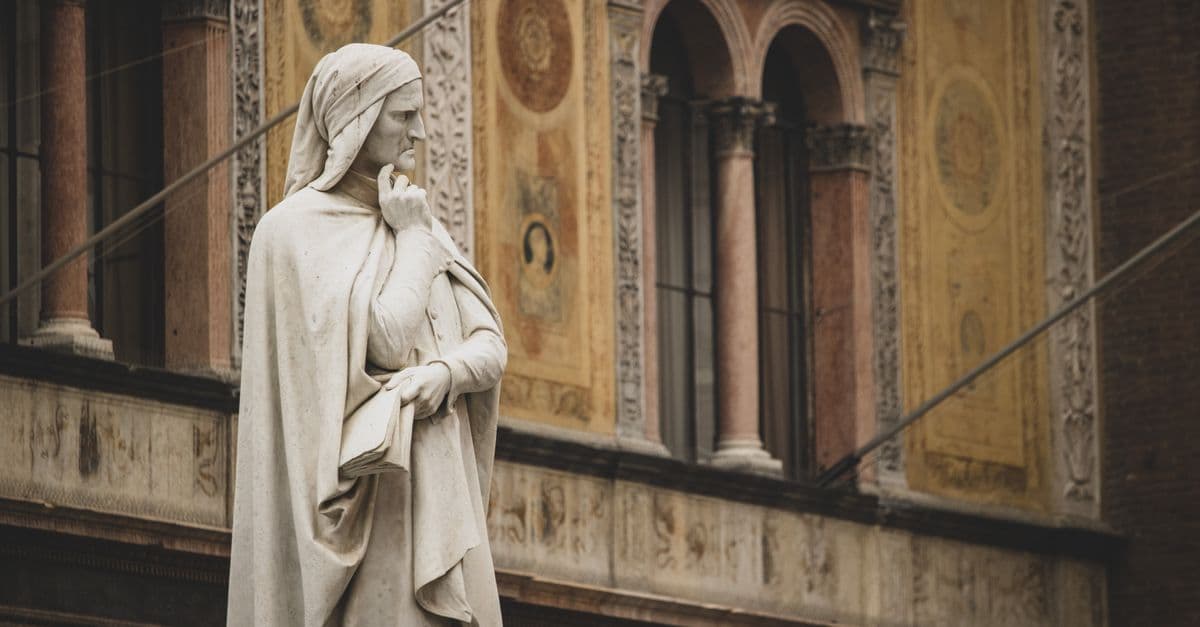
Photo: sadis / Pexels
Nicolaus Copernicus (1473–1543) removed Earth from the center of the universe. This is the act for which he is remembered and the one that, eventually and indirectly, contributed to more upheaval in Western thought than almost any other single idea. He proposed it carefully, published it cautiously, and died shortly after the book appeared — having spent his career not as a professional astronomer but as a Catholic canon, doctor, local administrator, and monetary reformer. He was a thoroughgoing polymath who happened to change astronomy forever largely in his spare time.
Quick Biography
Nicolaus Copernicus was born on February 19, 1473, in Royal Prussia — a semi-autonomous region of the Kingdom of Poland — in the town of Thorn (now Torun, Poland). His father, a merchant and municipal official, died when Nicolaus was around ten. His maternal uncle, Lucas Watzenrode the Younger, a prominent church official who became Bishop of Warmia, effectively adopted the family and managed Nicolaus's education.
This patronage shaped Copernicus's entire life. Watzenrode sent him to the University of Krakow (1491–1495), then to Italy for extended study. In Bologna (1496–1501), Copernicus studied canon law and lived in the house of the astronomer Domenico Maria Novara, with whom he made astronomical observations. In Padua (1501–1503), he studied medicine. In Ferrara (1503), he obtained a doctorate in canon law — the degree his uncle expected. He never held a formal academic or astronomical position. His official role, which he occupied for the rest of his life, was canon of the Cathedral Chapter of Frombork (Frauenburg) in Warmia, a position that provided financial security and enough administrative duties to occupy a large share of his working time.
His astronomical work was conducted privately, alongside his canonical duties. He drafted an early sketch of the heliocentric theory, the Commentariolus, around 1510 and circulated it in manuscript without publishing. He worked on the full mathematical treatment, De Revolutionibus Orbium Coelestium (On the Revolutions of the Celestial Spheres), for decades. He was reluctant to publish; whether this was primarily from fear of ecclesiastical reaction, from his perfectionism, or from scientific caution about a theory he knew was not yet fully worked out is debated.
In 1539, a young German mathematician named Georg Joachim Rheticus traveled to Frombork specifically to work with Copernicus and persuaded him to allow a summary of the theory to be published — Narratio Prima (First Report, 1540). The positive response to this preliminary publication helped move Copernicus toward authorizing the full work. De Revolutionibus was published in Nuremberg in 1543. Copernicus died on May 24, 1543 — tradition holds that he received the printed book on the day he died, though the exact timing is uncertain. He was 70.
He was buried in the Frombork Cathedral. His grave was lost for centuries; his remains were identified by DNA analysis in 2008 and reinterred with a state ceremony in 2010.
Personal Life and the Anna Schilling Controversy
Copernicus never married. The Catholic canonical position he held did not require celibacy in the same way a priest's vows did, but canons were expected to maintain respectable domestic arrangements. For much of his adult life, Copernicus maintained a housekeeper named Anna Schilling, a woman related to him by marriage on his mother's side. The relationship became controversial enough that his bishop, Johannes Dantiscus, ordered Copernicus to dismiss her in 1539 and repeatedly.
Dantiscus was concerned about appearances: a canon living with a woman, however the relationship was characterized, was a source of gossip and, in the bishop's view, scandal. His letters to Copernicus on the subject survive and are explicit — he accused Copernicus of keeping a concubine and demanded the arrangement end. Copernicus's responses are more guarded; he referred to Schilling as his housekeeper and kinswoman and was slow to act on Dantiscus's instructions. The bishop eventually threatened ecclesiastical consequences if Copernicus did not comply.
Whether the relationship was sexual is not established by the surviving record. The term contemporaries used — focaria, Latin for housekeeper but with a common secondary meaning of concubine — was applied routinely to housekeepers even without any sexual implication in clerical households. What is clear is that Schilling was an important presence in his household for an extended period, that the bishop considered it a problem serious enough to pursue through multiple letters, and that Copernicus was reluctant to end the arrangement even under ecclesiastical pressure.
The episode is rarely discussed in popular accounts of Copernicus, which tend to present him as an isolated, ascetic figure. The Dantiscus correspondence suggests a more complicated private life — a man who formed attachments, maintained them under pressure, and was not simply the monk-like figure the popular image suggests. Schilling apparently left Frombork in 1539, the same year Rheticus arrived to persuade Copernicus to publish. Copernicus was 66 years old. The timing is a coincidence of historical record, not biography.
Major Contributions
The Heliocentric Model
Copernicus's central claim in De Revolutionibus was that the sun, not the Earth, is at the center of the universe, and that the Earth both rotates daily on its own axis and orbits the sun annually. He retained Aristotle's insistence on perfectly circular orbits, which meant he still needed epicycles to fit the observations — a significant limitation that Johannes Kepler would only resolve seventy years later. But the fundamental shift — removing Earth from the center — was the conceptual revolution.
The heliocentric model explained phenomena that the geocentric model handled awkwardly: the retrograde motion of planets (planets appearing to reverse direction temporarily in the sky) became a natural result of the Earth overtaking slower outer planets or being overtaken by faster inner ones, rather than requiring additional circles. The ordering of planets by distance from the sun became consistent and rational in a way the Ptolemaic system had not achieved.
Copernicus was not the first to propose heliocentrism; the Greek astronomer Aristarchus of Samos had proposed it in the 3rd century BCE and been largely ignored. What Copernicus provided was a complete, mathematically worked-out system — not just an assertion but a computational model that astronomers could use.
The Anonymous Preface — A Wrinkle Copernicus Did Not Write
De Revolutionibus was published with a preface stating that the heliocentric model was merely a mathematical convenience, not a physical truth, and that readers should not be troubled by its apparent conflict with Scripture. Copernicus had not written this preface; it was added, without his knowledge or consent, by Andreas Osiander, the Lutheran theologian who supervised the Nuremberg printing. Copernicus was bedridden and dying as the book was printed and could not object.
This unauthorized preface substantially softened the book's reception for decades. Many readers took the heliocentric model as a computing device rather than a physical claim. Galileo Galilei was arguably the first major figure to force the physical interpretation into the open — with consequences the Inquisition made permanent.
Monetary Theory: Gresham's Law Before Gresham
Copernicus wrote two treatises on monetary economics, one in Polish (c. 1517) and one in Latin (Monetae cudendae ratio, 1526), dealing with currency debasement in Royal Prussia. In these works he articulated, clearly and with practical examples, the economic principle that bad money drives out good: when two currencies of different intrinsic value circulate as legal tender, people hoard the good money and spend the debased. This principle is universally known as Gresham's Law, after the English financier Thomas Gresham, who articulated it in 1558.
Copernicus formulated it decades before Gresham. He did so not as an abstract theorem but as practical policy advice, arguing against the ongoing debasement of Prussian coinage by the Teutonic Knights and the local nobility. Historians of economics are aware of Copernicus's priority; it has not penetrated popular knowledge. The monetary tracts are rarely discussed in general accounts of his life.
Medical Practice and Administrative Work
Copernicus practiced medicine throughout most of his adult life. His training in Padua (1501–1503) was under the physicians who used Galenic and Avicennian medicine — the dominant medical framework of the era. He treated canons and bishops in the Frombork chapter, local people in Warmia, and during at least two plague outbreaks he attended to patients at considerable personal risk. His uncle Bishop Watzenrode consulted him medically in his final illness. There is no evidence that Copernicus was a distinguished or innovative physician, but he practiced over four decades, and his letters include medical observations and case notes that show genuine clinical engagement.
The canonical role absorbed more time than is usually acknowledged. He was responsible for administering church properties, collecting revenues, overseeing accounts, and participating in chapter governance for more than forty years. He surveyed church-owned lands in Warmia. He managed grain prices during periods of shortage. He contributed to the defense of Olsztyn castle in 1521 when Teutonic Knights raided the region — organizing the garrison's supplies and correspondence with the Polish king, requesting military support. This episode is frequently omitted from biographies but is documented in letters Copernicus himself wrote.
He also built a simple tower observatory at Frombork from which he made the naked-eye observations that fed into De Revolutionibus. The telescope would not be invented until 1608, sixty-five years after his death. All of Copernicus's astronomical data came from naked-eye instruments — primarily a triquetrum (a parallactic instrument for measuring stellar altitude) that he constructed himself and described in De Revolutionibus.
Quirks
He Published on His Deathbed — and the Fear Was Real, Not Just Tradition
The story that Copernicus delayed publication out of fear of the Church is sometimes treated as an oversimplification. The fuller picture is more interesting. The Church itself was not uniformly hostile to the book when it appeared — Pope Clement VII had heard a lecture on the Copernican theory in 1533 and was reportedly favorably impressed, and the preface to the original Commentariolus circulated without incident. The formal condemnation of De Revolutionibus by the Catholic Church did not come until 1616 — seventy-three years after publication, when Galileo Galilei had made the heliocentric interpretation impossible to ignore.
What Copernicus actually feared, based on his own preface to De Revolutionibus, was ridicule from other astronomers — specifically, the charge of proposing something absurd and untestable. His preface, addressed to Pope Paul III, explicitly asks for the Pope's protection against critics who would mock the theory without engaging it mathematically. He was well aware that a system requiring the Earth to move — something no one could feel or detect — would strike many readers as physically implausible.
The deathbed delivery of the printed book is attested by Rheticus's account and by the timing of publication relative to Copernicus's death. Whether he was conscious when it arrived, whether he grasped what he was holding, is not known. He had suffered a stroke. The image of the dying man receiving his life's work is powerful and plausible; the exact scene cannot be verified.
A Canon of the Catholic Church — His Whole Life
Copernicus was not a priest but held a canonical benefice — an administrative and ecclesiastical position in the Cathedral Chapter of Warmia — from approximately 1497 or 1503 (depending on when the appointment took formal effect) until his death. He administered church properties, collected revenues, oversaw accounts, and participated in chapter governance for more than forty years. He was a deeply embedded official of the institution whose cosmology he was quietly overturning.
This is not the story of an outsider challenging the establishment. Copernicus was the establishment. His uncle was a bishop who used ecclesiastical connections to finance Copernicus's education. His position gave him the financial security and physical location (Frombork, with its cathedral tower suitable for astronomical observation) to do the work. He was not secretly anti-clerical; his correspondence shows a man committed to both his church duties and his astronomy, apparently without experiencing the two as contradictory — right up until the moment the physical interpretation of his own theory forced the contradiction into public view, after he was dead.
Doctor, Economist, Translator — A Genuine Polymath
Copernicus practiced medicine throughout his life. He treated canons, bishops, and local people in Warmia, including during plague outbreaks. His medical training in Padua was rigorous; the curriculum included Galen and Avicenna as well as anatomy. There is no evidence he was distinguished as a physician, but he practiced for decades alongside his canonical and astronomical work.
He translated into Latin the Letters of Theophylact Simocatta, a 7th-century Byzantine historian, which he published in 1509 — his first publication, predating De Revolutionibus by thirty-four years. He wrote the monetary treatises. He composed an astronomical instrument, the triquetrum, used to measure the altitude of celestial bodies, and built the simple tower observatory at Frombork where he made his observations with naked-eye instruments (the telescope would not be invented until after his death).
The polymath character of his career was entirely normal for the Renaissance educated elite, but the combination of disciplines — astronomer, economist, doctor, canon lawyer, administrator, translator — is worth emphasis because the popular account of Copernicus tends to reduce him entirely to the one thing he is remembered for.
His Remains Were Lost for 465 Years
Copernicus was buried in the Frombork Cathedral after his death in 1543, but no marked grave survived the subsequent centuries of war, renovation, and neglect. His tomb was simply lost. In 2004–2005, Polish archaeologists searching the cathedral floor systematically found skeletal remains beneath a floor tile near one of the altars Copernicus had administered. Forensic analysis showed the skull belonged to a man who died at approximately 70 years of age, consistent with Copernicus's known age at death. In 2008, DNA from the skull was matched against DNA extracted from hairs found in a book from Copernicus's personal library preserved in Uppsala, Sweden. The match confirmed the identification. In 2010, the remains were reinterred with a state ceremony attended by the Polish president and Catholic bishops — the Church that had placed his book on the Index of Forbidden Books in 1616 now presiding over his honorable reburial.
He Never Left the Church, and the Church Never Formally Condemned Him While He Lived
Copernicus died a faithful Catholic, as far as the record shows. He received last rites. He had dedicated De Revolutionibus to the Pope. The book was placed on the Index of Forbidden Books in 1616, and removed only in 1822. In between, Galileo Galilei was the person the Inquisition actually prosecuted — for insisting on the physical truth of what Copernicus had proposed. Copernicus, protected by death and by Osiander's softening preface, escaped the reckoning his theory eventually provoked.
Quotes
"Finally we shall place the Sun himself at the center of the Universe." (De Revolutionibus, Book I)
"For it is the duty of an astronomer to compose the history of the celestial motions through careful and expert study." (De Revolutionibus, Preface)
"To know that we know what we know, and to know that we do not know what we do not know — that is true knowledge." (attributed — actually a paraphrase of Confucius via Thoreau; the attribution to Copernicus is incorrect)
"The massive bulk of the earth does indeed shrink to insignificance in comparison with the size of the heavens." (De Revolutionibus)
Legacy
Copernicus initiated what historians of science call the Copernican Revolution — not just in astronomy but in the human self-conception. Removing Earth from the center of the universe was, eventually, a conceptual displacement that extended far beyond orbital mechanics. It contributed to the secularization of European thought, to the development of the scientific method as applied to natural philosophy, and to the gradual dissolution of the idea that humans occupied a specially privileged position in the cosmos.
Johannes Kepler replaced Copernicus's circles with ellipses, making the heliocentric model fit observations precisely. Galileo Galilei found telescopic evidence — phases of Venus, moons of Jupiter — that was impossible to explain with a geocentric model. Isaac Newton explained why the heliocentric model had to be true. The relay was long; the first baton was passed from a canon's tower in Frombork.
The man who passed it was not an isolated dreamer but a working administrator, physician, and economist who found time between managing church revenues and treating plague patients to overturn two thousand years of cosmology. His bones were lost for 465 years and found by forensic analysis of hairs in a library book. He was reburied with full honors by the institution that had once banned his masterwork. Few scientific stories end with that particular symmetry.
Q: Did Copernicus really publish on his deathbed to avoid the Church? A: The deathbed timing is historically attested — Copernicus had suffered a stroke, and the printed book arrived as he was dying in May 1543. His reluctance to publish appears more complex than simple fear of the Church: his own preface cites concern about ridicule from mathematicians. The formal Church condemnation came in 1616, 73 years after publication. Fear of ecclesiastical reaction was a factor but not the only one.
Q: Did Copernicus anticipate Gresham's Law? A: Yes. In monetary treatises written in the 1520s — roughly thirty years before Thomas Gresham — Copernicus articulated the principle that debased currency drives good money out of circulation. Historians of economics acknowledge Copernicus's priority, though the principle carries Gresham's name in popular usage.
Q: Was Copernicus's model correct? A: It was correct in placing the sun at the center and in recognizing that Earth orbits and rotates. It was incorrect in retaining circular orbits, which required him to keep epicycles. Kepler's elliptical orbits, published in 1609, produced a heliocentric model that matched observations accurately without epicycles.
Q: Why did Copernicus keep his theory private for so long? A: He circulated an early sketch (the Commentariolus) around 1510. The full work took decades partly due to mathematical complexity, partly due to perfectionism, and partly due to concern about the reception. His own preface mentions fear of mockery. He allowed publication only after a German mathematician, Rheticus, visited him and published a positive preliminary account in 1540.
Q: Was Copernicus a priest? A: He was not an ordained priest. He was a canon — an administrator attached to a cathedral chapter — a position that provided income and duties but did not require ordination. He held this role for most of his adult life.
Q: Did Copernicus have a romantic relationship? A: The historical record shows that Copernicus had a long-term housekeeper named Anna Schilling, a kinswoman, whose presence in his household was controversial enough that his bishop, Johannes Dantiscus, wrote him multiple letters demanding he dismiss her and accusing him of keeping a concubine. Whether the relationship was sexual is not established. Schilling apparently departed in 1539. Copernicus never married.
Q: How were Copernicus's remains identified? A: In 2004–2005, Polish archaeologists found skeletal remains beneath the floor of Frombork Cathedral consistent with a man of about 70. In 2008, DNA from the skull was matched against hairs found in a book from Copernicus's personal library preserved in Uppsala, Sweden, confirming the identification. The remains were reinterred with a state ceremony in 2010.
Q: What was Copernicus's role in defending Olsztyn? A: In 1521, when Teutonic Knights raided Warmia, Copernicus organized the defense of Olsztyn castle — managing supplies for the garrison and writing to King Sigismund I of Poland requesting military support. The letters survive. It is a side of Copernicus's biography almost entirely absent from popular accounts, but it documents him as a practical administrator who responded to military crisis as well as astronomical problems.
Sources
- Copernicus, Nicolaus. On the Revolutions of the Celestial Spheres (De Revolutionibus Orbium Coelestium). Translated by Edward Rosen. Johns Hopkins University Press, 1992.
- Gingerich, Owen. The Book Nobody Read: Chasing the Revolutions of Nicolaus Copernicus. Walker & Company, 2004.
- Koestler, Arthur. The Sleepwalkers. Hutchinson, 1959.
- Repcheck, Jack. Copernicus' Secret. Simon & Schuster, 2007.
- Gorski, Karol. "Copernicus's Economic Writings." Organon 2, 1965.
- Pomian, Krzysztof. "The DNA identification of Nicolaus Copernicus's remains." Proceedings of the Royal Society B, 2012. doi:10.1098/rspb.2012.0781
- Biskup, Marian. Regesta Copernicana. Ossolineum, 1973.
Follow new articles
Add SciHub101 to your feed reader to see new science and technology stories.
About the Author
SciHub101 is an independent science and technology publication founded and edited by Buğra Sözeri, a software engineer and app developer based in Türkiye. AI tools assist with drafting and research. Source documentation in the existing archive is uneven, and articles are being reviewed and corrected. The Editorial Team byline identifies editorial responsibility; it does not certify specialist or independent human review. Where we compare products, anything built by our own team is labelled as such — see the editorial guidelines and About page for how corrections and disclosures work.
Related Articles
Johannes Kepler: Planetary Laws, a Mother on Trial for Witchcraft, and the First Sci-Fi Story
Johannes Kepler's three laws of planetary motion changed astronomy. His life was stranger: his mother was tried for witchcraft, he wrote history's first science fiction, and he paid bills casting horoscopes.
Hedy Lamarr: The Hollywood Star Who Invented the Technology Behind WiFi and Bluetooth
Hedy Lamarr's life and verified quirks: Hollywood's most glamorous star invented frequency hopping during WWII, studied technical manuals between takes, and never received patent royalties.

Tycho Brahe: The Astronomer Who Lost His Nose, Owned a Drunk Moose, and Built the Data That Changed Everything
Tycho Brahe made the most precise pre-telescope astronomical measurements in history. He also had a brass nose, a tame moose, and died refusing to leave a royal banquet to urinate.
Galileo Galilei: The Finger in the Museum and the Man Who Talked Back to Rome
Galileo Galilei's life, discoveries, and verified quirks: his preserved finger on display, three illegitimate children, the Inquisition recantation, and the apocryphal 'Eppur si muove'.

Galileo: The Night He Pointed a Telescope at Jupiter
In January 1610, Galileo saw four stars near Jupiter that moved. Within a week he understood the solar system would never be the same.

Robert Boyle: The Father of Chemistry Who Wrote Science Fiction and Refused to Be President
Robert Boyle established Boyle's Law, defined the chemical element, and wrote a remarkable wishlist of future inventions in 1662 that reads like a science fiction catalogue. A verified biography.