How Surgery Became Safe: Anesthesia, Antiseptics, and the Sterile Revolution

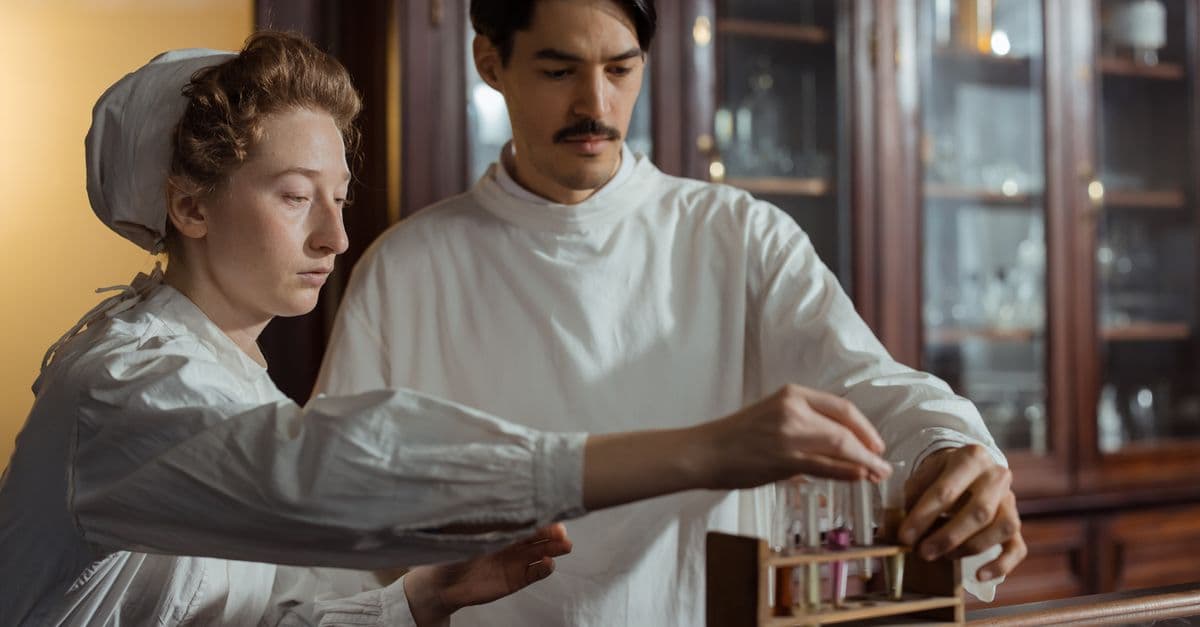
Photo: cottonbro studio / Pexels
In 1812, the novelist Fanny Burney underwent a mastectomy for breast cancer. She was fully conscious. She later described the procedure in a letter: "When the dreadful steel was plunged into the breast — cutting through veins — arteries — flesh — nerves — I needed no injunctions not to restrain my cries. I began a scream that lasted unintermittingly during the whole time of the incision." The operation lasted 20 minutes.
This was the reality of surgery for all of human history until October 16, 1846 — a date that marks as profound a transformation as any in medicine.
Key takeaways
- Pre-anesthesia surgeons competed on speed to minimize agony; Robert Liston could amputate a leg in 28 seconds
- The first successful public demonstration of ether anesthesia was on October 16, 1846, at Massachusetts General Hospital — now called "Ether Day"
- Nitrous oxide had been identified as an anesthetic candidate by 1800 but wasn't used surgically for 44 years due to a failed public demonstration
- Joseph Lister introduced carbolic acid antisepsis in 1865; surgical infection rates dropped from ~50% to single digits within years
- Modern sterile technique — pioneered by Ernst von Bergmann in the 1880s — goes beyond killing bacteria already present to preventing their introduction
Surgery Before Anesthesia
The word "surgery" comes from the Greek cheirourgía — "hand work." For most of history, surgical skill meant speed. The faster the surgeon, the less the patient suffered and (roughly) the better the survival odds. Robert Liston, a celebrated 19th-century Edinburgh and London surgeon, was famous for completing leg amputations in under 30 seconds. Audiences reportedly pressed forward to watch.
Patients facing surgery faced a grim choice: submit to conscious agony or risk death refusing treatment. Some were restrained by multiple assistants. Some passed out from shock. Some bit through leather straps placed between their teeth. Children's operations were particularly harrowing.
Various substances had been used as crude anesthetics or analgesics throughout history: opium and its derivatives could dull pain somewhat, alcohol could reduce anxiety (though it actually increases bleeding), mandragora root was used in medieval Europe. None was reliable or powerful enough for major surgery. The fundamental problem was that nothing could render a patient unconscious without also killing them — or so it seemed until the 1840s.
Nitrous Oxide: The 44-Year Delay
The discovery that inhaling certain gases could cause unconsciousness came earlier than is often realized. In 1800, the brilliant English chemist Humphry Davy synthesized and inhaled nitrous oxide (N₂O) and noted that it produced a dreamy euphoria and insensibility to pain. He published that "it seems capable of destroying physical pain" and suggested it might be useful during operations.
Nothing happened for 44 years. Nitrous oxide became a recreational novelty — "laughing gas parties" were fashionable in the early 19th century — but surgeons didn't take it seriously. Davy himself never pursued the surgical application.
Dentist Horace Wells of Hartford, Connecticut attended a laughing gas demonstration in December 1844 and noticed that a man who injured his leg during the gas-induced hilarity didn't seem to feel the wound. Wells had a colleague extract one of his own teeth the next day while he inhaled nitrous oxide — he felt nothing. Excited, he arranged a public demonstration in January 1845 at Harvard Medical School. The demonstration failed — the patient cried out — and Wells was laughed out of the hall. (The patient later said he hadn't actually felt pain; he was simply anxious. Wells never recovered from the humiliation.)
Ether Day: October 16, 1846
A different anesthetic solved the problem. Diethyl ether had been synthesized in the 16th century, and its intoxicating properties were known. In the early 1840s, a Georgia physician named Crawford Long used ether to perform several minor surgical procedures without pain — beginning in 1842 — but didn't publish his results.
William T.G. Morton, a Boston dentist who had been experimenting with ether, arranged a public demonstration at Massachusetts General Hospital on October 16, 1846. The patient was a young printer named Gilbert Abbott with a vascular tumor in his jaw. The surgeon was John Collins Warren, one of the most respected in America. Morton administered ether through a glass globe with a mouthpiece. Abbott became unconscious. Warren removed the tumor. When Abbott awoke, Warren asked whether he had felt pain. He replied that he had felt a scratching sensation but nothing more.
Warren turned to the gallery of watching surgeons and students and said: "Gentlemen, this is no humbug."
News spread with extraordinary speed. Within weeks, ether was being used in surgeries across the United States and Britain. The operating theater at Massachusetts General Hospital is still called the Ether Dome and remains in use today. October 16 is celebrated as World Anesthesia Day.
The Alternatives: Chloroform and the Debates
Chloroform was introduced as an anesthetic in 1847 by Scottish obstetrician James Young Simpson, who poured it on a handkerchief and inhaled it at his dinner table along with guests. They all passed out.
Chloroform had advantages over ether: it was faster-acting, had a more pleasant smell, and required smaller doses. Queen Victoria used chloroform for the birth of Prince Leopold in 1853 — a royal endorsement that deflected religious opposition to painless childbirth (some clergy had argued that birth pain was God's punishment for Eve's sin).
But chloroform's therapeutic window is narrow: the dose that anesthetizes is not far from the dose that kills. It caused cardiac arrhythmias and deaths. It took decades of careful observation to recognize the dose-response relationship, and chloroform gradually fell out of use through the 20th century.
Ether remained the standard anesthetic for nearly a century until safer inhaled agents were developed in the 1950s and beyond.
The Infection Problem: Surgery's Other Killer
Solving pain was only half the problem. Post-operative infection killed enormous numbers of surgical patients — the hospitalism problem was so severe that many physicians argued surgery should be avoided unless absolutely unavoidable. Hospitals were places where you went to die, not recover. The irony: bringing patients together in hospitals created conditions that spread fatal infections among them.
As late as the 1860s, infection rates in surgical wards exceeded 50% at many institutions. Amputations performed in hospitals had far higher mortality than the same operations performed in the field during wars — because hospital patients were clustered together while their wounds were dressed with the same sponges used on other patients.
Lister's Antiseptic Revolution
Joseph Lister (1827–1912) was a surgeon in Glasgow who read Pasteur's work on germ theory in 1865 and immediately grasped its surgical implications: if wound infections were caused by microorganisms, they might be prevented by killing those organisms.
Lister chose carbolic acid (phenol) as his antiseptic agent — it was being used to treat sewage in Carlisle and he'd heard it reduced cattle disease. Beginning in 1865, he soaked dressings in carbolic acid solution, sprayed the surgical field and instruments with it, and washed his hands with it. The results were dramatic: his ward's post-amputation mortality rate dropped from 46% to 15%.
Lister published his results in The Lancet in 1867. The reception was mixed — many surgeons resisted, some out of genuine skepticism, others from professional pride (the implicit claim was that their hands were transmitting disease). Acceptance came faster in Germany than in Britain. In the United States, resistance persisted well into the 1870s.
Lister's approach was antiseptic: kill bacteria that were already present. The next step was aseptic technique: prevent bacteria from entering the surgical field in the first place.
Aseptic Technique and Modern Sterile Surgery
Ernst von Bergmann, a German surgeon, developed the concept of aseptic surgery in the 1880s. Rather than dousing everything in carbolic acid, the goal was sterilization: boiling instruments, steam-sterilizing everything that entered the operating field, using sterile drapes, sterile gowns.
William Halsted at Johns Hopkins introduced rubber surgical gloves in 1890 — initially, according to legend, to protect his scrub nurse Caroline Hampton's hands from the carbolic acid (he later married her). The gloves also reduced bacterial contamination. Halsted developed many of the techniques of careful, gentle tissue handling that modern surgery still teaches.
By the 1890s, the combination of general anesthesia, antiseptic and aseptic technique, improved anatomical knowledge, and careful tissue handling had transformed surgery from a desperate last resort into a reliable therapeutic intervention. Operations that had been inconceivable — appendectomies, gallbladder removals, brain surgery — became possible.
The 20th Century and Beyond
The 20th century refined both anesthesia and surgical technique enormously:
- Local and regional anesthetics: cocaine as a local anesthetic was discovered in 1884; novocaine in 1905
- Intravenous anesthesia: introduced in the 1930s with barbiturates, refined with ketamine (1960s), propofol (1970s)
- Muscle relaxants: curare analogs (1940s) made intubation and mechanical ventilation practical
- Laparoscopic surgery: minimally invasive surgery (1980s–90s) reduced recovery times and complication rates dramatically
- Robotic surgery: computer-assisted systems like the da Vinci robot (approved 2000) extended surgical precision
FAQ
Q: Who really invented anesthesia? A: The priority dispute is complicated. Crawford Long used ether surgically first (1842) but didn't publish. Horace Wells used nitrous oxide in 1844 but had a failed public demonstration. William Morton performed the first successful public demonstration in 1846. The US Congress debated the priority question for decades without resolution. Most historians credit Morton with establishing ether anesthesia as a clinical reality through his demonstration.
Q: Is it true surgeons used to operate in street clothes? A: Yes. Before Lister, surgical "dress" was a black coat encrusted with dried blood and pus — a badge of experience. Surgeons wore their best clothes, then changed into old ones or an apron. They didn't wash their hands between patients. The idea that contact with patients spread disease was simply not part of the operating theater culture.
Q: How does modern general anesthesia work? A: Modern anesthesia involves multiple drug classes: sedatives/hypnotics (often propofol) to induce unconsciousness; inhaled agents (isoflurane, sevoflurane, desflurane) to maintain it; analgesics (opioids, local anesthetics) for pain; and often neuromuscular blocking agents to prevent movement. The exact mechanisms are still not fully understood — we know general anesthetics act at ion channels and receptors throughout the central nervous system, but a complete theory of how they cause unconsciousness remains elusive.
Q: Were there anesthetics before ether? A: Nothing reliable enough for major surgery. Opium could dull pain. Alcohol could reduce anxiety. "Soporific sponges" soaked in herbs including opium, mandrake, and hemlock were used in medieval Europe with highly variable results. Refrigeration (packing a limb in ice or snow) could somewhat reduce pain. None of these made major surgery survivable in a consistent way.
Q: What is the most dangerous part of modern surgery? A: Today, anesthesia itself has become extremely safe — mortality from anesthesia alone is about 1 in 200,000 procedures in developed countries, compared to 1 in 1,500 in the 1980s. Surgical risks now relate primarily to the underlying condition, patient health status, and the complexity of the procedure. Infection control, improved monitoring technology, and better drug options have all contributed to this dramatic safety improvement.
Read next:
Follow new articles
Add SciHub101 to your feed reader to see new science and technology stories.
About the Author
SciHub101 is an independent science and technology publication founded and edited by Buğra Sözeri, a software engineer and app developer based in Türkiye. AI tools assist with drafting and research. Source documentation in the existing archive is uneven, and articles are being reviewed and corrected. The Editorial Team byline identifies editorial responsibility; it does not certify specialist or independent human review. Where we compare products, anything built by our own team is labelled as such — see the editorial guidelines and About page for how corrections and disclosures work.
Related Articles
The History of DNA: From Miescher to the Double Helix
DNA was discovered in 1869, but nobody knew what it did. Working out its role and structure took 84 more years, and the story is more collaborative, and more complicated, than the famous version.

History of the Atom: From Dalton to Quantum Mechanics
The atom went from a philosophical guess to a nuclear reality in about 150 years. Each model that replaced the last was stranger than anyone expected.
Plague and Disease: How Epidemics Shaped History
The Black Death killed a third of Europe. The 1918 flu killed more people than World War I. Epidemics have redirected history more than any army.
History of Medicine: From Hippocrates to Genomics
Medicine has gone from bloodletting and prayer to gene editing in just a few centuries. Here's how we got there.
Anesthesia: The Invention That Made Modern Surgery Possible
How William Morton's 1846 ether demonstration at Mass General transformed surgery from conscious agony into painless procedure — and why we still don't fully understand it.

Why Anesthesia Is Still a Mystery
We've used general anesthesia since 1846 and perform 300 million surgeries a year with it — but we still don't know exactly how it works.