History of Electricity: Faraday, Tesla, Edison, and the Force That Powers the World
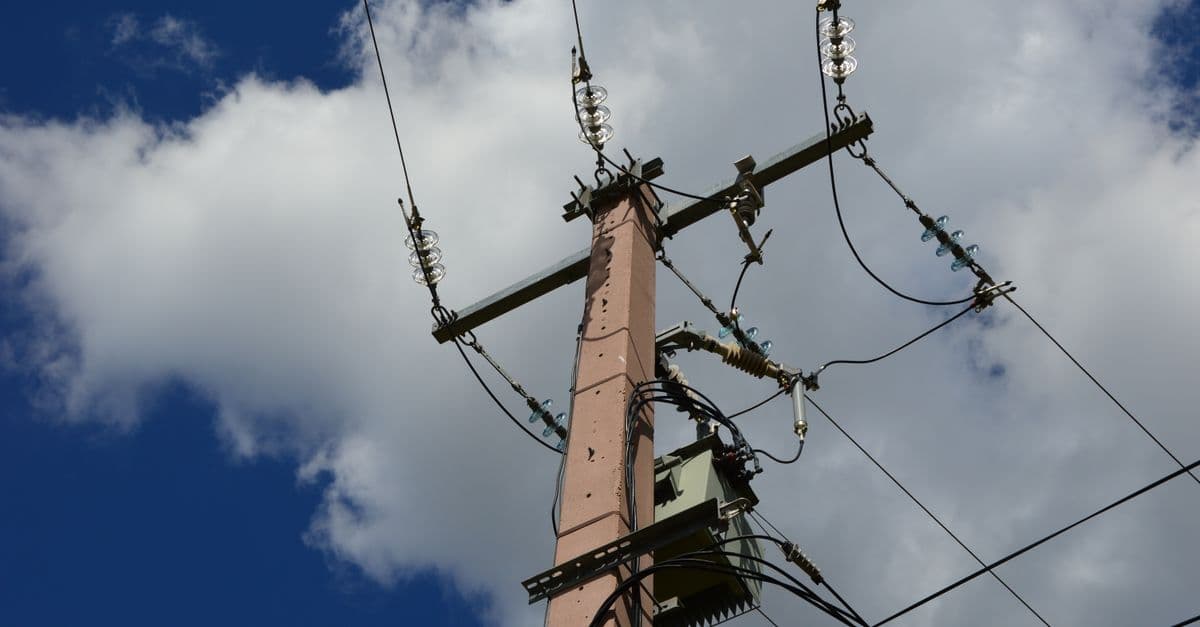
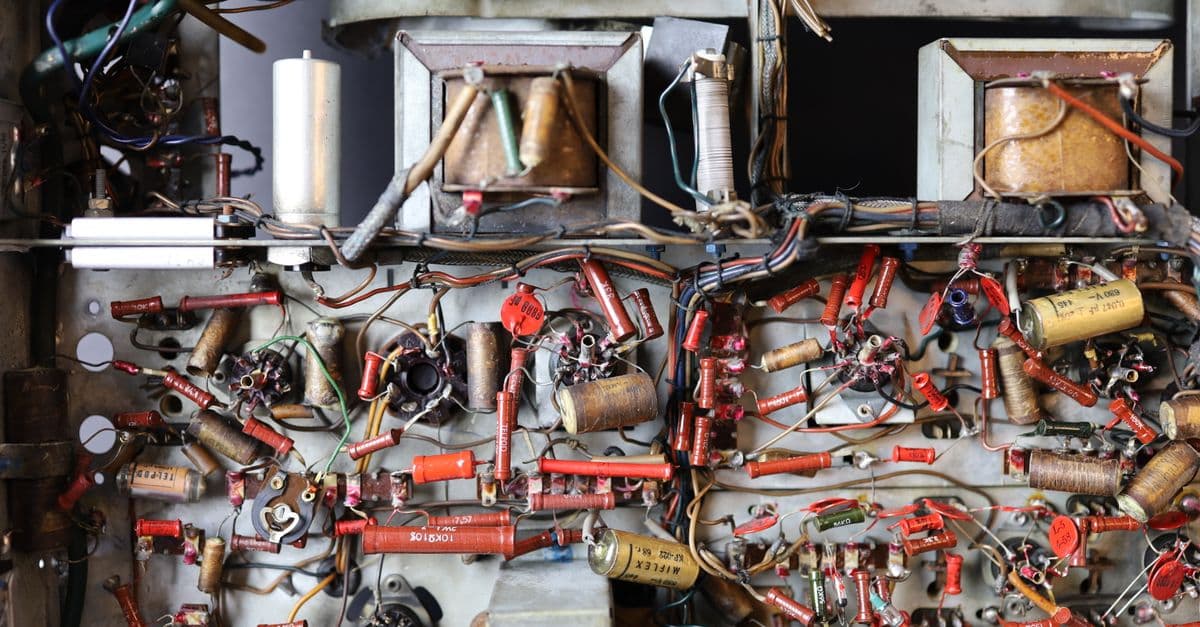
Photo: Ulrick Trappschuh / Pexels
On September 4, 1882, Thomas Edison's generating station at 257 Pearl Street in lower Manhattan began supplying electric current to customers in a district of about a quarter of a square mile. On that first day it lit roughly 400 lamps for fewer than 90 customers. Within a year it served about 513 customers and some 10,000 lamps. The IEEE, the world's largest engineering society, calls it "the forerunner of all central electric generating stations."
The world before that day ran on fire. For all of human history, artificial light meant burning something: oil, gas, wax or tallow. Factories ran on water wheels and steam engines. Electricity existed in laboratories and telegraph wires, but almost nobody bought it. Over the next half-century that changed completely. This article traces how it happened, from the first steady currents to the first power grids, and tries to separate the real history of Faraday, Edison, Tesla and Westinghouse from the myths that have grown around them.
Key Takeaways
- Volta's battery of 1800 produced the first steady electric current; Faraday's discovery of electromagnetic induction in 1831 made the electric generator possible.
- Edison's Pearl Street Station (1882) was the first central station selling electricity from one plant to many paying customers, using direct current (DC).
- Alternating current (AC) won the "war of the currents" mainly because transformers let it be sent long distances at high voltage and then stepped down for use.
- Westinghouse bought the rights to Tesla's AC motor patents in 1888, lit the 1893 Chicago World's Fair, and supplied the AC generators at Niagara Falls, which began sending power to Buffalo in 1896.
- As of 2024, about 655 million people still lacked electricity, 86% of them in sub-Saharan Africa, according to the UN.
Timeline at a glance
| Year | Event | Who |
|---|---|---|
| c. 600 BCE | Rubbed amber attracts light objects (traditionally credited) | Thales of Miletus |
| 1752 | Kite experiment links lightning to electricity | Benjamin Franklin |
| 1800 | Voltaic pile, the first battery | Alessandro Volta |
| 1820 | Electric current deflects a compass needle | Hans Christian Ørsted |
| 1831 | Electromagnetic induction discovered (29 August) | Michael Faraday |
| 1865 | Equations unifying electricity, magnetism and light | James Clerk Maxwell |
| 1879 | Long-lasting carbon-filament lamp demonstrated | Thomas Edison (with Joseph Swan working in parallel in Britain) |
| 1882 | Pearl Street Station opens (4 September) | Edison Electric Illuminating Company |
| 1886 | First demonstration AC distribution system in the US, Great Barrington, Massachusetts | William Stanley for Westinghouse |
| 1888 | Westinghouse acquires Tesla's AC motor patents | George Westinghouse, Nikola Tesla |
| 1893 | AC lighting at the World's Columbian Exposition, Chicago | Westinghouse |
| 1896 | Niagara Falls power reaches Buffalo | Niagara Falls Power Company, Westinghouse |
| 1935 | Rural Electrification Administration created | US federal government |
From Franklin to Faraday: The Scientific Foundations
Electricity had been known, if not understood, for millennia. Ancient Greek writers described how rubbed amber attracted small objects, and the observation is traditionally credited to Thales around 600 BCE. The English word "electricity" comes from elektron, the Greek word for amber, through the Latin electricus coined by William Gilbert in 1600.
Benjamin Franklin's famous kite experiment in 1752 helped show that lightning was electrical in nature. But eighteenth-century electricity was mostly static: sparks from friction machines and charges stored in Leyden jars, released in a single snap. It could be studied and played with but not put to steady work.
That changed in 1800. Building on Luigi Galvani's experiments with twitching frog legs, which Galvani had interpreted as "animal electricity", Alessandro Volta showed that the effect came from contact between different metals in a moist medium. His "voltaic pile" stacked alternating discs of zinc and copper or silver separated by brine-soaked cloth or card. For the first time, a device produced a steady, continuous current. Our article on the invention of the battery follows that line of technology to the lithium-ion cell. Within weeks of the announcement, chemists in London were using piles to split water into hydrogen and oxygen, and Humphry Davy went on to use large batteries to isolate potassium and sodium. But batteries were expensive and weak. Powering a city with chemical cells was never realistic.
The next clue came in 1820, when the Danish physicist Hans Christian Ørsted noticed that a current-carrying wire deflected a nearby compass needle. Ørsted's discovery showed that electricity and magnetism were linked. André-Marie Ampère quickly turned it into mathematics, describing the forces between current-carrying wires. If a current could create magnetism, scientists reasoned, perhaps magnetism could create a current.
Michael Faraday found out how. Faraday was the son of a blacksmith, left school early and was apprenticed to a London bookbinder. He educated himself by reading the books he bound, attended Humphry Davy's lectures, and talked his way into a job as Davy's laboratory assistant at the Royal Institution in 1813. By the 1820s he was one of the most gifted experimenters in Europe.
On 29 August 1831, in the basement laboratory of the Royal Institution, Faraday wound two separate coils of insulated wire around an iron ring. When he connected one coil to a battery, a galvanometer attached to the other coil twitched briefly; when he disconnected it, the needle twitched the other way. A current flowed only while the magnetism was changing. That was electromagnetic induction. The Royal Institution still displays the ring, which it describes as the first electric transformer.
Within weeks Faraday had built a copper disc that spun between the poles of a magnet and produced a continuous current: a primitive generator. The American physicist Joseph Henry found induction independently around the same time, but Faraday published first. The principle was simple and powerful: wherever you had motion, from falling water to a steam engine, you could make electricity. Thirty years later, James Clerk Maxwell turned Faraday's idea of "lines of force" into a set of equations that unified electricity, magnetism and light, which is the subject of our explainer on Maxwell's electromagnetic theory.
From Laboratory Toy to Machine: The Dynamo
Faraday's disc produced only a trickle of current. Turning induction into a practical machine took another four decades of engineering. Hippolyte Pixii built a hand-cranked generator in Paris in 1832. Through the middle of the century, generators with permanent magnets powered arc lamps in a few lighthouses. The big step came in the 1860s, when Werner von Siemens and others showed that a generator could use some of its own output to power electromagnets in place of permanent magnets. These "self-excited" dynamos could be made much more powerful. In the early 1870s, the Belgian engineer Zénobe Gramme built dynamos that produced smooth, steady current at a useful scale, and it was found that they could also run in reverse as motors.
By the late 1870s the pieces were in place: generators that could produce large amounts of current, arc lamps bright enough to light streets and large halls, and early electric motors. What was missing was a way to bring electricity into homes and offices, where arc lamps were far too harsh and bright.
Thomas Edison and the Invention of an Industry
Thomas Edison was already famous for the phonograph and for improvements to the telegraph and telephone when he turned to electric light in 1878. His larger contribution was organisational. His laboratory at Menlo Park, New Jersey, opened in 1876, employed teams of machinists, chemists and engineers working on several problems at once. Historians often describe it as an early model of the industrial research laboratory.
The incandescent lamp was not Edison's invention alone. Inventors had been building incandescent lights for decades, and in Britain Joseph Swan demonstrated a carbon-filament lamp at about the same time Edison did; the two later merged their British interests rather than fight in the courts. The challenge was to make a lamp that lasted, used little current and could be manufactured cheaply. Edison's team found that a thin, high-resistance carbon filament in a high vacuum met those conditions. A high-resistance lamp mattered because it let the system run at higher voltage and lower current, which in turn meant thinner, cheaper copper wires. Edison demonstrated his lighting system to the public at Menlo Park around New Year's Eve 1879. His team then spent months testing plant fibres for filaments and settled on carbonised bamboo for commercial lamps in the early 1880s. The full story of the lamp is in our article on the light bulb.
What Edison really built was a system. To sell light he needed dynamos, underground cables, junction boxes, fuses, switches, sockets and meters to bill customers. Many of these had to be designed from scratch. Pearl Street's six large "Jumbo" dynamos, each rated at about 100 kilowatts, were driven by steam engines fed by coal-fired boilers, and the current reached customers through copper conductors laid under the streets. The station ran until a fire in January 1890 damaged it; service was restored in eleven days, and the station was retired in 1895. Our article on the electric light grid looks at how Edison's design spread to other cities.
Edison's system used direct current, at around 110 volts. In a DC system, current flows in one direction only, and in the 1880s there was no practical way to change DC voltage. That was a serious limitation. The power lost as heat in a wire depends on the square of the current, so delivering a lot of power at low voltage means a lot of current and big losses unless you use very thick copper. A DC station could therefore only serve customers within a mile or so. Covering a city meant building many stations, each close to its customers.
The War of Currents: AC versus DC
Alternating current offered a way around that limit. AC voltage can be raised or lowered with a transformer, a device that works directly on Faraday's principle of induction. Power can be generated, stepped up to thousands of volts for transmission with low current and small losses, and then stepped down near the customer to a safe level.
The transformer had several inventors. Lucien Gaulard and John Dixon Gibbs demonstrated a "secondary generator" in Europe in the early 1880s. In 1884 and 1885, three engineers at the Ganz works in Budapest, Károly Zipernowsky, Ottó Bláthy and Miksa Déri, designed closed-core transformers connected in parallel, the arrangement that modern grids still use. George Westinghouse, an inventor and industrialist who had made his fortune with the railway air brake, bought the American rights to the Gaulard–Gibbs designs. His engineer William Stanley improved them, and in March 1886 Stanley lit shops and offices in Great Barrington, Massachusetts, with an AC system. Westinghouse's company soon began selling AC lighting systems across the United States.
AC had one big gap: there was no good AC motor. That is where Nikola Tesla came in. Born in 1856 in Smiljan, in what is now Croatia, to a Serbian family, Tesla arrived in New York in 1884 and worked for a time at Edison's machine works. He left in 1885. Tesla later said he quit after Edison's company refused to pay a promised bonus; the story comes from Tesla's own recollections and is hard to verify. In 1887 and 1888 Tesla filed patents on a polyphase AC system and an induction motor based on a rotating magnetic field, which needed no brushes or commutator. In July 1888, Westinghouse acquired the rights to Tesla's motor and system patents. (The Italian physicist Galileo Ferraris had independently described the rotating magnetic field around the same time.) For a fuller picture of the man, see our biography of Nikola Tesla.
Edison and his allies fought back, and this is where myth and history often blur. Edison sincerely regarded high-voltage AC as dangerous, and he said so publicly. In 1888, the electrical engineer Harold P. Brown, with help from Edison's laboratory, electrocuted dogs and other animals in public demonstrations to argue that AC was deadlier than DC. Brown was also involved in efforts to have New York adopt AC for its new electric chair, which was first used to execute William Kemmler in August 1890. Edison reportedly suggested that the condemned should be "Westinghoused".
The best-known story, however, is false as usually told. Topsy, an elephant at Coney Island's Luna Park, was electrocuted on 4 January 1903. The park's owners staged the killing, and the Edison Manufacturing Company filmed it, but Edison himself was not there and had no direct part in it. By 1903 the currents war had been over for about a decade. Topsy's death belongs to the history of animal cruelty and early cinema rather than to the AC–DC rivalry.
The commercial battle was decided by business as much as by publicity. Edison's companies merged with Thomson-Houston in 1892 to form General Electric, and Edison himself was soon pushed to the edges of the business. General Electric then started selling AC equipment too. The two great showcases came next.
For the World's Columbian Exposition in Chicago, which opened in May 1893, Westinghouse underbid General Electric, by roughly half according to most accounts. GE's estimate was driven up by the copper needed for its proposed distribution system. The fair used about 100,000 incandescent lamps and displayed a working polyphase AC system to millions of visitors. Our explainer on how electricity works covers the physics of AC that made the bid cheaper.
The second showcase was Niagara Falls. The Niagara Falls Power Company chose an AC system, and Westinghouse built the generators for the Edward Dean Adams power station, which began delivering power to local industry in 1895. In November 1896, a transmission line about 20 miles long began carrying power to Buffalo, New York. The US Energy Information Administration describes the plant as the world's first large hydroelectric plant. Niagara became the model for large generating stations built far from where the power is used, connected by high-voltage lines. Hydropower remains a major source today; see the countries with the most hydropower.
Why AC Won, and Why DC Came Back
The table below summarises the trade-offs as engineers saw them in the 1890s, and how they look now.
| Factor | DC in the 1880s–1890s | AC in the 1880s–1890s | Today |
|---|---|---|---|
| Changing voltage | No practical method | Simple, efficient transformers | Power electronics now convert DC voltages efficiently |
| Distance served | About a mile from the station | Tens of miles and more with high-voltage lines | AC for most grids; HVDC for very long or undersea links |
| Motors | Good DC motors existed | Tesla-type induction motors from 1888 | Induction motors dominate industry |
| Metering | Edison's electrolytic meter worked | Early AC meters lagged | Digital meters for both |
| Storage | Could charge batteries directly | Could not charge batteries directly | Batteries connect through inverters |
The deciding factor was distance. Large power stations are cheaper per unit of output than small ones, and the best energy sources, such as waterfalls and coalfields, are often far from cities. Only AC could connect the two economically in the 1890s.
DC never disappeared, though. Streetcars, subways and electrochemical industries used it for decades. And with modern semiconductor converters, high-voltage direct current (HVDC) is now the preferred technology for very long overhead lines and undersea cables, because over long distances it loses less power than AC. Inside your laptop, phone charger and solar panels, almost everything runs on DC. In a sense, both sides of the war won.
Myths and Misconceptions
"Edison invented the light bulb." He developed the first commercially successful system of incandescent lighting, including a long-lasting lamp, but many inventors had built incandescent lamps before him, and Swan's work in Britain ran in parallel.
"Tesla invented alternating current." AC generators existed before Tesla, and AC lighting was already in commercial use by 1886. Tesla's key contribution was a practical polyphase system and induction motor, which made AC useful for power as well as light.
"Edison electrocuted Topsy to discredit AC." As described above, Edison was not involved, and the event came long after the AC–DC battle.
"Edison was a villain and Tesla a misunderstood saint." Both were brilliant and flawed. Edison built a working industry and championed a technology that turned out to be a dead end for long-distance transmission. Tesla produced important inventions and some ideas, such as large-scale wireless power, that never worked as he hoped. Much of the commercial and engineering work belonged to people who are less famous, including Westinghouse, Stanley, the Ganz engineers and later Charles Steinmetz at General Electric.
Electrification: Rewiring Civilization
The decades from 1880 to 1940 saw the electrification of much of the industrialised world, though very unevenly. Cities came first. Electric streetcars transformed urban transport from the late 1880s. In factories, electric motors gradually replaced the steam engines that had driven machines through long systems of shafts and belts. Economic historians, notably Paul David, have argued that the full productivity benefit only arrived in the 1920s, once factories were redesigned around small motors on individual machines instead of one central engine.
Rural areas lagged far behind, because running lines to scattered farms cost more per customer than utilities could recover. When the US Rural Electrification Administration was created in 1935, only about one in ten American farms had electricity. The REA lent money at low interest to farmers' cooperatives that built their own lines. By the time the agency's work was done, more than nine in ten American farms were connected.
Electrification changed daily life in ways that are easy to forget. Electric light made evening work and study practical. Refrigeration reshaped food storage and retail. Electric pumps brought running water to homes far from mains. Telephone, radio and later television changed how people received news and entertainment. Today electricity also powers a growing share of transport and computing, from electric cars to data centres.
The job is not finished. According to the UN's 2025 tracking of Sustainable Development Goal 7, about 655 million people still lacked access to electricity in 2024, and 86% of them lived in sub-Saharan Africa. Global access had reached about 92%, but progress has slowed, and many of the people still unconnected live in remote or fragile areas where off-grid solar and mini-grids are often cheaper than extending the main grid.
FAQ
Q: Who really invented electricity? A: Nobody. Electricity is a natural phenomenon. What people invented were ways to produce, transmit and use it: Volta's battery in 1800, Faraday's discovery of induction in 1831, practical dynamos in the 1860s and 1870s, Edison's central station in 1882, and AC systems developed by Westinghouse, Stanley, Tesla and others in the late 1880s.
Q: What is the difference between AC and DC electricity? A: In direct current, charge flows in one direction. In alternating current, the direction reverses many times a second, 60 times in North America and 50 in most other places. AC voltage is easy to change with transformers, which made long-distance transmission practical in the 1890s.
Q: Why did Edison lose the war of the currents? A: In the 1880s there was no practical way to change DC voltage, so DC stations could only serve customers within about a mile. AC could be stepped up for long-distance transmission and stepped down for use, allowing large, distant power plants to serve whole regions.
Q: Did Edison really electrocute an elephant? A: No. Topsy was killed at Luna Park in 1903 by the park's owners. The Edison Manufacturing Company filmed the event, but Edison was not present, and the AC–DC rivalry had ended years earlier.
Q: What was Faraday's most important discovery? A: Electromagnetic induction, demonstrated on 29 August 1831, in which a changing magnetic field produces an electric current. Nearly every power-station generator and every transformer still works on that principle.
Q: How is electricity generated today? A: Mostly by spinning generators, driven by steam from burning fossil fuels or from nuclear fission, by falling water, or by wind. Solar panels are the main exception, turning light into DC electricity directly. All the spinning machines rely on Faraday's principle of induction.
Sources
- Engineering and Technology History Wiki (IEEE), Milestones: Pearl Street Station, 1882
- Royal Institution, Faraday's induction ring, August 1831
- US Energy Information Administration, Nikola Tesla (1856–1943)
- United Nations, Progress towards Goal 7
Read next:
Follow new articles
Add SciHub101 to your feed reader to see new science and technology stories.
About the Author
SciHub101 is an independent science and technology publication founded and edited by Buğra Sözeri, a software engineer and app developer based in Türkiye. AI tools assist with drafting and research. Source documentation in the existing archive is uneven, and articles are being reviewed and corrected. The Editorial Team byline identifies editorial responsibility; it does not certify specialist or independent human review. Where we compare products, anything built by our own team is labelled as such — see the editorial guidelines and About page for how corrections and disclosures work.
Related Articles
How Jet Engines Work: The Physics of Flight Power
A single GE90-115B turbofan is rated at 115,300 pounds-force of thrust. The physics behind it is a short chain of ideas: squeeze air, burn fuel in it, and let the hot gas do work.

AI Software Testing: How Machine Learning Finds Bugs Early
Machine learning now helps pick which tests to run, steer fuzzers toward crashes, draft unit tests, and flag anomalies in production. Here is what published results show, and where the tools still fail.
How Electricity Works — Electrons and Current
How electricity works: voltage, current, resistance, AC vs DC, power generation, the grid, and why birds don't get electrocuted.

History of Aviation: From the Wright Brothers to Today
On December 17, 1903, Orville Wright flew 120 feet in 12 seconds. In 2024, airlines carried about 4.7 billion passengers. Here is how the engineering got from one to the other.
How Satellites Orbit Earth: The Physics and Engineering Behind Eyes in the Sky
There are over 8,000 active satellites orbiting Earth right now. Here's how they stay up and what they do.
How the Transistor Changed Everything
Demonstrated at Bell Labs in December 1947, the transistor became the building block of every digital device on earth.