History of Aviation: From the Wright Brothers to Today
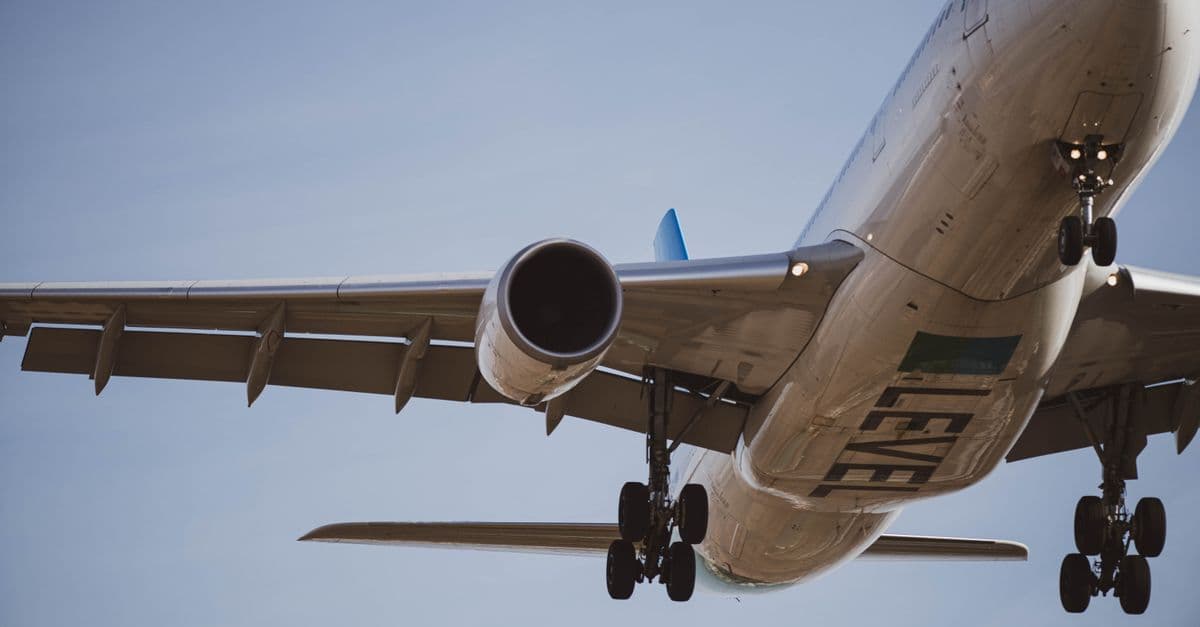
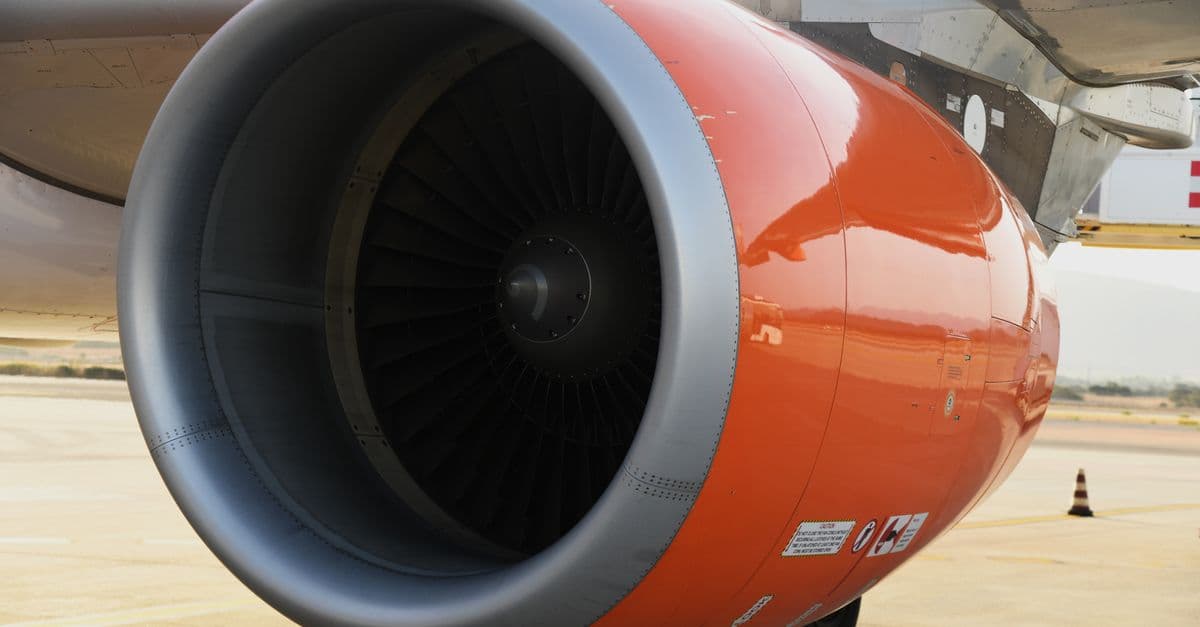
Photo: Walter Cunha / Pexels
The history of aviation compresses an unusual amount of change into one human lifetime. On December 17, 1903, Orville Wright flew 120 feet in 12 seconds over a North Carolina beach. In 2024, airlines carried about 4.7 billion passengers on scheduled services, according to the International Civil Aviation Organization (ICAO). The engineering decisions in between explain why the Wrights solved control before power, how war and the jet engine reset the limits, how the 747 and deregulation changed who flies, and what physics says about electric and hydrogen aircraft.
Key takeaways
- The Wright brothers won the race to powered flight because they treated flying as a control problem and built their own wind tunnel data, not because they had the most money or the biggest engine.
- Their 1903 Flyer made four flights in one day, the longest covering 852 feet in 59 seconds. By October 1905, a later Flyer stayed up for 38 minutes.
- War pushed aircraft from reconnaissance toy to industrial product, and the jet engine, first flown in 1939, removed the speed ceiling of the propeller.
- The Boeing 747 and the 1978 US Airline Deregulation Act helped turn air travel from a luxury into mass transport: about 310 million passengers in 1970, about 4.5 billion in 2019.
- Aviation produced about 2.5% of global CO2 emissions in 2019, and sustainable fuel was about 0.3% of jet fuel in 2024.
Why the Wright brothers succeeded where better-funded rivals failed
Wilbur and Orville Wright were not the first people to take flight seriously. Otto Lilienthal, a German engineer, made more than 2,000 glider flights beginning in 1891 and published Birdflight as the Basis of Aviation in 1889. His total time in the air added up to about five hours, and on August 9, 1896, a stall dropped his glider about 15 meters. He died the next day.
Samuel Langley, secretary of the Smithsonian Institution, had far more money. He received a $50,000 grant from the War Department in 1898 plus $20,000 from the Smithsonian to build a piloted "Aerodrome." Both of his launches over the Potomac River failed, on October 7 and December 8, 1903, and the pilot, Charles Manly, was pulled out of the water unhurt both times. The second crash came nine days before the Wrights flew.
The Wrights' central insight was that an aircraft needs to be steered, not just lifted. A useful analogy is the bicycle, which the brothers knew from their trade as cycle makers. Nobody builds a bicycle that balances by itself; the rider balances it continuously with small corrections. The Wrights decided a flying machine had to be the same, a vehicle the pilot controls actively in three directions at once.
Those three directions are still the vocabulary of every cockpit: pitch (nose up or down), roll (one wing tipping lower than the other), and yaw (the nose swinging left or right). The Wrights controlled pitch with a movable front elevator, roll by warping, or twisting, the wing tips, and yaw with a rudder at the rear. The 1902 glider gave them their first true turning control on October 9, 1902. Modern airliners replace wing warping with hinged flaps called ailerons, but the logic of three-axis control is unchanged.
The second advantage was data. Early gliding trials produced less lift than the published numbers predicted, so the brothers built a six-foot (1.8 m) wind tunnel in their shop and ran tests from October to December 1901. They tried about 200 wing models and examined 38 of them in detail. The problem, it turned out, was a long-trusted constant for air pressure, the Smeaton coefficient, listed as 0.0054; Wilbur's calculations put it closer to 0.0033. The lesson is not that earlier researchers were careless. It is that a single wrong constant, copied from table to table, can sink an entire design.
The Wrights' wind tunnel is also an early example of a method that dominates engineering now: test small, measure cheaply, and let the results overrule the prestigious reference book. For a modern look at why airflow is hard to predict even with computers, see why turbulence is hard to predict.
What actually happened on December 17, 1903
The 1903 Wright Flyer was small and light by any modern standard. Its wingspan was 40 feet 4 inches (12.3 m), and it weighed 605 pounds (274 kg) empty. The 12-horsepower, water-cooled, four-cylinder engine was built by Charlie Taylor, the Wrights' employee, because no suitable automobile engine was available. Two wooden propellers, each about 8.5 feet (2.6 m) long, turned in opposite directions through a chain drive.
Conditions at Kill Devil Hills, about four miles south of Kitty Hawk, helped. The wind averaged more than 20 mph (32 km/h) and supplied much of the airspeed needed for takeoff, which is why the first flight covered 120 feet over the ground in 12 seconds at only about 6.8 mph of ground speed. The brothers made four flights that morning, taking turns.
| Flight | Pilot | Duration | Distance over ground |
|---|---|---|---|
| 1 | Orville | 12 seconds | 120 ft (37 m) |
| 2 | Wilbur | 12 seconds | about 175 ft (53 m) |
| 3 | Orville | 15 seconds | about 200 ft (61 m) |
| 4 | Wilbur | 59 seconds | 852 ft (260 m) |
Source: Wikipedia articles on the Wright Flyer and the Wright brothers; the Library of Congress confirms flight one (120 feet, 12 seconds) and the 59-second longest flight.
The Library of Congress holds Orville's diary entry for the day, and it is one of the best primary documents in the history of technology. Even so, the flights were barely noticed at the time. The brothers still had to prove, over the next two years, that the machine was repeatable and not a lucky gust. For a closer look at the machine and its patent dispute, the site's article on the Wright brothers and controlled flight goes deeper.
A 32-year gap: The Douglas DC-3, the airliner that made flying commercially viable, made its first flight on December 17, 1935, exactly 32 years after Kitty Hawk.
From a field in Ohio to a practical airplane
The real test came in 1904 and 1905 at Huffman Prairie, a cow pasture near Dayton, Ohio. On September 20, 1904, the brothers flew a complete circle, covering 4,080 feet (1,244 m). On November 9, 1904, Wilbur flew about 2.75 miles (4.4 km) in 5 minutes 4 seconds.
The 1905 Wright Flyer III was the first aircraft anyone could call practical. Between September 26 and October 5, 1905, it made flights of 17 to 38 minutes, covering 11 to 24 miles. The last and longest, on October 5, 1905, was flown by Wilbur for 24.5 miles (39.4 km) in 38 minutes 3 seconds. A machine that can circle, bank, and land under control is a vehicle; a machine that hops in a straight line is an experiment.
Wilbur died on May 30, 1912, at age 45. Orville lived until January 30, 1948, long enough to read about jets and about Chuck Yeager exceeding the speed of sound the previous October. One person could witness the entire arc from a 12-second hop to supersonic flight.
Langley's reputation had one more chapter. In 1914, Glenn Curtiss modified the old Aerodrome and flew it a few hundred feet, partly to help him fight the Wrights' patent. The Smithsonian then displayed the machine as "the first man-carrying aeroplane in the history of the world capable of sustained free flight," a claim it withdrew only decades later.
How World War I turned aircraft into machines of industry
In August 1914, military aviation was tiny. Germany had about 230 army aircraft on paper and perhaps 180 usable ones; the Allies had about 184. Britain sent three squadrons with roughly 30 serviceable machines to France. Nobody expected the airplane to decide a battle.
The first uses were quiet ones. By March 1915, short-range reconnaissance squadrons had three main jobs: photographic mapping of enemy trenches, artillery spotting (telling gunners where their shells landed), and contact patrols that tracked advancing infantry. Aircraft proved so valuable as eyes that both sides immediately wanted to blind the other's.
That need produced the fighter. A machine gun is useless if the propeller is in the way, and a synchronization gear that timed each shot to pass between the blades solved it. The Fokker E.I entered service in July 1915 with such a gear, and on July 1, 1915, Kurt Wintgens used one to force down a French Morane-Saulnier. The period of German air superiority that followed, called the "Fokker Scourge," ended in 1916 when new British and French fighters arrived.
The deeper change was industrial. Warplanes needed engines, instruments, aluminum alloys, and trained mechanics at scale, and a generation of people learned to build and maintain aircraft. When peace came, the surplus pilots and the factory capacity went looking for peacetime work, which is how mail routes and the first airlines took off.
Lindbergh, the DC-3, and the pressurized cabin
The interwar years turned a stunt into a business. On May 20 and 21, 1927, Charles Lindbergh flew the Spirit of St. Louis solo from Roosevelt Field on Long Island to Le Bourget airfield outside Paris, about 3,610 miles (5,810 km) in roughly 33.5 hours. He won the $25,000 Orteig Prize, which had been offered for the first nonstop New York to Paris flight. Several famous and well-funded contenders had already tried, and the French pair Nungesser and Coli had vanished over the Atlantic in the same spring.
Lindbergh's flight showed that long ocean crossings were possible; it did not make them profitable. The aircraft that did was the Douglas DC-3, whose prototype first flew on December 17, 1935 and entered service with American Airlines in 1936. It carried 21 to 32 passengers at about 207 mph (333 km/h), and it was one of the first airliners able to make money carrying passengers alone, without mail subsidies. By 1939, about 90% of airline flights worldwide were flown by a DC-3 or one of its variants, and production reached 16,079 including military versions.
The next problem was altitude. Weather lives at lower levels, and thin air is smoother and faster to fly through, but people cannot breathe it. The Boeing 307 Stratoliner, which first flew on December 31, 1938, was the first airliner in revenue service with a pressurized cabin. Pan American began Stratoliner flights on July 4, 1940, cruising around 20,000 feet (6,100 m) at about 220 mph, and only 10 were built. Pressurization is now so standard that passengers only notice it when their ears pop. The site's explainer on why airplane windows are rounded shows how the same cabin pressure shapes the structure around you.
How a jet engine works, and who built the first one
A piston engine and a propeller work like a rower: each stroke pushes a lot of air backward slowly. A jet engine works more like a leaf blower pointed behind you. It scoops in air, compresses it, burns fuel in it, and lets the hot gas expand through a turbine and out of a nozzle. The turbine takes just enough energy from the gas to run the compressor, and the exhaust leaving at high speed pushes the aircraft the other way, as Newton's third law says it must.
The practical advantage is that a jet has few reciprocating parts and keeps working at altitudes where propellers lose their grip on thin air. The speed advantage matters just as much. A propeller's tips move faster than the aircraft, so they approach the speed of sound first, and the blades lose efficiency; a jet has no propeller to limit it. For a full treatment of the machinery, see how jet engines work.
Two engineers reached the idea independently. Frank Whittle, then a Royal Air Force student at Cranwell, filed a patent for a jet engine in January 1930. The patent lapsed in January 1935 because the Air Ministry would not pay the £5 renewal fee. Power Jets Ltd was incorporated in March 1936, and Whittle's first engine began running on April 12, 1937.
In Germany, Hans von Ohain developed an engine for Heinkel. On August 27, 1939, test pilot Erich Warsitz flew the Heinkel He 178, powered by von Ohain's HeS 3 engine of about 4.41 kN of thrust, reaching a top speed of 598 km/h (372 mph). Whittle's engine flew in the Gloster E.28/39, which took off from RAF Cranwell on May 15, 1941. For the longer story of the engine itself, see the site's article on the jet engine.
The Comet's fatal flaw and the 707 template
The first jet airliner arrived early and failed instructively. The de Havilland Comet 1 first flew on July 27, 1949, and on May 2, 1952, BOAC began the first passenger jet service, from London to Johannesburg. BOAC's first Comets had 36 reclining seats and about 30,000 passengers in their first year of service.
Then, in 1954, two aircraft broke apart in flight. BOAC Flight 781 came apart near Elba on January 10, 1954, killing all 35 on board, and a chartered South African Airways Comet fell near Naples on April 8, 1954, killing all 21. The inquiry into the Elba crash attributed the failure to metal fatigue: the pressurized skin was cycled again and again, and cracks began near a cut-out for an antenna. The popular story that square windows were to blame is a myth; the cracks started elsewhere.
A paperclip is the right mental model for fatigue. Bend it once and nothing happens, but bend it back and forth and it snaps without ever having been loaded beyond what it can hold. Every pressurized flight flexes the fuselage the same way, which is why modern airliners are designed with rounded windows, crack-stopping structure, and strict inspection schedules.
Boeing's answer was the 707. Its prototype, the 367-80 or "Dash 80," flew on July 15, 1954. Pan Am flew its first commercial 707 service from New York to Paris, with a fuel stop in Gander, Newfoundland, on October 26, 1958. The 707 carried up to 189 passengers in its first version and cruised at roughly 885 to 1,000 km/h depending on variant. A total of 1,010 were built, including 154 of the shorter-range 720 version.
The Comet 4, for its part, started the first regular jet service across the Atlantic on October 4, 1958, from London to New York, only weeks before Pan Am's 707. The template that survives is the 707's: swept wings, engines slung under the wings, and a pressurized cabin flying near 10,000 meters. The site's article on the jet airliner tells the Comet story in more detail.
Breaking the sound barrier, and the Concorde detour
At sea level in standard air, sound travels at about 1,225 km/h (761 mph), a speed called Mach 1. As an aircraft approaches that speed, air can no longer move out of the way smoothly. It piles up into shock waves, drag rises sharply, and control surfaces behave unpredictably. A boat pushing against its own bow wave is a fair picture.
On October 14, 1947, Captain Chuck Yeager flew the rocket-powered Bell X-1, named Glamorous Glennis for his wife, to Mach 1.06 over the Mojave Desert after being dropped from the bomb bay of a B-29. At that altitude the speed of sound is lower than at sea level, so Mach 1.06 corresponded to about 700 mph (1,100 km/h). Orville Wright was still alive.
Supersonic passenger flight arrived with Concorde. It first flew on March 2, 1969, and entered service on January 21, 1976 with both Air France and British Airways. It cruised at an average of Mach 2.02 (about 2,150 km/h), and a supersonic transatlantic crossing took just under 3.5 hours, against about 7 to 8 hours for a subsonic jet. Capacity was 92 to 128 passengers.
Concorde's economics and acoustics were the problem. At full load it managed about 15.8 passenger-miles per US gallon of fuel, compared with 33.3 for the Boeing 707 and 46.4 for the 747. Sonic booms kept it over the ocean, and several countries restricted its operation. After the crash of Air France Flight 4590 on July 25, 2000, and the drop in air travel after the September 11 attacks, rising maintenance costs and low passenger numbers ended the program. The last commercial flight was on October 24, 2003, and only 20 aircraft were ever built.
Why the 747 changed who gets to fly
Concorde chased speed, and the Boeing 747 chased cost. Pan Am's president, Juan Trippe, asked Boeing for a jet about 2.5 times the size of the 707, with 30% lower cost per passenger-distance. Joe Sutter led the design team. Pan Am's April 1966 order for 25 aircraft was valued at $525 million, and the whole program cost about $1 billion in 1968.
The scale of the bet shows in the logistics. Boeing bought the Everett, Washington, site in June 1966 and rolled out the first 747 on September 30, 1968. The aircraft made its first flight on February 9, 1969, with test pilots Jack Waddell and Brien Wygle at the controls, and Pan Am began service from New York to London on January 22, 1970. A typical three-class layout seated about 366 passengers. Boeing built 1,574 in all, and the last was delivered on January 31, 2023, to Atlas Air.
The economics of a 747 were simple: a bus is cheaper per rider than a taxi. Fill the seats, spread fuel and crew costs across more people, and the price per seat falls. But the technology alone did not make flying cheap. In the United States, the Airline Deregulation Act of 1978, signed by President Jimmy Carter on October 24, 1978, gradually eliminated the Civil Aeronautics Board's control over fares, routes, and market entry. A 1996 Government Accountability Office report found the average fare per passenger mile was about 9% lower in 1994 than in 1979, and inflation-adjusted paid fares fell roughly 30% between 1976 and 1990.
The price of that competition was instability. Eight major carriers, including Eastern, Pan Am, and TWA, plus more than 100 smaller airlines, went bankrupt or were liquidated between 1978 and 2001. Flying got cheaper and more crowded at the same time, and the hub-and-spoke network of connecting flights grew.
The result is visible in the global passenger data from the World Bank, compiled from ICAO figures.
| Year | Passengers carried worldwide |
|---|---|
| 1970 | 310 million |
| 1980 | 642 million |
| 1990 | 1.02 billion |
| 2000 | 1.67 billion |
| 2010 | 2.67 billion |
| 2019 | 4.46 billion |
| 2020 | 1.77 billion |
| 2023 | 4.27 billion |
Source: World Bank / ICAO series, via Our World in Data. Each passenger on a flight is counted once, by the carrier's country of registration.
Between 1970 and 2019 traffic grew about 14-fold (calculated from the table). The 2020 pandemic collapse cut it by about 60%, and by 2023 it was back within about 4% of the 2019 level. ICAO's own preliminary 2024 figure for scheduled services is about 4.7 billion passengers, up 7.9% from 2023, from about 37.4 million departures. The two series use different definitions, so they should not be merged into a single line.
Wide-bodies, composites, and the jet that was too big
Three later aircraft show where the 747's logic led and where it stopped. The Airbus A380 first flew on April 27, 2005, and entered service with Singapore Airlines on October 25, 2007. It was certified for up to 853 passengers in an all-economy layout, and 525 in a typical three-class layout. Only 254 were built, including three test aircraft, and the last was delivered to Emirates on December 16, 2021. Airlines decided that two engines on a smaller aircraft were cheaper to run than four engines on a giant, and that most routes did not need 500 seats in one aircraft.
The Boeing 787 Dreamliner took the opposite approach: a mid-size twin built largely from composite, a carbon-fiber material that is light and strong. Boeing lists the airframe as about 50% composite by weight. It first flew on December 15, 2009, and entered commercial service with All Nippon Airways on October 26, 2011, about three years late after supply-chain and other delays. Boeing said it would burn roughly 20% less fuel than the 767, with about 40% of that gain coming from the engines.
The engines are the quiet story. A turbofan has a large fan at the front that pushes most of its air around the engine core rather than through it. The ratio of bypass air to core air is the bypass ratio. A higher ratio moves more air at lower speed, which saves fuel and cuts noise, in the same way that long, slow oar strokes waste less energy than frantic splashing. The Rolls-Royce Conway, with a bypass ratio of just 0.3, was the first production turbofan and flew on the Boeing 707. The Pratt & Whitney PW1000G, in service since 2016, reaches 12.5 to 1.
| Aircraft | First service | Typical capacity | Cruise speed | Note |
|---|---|---|---|---|
| Wright Flyer (1903) | Dec 17, 1903 | 1 pilot | about 6.8 mph average ground speed on first flight | 12 hp engine |
| Douglas DC-3 | 1936 | 21 to 32 | 207 mph | Profitable without mail subsidies |
| Boeing 707 | Oct 1958 (Pan Am) | up to 189 | about 885 to 1,000 km/h | First mass jet template |
| Concorde | Jan 21, 1976 | 92 to 128 | Mach 2.02 | 20 built |
| Boeing 747 | Jan 22, 1970 | about 366 (3 class) | n/a | 1,574 built |
| Airbus A380 | Oct 25, 2007 | 525 (3 class), 853 max | n/a | 254 built |
Why flying got so much safer
Commercial aviation is often called safe, and the numbers support the claim, though the shape of the improvement deserves care. According to the Wikipedia summary of aviation safety data, fatal accidents per million flights fell from 6.35 in 1970 to 0.51 in 2019, roughly a 12-fold drop. Fatalities per trillion revenue passenger-kilometers fell from 3,218 to 40, about 81-fold.
The most recent ICAO figure is a reminder that the trend is not a straight line. ICAO reported 2.56 accidents per million scheduled departures in 2024, up from 1.87 in 2023. That figure counts all accidents under ICAO's definition, not only fatal ones, so it cannot be compared directly with the fatal-accident series above.
The Comet inquiry is the founding example of how that improvement happens. Investigators examine wreckage to find the cause, regulators make the fix mandatory, and manufacturers redesign, so each failure becomes a rule that protects every later aircraft. Navigation is part of the same story, and satellite systems such as the one described in the site's guide to how GPS works are one of the tools that replaced guesswork with measured position.
Comparisons with cars depend on the denominator. The same source reports that in the United Kingdom between 1990 and 2000, air travel had about 0.05 deaths per billion kilometers against 3.1 for private cars. Per journey, however, air travel scored 117 deaths per billion journeys against 40 for cars, because a flight is a long journey. Neither number says flying is dangerous, but "safest form of travel" depends on whether you count by distance, time, or trips.
Why planes cruise at 35,000 feet
At an altitude of 11 km (about 36,000 feet), the International Standard Atmosphere gives a temperature of about -56.5 degrees Celsius and an air density of 0.3639 kg/m³, against 1.225 kg/m³ at sea level. That is roughly 30% of sea-level density. Drag falls with density, so the aircraft needs less thrust to hold the same speed, and a jet engine runs efficiently in cold, thin air. Most airliners cruise between about 10 and 12 km.
How does a wing generate lift in the first place? NASA Glenn explains lift as a reaction to the wing turning the airflow: the wing deflects air downward, and the air pushes the wing up, following Newton's third law. Both the upper and lower surfaces help turn the flow. NASA also cautions that many popular explanations are misleading, including the familiar claim that air must "race" over the top surface to meet the air below. An airplane flies because the wing, set at an angle to the oncoming air, redirects a large mass of air downward, and the pressure differences are the way that force is delivered to the wing.
For readers who want a deeper treatment of the instruments and sensors that keep that wing flying level, see the site's explainer on how gyroscopes resist falling over, which covers the physics behind attitude indicators.
Where aviation goes from here
The hardest problem is no longer speed or size. It is emissions. Our World in Data reports that aviation produced about 2.5% of global CO2 emissions in 2019, or about 1 gigatonne of CO2 a year, up from about 0.5 gigatonnes in 1990. About 10% of the world's population flies in a typical year. There has been real progress per passenger: energy use fell from 2.9 MJ per passenger-kilometer in 1990 to 1.3 MJ in 2019, and CO2 emitted fell from 357 grams to 157 grams per passenger-kilometer. But the carbon content of jet fuel itself has not changed.
Three technical answers are on the table, and each has a catch.
- Sustainable aviation fuel (SAF). It works in existing engines, but IATA estimated that production in 2024 was 1 million tonnes, about 0.3% of global jet fuel, and projected 2.1 million tonnes, about 0.7%, for 2025.
- Batteries. In 2018, lithium-ion packs were estimated at about 160 Wh/kg against 12,500 Wh/kg for aviation fuel, and a regional airliner would need roughly 500 Wh/kg. The Pipistrel Velis Electro, a two-seat trainer, received EASA type certification on June 10, 2020. Large electric airliners remain far off, and the site's explainer on how lithium-ion batteries work explains why the energy density gap is stubborn.
- Hydrogen. On February 18, 2025, Airbus said it would push back its ZEROe hydrogen aircraft timeline, originally 2035, by up to 10 years, to as late as 2040 to 2045. The company blamed slower than expected development of hydrogen infrastructure, production, and regulation, and canceled a planned fuel-cell flight test on an A380. The related question of how the fuel would be produced is covered in how green hydrogen is made.
Supersonic passenger flight is also being retried. Boom Technology's XB-1 demonstrator first flew in March 2024 and broke the sound barrier in January 2025. The planned Overture airliner is designed for Mach 1.7 with 60 to 80 passengers. Boom's stated goal is to introduce it around 2029, and its order book totals 35 orders and about 95 options as of the Wikipedia summary, which is a sign of interest rather than a certified aircraft. The history of Concorde suggests the real test is whether the economics and the noise rules work, not whether the aircraft can fly fast.
What people get wrong about aviation history
The Wrights did not invent the airplane in isolation. They built on Lilienthal's gliders and on published research, and their breakthrough was combining control, a tested wing, a custom engine, and propellers that behaved as rotating wings. The idea that two bicycle mechanics out-invented a government is partly true, but they also out-measured it.
The Comet did not crash because of square windows. The failure was metal fatigue, with cracks starting at cut-outs for an antenna. Rounded windows are good practice, but they were not what fixed the problem.
Concorde did not fail because it was too fast. It failed because the fuel burn per passenger, the noise, the limited routes, and a small market made it expensive to operate, and then a fatal crash and a travel slump finished the job.
Jet engines are not "noisier propellers." They work on a different principle, and the modern turbofan moves most of its air around the core, which is why it is quieter and more efficient than the early turbojets.
Safer does not mean risk free. Aviation's improvement is real and large, but ICAO's 2024 accident rate rose from 2023, and the data are noisy from year to year because serious accidents are rare events.
Frequently asked questions
Q: Who made the first powered airplane flight? A: Orville and Wilbur Wright made the first sustained, controlled, powered flights on December 17, 1903, at Kill Devil Hills near Kitty Hawk, North Carolina. Orville flew first for 12 seconds and 120 feet. Wilbur flew the fourth and longest flight that day, 852 feet in 59 seconds.
Q: Why did the Wright brothers succeed when Samuel Langley failed? A: The Wrights treated flight as a control problem, tested wing shapes in their own wind tunnel, and learned to fly gliders before adding an engine. Langley, who had about $70,000 in combined War Department and Smithsonian funding, built a powerful machine that crashed on both launches, on October 7 and December 8, 1903, because it lacked a workable control system.
Q: When was the first jet-powered flight? A: The Heinkel He 178 made the first jet-powered flight on August 27, 1939, with Erich Warsitz at the controls and a Hans von Ohain HeS 3 engine. Britain's first jet flight, the Gloster E.28/39 powered by Frank Whittle's engine, followed on May 15, 1941.
Q: What made the Boeing 747 so important? A: The 747 was designed to be about 2.5 times the size of the 707 and cost 30% less per passenger-distance. It entered service with Pan Am on January 22, 1970. Larger aircraft spread fuel and crew costs over more seats, which helped lower fares; US deregulation in 1978 then added competition.
Q: Why did Concorde stop flying? A: Concorde's last commercial flight was on October 24, 2003. The reasons given include rising maintenance costs, low passenger numbers after the crash of Air France Flight 4590 on July 25, 2000, and the fall in air travel after the September 11 attacks. Its fuel burn per passenger was also far higher than that of subsonic jets.
Q: How much of global CO2 comes from aviation? A: Our World in Data reports that aviation accounted for about 2.5% of global CO2 emissions in 2019, or about 1 gigatonne. Efficiency per passenger-kilometer more than halved between 1990 and 2019, but total emissions grew because traffic grew faster. Warming effects from contrails and other non-CO2 factors add to the CO2 figure.
Q: Will electric or hydrogen airliners replace jets soon? A: Not in the near term. Batteries hold far less energy per kilogram than jet fuel, and Airbus pushed its hydrogen airliner timeline back by up to 10 years in February 2025. Sustainable aviation fuel, which works in current engines, is expected to carry most of the near-term effort, though it was only about 0.3% of jet fuel in 2024.
The takeaway
Aviation did not advance because of one great invention. It advanced because each generation fixed the specific failure of the one before. The Wrights fixed control, the DC-3 fixed economics, the Stratoliner fixed altitude, the Comet's investigators fixed fatigue, and the 747 and deregulation fixed price. That pattern, an accident or a bottleneck that turns into a design rule, is a large part of why fatal accidents per million flights fell about 12-fold between 1970 and 2019, and why air travel grew about 14-fold over the same period.
The same pattern points to what is left. The unsolved problem is energy: jet fuel carries a vast amount of energy per kilogram, and everything that might replace it, from batteries to hydrogen to sustainable fuels, either weighs more, costs more, or does not exist at scale. The next chapter of aviation history will be written by chemists and grid engineers as much as aerodynamicists.
Sources
- Library of Congress: This Day in History, Wright brothers take flight
- Wright brothers (Wikipedia)
- Wright Flyer (Wikipedia)
- Samuel Pierpont Langley (Wikipedia)
- Otto Lilienthal (Wikipedia)
- Aviation in World War I (Wikipedia)
- Charles Lindbergh (Wikipedia)
- Douglas DC-3 (Wikipedia)
- Boeing 307 Stratoliner (Wikipedia)
- Frank Whittle (Wikipedia)
- Heinkel He 178 (Wikipedia)
- De Havilland Comet (Wikipedia)
- Boeing 707 (Wikipedia)
- Bell X-1 (Wikipedia)
- Concorde (Wikipedia)
- Boeing 747 (Wikipedia)
- Airline Deregulation Act (Wikipedia)
- Airbus A380 (Wikipedia)
- Boeing 787 Dreamliner (Wikipedia)
- Turbofan (Wikipedia)
- Aviation safety (Wikipedia)
- International Standard Atmosphere (Wikipedia)
- Boom Overture (Wikipedia)
- Electric aircraft (Wikipedia)
- ICAO: World air transport in 2024
- Our World in Data: Climate change and flying
- Our World in Data: Air transport, passengers carried
- IATA: Sustainable aviation fuel production estimates (December 2024)
- NASA Glenn: How lift is generated
- CompositesWorld: Airbus pushes ZEROe aircraft project timeline
Read next:
Follow new articles
Add SciHub101 to your feed reader to see new science and technology stories.
About the Author
SciHub101 is an independent science and technology publication founded and edited by Buğra Sözeri, a software engineer and app developer based in Türkiye. AI tools assist with drafting and research. Source documentation in the existing archive is uneven, and articles are being reviewed and corrected. The Editorial Team byline identifies editorial responsibility; it does not certify specialist or independent human review. Where we compare products, anything built by our own team is labelled as such — see the editorial guidelines and About page for how corrections and disclosures work.
Related Articles

Reinforcement Learning for Robotics: Teaching Machines to Move Through the World
Robots now learn walking, balancing, and some manipulation by trial and error, mostly in simulation. Here is how the training works, what has reached real hardware, and what still breaks.

Countries with the Most Data Centers (2025 Ranked)
The United States hosts more data centers than any other country by every count, but the totals vary from about 3,800 to 5,400 depending on the database. Here is the ranking, why facility counts and megawatts tell different stories, and what the IEA says about data centre electricity.
How the Transistor Changed Everything
Demonstrated at Bell Labs in December 1947, the transistor became the building block of every digital device on earth.
History of Electricity: Faraday, Tesla, Edison, and the Force That Powers the World
Electricity was a scientific curiosity in 1800. Within 100 years it was lighting cities and running factories.
How Jet Engines Work: The Physics of Flight Power
A single GE90-115B turbofan is rated at 115,300 pounds-force of thrust. The physics behind it is a short chain of ideas: squeeze air, burn fuel in it, and let the hot gas do work.
Airplane Invention: The Wright Brothers and Controlled Flight
The Wright brothers solved controlled powered flight, but gliders, engines, wind tunnels, and earlier aviation pioneers all mattered.