Airplane Invention: The Wright Brothers and Controlled Flight
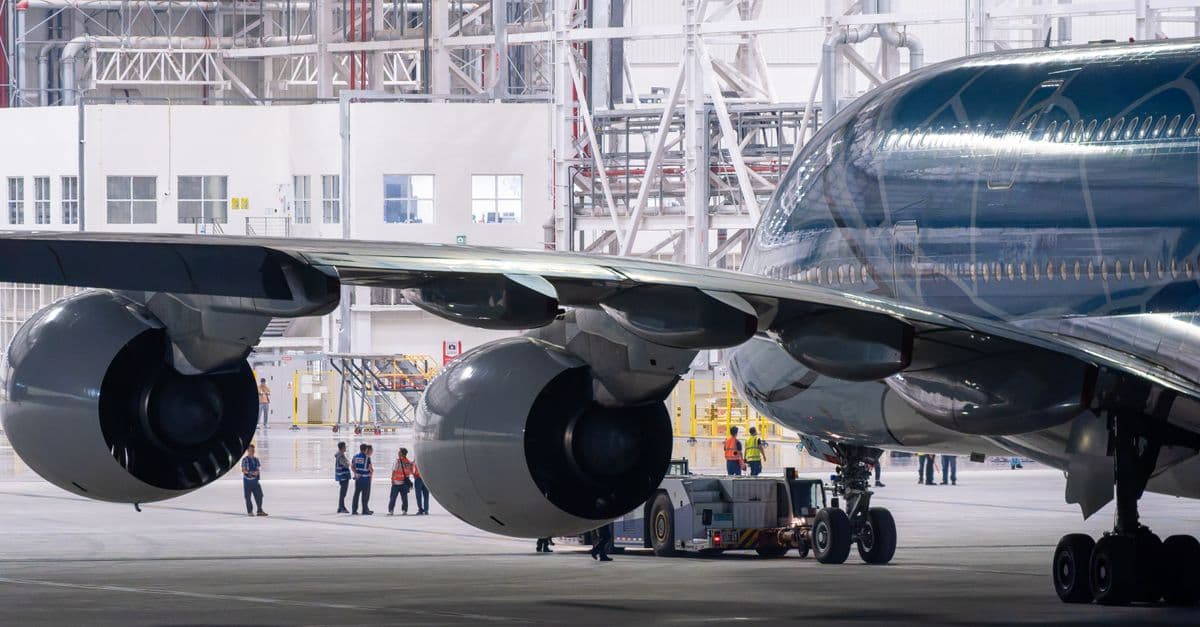
Photo: Planespotter Geneva / Pexels
On December 17, 1903, on the wind-scoured dunes of Kill Devil Hills near Kitty Hawk, North Carolina, Orville Wright lay flat on the lower wing of a spruce-and-muslin biplane and flew 36.6 meters (120 feet) in 12 seconds. It looked like a modest hop. It was the answer to a problem that had defeated every serious inventor for over a century: how to keep a heavier-than-air machine in the sky and steer it once it got there. This guide walks through why that problem was so hard, how two bicycle-shop owners from Dayton, Ohio solved it, and why the myth of a single lightning-bolt breakthrough hides the real story.
The problem nobody else had actually solved
By 1903, powered flight was not a fringe idea. Steam and gasoline engines existed. Kites, gliders, and even a few crude powered contraptions had already left the ground. What was missing was not power. It was control.
Samuel Langley, the Secretary of the Smithsonian Institution and one of the best-funded aeronautical researchers in the United States, had spent nearly $50,000 in government money on his piloted "Aerodrome." On October 7, 1903, it was launched from a catapult on a houseboat on the Potomac River near Quantico, Virginia, and "fell like a handful of mortar" straight into the water, according to a reporter who watched it happen. A second attempt on December 8, 1903, just nine days before Kitty Hawk, failed the same way (Boundary Stones / WETA, Smithsonian Magazine). Langley had an engine powerful enough to fly. He had no way to keep the airplane stable and steerable once it left the launch rail.
That is the piece almost every popular retelling skips. An airplane needs three separate things working at once: enough lift to leave the ground, enough thrust to keep moving forward against drag, and enough control to stay upright and change direction on purpose. Getting one or two of those right without the third does not produce a flying machine. It produces a very expensive crash, which is exactly what happened to Langley twice in the same autumn the Wrights got it right.
Why the Wrights approached it like engineers, not daredevils
Wilbur and Orville Wright ran a bicycle sales and repair shop in Dayton, Ohio. That background mattered more than it sounds. Bicycles taught them that balancing a vehicle in motion is an active, moment-to-moment skill, not a fixed property of a well-shaped object. A bicycle rider does not sit passively on a stable machine; the rider constantly makes tiny corrections to stay upright. The Wrights carried that intuition directly into aviation: an airplane, they reasoned, should be flown the same way, with a pilot actively correcting instability in real time, rather than built to be so inherently stable that it needed no pilot input at all.
That is one of the two analogies that explains the whole invention. The second is the wind tunnel itself. Think of a wind tunnel as a laboratory that lets you run a thousand small, cheap, non-fatal experiments before you run one large, expensive, and potentially fatal one. Instead of building and crashing a dozen full-size gliders to find out which wing shape produced the most lift, the Wrights could test miniature wings inside a wooden box and read the results off a balance in an afternoon.
What made 1900–1902 the real breakthrough years
Between 1900 and 1902, the Wrights built and flew three full-scale gliders at Kitty Hawk, testing lift, control, and structure without an engine at all. In the autumn of 1901, frustrated that their gliders were underperforming the published lift tables of the era, they built a six-foot wooden wind tunnel and ran more than 200 systematic tests on miniature wing shapes of their own design. What they found was that a widely used constant in the standard lift equation, known as the Smeaton coefficient, was off by nearly a factor of two, and the airfoil data pioneers like Lilienthal had published was unreliable (MiGFlug). They threw out other people's numbers and built their own aerodynamic database from scratch.
How the 1902 glider solved control, a year before the engine mattered
Historians increasingly treat 1902, not 1903, as the year the airplane was actually invented. The 1903 Flyer added an engine and propellers to a control system the Wrights had already proven on their 1902 glider.
That glider introduced what aviation still calls three-axis control: roll, pitch, and yaw, each governed independently.
| Axis | What it controls | Wright brothers' mechanism |
|---|---|---|
| Roll | Tipping side to side | Wing warping — cables twisted the wingtips in opposite directions to unbalance lift on the two wings |
| Pitch | Nose up or down | A forward elevator, controlled by hand, to raise or lower the nose |
| Yaw | Nose swinging left or right | A movable rear rudder, later linked to the wing-warping cables to counteract adverse yaw |
Table: The three-axis control system introduced on the Wright brothers' 1902 glider, per the Smithsonian's Peter Jakab and NASA Glenn Research Center.
Wing warping worked like flexing the trailing edge of a bird's wingtip: twisting one wingtip down and the other up changed the lift on each side, tipping the aircraft into a controlled bank rather than letting a gust do it involuntarily. NASA's Glenn Research Center still cites the 1902 glider's control system as the conceptual ancestor of the ailerons on every modern airplane wing (NASA GRC). Peter Jakab, a longtime Smithsonian aviation curator, has argued that "the perfection of the 1902 glider essentially signified the invention of the airplane," with the engine added the following year mostly a matter of installation, not invention (The Vintage News).
Why didn't the Wrights just buy an engine?
No engine manufacturer of the era made anything light enough. The Wrights needed roughly 8 to 12 horsepower (6 to 9 kilowatts) in a package light enough for a glider-class airframe to lift, so no commercial engine met the requirement, and they had to design and build their own (Holley Motor Life).
The engine and propeller: the least famous, most under-appreciated parts
Charlie Taylor, the Wright brothers' one full-time bicycle-shop machinist, designed and hand-built the 1903 Flyer's engine in about six weeks. It was a four-cylinder, four-stroke gasoline engine with an aluminum-copper alloy crankcase, cast locally, a choice that made it light enough to fly; aluminum engine components were essentially unheard of in 1903. The finished engine weighed about 180 pounds (82 kilograms) and produced a steady 12 horsepower (9 kilowatts) at 1,025 rpm once warmed up, occasionally reaching nearly 16 horsepower (12 kilowatts) (Mac's Motor City Garage, Simanaitis Says).
The propellers mattered just as much and get far less credit. No engineering literature at the time explained how to design an efficient aircraft propeller, so the Wrights derived the theory themselves, treating each propeller blade as a rotating, twisted wing moving along a helical path through the air, the same aerodynamic logic they had already worked out for the wings in their wind tunnel. Their finished propellers converted engine power into thrust at roughly 66 percent efficiency, high enough to get the Flyer off the ground on its first attempt (Wright Experience / AIAA technical paper).
That is the second mandatory analogy worth holding onto: a propeller is not a fan pushing air backward the way a household fan pushes air forward. It behaves like a wing that has been twisted into a corkscrew and spun in place, generating a forward-pointing lift force instead of an upward one. The Wrights understood this before almost anyone else building flying machines did, and it is a large part of why their engine, despite modest horsepower, produced enough usable thrust to fly.
Why December 17, 1903 still gets credited as "the" invention
If the control system was solved in 1902 and the engine was just an engineering exercise built on known aerodynamics, why does December 17, 1903 remain the date every textbook cites? Because that day combined lift, thrust, and control in one machine and proved it publicly and repeatedly, not once by luck but four times in a row.
The Wrights made four flights that day. Orville's first covered 36.6 meters (120 feet) in 12 seconds. The fourth and longest, piloted by Wilbur, covered 255.6 meters (852 feet) and stayed airborne for 59 seconds (National Air and Space Museum, Smithsonian). A single flight can be an accident of wind and luck. Four flights, on the same day, with two different pilots, at increasing distances, is evidence of a controllable, repeatable system. That repeatability, not the first 12 seconds alone, is what separates the Wright Flyer from Langley's Aerodrome and every other failed attempt of the era.
The part almost nobody tells you: the Wright brothers were also secretive, and it slowed everyone down
Here is where the popular story gets uncomfortably real. After 1903, the Wrights did not publicize their work. Fearing that competitors and foreign governments would steal an unpatented design, they largely stopped flying in public between 1905 and 1908, working instead to secure patent protection and a military or commercial buyer. Their U.S. patent for a "Flying Machine," covering the wing-warping and rudder control system, was filed on March 23, 1903, based on the 1902 glider, months before the powered Flyer even existed (Linda Hall Library).
Once the patent was granted, the brothers, and later the Wright Company, sued rival manufacturers, most notably Glenn Curtiss, who had switched from wing warping to hinged wingtip flaps called ailerons specifically to try to avoid infringing the Wrights' patent. It didn't work: in February 1913, a federal court ruled that Curtiss's ailerons infringed the Wright patent anyway, since the underlying idea, using differential lift across the wingspan for roll control, was what the patent actually protected, not the specific mechanism (Wright State University Special Collections).
Historians studying this period, including coverage in Time magazine and analysis from the aviation patent-law community, generally agree the lawsuits were a net drag on American aviation. Litigation between 1909 and 1917 consumed capital and attention that could have gone into building better aircraft, and it discouraged smaller manufacturers from entering the field at all, worried they would be sued regardless of how they engineered around the patent (Time, US History Scene). By the time the U.S. entered World War I in 1917, American military aircraft designs lagged behind French and British designs, largely because the two biggest patent holders, the Wright Company and Curtiss, had spent nearly a decade suing each other and everyone else instead of collaborating on better airframes.
The Smithsonian feud: how institutional pride distorted the history for decades
The patent war was not the only fight. In 1914, Smithsonian Secretary Charles Walcott commissioned aviator Glenn Curtiss to modify and re-fly Langley's 1903 Aerodrome, the same design that had twice plunged into the Potomac. Curtiss's heavily modified version, fitted with a different engine, floats, and other changes, managed several short hops. The Smithsonian then displayed the restored-to-original-appearance Aerodrome in its museum labeled as the earliest aircraft "capable" of powered flight, a claim that ignored the extensive modifications Curtiss had made (Boundary Stones / WETA).
Orville Wright, understandably furious that the institution that employed the Wrights' failed 1903 rival was now claiming his own design deserved the credit, refused to donate the original 1903 Flyer to the Smithsonian. Instead, in 1928, he loaned it to the Science Museum of London, where it stayed for two decades. The dispute was not resolved until 1942, when the Smithsonian formally published the details of Curtiss's modifications and withdrew its claim. Only then did Orville agree to return the Flyer to the United States; it went on permanent display at the Smithsonian's National Air and Space Museum after his death, in 1948 (Inventionandtech.com, Wright-brothers.org history archive).
This matters for readers beyond trivia. It shows that even a fact as apparently settled as "who flew first" was actively shaped by an institution's reputation, not just by engineering evidence, for nearly four decades.
What people get wrong about the Wright brothers' achievement
Myth: The Wright brothers invented the airplane in a single flash of insight at Kitty Hawk. In reality, the core invention, the three-axis control system, was proven a year earlier on the 1902 glider with no engine at all. December 17, 1903 demonstrated that the same control system still worked once thrust and weight were added, and it did so four times in a row.
Myth: They were untrained tinkerers who got lucky. The Wrights ran over 200 wind tunnel experiments, rejected inaccurate published aerodynamic data, and derived original propeller theory because none existed. That is closer to a small, self-funded aerospace research program than a lucky guess.
Myth: Powered flight was mostly a matter of a strong enough engine. Langley had a well-funded engine and a well-known research institution behind him, and his piloted Aerodrome crashed into a river twice in the same autumn the Wrights succeeded. Thrust without control produced two expensive failures, not two flights.
Myth: Once the airplane was invented, aviation immediately took off. The Wrights' post-1903 secrecy, followed by a decade of patent litigation with Glenn Curtiss and other manufacturers, arguably slowed the industry's technical progress through the mid-1910s, which is part of why American combat aircraft lagged European designs when the United States entered World War One in 1917.
From a 12-second hop to a jet-powered world
The gap between the Wright Flyer and a modern airliner is not really about the wing anymore, it is about propulsion and scale. The next genuine turning point after 1903 came more than fifty years later, when the Boeing 707 entered commercial service on October 26, 1958. Pan American World Airways flew the first scheduled 707 jet service from New York to Paris, carrying 111 passengers and 12 crew on an eight-hour flight, roughly double the speed and capacity of the piston-engine airliners it replaced, and that shift is generally credited with launching the commercial jet age (Flightradar24, EBSCO Research Starters).
Put the two milestones side by side and the scale of what happened in fifty-five years becomes concrete: a machine that could carry one lightly built pilot 255.6 meters (852 feet) in under a minute gave rise, within a single human lifetime, to a machine that could carry over a hundred paying passengers across the Atlantic Ocean nonstop. The underlying physics, lift generated by air moving over a wing and thrust generated by an engine, never changed. What changed was materials, engine efficiency, and the accumulated aerodynamic knowledge that started with the Wrights' 200 wind tunnel tests.
Practical implications: why this history still matters to how we build things
The Wright brothers' path from bicycle mechanics to aviation pioneers illustrates a pattern that recurs across almost every transformative invention: the famous public demonstration is the visible tip of a much longer, less photogenic process of testing, failing cheaply, and correcting bad assumptions. Their wind tunnel let them fail in miniature, on a workbench, hundreds of times, instead of failing in a full-scale glider with a human being strapped to it.
That same logic underlies modern engineering discipline, from wind tunnel testing of new aircraft designs to software companies running small controlled experiments before a full product launch. The lesson is not "geniuses have flashes of insight." It is "reliable systems come from cheap, repeatable ways to find out you're wrong before it's expensive."
The second lesson is about what happens after the invention. A working prototype is not the same thing as an industry. Patents, secrecy, institutional reputation, and litigation shaped how fast, and in what direction, aviation grew for the next fifteen years almost as much as the engineering did. Readers evaluating any "who invented X" story should ask not just who built the first working version, but who controlled it afterward, and what that control cost the field.
The takeaway
The Wright brothers did not invent flight out of nowhere. They inherited a century of glider research, decades of unreliable aerodynamic data, and a well-funded, well-connected rival who had thrust but no control. What they added was a disciplined, wind-tunnel-tested understanding of lift and an original theory of propeller thrust, combined into a three-axis control system proven a full year before the engine ever turned over. December 17, 1903 mattered because it showed that system still worked under power, four times in a row, not because it was the first spark of the idea. The parts of the story that get left out, the Smithsonian feud, the patent war with Curtiss, the decade the Wrights spent suing instead of flying, are not footnotes. They are the reminder that inventing something and successfully growing the industry around it are two different jobs, and the Wrights were only unambiguously great at the first one.
Read next:
- The Invention of the Internet
- How the Transistor Changed Everything
- History of Computing: From Abacus to AI
Frequently Asked Questions
Q: When did the Wright brothers achieve the first powered flight? A: On December 17, 1903, at Kill Devil Hills near Kitty Hawk, North Carolina. Orville Wright flew 36.6 meters (120 feet) in 12 seconds on the first of four flights that day; the longest, piloted by Wilbur, covered 255.6 meters (852 feet) in 59 seconds (Smithsonian National Air and Space Museum).
Q: What was the Wright brothers' key innovation, besides the engine? A: Three-axis control: independent management of roll (wing warping), pitch (a forward elevator), and yaw (a movable rudder). This system was proven on their unpowered 1902 glider, a year before the powered Flyer existed, and remains the conceptual basis for how airplanes are still controlled today (NASA Glenn Research Center).
Q: Why did Samuel Langley's Aerodrome fail when it had comparable or greater funding? A: Langley's team, funded with roughly $50,000 in government money, solved propulsion but never solved control. His piloted Aerodrome crashed into the Potomac River on both its October 7 and December 8, 1903 launch attempts, just days before the Wrights' success (Boundary Stones / WETA).
Q: How did the Wright brothers design their own airfoil and propeller data? A: They built a six-foot wind tunnel in 1901 and ran more than 200 tests on miniature wing shapes after discovering that a standard aerodynamic constant, the Smeaton coefficient, and Otto Lilienthal's published lift tables were inaccurate. They then treated the propeller as a rotating, twisted wing and derived original thrust calculations, since no such propeller theory existed yet (Wright Experience AIAA paper).
Q: What engine powered the 1903 Wright Flyer? A: A custom four-cylinder, four-stroke gasoline engine built in about six weeks by their mechanic Charlie Taylor, with an aluminum-copper alloy crankcase. It weighed about 180 pounds (82 kilograms) and produced roughly 12 horsepower (9 kilowatts) at 1,025 rpm (Mac's Motor City Garage).
Q: Did the Wright brothers patent their invention, and what happened afterward? A: Yes. They filed for a "Flying Machine" patent on March 23, 1903, covering their wing-warping and rudder control system, based on the 1902 glider. Between 1909 and 1917 they and the Wright Company sued rival manufacturers, most notably Glenn Curtiss, winning a 1913 ruling that Curtiss's alternative aileron system still infringed the patent (Wright State University Special Collections).
Q: What was the Wright brothers' feud with the Smithsonian Institution about? A: In 1914, the Smithsonian had Glenn Curtiss modify and re-fly Langley's failed Aerodrome, then displayed it as the first aircraft "capable" of flight without disclosing the modifications. Orville Wright refused to donate the original 1903 Flyer to the Smithsonian in protest, loaning it instead to London's Science Museum from 1928 until the dispute was resolved in 1942 (Wright-brothers.org archive).
Q: Who influenced the Wright brothers before Kitty Hawk? A: German glider pioneer Otto Lilienthal, who completed roughly 2,000 successful glide flights before dying in a 1896 crash. Wilbur Wright later said his interest in aeronautics "dates back to the death of Lilienthal in 1896" (This Day in Aviation).
Q: How did the Wright brothers' invention compare to the start of the commercial jet age? A: The Wright Flyer's longest 1903 flight covered 255.6 meters (852 feet) with one pilot aboard. Fifty-five years later, on October 26, 1958, the Boeing 707 entered scheduled commercial service, flying 111 passengers nonstop from New York to Paris and roughly doubling the speed and capacity of prior piston airliners (Flightradar24).
Q: Did patent litigation slow down the American aviation industry? A: Historians and patent-law analysts generally agree it did. Lawsuits between the Wright Company and Glenn Curtiss's company from 1909 to 1917 diverted capital and discouraged smaller manufacturers from entering the field, which is cited as one reason American military aircraft designs lagged European designs by the time the U.S. entered World War I (Time).
Sources
- Smithsonian National Air and Space Museum — 1903 Wright Flyer
- NASA Glenn Research Center — Aircraft Control, 1902 Glider
- Boundary Stones / WETA — The Langley Aerodrome and the Race to Fly
- Smithsonian Magazine — This Odd Early Flying Machine Made History but Didn't Have the Right Stuff
- Wright Experience / AIAA — Evolution of Wright Flyer Propellers between 1903 and 1912
- Mac's Motor City Garage — The Power to Fly: The Wright Brothers' 1903 Engine
- Linda Hall Library — Patent Wars digital exhibition
- Wright State University — Wright Company Patent Litigation, Special Collections and Archives
- Time — The Wright Brothers: Pioneers of Flight—and Patent Trolling
- Wright-brothers.org — The Wright-Smithsonian Controversy archive
- This Day in Aviation — Otto Lilienthal
- Flightradar24 — A short history of the Boeing 707
Follow new articles
Add SciHub101 to your feed reader to see new science and technology stories.
About the Author
SciHub101 is an independent science and technology publication founded and edited by Buğra Sözeri, a software engineer and app developer based in Türkiye. AI tools assist with drafting and research. Source documentation in the existing archive is uneven, and articles are being reviewed and corrected. The Editorial Team byline identifies editorial responsibility; it does not certify specialist or independent human review. Where we compare products, anything built by our own team is labelled as such — see the editorial guidelines and About page for how corrections and disclosures work.
Related Articles

Antibiotics Invention: Penicillin, Fleming, Florey, and Chain
Antibiotics began with penicillin's discovery, but turning mold into medicine required chemistry, fermentation, wartime scale-up, and clinical testing.

The Airplane: Wright Brothers, Kitty Hawk, and the Patent War That Shaped Aviation
How Orville and Wilbur Wright achieved controlled powered flight on December 17, 1903 at Kitty Hawk — and how their patent war nearly strangled the industry they created.
How Airplanes Fly — Physics of Flight
The real physics behind lift, thrust, and drag — what every textbook gets wrong and what actually keeps 400-ton jets in the sky.
History of Aviation: From the Wright Brothers to Today
On December 17, 1903, Orville Wright flew 120 feet in 12 seconds. In 2024, airlines carried about 4.7 billion passengers. Here is how the engineering got from one to the other.
How Jet Engines Work: The Physics of Flight Power
A single GE90-115B turbofan is rated at 115,300 pounds-force of thrust. The physics behind it is a short chain of ideas: squeeze air, burn fuel in it, and let the hot gas do work.