The Airplane: Wright Brothers, Kitty Hawk, and the Patent War That Shaped Aviation
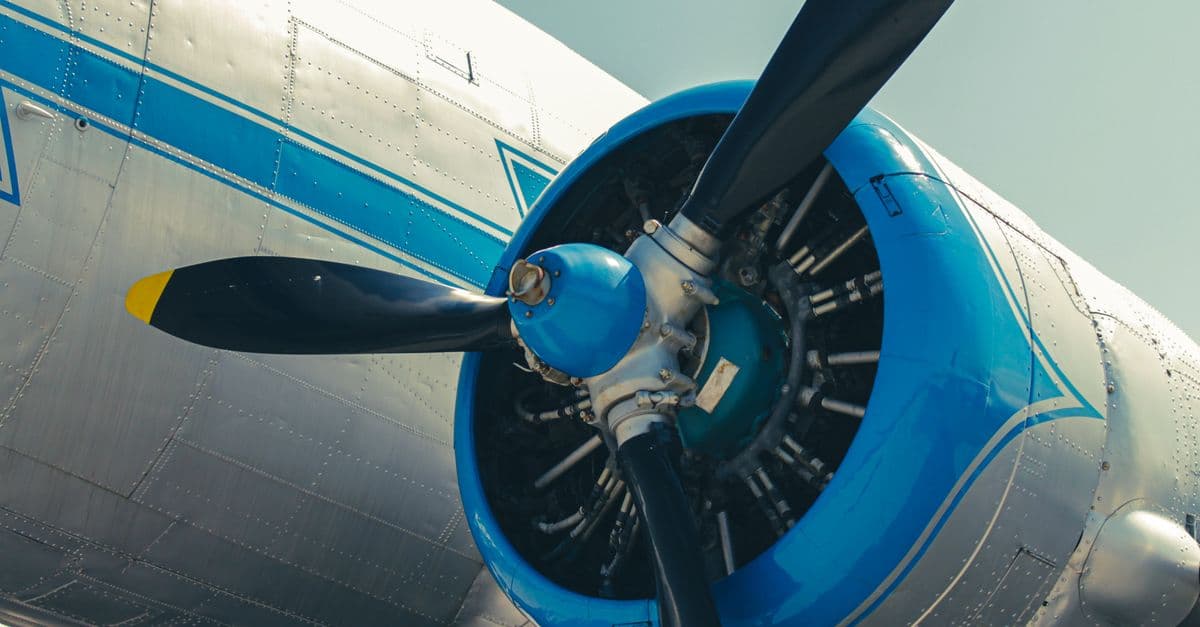
Photo: Incze Sándor Zoltán / Pexels
On December 17, 1903, on a windswept beach near Kitty Hawk, North Carolina, Orville Wright lay prone on the lower wing of a biplane and flew for 12 seconds, covering 36.5 meters (120 feet). It was the first sustained, controlled, powered flight of a heavier-than-air machine in history. The Wright Brothers made four flights that day. By the fourth, with Wilbur at the controls, the machine stayed airborne for 59 seconds and covered 260 meters (852 feet). The brothers then walked back to their camp and sent a telegram to their father.
The Story Behind the Discovery
The Wright Brothers arrived at Kitty Hawk not as visionaries who had dreamed of flight from childhood but as methodical engineers who had identified a solvable problem and solved it systematically. Orville and Wilbur Wright ran a bicycle shop in Dayton, Ohio. They were self-taught, meticulous, and — crucially — understood something that most of their predecessors had missed: the central problem of flight was not power or lift. It was control.
Lift — the aerodynamic force perpendicular to airflow that supports an aircraft in flight, generated by the pressure differential between the upper and lower surfaces of a wing moving through air.
Drag — the aerodynamic resistance opposing forward motion. Efficient flight requires maximizing lift while minimizing drag.
Every experiment before the Wrights had assumed that a flying machine would be inherently stable — that the pilot's job would be merely to steer, like a ship captain, not to actively balance the machine in three dimensions. This assumption was catastrophically wrong.
The Wrights understood the problem because they studied birds carefully. A bird in flight is not stable — it is constantly making small adjustments, twisting its wing tips to maintain balance as air currents shift. The Wrights decided to build a machine that required active pilot control, not one that would fly itself. This made their aircraft more difficult to fly but made it controllable in a way that no previous design had been.
Source: National Air and Space Museum (Smithsonian) — "Debunking Gustave Whitehead's Claim of Flying First" — documents the Wright Brothers' methodology and the evidence basis for their 1903 priority.
The insight came to Wilbur in 1899 while handling a long, rectangular cardboard box from which he had removed a bicycle inner tube. He noticed that by twisting the box diagonally, he could change the angle of attack of each end independently. That twisting motion — applied to wing surfaces — could roll an aircraft in flight. He and Orville called it wing warping.
The Predecessors Who Made 1903 Possible
Otto Lilienthal (1848–1896)
The German engineer Otto Lilienthal made over 2,000 glider flights between 1891 and 1896, developing and testing at least 16 different glider designs. He was the first person to demonstrate that sustained, controlled gliding flight in a heavier-than-air craft was achievable by a human being. Before him, controlled aviation was theoretical. He proved it was physical.
Lilienthal's 1889 book "Der Vogelflug als Grundlage der Fliegekunst" (Bird Flight as the Basis of Aviation) was a rigorous engineering text that measured and tabulated the aerodynamic properties of curved wing surfaces. The Wright Brothers used his lift coefficient tables directly in their own calculations.
Source: Atlas Obscura — "The Final Flight of the Glider King" and Otto Lilienthal Museum — documents Lilienthal's 2,000+ flights and his influence on the Wrights.
In August 1896, a gust of wind destabilized Lilienthal's glider. He fell approximately 15 meters and died the following day. Wilbur Wright read about Lilienthal's death in a newspaper. He later wrote that this moment was when his serious interest in the problem of flight began. The Wrights acknowledged Lilienthal as the most important predecessor of their work.
Lilienthal controlled his gliders by shifting his body weight — swinging his legs to move the center of gravity. The Wrights recognized this as fundamentally inadequate for powered flight at higher speeds. They needed mechanical control of the wing surfaces themselves.
Samuel Langley (1834–1906)
Samuel Pierpont Langley was Secretary of the Smithsonian Institution and a serious aeronautical researcher. His steam-powered "Aerodrome" models flew successfully in 1896. In 1898, the US Army gave him a $50,000 grant to build a full-size piloted aircraft. His "Great Aerodrome" failed twice in 1903 — on October 7 and December 8 — plunging into the Potomac River shortly after launch. Nine days after Langley's second failure, the Wrights flew at Kitty Hawk.
Langley's failure was largely a structural and launch system problem, not a fundamental aerodynamic one. His aircraft was launched by a catapult, which stressed the structure in ways it could not withstand. Whether a better-funded, better-engineered version of Langley's design could have flown before the Wrights is a genuine historical question. It remains unanswered.
How the Wright Flyer Actually Works
The Wright Flyer was a biplane — two wings stacked vertically — made of spruce wood and muslin fabric, with the pilot lying prone on the lower wing. Its 12-horsepower engine (built by the Wrights and their machinist Charlie Taylor) drove two pusher propellers — mounted behind the wings, pushing rather than pulling. Total weight: approximately 274 kg (605 lb) including pilot. The full account is in the Wright brothers and controlled flight.
The Three-Axis Control System
What made the Flyer different from every previous aircraft was its three-axis control system — the ability to control roll, pitch, and yaw independently.
Roll — rotation around the front-to-back axis. Controls banking left and right. The Wrights solved this with wing warping: cables ran from the pilot's hip cradle to the wing tips; shifting weight twisted the rear trailing edges of both wings in opposite directions, creating differential lift and rolling the aircraft.
Pitch — rotation around the side-to-side axis. Controls climbing and descending. The Wrights used a forward elevator (canard configuration) ahead of the main wings. Moving the elevator changed the aircraft's nose-up or nose-down angle.
Yaw — rotation around the vertical axis. Controls turning left and right. A rear vertical rudder, linked to the wing-warping cables, corrected the adverse yaw that wing warping created.
The three-axis control system the Wrights developed and patented is still the fundamental control architecture of every fixed-wing aircraft flying today — from a Cessna 172 to an Airbus A380. The surfaces have changed (ailerons instead of wing warping, fly-by-wire computers replacing mechanical cables), but the three-axis concept is identical.
Source: Wright Brothers patent war Wikipedia article — documents US Patent 821,393 (filed March 23, 1903; granted May 22, 1906) covering the three-axis control system.
The Wind Tunnel Experiments
Before building the 1903 Flyer, the Wrights built their own wind tunnel in 1901 and conducted systematic aerodynamic tests on over 200 different wing shapes. Lilienthal's lift tables, they discovered, contained errors. The Wrights' own measurements produced more accurate lift and drag coefficients, which they used to design the Flyer's wings with precision no previous aircraft designer had achieved.
The wind tunnel is not mentioned in most popular accounts of the Wright Brothers' story. It was arguably their most important tool. The systematic data it produced gave them confidence that their designs would work before they committed to building full-size aircraft — a methodology that would become standard in aerospace engineering.
Timeline: From Lilienthal to the Jet Age
| Year | Event |
|---|---|
| 1891 | Lilienthal makes first successful glider flights near Berlin |
| 1896 | Lilienthal dies in glider crash; Wilbur Wright reads newspaper account |
| 1899 | Wilbur's cardboard box insight leads to wing-warping concept; Wrights build biplane kite |
| 1900 | First manned glider tests at Kitty Hawk, North Carolina |
| 1901 | Second Kitty Hawk season; glider underperforms; Wrights build wind tunnel |
| August 14, 1901 | Gustave Whitehead allegedly flies in Connecticut — claim not accepted by mainstream historians |
| 1902 | Third Kitty Hawk season; three-axis control system refined and tested |
| October 7, 1903 | Langley's Great Aerodrome crashes into Potomac River (first attempt) |
| December 8, 1903 | Langley's second attempt fails |
| December 17, 1903 | Wright Flyer makes four flights at Kitty Hawk; longest is 59 seconds, 260 m |
| March 23, 1903 | Patent application filed (granted May 22, 1906 as US Patent 821,393) |
| 1905 | Wright Flyer III achieves sustained flights of over 30 minutes |
| October 23, 1906 | Santos-Dumont flies 60 m in Paris — first public powered flight in Europe |
| 1908 | Wrights demonstrate aircraft to US Army; European flights by Wilbur attract global press |
| 1910 | Glenn Curtiss begins competing with Wrights; patent war begins in earnest |
| February 1913 | US Circuit Court rules against Curtiss in patent infringement case |
| 1914–1918 | World War I drives rapid aircraft development; speed doubles, range quadruples |
| 1929 | Curtiss-Wright Corporation formed through merger |
The People Involved
Wilbur Wright (1867–1912) and Orville Wright (1871–1948)
The brothers were inseparable collaborators, and distinguishing their contributions is difficult because they worked as a unit. Wilbur was the more systematic thinker and the more effective communicator; Orville was the more skilled machinist and the more instinctive pilot. Both were possessed of extraordinary patience: between 1900 and 1903, they made three extended trips to Kitty Hawk, spending weeks at a time in spartan camp conditions conducting systematic glider experiments before ever attempting powered flight.
Neither brother ever married. Neither attended college. They funded their aeronautical research entirely from the profits of their bicycle business. When the Smithsonian Institution's Langley was receiving $50,000 in government funding to build his aircraft, the Wrights were spending roughly $1,000 from their own savings.
Wilbur died of typhoid fever in 1912, aged 45, before seeing the full consequences of what he had created. Orville lived until 1948, long enough to see jet aviation, rocketry, and the breaking of the sound barrier. He reportedly expressed misgivings about the role aircraft had played in the wars he had witnessed.
Glenn Curtiss (1878–1930)
Glenn Curtiss was a motorcycle racer and engine builder from Hammondsport, New York, who became the most important aircraft designer in America after the Wrights. He built the "June Bug" biplane in 1908, which won the Scientific American Trophy for the first public one-kilometer flight in the US. His aircraft used ailerons — separate hinged surfaces near the wing tips — rather than the Wrights' wing warping.
The Wrights immediately sued, claiming that ailerons were a derived implementation of their patented wing-warping concept. The US Circuit Court agreed in February 1913. Curtiss appealed.
Source: Wright Brothers patent war Wikipedia article — documents the full history of the Curtiss litigation, the 1913 circuit court ruling, and the 1917 patent pool resolution.
The Curtiss-Wright legal conflict was never fully resolved in court. It ended through a government-mandated patent pool in 1917, when the US entering World War I made the patent impasse a national security problem. The Manufacturers Aircraft Association was formed, requiring all US aircraft manufacturers to cross-license patents at fixed royalty rates. The Wrights received the largest royalty share; Curtiss received a substantial share as well. The two companies merged in 1929 to form the Curtiss-Wright Corporation.
Priority Disputes: Whitehead and Santos-Dumont
Gustave Whitehead (1874–1927)
Gustave Whitehead, a German-born mechanic living in Bridgeport, Connecticut, claimed to have flown a powered aircraft on August 14, 1901 — more than two years before Kitty Hawk. The claim rests primarily on a newspaper account published August 18, 1901 in the Bridgeport Sunday Herald. Connecticut's legislature passed a bill in 2013 designating Whitehead as the first to fly.
The mainstream aeronautical history community, including the Smithsonian's National Air and Space Museum and Scientific American, does not accept the Whitehead claim.
Source: National Air and Space Museum — "Debunking Gustave Whitehead's Claim of Flying First" — the Smithsonian's detailed analysis of the evidentiary problems with the Whitehead claim.
The reasons are substantive, not institutional. Unlike the Wrights, Whitehead left no letters, diaries, notebooks, engineering calculations, or drawings recording his experiments. James Dickie, the only named witness who could be interviewed, stated he was not present and did not witness any flight on August 14, 1901. The original newspaper account contains inconsistencies. Whitehead himself never successfully repeated the alleged flight for independent witnesses. Scientific American, which in 2013 published the initial claim supporting Whitehead, published a detailed retraction and debunking in 2014 after reviewing the evidence.
Alberto Santos-Dumont (1873–1932)
Alberto Santos-Dumont occupies a genuinely different position. A Brazilian living in Paris, Santos-Dumont was already famous in Europe for his dirigible flights around the Eiffel Tower in 1901. On October 23, 1906, his "14-Bis" biplane flew approximately 60 meters before a large crowd in Paris — the first public, independently witnessed powered flight in Europe.
In Brazil, Santos-Dumont is taught as the inventor of the airplane. The distinction his supporters make is meaningful: the Wright Brothers' 1903 flights were witnessed by only a handful of people, were not independently verified until years later, and used a launch rail (though notably a very short one — the aircraft achieved lift-off under its own power within a few meters). Santos-Dumont flew entirely under his own power, from a standing start, before a public audience.
Source: Aviation Oil Outlet — "Santos-Dumont vs The Wright Brothers: Who Really Invented the Airplane?" — covers the Brazilian perspective and the substantive distinction between the two claims.
The international aeronautical community's consensus is that the Wrights' 1903 flights meet the standard for "sustained, controlled, powered heavier-than-air flight" and Santos-Dumont's 1906 flights do not retroactively change that. But Santos-Dumont was the person who made flight visible to Europe and the world, and his achievement should not be reduced to a footnote.
The Patent War and Its Consequences
The Wright patent war is one of the most consequential in industrial history — not because of who won, but because of what the fighting cost.
The Wrights' US Patent 821,393, granted May 22, 1906, claimed not just wing warping but the broader principle of differential adjustment of wing surfaces for lateral control. The claim was deliberately broad. It was intended to cover any method of roll control — including ailerons that competitors might develop to avoid the specific wing-warping design.
Courts largely agreed with the Wrights. Several companies paid licensing fees. Glenn Curtiss fought and kept fighting, partly on principle and partly because he believed the patent was overbroad and would strangle the industry.
He was not wrong about the second part. While the Wrights and Curtiss litigated, European aircraft manufacturers — operating without the same patent constraints — made rapid progress. By 1912, French and British aircraft designers had surpassed American designs in both performance and military applicability. The US, birthplace of powered flight, entered World War I with an aviation industry so crippled by patent litigation that it could not field a competitive combat aircraft.
The 1917 patent pool resolved the immediate impasse. But the episode established a precedent that broad foundational patents on emerging technologies can suppress rather than incentivize innovation — a lesson that would be relearned in software, biotechnology, and many other fields.
Unintended Consequences
World War I and Rapid Militarization
The Wright Brothers flew for sport and exhibition in 1903. By 1914, their invention was a weapon. World War I transformed aircraft from fragile curiosities into reconnaissance platforms, then fighters, then bombers. Between 1914 and 1918, aircraft speed roughly doubled, ceiling increased from under 3,000 m to over 7,000 m, and range extended from minutes to hours. The war killed hundreds of thousands of people by air attack and aerial reconnaissance that directed artillery — and drove a decade's worth of aeronautical development in four years.
Commercial Aviation and Global Connectivity
The first scheduled commercial airline service began in January 1914 — a flying boat route between St. Petersburg and Tampa, Florida. The modern global air transport network carries over 4 billion passengers per year. It has compressed global geography in ways that affect trade, tourism, disease spread, and cultural exchange simultaneously.
Electric Aviation and Supersonic Revival
As of 2026, the next phase of aviation is taking shape on two fronts. Electric aircraft — using battery-electric or hybrid powertrains — are now commercially viable for short-range regional routes. Companies including Eviation, Heart Aerospace, and several others are certifying or approaching certification for small electric passenger aircraft. Battery energy density remains the binding constraint; current lithium-ion technology allows electric aircraft to compete with fossil fuel on routes under approximately 500 km.
Supersonic commercial flight, which ended with the Concorde's retirement in 2003, is being revived. Boom Supersonic's XB-1 demonstrator completed supersonic flight tests in 2024, with the company's Overture passenger aircraft targeting entry into service in the late 2020s.
Source: Wright Brothers patent war Wikipedia article — the 1917 Manufacturers Aircraft Association patent pool history.
Where Aviation Stands Today
The commercial aviation industry is dominated by two manufacturers: Boeing (US) and Airbus (EU), which together supply roughly 90% of the global large passenger aircraft market. Both produce aircraft whose control systems are the direct descendants of the three-axis control architecture the Wright Brothers patented in 1906 — though the mechanism has evolved from wing-warping cables to hydraulic actuators to fly-by-wire computers.
The Boeing/Airbus duopoly is itself partly a consequence of the Wright patent war. The 1917 government-mandated cross-licensing created a consolidated American aircraft industry that grew into Boeing through decades of mergers. Airbus was created in 1970 as a European government consortium to counterbalance American dominance — a structural consequence of the US industry's government-backed wartime consolidation.
The air cargo network is equally consequential. Approximately 35% of global trade by value moves by air freight — pharmaceutical products, electronics, fresh food, and urgent industrial components. The overnight delivery economy is a direct product of the infrastructure the Wright Brothers' 12-second flight made possible.
FAQs
Q: Did the Wright Brothers really invent the airplane? A: They are credited with the first sustained, controlled, powered heavier-than-air flight on December 17, 1903. The historical consensus, held by the Smithsonian Institution and the international aeronautical community, accepts this. Claims by Gustave Whitehead (1901) lack documentary support. Santos-Dumont's 1906 flights were genuine and historically significant but came three years later.
Q: What does "sustained and controlled" mean — why does that distinction matter? A: Many earlier devices produced brief hops or uncontrolled slides into the air. "Sustained" means the aircraft maintained flight for a meaningful duration under its own power. "Controlled" means the pilot could direct the aircraft's path and maintain stable flight. The Wright Flyer met both criteria. Most earlier claims do not meet both simultaneously.
Q: What was wing warping and why did it matter? A: Wing warping twisted the trailing edges of the wing surfaces in opposite directions to create differential lift, rolling the aircraft. It solved the fundamental problem of lateral control — the problem every previous aircraft designer had ignored or failed to solve. The Wrights' broad patent on this principle claimed any differential lateral control, which is why it covered ailerons as well.
Q: Why did the Wright Brothers go to Kitty Hawk rather than fly near their home in Dayton? A: They needed steady, moderate winds for their glider experiments, open sandy terrain for safe landings, and privacy. Kitty Hawk on the Outer Banks of North Carolina met all three criteria. The Wind at Kill Devil Hills, where they actually flew, averaged about 10–15 mph — ideal for their purposes.
Q: Who built the Wright Flyer's engine? A: The brothers and their machinist Charlie Taylor built the engine themselves. No automobile manufacturer could provide an engine light enough and powerful enough for their requirements. The 12-horsepower, 77 kg (170 lb) engine Taylor built in approximately six weeks was a custom aluminum-block four-cylinder design — one of the lightest high-power engines built to that date.
Q: What ended the Wright Brothers' patent war? A: The US government effectively ended it in 1917 by creating the Manufacturers Aircraft Association, a compulsory patent pool that required all US aircraft manufacturers to cross-license patents at fixed royalty rates. World War I made the impasse a national security problem. The legal dispute between the Wright Company and Curtiss was never finally resolved in court; it ended with the patent pool and later the 1929 merger of the two companies.
Q: Why is Santos-Dumont important if the Wrights flew first? A: Santos-Dumont was the first person to demonstrate powered flight to a large public audience in Europe, in 1906. He inspired a generation of European aviators and designers, made aviation visible and credible to European governments and the public, and is rightly celebrated as a pioneer regardless of his chronological position relative to the Wrights.
Q: How different is a modern aircraft's control system from the Wright Flyer's? A: The three-axis concept (roll, pitch, yaw controlled independently) is identical. The mechanisms are entirely different. Modern aircraft use ailerons for roll, elevators for pitch, and a rudder for yaw — the same axes as the Wright Flyer. Large aircraft use hydraulic actuators and fly-by-wire computers to move control surfaces; pilots' inputs are processed by flight control computers. The Wrights' cables and hip cradle have been replaced by silicon, but they control the same three axes.
The Takeaway
The Wright Brothers' achievement was methodological as much as mechanical. They were not the first to dream of flight, not the first to glide, and not the first to build an engine. They were the first to understand that the problem of controlled flight demanded a systematic, data-driven engineering approach — wind tunnel tests, documented results, iterative design — rather than inspired tinkering. Their three-axis control architecture, patented in 1906, remains the structural blueprint of every fixed-wing aircraft flying today. That the patent they filed also nearly destroyed the American aviation industry for a decade is a reminder that invention and its consequences rarely stay in the inventor's control.
Read next:
Follow new articles
Add SciHub101 to your feed reader to see new science and technology stories.
About the Author
SciHub101 is an independent science and technology publication founded and edited by Buğra Sözeri, a software engineer and app developer based in Türkiye. AI tools assist with drafting and research. Source documentation in the existing archive is uneven, and articles are being reviewed and corrected. The Editorial Team byline identifies editorial responsibility; it does not certify specialist or independent human review. Where we compare products, anything built by our own team is labelled as such — see the editorial guidelines and About page for how corrections and disclosures work.
Related Articles
The Automobile: How the Car Changed Everything
From Karl Benz's 1886 Patent-Motorwagen to today's electric vehicles, discover how the automobile was invented, who built it first, and why it reshaped civilization.

The Air Conditioner: The Invention That Reshaped Where Humans Can Live
Willis Carrier set out to fix a printing problem in 1902 Brooklyn. The machine he designed ended up reshaping cities, enabling the Sun Belt, and creating a climate paradox.
Airplane Invention: The Wright Brothers and Controlled Flight
The Wright brothers solved controlled powered flight, but gliders, engines, wind tunnels, and earlier aviation pioneers all mattered.
History of Aviation: From the Wright Brothers to Today
On December 17, 1903, Orville Wright flew 120 feet in 12 seconds. In 2024, airlines carried about 4.7 billion passengers. Here is how the engineering got from one to the other.