The Automobile: How the Car Changed Everything
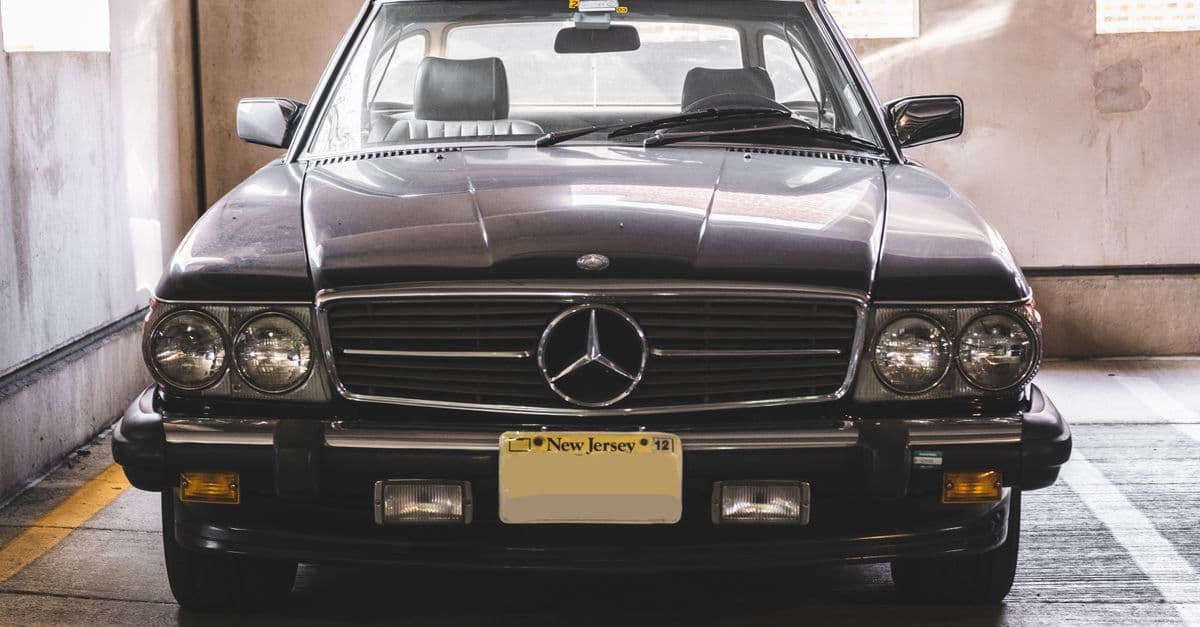
Photo: Malcolm Garret / Pexels
On January 29, 1886, a German engineer named Karl Benz filed patent number 37435 in Berlin. The document described a three-wheeled vehicle powered by an internal combustion engine — no horses required. That date is now recognized as the birth certificate of the automobile, but the story of how a sputtering, chain-driven tricycle became the most consequential personal machine in human history involves a driven wife, a patent troll, an assembly line, and more than a century of unintended consequences.
The Story Behind the Discovery
Internal combustion engine — a heat engine where fuel is burned inside the cylinder itself, converting chemical energy to mechanical work, unlike a steam engine which burns fuel externally to heat water.
The idea of a self-propelled road vehicle had circulated for decades before Benz. Nicolas-Joseph Cugnot built a steam-powered tricycle in France in 1769, and throughout the nineteenth century engineers tinkered with steam carriages. But steam required a massive boiler and a water supply, making small personal vehicles impractical. What changed everything was the development of the high-speed internal combustion engine in the 1870s and 1880s.
Karl Benz had been refining a two-stroke engine since the 1870s, and by 1882 he had founded Benz and Company in Mannheim, Germany. His insight was to design the vehicle and its engine as a unified system rather than bolting a motor onto an existing carriage. The Patent-Motorwagen — Motor Car Number One — had a rear-mounted, water-cooled, single-cylinder four-stroke engine producing about 0.75 horsepower. It sat on a tubular steel frame, used wire-spoked wheels borrowed from bicycle technology, and had tiller steering on the front axle.
Source: Mercedes-Benz Group Archive (2024) — Patent number 37435 filed January 29, 1886; the patent itself was granted in November 1886 but takes effect from the application date.
What is less often told is that Benz, for all his mechanical genius, was deeply shy about publicity. The Patent-Motorwagen might have remained a workshop curiosity had it not been for his wife.
Bertha Benz and the First Road Trip
In the early hours of August 5, 1888, Bertha Benz quietly wheeled the Patent-Motorwagen out of the family workshop in Mannheim while her husband slept. She loaded her two teenage sons, Eugen (15) and Richard (13), onto the vehicle, and set off toward her mother's house in Pforzheim — 106 km (66 miles) away across hilly terrain.
Karl knew nothing about the journey until it was already underway.
The trip was not smooth. The fuel supply (a petroleum solvent called ligroin, purchased at pharmacies along the route) ran low repeatedly. A chain broke and had to be repaired. A leather brake pad wore through; Bertha had a cobbler install a new piece of leather on the spot, inventing the first brake lining in the process. When a fuel line clogged, she cleared it with a hatpin. She sent Karl a telegram from Pforzheim that afternoon.
Source: Daimler Global Media (2024) — Bertha Benz's 1888 journey confirmed via company records as approximately 106 km one-way, August 5, 1888.
The journey proved two things the Patent-Motorwagen's skeptics doubted: the vehicle could sustain extended use, and the engine could handle real-world gradients. Orders picked up significantly afterward. Bertha Benz's drive was the first long-distance automobile journey in history and arguably the first automotive product demonstration.
| Year | Event |
|---|---|
| 1879 | Karl Benz receives patent for a two-stroke engine |
| 1885 | Patent-Motorwagen prototype completed |
| Jan 29, 1886 | Patent number 37435 filed — the automobile's official birth date |
| Aug 5, 1888 | Bertha Benz drives 106 km from Mannheim to Pforzheim |
| 1893 | Benz Velo becomes first automobile produced in numbers |
| 1901 | Daimler Motoren Gesellschaft introduces the first Mercedes |
| 1908 | Ford Model T introduced at $825 |
| 1913 | Ford Highland Park moving assembly line begins operation |
| 1927 | Model T production ends after 15 million units |
| 1938 | Volkswagen Beetle enters production |
| 2023 | Global vehicle production reaches 93.9 million units |
How the Automobile Actually Works
The internal combustion engine at the heart of a gasoline car follows a four-stroke cycle that Nikolaus Otto had patented in 1876 — just a decade before Benz used a refinement of it. Think of each cylinder as a pump working in four beats: intake (air and fuel pulled in), compression (the piston squeezes the mixture), power (a spark plug ignites it, expanding gases push the piston down), and exhaust (burned gases pushed out). In a four-cylinder engine running at 3,000 rpm, this sequence happens 6,000 times per second across all four cylinders simultaneously.
The crankshaft converts that linear piston motion into rotation — the same mechanical transformation you use when you turn a bicycle's pedals. A transmission then adjusts the ratio between engine speed and wheel speed, letting you move slowly from a stop without stalling the engine.
Differential — a gear assembly that allows the two driven wheels to rotate at different speeds, essential when cornering because the outer wheel travels a longer arc than the inner wheel.
The chassis, steering, and braking systems are separate engineering problems stacked on top of the engine. Early cars steered with a tiller like a boat; the steering wheel became standard only by the early 1900s. Early brakes worked by pressing external wooden blocks against the tire, then evolved to internal drum brakes (1900s), disc brakes (1950s), and now electro-hydraulic systems assisted by computers.
Modern vehicles layer electronics over every mechanical system. A contemporary car contains between 25 and 100 microprocessors managing fuel injection, transmission shifts, anti-lock braking, traction control, and infotainment simultaneously. A 2024 Tesla Model 3 has an estimated 100 million lines of software code onboard — more than a Boeing 787.
The People Involved
The simultaneous nature of automotive invention has generated a century of debate over who "really" invented the car. The honest answer is that several inventors converged on the same solution within a few years of each other, working independently.
Gottlieb Daimler and his chief engineer Wilhelm Maybach were working 100 km north of Benz in Bad Cannstatt. In 1885 they built the Reitwagen, a motorized wooden bicycle — possibly the world's first motorcycle. By March 1886, Maybach had fitted their fast-running Grandfather Clock engine into a horse-drawn carriage, producing a four-wheeled motorized vehicle. Daimler and Benz were competitors who never met.
Source: Britannica — Gottlieb Daimler biography; the Daimler Motorized Carriage reached 16 km/h on its first run in 1886.
The two companies — Benz and Company, and Daimler Motoren Gesellschaft — merged in 1926 to form Daimler-Benz AG, the parent company of Mercedes-Benz. By that point, a third force had already transformed the industry beyond recognition.
Henry Ford did not invent the automobile. He invented affordable mass production of it. The Ford Motor Company launched the Model T in 1908 at $825 (about $27,000 in 2025 dollars). Four years later, Ford engineers at the Highland Park plant in Michigan began installing a moving assembly line — a concept borrowed partly from Chicago meatpacking operations. By 1914 the chassis assembly time had fallen from 12.5 hours to 1 hour and 33 minutes.
Source: The Henry Ford Museum (2024) — Assembly line implementation at Highland Park began in 1913; chassis assembly time reduction documented in company records.
By 1916 the Model T's price had fallen to $360. By 1924, it cost $260. Ford had turned a luxury into a commodity, and in doing so, reshaped American geography, labor relations, and daily life.
Patent and Priority Disputes
The Selden Patent is one of the most consequential acts of legal maneuvering in industrial history. George B. Selden, a Rochester patent attorney with an interest in engineering, filed a patent application in 1879 describing a road engine. He then used every available procedural mechanism to delay the patent's issuance until 1895 — by which point the automobile industry was taking shape. A patent holder is entitled to royalties from the filing date, not the grant date, so Selden had created a retrospective monopoly.
Selden licensed his patent to the Association of Licensed Automobile Manufacturers (ALAM) in 1903, which used it to collect fees from manufacturers and exclude competitors. When Henry Ford applied to join ALAM, he was refused. Ford began manufacturing anyway and fought the patent in court.
Ford's legal team argued that Selden's patent referenced the Brayton two-stroke engine cycle, while Ford's cars used the Otto four-stroke cycle. The appeals court agreed on January 11, 1911. The Selden patent was ruled valid but not infringed by Ford. Automakers were freed from royalty payments, and Ford became a folk hero of independent American enterprise.
Source: The Henry Ford (2024) — Selden patent court ruling archived in digital collections; case decided January 11, 1911.
The Benz-versus-Daimler priority debate never reached a courtroom, partly because the two companies operated in different segments: Benz focused on practical mass-market vehicles, Daimler on high-performance engines sold to other manufacturers. Both families accepted they had arrived independently at similar conclusions.
Unintended Consequences
The automobile reshaped the world in ways nobody anticipated. The most direct effect was geographic: the car made distance negotiable. Suburbs became viable when workers could commute 15 km rather than walking to work. American cities designed around the streetcar were redesigned around the parking lot. Between 1910 and 1960, the United States paved more than 6.2 million km of roads.
Source: U.S. Federal Highway Administration (2023) — Historical highway statistics, road mileage records.
The oil industry grew with the automobile. Global petroleum consumption was modest before the Model T; by the 1950s, automobile fuel had become the central driver of geopolitics. Wars were influenced by access to oil, alliances shifted around petroleum reserves, and entire national economies calibrated their foreign policy to keep gasoline cheap.
The air quality consequences were severe and slow to be recognized. Los Angeles's notorious smog was identified in the 1940s as primarily automotive in origin. Catalytic converters, mandated in the United States starting in 1975, reduced hydrocarbons and nitrogen oxides from tailpipe emissions by roughly 98 percent compared to uncontrolled engines. Lead, added to gasoline since 1922 as an antiknock agent (also by Thomas Midgley Jr., who later invented CFCs), was finally phased out in US fuel by 1996.
The automobile also generated a substantial mortality toll. Globally, road traffic crashes kill approximately 1.19 million people per year, making it the leading cause of death for people aged 5 to 29, according to the World Health Organization.
Source: World Health Organization (2023) — Global Status Report on Road Safety; 1.19 million annual road deaths.
Perhaps the most structurally strange consequence is what economists call induced demand: every new road built to relieve congestion fills with new drivers, leaving congestion essentially unchanged. Los Angeles spent decades building freeways and ended up with both the freeways and the traffic.
Where It Stands Today
Global vehicle production reached 93.9 million units in 2023, with China alone producing more than 30 million.
Source: International Organization of Motor Vehicle Manufacturers (OICA) — 2023 production statistics; total of 93.9 million vehicles.
The internal combustion engine's dominance is ending, but slowly. Electric vehicles (EVs) crossed 10 percent of new car sales globally in 2022 for the first time, and by 2023, approximately one in five new cars sold in China was electric or plug-in hybrid. Battery costs have fallen from roughly $1,200 per kilowatt-hour in 2010 to under $140 per kilowatt-hour in 2023, making EVs price-competitive with conventional cars in several major markets.
Source: BloombergNEF (2023) — EV battery price survey; $139/kWh average pack price in 2023.
Autonomous driving has been promised for decades and remains elusive at full scale, though Level 2 driver assistance (simultaneous control of steering and speed under human supervision) is now standard on most new vehicles. True Level 4 autonomy — where the car drives itself without any human fallback — operates in limited geofenced areas in a handful of cities.
Benz's Patent-Motorwagen achieved about 16 km/h on a good road. A 2024 Lucid Air can travel 837 km on a single charge and accelerate from 0 to 96 km/h in 2.8 seconds. The mechanical lineage connecting them is real — pistons, wheels, a steering mechanism — but the engineering distance between them is larger than the gap between the Patent-Motorwagen and the horse.
The Selden patent and the Ford lawsuit that defined an industry
George Baldwin Selden was a Rochester patent attorney who understood, as early as 1879, that the road vehicle was coming. On May 8 of that year he filed a patent application for what he called a "road engine" — a gasoline-powered vehicle with a liquid hydrocarbon engine. He then did something that would not be fully closed off by US patent law until 1995: he filed a series of continuation amendments, each keeping the application alive and pending while the clock on issuance was paused. The patent sat submerged for 16 years, five months, and 28 days. By the time US Patent 549,160 was finally granted on November 5, 1895, the automobile industry was beginning to form around it.
Source: Smithsonian National Museum of American History (2024) — Selden Automobile Patent Model, 1879; application filed May 8, 1879, patent granted November 5, 1895. americanhistory.si.edu
This technique — filing early, delaying grant, then surfacing the patent once an industry has built itself around the covered technology — is now called a submarine patent. Selden did not accidentally take 16 years; he monitored the market and timed issuance to maximize the royalty-bearing window. Because the patent term ran from the grant date, not the filing date, he also had a full 17 years of exclusivity starting in 1895.
The mechanism of control came next. Selden licensed Patent 549,160 to the Electric Vehicle Company, which in 1903 helped found the Association of Licensed Automobile Manufacturers (ALAM) — a coalition of roughly 11 established manufacturers including Olds Motor Works, Cadillac, and Packard. ALAM charged licensees a 1.25 percent royalty on the wholesale price of every car sold. The split: one-fifth to Selden, two-fifths to EVC, two-fifths back to ALAM to fund infringement suits against anyone who refused to join. Applications for membership required unanimous approval from a five-member executive board, giving existing members a direct vote over who could compete with them.
Source: Wikipedia — Association of Licensed Automobile Manufacturers; royalty structure and membership rules documented from contemporary trade records. en.wikipedia.org/wiki/Association_of_Licensed_Automobile_Manufacturers
Henry Ford applied for ALAM membership in 1903, the same year he founded the Ford Motor Company. He was refused. The board reportedly considered his operation too small and financially unproven. Ford began manufacturing and selling cars anyway. On October 22, 1903, ALAM filed suit. The cartel also ran newspaper advertisements warning consumers that buying a Ford automobile exposed them personally to patent infringement liability — a pressure tactic aimed directly at dealers and customers.
Ford's legal team constructed a technical argument rather than a procedural one. Selden's 1879 patent had referenced the Brayton-cycle engine, a design developed by George Brayton in the 1870s that used separate cylinders for compression and combustion. The engines in Ford's cars — and in virtually every other automobile on the road by 1903 — used the Otto cycle: intake, compression, ignition, and exhaust all occurring in the same cylinder. Ford's lawyers argued that a patent on a Brayton-cycle vehicle covered exactly that and nothing more. The case generated a record of roughly 14,000 pages of testimony over eight years.
On January 11, 1911, the US Circuit Court of Appeals handed down its ruling in Columbia Motor Car Co. v. C.A. Duerr & Co. The court found Selden's patent valid but not infringed. Ford and every other manufacturer using the Otto cycle owed nothing. The ALAM cartel dissolved immediately; no more royalties, no more gated membership, no more newspaper threats.
Source: The Henry Ford (2024) — Selden patent ruling archived in digital collections; case decided January 11, 1911. The ruling text distinguishes Brayton-cycle from Otto-cycle engines as the basis for non-infringement. thehenryford.org
The practical consequences were immediate. Without the royalty overhead and the threat of exclusion, smaller manufacturers could enter the market on engineering merit rather than political standing with an incumbent cartel. Ford's public fight had already made him a folk hero of independent enterprise; the ruling made that image fact. Mass production at Highland Park accelerated two years later, in part because the legal cloud had lifted.
Europe ran a different but parallel story. Gottlieb Daimler pursued a licensing strategy across borders rather than forming a domestic cartel: he sold French manufacturing rights to Panhard et Levassor in 1889, and in 1896 granted a patent license to the British Daimler Company, which eventually became entirely independent of its German parent. The effect was geographic fragmentation rather than monopoly — separate national industries developing under Daimler-derived licenses, which partly explains why early European automobiles diverged so rapidly in engineering character from American ones.
Source: Wikipedia — Gottlieb Daimler; Panhard-Levassor license 1889, British Daimler license 1896. en.wikipedia.org/wiki/Gottlieb_Daimler
The Selden case is now a standard reference in patent law courses as the original submarine patent: a single lawyer-inventor, no working prototype, a 16-year delay, and an attempt to tax an entire industry into existence. The 1952 Patent Act and its subsequent revisions tightened continuation rules specifically to prevent the strategy from repeating. The ALAM episode also established an informal principle that would recur throughout 20th-century American industry — that a patent cartel built on a boundary claim, rather than genuine innovation, is vulnerable the moment a well-funded defendant runs the technical analysis all the way to an appellate bench.
FAQs
Q: Who actually invented the automobile — Benz or Daimler? A: Karl Benz holds the first patent specifically for a motor vehicle (filed January 29, 1886). Daimler and Maybach built a motorized carriage around the same time but filed no equivalent foundational patent. Most automotive historians credit Benz with priority; both the German government and Mercedes-Benz AG recognize January 29, 1886 as the automobile's official birthday.
Q: What did Bertha Benz actually contribute to automotive history? A: She conducted the first long-distance automobile journey in history, covering 106 km from Mannheim to Pforzheim on August 5, 1888. She also solved several practical engineering problems during the trip, including improvising a brake lining repair and clearing a clogged fuel line, providing Karl Benz with feedback that led to real design improvements. She also served as the company's de facto marketing strategist.
Q: Why was Henry Ford's assembly line such a big deal? A: Before Ford's moving assembly line (1913), a car was built in one spot by a team of workers. The assembly line brought the work to the workers on a moving chain, reduced chassis assembly time from over 12 hours to under 2 hours, and allowed Ford to cut the Model T's price by two-thirds over a decade — turning a luxury good into a mass-market product.
Q: What was the Selden patent, and why did it matter? A: George Selden filed a patent in 1879 for a gasoline-powered road vehicle and delayed its issuance until 1895, then licensed it to a manufacturers' cartel. Ford challenged and broke the patent in 1911 by arguing his cars used a different engine type (Otto cycle vs. Brayton cycle). The ruling freed the industry from patent-based monopoly and established Ford as a champion of independent manufacturing.
Q: How do electric vehicles relate to the original automobile? A: Electric cars actually predate gasoline cars — the first electric vehicle with a rechargeable battery appeared in 1884. Early 20th century EVs lost the market competition to gasoline cars primarily due to range limitations. The current EV transition is essentially the second time electric propulsion has been a serious contender, now supported by lithium-ion battery technology that didn't exist in 1900.
Q: How many cars are produced globally each year today? A: In 2023, the world produced approximately 93.9 million motor vehicles, of which about 75.9 million were passenger cars. China is the largest producer by far, manufacturing more than 30 million vehicles in 2023 — roughly one-third of global output.
The Takeaway
The automobile was not a single invention but a cascade: Benz's patent in 1886, Bertha's drive in 1888, Ford's assembly line in 1913, and a century of iteration since. What began as a 0.75-horsepower patent curiosity is now the planet's dominant personal transport system, responsible for reshaping cities, fueling geopolitical conflicts, and killing over a million people per year. The shift to electrification is genuine, but it changes the power source, not the fundamental problem: a civilization built around individual metal boxes moving one person at a time through shared space will keep encountering the same constraints, regardless of what makes the wheels turn.
Read next:
Follow new articles
Add SciHub101 to your feed reader to see new science and technology stories.
About the Author
SciHub101 is an independent science and technology publication founded and edited by Buğra Sözeri, a software engineer and app developer based in Türkiye. AI tools assist with drafting and research. Source documentation in the existing archive is uneven, and articles are being reviewed and corrected. The Editorial Team byline identifies editorial responsibility; it does not certify specialist or independent human review. Where we compare products, anything built by our own team is labelled as such — see the editorial guidelines and About page for how corrections and disclosures work.
Related Articles

The Mechanical Clock: How Humanity Learned to Slice Time
From the verge escapement of 1275 to atomic clocks accurate to one second in 300 million years — the 750-year story of how timekeeping reshaped civilization.
The Airplane: Wright Brothers, Kitty Hawk, and the Patent War That Shaped Aviation
How Orville and Wilbur Wright achieved controlled powered flight on December 17, 1903 at Kitty Hawk — and how their patent war nearly strangled the industry they created.
The Invention of the Steam Engine
How Thomas Newcomen's 1712 atmospheric engine and James Watt's 1769 separate condenser transformed fire into motion and launched the Industrial Revolution.

The Sewing Machine: Howe, Singer, and the First Patent War
The sewing machine's full history: Elias Howe's 1846 lockstitch patent, Isaac Singer's 1851 improvements, the first US patent pool in 1856, and today's global garment industry.

Countries With the Most Electric Vehicles Per Capita (2025)
Norway has the highest electric share of any national car fleet, with more than one in three cars electric, and 97% of its 2025 new-car sales were electric or plug-in hybrid. Here is how every major market compares, and why fleet share and sales share tell different stories.

Countries with the Most Car Ownership Per Capita (2025 Ranked)
San Marino reports about 1,570 registered vehicles per 1,000 residents, the United States about 875, and Italy leads the EU at 709 passenger cars. What the numbers count, why rankings shift with the definition, and how electric cars are changing fleets.