Why The Vacuum Tube Made Electronics Possible

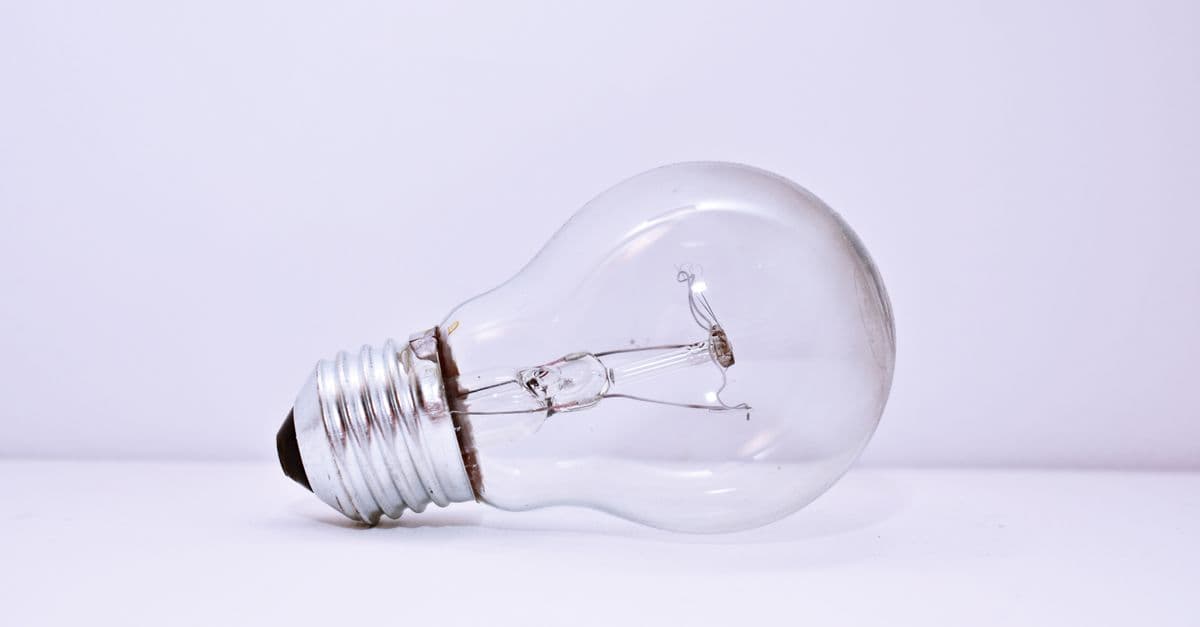
Photo: Ron Lach / Pexels
Every electronic device built before 1960 depended on a technology that began as a nuisance: current mysteriously leaking across a gap inside a light bulb. Thomas Edison noticed the effect in 1880 while trying to figure out why his bulb filaments blackened and burned out, and he patented it in 1884 without understanding it or finding it useful. It took two more inventors, working two decades apart, to turn that stray current into the switch and amplifier that made radio, long-distance telephony, and the first electronic computers possible.
This is the story of how a light bulb accident became the vacuum tube, why the device had to be a vacuum rather than an ordinary glass bulb, how adding one extra piece of wire mesh turned a one-way valve into an amplifier, and why, even after transistors took over almost every job vacuum tubes once did, a small number of engineers and musicians still insist on the older technology.
The accident Edison never explained
In 1880, while investigating premature filament failure in his incandescent lamps, Edison built a test bulb with a second metal electrode sealed inside near the glowing filament, isolated from it by a small gap of empty space. He observed that current would flow across that gap to the second electrode whenever it carried a positive charge relative to the filament, even though nothing physically connected the two pieces of metal. Edison patented the phenomenon in 1884 as part of an electrical indicating device, but he had no practical use for it and, crucially, no correct explanation of what was actually happening inside the bulb (American Physical Society, 2024).
The phenomenon became known as the Edison effect, and for two decades it sat in scientific literature as an interesting but unexploited curiosity. What Edison had actually observed, though nobody had the vocabulary for it yet, was thermionic emission: heat a metal filament hot enough and its own electrons gain enough energy to boil off the surface entirely, the way steam escapes a pot of boiling water. Those liberated electrons, negatively charged, would then be pulled across the gap to any nearby electrode held at a positive voltage, completing a circuit through what looked like empty space but was, in fact, a stream of moving electrons.
Edison was, by his own later admission, more interested in improving lamp longevity than in electron physics, and he moved on. The person who picked the thread back up had a very different problem to solve: how to turn the erratic, alternating signals picked up by an early radio antenna into something a listener's ear could actually make sense of.
Why a heated filament secretly leaks electrons
To understand why Edison's bulb did what it did, it helps to separate two things that happen at once inside any hot filament: light and electron emission. A tungsten or carbon filament glows because resistive heating pushes electrons in the metal into higher energy states that release photons when they fall back down, the same basic mechanism behind any incandescent light source.
But heat a conductor hot enough, and some fraction of its electrons gain so much thermal energy that they escape the metal's surface entirely rather than just jumping between energy levels inside it. This is thermionic emission, the process by which a hot cathode boils electrons off its surface into the surrounding vacuum. It is the electrical equivalent of water molecules evaporating off a hot stove, except here the "vapor" is a cloud of free electrons rather than water vapor, and the "container" holding that vapor is the sealed glass envelope of the tube.
Inside Edison's bulb, those liberated electrons had nowhere useful to go until a second electrode was introduced nearby. Once that plate was held at a positive voltage relative to the hot filament, the negatively charged electrons were attracted across the gap and completed a circuit, current flowing through empty space rather than through a wire. Reverse the plate's voltage, make it negative instead of positive, and the electrons are repelled back toward the filament; no current flows at all. That asymmetry, current one way, nothing the other way, is what made the device useful the instant someone recognized it.
Fleming's 1904 insight: a one-way valve for radio signals
John Ambrose Fleming was a British physicist who had consulted for Edison's companies in the 1880s and later turned his attention to the young, unreliable field of wireless telegraphy. Early radio receivers of the period struggled with a basic mismatch: the radio signals arriving at an antenna were alternating current, oscillating back and forth many times per second, but the crude detectors of the era (coherers made of loose metal filings) were unreliable and imprecise at converting that oscillation into a steady signal a person could interpret (ETHW, Fleming Valve 1904).
Fleming had spent years studying the Edison effect and, according to his own later account, had "a sudden very happy thought" while walking along Gower Street in London in 1904: the one-directional current flow he had documented in Edison's old bulbs was exactly the property needed to rectify an alternating radio signal into a one-directional current. On November 16, 1904, Fleming filed a patent for what he called an oscillation valve. It became known as the Fleming valve, and it was the first practical vacuum tube ever built for a specific electrical purpose rather than as a laboratory curiosity (ETHW, 2024; historyofinformation.com).
Rectification — converting alternating current, which reverses direction periodically, into direct current, which flows only one way — is the specific job the Fleming valve performed. Because electrons could only cross the vacuum gap in one direction, from the heated cathode to the positively charged plate, the device blocked half of every incoming radio wave cycle and passed the other half through, producing the steady pulses of current early radio receivers needed to drive a set of headphones. Fleming's two-electrode device is still called a "valve" throughout the United Kingdom and much of Europe today, a naming choice that reflects exactly what it does: it lets current through in one direction and shuts it off in the other, the electrical equivalent of a one-way check valve in a water pipe.
Was Fleming's valve the same thing as Edison's bulb?
Not quite. Fleming's device used the identical physical mechanism Edison had observed, a heated filament emitting electrons across a vacuum to a plate, but Fleming deliberately engineered it as a two-electrode detector for a specific circuit application, radio signal rectification, rather than as an accidental byproduct of a light bulb. The underlying physics was Edison's discovery; the practical device was Fleming's invention.
Why the tube had to be an actual vacuum
The name "vacuum tube" is not decorative. Ordinary air is packed with roughly 2.5 x 10^19 gas molecules per cubic centimeter at sea level, and every one of those molecules is a potential obstacle to an electron trying to cross the gap between filament and plate. An electron traveling through air at normal pressure will collide with a gas molecule after an extremely short distance, scattering in a random direction and losing the energy and directionality that made it useful as a controlled signal in the first place.
Pump the air out of the glass envelope, creating a genuine vacuum, and that obstacle disappears. Electrons emitted from the heated filament can travel in a clean, essentially unobstructed straight line to whatever electrode is pulling on them, arriving with their charge, timing, and energy intact rather than scattered into electrical noise. This is the entire reason the device is called a vacuum tube rather than simply an "electron tube" or "filament tube": the vacuum is not incidental packaging, it is the working component that makes the electron stream usable at all.
Manufacturing a reliable, long-lasting vacuum inside a sealed glass envelope was itself a nontrivial engineering problem in the early 1900s. Glassblowers had to fuse metal electrode leads through the glass wall without cracking it, evacuate the air with pumps that were, by later standards, primitive, and then seal the tube permanently while it was still under vacuum. Any tiny leak would let air back in over weeks or months, degrading the tube's performance until it stopped working altogether, one of the practical limitations that would eventually help doom the technology once a better alternative appeared.
De Forest's grid: turning a valve into an amplifier
Fleming's valve could detect and rectify a signal, but it could not make a weak signal stronger. That capability arrived in 1906, when American inventor Lee de Forest inserted a third electrode, a sparse wire mesh called a grid, into the gap between the heated filament (the cathode) and the plate (the anode). De Forest called his three-electrode device the Audion, and it became the first triode, a vacuum tube with three working electrodes instead of two (National MagLab, Audion 1906; historyofinformation.com, 2024).
The grid sits physically closer to the electron stream than the plate does, which means even a small voltage applied to it has an outsized effect on how many electrons make it through to the plate. Make the grid slightly more negative and it repels a larger share of the electron stream back toward the filament, sharply reducing the current reaching the plate. Make it slightly less negative and more electrons get through. Critically, the plate circuit can be wired to carry a much larger current, and a much higher voltage, than the tiny signal applied to the grid, so a small fluctuation at the grid produces a proportionally much larger fluctuation in the plate current. That is amplification: a weak input signal controlling a strong output signal, using the tube's own internal electron flow as the mechanism.
Picture the grid as a sluice gate positioned partway down a large dam. Nudging the gate open or closed takes very little physical effort, but that small nudge governs an enormous volume of water passing through the dam, out of all proportion to the effort spent moving the gate itself. A whisper-level electrical signal at the grid, applied with almost no power at all, can govern a plate current carrying far more power, which is precisely why the triode could do something the diode never could: take a weak, fading signal and make it strong again without physically touching the original.
Did de Forest immediately understand what he had built?
Not entirely. De Forest originally developed the Audion as an improved radio detector, essentially a more sensitive version of Fleming's valve, and its true amplifying potential was not fully recognized and exploited until around 1912, when researchers including de Forest himself, working at the Federal Telegraph Company in Palo Alto, discovered they could "cascade" multiple Audion tubes in sequence to amplify high-frequency radio signals far beyond what any single tube could manage (Wikipedia, Triode; historyofinformation.com, 2024). The gap between invention and full understanding of an invention's significance is a recurring pattern in the history of electronics.
What vacuum tube amplification actually made possible
Before the triode, amplifying a weak electrical signal at all was essentially impossible using the technology available. A telegraph or telephone signal traveling any real distance through copper wire simply faded, losing energy to resistance in the line, and there was no practical way to boost it back up partway through the journey. That single limitation put a hard ceiling on how far any electrical communication signal could usefully travel.
| Application | What the vacuum tube did | Era |
|---|---|---|
| Radio detection | Rectified weak alternating radio signals into audible current | 1904–1910s |
| Radio amplification | Boosted faint incoming signals strong enough to drive a loudspeaker | 1912 onward |
| Long-distance telephone | Amplified fading signals at repeater stations along transcontinental and transatlantic cables | 1910s–1950s |
| Television | Amplified and processed video and audio signals in receivers and cameras | 1930s–1960s |
| Early digital computers | Acted as extremely fast electronic on/off switches representing binary states | 1940s–1950s |
| Radar | Generated and amplified high-frequency signals for wartime and civilian detection systems | 1930s–1950s |
Vacuum tubes performed two distinct jobs, amplifying signals and switching on and off, and nearly every major electrical technology of the first half of the twentieth century depended on one or the other.
Once triode amplification became commercially practical, engineers could install repeater stations at intervals along a long-distance telephone line, each one boosting the fading signal back to full strength before it degraded further. That single capability made transcontinental telephone service commercially viable in the United States by the 1910s and transatlantic telephone cables practical decades later, replacing what had previously been an unreliable and distance-limited technology.
The vacuum tube's second core capability, acting as an extremely fast electronic switch that could be either "on" (conducting current) or "off" (blocking it), turned out to be exactly what early digital computing needed. A switch that flips between two states is the physical building block of binary logic, the on-off, one-zero foundation all digital computation still rests on. ENIAC, completed in 1945 at the University of Pennsylvania, used approximately 17,468 vacuum tubes as its switching elements, performing calculations electronically at speeds mechanical calculators of the era could not approach (Computer History Museum, ENIAC).
The reliability problem tubes never fully solved
Vacuum tubes had drawbacks that were obvious to anyone who operated one for long. Each tube needed its filament continuously heated to trigger thermionic emission, which meant every operating tube consumed real power and generated real heat purely to stay in a "ready" state, whether or not it was actively doing useful work at that instant. A radio set with a handful of tubes ran warm; a computer with thousands of them ran hot enough to require serious cooling infrastructure and consumed enough electricity to show up as a real operating cost.
Filaments also wore out, the same physical process that eventually burns out an ordinary incandescent light bulb, and a tube with a burned-out filament stopped working entirely and had to be located and replaced. With ENIAC's roughly 17,468 tubes running continuously, engineers documented losing a tube to failure roughly once every day or two, and locating precisely which tube among thousands had failed was itself a nontrivial diagnostic task (Computer History Museum). Engineers eventually developed the skill to find and replace a failed tube in as little as fifteen minutes, but the underlying reliability ceiling never went away: the more tubes a system used, the more often something failed, which placed a practical upper limit on how large and complex any single vacuum-tube machine could realistically be built.
This is the central tension that defined the entire vacuum-tube era: the technology enabled things no prior electronics could do, but its size, heat, power draw, and failure rate meant every one of those systems was built against a hard ceiling that engineers spent decades trying to push back.
The transistor: solving the same problem without the vacuum
On December 16, 1947, physicists John Bardeen and Walter Brattain, working under William Shockley at Bell Labs in Murray Hill, New Jersey, successfully tested the first working transistor, a small assembly of gold foil contacts pressed against a piece of germanium, a semiconductor material. The device amplified an electrical signal without any heated filament and without any vacuum at all, using instead the electrical behavior of a solid semiconductor crystal. The team demonstrated the device to Bell Labs officials on December 23, 1947, and Bell Labs publicly announced it the following June (Computer History Museum, 1947; historyofinformation.com).
The transistor performed the identical fundamental job a triode vacuum tube performed, letting a small input signal control a much larger current, but it accomplished that job through an entirely different physical mechanism: manipulating the behavior of electrons and "holes" (the absence of an electron, which behaves like a positive charge carrier) inside a doped semiconductor crystal, rather than boiling electrons off a heated filament into a vacuum. Because a transistor needs no filament to heat, it consumes dramatically less standby power, generates far less waste heat, and has no glowing element to eventually burn out, all of which made it more reliable, smaller, and cheaper to operate at scale than any vacuum tube could ever be.
The shift did not happen overnight. Early transistors were expensive, inconsistent in quality, and initially outperformed by vacuum tubes at very high frequencies and high power levels, so tubes remained dominant in radio transmitters, early color televisions, and even some early computer designs through much of the 1950s. But the transistor's fundamental advantages in power, heat, size, and reliability made the eventual transition inevitable once semiconductor manufacturing matured, and by the 1960s solid-state devices had displaced vacuum tubes across nearly every mainstream application.
What people get wrong about vacuum tubes
A common misunderstanding is that vacuum tubes and transistors work on totally unrelated principles, one somehow "old" electronics and the other "modern" electronics. In reality, both devices perform the exact same fundamental function, using a small input signal to control a much larger flow of charge carriers, they just achieve that control through different physics: thermionic emission across a vacuum in a tube, versus the movement of electrons and holes through a doped semiconductor crystal in a transistor. The amplification principle de Forest discovered with his grid electrode is conceptually identical to the amplification principle at work inside every transistor manufactured today, just implemented in a completely different physical medium.
A second misconception is that vacuum tubes are extinct technology, entirely replaced and gone. That is not accurate. High-end guitar amplifiers still frequently use vacuum tubes, valued by musicians for specific harmonic distortion characteristics that solid-state circuits reproduce imperfectly at best. Certain high-power radio and broadcast transmitters, along with some specialized microwave and military applications, also continue to rely on vacuum tube technology because tubes handle very high voltages and very high power levels more gracefully than equivalent solid-state components in those specific niches.
A third, subtler misconception is assuming Edison basically "invented" the vacuum tube because he found the underlying effect first. Edison documented a phenomenon and patented it in the narrowest possible sense, without explaining the physics behind it or building a device that used it for anything. The actual inventive leap, recognizing that the one-way current flow could rectify radio signals, belonged to Fleming in 1904, and the leap that turned a passive detector into an active amplifier belonged to de Forest in 1906. Crediting the underlying discovery and the working invention to the same person collapses two genuinely distinct contributions into one.
The takeaway
Edison stumbled onto an odd electrical curiosity while chasing an unrelated light bulb problem in 1880, and it sat unexploited for 24 years until Fleming recognized in 1904 that the same one-way current flow could rectify a radio signal. De Forest's 1906 addition of a control grid turned that passive valve into something categorically more powerful, a device that could take a weak signal and make it strong, and that single capability underwrote long-distance telephony, radio broadcasting, radar, and the first electronic computers for the next four decades. The transistor did not replace that amplification principle when it arrived at Bell Labs in 1947, it replaced the vacuum, heat, and fragility that came with executing that principle inside a heated glass bulb, proving that the real invention was never the glass tube itself but the idea of using a small signal to command a much larger one.
Read next:
- How the electron microscope sees tiny things
- How semiconductors are made
- How the Geiger counter detects radiation
FAQ
Q: Who invented the vacuum tube?
John Ambrose Fleming built the first practical vacuum tube, the Fleming valve, in 1904, based on the Edison effect that Thomas Edison had observed and patented, without fully explaining it, in 1884. Lee de Forest added a controlling grid electrode in 1906, creating the Audion triode, which enabled true signal amplification once its potential was recognized around 1912.
Q: Why does a vacuum tube need to actually be a vacuum?
Air molecules would collide with and scatter the electrons boiled off the heated filament before they could reach the target electrode, destroying any controlled signal. Removing the air gives electrons a clear, essentially unobstructed path to travel across the gap, which is why the device is named for the vacuum rather than for the electrons themselves.
Q: How does a vacuum tube amplify a signal?
A small voltage applied to a grid electrode positioned between the filament and the plate controls a much larger flow of electrons passing between them, so small input changes produce proportionally much larger output changes at the plate. That is the basic mechanism of amplification, and it is the same principle every transistor amplifier still relies on today.
Q: Why did transistors eventually replace vacuum tubes?
Transistors, invented at Bell Labs in December 1947 by John Bardeen, Walter Brattain, and William Shockley, perform the same electron-flow-control function using a solid semiconductor crystal instead of a heated filament sealed in a vacuum. That design uses far less power, generates far less heat, and lasts much longer without the kind of filament failure that plagued vacuum tube systems like ENIAC.
Q: Are vacuum tubes still used in any modern technology?
Yes, in specific niche applications. High-end guitar amplifiers still commonly use vacuum tubes for particular harmonic distortion characteristics that solid-state circuits do not fully replicate, and some high-power radio transmitters and specialized military or broadcast equipment continue to rely on tubes for high-voltage, high-power performance.
Q: What is the difference between a diode vacuum tube and a triode vacuum tube?
A diode, like Fleming's 1904 valve, has two electrodes, a filament and a plate, and can only rectify current, letting it flow one direction and blocking the reverse. A triode, like de Forest's 1906 Audion, adds a third electrode, the grid, positioned between the other two, which lets a small signal control and amplify a much larger current, a capability the diode never had.
Follow new articles
Add SciHub101 to your feed reader to see new science and technology stories.
About the Author
SciHub101 is an independent science and technology publication founded and edited by Buğra Sözeri, a software engineer and app developer based in Türkiye. AI tools assist with drafting and research. Source documentation in the existing archive is uneven, and articles are being reviewed and corrected. The Editorial Team byline identifies editorial responsibility; it does not certify specialist or independent human review. Where we compare products, anything built by our own team is labelled as such — see the editorial guidelines and About page for how corrections and disclosures work.
Related Articles

Airplane Invention: The Wright Brothers and Controlled Flight
The Wright brothers solved controlled powered flight, but gliders, engines, wind tunnels, and earlier aviation pioneers all mattered.