Antibiotics Invention: Penicillin, Fleming, Florey, and Chain
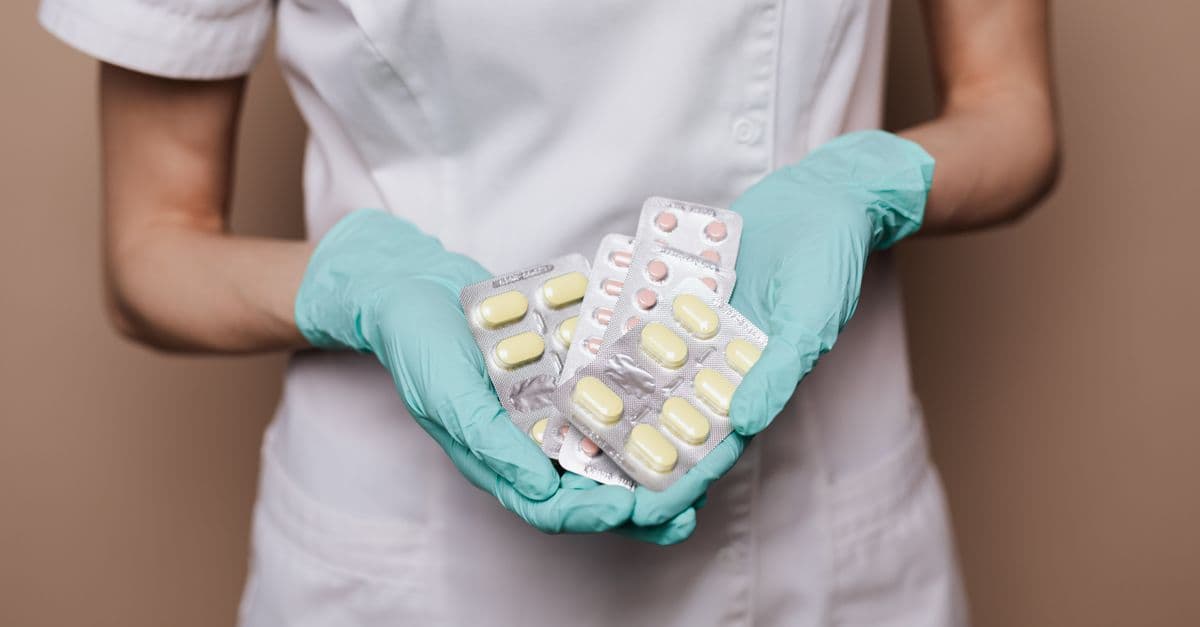
Photo: www.kaboompics.com / Pexels
On September 3, 1928, Alexander Fleming returned from a two-week holiday to a cluttered lab bench at St. Mary's Hospital in London and noticed something odd: a stray mold spore had contaminated one of his petri dishes, and the Staphylococcus bacteria around it had died (American Chemical Society). That accident is usually told as the whole penicillin story. It is only the first chapter. Turning a mold's chemical defense into a manufacturable drug took thirteen more years, two more scientists, a world war, and an American cornfield.
The contaminated dish that started it
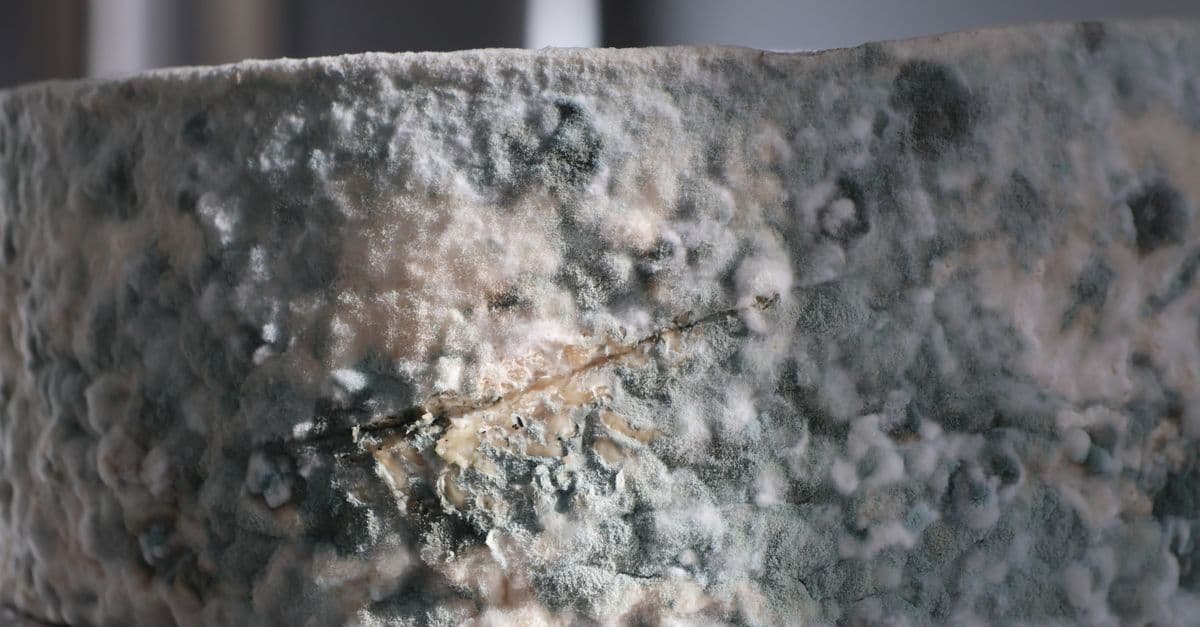
Fleming was studying Staphylococcus, a genus of bacteria responsible for boils, abscesses, and wound infections, when he found a colony of blue-green mold growing on one of his unwashed plates. Around the mold was a clear ring where the bacteria simply had not grown. Something the mold produced was killing them, or at least stopping them from multiplying.
Fleming identified the mold as a strain of Penicillium, later refined to Penicillium notatum, and named the active substance penicillin (Live Science). He tested crude filtrate from the mold broth against several types of bacteria and found it worked against many gram-positive species, including the ones that cause strep throat, pneumonia, and diphtheria, while leaving some other bacteria untouched. He published his findings in the British Journal of Experimental Pathology in 1929.
That is where most textbook summaries stop, and where the real problem starts.
Penicillin, as Fleming had it, was a weak, unstable broth. It broke down quickly outside the lab, and Fleming himself was not a chemist. He lacked the tools to purify it, concentrate it, or prove it could work safely inside a living body rather than just a petri dish. He tried, on and off, for a few years, then largely moved on to other research. Penicillin needed a chemist's precision and a pathologist's persistence, and it would take a different pair of scientists working together to supply both.
Why a discovery is not a medicine
This is the gap that separates "found a phenomenon" from "built a drug," and it is where most popular retellings of the penicillin story go wrong. A useful way to think about it: Fleming discovered that a chemical existed and that it had an effect. He did not discover how to isolate that chemical in pure form, how much of it a sick person needed, how to keep it stable long enough to inject, or how to produce it in quantities larger than what fits in a lab flask. Those are four separate, very hard problems, and each one requires different expertise.
Think of it like the difference between noticing that lightning can be captured and building a battery. Benjamin Franklin's kite experiment proved electricity existed in a form that could be drawn from the sky, but it took Alessandro Volta, Michael Faraday, and generations of engineers to turn that observation into something you could plug an appliance into. Fleming's petri dish was the kite. Purified, mass-produced penicillin needed its own version of the battery, the generator, and the power grid.
Who actually gets credit for making penicillin usable?
Alexander Fleming discovered penicillin's antibacterial effect in 1928. Howard Florey and Ernst Chain, working at Oxford's Sir William Dunn School of Pathology, led the team that purified it, tested it in animals and humans, and proved it could treat systemic infection. Norman Heatley developed the extraction techniques that made scaled production possible.
The Oxford team that revived a forgotten paper
In the late 1930s, Howard Florey, an Australian pathologist running the Dunn School of Pathology at Oxford, and Ernst Chain, a biochemist who had fled Nazi Germany in 1933, were searching scientific literature for naturally occurring antibacterial substances. They came across Fleming's decade-old paper and decided penicillin was worth a serious chemistry effort.
Chain, working with fellow chemist Edward Abraham, spent nearly two years developing a method to extract and concentrate penicillin from the mold broth in a stable, purified form (Science History Institute). A third team member, Norman Heatley, devised a technique that transferred the active compound back and forth between water and solvent by shifting its acidity, a process that let the team purify usable quantities without industrial equipment (Understanding Animal Research).
By May 1940, they had enough purified penicillin to test whether it could cure infection in a living animal, not just kill bacteria on a dish.
What did the famous mouse experiment actually prove?
On May 25, 1940, the Oxford team infected eight mice with a lethal dose of Streptococcus pyogenes. Four received penicillin injections; four did not. Sixteen and a half hours later, the treated mice were alive and the untreated mice were dead (Longitude Prize). It was the first hard evidence that penicillin could cure a systemic bacterial infection inside a body, not just clear a bacterial culture in glass.
Florey and Chain published the result in The Lancet on August 24, 1940. The next question was whether it would work in a human, and how much of it that would take.
The first human patient, and why he still died
In early 1941, the Oxford team was ready to test penicillin on a person. Their first patient was Albert Alexander, a 43-year-old Oxford police officer who had developed overwhelming sepsis after a small scratch from a rose thorn became infected with staphylococci and streptococci, spreading to his scalp, face, and lungs (The Conversation).
On February 12, 1941, Charles Fletcher, a young doctor working with Florey, injected Alexander with penicillin. Within a day, his fever dropped and the infection visibly retreated. It looked like a medical miracle, and for ten days, it was one.
Then the team ran out of drug. Purified penicillin was so scarce that researchers had been recovering it from Alexander's own urine and reinjecting it to stretch the supply. Once the reserves were exhausted, the infection returned unchecked. Albert Alexander died on March 15, 1941 (New Statesman).
Alexander's case proved the treatment principle and exposed its limiting factor at the same moment. Oxford's lab-scale production, essentially growing mold in hundreds of hospital bedpans and biscuit tins because no purpose-built equipment existed, could never supply enough penicillin for more than a handful of patients at a time (Science Museum, London).
From bedpans to bioreactors: the wartime scale-up
Britain in 1941 was fighting for survival and had no pharmaceutical capacity to spare on unproven drug manufacturing. Florey made a decision that shaped the rest of the story: in July 1941, he and Norman Heatley flew to the United States to find an American partner capable of mass production (Science History Institute).
Heatley spent six months working at the USDA's Northern Regional Research Laboratory in Peoria, Illinois. There, a researcher named Andrew Moyer discovered that adding corn steep liquor, a cheap byproduct of corn starch processing, to the fermentation medium dramatically increased penicillin yields, and swapping glucose for lactose as the sugar source pushed output even higher, reaching about 20 units of penicillin per milliliter, several times what the Oxford flask method produced (ACS Landmarks).
The bigger leap was mechanical, not chemical. American pharmaceutical companies, including Pfizer, adapted an existing industrial process called deep-tank fermentation, originally used for citric acid production, to grow Penicillium mold in large steel tanks instead of shallow dishes. Air was pumped through the tanks continuously while mechanical stirrers kept the mold suspended and aerated, letting a single tank produce what would have taken thousands of bedpans at Oxford (ACS Landmarks).
The results compounded fast. At the end of 1942, the United States had enough penicillin to treat fewer than 100 patients total. By September 1943, supply had grown enough to meet the demands of the entire Allied military (Wikipedia, citing period production records). By the D-Day landings in June 1944, penicillin was standard-issue for treating infected battlefield wounds, a change that dramatically cut deaths from wound infection compared to earlier wars.
Why did it take American industry instead of British labs?
Britain's wartime economy was too stretched to fund new pharmaceutical manufacturing capacity in 1941. The United States had both the untapped industrial capacity and, through the USDA lab in Peoria, the specific fermentation expertise needed to solve penicillin's yield problem, so Florey and Heatley brought the Oxford science to American production lines instead.
Fleming, Florey, and Chain: comparing three different jobs
The "who invented penicillin" question is really three separate questions wearing one trench coat. Each man solved a distinct problem, and none of the three could have finished the job alone.
Table: What each key scientist actually contributed to penicillin
| Scientist | Role | Key contribution | Time period |
|---|---|---|---|
| Alexander Fleming | Discoverer | Observed penicillin's antibacterial effect and named the compound | 1928–1929 |
| Ernst Chain | Biochemist | Developed methods to purify and concentrate penicillin into a stable form | 1938–1940 |
| Howard Florey | Pathologist, team lead | Directed the Oxford research, designed the animal and human trials | 1938–1941 |
| Norman Heatley | Biochemist, engineer | Invented the back-extraction purification technique and scaled early production | 1938–1943 |
| Andrew Moyer | USDA microbiologist | Found the corn steep liquor and lactose combination that raised fermentation yields | 1941–1943 |
Roles and dates drawn from Science History Institute, ACS Landmarks, and Longitude Prize historical summaries.
Fleming's Nobel Prize, shared with Florey and Chain in 1945, reflects this division of labor. The Nobel committee did not award the prize for a single discovery; it recognized discovery, purification, and proof of therapeutic effect as three linked but distinct achievements, credited to three different people (Science History Institute).
Why the "lucky accident" story misleads readers
The popular version of the penicillin story treats it as a single flash of luck: mold blows in a window, Fleming notices, humanity gets antibiotics. That version is not wrong about the mold. It is wrong about everything after the mold.
A contaminated petri dish happens in labs constantly; most researchers simply throw the plate away. What made Fleming's observation matter was that he stopped to ask why the bacteria near the mold had died, then spent real effort testing the substance against other organisms before publishing. That is closer to disciplined curiosity than pure luck.
But even crediting Fleming fully for the observation, the twelve-year gap between his 1929 paper and the first successful human treatments in 1941 is the real story. Ideas that never get engineered into usable form do not save anyone. The reason penicillin became "the drug that changed the twentieth century" rather than a forgotten footnote is Chain's chemistry, Florey's clinical rigor, Heatley's extraction method, and an American fermentation breakthrough that had nothing to do with a London hospital at all.
This pattern repeats across the history of technology. Compare it with how ARPANET's first message in 1969 demonstrated that packet switching worked, but it took Vint Cerf and Bob Kahn's 1974 TCP/IP protocol, and another decade of infrastructure building, before "the internet" resembled anything a normal person could use. Or how the earliest calculating machines proved that mechanical computation was possible centuries before anyone could manufacture a computer cheap enough for a household. A demonstration and a deployable technology are different achievements, built by different kinds of people, usually separated by years or decades.
What penicillin actually does inside the body
Penicillin belongs to a class of antibiotics called beta-lactams, named for the four-membered ring structure at the core of the molecule. Bacteria build a rigid outer wall out of a mesh-like material called peptidoglycan, which keeps the cell from bursting under internal pressure, similar to how a brick wall gives a building structural integrity against wind.
Penicillin blocks the enzymes bacteria use to link the final cross-strands of that wall together. Without those cross-links, the wall stays weak. As the bacterium tries to grow and divide, internal pressure ruptures the incomplete wall and the cell dies (PMC review, "The Discovery of Penicillin"). This is why penicillin mainly affects actively growing, dividing bacteria rather than dormant ones, and why it has little effect on human cells, which do not build peptidoglycan walls at all. That selectivity, killing bacteria while mostly sparing the patient, is exactly what made penicillin so much safer than earlier antimicrobial treatments like heavy-metal compounds.
Why doesn't penicillin work against every infection?
Penicillin only affects bacteria that build a peptidoglycan cell wall using the specific enzymes it blocks, so it has no effect on viruses, which have no cell wall at all, and it struggles against gram-negative bacteria, which have an extra outer membrane that blocks the drug from reaching its target. Bacteria can also evolve enzymes called beta-lactamases that chemically break penicillin apart before it can act.
The resistance problem penicillin's own discoverer predicted
Fleming used his 1945 Nobel Prize acceptance speech to warn about exactly the failure mode that has since become one of medicine's biggest challenges. He cautioned that underdosing patients with penicillin could let weaker bacteria survive, breed, and pass resistance on to future bacterial generations, effectively training pathogens to withstand the drug that was supposed to kill them.
That warning proved accurate. Bacteria evolve resistance through several mechanisms: producing enzymes that break down the antibiotic, altering the target proteins the drug binds to, or pumping the drug back out of the cell before it can act. Every course of antibiotics that does not fully clear an infection gives surviving bacteria a chance to pass resistance traits to the next generation, and resistant strains can share those traits with entirely different bacterial species through a process called horizontal gene transfer.
The scale of the resulting problem is not abstract. In the United States alone, antimicrobial-resistant infections cause more than 2.8 million illnesses and over 35,000 deaths every year, according to the CDC's Antibiotic Resistance Threats report; when Clostridioides difficile infections are included, the toll exceeds 3 million infections and 48,000 deaths annually (CDC). Globally, a 2019 analysis published in The Lancet estimated that bacterial antimicrobial resistance was directly responsible for 1.27 million deaths and was associated with nearly 5 million deaths worldwide that year (The Lancet). More recent modeling projects that more than a million people will die annually from antibiotic-resistant infections between 2025 and 2050, with an estimated 1.91 million deaths in 2050 alone (CIDRAP, University of Minnesota).
That is the uncomfortable second half of the penicillin story: the same biological logic that let scientists engineer a cure also lets bacteria evolve around it, and every year of antibiotic use since 1943 has been, in effect, running a slow-motion evolutionary experiment on a global scale.
What people get wrong about the penicillin story
"Fleming discovered penicillin, so he made the drug." Fleming discovered the antibacterial effect and identified the mold. He did not purify penicillin into an injectable medicine, run animal trials, or organize mass production. Those steps required Florey, Chain, Heatley, Moyer, and an entire wartime industrial effort.
"It was pure luck with no scientific merit." The contamination itself was accidental, but Fleming's decision to methodically test the mold's effect against multiple bacterial species, rather than discard the plate, reflected trained scientific judgment. Accidents happen constantly in labs; recognizing which ones matter is a skill.
"Penicillin was an instant miracle cure once discovered." The Albert Alexander case shows the opposite. Even after the science worked, the drug remained too scarce to save the first patient it was tested on. The "miracle" required an additional two years of industrial engineering before penicillin could reliably save lives at scale.
"Antibiotic resistance is a recent problem caused by modern overuse." Resistant bacterial strains began appearing within years of penicillin's introduction, and Fleming himself warned about the mechanism in his 1945 Nobel address, years before resistance became a public health crisis. Overuse accelerated a process that started almost immediately.
"All antibiotics work the same way penicillin does." Penicillin and its chemical relatives (the beta-lactams) disrupt bacterial cell wall construction specifically. Other antibiotic classes, such as tetracyclines or macrolides, block bacterial protein synthesis or DNA replication through entirely different mechanisms, which is why doctors switch drug classes when one type fails against a resistant infection.
What this means
Penicillin's story is often flattened into a single image: a messy petri dish and a lucky mold spore. The more accurate version involves an accidental observation, a decade of scientific neglect, two refugee and immigrant scientists who revived a forgotten paper, a mouse experiment that proved the concept, a human patient whose death exposed the real bottleneck, and an American fermentation breakthrough that finally made mass production possible. Every stage required a different kind of expertise, and skipping any one of them would have left penicillin exactly where it sat for a decade after Fleming's paper: an interesting observation nobody could use. Other inventions also needed years of development beyond the first spark, as in the airplane and the Wright brothers' controlled flight.
The same discovery also handed medicine a countdown clock. Fleming's own warning about resistance, delivered the same year he won the Nobel Prize for the drug, has proven prophetic enough that global health agencies now treat antimicrobial resistance as one of the defining threats of modern medicine. Penicillin did not just launch the antibiotic era. It launched the arms race that has defined it ever since.
Read next:
Frequently Asked Questions
Q: Who actually invented penicillin? A: No single person invented penicillin. Alexander Fleming discovered its antibacterial effect in 1928, but Howard Florey, Ernst Chain, and Norman Heatley at Oxford turned it into a purified, testable medicine between 1938 and 1941, and American industrial scientists solved the mass-production problem between 1941 and 1943.
Q: When was penicillin first discovered? A: Alexander Fleming discovered penicillin's antibacterial properties on September 3, 1928, at St. Mary's Hospital in London, after noticing that a contaminating mold had killed the Staphylococcus bacteria growing on his petri dish.
Q: When was penicillin first used to treat a human patient? A: The first human patient treated with penicillin was Albert Alexander, an Oxford police officer with severe sepsis, injected on February 12, 1941. He initially improved but died on March 15, 1941, after the limited supply of penicillin ran out.
Q: Why did it take so long to turn penicillin into a medicine? A: Fleming lacked the chemistry expertise to purify and stabilize penicillin, and the compound broke down quickly outside the lab. It took Ernst Chain's purification chemistry, Norman Heatley's extraction technique, Howard Florey's clinical testing, and eventually American industrial fermentation methods to solve production at scale, a process that took roughly thirteen years from discovery to widespread availability.
Q: How does penicillin actually kill bacteria? A: Penicillin blocks the enzymes bacteria use to build their rigid outer cell wall. Without complete cross-links in the wall, the cell cannot withstand internal pressure as it grows, and it ruptures and dies. Human cells lack this type of wall, which is why penicillin is selectively toxic to bacteria.
Q: Did Alexander Fleming win the Nobel Prize for penicillin? A: Yes. Fleming shared the 1945 Nobel Prize in Physiology or Medicine with Howard Florey and Ernst Chain, recognizing discovery, purification, and clinical proof as three separate, necessary contributions to the same drug.
Q: What role did the United States play in penicillin's history? A: American industry solved penicillin's production bottleneck. USDA researcher Andrew Moyer developed a corn steep liquor fermentation formula that dramatically raised yields, and companies including Pfizer adapted deep-tank fermentation technology to grow the mold at industrial scale, taking supply from under 100 treatable patients in late 1942 to enough for the entire Allied military by September 1943.
Q: Why do bacteria become resistant to antibiotics like penicillin? A: Bacteria develop resistance through mutations and gene transfer that let them break down the antibiotic, alter the molecular target it binds to, or pump the drug out of the cell before it can act. Incomplete antibiotic courses let partially resistant bacteria survive and multiply, accelerating the spread of resistance traits.
Q: How big of a problem is antibiotic resistance today? A: In the United States, antimicrobial-resistant infections cause more than 2.8 million illnesses and over 35,000 deaths annually, according to the CDC. Globally, a 2019 study in The Lancet attributed 1.27 million deaths directly to bacterial resistance, and researchers project more than a million resistance-related deaths per year through 2050.
Q: Is penicillin still used in medicine today? A: Yes, penicillin and its chemical derivatives remain in wide use, particularly against streptococcal infections, syphilis, and certain other bacterial infections that have not developed resistance to it, though doctors increasingly rely on newer beta-lactam derivatives and alternative antibiotic classes where resistance has emerged.
Sources
- American Chemical Society, "Alexander Fleming Discovery and Development of Penicillin"
- Live Science, "Alexander Fleming wakes up to funny mold in his petri dish"
- Science History Institute, "Alexander Fleming"
- Science History Institute, "Howard Walter Florey and Ernst Boris Chain"
- Longitude Prize, "Antibiotic Pioneers: Howard Florey & Ernst Chain"
- Understanding Animal Research, "Penicillin"
- The Conversation, "Guns, not roses – the true story of penicillin's first patient"
- New Statesman, "The legacy of penicillin's first patient"
- Science Museum, London, "How was penicillin developed?"
- ACS Landmarks, "Penicillin Production through Deep-tank Fermentation"
- PMC, "The Discovery of Penicillin—New Insights After More Than 75 Years of Clinical Use"
- CDC, "About Antimicrobial Resistance"
- The Lancet, "Global burden of bacterial antimicrobial resistance in 2019"
- CIDRAP, University of Minnesota, "Study forecasts more than 39 million deaths from antimicrobial resistance by 2050"
Follow new articles
Add SciHub101 to your feed reader to see new science and technology stories.
About the Author
SciHub101 is an independent science and technology publication founded and edited by Buğra Sözeri, a software engineer and app developer based in Türkiye. AI tools assist with drafting and research. Source documentation in the existing archive is uneven, and articles are being reviewed and corrected. The Editorial Team byline identifies editorial responsibility; it does not certify specialist or independent human review. Where we compare products, anything built by our own team is labelled as such — see the editorial guidelines and About page for how corrections and disclosures work.
Related Articles
Battery Invention: From Volta Pile to Lithium-Ion
The battery begins with Volta's pile, but modern batteries evolved through chemistry, materials, portability, and rechargeable systems.
Airplane Invention: The Wright Brothers and Controlled Flight
The Wright brothers solved controlled powered flight, but gliders, engines, wind tunnels, and earlier aviation pioneers all mattered.
The Discovery of Penicillin — SciHub101
How a contaminated petri dish in 1928 led to the world's first antibiotic, saving an estimated 200 million lives across eight decades of medicine.
The Fleming Penicillin Discovery: How an Accident Changed Medicine
In 1928, Alexander Fleming noticed a mold dissolving bacteria on a contaminated plate. Here is the full story of the discovery, the 12-year gap before clinical use, and how it transformed medicine.
Alexander Fleming: The Messy Lab That Changed Medicine Forever — SciHub101
Alexander Fleming's life, discoveries, and verified quirks: the contaminated petri dish that became penicillin, painting with bacteria, and what Florey and Chain actually did.
Camera Invention: From Camera Obscura to Digital Sensors
The camera evolved from the camera obscura to chemical photography and digital sensors. This guide explains the chain of inventions.