How Airplanes Fly — Physics of Flight
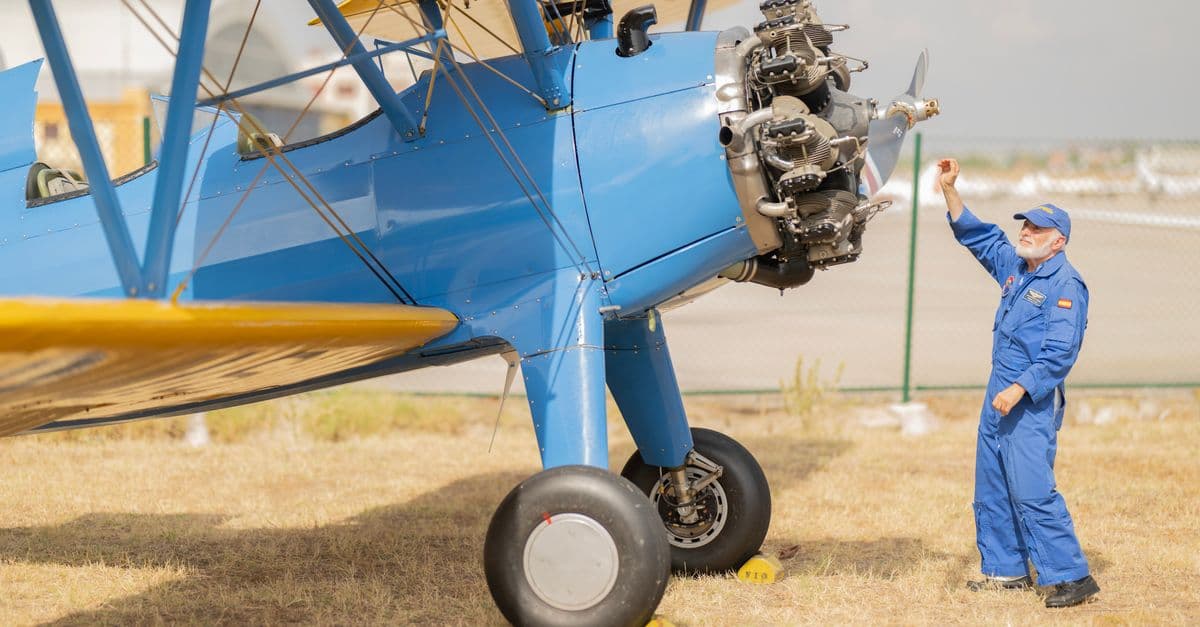
Photo: Miguel Cuenca / Pexels
A Boeing 777 weighs around 350 tonnes fully loaded. It rolls down a runway, hits about 290 km/h, and lifts cleanly into the air. The physics that makes this possible is real, well-understood, and — somewhat embarrassingly — taught wrong in most introductory textbooks.
Here's how flight actually works, and why "equal transit time" and a simplified Bernoulli's principle aren't enough.
The Four Forces
Every aircraft in flight has four forces acting on it:
- Lift — upward, perpendicular to airflow.
- Weight — downward, gravity acting on mass.
- Thrust — forward, generated by the engines.
- Drag — backward, resistance from air.
Level cruise means lift equals weight and thrust equals drag. Climbing means thrust exceeds drag and lift exceeds weight. Descending is the reverse.
That's the easy part. Now for the question every pilot, engineer, and curious eight-year-old asks: where does lift come from?
The Lift Myth You Were Probably Taught
The popular explanation goes like this: the top of a wing is curved, so air on top has to travel farther in the same time as air below. Faster air, by Bernoulli's principle, means lower pressure. Lower pressure on top means the wing gets pushed up.
This is wrong in several ways.
- "Equal transit time" is a myth. There is no law of physics requiring air molecules that separate at the leading edge to meet at the trailing edge. In fact, air over the top reaches the back faster than air below.
- Flat plates can fly. Paper airplanes have no airfoil curvature and they generate lift just fine. So does a tilted barn door.
- It can't explain inverted flight. Stunt planes fly upside down. If only curvature mattered, they'd fall.
Bernoulli isn't wrong — pressure does decrease where velocity increases, and that does contribute to lift. The problem is the reason the air speeds up: it isn't equal transit time. It's flow being deflected and squeezed by the airfoil's shape and angle of attack.
The Real Story
Lift is produced by deflecting air downward. Wings push a huge mass of air down, and by Newton's third law, the air pushes the wing up with equal and opposite force. NASA explicitly emphasizes this Newtonian explanation in its modern educational materials.
The two perspectives — Newton (air mass deflected down) and Bernoulli (lower pressure above the wing) — are not in conflict. They are two ways of describing the same flow field. A complete aerodynamics treatment uses both.
The two main shapes of contribution:
- Airfoil camber — the curved upper surface causes the air to follow a curved path. Following a curve requires a net force toward the center of curvature, which means lower pressure on the upper surface.
- Angle of attack (AoA) — tilting the wing nose-up forces the air below to deflect downward. This is the dominant lift-producer for most aircraft at takeoff and landing.
Both effects raise the air's downward momentum behind the wing — and equal-and-opposite that, you get lift.
Stall — When Lift Disappears
Lift increases with angle of attack, up to a point. Past the critical angle of attack (typically 15–20° for a clean wing), the airflow separates from the upper surface and becomes turbulent. Lift collapses. This is a stall, and it can happen at any airspeed — slow, fast, climbing, level, or descending. Pilots monitor airspeed and AoA together.
Several modern aviation accidents — including the 2018 Lion Air and 2019 Ethiopian Airlines 737 MAX crashes — involved AoA sensor failures feeding bad data to the MCAS automatic trim system, which mistakenly believed the aircraft was stalling and forced the nose down.
Thrust — How Engines Push Forward
Thrust mostly comes from Newton's third law applied to engines. Anything that throws mass backward gets pushed forward.
| Engine Type | How It Works | Where Used |
|---|---|---|
| Turbojet | Burns fuel, ejects hot gas at high velocity | Older airliners, military |
| Turbofan | Big front fan moves huge bypass air mass; core burns less | Modern airliners (most efficient) |
| Turboprop | Turbine spins a propeller | Regional, slow aircraft |
| Ramjet | No moving compressor — only works at supersonic speeds | Missiles, experimental |
| Piston/propeller | Internal combustion engine drives propeller | Small general aviation |
All gas turbines follow the Brayton cycle: intake → compress → combust → expand → exhaust. Modern high-bypass turbofans like those on the 787 are 80–90% bypass air. The hot core is a small fraction of total thrust. That's why airliners have those huge front fans — it's far more efficient to move a lot of air a little than a little air a lot.
Drag — Two Kinds
- Parasite drag — friction from air sliding over the skin, plus form drag from the aircraft's shape. Grows with the square of airspeed.
- Induced drag — the unavoidable side effect of producing lift. Wingtip vortices spill lift sideways. Drops with airspeed.
Total drag has a U-shaped curve. Every aircraft has a most-efficient cruise speed where the two cross.
Why Airliners Fly High
Above 35,000 feet (10,700 m), air density is about a quarter of sea level. Parasite drag scales with density. Engines have to work less to push through thinner air. Fuel burn drops. Range increases. Cabin pressurization is the trade-off — modern cabins are pressurized to roughly 6,000–8,000 ft equivalent.
The catch is that thin air also means less lift at a given speed. Aircraft maintain enough indicated airspeed by flying faster — typical cruise Mach 0.78–0.85 for airliners.
The Control Surfaces
- Ailerons — roll the aircraft around its long axis.
- Elevators — pitch nose up/down.
- Rudder — yaw (point) left/right.
- Flaps — extend rear of wing to increase camber and area for low-speed lift.
- Slats — extend leading edge to delay stall at high AoA.
- Spoilers — disrupt lift on top of wing for descent and after landing.
Flaps and slats are what let huge jets land at survivable speeds. Without them, an A380 would need a 5-km runway.
Supersonic — A Different Game
Above Mach 1, air can't get out of the way fast enough, and shockwaves form. Drag spikes. Sonic booms travel along the ground. Concorde (retired 2003) cruised at Mach 2, burning enormous fuel for the privilege. Modern attempts (Boom Overture, NASA X-59 quiet supersonic) try to reshape shockwaves to reduce the boom.
For a closer look at extreme propulsion, see how rockets work.
Modern Aviation Safety
Commercial aviation is staggeringly safe. Globally, the fatal accident rate has hovered around 0.06 per million departures in recent years — orders of magnitude safer than driving. Improvements come from redundancy, better training, automation, and shared incident reporting.
The most common in-flight discomfort — turbulence — comes from:
- Jet stream wind shear (clear-air turbulence).
- Thunderstorm updrafts and downdrafts.
- Mountain waves (air over terrain).
- Wake vortices from other aircraft.
Climate models suggest clear-air turbulence is increasing as jet streams strengthen. Buckle up.
FAQ
Q: So is the "Bernoulli explanation" wrong? A: It's incomplete and often misapplied. Bernoulli's principle is correct physics. The "equal transit time" justification for why air speeds up over a wing is the part that's wrong. Modern explanations use both Bernoulli and Newton's third law together.
Q: How can planes fly upside down? A: By using a positive angle of attack relative to the airflow even when inverted. A symmetric airfoil (common in aerobatic aircraft) produces no lift at zero AoA either way, so the pilot simply tilts the nose appropriately. Cambered airliner wings can do it briefly but inefficiently.
Q: What actually causes a stall? A: Exceeding the critical angle of attack. The airflow separates from the upper wing surface, lift collapses, and drag spikes. Recovery: reduce AoA (push nose down, even if counterintuitive near the ground).
Q: Why are modern jet engines so much quieter than older ones? A: High-bypass turbofans move large amounts of cooler air at lower velocity. Noise scales with the cube to the fifth power of jet velocity. Slower, fatter exhaust = quieter.
Q: How safe is flying really? A: Commercial aviation has roughly a 1-in-16-million risk of death per flight in developed-country airlines. Statistically you're safer in a plane than on the drive to the airport.
Q: Could a plane fly without engines? A: Yes — that's a glider. Even airliners glide. A 737 with both engines failed has a glide ratio around 17:1, meaning ~170 km of glide from 10 km altitude. The 2009 "Miracle on the Hudson" was a successful engines-out glide and water landing.
Sources
- NASA Glenn Research Center — "What Is Lift?" educational materials.
- Anderson, J. D. (2017) — Fundamentals of Aerodynamics.
- McLean, D. (2012) — Understanding Aerodynamics.
- FAA Pilot's Handbook of Aeronautical Knowledge.
- IATA Annual Safety Reports.
Follow new articles
Add SciHub101 to your feed reader to see new science and technology stories.
About the Author
SciHub101 is an independent science and technology publication founded and edited by Buğra Sözeri, a software engineer and app developer based in Türkiye. AI tools assist with drafting and research. Source documentation in the existing archive is uneven, and articles are being reviewed and corrected. The Editorial Team byline identifies editorial responsibility; it does not certify specialist or independent human review. Where we compare products, anything built by our own team is labelled as such — see the editorial guidelines and About page for how corrections and disclosures work.
Related Articles

How Fingerprint Sensors Work — Tech Explained
Optical, capacitive, and ultrasonic fingerprint sensors explained — how phones authenticate you in milliseconds without storing your print.
How 3D Printing Works — Additive Manufacturing
How 3D printing works explained: FDM, SLA, SLS, metal printing, materials, software workflow, real applications, and what additive manufacturing is good for.
How Jet Engines Work: The Physics of Flight Power
A jet engine swallows half a ton of air per second and turns it into 100,000 pounds of thrust. The physics inside is simpler than you might think.
Airplane Invention: The Wright Brothers and Controlled Flight
The Wright brothers solved controlled powered flight, but gliders, engines, wind tunnels, and earlier aviation pioneers all mattered.
How Do Airplanes Actually Fly?
Hundreds of tonnes of metal lifting off the ground feels like it shouldn't work. The physics is simpler than people think — and the popular "Bernoulli only" explanation is mostly wrong.
How Electricity Works — Electrons and Current
How electricity works: voltage, current, resistance, AC vs DC, power generation, the grid, and why birds don't get electrocuted.