The Jet Airliner — From the Comet's Fatal Flaw to the Age of Mass Air Travel — SciHub101
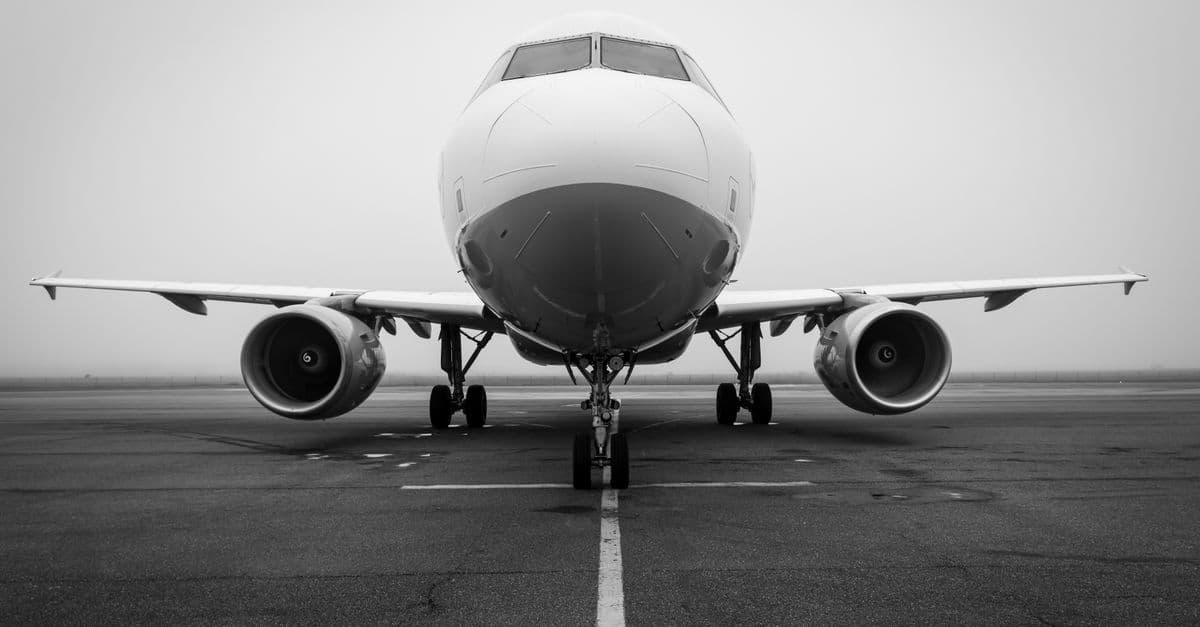
Photo: Joerg Mangelsen / Pexels
Before the jet airliner, crossing the Atlantic took at least 15 hours in a propeller-driven aircraft, and the noise, vibration, and altitude sickness made long-haul flight an ordeal reserved for the wealthy and the determined. The jet airliner changed what it meant to be on Earth — compressing geography, enabling global trade networks, and creating a form of human movement that simply did not exist before 1952. But the first chapter of that story was a catastrophe: the de Havilland Comet, Britain's great engineering triumph, began killing its passengers through a structural failure no one had fully anticipated, setting off an investigation that rewrote the rules of aircraft design for every manufacturer that followed.
What a Jet Airliner Is — and What Made It Different
A jet airliner uses one or more gas turbine engines — jet engines — to generate thrust by expelling hot exhaust gases rearward at high velocity, propelling the aircraft forward by Newton's third law. Unlike a propeller aircraft, which pushes air with a rotating blade, a jet engine accelerates a much larger mass of air through a confined pathway, reaching speeds and altitudes where propellers become inefficient.
The practical advantages for commercial aviation were immediate and dramatic. Jet airliners cruise at altitudes between 9,000 m and 13,000 m (29,500 to 43,000 ft), above most weather turbulence. They cruise at speeds of 800–950 km/h (430–513 knots), roughly twice the speed of the fastest piston-engine airliners. They have fewer moving parts in their engines than reciprocating piston engines, which means — in theory, and eventually in practice — greater mechanical reliability.
Think of the transition from piston to jet like switching from a reciprocating pump to a centrifugal pump: the first has pistons slamming back and forth hundreds of times a minute under extreme mechanical stress; the second is a continuous-flow machine with a single rotating element that runs smoothly for tens of thousands of hours between major overhauls. Jet engines are not simpler — they are extraordinarily complex — but they are mechanically steadier under sustained operation.
Source: Jet engine operating principles and altitude/speed advantages are described in standard aeronautical engineering references and summarized in the Boeing 707 Wikipedia article.
The Story of the Jet Airliner
The de Havilland Comet — World's First, Fatally Flawed (1952)
The de Havilland Aircraft Company of Hatfield, England, had designed and built the de Havilland Vampire jet fighter during World War II. By 1946, the company was developing a civilian jet transport. The result, the de Havilland DH.106 Comet, was an elegant aircraft: four de Havilland Ghost turbojet engines buried in the wing roots, a pressurized cabin for 36 to 44 passengers, and a distinctive design that had no precedent in commercial aviation.
The Comet entered service with the British Overseas Airways Corporation (BOAC) on May 2, 1952, on the London–Johannesburg route via Rome, Beirut, Khartoum, Entebbe, and Livingstone. It was a triumph of British engineering and national prestige. The Comet flew at 12,800 m (42,000 ft) and covered the London–Johannesburg route in 23 hours and 38 minutes, cutting the previous best time approximately in half.
Source: The Comet's May 2, 1952 entry into service and route details are documented in the de Havilland Comet Wikipedia article and the FAA's Comet accident lessons page.
The aircraft also introduced something novel: a fully pressurized cabin maintained at an effective altitude of around 2,400 m (8,000 ft) regardless of the aircraft's actual cruise altitude, so passengers could breathe normally at 12,800 m without oxygen masks. This pressurization was achieved by pumping outside air into the cabin, maintaining the fuselage interior at a pressure higher than the outside atmosphere. At cruise altitude, the pressure differential across the fuselage skin was approximately 57 kPa (8.25 psi) — a significant structural load that had to be absorbed by the airframe on every flight.
The Crashes — and What They Revealed
Three Comets were lost in catastrophic in-flight breakups in 1953 and 1954.
- BOAC Flight 781 broke apart over the Tyrrhenian Sea near Elba on January 10, 1954, killing all 35 aboard.
- South African Airways Flight 201 broke apart over the Mediterranean near Naples on April 8, 1954, killing all 21 aboard.
BOAC voluntarily grounded its Comet fleet. The British government launched the most thorough aircraft accident investigation yet conducted, centered at the Royal Aircraft Establishment (RAE) at Farnborough. Engineers conducted an innovative test: they placed the entire fuselage of Comet G-ALYU in a water tank, filled it with water to simulate cabin pressure, and repeatedly pressurized and depressurized it hydraulically while simultaneously flexing the wings to simulate flight loads.
Source: The water-tank testing methodology and the March 1954 investigation timeline are described in detail in the RAF Museum's Comet Failure archive and the de Havilland Comet Wikipedia article.
On June 24, 1954, after 3,057 simulated flight cycles (1,221 actual and 1,836 simulated), G-ALYU burst open. The failure originated at the corner of one of the fuselage's square windows. The Comet's windows had been designed with right-angle corners rather than rounded corners to maximize the visible area. At each corner, the stress in the aluminum skin was approximately 4 to 5 times higher than in the straight sections — a phenomenon called stress concentration. Over hundreds of pressurization cycles, fatigue cracks propagated invisibly from these stress concentrations until the skin could no longer contain the pressure differential and catastrophically decompressed.
Source: The metal fatigue mechanism and the stress concentration at square window corners are described in the ScienceDirect article on fatigue failure of the Comet I and the FAA Comet accident page.
The Farnborough investigation established two findings that permanently changed aviation:
- Rounded windows and doors: All subsequent commercial jet aircraft have rounded (elliptical or oval) openings. The circular geometry distributes stress evenly around the perimeter, eliminating stress concentrations.
- Fatigue testing as certification requirement: The Comet disaster established that aircraft must be tested to their full design life plus a significant safety factor before being certified for passenger service — a requirement that remains the foundation of aircraft certification worldwide.
Source: The post-Comet engineering standards, including rounded window requirements and fatigue certification, are described in AeroXplorer's Comet analysis.
The Comet killed 56 people in its first two years of service. It also, through its wreckage and investigation, taught the world how to build pressurized aircraft that last.
Boeing 707 — The Aircraft That Actually Built the Jet Age (1958)
While the Comet investigation was ongoing, Boeing was developing its own jet airliner. Unlike de Havilland, Boeing could apply the Comet's hard-won lessons from the start: rounded window corners, more conservative structural margins, better fatigue analysis. Boeing also benefited from its experience building the B-52 bomber, which had generated enormous in-house expertise in jet-powered large-aircraft design.
Pan American World Airways signed the launch order for the Boeing 707 in 1955. On October 26, 1958, Pan Am launched scheduled 707 service from New York to Paris — the first regular transatlantic jet passenger service. The flight carried 111 passengers and 12 crew, crossing in approximately 8 hours.
Source: Pan Am's October 26, 1958 inaugural 707 service details are documented in EBSCO Research Starters on Boeing 707 Commercial Service and Britannica's Boeing 707 entry.
The 707 seated 140–189 passengers in typical configurations, compared to the Comet's 36–44. Ticket prices dropped. Passenger volumes grew. Airlines that had competed primarily on dining quality and cabin comfort now competed on schedule frequency. By the mid-1960s, the jet airliner had displaced ocean liners as the primary means of transatlantic travel — a shift that took less than a decade.
The 707's design established the template that most subsequent commercial jet airliners would follow: swept wing (typically 35 degrees), rear-mounted engines in pods (in the 707's case, four underwing), and a pressurized fuselage with oval windows. Derivatives of this architecture — the 727, 737, 747, and their Airbus equivalents — remained the dominant form for the next 60 years.
Concorde — The Supersonic Parenthesis (1969–2003)
British and French engineers, working from a 1962 intergovernmental agreement, designed the Concorde to do what the 707 could not: fly passengers faster than the speed of sound. The aircraft's first test flight took place on March 2, 1969, from Toulouse, piloted by André Turcat. Concorde went supersonic for the first time on October 1, 1969.
Source: Concorde's March 2, 1969 first flight and supersonic milestone dates are documented in the Concorde Wikipedia article and Britannica's Concorde entry.
Concorde entered commercial service in January 1976, with British Airways flying London–Bahrain and Air France flying Paris–Rio de Janeiro simultaneously. Transatlantic service (London–New York and Paris–New York) began in November 1977. Concorde's cruising speed was Mach 2.04 — approximately 2,179 km/h (1,354 mph) — at an altitude of 18,300 m (60,000 ft). A London–New York crossing took approximately 3.5 hours, compared to 7–8 hours on a subsonic jet.
The structural engineering challenge of sustained supersonic cruise was extreme. At Mach 2, aerodynamic heating raises the fuselage skin temperature to approximately 127°C — hot enough to require aluminum alloys with high heat tolerance rather than the standard alloys used in subsonic aircraft. The aircraft's nose cone extended by approximately 30 cm (12 inches) in flight due to thermal expansion.
Source: Concorde's cruise altitude, speed, and thermal expansion specifications are documented in EBSCO Research Starters on Concorde and the Smithsonian Air and Space Museum's Concorde entry.
Only 20 Concordes were ever built. The economics never worked. The aircraft carried 100 passengers and burned roughly the same fuel as a 747 carrying 450. A round-trip London–New York ticket in Concorde's final years cost approximately £7,000–£10,000 (about $10,000–$14,000 in 2003 dollars). The aircraft was sustained commercially only because both British Airways and Air France received their aircraft from their governments at no cost.
On July 25, 2000, Air France Concorde Flight 4590 struck a piece of debris on the runway during takeoff from Paris Charles de Gaulle airport. A tire burst, and a fragment of rubber struck the underside of the wing, rupturing a fuel tank. The aircraft crashed 96 seconds after takeoff, killing all 109 people aboard and 4 on the ground. All 12 remaining Concordes were grounded. Modified Concordes returned to service in November 2001 but carried far fewer passengers in the post-9/11 aviation downturn. British Airways and Air France announced Concorde's retirement in April 2003. The last commercial Concorde flight took place on October 24, 2003.
Source: The July 25, 2000 Air France Flight 4590 crash and Concorde's retirement details are in the Concorde Wikipedia article.
The Airbus A380 — The Superjumbo That Arrived Late (2007–2021)
Airbus developed the A380 double-deck widebody to challenge the Boeing 747's dominance of high-capacity long-haul routes. The A380 entered service with Singapore Airlines on October 25, 2007. At full capacity it could carry 853 passengers in an all-economy configuration, though typical mixed-class layouts ran to 555 passengers.
Source: A380 entry into service with Singapore Airlines in October 2007 is documented in standard aviation history sources.
The timing proved poorly judged. Airlines increasingly preferred smaller, fuel-efficient twin-engine widebodies — the Boeing 787 and Airbus A350 — that could profitably serve point-to-point routes without requiring the enormous hub-to-hub passenger volumes the A380 needed to fill. In February 2019, Airbus announced it would end A380 production after Emirates, the aircraft's largest customer, reduced its order. The last A380 was delivered in December 2021.
Key People and Their Contributions
Geoffrey de Havilland (1882–1965): Founded the de Havilland Aircraft Company in 1920. The Comet was his company's greatest achievement and greatest disaster within three years of each other. He died two years after the last Comet was delivered, before the full commercial recovery of British aviation.
Juan Trippe (1899–1981): Pan American World Airways founder who was the decisive customer for the Boeing 707 and later the Boeing 747. Trippe understood that the economics of mass air travel required large, fast aircraft and used Pan Am's purchasing power to drive the industry toward both. His 1966 order for 25 Boeing 747s forced Boeing to build a plane larger than anything previously flown.
André Turcat (1921–2016): Chief test pilot who flew Concorde's first flight on March 2, 1969. A graduate of the École Polytechnique, Turcat was both an engineer and a pilot — a combination that made him ideally suited to test an aircraft at the extreme edge of what aluminum airframes could survive.
Joe Sutter (1921–2016): Boeing engineer who led the 747 design team, earning him the nickname "Father of the 747." The 747 democratized long-haul air travel by reducing seat-mile costs to levels that made transatlantic fares accessible to middle-income travelers for the first time.
Source: Joe Sutter's role in the 747 design is documented in his memoir 747: Creating the World's First Jumbo Jet (Smithsonian Books, 2006).
Patent Disputes and Regulatory Conflicts
Commercial jet aviation's patent landscape was less contentious than many other industries because the core propulsion technology — the jet engine — was developed under wartime government contracts where patent rights were pooled or suppressed. The key disputes were regulatory rather than intellectual property conflicts.
The sonic boom problem: The United States Federal Aviation Administration banned overland supersonic commercial flight in 1973, citing noise and the structural effects of sonic booms on buildings. This ban applied to Concorde and effectively restricted it to transatlantic routes. The ban remains in force, though NASA and several manufacturers (Boom Supersonic, Lockheed Martin's Quiet Supersonic Technology program) are developing aircraft designed to produce lower-intensity "soft" sonic booms that might qualify for regulatory exemption.
Source: The FAA's 1973 overland supersonic ban and ongoing efforts to revise it are discussed in aviation regulatory literature and NASA's X-59 QueSST project documentation.
ETOPS and twin-engine overwater flight: For decades, international regulations required aircraft flying transoceanic routes to remain within 60 minutes of an emergency landing airport, calculated at single-engine cruise speed. This effectively mandated three- or four-engine aircraft for long overwater routes. Advances in jet engine reliability led the FAA to progressively relax this rule (Extended-range Twin-engine Operational Performance Standards, ETOPS) — first to 120 minutes in 1985, then 180 minutes in 1988, and ultimately to 330 minutes for the most reliable twin-engine aircraft. The Boeing 777 and 787 can now fly direct routes across the Pacific that would previously have required a four-engine aircraft.
The Unintended Consequences of the Jet Airliner
Mass Tourism and Overtourism
Before jet airliners, international tourism was functionally restricted to the wealthy. By the early 1970s, charter jet flights had made Mediterranean beach holidays accessible to working-class Northern Europeans. By the 2000s, budget airlines operating secondary airports had made a weekend trip from London to Porto or Edinburgh to Budapest routine and cheap.
The consequence is overtourism: cities like Venice, Barcelona, Dubrovnik, and Amsterdam now face residential displacement, infrastructure strain, and heritage site degradation driven by tourist volumes that pre-jet infrastructure was never designed to support. Venice receives approximately 5 million tourist visits annually. The city's resident population has fallen below 50,000 — roughly half its 1950 level — partly because the tourism economy has made it economically and practically uninhabitable for residents.
Source: Venice's population decline and tourist volume statistics are from multiple Italian demographic sources and widely reported in European news media.
The Carbon Cost
Aviation accounts for approximately 2.5 percent of global CO₂ emissions, but its full climate impact is estimated to be roughly 3.5 times higher when non-CO₂ effects (contrail cirrus formation, NOₓ-induced ozone formation at cruise altitude) are included.
Source: Aviation's 2.5 percent share of CO₂ emissions and the 3.5x multiplier for total warming impact are from the Lee et al. (2021) study in Atmospheric Environment, which is the most-cited assessment of aviation's full climate contribution.
The industry is pursuing several decarbonization pathways: sustainable aviation fuel (SAF, made from waste oils, agricultural residue, or synthetic processes), hydrogen combustion, and battery-electric propulsion for short-haul routes. SAF can reduce lifecycle CO₂ emissions by up to 80 percent compared to conventional jet fuel, but current global SAF production covers less than 0.1 percent of aviation fuel demand.
Source: SAF's 80 percent CO₂ reduction potential and current production levels are from the IEA's 2023 aviation decarbonization analysis.
The Pandemic Vulnerability
The 2020 COVID-19 pandemic demonstrated how completely global aviation had become embedded in supply chains, scientific collaboration, and economic migration. When governments closed borders and airlines grounded fleets, passenger volumes collapsed by approximately 66 percent globally in 2020 — the largest single-year decline in commercial aviation history. The financial damage exceeded $370 billion in airline losses.
Source: The 2020 66 percent passenger volume decline and financial losses are from IATA's 2020 annual report.
Where the Jet Airliner Stands Today
Commercial aviation is dominated by two families of aircraft:
| Segment | Boeing | Airbus |
|---|---|---|
| Single-aisle narrowbody | 737 MAX (8/9/10) | A320neo family (A319/A320/A321) |
| Small widebody | 787 Dreamliner | A330neo |
| Large widebody | 777X | A350-900/1000 |
| Very large | (no current offering) | A380 (production ended) |
Source: Current commercial aircraft product lines are documented on Boeing.com and Airbus.com.
The narrowbody market — A320neo and 737 MAX — dominates new aircraft orders by volume, driven by the profitability of short- and medium-haul point-to-point routes. The Boeing 737 MAX's two fatal crashes (Lion Air Flight 610 in October 2018 and Ethiopian Airlines Flight 302 in March 2019, killing 346 people in total) triggered the longest grounding of a commercial aircraft type in FAA history — 20 months — and exposed the regulatory capture risks in the FAA's delegated certification processes.
Source: The 737 MAX crashes and the 20-month grounding are documented by the FAA's official 737 MAX information page and the NTSB investigation records.
The next supersonic chapter is being written by Boom Supersonic, whose Overture aircraft targets Mach 1.7 service beginning in the late 2020s, using 100 percent sustainable aviation fuel. American Airlines and United Airlines have each placed conditional orders. NASA's X-59 QueSST demonstrator is testing quiet supersonic technology that could eventually allow overland supersonic flight if the FAA revises its 1973 ban.
FAQs About the Jet Airliner
Q: Why did the de Havilland Comet crash? A: Metal fatigue caused by repeated pressurization cycles cracking the fuselage skin, originating at the corners of the aircraft's square windows. At cruise altitude, the pressure differential across the fuselage skin was high enough that stress concentrations at the square window corners initiated invisible fatigue cracks after hundreds of flight cycles. Those cracks propagated until the fuselage catastrophically decompressed in flight. The disaster established rounded windows as a standard requirement in all subsequent commercial aircraft.
Q: What made the Boeing 707 more successful than the Comet? A: Three main factors: Boeing incorporated the Comet's structural lessons (rounded windows, better fatigue analysis) from the start; the 707 carried three to four times as many passengers, making it economically viable; and Boeing had US government backing through its B-52 bomber program, giving it manufacturing scale de Havilland lacked. The 707 also benefited from the massive US commercial aviation market Pan Am provided as launch customer.
Q: Why was Concorde retired? A: A combination of the July 2000 Paris crash, the post-9/11 downturn in business travel (Concorde's primary market), economics that were never viable without government subsidies, and an aging fleet with no replacement in sight. The aircraft were between 24 and 27 years old at retirement — old for any airliner.
Q: What is sustainable aviation fuel? A: SAF is jet fuel produced from non-petroleum feedstocks — waste cooking oils, agricultural residue, municipal solid waste, or synthetic processes using green hydrogen and captured CO₂. SAF is chemically compatible with existing jet engines and airport infrastructure, requiring no aircraft modification. It can reduce lifecycle CO₂ emissions by up to 80 percent versus conventional jet fuel, but costs 3 to 5 times more to produce and current global production covers less than 0.1 percent of aviation fuel demand.
Q: Will electric aircraft replace jet airliners? A: For short-haul routes under approximately 500 km, battery-electric regional aircraft are technically feasible and several are in development or entering service. For medium- and long-haul routes, battery energy density (roughly 260 Wh/kg for current lithium-ion cells) is too low to provide competitive range and payload. Hydrogen-powered aircraft (either fuel cell or hydrogen combustion) are a credible long-haul decarbonization option, with Airbus targeting hydrogen aircraft entry into service by 2035. For the foreseeable future, jet airliners burning liquid fuel will dominate routes over 2,000 km.
Q: How much does a modern commercial jet airliner cost? A: At list price (before airline negotiations and volume discounts), a Boeing 737 MAX 8 lists at approximately $121 million. An Airbus A321neo lists at approximately $129 million. A Boeing 787-9 lists at approximately $292 million. Airlines typically negotiate discounts of 40 to 60 percent off list price for large orders. No airline pays list price.
The Takeaway
The jet airliner was built on a tragedy. The Comet's catastrophic decompression failures killed 56 people and discredited Britain's aviation industry, but the investigation they prompted established the engineering principles — rounded windows, fatigue certification testing, pressurization analysis — that made every subsequent commercial jet safer. The Boeing 707 took those lessons and attached them to American industrial scale, producing the mass air travel market that reshaped global geography within a decade. Concorde showed that humans would pay extraordinary sums to reclaim time, and that economics and physics together set limits on what technology can sustain commercially. The jet airliner's unfinished business — decarbonization — is the defining engineering challenge of the next generation of aircraft designers, who are working in the same competitive pressure, institutional rivalry, and regulatory complexity that shaped the Comet's creators 75 years ago.
Read next:
Weekly digest
Stay ahead of the curve
Get the best science, AI, and tech stories delivered to your inbox every week. No spam — unsubscribe any time.
About the Author
SciHub101 is an independent science and technology publication founded and edited by Buğra Sözeri, a software engineer and app developer based in Türkiye. Articles are drafted against peer-reviewed literature and primary sources, fact-checked, and edited by a human before publication. Where we compare products, anything built by our own team is labelled as such — see the editorial guidelines and About page for how corrections and disclosures work.
Related Articles

The Invention of the Laser — SciHub101
How Townes and Schawlow's 1958 paper, Maiman's 1960 ruby device, and a 30-year patent war produced the most versatile tool in modern science.

The Invention of the Internet — SciHub101
How ARPANET's 1969 first message, packet switching theory, and Cerf and Kahn's 1974 TCP/IP paper created a network connecting 5.5 billion people.
Airplane Invention: The Wright Brothers and Controlled Flight
The Wright brothers solved controlled powered flight, but gliders, engines, wind tunnels, and earlier aviation pioneers all mattered.
The Helicopter: From da Vinci's Sketch to Mars
How Paul Cornu's 1907 hop, Focke's 1936 twin-rotor, and Sikorsky's 1939 VS-300 solved the problem of vertical controlled flight — and where it went next.

The Radar — How Bouncing Radio Waves Changed War and Weather — SciHub101
From Hülsmeyer's 1904 ship detector to Watson-Watt's Chain Home network, radar reshaped warfare, aviation safety, and meteorology in under a century.
The Jet Engine: How Two Engineers on Opposite Sides of a War Changed Flight
Frank Whittle patented the jet engine in 1930. Hans von Ohain flew one in 1939. Neither knew the other existed. Their parallel invention and eventual friendship is the story of modern aviation.