The Helicopter: From da Vinci's Sketch to Mars
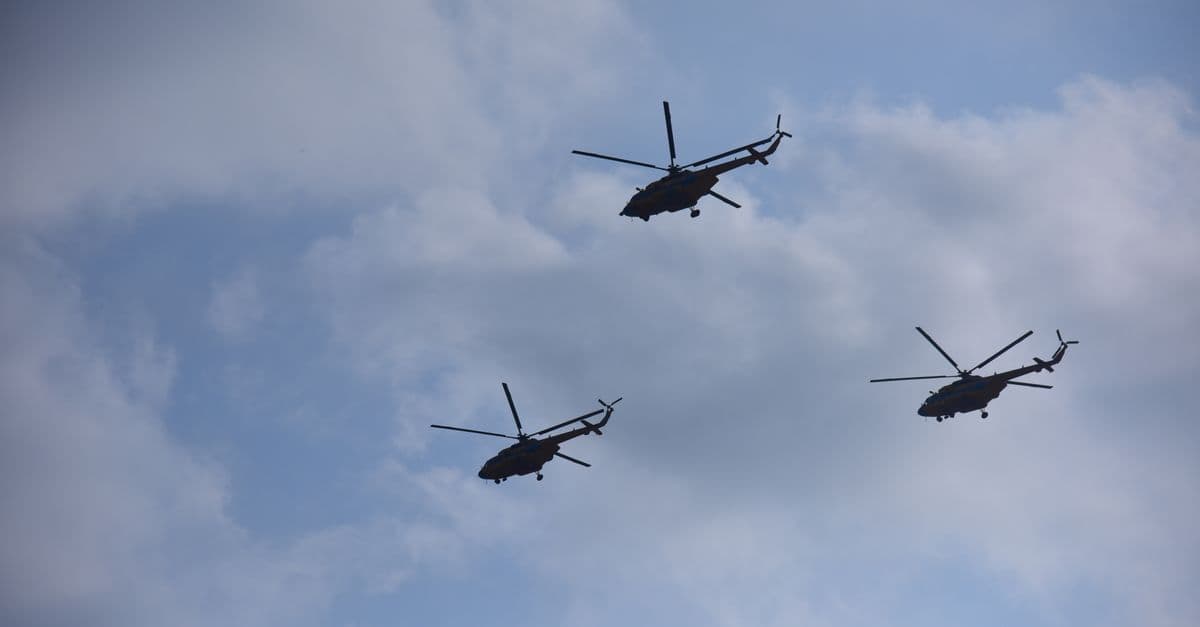
Photo: Sóc Năng Động / Pexels
Vertical flight sounds simple in theory — push air downward hard enough and the craft goes up. In practice, every pioneer who tried it between 1900 and 1940 discovered the same set of cascading physics problems: torque spins the fuselage opposite to the rotor, the blades that advance into the airflow generate more lift than the blades retreating with it, and a gust of wind turns what should be a stable hover into an uncontrolled spin. The helicopter is the story of how those problems were solved, one by one, by engineers in France, Germany, and ultimately the United States — and why the solution that stuck was invented by a man who had already built an aircraft company in Russia before most of the world knew his name.
The Problem Vertical Flight Had to Solve
Fixed-wing aircraft earn their lift cheaply: a wing moving forward through air generates lift as long as speed is maintained. Stop the forward motion and the wing stops generating lift. For the countless applications where landing requires not a long runway but a specific field, rooftop, or ship deck, this is a fatal limitation.
Rotary-wing flight substitutes a spinning rotor for the moving wing: each blade sweeps through the air and generates lift even when the aircraft isn't going anywhere. It sounds elegant. The engineering is not.
Problem one: torque. Newton's third law applied to rotating machinery means that when the engine spins the rotor clockwise, the rotor tries to spin the fuselage counterclockwise. Eliminate this reaction torque or the aircraft will spin uncontrollably.
Problem two: asymmetry of lift. In forward flight, the blade moving into the airstream (the advancing blade) encounters more air than the blade moving with the airstream (the retreating blade). Without correction, the craft rolls in the direction of the retreating blade.
Problem three: control. To fly somewhere other than straight up and straight down, the pilot needs to change the amount of lift generated by individual blades as they rotate around the mast — a mechanism called cyclic pitch control. Designing a mechanical system that achieves this reliably, at the speed a rotor turns, is not trivial.
Source: Wright Experience (2023) — "When Were Helicopters Invented?" covering the core aerodynamic challenges of vertical flight. wrightexperience.com/when-were-helicopters-invented
Every helicopter that works today has a solution to all three problems. Getting there took decades and cost several people their lives.
The Pioneers: Cornu, Focke, and the Race to Hover
Paul Cornu and the First Manned Hover (1907)
Paul Cornu was a French bicycle mechanic and engineer from Lisieux, Normandy. On November 13, 1907 — four years after the Wright Brothers' first flight — he became the first person to leave the ground in a rotary-wing aircraft under its own power. His machine used two counter-rotating rotors mounted fore and aft on a bicycle-frame fuselage, driven by a 24-horsepower Antoinette engine.
The flight lasted approximately 20 seconds and reached a height of about 30 centimeters (roughly 12 inches). By any measure it was marginal: a helper standing beside the craft had to push down on a strut to keep Cornu from drifting sideways. True controlled hovering remained out of reach.
Source: Aviation Week Network — "A Brief History of Rotorcraft Development," documenting Cornu's 1907 tandem-rotor flight as the first manned helicopter hop. aviationweek.com/business-aviation/brief-history-rotorcraft-development
Cornu's solution to the torque problem — two rotors spinning in opposite directions, each canceling the other's rotational reaction — was sound physics. The machine that actually made counter-rotating rotors work at scale, however, came from Germany.
Leonardo da Vinci: Aerial Screw, Not Helicopter
The aerial screw sketch attributed to Leonardo da Vinci, drawn around 1493, is often cited as the earliest conceptual ancestor of the helicopter. It shows a helical surface — like a large screw thread — that Leonardo suggested could be driven by four men to "bite" into the air and achieve lift.
The sketch is historically significant, but it is not a helicopter design in any functional sense. It has no mechanism for directional control, no solution to torque, and the screw-thread shape is not an efficient rotor profile. Engineers and aerodynamicists who have modeled the design consistently conclude it could not have generated sufficient lift to carry a person. Da Vinci's sketch demonstrates intellectual curiosity about vertical flight; it does not demonstrate the engineering knowledge needed to build one.
Source: Discover Walks Blog (2023) — "Who Invented The Helicopter? Key Dates, Stories And Facts," addressing da Vinci's aerial screw and its functional limitations. discoverwalks.com/blog/world/who-invented-the-helicopter
Heinrich Focke and the Fa 61 (1936)
The first genuinely controllable helicopter was the Focke-Wulf Fw 61 (later designated Fa 61), which made its first flight on June 26, 1936. German engineer Heinrich Focke mounted two rotors side by side on outrigger arms, both spinning in opposite directions. The torque-cancellation method was Cornu's, but Focke had the engineering tools and engine power to execute it properly.
The Fa 61 was not a marginal hover. It set a world altitude record of 3,427 m (11,243 ft), flew 143 km (89 miles) in a cross-country run, and reached speeds of 122 km/h (76 mph). Aviator Hanna Reitsch flew it inside Berlin's Deutschland Halle sports arena in February 1938 to demonstrate its controllability to the public.
Source: M&E Global (2022) — "A brief but essential history of helicopter mechanics," documenting Focke's Fa 61 performance and its status as the first practical helicopter. mneglobal.com/blog/2022/04/a-brief-but-essential-history-of-helicopter-mechanics
Igor Sikorsky and the VS-300: Solving the Configuration Problem
Igor Sikorsky was born in Kiev in 1889 and had already built the world's first four-engine aircraft — the Ilya Muromets — for the Russian Imperial Air Force before the revolution of 1917 forced him to emigrate. He arrived in the United States in 1919 with $600 and eventually founded the Sikorsky Manufacturing Corporation in 1923, building flying boats.
By the late 1930s, he had returned to an obsession he had first pursued in Russia before World War I: the helicopter. His design choice was different from Focke's. Instead of two side-by-side main rotors, Sikorsky used a single large main rotor and a small tail rotor. The tail rotor's purpose was pure torque compensation — it pushed sideways against the fuselage to prevent the counterrotation that Newton's third law would otherwise cause.
This configuration — single main rotor, single tail rotor — is now the standard for most helicopters in the world.
Source: ASME Historical Landmark Report (1984) — National Historic Engineering Landmark designation for the VS-300, detailing its configuration and significance. asme.org — VS-300 Landmark document
The VS-300 made its first tethered flight on September 14, 1939, at Stratford, Connecticut. Sikorsky himself was at the controls. The machine barely left the ground — it hovered for a few seconds before Sikorsky landed it. Eight months later, on May 24, 1940, it made its first free flight.
Source: Wikipedia — Vought-Sikorsky VS-300 article, documenting the tethered September 1939 flight and free flight of May 1940. en.wikipedia.org/wiki/Vought-Sikorsky_VS-300
The VS-300 was a learning machine. Sikorsky flew it constantly, iterating the rotor configuration through multiple versions. The final form — with one main rotor and one tail rotor, using both collective and cyclic pitch control — solved all three core problems simultaneously.
Timeline: Vertical Flight from Sketch to Space
| Year | Event |
|---|---|
| 1493 | Da Vinci sketches the aerial screw concept (not a functional design) |
| 1907 | Paul Cornu achieves first manned rotary-wing flight, ~30 cm altitude, ~20 seconds |
| 1936 | Focke-Wulf Fa 61 makes first flight; achieves altitude record of 3,427 m |
| 1939 | Sikorsky VS-300 first tethered flight, September 14 |
| 1940 | VS-300 first free flight, May 24 |
| 1942 | Sikorsky XR-4 accepted by US Army; first mass-produced helicopter |
| 1944 | Sikorsky R-4 performs first helicopter combat rescue, Burma theater |
| 1945 | 131 R-4 helicopters completed under USAAF contracts |
| 1954 | Bell 47 becomes widely used for medical evacuation in Korea |
| 1989 | Bell Boeing V-22 Osprey tilt-rotor prototype first flight |
| 2021 | NASA Ingenuity makes first powered flight on Mars, April 19 |
| 2024 | Ingenuity final flight, January 18; 72 total flights, 18 km traveled |
Source: Wikipedia — Sikorsky R-4 article; Wikipedia — Ingenuity helicopter article; Aviation Week — rotorcraft history. Multiple sources combined for timeline.
The People Who Built the Machine: Sikorsky in Detail
Sikorsky's route to the VS-300 was not a straight line. His first helicopter attempts in Russia, in 1909 and 1910, failed — the engines of the era were too heavy for their power output to lift a rotorcraft and a pilot. He concluded that helicopters were not yet feasible and spent the next three decades building fixed-wing aircraft instead, returning to the problem only when engine technology had matured sufficiently.
At United Aircraft Corporation's Vought-Sikorsky division in Stratford, Connecticut, he had industrial resources he had lacked in Russia. The VS-300 was built with company funding and Sikorsky's own conviction that the configuration he had chosen would work. When the first version of the VS-300 proved unstable in lateral motion, he added two additional small rotors on a horizontal axis. When that version proved overcomplicated, he simplified back to the single tail rotor, adding cyclic pitch capability to the main rotor to handle lateral and longitudinal control.
Source: Lemelson-MIT Program (2023) — Igor Sikorsky biography, documenting his early Russian helicopter attempts and the VS-300 development process. lemelson.mit.edu/resources/igor-sikorsky
The production derivative of the VS-300 — the XR-4, which first flew on January 14, 1942 — was accepted by the US Army on May 30, 1942. Produced as the R-4 (nicknamed "Hoverfly"), it became the world's first mass-produced helicopter, with 131 units delivered by the end of World War II.
Source: Wikipedia — Sikorsky R-4 article. en.wikipedia.org/wiki/Sikorsky_R-4
On April 22, 1944, in the China-Burma-India theater, an R-4 piloted by Lt. Carter Harman performed what is considered the first helicopter combat rescue, extracting a downed pilot from the Burmese jungle where no fixed-wing aircraft could land.
Priority Disputes and the Question of "First"
The helicopter has more legitimate claimants to "first" than almost any other invention because the definition of "first" depends entirely on which criteria you apply.
First manned rotary-wing flight: Paul Cornu, November 13, 1907, France.
First controlled, sustained hovering flight: Étienne Oehmichen, 1922, France. Oehmichen's coaxial helicopter held a world endurance record in 1924 with a flight of 7 minutes, 40 seconds. His machine was not practical but it demonstrated true sustained hover.
First fully controllable helicopter with practical performance: Heinrich Focke, Fa 61, 1936, Germany. This is the most defensible claim to "first practical helicopter."
First helicopter with the configuration used by most modern helicopters: Igor Sikorsky, VS-300, 1939–1940, United States.
Source: Discover Walks Blog (2023) — comparative analysis of helicopter "firsts" from Cornu through Sikorsky. discoverwalks.com/blog/world/who-invented-the-helicopter
The reason Sikorsky is most commonly cited as "the inventor of the helicopter" is not that he was first to fly one but that the configuration he chose — single main rotor with tail rotor, collective and cyclic pitch control — became the industry standard. Every Bell, Sikorsky, Airbus Helicopters, and Leonardo/AgustaWestland machine you see flying today traces its configuration to Sikorsky's VS-300.
Unintended Consequences: What the Helicopter Made Possible
The helicopter's ability to operate from unprepared surfaces, hover in place, and operate without a runway created applications that were genuinely impossible before it existed.
Medical evacuation. The Korean War (1950–1953) established the helicopter as a life-saving technology. The Bell 47, with a stretcher mounted externally on each skid, could reach wounded soldiers in terrain that jeeps couldn't cross and evacuate them to surgical units within the "golden hour." The mortality rate from wounds in Korea was measurably lower than in World War II, partly because of helicopter evacuation speed.
Offshore drilling. The North Sea oil fields that opened in the 1960s and 1970s would have been commercially unworkable without helicopter logistics. Rotating crews to platforms 150 km (93 miles) offshore, which would require an hours-long boat trip in rough seas, takes 30–40 minutes by helicopter. The economics of offshore extraction are built around helicopter transport in a way that is easy to overlook precisely because it has been routine for 60 years.
Aerial firefighting. The combination of hover capability and a belly tank or Bambi bucket allows helicopters to scoop water from lakes and rivers and drop it with reasonable precision on wildfire fronts. Fixed-wing air tankers carry more water but cannot operate in the confined terrain around ridge fires where helicopters maneuver.
Source: Aviation Week (2022) — rotorcraft history covering Korean War medevac, offshore drilling logistics, and firefighting applications.
The Tilt-Rotor and Electric Future
The helicopter's fundamental trade-off is that it is efficient in hover but relatively inefficient in forward flight compared to fixed-wing aircraft. The rotor that generates lift in hover is creating drag in cruise. Several engineering approaches attempt to overcome this.
The tilt-rotor. The Bell Boeing V-22 Osprey takes off vertically like a helicopter using rotors mounted on rotating nacelles at the tips of a fixed wing. Once airborne, the nacelles rotate forward and the rotors become propellers, allowing cruise speeds of around 510 km/h (317 mph) — roughly double a conventional helicopter. The first prototype flew in 1989; the V-22 entered US Marine Corps service in 2007.
Source: US Marine Corps factsheet (2023) — V-22 Osprey specifications and service history. marines.mil
Electric VTOL. Joby Aviation, Archer, Lilium, and a range of other companies are developing electric vertical take-off and landing aircraft (eVTOL) that use multiple electric motors on fixed or tilting rotors. These are closer to scaled-up drones than conventional helicopters in their control architecture — the motors are controlled by software rather than mechanical swashplates — but they aim at the same urban air mobility market.
Joby Aviation became the first eVTOL company to have its final airworthiness criteria published by the FAA and completed the first full pilot-on-board transition flights in April 2025. Commercial passenger service remains contingent on type certification.
Source: SEC filing, Joby Aviation 8-K (May 2025) — documenting FAA certification progress and 2025 flight testing milestones. sec.gov
Ingenuity: The Helicopter on Another Planet
On April 19, 2021, a helicopter became the first powered aircraft to fly on another planet. NASA's Ingenuity rotorcraft, which arrived on Mars attached to the underside of the Perseverance rover, lifted 0.1 m off the Martian surface, hovered for 30 seconds, and landed. The flight demonstrated that powered heavier-than-air flight was possible in an atmosphere that is, by mass, about 1% as dense as Earth's.
The design challenge was acute. Mars gravity is 38% of Earth's, but the atmosphere is so thin that generating lift requires spinning the rotors far faster than any comparable Earth helicopter. Ingenuity's two counter-rotating rotors spin at approximately 2,400 rpm — five times the speed of a typical helicopter rotor — to generate enough lift in the near-vacuum Martian air.
Source: NASA Science — Ingenuity Mars Helicopter mission page. science.nasa.gov/mission/mars-2020-perseverance/ingenuity-mars-helicopter
Designed as a 30-day, five-flight technology demonstration, Ingenuity completed 72 flights over nearly three years. It traveled 18 km (11 miles) total, reached altitudes up to 24 m (79 ft), and hit speeds up to 36 km/h (22.4 mph). Its final flight was January 18, 2024, when a rotor blade was damaged during landing in a featureless sand dune area that provided insufficient visual reference for its navigation system.
Source: Smithsonian Magazine (2024) — "NASA's Ingenuity Mars Helicopter Has Taken Its Final Flight," documenting the January 18, 2024 final flight and damage. smithsonianmag.com
FAQs
Q: Did Leonardo da Vinci really invent the helicopter? A: No. His 1493 aerial screw sketch shows intellectual interest in the concept of rotary-wing lift, but it is not a functional helicopter design. It lacks any torque compensation mechanism, any flight control system, and the screw-thread shape cannot generate efficient lift. Aerodynamicists who have modeled it consistently conclude it could not have lifted a person.
Q: What was the first helicopter used in combat? A: The Sikorsky R-4, on April 22, 1944, in the China-Burma-India theater of World War II. It performed a rescue of a downed pilot in terrain inaccessible to fixed-wing aircraft or ground vehicles.
Q: Why do most helicopters have a tail rotor? A: To counteract torque. When the engine spins the main rotor in one direction, Newton's third law causes the fuselage to want to spin in the opposite direction. The tail rotor pushes sideways on the fuselage to cancel this rotational force. Alternatives — like Focke's twin side-by-side rotors or modern coaxial helicopters — achieve the same result with different configurations.
Q: What is the difference between a helicopter and an autogyro? A: An autogyro (also called gyroplane or gyrocopter) has a freely spinning unpowered rotor that generates lift, plus a conventional propeller for forward thrust. The rotor is not driven by the engine; it spins because air flows up through it during forward flight. Autogyros cannot hover the way a helicopter can because the rotor requires forward airflow to spin. Juan de la Cierva flew the first autogyro in 1923, before Sikorsky's helicopter.
Q: How does the V-22 Osprey avoid the helicopter's efficiency problem? A: By tilting its rotors forward after takeoff. In helicopter mode, the rotors point upward and generate lift. Once airborne, the nacelles rotate 90 degrees so the rotors face forward, acting as propellers. The fixed wing then generates lift in cruise, and the rotors provide thrust — a much more efficient arrangement than a hovering helicopter rotor in fast forward flight.
Q: How did Ingenuity fly in Mars's thin atmosphere? A: By spinning its two counter-rotating rotors at approximately 2,400 rpm — roughly five times the speed of a typical Earth helicopter rotor. Mars has only about 1% of Earth's atmospheric density at the surface, which means generating meaningful lift requires much higher rotor speed. The lower gravity (38% of Earth's) partially compensates, but the thin air required the high-speed design.
The Takeaway
The helicopter is the product of an almost 40-year iterative effort by engineers who each solved part of the problem and handed the next engineer a clearer definition of what remained unsolved. Cornu proved manned rotary flight was possible. Focke proved it could be controlled. Sikorsky chose the configuration that turned out to scale from two-seaters to aircraft carriers. The result is a machine that performs operations — hovering over a ship in high winds, threading through a mountain canyon to extract a casualty, operating in an atmosphere barely thick enough to breathe — that no other aircraft can manage. That range of capability is why, 85 years after the VS-300's first tethered hop, helicopters of some form are flying on another planet.
Read next:
Follow new articles
Add SciHub101 to your feed reader to see new science and technology stories.
About the Author
SciHub101 is an independent science and technology publication founded and edited by Buğra Sözeri, a software engineer and app developer based in Türkiye. AI tools assist with drafting and research. Source documentation in the existing archive is uneven, and articles are being reviewed and corrected. The Editorial Team byline identifies editorial responsibility; it does not certify specialist or independent human review. Where we compare products, anything built by our own team is labelled as such — see the editorial guidelines and About page for how corrections and disclosures work.
Related Articles
The Internal Combustion Engine — History, Mechanics, and What Comes Next
From Lenoir's 1860 coal-gas motor to Diesel's compression ignition, the internal combustion engine powered a billion vehicles. Here is how it works and where it is going.

The Fiber Optic Cable: How Glass Replaced Copper
Charles Kao's 1966 paper proved pure glass could carry light across continents. Corning proved it in 1970. Today 1.5 million km of fiber carries 95% of global internet traffic.
Airplane Invention: The Wright Brothers and Controlled Flight
The Wright brothers solved controlled powered flight, but gliders, engines, wind tunnels, and earlier aviation pioneers all mattered.

The Jet Airliner — From the Comet's Fatal Flaw to the Age of Mass Air Travel
The de Havilland Comet launched the jet age in 1952, then killed 56 people through metal fatigue. How aviation rebuilt trust and shaped the modern world in its wake.

The Radar — How Bouncing Radio Waves Changed War and Weather
From Hülsmeyer's 1904 ship detector to Watson-Watt's Chain Home network, radar reshaped warfare, aviation safety, and meteorology in under a century.
The Jet Engine: How Two Engineers on Opposite Sides of a War Changed Flight
Frank Whittle patented the jet engine in 1930. Hans von Ohain flew one in 1939. Neither knew the other existed. Their parallel invention and eventual friendship is the story of modern aviation.