The Invention of the Laser
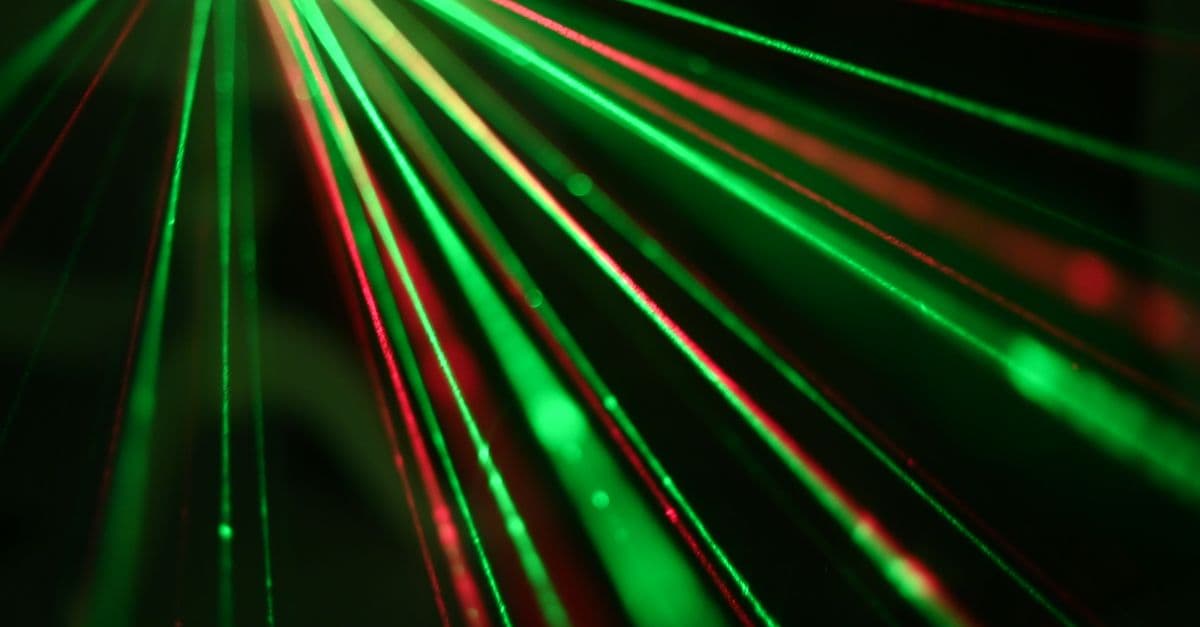
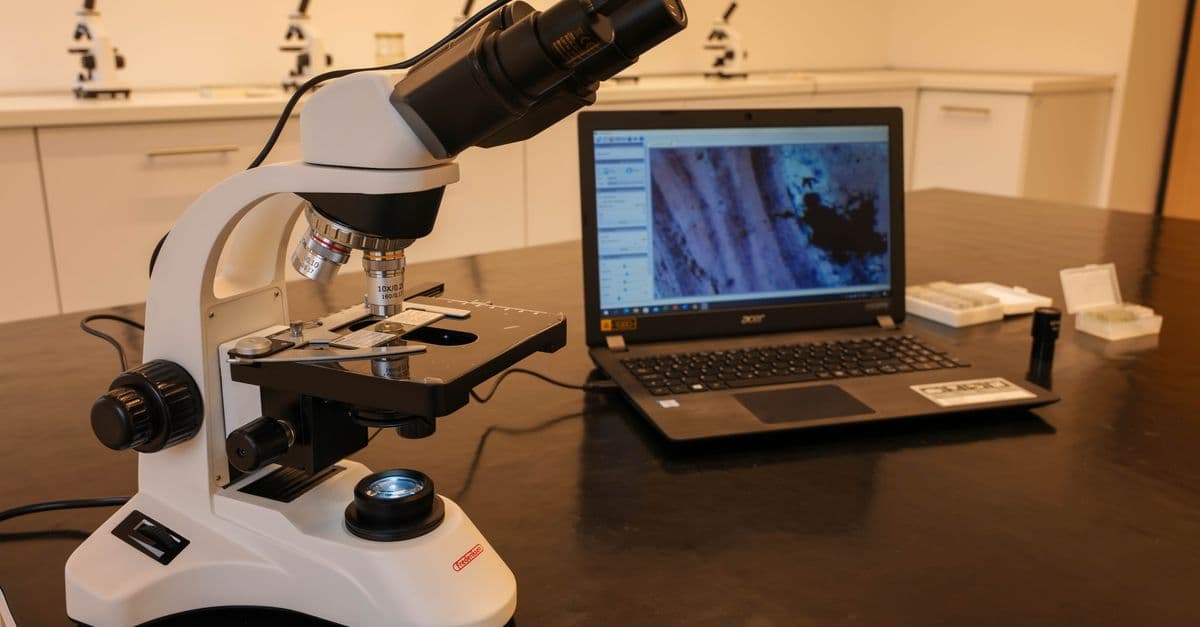
Photo: Тимур Керимов / Pexels
The laser is a device that produces an intense, narrow beam of light in which all the photons travel in the same direction, at the same wavelength, and in the same phase — a property called coherence. Charles Townes and Arthur Schawlow at Bell Telephone Laboratories published the theoretical blueprint for such a device on August 26, 1958. Theodore Maiman built the first working laser on May 16, 1960, using a rod of synthetic ruby inside a camera-flash housing. The word "laser" itself was coined by a man who spent the next 30 years fighting for credit and royalties.
The Idea Before the Device: Masers and Optical Masers
To understand where the laser came from, you have to start with a cousin invention from six years earlier. In 1954, Charles Townes at Columbia University built the maser — Microwave Amplification by Stimulated Emission of Radiation. The maser produced coherent microwave beams using a quantum mechanical process that Einstein had described theoretically in 1917: stimulated emission, where a photon collides with an excited atom and triggers the release of a second, identical photon.
Stimulated emission — when an incoming photon of precisely the right energy hits an atom whose electron is in an elevated energy state, it causes that electron to drop back down, releasing a second photon that is identical in wavelength, direction, and phase to the first. The process doubles the photon count without losing coherence.
Townes and his brother-in-law Arthur Schawlow — then both working at Bell Labs in Murray Hill, New Jersey — asked the natural follow-up question: could you do this with visible light instead of microwaves? Light has much shorter wavelengths than microwaves, which means you need a very precise optical resonator to build up the stimulated emission into a usable beam. In December 1958, their paper "Infrared and Optical Masers" appeared in Physical Review. It described how a pair of parallel mirrors at either end of a gain medium could bounce photons back and forth, each pass triggering more stimulated emission, until a coherent beam leaked out through a partially reflective mirror on one end.
Source: Schawlow, A.L. and Townes, C.H. (1958). "Infrared and Optical Masers." Physical Review, Vol. 112, No. 6, pp. 1940–1949. The paper provided the complete theoretical framework for laser construction.
The device was still theoretical. The paper described how to build one, but not what gain medium to use. That decision would trigger a fierce scientific race.
Gordon Gould and the Notebook That Started a War
Before the Schawlow-Townes paper appeared in print, a Columbia University physics graduate student named Gordon Gould was working on similar ideas. In November 1957, Gould wrote out his concept for an optical maser — including the word "laser," an acronym he coined for Light Amplification by Stimulated Emission of Radiation — in a notebook, which he took to a notary public and had stamped on November 13, 1957.
Acronym origin: Gould's notebook entry defined "laser" as "Light Amplification by Stimulated Emission of Radiation." The term displaced "optical maser" and became universal within a few years of the device's demonstration.
Gould's critical mistake, from a legal standpoint, was not filing a patent immediately. He mistakenly believed he had to demonstrate a working device before applying. By the time he applied in April 1959, Schawlow and Townes had already filed their patent application in July 1958. The Patent Office rejected Gould's application as duplicative.
What followed was one of the longest patent disputes in American engineering history. Gould had strong evidence: the notarized notebook predated the Schawlow-Townes filing. But his Communist Party membership in the late 1940s meant the Defense Department denied him security clearance for years, which blocked him from working on laser research at all — and from being taken seriously in legal proceedings.
Source: Hecht, J. (2005). Beam: The Race to Make the Laser. Oxford University Press. The definitive history of the laser patent fight, based on primary documents and interviews with the surviving principals.
Gould won a minor patent in 1977 for optically pumped laser amplifiers. His major victory came in 1987, when a federal judge ordered the U.S. Patent Office to issue patents to Gould for the optically pumped and gas-discharge laser devices — 30 years after his notebook entry. By that point, lasers were a multi-billion-dollar industry. Gould collected tens of millions of dollars in royalties before his patents expired.
How the Laser Actually Works
A laser requires three components: a gain medium, a pump, and an optical resonator.
The gain medium is the material that produces light through stimulated emission. It can be a solid crystal (like Maiman's ruby), a gas (like helium-neon, which produces the familiar red pointer beams), a semiconductor (like the diode lasers in DVD players), or even a liquid dye. What matters is that the medium has atoms or molecules with an appropriate pair of energy levels.
Population inversion — the condition where more atoms are in an excited state than in the ground state. Normally, heat drives atoms toward the lower energy state, so population inversion does not occur naturally. The pump provides external energy — light, electricity, or chemical reaction — to force atoms into the excited state faster than they can decay.
Think of it like filling a leaking bucket faster than water drains out. Once more atoms are excited than relaxed, the bucket is "inverted." A single photon of the right energy hitting an excited atom starts a chain reaction: one photon triggers a second, the second triggers two more, and so on in an exponential cascade. The optical resonator — two mirrors at either end of the gain medium — keeps bouncing photons through the medium, extending the cascade. One mirror is fully reflective; the other is partially reflective (typically 95–99%), allowing a fraction of the amplified light to escape as the output beam.
The beam that exits is coherent: all photons have the same wavelength, same phase, and same direction. This is what makes laser light fundamentally different from the light of a lamp, which radiates photons in all directions, at all wavelengths, and in chaotic phase relationships. A lamp is like a crowd all shouting different words at once; a laser is like a choir locked in perfect unison.
Why Ruby? The Maiman Decision
When the Schawlow-Townes paper appeared in late 1958, laboratories across the United States began racing to build the first working optical maser. The leading candidate for gain medium, in most researchers' assessment, was a gas. Gases were well understood, their energy levels were clean, and stimulating them electrically was straightforward. Ruby was considered a poor choice: Theodore Maiman's colleagues at Hughes Research Laboratories and the broader community believed ruby's three-level energy system was too inefficient to sustain population inversion.
Maiman disagreed. He had spent two years studying ruby's spectroscopy, and he believed the published absorption measurements the community relied on were wrong by a factor of several. He ordered a synthetic ruby rod — 1 cm in diameter, 1.5 cm long — from a gem manufacturer, silvered both ends to create mirrors, and wrapped it in a helical xenon photographic flash lamp. The flash lamp was the pump: a burst of white light rich in green and blue wavelengths, which ruby absorbs efficiently.
On May 16, 1960, working on a total budget of $50,000, Maiman fired the flash lamp and recorded an output pulse at 694.3 nm — deep red coherent light. The laser worked on the first attempt.
Source: Maiman, T.H. (1960). "Stimulated Optical Radiation in Ruby." Nature, Vol. 187, pp. 493–494. Published August 6, 1960, after the paper was rejected by Physical Review Letters. This two-paragraph letter announced the laser to the world.
Physical Review Letters had rejected Maiman's paper, with editor Samuel Goudsmit apparently deciding that maser/laser publications had become too routine. Nature published it instead, in a brief letter that understated what Maiman had done. Within months, every major physics laboratory in the world was trying to replicate and extend his result.
The Nobel Prize Problem
Who Got Credit — and Who Did Not
Charles Townes shared the 1964 Nobel Prize in Physics "for fundamental work in the field of quantum electronics, which has led to the construction of oscillators and amplifiers based on the maser-laser principle." He shared it with Nikolay Basov and Alexander Prokhorov of the Soviet Union, who had independently developed maser theory. Arthur Schawlow was not included in the 1964 prize despite co-authoring the foundational laser paper.
Schawlow received his own Nobel Prize in Physics in 1981, shared with Nicolaas Bloembergen and Kai Siegbahn, "for his contribution to the development of laser spectroscopy" — recognizing not the laser's invention but a field of precision measurement that the laser made possible.
Theodore Maiman, who built the first working laser and arguably made the single most consequential practical contribution, was never awarded the Nobel Prize. He was nominated repeatedly. He died in 2007, still unrecognized by Stockholm.
Gordon Gould received no Nobel Prize, but collected royalties. His 1987 patent victory meant that companies producing lasers using gas discharge or optical pumping — which covered most of the commercial laser industry at the time — owed him licensing fees. He eventually received an estimated $30 million before his patents expired in 2008, three years after his death at age 85.
Source: Hecht, J. (2005). Beam: The Race to Make the Laser. Oxford University Press. Gould's royalty estimates are documented in contemporary press coverage including The Washington Post, September 20, 2005.
The laser's origin story is a reminder that credit and priority in science rarely resolve cleanly. Townes had the theory; Schawlow had the engineering blueprint; Gould had the name and a notarized notebook; Maiman had the working device. Each claim is legitimate, and each sits in a different dimension of "invention."
How a Laser Pulse Is Measured: A Brief Detour into Extreme Physics
Maiman's first laser fired pulses lasting about a millisecond. Modern lasers can produce pulses lasting femtoseconds — one quadrillionth of a second (10⁻¹⁵ s). To put that in proportion: a femtosecond is to one second as one second is to 31.7 million years.
This matters because pulse duration determines peak power. A laser might deliver 1 joule of energy; stretched over one second, that is 1 watt, which will barely warm your hand. Compressed into a femtosecond pulse, the same energy arrives at a peak power of 10¹⁵ watts — more power than the entire global electricity grid delivers at any given moment, concentrated in a beam narrower than a human hair and lasting for a time too short for light to travel across a single cell.
Such pulses are used in femtosecond laser eye surgery, in experiments that probe chemical reactions at the timescale of atomic motion, and in research into laser-driven particle acceleration.
The Patent and Priority Disputes in Detail
The laser patent dispute had three concurrent battles, each proceeding on a different timeline and in different legal venues.
| Claim | Party | Filed | Status |
|---|---|---|---|
| Theoretical design of "optical maser" | Schawlow & Townes / Bell Labs | July 1958 | Patent granted March 22, 1960 |
| "Laser" concept, optically pumped amplifier | Gordon Gould / TRG Inc. | April 1959 | Minor patent 1977; major patents ordered 1987 |
| First working ruby laser | Theodore Maiman / Hughes Research | 1960 | Not patented — disclosed in Nature |
| Gas-discharge laser patent | Gordon Gould | Ongoing after 1960 | Settled through 1980s litigation |
The Gould-versus-Schawlow-Townes dispute was particularly complex because the U.S. Patent Office initially treated the laser as a single invention, which meant one patent could preempt the others. Later proceedings recognized that Gould's optically pumped and gas-discharge device concepts were sufficiently distinct from the Schawlow-Townes optical resonator patent to merit separate consideration. When federal courts finally agreed, the laser industry faced the prospect of paying retroactive royalties to Gould on patents going back decades.
Several major companies — including Bell Labs, which had employed Schawlow and Townes and assumed its own patent coverage — were required to license Gould's patents. The laser industry settled rather than face prolonged litigation.
Unintended Consequences: The Uses Nobody Predicted
When Maiman fired his ruby rod in 1960, the press reaction was almost uniformly alarmed. Headlines described the laser as a "death ray." The military was, in fact, the initial funder of much laser research, hoping for a directed-energy weapon. That application proved far harder than anticipated — you need enormous power to damage a target at distance, and atmospheric turbulence scatters even a coherent beam.
What nobody predicted in 1960 was that lasers would become the backbone of global telecommunications. Optical fiber cables carry internet traffic, telephone calls, and video streams around the world at the speed of light — and every fiber-optic link is driven by a laser diode, a semiconductor laser small enough to fit in a matchhead. The internet as you experience it is, at its physical layer, a laser network.
Laser diode — a semiconductor device in which an electrical current drives electrons and electron holes to recombine at a p-n junction, releasing photons. The semiconductor crystal itself forms the optical resonator, with cleaved end facets serving as mirrors. Invented at multiple laboratories simultaneously in 1962, laser diodes are now produced in quantities of billions annually.
Nobody in 1960 predicted that lasers would restore eyesight. LASIK (Laser-Assisted In Situ Keratomileusis) uses an excimer laser — pulsing at 193 nm ultraviolet — to ablate microscopic layers of corneal tissue with sub-micron precision, reshaping the cornea to correct refractive errors. More than 700,000 LASIK procedures are performed annually in the United States alone.
And nobody predicted LIGO. The Laser Interferometer Gravitational-Wave Observatory uses a 1,064 nm neodymium-doped yttrium aluminum garnet (Nd:YAG) laser split into two beams that travel 4 km down perpendicular arms, reflect off mirrors, and recombine. When a gravitational wave passes through, it stretches space in one direction and compresses it in the perpendicular direction by an amount smaller than one-thousandth the diameter of a proton. The laser detects it. In 2015, LIGO announced the first direct detection of gravitational waves, fulfilling a prediction Einstein made in 1916. The detection was possible only because Maiman's 1960 work evolved over 55 years into laser technology of extraordinary precision.
Source: Abbott, B.P. et al. (LIGO Scientific Collaboration and Virgo Collaboration) (2016). "Observation of Gravitational Waves from a Binary Black Hole Merger." Physical Review Letters, Vol. 116, No. 061102. The paper announcing the first gravitational wave detection.
Where Lasers Stand Today
The laser industry in 2024 encompasses a market estimated at over $20 billion annually, spanning applications that Maiman and Townes could not have imagined in 1960. Industrial lasers cut and weld steel, titanium, and semiconductor wafers. Barcode scanners at checkout counters use cheap red diode lasers. Blu-ray discs store data by burning pits into plastic at 405 nm ultraviolet — shorter wavelength means smaller pits, which means more data per disc. Laser rangefinders measure distances from millimeters to light-years. Laser cooling slows atoms to within a millionth of a degree of absolute zero, enabling atomic clocks accurate to one second in 300 million years.
In medicine, lasers treat diabetic retinopathy by sealing leaking blood vessels in the eye, destroy tumors through photodynamic therapy, and remove tattoos by selectively heating the pigment particles that ink is made of, leaving surrounding tissue untouched.
In 2023, the National Ignition Facility at Lawrence Livermore National Laboratory used 192 high-powered laser beams converging on a target the size of a peppercorn to achieve ignition — more fusion energy out than laser energy in — for the first time. The laser that made nuclear fusion ignition possible weighed thousands of tons and delivered 2.05 megajoules of energy in a pulse lasting a few nanoseconds.
Sixty-four years after Gordon Gould wrote "LASER" in a notarized notebook, the device he named and Maiman built is woven into virtually every domain of science, industry, and daily life.
Source: Abu-Shawareb, H. et al. (2022). "Lawson Criterion for Ignition Exceeded in an Inertial Confinement Fusion Experiment." Physical Review Letters, Vol. 129, No. 7. The peer-reviewed confirmation of NIF laser fusion ignition.
The Takeaway
The laser is what happens when quantum theory moves from chalkboard to laboratory. Townes understood stimulated emission; Schawlow translated it into an engineering blueprint; Maiman ignored the consensus that said ruby would not work and proved it would. The result was a device that does everything from reading a grocery barcode to detecting the ripple of two black holes colliding a billion light-years away. The patent fight that consumed Gordon Gould's career is a reminder that some inventions are so foundational that the question of who owns them becomes unanswerable — the laser belongs, ultimately, to everyone who uses it.
Frequently Asked Questions
Q: Who invented the laser? A: Multiple people have legitimate claims. Charles Townes and Arthur Schawlow published the theoretical design in December 1958. Gordon Gould coined the word "laser" and described optically pumped laser amplifiers in a November 1957 notebook. Theodore Maiman built and demonstrated the first working laser on May 16, 1960. No single person invented it alone.
Q: What does laser stand for? A: Laser is an acronym for Light Amplification by Stimulated Emission of Radiation. Gordon Gould coined it in his November 1957 notebook entry at Columbia University, where he was a graduate student studying physics.
Q: What was the first laser made of? A: The first working laser used a synthetic ruby crystal as its gain medium — a cylindrical rod 1 cm in diameter and 1.5 cm long, with silvered ends serving as mirrors. A xenon photographic flash lamp wrapped helically around the rod provided the pump energy. Theodore Maiman built it at Hughes Research Laboratories in Malibu, California.
Q: Why did Maiman use ruby when others thought it would not work? A: Maiman had independently measured ruby's optical absorption properties and found them roughly four times better than the figures most researchers were using. He calculated that a xenon flash lamp could achieve the population inversion needed to produce stimulated emission, even though the three-level energy structure of ruby was considered inefficient. He was right; the rest of the community had been working with incorrect published data.
Q: Did Gordon Gould really win his patent fight? A: Yes. In 1987, a federal judge ordered the U.S. Patent Office to issue patents to Gould for optically pumped and gas-discharge laser devices. This came 30 years after his original notebook entry. The laser industry, which had assumed it operated under the Schawlow-Townes Bell Labs patent, was required to license Gould's patents. Gould collected an estimated tens of millions of dollars in royalties before his patents expired.
Q: Why did Maiman never win the Nobel Prize? A: The Nobel Prize in Physics 1964 went to Townes, Basov, and Prokhorov for theoretical work on quantum electronics and the maser-laser principle. Schawlow received a Nobel in 1981 for laser spectroscopy applications. Maiman was nominated multiple times but died in 2007 without winning. The Nobel Committee's decision to honor the theory over the experimental demonstration remains one of the more discussed omissions in the prize's history.
Q: How is laser light different from ordinary light? A: Ordinary light — from a lamp, the sun, or a flame — consists of photons emitted randomly in all directions, at multiple wavelengths, and with no fixed phase relationship. Laser light is coherent: all photons travel in the same direction, at the same wavelength, and in the same phase. This coherence is what allows a laser beam to remain narrow over long distances, to be focused to an extremely small spot, and to interfere with itself precisely — the property LIGO exploits to detect gravitational waves.
Read next:
Follow new articles
Add SciHub101 to your feed reader to see new science and technology stories.
About the Author
SciHub101 is an independent science and technology publication founded and edited by Buğra Sözeri, a software engineer and app developer based in Türkiye. AI tools assist with drafting and research. Source documentation in the existing archive is uneven, and articles are being reviewed and corrected. The Editorial Team byline identifies editorial responsibility; it does not certify specialist or independent human review. Where we compare products, anything built by our own team is labelled as such — see the editorial guidelines and About page for how corrections and disclosures work.
Related Articles
The Microchip: How Two Men Independently Shrank a Room
Jack Kilby and Robert Noyce independently invented the integrated circuit in 1958–59. Here's how a germanium sliver and a silicon wafer changed everything.

The Jet Airliner — From the Comet's Fatal Flaw to the Age of Mass Air Travel
The de Havilland Comet launched the jet age in 1952, then killed 56 people through metal fatigue. How aviation rebuilt trust and shaped the modern world in its wake.
Laser Invention: From Masers to Coherent Light
The laser grew from quantum theory, masers, optical engineering, and patent battles. This article explains how coherent light became a world-changing tool.
Why Is Glass Transparent? The Physics of Light Passing Through
Glass is transparent because visible photons lack the energy to excite its electrons and its uniform, grain-free structure scatters almost nothing sideways.
Young's Double-Slit Experiment: Light as a Wave
In 1801, Thomas Young passed light through two slits and saw stripes on a screen that only waves can produce. The same experiment later revealed the quantum nature of matter.
Isaac Newton: The Solitary Genius Who Stuck a Needle in His Own Eye
Isaac Newton's biography, laws of motion, optics, and verified quirks: needle behind the eyeball, alchemy obsessions, plagiarism wars, and a life of deliberate solitude.