The Microwave Oven: How a Melted Candy Bar Rewired the Kitchen
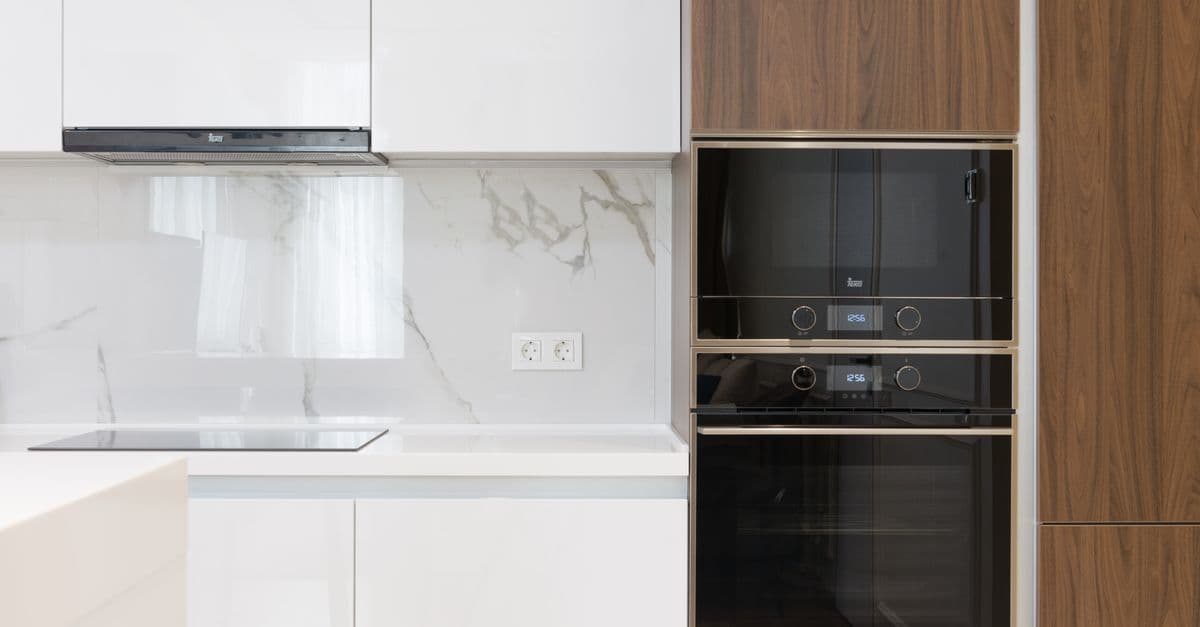
Photo: Max Vakhtbovych / Pexels
In 1945, a self-taught engineer named Percy Spencer was standing next to an active radar magnetron at Raytheon's facility in Waltham, Massachusetts, when he noticed the Payday candy bar in his pocket had started to melt. He did not report the anomaly and walk away. He went out and bought popcorn kernels. Within weeks, the fundamental physics behind every microwave oven on the planet had been worked out, not in a university laboratory, but by a man who had never finished grammar school.
The Accidental Discovery That Almost Got Ignored
The year was 1945 and the war effort had made Raytheon one of the most important defense contractors in the United States. Spencer was the head of the power tube division, a department that had expanded from a handful of engineers to several thousand during World War II by manufacturing magnetrons — the devices that generate microwave-frequency radio waves for radar systems.
Magnetrons produce microwave radiation at frequencies typically between 1 gigahertz and 300 gigahertz. Radar systems use these waves to bounce off distant objects and detect their position. Nobody at the time was thinking about food.
Source: Lemelson-MIT Program (2023) — Percy Spencer biography, documenting his role leading Raytheon's power tube division and the 1945 candy bar discovery. lemelson.mit.edu/resources/percy-spencer
Spencer's genius was not the accident itself but what happened next. He placed popcorn kernels near the magnetron. They popped. He brought in a colleague with an egg, positioned it next to the tube — and it exploded. The pattern was unmistakable: microwaves were penetrating food and generating heat from within, not from a surface as a conventional oven does.
His next step was to build a metal enclosure around the magnetron so the waves would be directed at food samples rather than dispersing into the room. He filed a patent application. That enclosure became the first microwave oven.
Source: New England Historical Society (2021) — Detailed account of Spencer's candy bar incident and subsequent experiments at Raytheon. newenglandhistoricalsociety.com/percy-spencer-melts-chocolate-bar-invents-microwave-oven
How a Microwave Oven Actually Heats Food
The mechanism is genuinely counterintuitive. A conventional oven heats food the way the sun heats a rock: energy arrives at the surface and slowly conducts inward. A microwave oven is closer to the way sunlight warms your body from the inside of a car — the energy passes through the window and is absorbed internally.
Microwave ovens operate at a frequency of 2,450 megahertz (2.45 GHz), a frequency chosen partly because it penetrates food to useful depths and partly because it was allocated for industrial, scientific, and medical use and therefore didn't interfere with radar or communications.
The key molecule is water. Water molecules are polar: one end is slightly positive, the other slightly negative. When a microwave's oscillating electric field passes through the food, water molecules try to align with the field — then the field reverses, and they try to flip back. At 2.45 GHz, this happens 2.45 billion times per second. All that molecular tumbling generates friction, and friction generates heat.
Source: MIT Technology Review (1999) — "Melted Chocolate to Microwave," explaining the dielectric heating mechanism at 2.45 GHz. technologyreview.com/1999/01/01/236818/melted-chocolate-to-microwave
Think of it like this: if you put a hot water bottle in a bed, it warms the sheets by conduction from outside. A microwave is more like giving each water molecule in the food its own tiny furnace. The result is that a thick piece of meat heats much faster in a microwave than in a conventional oven — though not always more evenly, because microwave energy can create hotspots where waves reinforce each other.
This is also why metal sparks. Metal conductors reflect microwaves rather than absorbing them. When the reflected waves concentrate at sharp metal edges or the fine wires of a twist-tie, the local electric field becomes intense enough to ionize the surrounding air, producing the blue arcs that have ruined countless reheated takeout containers.
Source: History.com (2023) — "Who Invented the Microwave Oven?" covering the physics of microwave heating and early commercial development. history.com/articles/microwave-oven-invention
Why 2.45 GHz and Not Some Other Frequency?
A common myth is that 2.45 GHz was chosen because it perfectly resonates with the rotational frequency of water molecules. It does not — that resonance sits around 22 GHz. The actual selection was practical: 2.45 GHz penetrates several centimeters into typical food (enough to heat through a piece of chicken but not so deep that the center cooks while the outside stays cold), and the frequency was already allocated to ISM (industrial, scientific, and medical) band use by international radio regulators. Using a reserved band prevented microwave ovens from jamming communications infrastructure.
Percy Spencer: The Engineer Without a Diploma
Spencer's biography is one of the more striking in the history of technology. Born Percy LaBaron Spencer on July 19, 1894, in Howland, Maine, he was orphaned twice as a child — his father died when Percy was 18 months old, and his mother abandoned him shortly afterward. He was raised by an aunt and uncle.
He left school at 12 to work in a spool mill. At 18, he joined the US Navy after reading newspaper reports about the wireless operators aboard the Titanic. While standing watch at night, he taught himself calculus, trigonometry, physics, and chemistry from textbooks. He never received a high school diploma, let alone a university degree.
Source: National Inventors Hall of Fame (2023) — Inductee biography of Percy L. Spencer, documenting his early life and self-education. invent.org/inductees/percy-l-spencer
Spencer joined Raytheon in 1925. By the time World War II began, he had transformed the company's magnetron production from a craft operation to an industrial one by redesigning how the tubes were stamped and soldered rather than machined, raising output to 2,600 units per day. He would eventually hold approximately 300 patents.
Source: Wikipedia — Percy Spencer article, citing approximately 300 total patents during his career. en.wikipedia.org/wiki/Percy_Spencer
He became Senior Vice President at Raytheon and a senior member of its board — a trajectory that would have been considered extraordinary for a Harvard graduate and was simply without precedent for a self-taught mill worker from rural Maine.
The Radarange: From Radar Lab to Restaurant
| Year | Milestone |
|---|---|
| 1945 | Spencer's candy bar incident at Raytheon, Waltham, MA |
| 1947 | First commercial Radarange: 1.8 m (5 ft 11 in) tall, ~340 kg (750 lb), priced at $2,000–$3,000 |
| 1952 | Raytheon licenses technology to Tappan Stove Company for home market research |
| 1967 | Amana Radarange: first compact countertop model at $495 (Raytheon-owned subsidiary) |
| 1971 | US household microwave penetration: approximately 1% |
| 1975 | Annual US microwave sales: 1 million units |
| 1985 | Annual US sales: roughly 10 million units |
| 1997 | US Bureau of Labor Statistics reports over 90% US household penetration |
Source: Wikipedia — Microwave oven article, with specifications and household penetration data drawn from Bureau of Labor Statistics and Encyclopedia.com. en.wikipedia.org/wiki/Microwave_oven
The first Radarange placed in restaurant service — at a Speedy Weeny hot dog stand in Grand Central Terminal, New York — was not a kitchen appliance in any conventional sense. It weighed roughly as much as a refrigerator, required its own water-cooling system, and cost what a new car cost. Only commercial food operations with very high throughput could justify the expense.
Source: Retromobe (2017) — Technical specifications of the 1947 Radarange and its first commercial placements. retromobe.com/2017/06/raytheon-radarange-worlds-first
Raytheon's acquisition of Amana Refrigeration in 1965 gave the company the consumer appliance infrastructure to attempt the home market. The 1967 Amana Radarange, priced at $495 (roughly $4,500 in 2025 dollars), was a 115-volt countertop device that could cook hamburgers in 35 seconds. It was the machine that proved home microwave cooking was viable.
Patent Rights, Licensing, and Who Actually Profited
The microwave oven patent filed by Percy Spencer — US Patent 2,495,429, "Method of Treating Foodstuffs" — was assigned to Raytheon. Spencer did not become wealthy from the invention. Like most employees at defense contractors in the 1940s, he worked under an employment agreement that transferred patent rights to the company in exchange for a nominal fee — reportedly $2 in this case.
Source: University of Maine — Percy Spencer subject guide, Library Research Guides, documenting the patent assignment and Spencer's compensation. libguides.library.umaine.edu/percyspencer
Raytheon, by contrast, built a significant business. The company licensed the technology to other manufacturers, including Tappan, Sharp, and Samsung, as Japanese and Korean manufacturers entered the market in the late 1960s and early 1970s with lower-cost units that democratized the appliance far faster than any American company could manage alone.
The core patent expired in 1965, opening the field to competition. By the mid-1970s, Japanese manufacturers — led by Sharp, which had introduced solid-state controls that replaced bulky mechanical timers — had driven prices below $200. That price point made the microwave mass-market viable.
Unintended Consequences: What Nobody Predicted
The textured frozen dinner. Once a reliable, fast reheating method existed, food manufacturers redesigned products to be cooked in microwaves. Frozen food packaging changed entirely; aluminum trays, which microwaves can't penetrate and which spark when the field hits them, were replaced by microwavable plastics and paperboard trays.
Uneven cooking and food safety. The internal friction-heating mechanism creates hotspots and cold spots, particularly in foods with uneven water content. Microwave cooking does not reliably pasteurize food — the USDA has repeatedly cautioned that microwave reheating of poultry and pork does not guarantee killing pathogens if cold spots survive. This was not a problem anticipated in 1947.
Source: USDA Food Safety and Inspection Service — Guidance on safe microwave cooking temperatures and cold spot risks. fsis.usda.gov
The 30-minute lunch. Before the microwave, workplace lunches almost universally meant either a hot meal at a restaurant or a cold-food brought from home. The microwave oven, installed in office break rooms starting in the late 1970s, created an entirely new category of midday behavior: bringing last night's leftovers and reheating them at work. This single behavioral shift changed the economics of the packaged food industry.
Plastic chemical migration. Research conducted over the past two decades has flagged the leaching of plasticizers — particularly DEHP and BPA — from certain microwave-safe plastic containers when heated. The FDA has a specific regulatory framework for microwave-safe plastics, but the interaction between the heated food industry and plastic chemistry was nowhere in Spencer's 1945 patent application.
Source: FDA — "Packaging & Food Contact Substances: What You Need to Know About Microwave-Safe Containers," documenting standards for plasticizers and microwave containers. fda.gov
The Induction Rivalry: A Different Physics Entirely
The most significant contemporary competitive pressure on the microwave oven comes not from a faster or cheaper variant of the same technology, but from induction cooking — which operates on an entirely different physical mechanism.
An induction cooktop uses a coil of wire carrying alternating current to generate a rapidly oscillating magnetic field. When a ferromagnetic pan (cast iron, magnetic stainless steel) sits on the coil, the oscillating field induces eddy currents in the pan's base. These currents meet electrical resistance and generate heat — in the pan, not in the air or the cooktop surface.
Induction cooking and microwave ovens solve different problems. The microwave reheats and defrosts faster than any conventional method. Induction offers stovetop-class cooking with greater energy efficiency than gas or electric resistance heating. They are not really substitutes — a kitchen with both is not redundant — but for consumers choosing between a microwave and an induction cooktop as their primary heat source, the choice is genuinely contested.
Source: US Department of Energy (2022) — Energy efficiency comparison of cooking methods, including induction versus microwave and conventional resistance. energy.gov
What Spencer's accidental discovery cannot be replaced by is speed for reheating: a microwave can bring a bowl of soup to temperature in 90 seconds. No induction cooktop on the market can match that for a home user.
Where the Microwave Stands Today
Microwave oven penetration in US households crossed 90% in the late 1990s and has remained at that level since.
Source: US Bureau of Labor Statistics (1997, cited in Faucet Fam, 2023) — Consumer Expenditure Survey reporting 90%+ household penetration. faucetfam.com/when-did-microwave-ovens-become-popular
The basic magnetron-and-metal-box design that Spencer patented in 1945 has changed in incremental ways: solid-state inverter technology (replacing the older single-power magnetron with variable-power microwave generation), turntables that reduce hotspots, convection combinations that add browning capability, and sensor cooking that measures steam output to determine doneness. None of these innovations changes the fundamental physics.
The one genuinely disruptive technical development is the replacement of magnetrons with solid-state amplifiers using GaN (gallium nitride) transistors, which allow precise frequency and power control. Solid-state microwave ovens can sweep frequencies rather than operating at a fixed 2.45 GHz, distributing energy more evenly throughout the food cavity. Companies including Genie, Wayv, and Panasonic's Microwave Imaging Laboratory have produced prototype and early commercial units. At the time of writing, they remain significantly more expensive than magnetron-based models, but the trajectory mirrors what happened with transistors displacing vacuum tubes in audio equipment.
Source: IEEE Spectrum (2022) — Coverage of solid-state microwave cooking technology and GaN-based systems. spectrum.ieee.org
The device that started as a six-foot radar tube requiring a plumber to install now sits in 9 out of 10 American homes, runs on a standard wall outlet, and costs roughly the same in real terms as a decent pair of running shoes. That is the span of one engineer's accidental discovery to commodity appliance in under 80 years.
How Dielectric Heating Actually Rotates Water Molecules
The 2.45 GHz frequency stamped on every microwave spec sheet is not the resonant frequency of water. Water vapor in isolation absorbs microwave energy most efficiently at around 22 GHz — almost ten times higher. Using 22 GHz for a consumer oven would require a different class of vacuum tube entirely, one that was far more expensive to manufacture at scale than the magnetrons Raytheon was already producing by the millions for radar. The real reason 2.45 GHz stuck is regulatory and economic: the 1947 International Telecommunications Conference in Atlantic City established 2,450 MHz as an ISM (industrial, scientific, and medical) band specifically to house devices like diathermy machines and electronic cookers, protecting communications infrastructure from interference. The FCC codified US compliance in Part 18 of its rules. A consumer magnetron tuned to 2.45 GHz could be stamped out cheaply; a tube at 22 GHz could not.
Source: ISM radio band history and 1947 ITU Atlantic City Conference allocation. en.wikipedia.org/wiki/ISM_radio_band; FCC Part 18 rules for ISM equipment. ecfr.gov/current/title-47/chapter-I/subchapter-A/part-18
The physics of what 2.45 GHz actually does to water is more subtle than the "spinning molecules" shorthand implies. A water molecule is a bent dipole — the oxygen end carries a partial negative charge, the two hydrogen ends carry partial positive charges. In a static electric field, it would simply orient and sit still. In an alternating field oscillating at 2.45 billion cycles per second, the molecule tries to track the reversing field but is perpetually out of phase with it, continuously torquing back and forth. The energy cost of that torque — technically the dielectric loss, quantified by the material's loss tangent — dissipates as heat. Think of it like stirring thick honey with a spoon at high speed: the viscous drag converts your mechanical effort directly into warmth. The spoon is the field; the honey is the hydrogen-bonded liquid water network. As described in Pozar's Microwave Engineering (4th ed., 2011), the heating rate per unit volume scales with frequency, field intensity squared, and the material's loss factor — which is why two identical-looking foods with different water content heat at different rates.
Source: Pozar, D.M. Microwave Engineering, 4th ed. (Wiley, 2011), Chapter 1 — fundamentals of electromagnetic power loss and dielectric heating in lossy materials.
The penetration depth at 2.45 GHz in typical food sits between roughly 1 cm and 2 cm, depending on moisture content and temperature. Research from the University of Wisconsin Microwave Processing Laboratory puts the depth at approximately 9.9 mm in cooked beef and 3.8 mm in cooked ham at room temperature, rising to around 18 mm in plain water at 25°C. Below that absorption skin depth, intensity falls exponentially — the outer layer of a thick chicken breast may reach 80°C while the center barely warms. This is a fundamental property of the wave, not a defect in the oven design.
Source: Microwave penetration-depth data for food materials at 2.45 GHz, including values for beef, ham, and water at varying temperatures. pmc.ncbi.nlm.nih.gov/articles/PMC5502878
The uneven-heating problem compounds because a metal box is also a resonant cavity. Microwaves bounce off the walls, reflect back, and interfere with themselves to produce standing-wave patterns — bands of high and low field intensity spaced roughly 6 cm apart (half the 12.2 cm wavelength of 2.45 GHz). Food sitting at a node, where the wave's electric field amplitude is near zero, barely heats at all. Food at an antinode heats rapidly. The turntable's only job is to move the food through these hot and cold zones so that over a 90-second reheat cycle, each region of the food spends some time at an antinode. It costs pennies to manufacture and it works well enough for most purposes, though it does not eliminate standing waves; it simply averages them out over time.
Source: Standing-wave patterns and turntable function in microwave cavities. scienceabc.com/innovation/why-do-we-need-a-turntable-in-microwaves; Oberlin College Physics Demonstrations — standing waves in a microwave oven. www2.oberlin.edu/physics/catalog/demonstrations/waves/microwavestandingwaves.html
Metal sparks for a related but distinct reason. Conductors do not absorb microwaves — they reflect them. When the reflected and incident waves meet at a sharp metal edge, such as the tip of a fork tine or the metallic printing on a takeout container, the electric field concentrates at the point of that geometry. If the local field intensity surpasses the ionization threshold of air (roughly 3 million volts per meter at standard conditions), the surrounding air breaks down into plasma, producing the blue arc. A smooth metal bowl is less dangerous than a crumpled piece of foil precisely because smooth curves distribute the field; sharp geometry concentrates it.
The differential absorption between water, fat, and dissolved salt explains one of the most common microwave complaints: the soggy pizza crust. Water has a high dielectric loss factor at 2.45 GHz; fat (hydrocarbon chains with no dipole moment) has a very low one and heats primarily through indirect conduction from adjacent water-rich material. Dissolved salt increases a food's ionic conductivity, which adds a second heating mechanism on top of the dipole rotation — salt-laden toppings therefore heat faster than the crust beneath them. The sauce and cheese reach temperature and begin releasing steam before the starchy crust has warmed through. That steam migrates downward into the cooler crust. The result is a crust that has absorbed water without ever reaching the 150°C surface temperature that would drive it off as vapor and restore crispness — the same temperature threshold, incidentally, that the Maillard browning reaction requires and that microwave heating cannot reach.
FAQs
Q: Was it a chocolate bar that melted in Percy Spencer's pocket? A: The candy bar was a Payday — chocolate-coated peanut bar — not a plain chocolate bar as commonly reported. The story is otherwise accurate: it melted in his pocket while he stood near an active magnetron at Raytheon in 1945.
Q: Why do microwaves not brown food the way an oven does? A: Browning (the Maillard reaction) requires surface temperatures above about 150°C (302°F). Microwaves heat water molecules throughout the food, but water cannot exceed 100°C (212°F) at atmospheric pressure before it becomes steam. The food surface stays too cool for Maillard browning to occur, which is why microwave-reheated bread goes soft instead of crispy.
Q: Is microwave radiation dangerous? A: Microwave ovens use non-ionizing radiation — they carry far too little energy per photon to break chemical bonds or damage DNA. The radiation heats tissue the same way it heats food, which is why the door shield and interlocks that stop the magnetron when the door opens are important, but the mechanism is thermal, not radiological.
Q: How did the price of the Radarange drop so dramatically? A: Three factors: Japanese manufacturers (particularly Sharp) introduced solid-state controls in the 1960s that replaced expensive mechanical timers, global manufacturing competition drove margins down, and the basic magnetron technology was mature enough by 1975 that production was highly optimized. From $3,000 in 1947 to under $200 by the mid-1970s in nominal dollars — and far less in inflation-adjusted terms.
Q: Did Percy Spencer ever profit from the microwave oven? A: Not directly. As a Raytheon employee, his patent rights were assigned to the company. He reportedly received a nominal sum (accounts vary but often cite $2). His compensation came through his career advancement to Senior Vice President and board member.
Q: Why do microwaves not heat glass or plastic? A: Most glass and microwave-safe plastics have very few polar molecules — they do not absorb microwave energy efficiently and therefore heat very little. The exception is glass or plastic with absorbed water or certain plasticizers, which can heat up. "Microwave-safe" labeling specifically certifies that a container has been tested not to heat dangerously and not to leach chemicals at expected microwave temperatures.
The Takeaway
Percy Spencer's candy bar melted because radar technology had outpaced anyone's understanding of what high-power microwave fields could do outside a targeting system. The microwave oven was not invented so much as noticed — but noticing, following up with popcorn and eggs, and building a metal enclosure around the result is a kind of invention that lab-based science rarely produces. The device that emerged spent two decades as industrial equipment before Amana's 1967 countertop model began the 30-year march to near-universal household adoption. Its physics remain unchanged from Spencer's original insight: water molecules, excited by 2.45 billion field reversals per second, heat food from the inside out. Every reheat cycle in every office break room runs on an accidental observation in a wartime radar lab.
Read next:
Follow new articles
Add SciHub101 to your feed reader to see new science and technology stories.
About the Author
SciHub101 is an independent science and technology publication founded and edited by Buğra Sözeri, a software engineer and app developer based in Türkiye. AI tools assist with drafting and research. Source documentation in the existing archive is uneven, and articles are being reviewed and corrected. The Editorial Team byline identifies editorial responsibility; it does not certify specialist or independent human review. Where we compare products, anything built by our own team is labelled as such — see the editorial guidelines and About page for how corrections and disclosures work.
Related Articles
The Invention of the Pacemaker
How a wrong resistor in 1958 led Wilson Greatbatch to invent the implantable pacemaker — and how Arne Larsson lived to 86 wearing 26 of them.
The Invention of the Microscope
From Zacharias Janssen's first compound microscope around 1590 to Nobel-winning super-resolution techniques: how the microscope revealed the hidden universe of cells and microbes.

The Radar — How Bouncing Radio Waves Changed War and Weather
From Hülsmeyer's 1904 ship detector to Watson-Watt's Chain Home network, radar reshaped warfare, aviation safety, and meteorology in under a century.
How Microwave Ovens Work — Physics of Heating Food
How microwave ovens heat food at 2.45 GHz, why metals spark, what's safe to microwave, and a comparison with convection, induction, and gas.