The Internal Combustion Engine — History, Mechanics, and What Comes Next — SciHub101
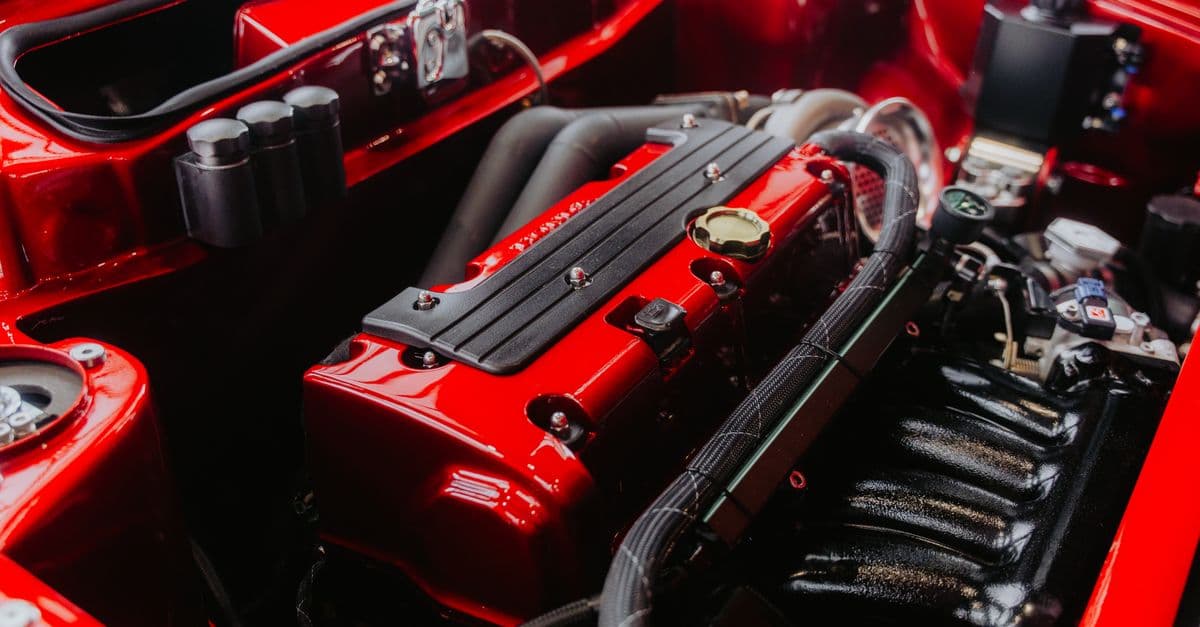
Photo: Luke Miller / Pexels
An internal combustion engine burns fuel inside the machine itself, using the expanding gases of that combustion to push a piston that rotates a crankshaft that turns wheels, propellers, or turbines. That enclosed-fire concept is so foundational to modern civilization that roughly one billion vehicles on Earth's roads today are powered by some variant of it. Yet the engine that made mass transportation possible was assembled from the work of a Belgian inventor who burned coal gas, a German engineer who obsessed over efficiency, and a Bavarian inventor whose death remains unexplained. The internal combustion engine is not one invention — it is a layered accumulation of ideas refined over 160 years.
What "Internal Combustion" Actually Means
The external combustion engine — the steam engine — burns fuel outside the working cylinder. A boiler heats water into steam; the steam drives a piston. The fire and the work are physically separated. The internal combustion engine eliminates the boiler. Combustion happens inside the cylinder, directly pushing the piston. The result is a machine that is lighter, faster-responding, more power-dense, and — in principle — more fuel-efficient than a steam engine of equivalent output.
Think of the difference this way: an external combustion engine is like warming a room by building a fire in the hallway and piping heat under the door; an internal combustion engine is like building the fire in the room itself. The direct approach wastes less energy in transport and responds faster when you demand more heat.
There are two principal types of internal combustion reciprocating engine, defined by how they ignite the fuel:
- Spark-ignition (SI) engines mix fuel and air, then fire an electric spark to initiate combustion. These are Otto-cycle engines, found in most gasoline-powered cars and motorcycles.
- Compression-ignition (CI) engines compress the air in the cylinder so violently — at ratios of 14:1 to 23:1 — that the temperature rises high enough to ignite diesel fuel injected directly into the cylinder. No spark plug required. These are Diesel-cycle engines.
Both types exist because of different inventors working independently on different problems, decades apart.
The Story of the Internal Combustion Engine
Étienne Lenoir and the First Practical Gas Engine (1860)
The practical internal combustion engine begins not in Germany but in Belgium, with Jean Joseph Étienne Lenoir, a self-taught inventor who had emigrated to Paris. By 1859, Lenoir had constructed a two-stroke engine that burned a mixture of coal gas and air, ignited by an electric spark from a Ruhmkorff coil. He received a French patent for his "air motor expanded by gas combustion" in 1860.
Source: Lenoir's 1860 patent and technical specifications are documented at Britannica's Étienne Lenoir biography and accelleron.com's history of the ICE.
Lenoir's engine was a converted double-acting steam engine with slide valves. It was not elegant — fuel efficiency was only around 4 percent — but it ran reliably. By 1865, more than 400 were in use across France and approximately 1,000 in Britain, powering pumps, printing presses, and small machinery. In 1863, Lenoir even built the Hippomobile, a vehicle that made a 18 km test run from Paris to Joinville-le-Pont in three hours, powered by a single-cylinder internal combustion engine.
Source: The Hippomobile's 1863 test run and Lenoir's engine statistics are described in EBSCO Research Starters on Lenoir's Internal Combustion Engine.
The Lenoir engine's core weakness was that it drew in the fuel-air mixture during the first half of the power stroke, then ignited it. There was no separate compression before ignition. Without compression, the thermodynamic efficiency was poor, and the exhaust stroke wasted energy that a better-designed cycle would reclaim.
Nikolaus Otto and the Four-Stroke Cycle (1876)
Nikolaus August Otto was a German salesman with no formal engineering education who became obsessed with improving the gas engine after seeing reports of Lenoir's machine in 1860. In 1864, he partnered with the engineer Eugen Langen to form N.A. Otto & Cie, the world's first internal combustion engine manufacturer.
Their early atmospheric engine — which used the expansion of gases to pull a piston down by atmospheric pressure rather than pushing it up by combustion pressure — won the gold medal at the 1867 Paris World's Fair, outselling a Lenoir engine on fuel efficiency by a factor of more than two.
Source: The 1867 Paris World's Fair competition between Otto-Langen and Lenoir engines is described in Britannica's Nikolaus Otto biography and accelleron.com's history.
Otto's transformative achievement came in 1876, when he built the first practical four-stroke gas engine — the engine type that bears his name to this day. The four-stroke cycle divides the engine's operation into four distinct piston movements:
- Intake stroke: The piston descends, drawing a fuel-air mixture into the cylinder through the open intake valve.
- Compression stroke: The piston ascends with both valves closed, compressing the mixture to a fraction of its original volume.
- Power stroke: The spark ignites the compressed mixture. The rapid combustion and gas expansion force the piston down, producing the mechanical work that drives the crankshaft.
- Exhaust stroke: The piston ascends again, pushing burned gases out through the open exhaust valve.
The four-stroke cycle is thermodynamically superior to Lenoir's two-stroke approach because compression before ignition dramatically increases the temperature and pressure at which combustion occurs, extracting more work per unit of fuel. Otto's 1876 engine achieved an efficiency of around 17 percent — not impressive by modern standards (contemporary engines reach 35–45 percent), but more than four times better than Lenoir's machine.
Source: The thermodynamic performance of Otto's 1876 engine and the four-stroke cycle are described in MSOE faculty notes on the Otto Cycle.
Otto received German Patent 532 for the four-stroke engine in 1876. More than 30,000 of his engines were built over the next decade. However, in 1886, a German court revoked Otto's patent after discovering that the French engineer Alphonse Beau de Rochas had described the four-stroke principle in an 1862 French patent (though without building a working engine). Otto had not known about Beau de Rochas's prior work and had genuinely reinvented the cycle independently, but the patent revocation removed his legal monopoly. The cycle still bears his name.
Source: The Beau de Rochas priority dispute and the 1886 patent revocation are documented in EBSCO Research Starters on Otto's Practical Internal Combustion Engine.
Rudolf Diesel and Compression Ignition (1893)
Rudolf Diesel was a Bavarian-born engineer trained at the Technische Hochschule München who had a theoretical rather than empirical approach to engine design. Where Otto worked by trial and experiment, Diesel worked from thermodynamic first principles. His goal was to design an engine that operated on the Carnot cycle — the theoretically most efficient thermodynamic cycle possible — by using extreme compression to achieve ignition rather than a spark.
Diesel's 1893 patent, German Patent 67207, described a "method and apparatus for converting heat into work." The core insight was compression ignition: compress the air charge in the cylinder to such a high ratio — Diesel's original design called for 250:1, though this was later moderated to practical values — that the temperature rose high enough to ignite fuel injected directly into the cylinder at the moment of maximum compression.
Source: Diesel's 1893 patent concept and its thermodynamic basis are described in EBSCO Research Starters on Otto's Practical Internal Combustion Engine and historycooperative.org.
The first practical Diesel engine ran in 1897 at MAN's factory in Augsburg, Germany. It achieved a thermal efficiency of about 26 percent — substantially better than contemporary steam engines — and could run on a wide variety of fuels, including crude oil, vegetable oil (Diesel demonstrated his engine running on peanut oil at the 1900 World's Fair), and heavy fuel oils that gasoline engines could not burn.
Source: The 1897 Augsburg Diesel engine and the 1900 peanut oil demonstration are documented in multiple engineering history sources.
Diesel's engine was commercially significant from the start for stationary applications — power generation, ship propulsion, and later railway locomotives. Its high compression ratio made it heavier and more expensive than gasoline engines of equivalent power, which is why it took until the 1930s before diesel engines began appearing in trucks and buses, and until the 1970s before they became competitive in passenger cars.
Rudolf Diesel's Death — The Unsolved Mystery of 1913
On the night of September 29, 1913, Rudolf Diesel boarded the steamship Dresden in Antwerp for an overnight crossing of the English Channel to Harwich, England. He had dinner with two associates, retired to his cabin at around 10 PM, and was never seen alive again. His body, badly decomposed, was recovered from the North Sea nine days later.
Source: The circumstances of Diesel's disappearance and the recovery of his body are documented in Time Magazine's account and in Douglas Brunt's 2023 book The Mysterious Case of Rudolf Diesel (Simon & Schuster).
Three theories were seriously advanced at the time:
Suicide: Diesel was under severe financial stress. His business investments had largely failed; he had mortgaged his Munich home; he was reportedly near bankruptcy. The suicide theory held that he jumped from the ship's stern at night.
German espionage: A newspaper headline at the time read: "Inventor Thrown into the Sea to Stop Sale of Patents to the British Government." The theory held that Kaiser Wilhelm II's agents murdered Diesel to prevent his engine technology — particularly its potential for submarine propulsion — from reaching Britain on the eve of a war that Germany was preparing for.
Rockefeller's agents: Diesel's engine could run on vegetable oil, bypassing petroleum entirely. Some theorized that Standard Oil's commercial interest in eliminating a petroleum-free engine technology motivated foul play.
No definitive conclusion was ever reached. The official verdict was an open finding. Diesel's son Eugen later identified the personal effects recovered from the body as his father's, but the corpse itself was returned to the sea by the salvagers before a formal identification could be completed ashore.
How the Four-Stroke Engine Works — A Mechanical Walk-Through
A modern gasoline four-stroke engine has evolved far beyond Otto's 1876 design, but the same four-stroke cycle governs its operation. Here is what happens inside a single cylinder of a contemporary engine during one complete cycle:
The piston is connected to the crankshaft via a connecting rod. As the crankshaft rotates, the piston moves up and down. Two rotations of the crankshaft complete one four-stroke cycle — so in a four-cylinder engine running at 3,000 revolutions per minute (RPM), each cylinder fires 1,500 times per minute.
Intake: The intake camshaft opens the intake valve. The piston descends from top dead center (TDC) to bottom dead center (BDC), creating a partial vacuum. A precisely metered mixture of air and gasoline vapor enters the cylinder. Modern engines use fuel injection directly into the cylinder (direct injection) or into the intake port (port injection), replacing the carburetor that sprayed fuel upstream of the intake valve.
Compression: Both valves close. The piston ascends, compressing the mixture to approximately one-tenth of its original volume (compression ratio 10:1). The compressed mixture heats to several hundred degrees Celsius from compression alone — but not enough to self-ignite in a well-designed gasoline engine.
Power (combustion): Just before TDC, the spark plug fires, igniting the compressed mixture. Combustion propagates across the cylinder in roughly 2 milliseconds, raising the in-cylinder pressure to 50–100 bar. This pressure drives the piston forcefully downward, turning the crankshaft. This is the only stroke that produces work; the other three consume it.
Exhaust: The exhaust camshaft opens the exhaust valve. The ascending piston pushes burned gases out through the exhaust port. The catalyst in the three-way catalytic converter (TWC) attached to the exhaust system oxidizes carbon monoxide and unburned hydrocarbons, and reduces nitrogen oxides, before the gases exit the tailpipe.
Source: Engine cycle mechanics and combustion parameters are described in standard automotive engineering texts and summarized at ScienceDirect's Otto Cycle Engine overview.
Modern engines overlay this basic cycle with a set of technologies that Otto could not have imagined:
- Variable valve timing (VVT): Camshaft timing adjusts based on engine speed and load, optimizing intake and exhaust valve opening for peak power at high RPM and peak efficiency at part load.
- Turbocharging: A turbine driven by exhaust gases compresses the incoming air charge, allowing more air — and thus more fuel — to enter the cylinder. A turbocharged 2.0-liter engine can produce the power of a naturally aspirated 3.0-liter engine with better fuel economy.
- Cylinder deactivation: At light loads, half the cylinders shut off (intake and exhaust valves stay closed, fuel injection stops), reducing pumping losses.
- Gasoline direct injection (GDI): Fuel is injected directly into the combustion chamber at pressures up to 200 bar, improving mixing and enabling higher compression ratios without knock.
Timeline of Key Developments
| Year | Event | Significance |
|---|---|---|
| 1860 | Lenoir receives French patent for coal-gas engine | First practical working ICE |
| 1862 | Beau de Rochas describes four-stroke cycle in French patent | Prior claim to the cycle, not a working engine |
| 1863 | Hippomobile test drive, Paris to Joinville-le-Pont, 18 km | First road vehicle powered by an ICE |
| 1864 | Otto and Langen form N.A. Otto & Cie | First ICE manufacturer |
| 1867 | Otto-Langen atmospheric engine wins gold at Paris World's Fair | Commercial validation over Lenoir design |
| 1876 | Otto patents four-stroke engine (German Patent 532) | Definitive engine architecture |
| 1885 | Benz Patent-Motorwagen, first purpose-built gasoline automobile | ICE enters personal transportation |
| 1893 | Diesel patents compression-ignition engine | Alternative combustion pathway |
| 1897 | First practical Diesel engine runs at MAN Augsburg | Diesel enters commerce |
| 1913 | Rudolf Diesel disappears from Channel crossing | Unsolved to this day |
| 1908 | Ford Model T enters production | Mass market for gasoline ICE |
| 1970s | Catalytic converter mandated in US vehicles | Emissions control begins |
| 2008 | Global financial crisis, ICE vehicle sales collapse | Electric vehicles enter mainstream |
| 2035 | EU ban on new petrol and diesel car sales takes effect | Regulatory sunset for the ICE |
Source: Key dates verified against Britannica, EBSCO Research Starters, and Wikipedia on Nikolaus Otto, Rudolf Diesel, and the Benz Patent-Motorwagen.
The Patent Disputes
The ICE's history is dense with patent conflicts, because the stakes were high from the start.
The Beau de Rochas dispute: When Otto filed his 1876 four-stroke patent, he was unaware of Alphonse Beau de Rochas's 1862 French patent, which described the four-stroke principle in writing without constructing a working engine. Beau de Rochas's patent had lapsed unpaid in 1870, which complicated matters further. German courts revoked Otto's master patent in 1886, freeing other manufacturers to build four-stroke engines. The ruling effectively commoditized the technology and accelerated the proliferation of automobile manufacturing in Germany and France.
Karl Benz and the automobile: Otto's 1886 patent fight overlapped with Benz's commercialization of the first purpose-built gasoline automobile, the Patent-Motorwagen. Benz was a former employee of Eugen Langen (Otto's business partner) and had developed his engine independently. The resolution of the Otto patent dispute meant Benz faced no royalty obligations to Otto's firm for his automotive engines.
Diesel's licensing strategy: Diesel licensed his engine design to MAN, Krupp, Sulzer, and other manufacturers directly rather than attempting to manufacture at scale himself. This gave him royalty income but less control over production quality. Several early licensees experienced catastrophic engine failures because compression ratios and fuel injection timing were not correctly calibrated, damaging the technology's reputation in its first decade.
The Unintended Consequences of Internal Combustion
Urban Air Quality and the Pollution Problem
Gasoline and diesel engines emit a range of combustion products: carbon dioxide (CO₂), carbon monoxide (CO), unburned hydrocarbons (HC), nitrogen oxides (NOₓ), and — particularly from diesels — fine particulate matter (PM2.5). In the mid-20th century, these emissions accumulated in cities with millions of vehicles to produce visible, toxic smog.
Los Angeles's photochemical smog crisis of the 1950s and 1960s — caused by NOₓ and unburned hydrocarbons reacting with sunlight to form ozone — prompted California to establish the world's first automotive emission standards in 1966. Federal US standards followed in the Clean Air Act of 1970. The three-way catalytic converter, introduced in US vehicles in 1975, dramatically reduced CO, HC, and NOₓ emissions, but has no effect on CO₂.
Source: California's 1966 emission standards and the federal Clean Air Act's effect on automotive pollution are documented in EPA history and multiple environmental policy sources.
The Climate Problem
The ICE burns hydrocarbons, and every gram of carbon burned produces approximately 3.67 grams of CO₂. A modern gasoline passenger car emitting 150 grams of CO₂ per kilometer — a common figure for mid-size sedans — produces its own weight in CO₂ roughly every 10,000 km of driving. Globally, road transport accounts for approximately 16 percent of total greenhouse gas emissions, according to the International Energy Agency.
Source: Road transport's 16 percent share of global greenhouse gas emissions is from the IEA's 2023 CO₂ Emissions from Fuel Combustion report.
The Trillion-Dollar Infrastructure Lock-In
The ICE's century of dominance created an infrastructure web — oil wells, pipelines, refineries, tankers, gas stations — so deeply embedded in the global economy that replacing it is not merely a technological challenge. The global refining industry processes approximately 100 million barrels of crude oil per day. A transition away from petroleum-fueled ICE vehicles means stranded assets measured in trillions of dollars, a scale of economic disruption with no modern precedent.
Where the Internal Combustion Engine Stands Today
There are approximately one billion ICE vehicles currently in operation worldwide. Despite the rapid growth of battery electric vehicles (BEVs), new ICE vehicle registrations continue to outnumber new BEV registrations in most markets as of 2025.
Source: Global vehicle fleet size estimates are from the International Energy Agency's Global EV Outlook 2024.
The ICE is not going quietly. Several trajectories are being pursued simultaneously:
Hybrid powertrains: Pairing an ICE with an electric motor and battery allows recuperative braking, electric-only low-speed driving, and engine-off coasting. Well-designed hybrids (Toyota Prius, Honda CR-V Hybrid) achieve real-world fuel consumption that approaches the efficiency of entry-level BEVs in urban use, without the range-anxiety limitations of pure electric vehicles.
Synthetic and electrofuels (e-fuels): E-fuels are carbon-neutral hydrocarbons synthesized from green hydrogen (produced by electrolysis using renewable electricity) and captured CO₂. The resulting fuel is chemically identical to gasoline or diesel and burns in existing ICE vehicles without modification. The European Union's 2035 ban on new petrol and diesel car sales includes an exception for e-fuel-compatible vehicles, a provision lobbied for by Porsche, which has invested heavily in e-fuel production in Chile.
Source: The EU's 2035 ICE ban and the e-fuel exemption are documented in the European Parliament's 2023 announcement.
Hydrogen ICEs: Several manufacturers, including Toyota and BMW, have explored internal combustion engines that burn hydrogen rather than hydrocarbons. Hydrogen combustion produces water vapor as its primary product, with small amounts of NOₓ from atmospheric nitrogen at combustion temperatures. Hydrogen ICEs offer a pathway to near-zero emissions without the manufacturing complexity of fuel cells.
The regulatory picture varies sharply by region. Norway's new car market is already more than 90 percent electric. China is the world's largest BEV market, with domestic brands capturing the majority of sales. The United States, India, and Southeast Asia continue to sell predominantly ICE vehicles, with electrification growing but far from dominant.
FAQs About the Internal Combustion Engine
Q: Who actually invented the internal combustion engine? A: No single person. Étienne Lenoir built the first practical working engine in 1860. Nikolaus Otto developed the thermodynamically superior four-stroke cycle in 1876. Rudolf Diesel created the compression-ignition engine in 1893. Karl Benz adapted the Otto-cycle engine into the first purpose-built automobile in 1885. The invention is a collaborative accumulation spanning at least three decades and three countries.
Q: What is the difference between petrol (gasoline) and diesel engines? A: Petrol engines use spark ignition — a spark plug fires to ignite a pre-mixed air-fuel charge at a compression ratio of roughly 9:1 to 13:1. Diesel engines use compression ignition — the air charge is compressed at ratios of 14:1 to 23:1 until it is hot enough to ignite diesel fuel injected at the moment of maximum compression. Diesel engines are generally more fuel-efficient and torquier at low revs; petrol engines are lighter, cheaper, and rev more freely.
Q: Why are diesel engines more efficient than petrol engines? A: Higher compression ratios extract more work per combustion event. Diesel fuel also has a slightly higher energy density per liter than gasoline. Additionally, diesel engines do not need to throttle their air intake (they control power by varying the fuel quantity injected), which eliminates the pumping losses that reduce part-load efficiency in throttled gasoline engines.
Q: What killed Rudolf Diesel? A: Unknown. His body was recovered from the North Sea in October 1913, nine days after he disappeared from the steamship Dresden during a Channel crossing. Suicide, German espionage, and commercially motivated foul play were all theorized at the time. No definitive conclusion was ever reached, and the case remains officially unresolved.
Q: Will the internal combustion engine disappear? A: Not in the near term. The EU's 2035 ban applies only to new car sales, meaning ICE vehicles will remain in use for decades beyond that date. In markets without similar mandates — including the United States at the federal level, India, and most of Southeast Asia — ICE vehicles are expected to remain the majority of new sales into the 2030s. E-fuels and hydrogen ICEs could extend the technology's relevance further. The more honest answer is that the ICE will decline, but slowly, across a transition measured in decades rather than years.
Q: How efficient is a modern internal combustion engine compared to Otto's original? A: Otto's 1876 engine achieved roughly 17 percent thermal efficiency. A modern naturally aspirated gasoline engine achieves 35–40 percent. The best current production gasoline engines (Toyota's Dynamic Force engines used in hybrids) achieve approximately 41 percent thermal efficiency. Diesel engines typically reach 43–46 percent. The thermodynamic ceiling for an ICE operating on the Otto cycle under ideal conditions is around 56 percent at a compression ratio of 10:1; real-world losses (heat transfer, friction, pumping) reduce this substantially.
The Takeaway
The internal combustion engine is 160 years of accumulated ingenuity — Lenoir's coal-gas spark, Otto's disciplined four-stroke cycle, Diesel's uncompromising compression logic — all converging into a machine so useful that a billion copies of its descendants currently share our roads. Its success created problems proportional to its adoption: urban smog, carbon emissions, petroleum dependency. The engine that powered the 20th century is now confronting the 21st century's energy transition, and whether it exits gradually on synthetic fuels or is replaced wholesale by batteries, its mechanical legacy — the crankshaft, the connecting rod, the compression ratio — shaped the engineering vocabulary that electrification inherited.
Read next:
Weekly digest
Stay ahead of the curve
Get the best science, AI, and tech stories delivered to your inbox every week. No spam — unsubscribe any time.
About the Author
SciHub101 is an independent science and technology publication founded and edited by Buğra Sözeri, a software engineer and app developer based in Türkiye. Articles are drafted against peer-reviewed literature and primary sources, fact-checked, and edited by a human before publication. Where we compare products, anything built by our own team is labelled as such — see the editorial guidelines and About page for how corrections and disclosures work.
Related Articles

The Invention of the Internet — SciHub101
How ARPANET's 1969 first message, packet switching theory, and Cerf and Kahn's 1974 TCP/IP paper created a network connecting 5.5 billion people.

The Helicopter: From da Vinci's Sketch to Mars
How Paul Cornu's 1907 hop, Focke's 1936 twin-rotor, and Sikorsky's 1939 VS-300 solved the problem of vertical controlled flight — and where it went next.
Airplane Invention: The Wright Brothers and Controlled Flight
The Wright brothers solved controlled powered flight, but gliders, engines, wind tunnels, and earlier aviation pioneers all mattered.
The Roller Coaster: From Russian Ice Slides to 240 km/h Steel
Roller coasters evolved from 17th-century Russian ice slides to 240 km/h steel machines. Here's the full engineering and cultural history of the world's most engineered thrill.

Structural Battery Composites Explained: When Materials Carry Loads and Store Energy
Structural batteries combine mechanical load-bearing and electrochemical storage in one composite system. Learn the materials science, accounting challenges, prototypes and limits behind the idea.