The Fiber Optic Cable: How Glass Replaced Copper
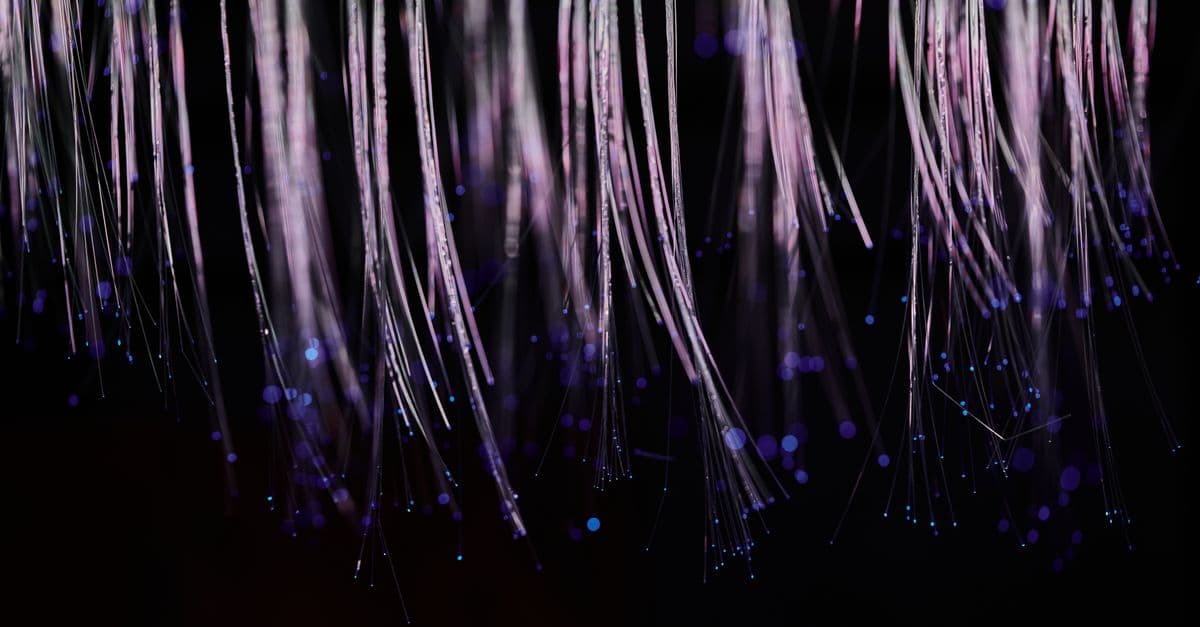
Photo: Suki Lee / Pexels
Every international phone call, video stream, and search query you make almost certainly travels, at some point, through a thread of glass thinner than a human hair. Fiber optic cables carry over 95% of international internet traffic — not through satellites, not through radio waves, but through pulses of light moving through strands of extraordinarily pure silica glass. The technology that made this possible was proposed in a single research paper in 1966 by a British-Chinese physicist named Charles Kao, who calculated that glass could carry light across continents if it could be made pure enough. Four years later, a team at Corning Glass Works proved he was right. The intervening decades built the physical infrastructure that the modern internet runs on.
The Problem with Copper and the Promise of Light
By the early 1960s, telecommunications engineers faced a capacity problem that was going to get worse. The global telephone network ran on copper wire — coaxial cables on long-distance runs, twisted-pair cables in local loops. Copper cables carry electrical signals, and electrical signals degrade with distance. Amplifiers must be spaced along the cable to boost the signal, and the bandwidth available through a given copper wire is physically limited.
The limitation is not arbitrary — it is fundamental physics. The signal-carrying capacity of a conductor is bounded by its electrical properties: resistance, capacitance, and inductance. Telephone engineers could expand capacity by adding more cables, or by carrying multiple calls on a single cable using frequency multiplexing, but both approaches hit diminishing returns.
Source: Nobel Prize Organization — Charles K. Kao biographical information, covering the communications capacity problem that motivated fiber optics research. nobelprize.org/prizes/physics/2009/kao/biographical
Light offers a different approach entirely. The frequency of visible light — roughly 400–700 terahertz — is many orders of magnitude higher than the frequency of electrical signals in copper wire. In principle, a light beam can carry vastly more information than an electrical signal in the same time period. The problem was not the concept of using light for communications — that had been understood since Alexander Graham Bell's photophone experiments in 1880 — but the medium. How do you guide light over long distances without it dispersing, reflecting off obstacles, or simply fading away?
The answer was glass fiber. Light travels inside a glass strand by total internal reflection: the core of the fiber has a higher refractive index than the surrounding cladding layer, so light rays hitting the boundary between core and cladding are reflected back inward rather than escaping. The light bounces its way down the fiber the way water spirals down a curved pipe. In principle, a glass fiber could guide light indefinitely — except that no glass was pure enough in the early 1960s to make this practical.
Source: Corning — "Delivering a Communication Revolution at the Speed of Light for 50 Years," explaining total internal reflection and the glass purity challenge. corning.com/worldwide/en/markets/Optical-Communications-Market/streamlined-connectivity/50YearsOfFiber.html
The glass available in the 1960s absorbed and scattered light so aggressively that a signal was reduced to near-zero within a few meters. Using such glass for telecommunications would require an amplifier every few meters — obviously impractical.
Charles Kao's 1966 Paper: The Calculation That Changed Everything
Charles Kuen Kao was born in Shanghai on November 4, 1933, and educated in Hong Kong and London. By 1963, he was working at Standard Telecommunication Laboratories (STL) in Harlow, England — a research facility affiliated with International Telephone and Telegraph (ITT).
At STL, Kao and his colleague George Hockham began a systematic analysis of what limited light transmission in glass fibers. The prevailing assumption in the telecommunications industry was that glass simply absorbed light too much to be useful for communications — that the absorption was an inherent property of glass as a material.
Kao and Hockham's insight was to ask whether the absorption was fundamental to glass or was caused by impurities. If it was impurities, then purifying the glass could potentially reduce absorption to levels that would allow practical telecommunications.
Source: IEEE Spectrum (2018) — "Remembering the Remarkable Foresight of Charles Kao," covering his analysis at STL and the Kao-Hockham 1966 paper. spectrum.ieee.org/remembering-the-remarkable-feat-of-charles-kao
Their paper, "Dielectric-fibre surface waveguides for optical frequencies," published in the Proceedings of the Institution of Electrical Engineers (IEE) in July 1966, made a specific quantitative claim: if the impurities in glass fiber could be reduced to achieve attenuation of less than 20 decibels per kilometer (20 dB/km), optical fiber would be viable for telecommunications.
For context: glass available in 1966 had attenuation of around 1,000 dB/km. Kao was saying that if the material could be improved by a factor of 50, it would work. Most people in the industry thought he was wrong about whether glass could be made that pure.
Source: Nobel Prize Organization — "The Nobel Prize in Physics 2009: Illustrated Information," documenting the 20 dB/km threshold in Kao's 1966 paper. nobelprize.org/prizes/physics/2009/illustrated-information
Kao spent the next several years traveling to glass manufacturers — Pilkington, Schott, Corning — presenting his analysis and asking whether they could achieve the purity levels he specified. The response was largely skeptical. Corning Glass Works, however, assigned a research team to the problem.
Corning's 1970 Breakthrough: Hitting the 20 dB/km Target
The Corning team assigned to fiber purity was led by Dr. Robert Maurer, with researchers Donald Keck and Peter Schultz. Their approach was to use chemical vapor deposition (CVD) rather than conventional glass melting to produce the fiber core material. CVD built up layers of silica glass from chemical vapors, which could be controlled far more precisely than molten glass and avoided introducing the metallic ion impurities (particularly iron and copper) that caused light absorption.
In 1970, Keck, Maurer, and Schultz produced a fused silica fiber with attenuation below 20 dB/km — specifically around 16 dB/km. This was the first glass fiber that met Kao's threshold. The theoretical prediction from 1966 had been demonstrated physically in 1970.
Source: Engineering and Technology History Wiki (ETHW) — "Milestones: World's First Low-Loss Optical Fiber for Telecommunications, 1970," documenting the Corning team's achievement and CVD technique. ethw.org/Milestones:World's_First_Low-Loss_Optical_Fiber_for_Telecommunications,_1970
The 1970 result proved the concept. It did not immediately produce a product: fibers with 16 dB/km attenuation require an amplifier (or repeater) every few kilometers, which is expensive but manageable for telecommunications infrastructure. The next two decades of fiber optics research were primarily about reducing attenuation further, improving fiber consistency, and developing the laser sources and detectors needed to make a practical system.
Source: Optics and Photonics News (2020) — "The Breakthrough Birth of Low-Loss Fiber Optics," covering the Corning team's 1970 work and subsequent development. optica-opn.org/home/articles/volume_31/march_2020/features/the_breakthrough_birth_of_low-loss_fiber_optics
By the mid-1980s, commercial fibers had achieved attenuation below 0.2 dB/km in the 1,550-nanometer wavelength window — 100 times better than the 1970 Corning result and 5,000 times better than the glass available when Kao published his paper.
Timeline: From Paper to Global Infrastructure
| Year | Milestone |
|---|---|
| 1880 | Alexander Graham Bell's photophone demonstrates light-based voice transmission |
| 1954 | Harold Hopkins and Narinder Singh Kapany demonstrate image transmission through fiber bundles |
| 1966 | Charles Kao and George Hockham publish "Dielectric-fibre surface waveguides" — the 20 dB/km threshold |
| 1970 | Corning team (Keck, Maurer, Schultz) demonstrates fiber below 20 dB/km using CVD |
| 1977 | First live telephone traffic over optical fiber in Chicago (GTE) and Long Beach, CA (AT&T) |
| 1988 | TAT-8, first transatlantic fiber optic cable, enters service December 14 |
| 1996 | First commercial wavelength-division multiplexing (WDM) systems; multiple wavelengths per fiber |
| 2000 | Dot-com boom drives massive fiber cable laying; some cables remain unlit ("dark fiber") |
| 2009 | Charles Kao awarded Nobel Prize in Physics |
| 2024 | NICT demonstrates 402 Tb/s transmission in a standard commercial fiber |
| 2026 | Over 1.5 million km of submarine fiber cables in service globally |
Source: Nobel Prize Organization (2009); ETHW — TAT-8 Milestone; NICT (2024) press release; phys.org (2026) — undersea cable statistics.
The People: Kao, Hockham, and the Corning Team
Charles Kao's biography bridges East and West in ways that are worth noting. Born in Shanghai, educated at St. Joseph's College in Hong Kong and then at the University of London, he spent his career at Standard Telecommunication Laboratories in England, then moved to the Chinese University of Hong Kong in 1987 as Vice Chancellor, where he built the institution's research profile over a decade.
His 1966 paper was co-authored with George Hockham, but the credit for the core insight — that glass purity, not fundamental glass physics, was the limitation — is generally attributed to Kao. He was the one who traveled to glass manufacturers, calculated what purity level was needed, and made the case to a skeptical industry.
Source: Nobel Prize Organization — "Charles K. Kao: Facts," documenting the 2009 Nobel Prize award rationale. nobelprize.org/prizes/physics/2009/kao/facts
In 2009, the Royal Swedish Academy of Sciences awarded the Nobel Prize in Physics to Charles Kao "for groundbreaking achievements concerning the transmission of light in fibres for optical communication." He shared the prize with Willard Boyle and George Smith, who were recognized for the invention of the CCD image sensor. The Nobel committee specifically cited Kao's 1966 paper and his proof that glass purity was the limiting factor.
Source: Nobel Prize Organization — Physics 2009 Prize announcement and illustrated information pages. nobelprize.org/prizes/physics/2009
Kao received the Nobel Prize at a ceremony in Stockholm while suffering from Alzheimer's disease, which had been diagnosed around 2004. His wife Gwen accepted the honor with him on stage. He died on September 23, 2018, in Hong Kong.
The Corning team — Keck, Maurer, and Schultz — are less well known outside the fiber optics field but were inducted into the National Inventors Hall of Fame in 1993 for their 1970 achievement. Their CVD technique remains the basis for how optical fiber is manufactured today.
The TAT-8: First Fiber Across the Atlantic
From laboratory demonstration to transatlantic infrastructure took 18 years. The Trans-Atlantic Telephone Cable No. 8 (TAT-8) entered service on December 14, 1988 — the first transatlantic telecommunications cable to use optical fiber rather than coaxial copper.
TAT-8 connected the United States, the United Kingdom, and France. It ran 3,148 miles (5,066 km) of undersea fiber, carried 280 megabits per second (Mbit/s), and had a maximum capacity of 40,000 simultaneous telephone calls — roughly three times the capacity of its copper predecessor, TAT-7.
Source: Engineering and Technology History Wiki (ETHW) — "Milestones: Trans-Atlantic Telephone Fiber-Optic Submarine Cable (TAT-8), 1988." ethw.org/Milestones:Trans-Atlantic_Telephone_Fiber-Optic_Submarine_Cable_(TAT-8),_1988
TAT-8 required optical repeaters every 40–70 km along the cable to amplify the signal. These repeaters were essentially miniaturized regenerators: they received the optical signal, converted it to an electrical signal, amplified it, and retransmitted it as light. The repeaters were the most technologically demanding components of the system and the most expensive.
The invention of the erbium-doped fiber amplifier (EDFA) in 1987 — by David Payne at the University of Southampton and Emmanuel Desurvire at Bell Labs — transformed this economics. An EDFA amplifies light directly, without converting it to electricity, by pumping the signal through a short segment of fiber doped with erbium ions that are excited by a secondary laser. Amplification without conversion meant fewer failure points, lower cost per kilometer, and — critically — the ability to amplify multiple wavelengths simultaneously.
Source: History of Information (2023) — "Charles Kao Proposes Optical Fibers as a Medium for Communication," covering the EDFA development context and its impact on repeater spacing. historyofinformation.com/detail.php?id=1332
TAT-8 was decommissioned in 2002 after a fault on the seabed, and its cable was removed from the Atlantic Ocean floor in 2024–2025, after 37 years of service.
How Fiber Optics Actually Works
Light traveling through a fiber optic cable is guided by total internal reflection — a consequence of Snell's law of refraction. When light traveling through a denser medium hits a boundary with a less dense medium at an angle greater than a critical angle, it reflects entirely back into the denser medium rather than passing through.
A fiber optic cable has two concentric glass layers: the core (high refractive index, typically doped silica) and the cladding (lower refractive index, pure silica). Light traveling along the core hits the core-cladding boundary at a shallow angle that is always above the critical angle, so it reflects completely back into the core and continues down the fiber.
Think of it like this: a garden hose filled with water won't transmit light, but a glass tube with the right geometry behaves like a mirror tunnel — each reflection sends the light farther along without losing it through the walls.
Source: Corning — "Loss Matters" fiber optics educational resource, explaining total internal reflection and core-cladding geometry. corning.com/optical-communications/emea/en/home/products/fiber/optical-fiber-resource-center/loss-matters-videos-and-tutorials.html
The light pulses are generated by semiconductor lasers or LEDs, typically operating at wavelengths around 1,310 nm or 1,550 nm — in the near-infrared range, which silica glass absorbs least. Modern systems use wavelength-division multiplexing (WDM), which sends multiple independent data streams simultaneously down the same fiber on different wavelengths of light, the way different radio stations occupy different frequencies on the same electromagnetic spectrum.
Why Single-Mode Fiber Matters
Optical fiber comes in two main types: multimode fiber (larger core, typically 50–62.5 micrometers diameter, cheaper to manufacture) and single-mode fiber (smaller core, typically 8–10 micrometers, more expensive). Multimode fiber allows light to travel along multiple pathways simultaneously; the different paths arrive at slightly different times and blur together, limiting the bandwidth over distance. Single-mode fiber, where the core is small enough that only one propagation mode is supported, avoids this dispersion problem entirely and is used for all long-distance telecommunications.
Source: NICT (2024) press release — "World Record 402 Tb/s Transmission in a Standard Commercially Available Optical Fiber," describing the single-mode fiber used in the record transmission. nict.go.jp/en/press/2024/06/26-1.html
Priority Disputes: Who Gets Credit for Fiber Optics?
Fiber optics has a layered attribution history that requires some disentanglement.
The basic principle. Total internal reflection was described by John Tyndall in 1870 using a stream of water to guide light, demonstrating the concept publicly. The idea of guiding light in glass fibers was understood by physicists from at least the 1920s.
Image transmission through fibers. Harold Hopkins and Narinder Singh Kapany demonstrated transmission of images through fiber bundles in a 1954 paper in Nature, and Kapany coined the term "fiber optics" in a 1956 Scientific American article. Their work was focused on medical endoscopy, not telecommunications.
The telecommunications breakthrough. Kao and Hockham's 1966 paper was the first to quantify the purity requirements for telecommunications-distance light transmission and to argue that those purities were achievable. This is why Kao received the Nobel Prize while Hopkins and Kapany did not — the Nobel was specifically for the telecommunications insight, not the concept of light guidance in fiber.
Source: PMC — "Charles K. Kao — Father of Fiber Optics" (2011), published in the journal Photonics, reviewing Kao's contributions relative to earlier fiber optics work. pmc.ncbi.nlm.nih.gov/articles/PMC3146387
Narinder Kapany died in December 2020 without receiving the Nobel Prize, despite being credited with coining "fiber optics." The Nobel committee's decision to award Kao rather than Kapany reflects the specific judgment that the telecommunications application — requiring the purity analysis Kao performed — was the transformative contribution.
Unintended Consequences: What Fiber Made Possible
The internet's physical layer. The modern internet is physically an optical network. Every major connection between continents runs on fiber optic cables. The speed at which information travels globally — the latency that makes real-time video calls possible — depends on light traveling through silica glass at approximately two-thirds the speed of light in vacuum.
The dot-com era's physical legacy. The 1990s internet boom drove an enormous buildout of fiber optic infrastructure, much of it laid speculatively in anticipation of demand that hadn't yet materialized. When the dot-com bubble burst in 2000–2001, enormous capacity was stranded as "dark fiber" — installed cables with no active optical equipment. This dark fiber became the physical substrate for the bandwidth expansion of the 2000s and 2010s, as equipment was activated to meet growing demand without new cable installation.
Submarine cable geopolitics. Over 95% of international internet traffic flows through approximately 600 active or planned submarine cables as of 2025. This infrastructure has strategic significance that most users don't appreciate: cutting or tapping submarine cables can disrupt or surveil international communications at scale. The geography of cable landings — which countries have cables coming ashore, who owns them, who maintains them — is an increasingly explicit element of telecommunications policy and national security discussion.
Source: TeleGeography — Submarine Cable FAQs (2025), documenting 95%+ of international traffic through submarine cables and cable counts. telegeography.com/submarine-cable-faqs-frequently-asked-questions
AI infrastructure demand. The buildout of large-scale AI data centers is driving a new wave of fiber infrastructure investment. Training large language models and running inference at scale requires enormous data center interconnects and the long-haul capacity to move data between cloud regions. Hyperscalers (Google, Microsoft, Meta, Amazon) are now significant private investors in submarine cable infrastructure, commissioning cables dedicated to their own traffic rather than sharing capacity on commercially operated cables.
Source: Dgtl Infra (2024) — "Subsea Cables: The Invisible Fiber Link Enabling the Internet," covering hyperscaler investment in dedicated submarine cables. dgtlinfra.com/submarine-cables-fiber-link-internet
Where Fiber Optics Stands Today
As of early 2026, over 1.5 million km of submarine fiber cables are in service globally — enough to circle the Earth roughly 37 times. These cables carry over 95% of international internet traffic.
Source: Phys.org (2026) — "How 1.5 million km of undersea internet cables can double up as an earthquake and tsunami warning system." phys.org/news/2026-02-million-km-undersea-internet-cables.html
In June 2024, researchers at Japan's National Institute of Information and Communications Technology (NICT) demonstrated a record transmission speed of 402 terabits per second (Tb/s) through a standard commercially available optical fiber — four times faster than the best available commercial systems at the time.
Source: NICT press release (June 26, 2024) — "World Record 402 Tb/s Transmission in a Standard Commercially Available Optical Fiber." nict.go.jp/en/press/2024/06/26-1.html
The comparison to Kao's 1966 starting point is striking. TAT-8 in 1988 carried 280 Mbit/s on its fiber pair. The NICT 2024 demonstration achieved 402 Tb/s — an improvement of more than 1.4 million times the capacity in 36 years. The glass strand itself is not fundamentally different from what Corning demonstrated in 1970; the gains have come from wavelength-division multiplexing, amplifier technology, modulation techniques, and signal processing.
The fundamental physics that Charles Kao worked out in 1966 — total internal reflection in a pure glass waveguide — is unchanged. What changed is everything around it.
For a related invention that helped enable fiber optic communication systems, see The Invention of the Laser, which covers the coherent light sources that drive modern fiber optic transmitters.
FAQs
Q: Why did Charles Kao win the Nobel Prize and not the Corning researchers who actually made the fiber? A: The Nobel committee specifically cited Kao for his theoretical analysis proving that glass purity (not glass physics) was the limiting factor, and for his calculation of the 20 dB/km threshold. The Corning team — Keck, Maurer, and Schultz — demonstrated the first practical fiber meeting that threshold, but the Nobel Prize in Physics has traditionally gone to the theoretical insight over the experimental execution when the insight was the decisive contribution. The Corning team have received other recognition including the National Inventors Hall of Fame.
Q: How does wavelength-division multiplexing increase fiber capacity? A: By sending multiple independent light signals simultaneously on different wavelengths, the same physical fiber carries multiple data streams in parallel. It is analogous to FM radio, where multiple stations broadcast simultaneously on the same medium by using different frequencies. Modern commercial systems can multiplex hundreds of wavelength channels on a single fiber, each carrying its own data stream.
Q: Why can't satellites replace fiber optic cables? A: Latency and capacity. A signal to a geostationary satellite 35,786 km above Earth takes approximately 240 ms round-trip — noticeably slow for interactive applications. Low-Earth orbit satellite constellations like Starlink reduce latency to 20–40 ms but still can't match fiber's single-digit ms latency for ground-based routes, and the aggregate capacity of even large satellite constellations is orders of magnitude less than major submarine cables.
Q: What happens when a submarine cable breaks? A: Traffic is rerouted to other cables through the internet's routing protocols, often at reduced capacity. Repairs are performed by specialized cable ships that can locate a break, grapple the cable from the seabed, bring it to the surface, splice in new fiber, and reseal the cable housing. A repair typically takes 2–4 weeks from break detection to restored service.
Q: Is fiber optic cable affected by electromagnetic interference? A: No, and this is one of its major advantages over copper wire. Because fiber carries light rather than electrical current, it generates no electromagnetic field and is not affected by external electromagnetic interference, lightning strikes, or radio frequency noise. This makes it preferable for industrial environments, medical facilities, and any application where electrical noise is a problem.
Q: How is fiber optic cable actually made? A: A large glass cylinder called a preform is produced by chemical vapor deposition — building up layers of silica and dopants from chemical vapors at high temperature. The preform is then fed into a drawing tower, where one end is heated to around 2,000°C and fiber is drawn out from the molten tip at speeds up to 30 m/s. As it cools, it solidifies into a glass strand approximately 125 micrometers in diameter — roughly the width of a human hair. The drawn fiber is immediately coated with protective polymer.
The Takeaway
Charles Kao's 1966 paper was a bet: glass could be made pure enough for optical telecommunications if someone tried hard enough. The Corning team took four years to win that bet. The next two decades built the amplifiers, the multiplexing systems, and the submarine cable infrastructure to put that fiber to work. The result is that the information infrastructure of the modern world is physically a network of sand — silica glass drawn to hair-thin threads — carrying pulses of laser light at two-thirds the speed of light in vacuum. From a threshold calculation in a British research lab to 1.5 million kilometers of undersea fiber took about 60 years. The technology is now mature enough that the primary constraints on global bandwidth are no longer physics but economics: where cable ships have been, and where the next cable contracts have been signed.
Read next:
Follow new articles
Add SciHub101 to your feed reader to see new science and technology stories.
About the Author
SciHub101 is an independent science and technology publication founded and edited by Buğra Sözeri, a software engineer and app developer based in Türkiye. AI tools assist with drafting and research. Source documentation in the existing archive is uneven, and articles are being reviewed and corrected. The Editorial Team byline identifies editorial responsibility; it does not certify specialist or independent human review. Where we compare products, anything built by our own team is labelled as such — see the editorial guidelines and About page for how corrections and disclosures work.
Related Articles
The Helicopter: From da Vinci's Sketch to Mars
How Paul Cornu's 1907 hop, Focke's 1936 twin-rotor, and Sikorsky's 1939 VS-300 solved the problem of vertical controlled flight — and where it went next.
The Electroencephalogram (EEG) — How a Psychiatrist Mapped the Brain's Electric Storm
How Hans Berger's secret obsession with telepathy in 1924 produced the EEG—and why those squiggly lines still diagnose epilepsy and decode sleep 100 years later.
The Modem: From SAGE Air Defense to the 56K Era
The modem began in 1958 as SAGE air-defense hardware. See how it became the Hayes Smartmodem, the 56K V.90 standard, and the DSL and cable links of today.
Countries with the Fastest Internet Speeds (Fixed Broadband Ranked)
The United Arab Emirates leads the world with a median fixed broadband download speed of 413.2 Mbps — more than four times the global average of roughly 90 Mbps. High urbanization rates, state-backed fiber rollout programs, and competitive telecoms markets are the common threads running through every country at the top of the Ookla Speedtest Global Index 2024.