How Satellite Internet Reduces Latency

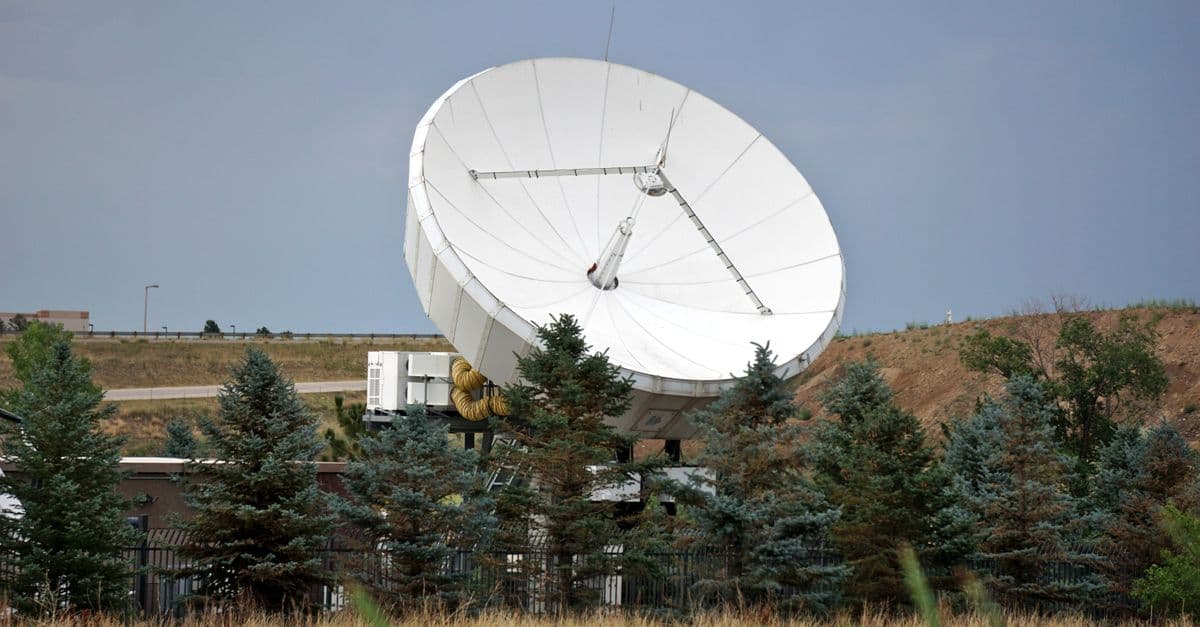
Photo: Phong Thanh / Pexels
Older satellite internet services built a reputation for laggy, frustrating connections, with latency often exceeding 600 milliseconds, largely unusable for video calls or online gaming. Starlink now reports a median latency around 25 to 50 milliseconds for most customers, with peak (99th-percentile) latency under 65 milliseconds. The entire difference comes down to one number: how far above Earth the satellites actually orbit.
Why altitude, not distance to a ground station, is the real bottleneck
Traditional satellite internet services, including older-generation HughesNet and Viasat offerings, rely on geostationary (GEO) satellites, which orbit at approximately 35,786 kilometers (22,236 miles) above Earth's equator. That altitude is not arbitrary. A satellite at exactly that height completes one orbit every 24 hours, matching Earth's own rotation, so it appears to hang motionless in the sky from any fixed point on the ground. That stillness is what makes GEO satellites so useful for a permanently pointed dish, and it is also the source of nearly all their latency problems.
Latency — the delay between sending a signal and receiving a response, usually measured in milliseconds, is distinct from bandwidth, which measures how much data can move per second. A connection can have plenty of bandwidth and still feel sluggish if latency is high, the same way a wide highway still has a long commute if it stretches across an entire country.
A signal from a home GEO dish has to travel roughly 35,786 kilometers up to the satellite and another 35,786 kilometers back down to a ground station, then repeat that same trip for the return path. That adds up to nearly 144,000 kilometers of total signal travel for a single request-response cycle. Radio waves travel at the speed of light, roughly 300,000 kilometers per second (186,000 miles per second), but even at that speed, covering 144,000 kilometers takes time that no engineering can shave away. The result is a physics-imposed latency floor of roughly 480 milliseconds round-trip for a satellite positioned directly overhead, and real-world latency is typically higher, often 600 to 700 milliseconds, once processing delays, ground routing, and satellites near the edge of their coverage footprint are factored in (satsig.net technical reference).
Half a second of delay does not sound catastrophic in isolation, but round-trip delay compounds with every back-and-forth exchange a connection requires. Loading a single web page can involve dozens of small request-response cycles between a browser and a server, and each one inherits that same half-second tax. A page that would load in under a second on fiber can visibly crawl on GEO satellite internet, even though the download speed itself might be perfectly respectable.
Why low Earth orbit changes the physics entirely
Starlink and similar newer services, including Amazon's Project Kuiper and the UK-backed OneWeb constellation, instead use satellites in low Earth orbit (LEO), typically around 550 kilometers (340 miles) altitude for Starlink specifically. That is roughly 65 times closer to Earth than a geostationary satellite. Distance is the whole story here: less physical distance for a signal to travel means less unavoidable delay, the same basic physics that makes a phone call to someone in the next room have essentially no perceptible lag compared to a call routed across an ocean.
Running the same math used for GEO satellites on a 550-kilometer LEO satellite gives a round trip of roughly 2,200 kilometers, about 1 percent of the distance a GEO signal has to cover. That alone would put the speed-of-light latency floor for a single LEO hop at well under 10 milliseconds. In practice, published Starlink figures sit closer to 25 to 50 milliseconds because the actual path a signal takes rarely runs straight up and back down. It typically bounces between multiple satellites and ground stations before reaching its destination, and each hop adds queuing, routing, and processing time on top of the pure travel distance.
This is the tradeoff that defines LEO satellite internet: altitude buys latency, but it costs coverage stability. A single LEO satellite is only overhead and in range of a given ground terminal for a few minutes at a time before it moves out of view, a direct consequence of the faster orbital speed required to stay aloft at that lower altitude. A geostationary satellite never needs to hand off a connection because it never moves relative to the ground. A LEO satellite has to hand off every connection it is serving, repeatedly, all day, forever.
Why can't a single LEO satellite just orbit slower to stay in view longer?
Orbital speed at a given altitude is fixed by gravity, not by design choice. A satellite at 550 kilometers must travel at roughly 27,000 kilometers per hour (about 17,000 miles per hour) to maintain a stable orbit rather than falling back to Earth, so it necessarily crosses the sky quickly and cannot be slowed down without also raising its altitude.
How thousands of satellites replace one geostationary satellite
Because no single LEO satellite can stay in view for long, LEO internet providers compensate with sheer numbers. Instead of one satellite parked permanently over a region, as GEO systems do, a LEO constellation distributes thousands of satellites across multiple orbital shells and inclinations so that as one satellite drops below the horizon from a ground terminal's perspective, another has already risen to take its place.
Coordinating this handoff is a continuous background process rather than a one-time event. Ground terminals and satellites exchange positioning data constantly, identifying which satellite will next be best positioned before the current one moves out of range, then transferring the active connection, often called a "handoff," with the goal of making the transition invisible to the user. Given how quickly LEO satellites cross the sky relative to a fixed ground point, this handoff can happen every few minutes throughout a single browsing or video session.
How does a satellite internet system hand off your connection between satellites without dropping it?
Ground terminals and satellites continuously exchange positioning and signal-strength data to identify the next best-positioned satellite before the current one moves out of range. The system transfers, or "hands off," the active connection to that satellite automatically, a process that must repeat every few minutes given how quickly LEO satellites move relative to a fixed point on the ground.
Some newer-generation LEO satellites also communicate directly with each other via laser links in orbit, rather than routing every signal back down to a ground station between hops. This inter-satellite laser routing can shorten the total path a signal takes for long-distance connections, since light travels faster through the vacuum of space than through fiber optic cable, though the practical benefit depends heavily on how many satellites and ground stations a given request has to pass through.
The orbital tradeoffs, side by side
Different orbital altitudes trade latency, coverage footprint, and infrastructure cost against each other in ways that shape which satellite internet option makes sense for a given use case.
| Orbit type | Typical altitude | Typical round-trip latency | Satellites needed for global coverage | Coverage per satellite |
|---|---|---|---|---|
| Geostationary (GEO) | ~35,786 km | ~480–700 ms | As few as 3 for near-global coverage | Fixed, wide footprint over one region |
| Medium Earth orbit (MEO) | ~8,000–20,000 km | ~100–150 ms | Dozens (used by GPS, some newer broadband systems) | Moderate footprint, slower handoffs than LEO |
| Low Earth orbit (LEO) | ~500–1,200 km (Starlink ~550 km) | ~20–50 ms | Thousands, arranged in constellations | Small footprint, constant handoffs required |
Lower altitude cuts latency dramatically but forces providers to launch and coordinate far more satellites to maintain continuous coverage.
GEO's single enormous advantage is simplicity: three well-placed satellites can cover nearly the entire populated Earth, which is why it remained the default for decades of satellite television and early satellite internet. MEO sits in an awkward middle position, better known for GPS and navigation constellations than broadband, since its latency improvement over GEO is real but still far short of what LEO delivers. LEO trades that simplicity for speed, accepting enormous constellation-management complexity in exchange for latency low enough to support real-time applications.
Why this latency difference matters for real-world use
Lower latency directly enables applications that were previously impractical over older satellite internet: real-time video conferencing, competitive online gaming, and voice-over-IP calls, all of which are noticeably degraded by round-trip delays above roughly 100 to 150 milliseconds. Below that threshold, most people stop consciously perceiving the lag; above it, conversations start to feel like a walkie-talkie exchange, with participants talking over each other because the delay disrupts natural turn-taking.
This is a major reason SpaceX has marketed Starlink toward rural and remote users who previously had only geostationary satellite or very limited terrestrial options, positioning it as a genuine alternative to fiber or cable rather than simply a backup connectivity option. A household that could once only use satellite internet for email and basic browsing can now realistically run video calls, cloud-based work tools, and multiplayer games, the exact use cases that GEO latency made painful.
The shift toward LEO constellations has also mattered for underserved and disaster-affected regions. Starlink terminals have been deployed for emergency connectivity following natural disasters and in areas with limited existing telecommunications infrastructure, precisely because the latency improvement makes real-time communication tools, coordination calls, medical consultations, and data uploads, usable in ways that older satellite technology could not reliably support. A responder trying to coordinate a rescue over a half-second-delayed GEO connection is working with a meaningfully worse tool than one on a 30-millisecond LEO link, even if both connections technically deliver "internet access."
Latency improvements also ripple into industries that depend on tight feedback loops rather than raw bandwidth. Financial trading systems, remote-controlled machinery, and telemedicine applications, for instance, care less about how much data moves per second and more about how quickly a signal round-trips, which is exactly the metric LEO satellite internet improved by an order of magnitude compared to GEO.
Common misconceptions about satellite internet latency
A frequent misunderstanding treats "satellite internet" as a single category with uniformly bad latency, without distinguishing between geostationary and low Earth orbit systems, which differ enormously in orbital altitude and therefore in latency performance. Lumping GEO and LEO together obscures a roughly tenfold latency difference driven almost entirely by how far up the satellites orbit, not by how advanced or modern the provider's branding sounds.
Another common error assumes LEO satellite internet latency now fully matches terrestrial fiber optic connections. It does not, at least not yet. While LEO systems like Starlink have dramatically closed the gap compared to geostationary satellites, typical terrestrial fiber connections still generally achieve lower latency, often under 20 milliseconds, since fiber signals travel through solid cable across shorter, more direct terrestrial paths without the added travel time of reaching orbit and back at all. LEO satellite internet is best understood as closing most of the gap between GEO satellite and fiber, not eliminating it.
A third misconception assumes that adding more satellites to a constellation automatically lowers latency further. Beyond a certain constellation density, additional satellites mostly improve coverage reliability and capacity per user rather than shaving more milliseconds off the baseline, since the dominant latency factor is already the speed-of-light travel time to and from a 550-kilometer altitude, a floor that more satellites cannot push lower without also lowering the orbit itself.
What limits how low LEO satellites can fly
If lower altitude means lower latency, an obvious question follows: why not fly satellites even closer to Earth to shave off a few more milliseconds? Atmospheric drag sets a practical floor. Below roughly 300 to 400 kilometers, thin traces of Earth's atmosphere create enough drag to steadily slow a satellite down, forcing it to burn fuel constantly to maintain orbit or else decay and re-enter within months rather than years.
There is also a coverage-versus-quantity tradeoff embedded in the altitude choice. A lower-altitude satellite covers a smaller patch of ground at any given moment, which means a constellation flying even lower than Starlink's roughly 550 kilometers would need still more satellites to maintain the same continuous coverage, adding launch cost and orbital-traffic-management complexity for a latency gain that is already well below the threshold most applications need. Engineers generally treat 500 to 600 kilometers as a practical sweet spot: low enough for latency in the tens of milliseconds, high enough to keep atmospheric drag and satellite replacement costs manageable.
What low latency looked like on the ground in Maui and Florida
The clearest evidence that latency improvements translate into real-world usefulness comes from disaster response, where LEO satellite internet has repeatedly been the fastest way to restore functional communication after terrestrial infrastructure fails. When wildfires devastated parts of Maui in August 2023, cutting off cell towers and fiber lines across the island, Starlink shipped and distributed more than 650 terminal kits to more than 40 responding organizations, covering expedited shipping costs and roughly a third of the hardware cost itself (Fox Business, "Where Elon Musk deployed SpaceX Starlink service in emergency situations"). Search-and-rescue coordination, medical triage communication, and family reunification efforts all depend on connections responsive enough for real-time voice and video, exactly the latency threshold that separates usable LEO satellite internet from the frustrating half-second delays of older geostationary service.
Hurricane response has followed a similar pattern. Ahead of and after Hurricane Ian's landfall in Florida, SpaceX repositioned satellites to expand coverage over the affected region, and the state deployed hundreds of Starlink terminals directly into the hardest-hit areas, with additional units staged nearby for rapid follow-up deployment as damage assessments came in. In 2026, the U.S. Department of State and Starlink formalized this pattern into a standing partnership, signing a memorandum of understanding under which the department's Bureau of Disaster and Humanitarian Response coordinates directly with Starlink to restore communications after natural disasters and humanitarian crises abroad (U.S. Department of State, "United States and Starlink Announce Cooperation on Critical Disaster Response," 2026).
What makes these deployments notable from a purely technical standpoint is speed of setup, not just latency after the fact. A LEO terminal can be unboxed, pointed roughly skyward, and connected within minutes, without waiting for a technician to splice fiber or repair a damaged cell tower, because the "infrastructure" it depends on is already orbiting overhead rather than buried in the ground nearby. Combined with latency low enough for real-time coordination calls, that rapid-deployment property is precisely why disaster response has become one of the most consistently cited use cases for LEO satellite internet, distinct from its more everyday role serving rural households with no other broadband option.
The takeaway
Satellite internet latency comes down almost entirely to one variable: orbital altitude. Geostationary satellites sit roughly 35,786 kilometers up specifically so they can remain fixed in the sky, but that altitude imposes an unavoidable physics-based latency floor around 480 milliseconds or more, often measured at 600 milliseconds or higher in practice. Low Earth orbit constellations like Starlink fly at roughly 550 kilometers instead, cutting that same signal-travel-time floor down to a fraction of its former size, typically 25 to 50 milliseconds, at the engineering cost of needing thousands of satellites constantly handing off connections to maintain continuous coverage as individual satellites race across the sky in a matter of minutes. Neither approach eliminates the tradeoff entirely; LEO systems still trail fiber optic latency, and GEO retains an edge in coverage simplicity. But for the specific problem of making satellite internet usable for real-time communication, altitude, not marketing or bandwidth, is the variable that actually solved it.
Read next:
- How LiDAR measures distance
- How passkeys sync across devices safely
- How digital signatures prove a file is authentic
FAQ
Q: Why did older satellite internet services have such high latency?
They relied on geostationary satellites orbiting roughly 35,786 kilometers (22,236 miles) above Earth, and that enormous distance for signals to travel up and back imposes a physics-based latency floor of around 480 milliseconds or more, often measured at 600 milliseconds or higher in practice, regardless of how efficient the rest of the network is.
Q: How does Starlink achieve much lower latency than older satellite internet?
Starlink uses low Earth orbit satellites at roughly 550 kilometers (340 miles) altitude, about 65 times closer to Earth than geostationary satellites, dramatically cutting the physical distance signals must travel and therefore the unavoidable delay that distance imposes. Published figures put typical Starlink latency around 25 to 50 milliseconds.
Q: Why does low Earth orbit satellite internet need thousands of satellites instead of just a few?
A single low Earth orbit satellite is only in range overhead for a few minutes before moving out of view, a direct result of the faster orbital speed required to stay aloft at that lower altitude. A large constellation, thousands of satellites, is required so that another satellite is always positioned to take over the connection as the previous one moves away.
Q: Does satellite internet latency now match fiber optic internet?
Not quite. Low Earth orbit systems like Starlink have dramatically closed the gap compared to geostationary satellites, but terrestrial fiber connections still generally achieve lower latency, often under 20 milliseconds, since fiber signals travel more directly through solid cable without the added travel time of reaching orbit and back.
Q: What real-world activities benefit most from lower satellite internet latency?
Real-time applications like video conferencing, competitive online gaming, and voice-over-IP calls are all noticeably degraded by round-trip delays above roughly 100 to 150 milliseconds, making them far more usable on low-latency LEO satellite internet than on older geostationary services.
Q: Why can't LEO satellites fly even lower to reduce latency further?
Below roughly 300 to 400 kilometers, atmospheric drag becomes strong enough to steadily slow a satellite, forcing constant fuel use or causing orbital decay within months. Engineers generally treat 500 to 600 kilometers as a practical balance between low latency and manageable drag and replacement costs.
Follow new articles
Add SciHub101 to your feed reader to see new science and technology stories.
About the Author
SciHub101 is an independent science and technology publication founded and edited by Buğra Sözeri, a software engineer and app developer based in Türkiye. AI tools assist with drafting and research. Source documentation in the existing archive is uneven, and articles are being reviewed and corrected. The Editorial Team byline identifies editorial responsibility; it does not certify specialist or independent human review. Where we compare products, anything built by our own team is labelled as such — see the editorial guidelines and About page for how corrections and disclosures work.
Related Articles




How Satellites Orbit Earth: The Physics and Engineering Behind Eyes in the Sky
There are over 8,000 active satellites orbiting Earth right now. Here's how they stay up and what they do.
Countries With the Most Satellites in Orbit (2026 Data)
The United States leads every satellite count, largely because of Starlink: 11,114 of the 16,988 active satellites tallied on October 12, 2026. Here is how the major counts differ, who is next, and what the rankings leave out.