Why Undersea Cables Carry Most Internet Traffic
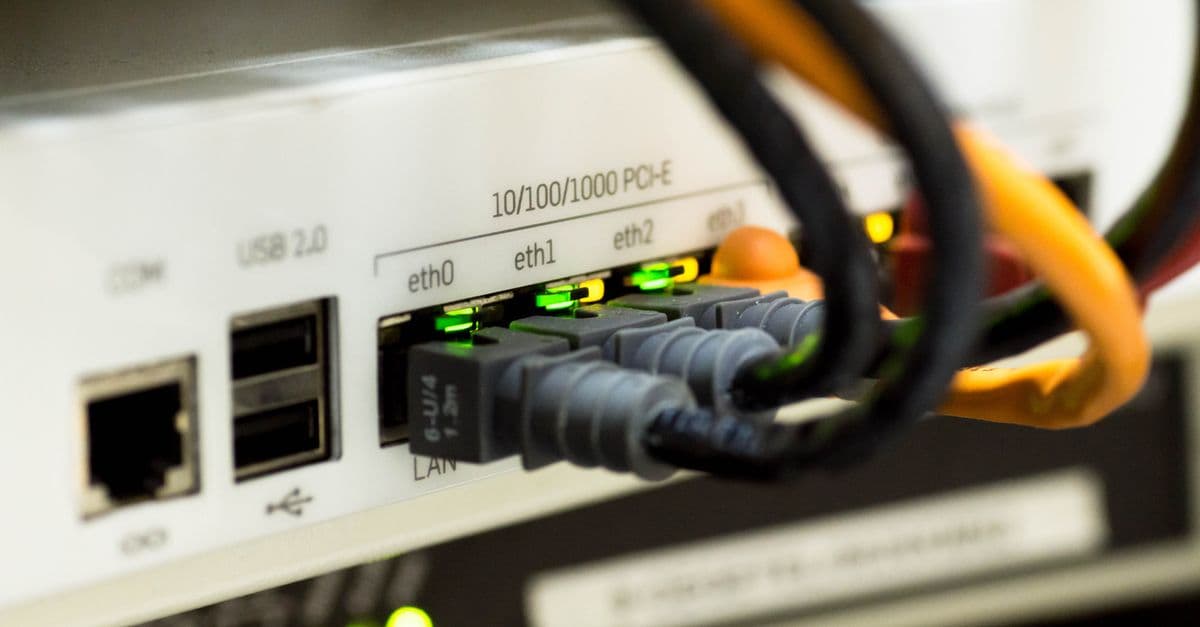
Photo: Pixabay / Pexels
When you video-call someone on another continent, the picture almost certainly does not go up to a satellite. It runs through a glass fiber lying on the seabed, one of roughly 1.5 million kilometers (about 930,000 miles) of submarine cable now in service. Undersea cables carry most internet traffic between continents, about 99 percent by common estimates, and the reasons are physical and economic, not historical accident. The sections below cover why light in glass beats radio from orbit, how the cables are built, laid, and repaired, and what recent Baltic Sea, Red Sea, and Taiwan incidents show about their weak points.
Why fiber beats satellites for bulk data
Two numbers frame the whole story. Wikipedia's survey of the technology puts the share of intercontinental data traffic carried by submarine cables at about 99 percent, with satellites carrying less than 5 percent and some estimates as low as 0.5 percent (Wikipedia). TeleGeography, the research firm that maintains the best-known cable map, cites FCC data showing satellites carry just 0.37 percent of U.S. international capacity (TeleGeography). The exact percentage depends on who is counting and how, but nobody's count puts satellites close to cables.
Start with geometry. A geostationary satellite sits about 35,786 kilometers (22,236 miles) above the equator (Wikipedia). A signal that goes up and comes back down covers roughly 71,600 kilometers, and at the speed of light that takes about 240 milliseconds, which matches the figure usually quoted for the orbit. A request and its reply need two such trips, so the physical floor for a round trip is close to half a second before any equipment adds delay. That is tolerable for television broadcast and painful for a video call.
Low-Earth-orbit constellations shrink the distance dramatically. A Starlink vice president of engineering has said its global median latency is around 26 milliseconds, a company claim reported alongside Ookla's satellite performance report (Telecompetitor). That is far below geostationary delays. The catch is scale: Wikipedia counts roughly 10,400 Starlink satellites in orbit as of June 2026, and they reach users by radio, a shared and limited resource (Wikipedia).
Fiber has a different set of limits. Light in glass travels at roughly 200,000 kilometers per second, about two-thirds of its speed in a vacuum (Wikipedia). A 6,600-kilometer transatlantic route therefore takes at least 33 milliseconds one way, or about 66 milliseconds round trip. Those figures are calculated from the quoted speed, and real routes are not perfectly straight, so actual delays run somewhat higher. What fiber gains in exchange is capacity: nothing in the glass has to be shared with a neighbor's signal, and adding capacity means lighting more glass.
TeleGeography reports that fish bites caused zero submarine cable faults from 2007 to 2014. Anchors and fishing gear, not sea creatures, do most of the damage.
For readers who want the layer above the cables, how the internet actually works follows a request from your device to a server and back, and how satellite internet reduces latency covers the satellite side in more depth.
How light crosses an ocean: lasers, wavelengths, and glass amplifiers
A submarine cable carries pairs of optical fibers. Each fiber is a strand of glass whose cladding is 125 micrometers across, with a core only about 8 micrometers wide (Wikipedia). A laser at one end switches light on and off, billions of times per second, and a receiver at the other end reads the pattern as ones and zeros. The glass is so clear that light survives a long way, but not forever.
Loss in fiber is measured in decibels per kilometer. A typical single-mode fiber at the 1,550-nanometer wavelength loses about 0.3 decibels per kilometer, and the best commercial fiber cited by Wikipedia reaches 0.148 (Wikipedia). At 0.3 decibels per kilometer, 100 kilometers costs 30 decibels, which means only one-thousandth of the light is left. A signal that must cross 6,600 kilometers cannot make the trip unassisted.
The fix is a repeater, a sealed unit along the cable that contains an optical amplifier. The amplifier most cables use is the erbium-doped fiber amplifier. Two groups demonstrated gain in erbium-doped fiber in 1986 and 1987, one at the University of Southampton and one at AT&T Bell Laboratories, and Wikipedia reports such amplifiers were first used in submarine cables in 1995 (Wikipedia, Wikipedia). A pump laser excites erbium ions in a short length of doped fiber, and the incoming signal stimulates those ions to release matching photons. The light is boosted directly, with no conversion to electricity and back. Spacing varies by design, but spans of 100 kilometers or more between repeaters are possible.
An amplifier handles a band of wavelengths at once. The erbium amplifier's gain spans roughly 30 nanometers in the 1,550-nanometer region, which lets a single fiber carry many separate laser colors simultaneously. This is wavelength-division multiplexing, and you can picture it as a highway on which every lane is a different color of light. A car in one lane never meets a car in another, so adding colors adds lanes without adding road.
The other way to add lanes is to add fibers. Google's Dunant cable, which links Virginia Beach, Virginia, with Saint-Hilaire-de-Riez, France, uses 12 fiber pairs and has a design capacity of 250 terabits per second (Wikipedia). That works out to roughly 21 terabits per second per pair. TE SubCom built it, and sources differ slightly on its length, between about 6,400 and 6,600 kilometers.
The scale of improvement is easiest to see in history. The first transatlantic telephone cable, TAT-1, opened on September 25, 1956, with 36 telephone channels. TAT-8, in 1988, was the first transatlantic fiber cable, with two working fiber pairs and one spare (Wikipedia). Design capacities have since risen into the hundreds of terabits per second, such as 224 for the MAREA cable cited by TeleGeography. The underlying idea, pushing light through glass, is the one that replaced copper on long routes. For a ground-level explanation of how fibers guide light, see how fiber optic cables transmit data.
What a submarine cable actually looks like
The cable that carries all this is slimmer than most people expect. TeleGeography notes that most of a cable's length is about the width of a garden hose, with glass fibers the diameter of a human hair at its heart (TeleGeography). Modern deep-sea cable is about 25 millimeters (1 inch) across and weighs roughly 1.4 tonnes per kilometer.
The layers, from the outside in, are polyethylene, Mylar tape, stranded steel wires, an aluminium water barrier, polycarbonate, a copper or aluminium tube, petroleum jelly, and the optical fibers at the center (Wikipedia). Each layer has a job: the steel wires supply strength, the metal tube can carry electrical power, and the water barrier and jelly keep seawater away from the glass.
Power matters because the repeaters need it, and there are no outlets on the seabed. The repeaters are fed with direct current at roughly 3,000 to 15,000 volts, with a total power that can reach about 16.5 kilowatts, sent along the cable itself.
Protection varies along the route, because risk does. Cables are typically buried in waters shallower than 2,000 meters, and burial in deeper seabed is increasing to guard against trawling. In shallow water, a plough suspended under the ship uses high-pressure water jets to bury the cable about 0.9 meters (3 feet) below the seabed so that fishing gear passes overhead (Wikipedia). Out in deep water, human activity is rare and the cable simply lies on the seafloor.
The numbers suggest burial pays off. According to Wikipedia's survey, burial began widely in 1980, and fault rates fell from 3.7 per 1,000 kilometers per year for 1959 to 1979 to about 0.44 per 1,000 kilometers per year after 1985. TeleGeography adds that cables are engineered for a minimum design life of 25 years.
How a cable gets laid, joined, and tested
Laying a transoceanic cable is a slow industrial process rather than a dramatic one. Cable-laying ships store the cable on large drums or in the hold, and examples such as the CS Cable Innovator are about 145 meters (476 feet) long (Wikipedia). A linear cable engine feeds cable over the stern, with a capacity of up to 240 meters a minute, but ships are held to about 8 knots while laying so the cable settles correctly and its position can be mapped for later repairs.
Before any of that happens, the route has to be chosen and permitted, including permission for the waters of each country it crosses. Permits matter later too, as the Red Sea repairs below show.
Where two lengths of cable meet, technicians splice the glass. The core of a standard fiber is only about 8 micrometers wide, so the two ends must be aligned very precisely and fused so that light passes through with little loss. A poor splice becomes a loss point on a link thousands of kilometers long, which is why the work happens under controlled conditions, often on the ship.
The 25-year design life TeleGeography cites is a promise about all of this: splices, repeaters, and armor all have to survive decades on the seabed, because reaching a failed repeater means sending a ship to hook the cable up from the bottom.
Who owns and repairs the cables
The traditional model was a consortium, with telecom carriers sharing costs and each receiving a share of capacity. TeleGeography describes how, in the late 1990s, entrepreneurial companies built many private cables and sold capacity to users, and how content providers such as Google, Meta, Microsoft, and Amazon are now major investors in new cables (TeleGeography). TeleGeography also reports that capacity deployed by private network operators has recently outpaced that of internet backbone operators. Dunant is a clear example of the newer model: Google commissioned the cable and had it built by TE SubCom, to carry its own traffic.
| Owner type | Typical funding | Main motivation |
|---|---|---|
| Telecom consortium | Costs shared among carriers | Capacity for retail customers and wholesale sales |
| Single cloud or content company | Self-funded or co-funded | Dedicated bandwidth between its own data centers |
| Capacity-selling private operator | Investor capital | Sale of capacity to users |
Categories summarize ownership models described by TeleGeography. Individual systems may mix these types.
The shift toward private owners connects to the physical build-out of computing. For the demand side, see countries with the most data centers, which ranks where the traffic is going.
Repair is a specialist job. A cable ship locates the fault, then lowers a grapnel on a rope to snag the cable on the seabed. The ship hauls the cable up by running its cable engine in reverse, cuts out the damaged section, splices in new cable, and lowers the cable back (Wikipedia). Repair ships are smaller and more maneuverable than layers.
A 2022 case shows how long this can take. On January 15, 2022, a volcanic eruption cut Tonga's only international cable, which links the islands to Fiji. The repair ship Reliance replaced a 92-kilometer (57-mile) section of the 827-kilometer cable, with the work itself taking about 20 days, and service returned on February 22, 2022, roughly five weeks after the cut (Global News). About 20 of those days were repair work, which leaves roughly two weeks for getting a ship and cable in place.
Why cables break: mostly accidents
Faults are routine. TeleGeography cites the International Cable Protection Committee in estimating roughly 200 faults per year worldwide, with fishing vessels and ship anchors causing about two-thirds of them. Environmental causes such as earthquakes contribute, underwater component failures are less common, and TeleGeography calls sabotage and shark bites "exceedingly rare." In the Atlantic alone, there are more than 50 repairs a year, and Wikipedia's survey says fewer than 9 percent of Atlantic breaks between 1959 and 1996 were due to natural events.
The pattern reflects where the hazards are. Trawlers drag gear across the seabed in shallow, busy water, and ships that drop or drag an anchor in the wrong place can sever several cables laid in the same corridor. Earthquakes and eruptions can also break cables, as the 2006 Hengchun earthquake and the 2022 Tonga eruption showed.
Some incidents are simply human. In 2007, more than 11 kilometers of cable went missing in Vietnam, reportedly taken by fishing boats, and in 2013 three divers were arrested for cutting the main Egypt to Europe cable (Wikipedia). These cases are real but they are small against the thousands of accidental faults.
When it might not be an accident: Baltic Sea, Red Sea, and Taiwan
Since 2023, several incidents have raised a harder question: whether some damage is deliberate. The record so far is mixed, and attribution has been difficult. The table summarizes what public sources confirm.
| Incident | What happened | Outcome so far |
|---|---|---|
| Baltic Sea, November 17 to 18, 2024 | BCS East-West Interlink (Lithuania to Sweden) and C-Lion1 (Finland to Germany) damaged about 97 to 105 km apart; both restored November 28, 2024 | Chinese ship Yi Peng 3 was at both sites; damage not conclusively attributed to any party; U.S. intelligence officials assessed the cables were not cut deliberately |
| Baltic Sea, December 25, 2024 | Estlink 2 power cable and telecom links between Finland and Estonia disrupted; Eagle S investigated | Three crew charged; Helsinki District Court ruled on October 3, 2025 that Finland lacked jurisdiction; ruling subject to appeal |
| Latvia to Gotland, January 25 to 26, 2025 | Cable damaged by the dragging anchor of the Vezhen | Swedish prosecutors closed the case on October 13, 2025, finding an accident |
| Red Sea, February 2024 | AAE-1, SEACOM, and EIG reported damaged | Cause unknown; one hypothesis is the dragging anchor of the abandoned Rubymar; AAE-1 repaired in July 2024 after permit delays |
| Taiwan, February 2025 | Cable off southwestern Taiwan damaged | Tainan court sentenced the Hong Tai 58 captain to three years in June 2025; he denied the charge and can appeal |
Sources: Wikipedia (Baltic Sea disruptions, AAE-1), ERR, LSM, Baird Maritime. Court outcomes reflect reporting through late 2025 and may have changed on appeal.
The Baltic cases show how slow and uncertain attribution can be. After the November 2024 breaks, the Yi Peng 3 switched off its AIS transponder for 7.5 hours after passing Gotland, anchored in the Kattegat outside Danish waters, and was monitored by Danish, German, and Swedish vessels. Chinese authorities let investigators from four countries board on December 19, but Swedish prosecutors were refused access (Wikipedia). On December 21, the ship resumed its voyage. The damage "has not been conclusively attributed to any specific party."
The Eagle S case shows a legal difficulty. The Helsinki court reasoned that the alleged damage occurred before the ship entered Finnish territorial waters, and that under the UN Convention on the Law of the Sea the power to prosecute rests with the flag state or the defendants' home countries (ERR). Whatever the facts of the incident, the ruling shows that damage in a coastal state's exclusive economic zone can fall into a jurisdictional gap.
The Vezhen case went the other way. Swedish prosecutors concluded that weather, equipment deficiencies, and lack of shipping expertise combined: two of the ship's three anchor safety devices had been inoperative, a large wave broke the third on January 25, 2025, and the loose anchor severed the cable the next day (LSM). It had looked suspicious in the first days, which is the point. An accident and a deliberate act can leave the same damage on the seabed.
NATO responded to the string of events in the Baltic by launching Baltic Sentry on January 14, 2025, which uses frigates, maritime patrol aircraft, and a small fleet of naval drones, and works within its Critical Undersea Infrastructure Network, which includes industry (NATO). The Taiwan case is the one in this list that ended with a conviction, and the court found the captain guilty of intentionally damaging the cable (Baird Maritime).
The Red Sea in February 2024 is a useful reminder that geography as well as intent creates risk. Cables there run through a narrow corridor. When AAE-1, SEACOM, and EIG were reported damaged, Wikipedia's account says traffic between Europe, Asia, and the Middle East was disrupted, though it also says the cause is unknown. Repairs on AAE-1 were still pending in May 2024 because the Yemeni government had refused permits, and were completed in July. In that case the slow part was access, not engineering.
Undersea fiber versus satellites, side by side
The two technologies are not really rivals for the same job, though the comparison explains why bulk traffic goes under water.
| Feature | Undersea fiber | Geostationary satellite | Low-Earth-orbit constellation |
|---|---|---|---|
| Signal path | Along the seabed between landing stations | About 35,786 km up and back down | Low orbit, many satellites |
| Physical delay floor | About 33 ms one way across 6,600 km, from light speed in glass | About 240 ms up and down; a request plus reply is roughly double | Company-reported global median of about 26 ms |
| Share of international traffic | About 99 percent by common estimates | Less than 5 percent for all satellites, per Wikipedia | Part of the same satellite share |
| Example capacity | Dunant 250 Tbps design; MAREA 224 Tbps | Shared radio spectrum | Shared radio spectrum; roughly 10,400 satellites in orbit |
| Best at | Bulk data between population centers | Broadcast and remote fixed sites | Remote, mobile, and maritime users |
| Main weakness | Anchors, trawling, quakes, deliberate damage | Delay | Constellation size and spectrum sharing |
Figures for fiber and geostationary latency are physical floors calculated from stated speeds and distances. Starlink's latency is a company claim.
What people get wrong about undersea cables
Myth: satellites are replacing cables. Low-Earth-orbit service has made satellite internet far better, and it reaches ships, aircraft, and remote communities that no cable passes. But it has not displaced the seabed. FCC data cited by TeleGeography puts satellites at 0.37 percent of U.S. international capacity, and new cable investment continues: TeleGeography tracks more than 600 active and planned systems, with about 1.5 million kilometers in service as of early 2026.
Myth: one cut takes a country offline. Most well-connected regions have several cables on different routes, so traffic reroutes when one fails, much as drivers switch to another highway when one is closed. Single-cable places are the exception, and Tonga's 2022 outage shows what that looks like, since the cut left the islands with no international cable for about five weeks. Where many cables share a narrow corridor, such as the Red Sea, several can be hit at once and rerouting runs out of room.
Myth: undersea cables are fragile hair-thin threads on the sea floor. The glass is hair-thin, but the cable around it is about the width of a garden hose and heavily armored near shore. Fault rates fell from 3.7 to about 0.44 per 1,000 kilometers per year once burial became widespread. The weak point is not the cable's construction so much as its exposure to ships.
Myth: sabotage is behind most breaks. The numbers say otherwise. Roughly two-thirds of faults come from fishing gear and anchors, and TeleGeography describes sabotage as exceedingly rare. That does not make deliberate damage impossible, as the Taiwan conviction shows, but a single suspicious incident is not evidence of a pattern.
The takeaway
Undersea cables dominate because glass offers a combination that orbit cannot match for bulk traffic: capacity measured in hundreds of terabits per route, a delay set mainly by the speed of light in glass, and a design life of 25 years or more. Satellites win where there is no seabed to cross. The cost of that arrangement is concentration. A small number of ships, landing stations, and narrow corridors carry nearly everything, and the main threats are mundane: anchors, trawls, earthquakes, and slow repairs. The recent Baltic, Red Sea, and Taiwan cases mostly teach caution about attribution. In every one, working out who did what has taken courts and prosecutors months, which suggests that resilience (more routes, more repair ships, faster permits) will matter more than any single piece of surveillance.
FAQ
Q: How much of global internet traffic travels through undersea cables? A: About 99 percent of intercontinental data traffic, by the estimate Wikipedia reports, with satellites carrying less than 5 percent and some estimates as low as 0.5 percent. FCC data cited by TeleGeography puts satellites at 0.37 percent of U.S. international capacity.
Q: How fast can a single undersea cable carry data? A: Design capacities now reach hundreds of terabits per second. Google's Dunant cable has a design capacity of 250 terabits per second across 12 fiber pairs, and TeleGeography cites 224 terabits per second for the MAREA cable. Wavelength-division multiplexing and more fiber pairs are what raise the totals.
Q: What happens when an undersea cable breaks? A: A repair ship locates the fault, snags the cable with a grapnel, hauls it up, splices in new cable, and lowers it back. Traffic usually reroutes over other cables meanwhile. When the broken cable is a region's only link, as with Tonga in 2022, the outage can last weeks.
Q: Why don't satellites replace undersea cables? A: Fiber moves far more data per route and does not share radio spectrum. A geostationary link needs about 240 milliseconds to go up and back down, and low-orbit constellations need thousands of satellites. Satellites remain the better choice for remote, mobile, and maritime users.
Q: Have undersea cables actually been deliberately sabotaged? A: Some cases have ended in findings of intent, such as a Taiwanese court's June 2025 conviction of a ship captain. Others, such as the Vezhen case in Sweden, were concluded to be accidents, and the November 2024 Baltic damage has not been conclusively attributed. TeleGeography calls sabotage exceedingly rare.
Q: What is a submarine cable repeater and why is it needed? A: A repeater is a sealed unit along the cable containing an optical amplifier. Light fades as it travels, and a typical fiber loses about 0.3 decibels per kilometer, so the signal must be boosted periodically. The amplifiers are powered by direct current sent through the cable from stations on land.
Q: How long do undersea cables last? A: TeleGeography says cables are engineered for a minimum design life of 25 years. Capacity can be raised during that life by upgrading terminal equipment: Wikipedia reports AAE-1 went from 40 terabits per second to over 100 after a May 2022 upgrade.
Sources
- TeleGeography, Submarine Cable FAQs
- Wikipedia, Submarine communications cable, Dunant, Optical fiber, Erbium-doped fiber amplifier, Cable layer, 2024 Baltic Sea submarine cable disruptions
- ERR, Finnish court says it has no jurisdiction in Eagle S cable damage case
- LSM, Sweden closes case on Latvian undersea cable damage
- Baird Maritime, Taiwan hands jail term to Chinese captain for damaging subsea cables
- Global News, Tonga cable restored
Read next:
Follow new articles
Add SciHub101 to your feed reader to see new science and technology stories.
About the Author
SciHub101 is an independent science and technology publication founded and edited by Buğra Sözeri, a software engineer and app developer based in Türkiye. AI tools assist with drafting and research. Source documentation in the existing archive is uneven, and articles are being reviewed and corrected. The Editorial Team byline identifies editorial responsibility; it does not certify specialist or independent human review. Where we compare products, anything built by our own team is labelled as such — see the editorial guidelines and About page for how corrections and disclosures work.
Related Articles

The Fiber Optic Cable: How Glass Replaced Copper
Charles Kao's 1966 paper proved pure glass could carry light across continents. Corning proved it in 1970. Today 1.5 million km of fiber carries 95% of global internet traffic.
Countries with the Fastest Internet Speeds (Fixed Broadband Ranked)
The United Arab Emirates leads the world with a median fixed broadband download speed of 413.2 Mbps — more than four times the global average of roughly 90 Mbps. High urbanization rates, state-backed fiber rollout programs, and competitive telecoms markets are the common threads running through every country at the top of the Ookla Speedtest Global Index 2024.
How 5G Networks Actually Get Built — and Secured
5G cellular networks explained through the deployment fight: fiber costs, small cell permitting, Open RAN, and the security risks of virtualized cores.