The Modem: From SAGE Air Defense to the 56K Era
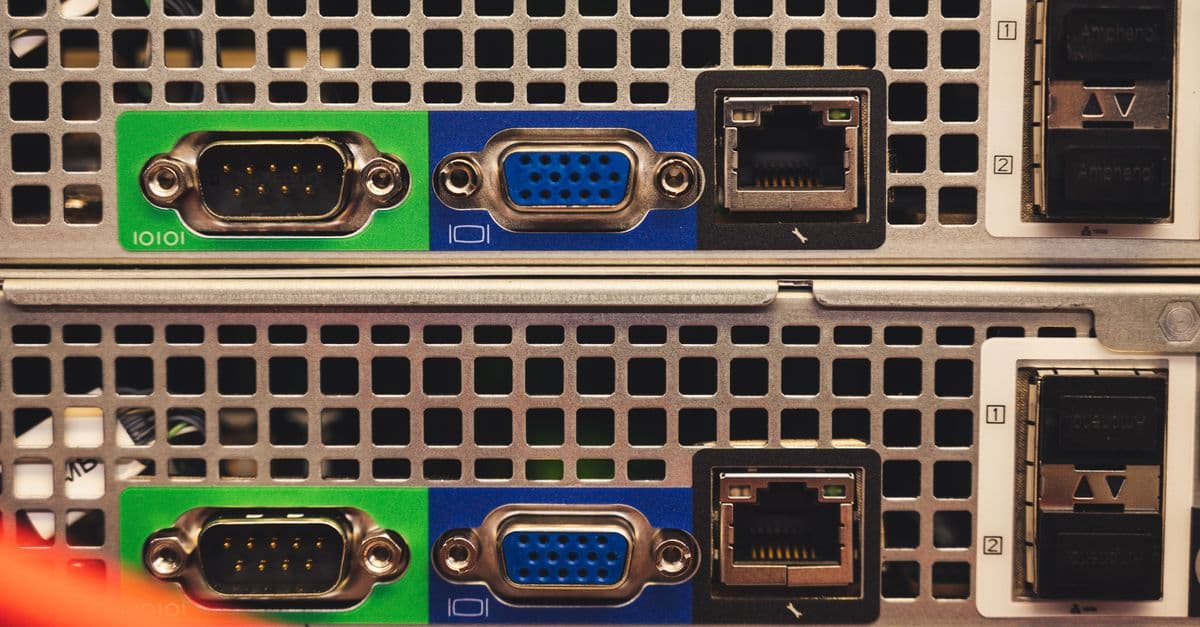
Photo: Brett Sayles / Pexels
The modem is the reason the internet entered homes. More precisely, it is the reason data could travel at all over infrastructure designed for voice. The first commercial modem was not built for casual communication — it was built in 1958 to transmit radar tracking data across the continental United States for a nuclear early-warning system called SAGE. The device that billions of people would later hear screeching in their bedrooms as they logged onto AOL began its life as military hardware designed to prevent nuclear war. This is how a 110-bit-per-second military instrument became a 56,000-bit-per-second household object that connected the world.
What a Modem Actually Does
The word "modem" is a portmanteau of modulator-demodulator, and the function it describes is precisely that: the conversion of digital data (the binary language of computers) into analog signals that can travel over copper telephone wires, and back again at the receiving end.
Source: Modem — Wikipedia
Telephone lines were designed for human voice — analog signals with frequencies roughly between 300 Hz and 3,400 Hz. Early computers spoke in binary: pulses of voltage that were either on or off, representing 1 or 0. To make a computer talk over a telephone line, you need to translate those on/off pulses into tones that fall within the voice frequency band, transmit those tones as audio, and then reverse the translation at the other end.
Think of it like Morse code. A telegraph operator takes a message and encodes it into a sequence of dots and dashes — short and long tones — that can travel over a wire as sound. A modem does something analogous, but at thousands of times per second and using frequency shifts, phase shifts, and amplitude variations instead of simple dots and dashes. The telephone network becomes a musical instrument that the modem plays to carry data.
Source: Bell 101 — Wikipedia
The Bell 101: Military Origins, 1958
The story starts with SAGE — the Semi-Automatic Ground Environment — a Cold War air-defense network commissioned by the US Air Force in the early 1950s. SAGE connected dozens of radar installations across North America to centralized IBM computing centers (each the size of a large building) that tracked aircraft trajectories and coordinated interception responses. The problem was that radar data from distant stations needed to reach those computing centers in near-real time.
Source: Bell Labs Develops the 101 Modem — History of Information
AT&T's Bell Laboratories solved the problem with the Bell 101 Dataset, released in September 1958. The device transmitted digital data over standard telephone lines at 110 bits per second (bps) using frequency-shift keying (FSK) — a modulation method where a 1 is represented by one audio frequency and a 0 by a different frequency, typically 1,270 Hz for a mark (1) and 1,070 Hz for a space (0) in the lower channel of the Bell 103 standard that followed.
Source: Modem — Wikipedia
110 bps is almost incomprehensibly slow by any modern standard. At that speed, transmitting a single uncompressed page of text would take roughly 15 seconds. Transmitting a 1 megabyte file would take more than 20 hours. But in 1958, for a system designed to relay radar track data — numerical coordinates updated every few seconds — 110 bps was sufficient. AT&T made the Bell 101 commercially available in 1959, at rental rates only institutions could afford. Businesses and universities were the early adopters.
The Bell 103, introduced in 1962, operated at 300 bps and became the first widely used modem standard for general commercial and academic use. It supported full-duplex communication over a single telephone line by splitting the frequency band: one pair of frequencies for transmitting, another for receiving simultaneously.
A Timeline of Modem Development
| Year | Milestone |
|---|---|
| 1958 | AT&T Bell 101 Dataset released for SAGE air defense, 110 bps |
| 1959 | Bell 101 made commercially available |
| 1962 | Bell 103 standard, 300 bps, full-duplex |
| 1977 | Bell 212A standard, 1,200 bps |
| 1981 | Hayes Smartmodem 300 released; Hayes command set introduced |
| 1984 | Hayes Smartmodem 1200 popularizes home computing connectivity |
| 1991 | ITU V.32bis standard, 14,400 bps (14.4K) |
| 1994 | V.34 standard, 28,800 bps (28.8K) |
| 1996 | V.34+ extended, 33,600 bps (33.6K) |
| 1998 | ITU V.90 standard ratified, 56,000 bps downstream (56K) |
| 2000 | Broadband (DSL, cable) begins displacing dial-up in US homes |
How the Hayes Smartmodem Changed Everything
Through the 1970s, modems were institutional equipment. They were large, expensive, required skilled operation, and connected to mainframes and minicomputers in universities and large corporations. The personal computer revolution of the late 1970s created a new class of potential modem users — individuals — but the modems available were acoustic couplers (you physically placed your telephone handset into rubber cups on the device) and required manual dialing before connecting. The process was cumbersome enough that home networking remained a niche activity.
In January 1981, Dennis Hayes and Dale Heatherington of Hayes Microcomputer Products in Atlanta released the Smartmodem 300. The device made two contributions that transformed personal computing connectivity.
First, it connected directly to the telephone line (direct-connect) rather than using an acoustic coupler, which improved signal quality and eliminated the need to physically handle the telephone handset. Second — and more importantly — it introduced the Hayes command set, a text-based protocol that allowed a computer to control the modem entirely through software commands sent over the same serial cable used for data.
The Hayes commands began with "AT" (for Attention) and were followed by a letter or series of letters specifying the action. "ATDT" followed by a phone number would dial that number using tone dialing. "ATH" would hang up. "ATA" would answer an incoming call. "ATZ" would reset the modem to its default state. These commands became a de facto industry standard — the "Hayes-compatible" label was a selling point on every modem sold through the 1990s. Competing modem manufacturers reverse-engineered or licensed the Hayes command set because software — from terminal programs to operating systems — was written to expect it.
Source: Modem — Wikipedia
The Smartmodem 1200, released in 1984, ran at 1,200 bps — four times the original's speed and significantly faster than the original Bell 103 standard. For the first time, text-based bulletin board systems (BBS), early email, and online services like CompuServe and The Source became accessible to home computer users without prohibitive connection delays.
The fact worth sitting with: The Hayes command set — a two-letter prefix invented in 1981 by a small Atlanta company — remained the universal standard for modem control for more than 20 years. No regulatory body mandated it. It dominated because it worked and because software developers adopted it early.
What the Dial-Up Handshake Sound Actually Was
Every person who used a dial-up internet connection between roughly 1985 and 2005 knows the sound: a dial tone, a sequence of touch-tone beeps as the number was dialed, then a high-pitched carrier tone, followed by a cascade of screeching, buzzing, and rushing static before a sustained hiss and the word "CONNECT." The sounds were not glitches or artifacts. Each element was a specific communication between the calling and answering modems.
The handshake was a negotiation. When two modems connected, neither knew in advance what the other was capable of. They needed to establish: what is the fastest speed we both support? What error-correction protocols do we share? What data compression can we both use? The audio sequence accomplished all of this.
The initial high-pitched single tone (around 2,100 Hz) was the answering modem identifying itself. The calling modem responded with its own tone, and the two devices then exchanged rapid bursts of multi-frequency tones — each burst carrying information about the modem's capabilities. The sounds shifted in pitch and rhythm as the two devices progressively agreed on protocols, moving from the slowest commonly supported standard and working upward to the fastest.
Early modems (300 bps) used frequency-shift keying (FSK), where two frequencies represented 1 and 0. Later, higher-speed modems used phase-shift keying (PSK) and then quadrature amplitude modulation (QAM), encoding multiple bits into each signal change rather than just one. At V.34 (28.8 kbps) and above, QAM was encoding up to 6 bits per baud — meaning 16 or more distinguishable signal states rather than just two.
The whole handshake — from first tones to confirmed connection — typically took 15 to 45 seconds for V.90 modems. You were listening to two machines negotiate the terms of communication in real time.
The 56K Standard: V.90 and the Last Analog Leap
By the mid-1990s, modem speeds had progressed from 300 bps to 33.6 kbps over 15 years, roughly doubling every 18 to 24 months. Engineers believed they were approaching a theoretical ceiling. The telephone network's analog bandwidth, combined with noise characteristics of copper telephone lines, suggested that somewhere around 35 kbps was the maximum for symmetrical two-way analog transmission.
Source: Modem — Wikipedia
Then Brent Townshend at Stanford published research in 1996 demonstrating that the ceiling could be broken — but only in one direction. The key insight was that most internet service providers (ISPs) connected to the telephone network through digital lines, not analog ones. Data from the ISP to the user traveled through the network's digital infrastructure until it hit the last mile of copper wire to the home. If the modem could decode digital-to-analog conversion artifacts directly, rather than treating the signal as a purely analog one, it could achieve speeds up to 56 kbps downstream (from ISP to user), while the upstream (user to ISP) direction remained constrained to around 33.6 kbps.
Two competing implementations emerged: US Robotics' x2 and Rockwell's K56flex. The incompatibility between them was commercially damaging — users buying one brand's modem couldn't connect at full speed to an ISP using the other standard. The International Telecommunication Union (ITU) convened to settle the matter, and in February 1998 announced the draft V.90 standard. The ITU formally ratified V.90 in September 1998.
Source: The Complete History of the Modem — History-Computer
In practice, V.90 connections rarely reached 56 kbps. US regulations capped transmit power on telephone lines, limiting practical downstream speeds to around 53 kbps. Line quality, distance from the central office, and electrical noise further reduced real-world speeds. A good V.90 connection typically achieved 44 to 50 kbps downstream. This was still more than 450 times faster than the Bell 101's 110 bps.
Patent Disputes: Hayes and the Smartmodem Legacy
Hayes Microcomputer Products dominated the modem market through the 1980s and built the Smartmodem line into one of the most recognized product families in personal computing. But the same command set that made Hayes ubiquitous became a liability when competitors reverse-engineered it and sold "Hayes-compatible" modems at lower prices.
Hayes attempted to defend its intellectual property but faced the classic innovator's dilemma: it had created a de facto standard, and standards by definition cannot be monopolized. When cheaper modems with identical software interfaces flooded the market in the early 1990s, Hayes struggled to maintain a price premium on hardware alone. The company filed for bankruptcy in 1994, emerged from bankruptcy, and eventually sold its remaining assets to Cardinal Technologies in 1999.
Dennis Hayes continued working in communications technology and advocacy. The AT command set he helped create was still shipping in modems, cellular devices, and IoT modules in the 2020s, more than 40 years after he introduced it.
Unintended Consequences: The Internet Enters the Home
The modem's most significant unintended consequence was social rather than technological. When Hayes and others made modems affordable for home computer users in the early 1980s, they created the infrastructure for something that no one had explicitly planned: an informal network of bulletin board systems, hobbyist communities, and self-organized information exchanges that prefigured the public internet.
BBS culture — centered on text-based message boards, file sharing, and real-time chat — developed entirely through modem connections in the 1980s. At its peak in the early 1990s, there were more than 60,000 BBS systems operating in the United States alone, each a dial-up destination for local users. The social norms, content moderation challenges, and community dynamics that BBS operators navigated are direct ancestors of the problems that social media platforms deal with today.
Source: Modem | Auvik History
When the public internet became accessible through commercial ISPs in the early 1990s, the modem was the only practical means of connection for home users. The explosive adoption of the World Wide Web between 1993 and 1999 happened almost entirely over dial-up connections. Every photograph loaded, every email sent, every webpage visited by a home user was traveling through the modem's analog conversion. The device built to track Soviet bombers in 1958 became, 35 years later, the aperture through which the connected world first became visible to ordinary people.
Where the Modem Stands Today
Dial-up modems, as most people understood them, are functionally obsolete in countries with significant broadband infrastructure. DSL (digital subscriber line) modems — which still use copper telephone wires but operate at much higher frequencies than voice calls — replaced them in the 2000s. Cable modems use the coaxial cable networks originally built for television. Fiber-optic connections bypass analog conversion almost entirely.
But the modem concept — converting one signal type into another for transmission over an existing network — did not disappear. Cellular modems in smartphones, tablets, and mobile hotspots convert IP data into radio-frequency signals for transmission over 4G LTE and 5G networks. Industrial IoT (Internet of Things) devices use cellular modems to send sensor data from remote locations over cellular infrastructure. Every GPS tracker in a delivery vehicle, every smart electricity meter, every connected weather station is running a modem — just not one that makes noise.
Source: Modem — Wikipedia
The Hayes AT command set, developed in 1981 for a 300 bps modem, is still used to control cellular modems in IoT deployments. The commands have been extended with new prefixes for cellular-specific functions, but the core syntax — "AT" followed by a command string — persists. An IoT engineer configuring a cellular modem in 2026 uses a command protocol that Dennis Hayes designed for a device that transmitted data at roughly the speed of a fast typist.
FAQs
Q: What does "modem" stand for? A: Modem is a portmanteau of modulator-demodulator. The device modulates digital data into analog signals for transmission and demodulates incoming analog signals back into digital data.
Q: What was the first modem used for? A: The Bell 101 Dataset, the first commercial modem, was developed by AT&T Bell Laboratories in 1958 for the SAGE (Semi-Automatic Ground Environment) air defense system. It transmitted radar tracking data between remote stations and central computing facilities at 110 bits per second.
Q: Why did dial-up modems make that distinctive sound? A: The sounds were the two modems negotiating a connection in real time — exchanging tones to identify themselves, test the line quality, and agree on the fastest mutually supported protocol and error-correction scheme. Each phase of the handshake had a distinctive acoustic character. The sounds were deliberately routed through the modem's speaker so users could monitor connection progress.
Q: What is the Hayes AT command set? A: A text-based protocol introduced by Hayes Microcomputer Products with the Smartmodem 300 in 1981, which allowed computers to control modems through software commands sent over a serial connection. Commands began with "AT" (for Attention). It became the de facto industry standard and remains in use for cellular modems in IoT devices today.
Q: Why could 56K modems never actually reach 56,000 bps? A: US FCC regulations capped transmission power on telephone lines at levels that limited practical speeds to around 53 kbps. Additionally, line noise, distance from the telephone exchange, and the quality of local copper wiring all reduced real-world connection speeds. Most users achieved 44 to 50 kbps on good connections.
Q: Are modems still relevant today? A: Yes, though most people don't think of them in those terms. DSL and cable modems handle broadband internet connections in hundreds of millions of homes. Cellular modems in smartphones and IoT devices transmit data over mobile networks. The underlying function — signal conversion between two formats — is more prevalent than ever. Only the dial-up, voice-band modem of popular memory is obsolete.
The Takeaway
The modem's history runs from a Cold War air-defense system to a household object to an invisible component inside billions of cellular devices. What makes it worth understanding is not any single technological leap but the cumulative effect of small speed improvements compounding over 40 years — from 110 bps in 1958 to 56,000 bps in 1998, a 500-fold increase — each increment making a slightly different set of applications possible and pulling a slightly larger audience online. The internet did not spring into existence fully formed; it was made accessible in stages, and the modem was the mechanism of each stage.
Read next:
Weekly digest
Stay ahead of the curve
Get the best science, AI, and tech stories delivered to your inbox every week. No spam — unsubscribe any time.
About the Author
SciHub101 is an independent science and technology publication founded and edited by Buğra Sözeri, a software engineer and app developer based in Türkiye. Articles are drafted against peer-reviewed literature and primary sources, fact-checked, and edited by a human before publication. Where we compare products, anything built by our own team is labelled as such — see the editorial guidelines and About page for how corrections and disclosures work.
Related Articles

The Paperclip: Supply Chains, Myths, and 11 Billion Units a Year
The paperclip's true origin is more complicated than Johan Vaaler. Here's the real history of the Gem design, the WWII resistance myth, and 11 billion units per year.

The Light Bulb: Edison, Swan, and the Race to Illuminate the World
How Thomas Edison's 1879 carbon filament patent at Menlo Park — and the rivalry with Joseph Swan — launched commercial electricity and permanently changed human civilization.

The Fiber Optic Cable: How Glass Replaced Copper
Charles Kao's 1966 paper proved pure glass could carry light across continents. Corning proved it in 1970. Today 1.5 million km of fiber carries 95% of global internet traffic.

The Invention of the World Wide Web — SciHub101
How Tim Berners-Lee's 1989 proposal at CERN became the Web, released to the public domain in 1993, and grew into the infrastructure of modern life.
The Search Engine: From Archie to AI-Augmented Search
How the search engine evolved from a 1990 McGill University FTP indexer to Google's PageRank and today's AI-augmented search. The full history explained.