The Electric Toothbrush: From Corded Swiss Prototype to AI-Powered Dental Coach — SciHub101
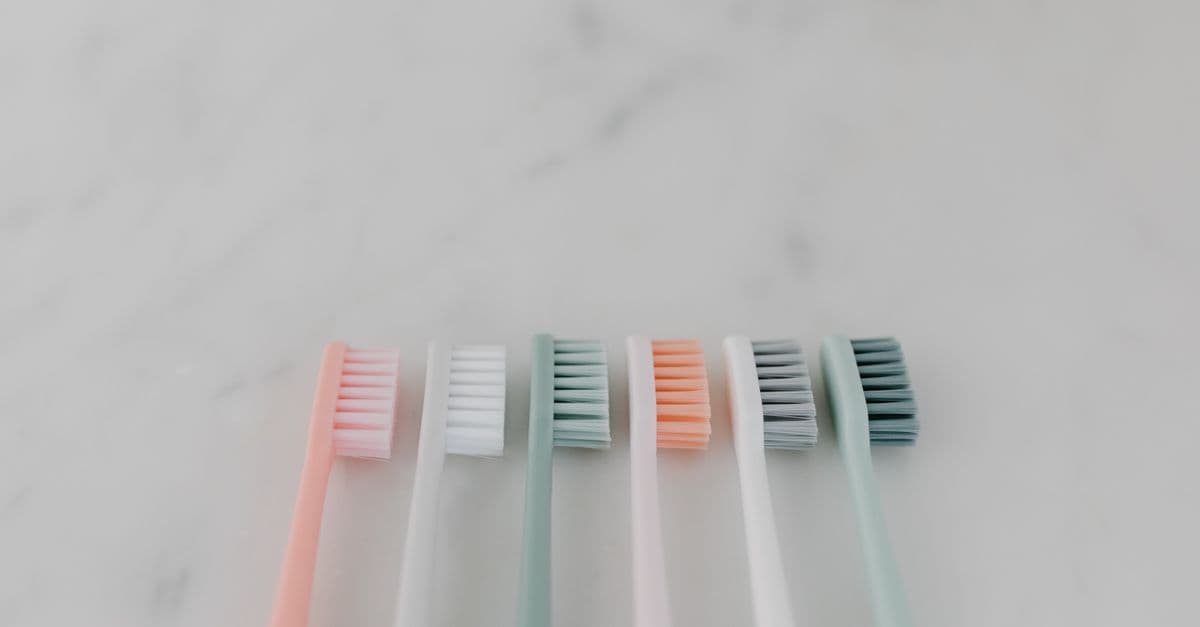
Photo: Tara Winstead / Pexels
Manual toothbrushes have existed in some form since ancient Egypt — bristle brushes with bone handles date to China around 1498 CE, and the design changed little until 1954, when a Swiss dentist named Philippe-Guy Woog plugged a plastic bristle head into a wall socket and changed the relationship between electricity and oral hygiene. The device Woog built was heavy, corded, and intended specifically for patients with limited motor control and people with orthodontic braces. Nobody predicted it would become a $4 billion global market or that, seventy years later, its descendants would track brushing pressure via accelerometers and send data to a dentist's dashboard. This is the story of how a clinical assistive tool became a mainstream consumer product — and what the actual scientific evidence says about whether it does what its manufacturers claim.
An electric toothbrush is a powered oral hygiene device that uses a motor to drive bristle motion — oscillating, rotating, sonic, or ultrasonic — at frequencies ranging from approximately 300 strokes per minute (oscillating) to 30,000 or more strokes per minute (sonic), reducing the manual dexterity required for effective plaque removal.
The First Corded Prototype: Philippe-Guy Woog and the Broxodent
Dr. Philippe-Guy Woog designed the first electric toothbrush in Switzerland in 1954, marketing it under the name Broxodent. The name came from the manufacturer, Broxo S.A., a Swiss company that also made oral irrigators.
Woog's motivation was clinical rather than commercial. Two groups of dental patients faced a specific problem: people with limited motor control (due to conditions like Parkinson's disease, arthritis, or post-stroke motor deficits) who could not generate the repetitive wrist-and-arm motion required for effective manual brushing; and orthodontic patients whose braces created cleaning surfaces that manual brushes could not reliably reach.
Source: Doctor Mayer Dental, "The First Electric Toothbrush, The Broxodent." (Doctor Mayer)
The Broxodent operated on AC line voltage — it plugged directly into a standard wall outlet and ran at mains frequency (50 Hz in Europe), which drove the brush head in a back-and-forth oscillation. This made it effective but also potentially dangerous near water, in the manner of all early electrical bathroom appliances. The device was corded, heavy, and not designed for bathroom storage; patients typically kept it in a case.
Broxo S.A. introduced the Broxodent to the United States in 1959 through E. R. Squibb and Sons Pharmaceuticals, then a major distributor of dental products. The American market reception was modest — it remained a specialty clinical item rather than a consumer product.
Source: Barron Family Dental, "The Electric Toothbrush Has Come a Long Way Since 1954." (Barron Family Dental)
The Safety Problem with Corded Bathroom Appliances
The Broxodent's AC line voltage operation was the central obstacle to mass market adoption. Bathroom environments combine electricity, water, wet hands, and reduced coordination — a combination that regulators and consumers correctly treated with caution. The device required careful handling and was explicitly not designed for use in or near a running shower or sink.
This constraint would be solved not by better insulation but by the invention of the cordless rechargeable toothbrush.
The Cordless Revolution: General Electric and the Rechargeable Brush
In 1961, General Electric released the first cordless rechargeable electric toothbrush in the United States, designed by engineer Robert Bock. The GE toothbrush used a nickel-cadmium (NiCd) rechargeable battery sealed inside a waterproof housing, which sat in a charging stand between uses. The battery was charged inductively or through sealed contacts — a design that eliminated the live electrical connection in the bathroom.
Source: Electric Toothbrush Wikipedia, citing early industry records. (Wikipedia: Electric Toothbrush)
Cordless operation changed the safety profile and the usage context. A battery-powered device without exposed electrical contacts could be used in or near a running sink without significant shock risk. It could be manufactured in consumer-friendly form factors — lighter, with exchangeable brush heads, designed for storage in a bathroom cup.
The NiCd battery chemistry that enabled this came with its own problem: memory effect, the tendency of NiCd batteries to lose capacity if consistently charged before fully discharged. Early cordless toothbrushes required full discharge-then-charge cycles to maintain battery life — a usage pattern consumers found inconvenient and often ignored, leading to progressive performance degradation.
This would not be fully resolved until the widespread adoption of nickel-metal hydride (NiMH) batteries in the 1990s and lithium-ion in the 2000s.
| Year | Product / Developer | Technology | Significance |
|---|---|---|---|
| 1954 | Broxodent (Philippe-Guy Woog) | AC corded oscillating | First electric toothbrush |
| 1959 | Broxodent U.S. launch | AC corded | First U.S. availability |
| 1961 | GE Cordless (Robert Bock) | NiCd cordless rechargeable | Eliminated live cord in bathroom |
| 1980s | Oral-B Rotadent | Rotary continuous | First rotary brush head design |
| 1987–92 | GEMTech / Sonicare (David Giuliani, David Engel, Roy Martin) | Sonic vibration | High-frequency bristle dynamics |
| 1992 | Sonicare launch | Sonic 31,000 strokes/min | First commercial sonic toothbrush |
| 2000 | Philips acquires Optiva / Sonicare | — | Major consolidation |
| 2006 | Braun / Oral-B Triumph | Oscillating-rotating + pressure sensor | First pressure feedback indicator |
| 2014 | Oral-B SmartSeries | Bluetooth connectivity | App-connected oral care coaching |
| 2020s | Sonicare 9900 Prestige | AI pressure/location sensing | Per-zone brushing analytics |
Sonicare: The University Research That Changed the Category
The most consequential innovation in electric toothbrush history after the cordless design emerged not from a corporate R&D lab but from a collaboration between a Seattle entrepreneur and two University of Washington engineering professors.
In 1987, David Giuliani — an entrepreneur with an electrical engineering background — connected with Drs. David Engel and Roy Martin at the University of Washington. Engel and Martin had been working with piezoelectric transducers (crystals that deform when electrically excited) for various sensing applications. The three formed a company called GEMTech to explore whether piezoelectric actuation could drive a toothbrush at high enough frequency to produce qualitatively different cleaning effects.
Source: Seattle Times, "David Giuliani, co-inventor of Sonicare toothbrush and a climate change activist, dies at 75." (Seattle Times)
The hypothesis was that very high-frequency bristle motion — far above the oscillation rates of conventional electric toothbrushes — would generate acoustic streaming: fluid movement in the saliva and water surrounding the teeth, created by the bristle vibrations, that could reach into interproximal spaces (between teeth and under gum margins) that bristles themselves cannot contact directly.
Several early prototypes proved impractical. The team rebuilt. After five years of development, the Sonicare toothbrush was introduced at a periodontal convention in Florida in November 1992.
Source: Inknowvation, "The Sonicare Story." (Inknowvation)
The Sonicare's brush head oscillates at approximately 260 Hz — 31,200 strokes per minute — compared to 300 strokes per minute for a manual brush and roughly 3,000 to 7,600 oscillations per minute for conventional electric brushes. At these frequencies, the bristles do not simply scrub the tooth surface; they disturb the fluid layer adjacent to the tooth, disrupting bacterial biofilm (plaque) through acoustic pressure rather than purely mechanical contact.
Source: Primidi, "Sonicare — History." (Primidi)
GEMTech became Optiva Corporation in 1995. In October 2000, Philips acquired Optiva for an undisclosed sum, adding Sonicare to its personal care division. Sonicare became the world's best-selling electric toothbrush by unit volume.
How Sonic Cleaning Works: The Physics
The distinction between "sonic" and "oscillating-rotating" toothbrushes is not marketing terminology — it describes genuinely different cleaning mechanisms.
In an oscillating-rotating toothbrush (the Oral-B design), a small round brush head rotates in alternating directions at roughly 8,800 oscillations per minute. Each bristle physically contacts and sweeps the tooth surface. The cleaning action is primarily mechanical: bristles remove plaque by scrubbing it away from the enamel surface.
In a sonic toothbrush (the Sonicare design), the entire brush head moves in a long lateral arc at approximately 31,000 strokes per minute. At this frequency, the bristle tips are moving fast enough to create hydrodynamic forces in the thin fluid film (saliva, water, or toothpaste slurry) between the bristle and the tooth surface. These forces can disrupt plaque bacterial films even at distances slightly beyond direct bristle contact — typically 3 to 4 mm beyond the bristle tips.
The analogy: an oscillating brush is like a scrub brush on a tile floor — direct physical contact removes the soil. A sonic brush is more like a pressure washer — the fluid dynamics of the directed water stream also loosens material the stream itself does not directly contact.
What the Clinical Evidence Actually Says
Electric toothbrush marketing claims significantly outpace what clinical evidence supports. The most rigorous summary of the evidence is the Cochrane Collaboration systematic review, which pools data from randomized controlled trials.
The Cochrane review on powered versus manual toothbrushes found that powered toothbrushes, specifically oscillating-rotating designs, consistently demonstrated a statistically significant benefit over manual toothbrushes for both plaque reduction and gingivitis control. The effect sizes were clinically modest: powered toothbrushes reduced plaque by approximately 11% and gingivitis by approximately 6% more than manual toothbrushes after studies of one to three months.
Source: Cochrane Systematic Review, "Powered/electric toothbrushes compared to manual toothbrushes for maintaining oral health." (Cochrane)
A 2024 meta-analysis published in PMC, analyzing randomized controlled trials from 2007 to 2022, confirmed that oscillating-rotating toothbrushes showed significantly greater reductions in gingivitis and plaque than sonic models in direct head-to-head trials.
Source: PMC, "A Meta-analysis Comparing Toothbrush Technologies on Gingivitis and Plaque." (PMC)
What the evidence does not support: claims that any electric toothbrush dramatically reduces cavities compared to a properly used manual brush, that sonic cleaning reaches substantially into periodontal pockets (gum pockets deeper than 3 mm require clinical intervention), or that Bluetooth connectivity and brushing apps improve long-term oral health outcomes compared to powered brushes without apps.
The honest clinical summary: an electric toothbrush, particularly an oscillating-rotating design, makes it easier to brush adequately — especially for people with limited manual dexterity, irregular technique, or tendency to brush too briefly. For a person who already brushes for two minutes with correct technique twice daily, the marginal benefit of any electric toothbrush is small.
The Patent Landscape and the Oral-B vs. Sonicare Duopoly
The global electric toothbrush market is effectively a two-product duopoly: Oral-B (owned by Procter & Gamble, which acquired Braun in 2005) and Sonicare (owned by Philips). Together they account for the substantial majority of premium electric toothbrush sales worldwide.
This duopoly was partly built on patent portfolios. Stratasys's FDM situation has a parallel in dental technology: oscillating-rotating brush head patents held by Braun/Oral-B and piezoelectric sonic brush patents held by Optiva/Sonicare created barriers that prevented competitors from replicating the core mechanisms during key growth years.
Patent expirations in the 2010s enabled a wave of lower-cost competitors — Quip, Burst, Oclean, and numerous Chinese manufacturers — that have taken meaningful market share in the sub-$30 segment. These competitors operate on the same mechanical principles as the two incumbents but without the clinical research portfolios that support Oral-B's and Sonicare's marketing claims.
Source: Incisal Edge, "It Came From the '50s." (Incisal Edge)
The market globally was valued at approximately $4 billion in 2024 and is projected to grow at roughly 5% annually through 2030, driven by premium product expansion in Asia-Pacific markets (particularly China, Japan, and South Korea) and by the addition of connectivity features commanding higher price points.
Unintended Consequences: What Brushing Apps Revealed
The addition of Bluetooth connectivity to premium electric toothbrushes in the 2010s generated an unanticipated data windfall that has reshaped clinical understanding of patient brushing behavior.
Accelerometers and gyroscopes in connected toothbrushes can record brushing duration, frequency, pressure, and approximate coverage pattern (which areas of the mouth were brushed, for how long). Oral-B's app data across millions of users revealed that the average user brushes for approximately 46 seconds — roughly a quarter of the two-minute guideline recommended by the American Dental Association and equivalent dental bodies globally. The 45-second average held across demographic groups, contradicting the widespread assumption that patients who bought premium connected toothbrushes were already good brushers.
Source: Data referenced in Oral-B clinical research literature and product development documentation; the two-minute guideline is standard ADA guidance. (ADA)
Pressure sensing revealed a second unexpected pattern: a substantial fraction of users brush with forces (greater than 200 g) sufficient to cause gingival recession — they press too hard, wearing away gum tissue at the gum margin over months and years. The Oral-B Triumph series introduced a visible pressure indicator in 2006; app-connected models provide real-time haptic feedback when pressure exceeds recommended levels.
The broader implication: consumer behavior data collected by the toothbrush itself is more informative about oral hygiene habits than self-report surveys, which systematically overstate brushing duration and frequency. This has clinical consequences: dentists who see their patients' app-generated brushing data can make more targeted recommendations than those relying on patient recall.
A privacy consideration that receives less attention: brushing behavior data transmitted to manufacturer servers constitutes health-adjacent behavioral data. The terms of service for brushing apps have generally permitted data to be used for product improvement and anonymized research. Whether this constitutes appropriate consent for behavioral health data is an active question in digital health ethics that applies broadly to all consumer health monitoring devices.
Where the Electric Toothbrush Stands Today
The 2020s saw electric toothbrushes incorporate the same sensing and AI-inference stack appearing in wearable health monitors: multi-axis accelerometers tracking brush position and motion, gyroscopes, pressure sensors, UV sterilization chambers for brush head storage, and machine learning models that infer per-zone brushing coverage from sensor patterns.
Philips Sonicare's 9900 Prestige series uses AI to analyze brushing motion across the mouth and provides zone-by-zone feedback through a companion app, identifying consistently missed areas (commonly the lingual surfaces of lower front teeth and the distal surfaces of second molars). The clinical validation of these coaching features — whether app-directed coaching improves measurable oral health outcomes over unbriefed electric toothbrush use — is an active and relatively new area of dental research.
The fundamental technology Woog built in 1954 — electric motor driving bristles in oscillating motion to assist effective plaque removal — has not been superseded. The sensing, connectivity, and analytics layers built on top of that 70-year-old mechanism have changed who uses the device, how long they use it, and what data that use generates. But when the AI coaching finishes and the timer stops, what happens at the enamel surface is still a powered bristle clearing bacterial biofilm from a calcium-phosphate mineral structure — the same process Woog designed for his corded clinical patients in Lausanne, seven decades ago.
Frequently Asked Questions
Q: Who invented the electric toothbrush? A: Dr. Philippe-Guy Woog designed the first electric toothbrush in Switzerland in 1954, naming it the Broxodent. It was a corded, AC-powered device originally intended for patients with limited motor control and those with orthodontic braces. General Electric released the first cordless rechargeable electric toothbrush in the United States in 1961.
Q: Is an electric toothbrush actually better than a manual one? A: According to Cochrane systematic reviews — the highest level of evidence synthesis — oscillating-rotating electric toothbrushes reduce plaque by approximately 11% more and gingivitis by approximately 6% more than manual toothbrushes over one to three months. The benefit is real but modest. A person who brushes correctly for two minutes twice daily with a manual brush achieves comparable outcomes to a casual electric brush user. Electric brushes primarily help people who brush too briefly, too hard, or with inconsistent coverage.
Q: What is the difference between sonic and oscillating-rotating electric toothbrushes? A: Oscillating-rotating brushes (Oral-B type) use a small round head that alternates rotational direction at roughly 8,800 oscillations per minute. Cleaning is primarily mechanical contact. Sonic brushes (Sonicare type) move the entire brush head in a long lateral arc at approximately 31,000 strokes per minute, generating acoustic streaming in the fluid around teeth that can disrupt plaque slightly beyond direct bristle contact. Cochrane evidence finds oscillating-rotating brushes show stronger clinical improvements over manual brushes in direct comparisons; sonic brushes show benefits over manual but not consistently over oscillating-rotating in head-to-head trials.
Q: How long should I brush with an electric toothbrush? A: Two minutes, twice daily — the same guideline as for manual toothbrushes. The American Dental Association has held this recommendation consistent regardless of brush type. Most premium electric toothbrushes include a two-minute timer with 30-second interval indicators for systematic quadrant-by-quadrant brushing. App data from Oral-B indicates the average user actually brushes for approximately 46 seconds, less than a quarter of the recommended time.
Q: Are the Bluetooth toothbrush apps worth using? A: For people who brush for less than two minutes or who consistently miss the same zones (which describes most people, based on app aggregate data), the real-time feedback can meaningfully improve coverage. The clinical evidence that app coaching improves long-term oral health outcomes compared to unbriefed electric toothbrush use is still emerging. For people already brushing well, the app adds little. The privacy consideration — brushing behavior data transmitted to manufacturer servers — is worth reviewing in the app's terms of service before enabling data sharing.
Q: Can electric toothbrushes damage gums? A: Yes, if used with excessive pressure. Brushing forces above approximately 200 grams (roughly the weight of a medium apple) can cause gingival recession — wearing away of gum tissue at the margin — over months to years. Electric toothbrushes with pressure sensors provide haptic or visual feedback when this threshold is exceeded. This feature was introduced by Oral-B in 2006 and is now standard on most premium models. The risk exists with manual brushes as well; research suggests electric brush users are not more likely to over-press, and some evidence suggests pressure sensors reduce the incidence.
Read next:
Weekly digest
Stay ahead of the curve
Get the best science, AI, and tech stories delivered to your inbox every week. No spam — unsubscribe any time.
About the Author
SciHub101 is an independent science and technology publication founded and edited by Buğra Sözeri, a software engineer and app developer based in Türkiye. Articles are drafted against peer-reviewed literature and primary sources, fact-checked, and edited by a human before publication. Where we compare products, anything built by our own team is labelled as such — see the editorial guidelines and About page for how corrections and disclosures work.
Related Articles

The Electroencephalogram (EEG) — How a Psychiatrist Mapped the Brain's Electric Storm — SciHub101
How Hans Berger's secret obsession with telepathy in 1924 produced the EEG—and why those squiggly lines still diagnose epilepsy and decode sleep 100 years later.

The Electric Motor: From Faraday's Wire to the EV Revolution — SciHub101
Michael Faraday's 1821 rotating wire became the device that now consumes 50% of the world's electricity. Here's how the electric motor works and why Tesla's AC design won.
Velcro: How a Dog Walk Became a $2.8 Billion Fastener Industry — SciHub101
How Swiss engineer George de Mestral turned burdock burrs stuck to his dog into the hook-and-loop fastener that NASA used, kids wear, and trademark lawyers fight over.

What If Fluoride in Drinking Water Was Actually Harmful? What 80 Years of Studies Show
Fluoride in drinking water has been called everything from a public health triumph to a covert poisoning. Here's the actual evidence — at typical levels, it prevents cavities; at high levels, it has real risks.