How NFC Payments Work Securely
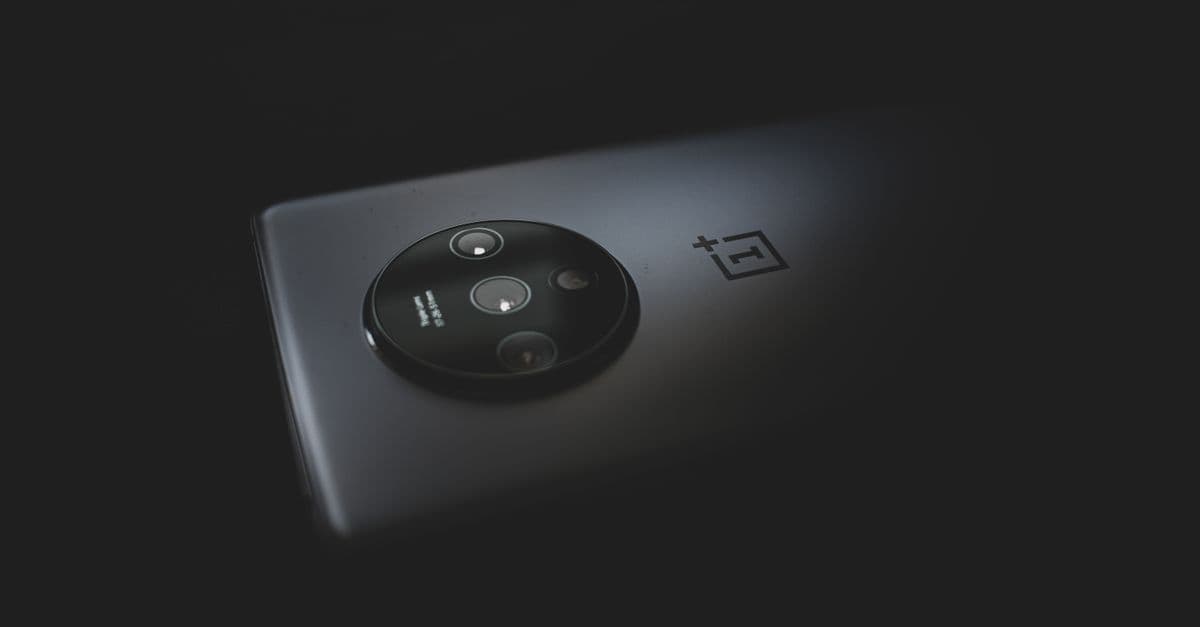
Photo: Jatin Jangid / Pexels
When you tap a phone or card on a payment terminal, your 16-digit card number does not make the trip. Near Field Communication (NFC), the short-range radio technology behind Apple Pay, Google Pay, and contactless cards, carries a substitute number and a one-time code instead. That design, built from tokenization and cryptography, is the main reason a tap is harder to exploit than a magnetic-stripe swipe. This article explains the radio physics, the data exchange, the places the keys are stored, and the attacks researchers have actually demonstrated.
Key takeaways
- NFC works by magnetic induction at 13.56 MHz and, for payments, over a few centimeters. The signal weakens far faster with distance than ordinary radio.
- A mobile wallet sends a token (a stand-in number limited to a device, merchant, or scenario) instead of the real card number.
- Every transaction also includes a cryptogram generated for that purchase, which the issuer checks, so a recorded tap is useless for a second purchase.
- Isolation matters: Apple's design keeps the device account number in a separate secure chip, while Android also supports software-based card emulation with different trade-offs.
- Real weaknesses exist. A published relay attack worked against Visa cards in an iPhone's Express Transit mode, and lost, unlocked phones are the more ordinary risk.
What NFC is, and why it was built for short range
Near Field Communication is a family of standards for devices to exchange small amounts of data when held very close together. According to the NFC Forum, the industry body that maintains the specifications, NFC operates at a 13.56 MHz base frequency, supports data rates from roughly 46 kbit/s up to about 1.7 Mbit/s, and builds on standards including ISO/IEC 14443 (the contactless card standard) and ISO/IEC 18092 (NFC Forum). The Forum describes three operating modes. In reader/writer mode a device reads tags. In peer-to-peer mode two devices exchange data. In card emulation mode a phone behaves like a contactless card, which is the mode payments and transit passes use.
Because the frequency is shared worldwide, a contactless card issued in one country can work at a terminal in another without regional radio changes. The Forum puts typical range at up to about 2 centimeters. IEEE's overview of the technology gives about 4 centimeters and describes the short distance as partly a physical constraint and partly a security feature (IEEE Technology Navigator). Either way, the design intent is the same: a payment that only works within a hand's width is much harder to intercept from across a room than one broadcast through the air like Wi-Fi.
That choice has a history. NFC descends from radio frequency identification (RFID), the technology used for warehouse tags, building badges, and toll transponders. Payments required something more constrained. A badge that opens a door can afford to be read from a meter away. A card that spends money cannot.
The radio physics behind the tap
NFC communication happens through electromagnetic induction between two coiled antennas, one in the terminal and one in your card or phone. The terminal's antenna produces an oscillating magnetic field. When the card's coil sits inside that field, the changing magnetic flux induces a small alternating current in the second coil. It is the same principle as a transformer, except the two coils are separated by air and a few centimeters, not wound around one iron core. For more on that principle, see Faraday's discovery of electromagnetic induction and how magnetism works.
The induced current is enough to power a simple card with no battery. Such a card is called a passive tag. It harvests energy from the terminal's field, wakes its chip, and answers by subtly changing how much it loads that field, a technique called load modulation. The terminal detects the change and reads it as data. A phone's NFC chip can be active, drawing on the phone's battery, but it uses the same 13.56 MHz coupling.
Why distance kills the signal so quickly
The reason a payment tap has such a short range is the shape of the field. Ordinary radio waves spread out, and their strength falls with the square of distance. IEEE describes the magnetic near field as decaying approximately as the inverse cube of distance instead of the inverse square, which limits practical range to about one coil diameter for high-data-rate links (IEEE Technology Navigator, magnetic communication). Doubling the gap reduces the field to about one-eighth, and the power a coil can pick up falls even faster than the field itself.
An analogy: imagine a stage whisper versus a shout. A shout travels across the room and can be heard by anyone, with the sound spreading and thinning gradually. A whisper into someone's ear is audible only at that distance, and nothing you do with a better microphone across the room rescues the information if the sound simply is not there. NFC is engineered to whisper. An eavesdropper does not merely need a better antenna. The signal at a distance is very weak and still must be demodulated from the surrounding noise.
That is a physical limit, not a software setting. A manufacturer cannot raise the range of a payment tap by changing code, and a thief cannot get a long-range read by pointing a bigger antenna at a card in a pocket. It does not mean skimming at close range is impossible, which is covered below.
How is NFC different from Bluetooth?
Both are short-range wireless technologies, but they solve different problems. NFC needs no pairing step. It starts when two devices come within a few centimeters, which suits one deliberate action like a payment. Bluetooth works over meters, uses a pairing handshake, and suits sustained connections such as headphones. NFC is sometimes used just to start a Bluetooth pairing quickly. For a comparison with other wireless systems, see how WiFi works.
What happens during one tap
A tap looks instant, but several things happen in order. The exact messages follow the EMV contactless specifications, which differ slightly by payment network, so this is a simplified sequence.
- The terminal powers the field and polls. It announces itself and asks which payment applications the device supports.
- The device offers an application. A card or phone selects a payment application, such as a Visa or Mastercard credit or debit product.
- The wallet authenticates the user, if required. On a phone, Apple's documentation says you must authenticate with Face ID, Touch ID, or your passcode to send payment information in stores, with Express Mode for transit as the exception (Apple Pay security and privacy overview).
- The device creates a cryptogram. Using a secret key that never leaves the secure hardware or protected storage, it computes a code over the details of this transaction.
- The terminal forwards the data. The token (not the real card number), the cryptogram, and the transaction details travel to the merchant's payment processor and then to the card network.
- The network and issuer verify. The network converts the token back to the real account number, and the issuing bank checks the cryptogram before approving.
- The terminal shows the result. It chimes, and the radio exchange has long since finished.
The key step is number four. The cryptogram is computed from transaction-specific data, and the card or wallet also keeps a counter that advances with each transaction. An issuer that sees a repeated or decreasing counter value treats it as a warning sign. That is why capturing one tap does not give a thief something to replay. The recorded cryptogram belongs to one purchase.
Tokenization: the stand-in card number
EMVCo, the body that maintains the EMV specifications, describes payment tokenisation as removing the primary account number (PAN) from a transaction and replacing it with a substitute value called an EMV Payment Token. The token is "constrained in how it can be used," meaning limited to a specific merchant, device, or payment scenario, which limits the damage if it is stolen (EMVCo, payment tokenisation).
The process of putting a card in a wallet shows how this works in practice. Integrator documentation for the Visa and Mastercard token services describes the sequence: the wallet (the "token requestor") asks the network's token service to tokenize the card, the issuer confirms the request is legitimate and may ask for extra verification, the service creates a token linked to the underlying account, and the token and its credentials are delivered to the device. At payment time, the network detokenizes the token and validates the cryptogram.
Apple's version is a useful concrete case. After you add a card, your bank or its authorized provider creates a device-specific Device Account Number (DAN) and sends it to Apple encrypted. Apple says it cannot decrypt it. The DAN lives in the device's Secure Element, is isolated from the operating system, and is never stored on Apple servers or backed up to iCloud. Apple keeps only part of the actual card number and part of the DAN, plus a card description. In stores, the terminal receives the DAN, a transaction-specific dynamic security code, and other data needed to complete the payment, and Apple states that neither it nor the device sends the actual card number (Apple Pay security and privacy overview).
Two features follow from this design. First, because the token is not the real account number, the issuer can restrict it. Apple notes that the card issuer can prevent a DAN from being used on a magnetic stripe card, over the phone, or on websites, which a standard card number does not allow. Second, if a token is compromised, it can be revoked without replacing the underlying card.
| Who | What they see | What they do not see |
|---|---|---|
| Merchant terminal | Token or DAN, one-time cryptogram, amount | Your real card number (in a mobile wallet payment) |
| Merchant's processor | Same token data, forwarded | Your real card number |
| Card network | Token plus the mapping to the real account | Details of what you bought, beyond data it needs |
| Issuing bank | The real account, the verified cryptogram | Nothing hidden; it is the party that created the credentials |
| Wallet provider (Apple) | Anonymous transaction details such as approximate amount and time | What you bought and where, per Apple's statement |
What is EMV, and how does it relate to NFC?
EMV is the global standard for chip-based payment cards, named for Europay, Mastercard, and Visa. EMVCo, the organization that manages it, was formed in 1999 and is now owned by six organizations: American Express, Discover, JCB, Mastercard, UnionPay, and Visa. NFC is the radio transport. EMV is the rulebook for what the data contains and how it is cryptographically checked. A contactless EMV transaction and a chip-insert EMV transaction use the same underlying verification logic, and NFC simply carries the messages through the air instead of through electrical contacts.
Where the keys live: secure elements and host card emulation
Cryptography is only as safe as the place the secret key is kept. Two designs dominate, and the differences matter.
Secure element. A secure element is a separate certified chip with its own protected memory. The key never enters the phone's general-purpose memory. A good analogy is a bank vault built inside a house with an open floor plan. Malware can wander through most rooms of the house, but the vault has its own walls and no interior door, so a compromised operating system still cannot read the keys. Apple's launch announcement in October 2014 described Apple Pay as using the Secure Element, which it said was walled off from iOS and not backed up to iCloud (Apple Newsroom, October 16, 2014).
Host card emulation (HCE). Android also supports HCE, in which an app emulates a card directly, without a secure element. Android's developer documentation describes the difference: with a secure element, the NFC controller routes data to the separate chip, and no Android app is involved while the transaction runs. With HCE, the controller routes data to the host processor, where an app's service handles it (Android developer documentation). Both can coexist on one device.
HCE wallets rely on other protections. Because the keys are not in dedicated hardware, they typically use short-lived, limited-use credentials and tokens supplied from the cloud, so that anything stolen from the phone is of little use for long. Trade-offs follow. Hardware isolation is a stronger wall, and software designs get flexibility and easier deployment. Many Android devices also offer an NFC-related setting that restricts payments while the device is locked, though the options vary by Android version and manufacturer.
It follows that a statement like "mobile wallet payments are secure because the keys are in a secure element" is true for some wallets and not universal. The more careful claim is that tokenization and one-time cryptograms protect the transaction in every design, and hardware isolation adds a further layer in designs that use it.
Why tapping beats swiping
A magnetic stripe stores card data in a static format that any stripe reader can copy. A skimmer records the same reusable data every time a card is swiped through it, and the copy works at any other stripe terminal until the card is canceled. The table compares the three common ways to pay in person.
| Property | Magnetic stripe swipe | Chip insert (EMV contact) | Contactless tap (NFC + EMV) |
|---|---|---|---|
| Data sent | Static card data, same every time | Chip generates a cryptogram for each transaction | Cryptogram for each transaction; token if from a mobile wallet |
| Replay of recorded data | Works until card is canceled | Fails: cryptogram is transaction-specific | Fails: cryptogram is transaction-specific |
| Physical contact | Yes, through a reader | Yes, in a slot | No; centimeters of range |
| Common attack | Skimming and counterfeit stripe cards | Stolen card with PIN known; fraud online | Relay or theft of an unlocked device; larger risks shift elsewhere |
| User check | None built in | PIN or signature | Device unlock on phones; small payments often need none on cards |
The U.S. migration to chip cards shows how the industry pushed the change. Starting in October 2015, card networks moved liability for counterfeit card-present fraud to whichever party, issuer or merchant, had not adopted EMV when the other party had. The shift covered counterfeit fraud only. It did not change responsibility for online purchases or for stolen cards. The pressure encouraged merchants to upgrade terminals, many of which also accept contactless.
The coat check analogy
Think of a token as a coat check ticket. The ticket lets you retrieve your coat exactly once, says nothing about who you are, and becomes worthless after the exchange. Anyone who finds a used ticket on the floor gains nothing. A static card number is more like a copy of your house key. It works at every lock it fits until you change the locks, which for a card means canceling and reissuing it.
Another way to see the one-time cryptogram is a sealed, numbered envelope. Each purchase gets an envelope that is valid for that purchase alone. If someone photographs the envelope, they hold a picture of an envelope that has already been opened.
Where fraud actually happens
The most common card fraud in the United Kingdom is not at a terminal at all. UK Finance's half-year report for 2025 put card fraud at £299 million and said card-not-present purchases, typically made online, drove the rise (reported by Infosecurity Magazine). Tokenization helps with online fraud as well, since a merchant that stores a token instead of a card number holds a less valuable target. Still, the comparison is a reminder that the biggest risk to card details is a data leak or a phishing page, not a hand-held reader in a crowd. For broader context on defending accounts, see how passkeys replace passwords and how to protect your online privacy.
Where the system can still be attacked
No payment technology is invulnerable. Several attacks are real, and they are narrower than rumor suggests.
Relay attacks
A relay attack forwards the radio conversation in real time. One device near the victim's phone or card talks to it, and a second device near a real terminal talks to the terminal, with the two devices linked over a network so that both sides think they are nearby. This defeats the physical range limit.
A 2022 paper at the IEEE Symposium on Security and Privacy, "Practical EMV Relay Protection," by Andreea-Ina Radu, Tom Chothia, Christopher Newton, Ioana Boureanu, and Liqun Chen, showed a relay attack against an iPhone. As the University of Surrey's announcement describes, the researchers used inexpensive radio equipment to capture a code, called "magic bytes," broadcast by transit gates. They then broadcast it so the iPhone believed it was at a transit gate while actually communicating with a shop reader. The vulnerability arose when a Visa card was set up in Express Transit mode, which works without fingerprint authentication. The researchers demonstrated a £1,000 payment from a locked iPhone, bypassing the contactless limit. Other combinations, such as Mastercard on iPhone and Visa on Samsung Pay, were not affected. The researchers said that at publication in September 2021 neither Apple nor Visa had implemented a fix, and advised people with a Visa transit card to turn the setting off (University of Surrey). The same paper proposed a new relay-resistance protocol and verified it with a formal tool (University of Birmingham research record). Readers should check the current status with their bank or wallet provider, since fixes may have shipped since.
Two lessons stand out. First, the weakness lay in a convenience feature, not in NFC's radio or in tokenization itself. Second, the attack needed specialized equipment and knowledge of a specific configuration, which is a very different threat from a stranger scanning a crowd.
Lost or stolen phones
A far more ordinary risk is a lost phone. Wallet authentication is the answer. Apple describes needing Face ID, Touch ID, or the passcode to pay in stores, and says Lost Mode suspends Apple Pay without canceling cards, while remotely erasing the device removes the ability to pay and issuers suspend the cards even if the device is offline. Contactless cards lack that biometric layer and instead rely on limits: small payments may go through without a PIN, and larger ones or a run of several payments in a row prompt for the PIN.
Can someone skim my card by walking past me with a scanner?
At the ranges involved, an attacker would need to hold a reader essentially against your wallet or bag. Even then, a card transaction produces a one-time cryptogram tied to that moment, which sharply limits the value of the captured data. RFID-blocking sleeves defend against this narrow scenario, so they are not useless, but the threat they address is more limited than their marketing implies.
Limits, PINs, and mobile wallets
Contactless cards often allow small purchases without a PIN as a trade of a little security for speed. Limits are set nationally. In the United Kingdom, the contactless limit rose from £30 to £45 in April 2020 and to £100 on October 15, 2021, following a decision by HM Treasury and the Financial Conduct Authority (PaymentExpert, August 31, 2021). In the euro area, the European Banking Authority urged in March 2020 that the no-PIN ceiling be raised to €50, and France moved from €30 to €50 on May 11, 2020 (Bird & Bird summary).
Mobile wallets work differently. Because the phone itself verifies you with a biometric or passcode, those wallets are generally not subject to the same no-PIN cap as a bare card. The check a card handles with a PIN, a phone handles at the lock screen.
A short history
NFC payments grew from an earlier generation of contactless cards and from the chip-and-PIN migration. EMVCo was formed in 1999 to promote interoperability between payment systems and fight card fraud. Apple Pay launched in the United States on October 20, 2014, with iPhone 6 and iPhone 6 Plus, supporting American Express, MasterCard, and Visa cards from major U.S. issuers, with the card number replaced by a Device Account Number in the Secure Element and Touch ID used to authorize payment (Apple Newsroom). Mobile wallets then spread across phones and watches, and tokenization moved from a feature to the default way mobile payments work.
The idea that a phone should replace a card also rests on the broader changes described in how smartphones changed the world and the foundations of wireless in the invention of the radio.
Common misconceptions
"Anyone with a scanner can steal my card number by standing near me." The short range, the one-time cryptogram, and tokenization in mobile wallets all work against this. The scenario requires holding a reader against your belongings, and the data obtained is of limited use.
"NFC and Bluetooth are interchangeable." They are not. NFC needs no pairing and works over centimeters, while Bluetooth works over meters and needs a connection setup. Bluetooth's pairing weaknesses do not apply to an NFC tap, because the protocols differ.
"A hacked phone means an empty bank account." A compromised phone is a serious problem, and security researchers do find flaws, but the design intends that payment keys stay out of reach of the ordinary operating system, and issuers can suspend a token. The details depend on the wallet: hardware isolation is stronger than software-only designs.
"Tokenization hides everything." It hides your real card number from merchants in a mobile payment. It does not hide the fact of a purchase from your bank, and it does not stop fraud that uses stolen credentials in other ways, such as phishing.
"QR codes and NFC are the same thing." They are different technologies for moving data to a reader. A QR code is an optical pattern a camera reads, as explained in how QR codes store information, while NFC is a radio link. Payment security depends on what the app does with each, not on the medium alone. A similar point applies to older scanning methods covered in how bar codes are read by lasers.
FAQ
Q: What frequency do NFC payments use? A: 13.56 MHz, according to the NFC Forum. That shared frequency is why the same contactless card or phone can work at terminals in different countries without any regional radio adjustments.
Q: Does NFC send my real card number? A: In a mobile wallet payment, no. The terminal receives a token or Device Account Number and a one-time cryptogram, and Apple states that neither it nor the device sends the actual card number. Physical contactless cards work somewhat differently, but they also send a cryptogram generated for that single transaction.
Q: How far away can an NFC payment be read? A: The NFC Forum describes typical range as up to about 2 centimeters, and IEEE cites about 4 centimeters. The field strength drops roughly with the cube of distance, so range is limited by physics and not by a software setting.
Q: Is tapping safer than swiping? A: Generally yes. A swipe reads static data that a skimmer can copy and reuse. A tap produces a new cryptogram for each transaction, and a mobile wallet adds a token, so an intercepted tap cannot be replayed for another purchase.
Q: What is a relay attack, and should I worry about it? A: A relay attack forwards the radio conversation in real time between a device near the victim and a device near a terminal elsewhere. Researchers demonstrated one against Visa cards in an iPhone's Express Transit mode, but it needed specialized equipment and a specific setup. For most people, a lost phone or an online data leak is a more likely problem.
Q: Why do wallets ask for a fingerprint, face scan, or passcode? A: The check is a second layer on top of tokenization. Apple's documentation says you must authenticate to send payment information in stores, apart from Express Mode for transit cards, so a person holding your phone cannot simply tap it on a terminal.
Q: Do all phones use a secure element? A: No. Apple's design uses a Secure Element. Android supports both secure-element wallets and host card emulation, in which an app handles the transaction on the main processor, with other protections such as limited-use credentials.
The takeaway
NFC payments are secure less because of secrecy than because of disposability. A tap carries a stand-in number and a code that is valid for one purchase, over a radio link that physics keeps to a few centimeters. The remaining weak points are specific and instructive: a convenience mode that skipped a check, a phone that is lost while unlocked, and card data stolen somewhere else entirely. A system that is safer than a swipe and still imperfect is the realistic description, and the research literature is the best place to track how the gaps get closed.
Sources
- NFC Forum, NFC technology overview: https://nfc-forum.org/learn/nfc-technology/
- IEEE Technology Navigator, Near Field Communication: https://technav.ieee.org/topic/near-field-communication/
- IEEE Technology Navigator, Magnetic Communication: https://technav.ieee.org/topic/magnetic-communication/
- EMVCo, About: https://www.emvco.com/about/overview/
- EMVCo, Payment tokenisation: https://www.emvco.com/emv-technologies/payment-tokenisation/
- Apple, Apple Pay security and privacy overview: https://support.apple.com/en-us/101554
- Apple Newsroom, October 16, 2014: https://www.apple.com/newsroom/2014/10/16Apple-Pay-Set-to-Transform-Mobile-Payments-Starting-October-20/
- Android developers, host-based card emulation: https://developer.android.com/develop/connectivity/nfc/hce
- University of Surrey, Visa and Apple Pay vulnerabilities, September 30, 2021: https://www.surrey.ac.uk/news/visa-and-apple-pay-vulnerabilities-leaves-iphone-users-open-payment-fraud
- University of Birmingham, "Practical EMV Relay Protection": https://research.birmingham.ac.uk/en/publications/practical-emv-relay-protection
Read next:
Follow new articles
Add SciHub101 to your feed reader to see new science and technology stories.
About the Author
SciHub101 is an independent science and technology publication founded and edited by Buğra Sözeri, a software engineer and app developer based in Türkiye. AI tools assist with drafting and research. Source documentation in the existing archive is uneven, and articles are being reviewed and corrected. The Editorial Team byline identifies editorial responsibility; it does not certify specialist or independent human review. Where we compare products, anything built by our own team is labelled as such — see the editorial guidelines and About page for how corrections and disclosures work.
Related Articles
How LLM Tokenization Works (and Why AI Can't Spell)
LLMs read tokens, not letters. See how byte-pair encoding builds a vocabulary, and why that explains strawberry miscounts, shaky arithmetic, and uneven costs.
The Credit Card: From a Forgotten Wallet to a Global Payment Network
How Diners Club's 1950 charge card, BankAmericard's revolving credit, the magnetic stripe, and the EMV chip built the network behind card payments.
Best Free E-Signature Tools in 2026 (No Signer Account)
Best free e-signature tools in 2026 where signers need no account: eSignSimple, Zoho Sign, SignWell, Dropbox Sign, DocuSign and Adobe compared on limits and audit trails.
Best Free Online Tools in 2026: How to Pick Them Safely
A hub for our 17 free-tool guides, from PDFs and e-signatures to AI photo apps and prayer times, plus a checklist for privacy, file handling, free tiers, and accessibility.