Tu Youyou And The Artemisinin Discovery
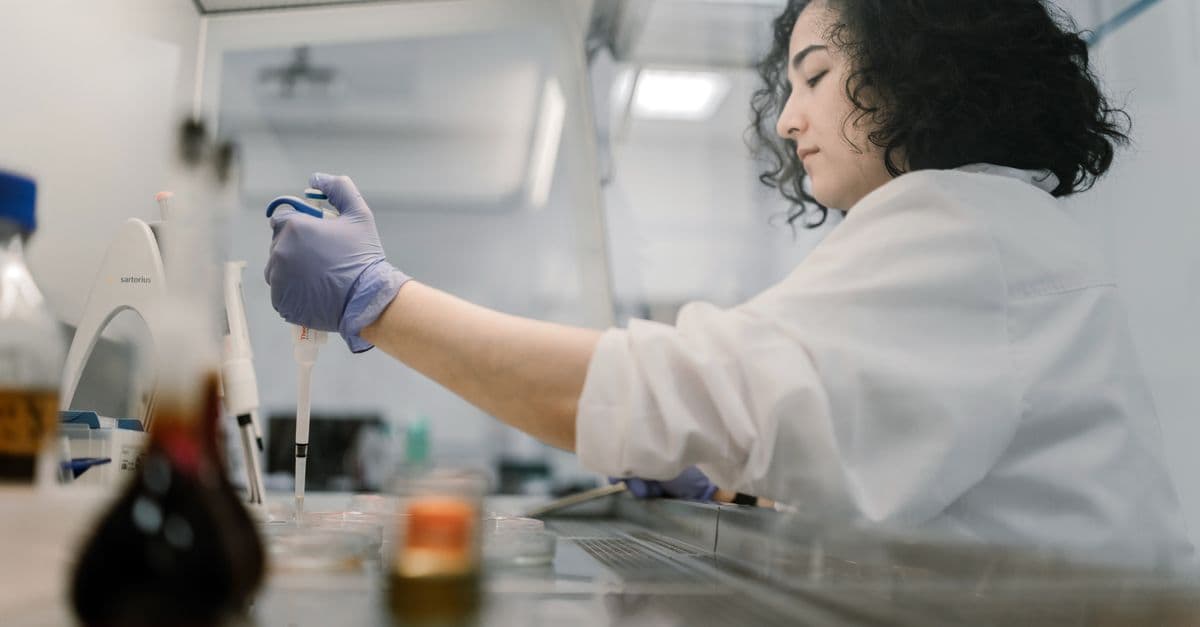
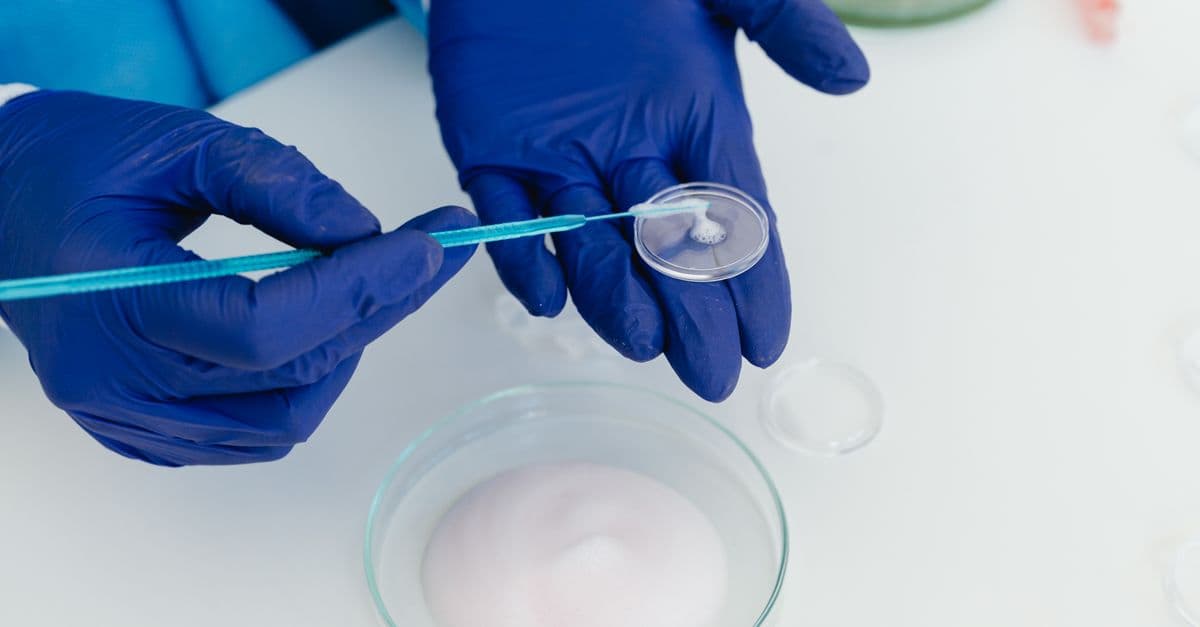
Photo: Mikhail Nilov / Pexels
Buried in a 1,600-year-old Chinese medical text was a single line of instruction that a modern research team had already failed to replicate using standard heat-based extraction: steep sweet wormwood in cold water, not hot. That overlooked detail, recovered from a fourth-century recipe by pharmaceutical chemist Tu Youyou in 1971, became the key to isolating artemisinin, an antimalarial compound now central to frontline malaria treatment worldwide. Tu's work earned her the 2015 Nobel Prize in Physiology or Medicine, and she did it without a PhD, without ever training abroad, and without membership in either of China's national science academies.
The wartime crisis that started Project 523
By the mid-1960s, malaria had become a battlefield problem as much as a public health one. North Vietnamese and Viet Cong troops fighting in the jungles of Southeast Asia were losing more soldiers to malaria than to combat, and the Plasmodium falciparum parasite circulating in the region had already developed resistance to chloroquine, the standard antimalarial drug since the 1940s (World Health Organization, World Malaria Report, 2023). Existing drugs were failing, and no replacement was close to ready.
North Vietnam appealed to China for help, and Mao Zedong's government responded by launching a secret, military-directed research initiative on May 23, 1967, hence the name Project 523 (U.S. News & World Report, 2015; NobelPrize.org, "Tu Youyou," 2015). The program pulled together more than 500 scientists from over 60 institutions across China, working in near-total secrecy during the Cultural Revolution, a period when much of China's scientific establishment had been disrupted or shut down entirely. Antimalarial drug research was one of the few scientific priorities the state actively protected during those years, precisely because it was tied to military necessity rather than academic prestige.
In 1969, at age 39, Tu Youyou was appointed to head a newly formed research group within Project 523 at the China Academy of Traditional Chinese Medicine in Beijing (NobelPrize.org, 2015). Tu was an unusual fit for a program built around field-collected folk remedies: she had trained in pharmacognosy, the scientific study of medicines derived from natural sources, and had also studied traditional Chinese medicine methods, giving her a working vocabulary in both classical texts and modern chemical analysis. That dual grounding turned out to matter more than anyone could have predicted at the time.
Screening thousands of remedies before finding the right one
Tu's first move was not laboratory work. She and her team spent months interviewing traditional Chinese medicine practitioners and combing through classical medical texts, folk manuscripts, and even veterinary treatises for any remedy associated with fever or intermittent chills, the hallmark symptoms of malaria. The result was a compiled reference document, A Collection of Single Practical Prescriptions for Anti-Malaria, cataloging roughly 640 candidate recipes (NobelPrize.org, 2015).
From that list, Tu's group narrowed the field through laboratory testing, ultimately screening more than 2,000 traditional prescriptions and preparing around 380 herbal extracts from roughly 200 different plants for antimalarial activity in mouse models infected with malaria parasites (NobelPrize.org, 2015). This was slow, unglamorous work. Most extracts showed no meaningful effect, some showed modest and inconsistent activity, and none delivered anything close to a clean, repeatable cure.
Pharmacognosy — the branch of pharmacology concerned with medicines derived from plants, animals, or minerals rather than synthesized in a lab. It sits at the intersection of botany, chemistry, and traditional medicine, and it was exactly the discipline needed to bridge folk remedies and modern drug isolation.
Among the hundreds of candidates was Artemisia annua, sweet wormwood, known in Chinese medicine as qinghao. It had a long history of use against fevers, but in Tu's team's initial extraction attempts, using conventional methods involving boiling water or hot organic solvents, its antimalarial activity in test animals was frustratingly inconsistent. Some batches worked. Most did not. A plant with genuine documented history kept producing extracts that failed in the lab, and there was no obvious reason why.
The fourth-century clue everyone else had missed
Rather than discard Artemisia annua as another dead end, Tu went back to the historical sources with a narrower, more literal question: not just "does this plant treat fever," but "exactly how was it prepared." That distinction turned out to be the whole discovery.
She found her answer in Zhouhou Beiji Fang (肘後備急方, "Emergency Prescriptions Kept Up One's Sleeve"), a compact handbook of quick home remedies compiled around 340 CE by the physician and alchemist Ge Hong. The relevant line instructed that qinghao be soaked in water, and the raw juice wrung out and drunk directly, rather than boiled or decocted the way most herbal remedies were prepared (NobelPrize.org, 2015; U.S. News & World Report, 2015).
Read casually, that line looks like a minor stylistic variation, one of dozens of small procedural quirks scattered across a fourth-century text. Tu read it differently. She hypothesized that the heat used in standard extraction, whether boiling water or heated organic solvents, was chemically destroying whatever compound in the plant carried the antimalarial effect. If that was true, the failure wasn't the plant. It was the method.
Why heat mattered
Artemisinin, the compound eventually isolated from Artemisia annua, contains a chemically reactive structure called an endoperoxide bridge, an oxygen-oxygen linkage that is unusually sensitive to heat and breaks down under the high temperatures used in boiling-water or reflux-solvent extraction. Ge Hong's instruction to avoid heat, written 1,600 years before anyone understood organic chemistry, was accidentally preserving the one structural feature that made the compound work.
Isolating artemisinin, then testing it on themselves
Working from that hypothesis, Tu's team developed a low-temperature extraction process using ether, a solvent with a low boiling point, instead of water or hot alcohol. On October 4, 1971, extract number 191 from this new low-temperature method showed 100 percent inhibition of the malaria parasite in infected mice and monkeys, a result the team had never come close to with earlier batches (NobelPrize.org, 2015). By 1972, the team had isolated the pure active compound and identified it as a novel chemical entity, which they eventually named artemisinin, or qinghaosu in Chinese.
Before the compound could move to broader clinical testing, Tu and several colleagues faced a familiar dilemma in urgent wartime drug development: there was no existing human safety data. According to accounts from Tu and her research group, she and a small number of team members volunteered to be the first human subjects, taking the compound themselves to establish a baseline of safety before it was administered to malaria patients (NobelPrize.org, 2015). Clinical trials that followed in malaria-endemic regions of China confirmed strong efficacy, including against parasite strains already resistant to chloroquine.
An analogy: a recipe followed correctly for the first time in decades
Picture a chef repeatedly failing to reproduce a dish from a worn family recipe card, not because the recipe was wrong, but because one instruction, add the herb off the heat rather than while the pot is still simmering, had been quietly ignored as an old-fashioned quirk rather than treated as a functional requirement. Once that single step is followed exactly as written, the dish comes together on the first try.
Tu's insight worked the same way. Qinghao had genuine antimalarial potential recorded in Chinese medical literature for over a thousand years, but every modern attempt to extract it was inadvertently destroying the very compound researchers were trying to isolate. The fourth-century instruction to avoid heat was not tradition for tradition's sake. It was, whether Ge Hong understood the chemistry or not, a functional processing note that modern extraction methods had been unknowingly violating for years.
A second, smaller analogy helps explain why the screening process itself mattered. Searching 2,000 traditional remedies for one that worked is a bit like fishing with 2,000 different nets in the same lake: most come up empty, a handful catch something small and inconsistent, and only careful, repeated casting with the right net, at the right depth, at the right time, eventually pulls in the fish that was there the entire time.
Why artemisinin combination therapy became the global standard
Artemisinin kills malaria parasites in the bloodstream quickly, reducing parasite counts faster than older drugs like chloroquine or quinine. But it also clears from the body quickly, with a short half-life that leaves a window during which surviving parasites can rebound if the drug is used alone. To close that gap, researchers developed artemisinin-based combination therapies (ACTs), pairing a fast-acting artemisinin derivative with a longer-acting partner drug that mops up any parasites the artemisinin component leaves behind.
The World Health Organization has recommended ACTs as the first-line treatment for uncomplicated Plasmodium falciparum malaria, the deadliest form of the disease, since 2001, and has credited artemisinin-based treatment as a major contributor to the decline in global malaria mortality over the following two decades (WHO, World Malaria Report, 2023). The WHO estimated 597,000 malaria deaths globally in 2023, down substantially from levels recorded in the early 2000s before ACTs became widely available, though the agency also notes that progress has slowed in recent years amid funding gaps and emerging resistance concerns (WHO, World Malaria Report, 2023).
Combining drugs also protects against resistance. When a parasite is exposed to two drugs with different mechanisms at once, it is far less likely to develop mutations that defeat both simultaneously than it would be facing either drug alone, the same logic behind combination antiretroviral therapy for HIV and multi-drug regimens for tuberculosis.
| Drug | Era Introduced | Source | Mechanism | Resistance Status (2026) |
|---|---|---|---|---|
| Quinine | 1820s (isolated) | Cinchona tree bark | Interferes with parasite heme detoxification | Still effective but largely superseded; used for severe cases |
| Chloroquine | 1940s | Synthetic, quinine-derived | Blocks heme detoxification in the parasite's digestive vacuole | Widespread resistance across most malaria-endemic regions |
| Artemisinin | 1972 (isolated) | Artemisia annua (sweet wormwood) | Endoperoxide bridge generates free radicals that damage parasite proteins | Partial resistance confirmed in parts of Southeast Asia; still first-line globally when combined |
| Artemisinin-Combination Therapy (ACT) | Early 2000s (WHO first-line recommendation) | Artemisinin derivative + longer-acting partner drug | Fast parasite clearance (artemisinin) + sustained clearance (partner drug) | WHO's recommended standard for uncomplicated P. falciparum malaria as of 2026 |
The shift from single-compound antimalarials to combination therapy tracks a broader pattern in infectious disease treatment: pairing a fast, potent drug with a slower, durable one to prevent resistance from developing against either alone.
How did Tu Youyou discover artemisinin?
Tu Youyou led a Chinese government research team within the secret Project 523 program, systematically screening over 2,000 traditional remedies for antimalarial activity starting in 1969. After hot-water extraction of sweet wormwood produced inconsistent results, she found a fourth-century text instructing cold-water extraction instead, leading her team to a low-temperature process that isolated artemisinin in 1972.
What is Project 523?
Project 523 was a secret Chinese military research program launched on May 23, 1967, to find new antimalarial treatments after chloroquine-resistant malaria devastated North Vietnamese troops fighting in the Vietnam War. It brought together more than 500 researchers from over 60 institutions, operating even as much of China's scientific establishment was disrupted by the Cultural Revolution.
Recognition and the "Three Noes" Nobel Prize
Tu Youyou received the 2015 Nobel Prize in Physiology or Medicine, sharing it with William C. Campbell and Satoshi Ōmura, who were separately recognized for a therapy against roundworm parasites. The award made her the first Chinese scientist to receive a Nobel Prize in a scientific category for research conducted entirely within China, and the first Chinese woman to win a Nobel Prize in any category (NobelPrize.org, 2015).
What made her case unusual within the scientific establishment was what she did not have. Tu held no PhD, largely because postgraduate degree programs did not yet exist in China during her early training years. She had never studied or conducted research abroad. And she was never elected to either the Chinese Academy of Sciences or the Chinese Academy of Engineering, China's two most prestigious scientific bodies. Chinese media sometimes referred to her, half admiringly and half as a pointed commentary on the country's credential-heavy science establishment, as the "Three Noes" scientist (三无科学家). The Nobel Committee's citation credited her discovery with having significantly reduced malaria mortality rates worldwide, an achievement that arrived independent of the institutional markers usually associated with elite scientific recognition.
Her path also stands in useful contrast to two other researchers featured on this site. Barbara McClintock spent decades pursuing an unconventional idea in genetics largely outside the mainstream of her field before eventual recognition, and George Washington Carver built a research career grounded in practical, applied plant science rather than elite academic credentials. Tu's story adds a third variation: a researcher whose breakthrough came from taking a historical source seriously enough to test its literal instructions, rather than dismissing pre-modern medicine as a category.
What people get wrong about the artemisinin discovery
A common misconception treats this as a story about traditional Chinese medicine simply being "proven right" in its original, unmodified form. That is not what happened. Tu's specific scientific contribution was diagnosing why earlier extraction attempts had failed, recognizing that standard heat-based methods were destroying the active compound, and then engineering a modified low-temperature process to correctly isolate it. That required systematic pharmacological screening, animal testing, and chemical process innovation, not simply administering a folk remedy as historically practiced.
A second misconception assumes the discovery validates traditional Chinese medicine as a whole. What was scientifically validated was one specific compound, isolated from one specific plant, following rigorous modern testing in animal models and controlled clinical trials. The overwhelming majority of the roughly 2,000 remedies Tu's team screened showed no meaningful antimalarial activity at all. Screening traditional knowledge for leads is a legitimate and long-standing approach in drug discovery, related fields have used it to find compounds ranging from aspirin's precursor in willow bark to paclitaxel from Pacific yew trees, but a lead is not a conclusion until it survives the same testing any other candidate drug would face.
A third point worth being precise about: artemisinin resistance is a real and documented concern, not a hypothetical one. Partial resistance, marked by delayed parasite clearance rather than outright treatment failure, has been confirmed in parts of the Greater Mekong subregion in Southeast Asia and has more recently been reported in parts of East Africa, which is why the WHO continues to recommend combination therapy rather than artemisinin alone, and why global surveillance of resistance markers remains an active public health priority (WHO, World Malaria Report, 2023). The story of artemisinin is not a closed chapter. It is an ongoing case study in how quickly a parasite population can adapt to even a highly effective drug, a dynamic that connects directly to how antibiotic resistance spreads through bacterial populations under similar evolutionary pressure.
The immune system's role in why treatment even works
Artemisinin and its combination partners clear the parasite from the bloodstream, but full recovery from malaria, and any lasting protection against reinfection, also depends on the immune system's own response to the parasite. Repeated Plasmodium infections train the immune system to recognize parasite antigens more efficiently over time, a partial and often incomplete form of immunity that public health researchers distinguish clearly from the durable protection produced by a well-designed vaccine. Understanding that distinction is part of why malaria vaccine development, most notably the RTS,S and R21 vaccines now being deployed across parts of sub-Saharan Africa, took decades longer than drug development to reach the field, a dynamic explored in more general terms in how vaccines train memory B cells. Drugs like artemisinin buy time and save lives during acute infection; vaccines aim at preventing the infection from taking hold in the first place, and the two approaches are complementary rather than substitutes for each other.
The takeaway
Tu Youyou's discovery of artemisinin combined systematic modern pharmacological screening with careful, literal historical research, and the decisive breakthrough came from recognizing that a centuries-old instruction to avoid heat during extraction was scientifically meaningful rather than a stylistic detail to be skimmed past. That insight, developed under the wartime urgency of Project 523 and validated through the low-temperature extraction process her team engineered, and confirmed on their own bodies before anyone else's, produced a compound now central to the World Health Organization's recommended first-line malaria treatment worldwide. It also produced an unusually clean case study in how credentials and discovery do not always travel together: the "Three Noes" scientist changed the trajectory of a disease that still kills hundreds of thousands of people a year, without a PhD, without training abroad, and without a seat in either of her country's national science academies.
Read next:
- George Washington Carver and Practical Plant Science
- Barbara McClintock and Jumping Genes
- How Antibiotic Resistance Spreads
FAQ
Q: What is artemisinin and why is it important?
Artemisinin is an antimalarial compound isolated from the sweet wormwood plant (Artemisia annua) by Tu Youyou's research team in 1972. It is highly effective against malaria parasites, including strains resistant to older drugs like chloroquine, and forms the basis of artemisinin-based combination therapies (ACTs), the World Health Organization's recommended first-line treatment for the most dangerous form of malaria since 2001.
Q: What was Project 523?
Project 523 was a secret Chinese government research program launched on May 23, 1967, to find new antimalarial treatments after chloroquine-resistant malaria caused significant military casualties during the Vietnam War era. Tu Youyou was appointed in 1969 to lead a research group within this program at the China Academy of Traditional Chinese Medicine.
Q: What historical text helped Tu Youyou discover artemisinin?
Tu found a reference in Zhouhou Beiji Fang (Emergency Prescriptions Kept Up One's Sleeve), a fourth-century text attributed to physician Ge Hong, instructing that sweet wormwood be steeped in water and its juice drunk directly rather than boiled, a detail that led her team to develop a low-temperature extraction process.
Q: When did Tu Youyou win the Nobel Prize, and why was it unusual?
Tu Youyou received the 2015 Nobel Prize in Physiology or Medicine for discovering artemisinin as an antimalarial therapy, becoming the first Chinese scientist to win a Nobel Prize in a scientific category for research conducted entirely within China. She achieved this without a PhD, without training abroad, and without membership in either of China's national science academies, sometimes called the "Three Noes" (三无科学家) distinction.
Q: Why did earlier attempts to extract artemisinin from sweet wormwood fail?
Earlier extraction attempts used standard hot-water or heated organic solvent methods, which destroyed artemisinin's heat-sensitive endoperoxide bridge, the structural feature responsible for its antimalarial activity. Tu's team's low-temperature ether extraction process, directly inspired by a fourth-century text's instruction to avoid heat, preserved the compound and successfully isolated it in 1972.
Q: Is artemisinin resistance a concern today?
Yes. Partial artemisinin resistance, marked by slower parasite clearance rather than complete treatment failure, has been confirmed in parts of Southeast Asia's Greater Mekong subregion and more recently reported in parts of East Africa. This is why the WHO recommends combination therapy rather than artemisinin alone, and why resistance surveillance remains an active global health priority.
Follow new articles
Add SciHub101 to your feed reader to see new science and technology stories.
About the Author
SciHub101 is an independent science and technology publication founded and edited by Buğra Sözeri, a software engineer and app developer based in Türkiye. AI tools assist with drafting and research. Source documentation in the existing archive is uneven, and articles are being reviewed and corrected. The Editorial Team byline identifies editorial responsibility; it does not certify specialist or independent human review. Where we compare products, anything built by our own team is labelled as such — see the editorial guidelines and About page for how corrections and disclosures work.
Related Articles
George de Mestral: The Engineer Who Invented Velcro After a Hike
George de Mestral invented Velcro in 1955 after examining cockleburs under a microscope during a 1941 hunting trip. His biomimicry insight became one of the most widely used fasteners on Earth.
Tu Youyou: The Three-No Scientist Who Cured Malaria With an Ancient Text — SciHub101
Tu Youyou's life, Nobel Prize, and verified quirks: tested artemisinin on herself, found the cure in a 4th-century manuscript, and won the Nobel with no PhD, no foreign degree, no academy membership.
Robert Koch: The Country Doctor Who Founded Modern Bacteriology
Robert Koch proved specific bacteria cause specific diseases, discovered TB and cholera pathogens, and won the 1905 Nobel Prize. His postulates still govern microbiology today.
Ernest Rutherford: The New Zealander Who Split the Atom — SciHub101
Ernest Rutherford discovered the atomic nucleus, named alpha and beta radiation, and mentored 11 future Nobel laureates. His biography, gold foil experiment, and legacy.
Murray Gell-Mann: The Man Who Named the Quark — SciHub101
Murray Gell-Mann discovered quarks, built the Eightfold Way, won the 1969 Nobel Prize, and co-founded the Santa Fe Institute. His biography, science, and verified quirks.