Tu Youyou: The Three-No Scientist Who Cured Malaria With an Ancient Text
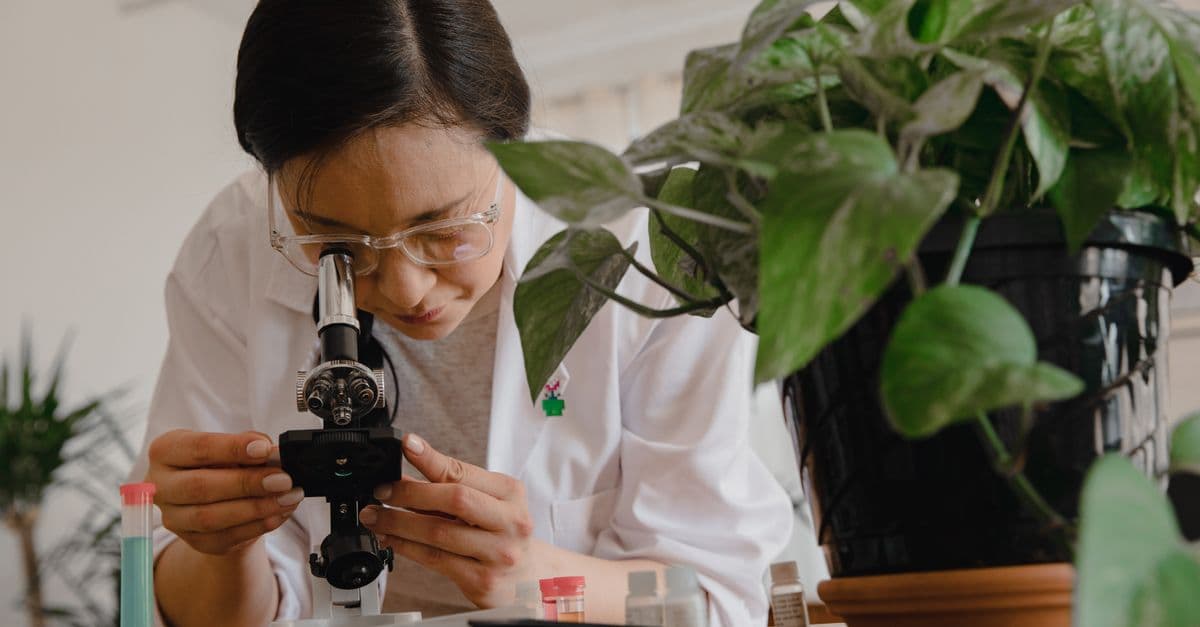
Photo: RDNE Stock project / Pexels
Tu Youyou (born 1930) is a Chinese pharmacologist who discovered artemisinin, the most effective antimalarial drug in history, during a secret military research program in the 1960s and 1970s. Her discovery has saved an estimated several million lives. In 2015, at age 84, she was awarded the Nobel Prize in Physiology or Medicine — the first Chinese woman to win a Nobel Prize in science, and one of the very few Nobel laureates who holds no doctorate, no postdoctoral training abroad, and no membership in any national academy of sciences. Her colleagues called her the "three-no scientist." She found the key to the cure in a 4th-century CE alchemical text, then tested the drug on herself before administering it to patients.
Quick Biography
Tu Youyou was born on December 30, 1930, in Ningbo, Zhejiang Province, China. Her father chose her given name from a line in the ancient Chinese Book of Songs: "youyou lu ming" — "the deer bleats youyou, eating the wild artemisia on the plain." The artemisia plant that gave her her name would become the source of her life's defining discovery. This coincidence, which she learned about only later, is one of the more extraordinary details in a life full of them.
She studied pharmaceutical science at Peking University Medical School, graduating in 1955, and joined the China Academy of Chinese Medical Sciences in Beijing. She never pursued a doctorate. At the time, further academic qualification abroad was not feasible for Chinese scientists, and the political turbulence of the Cultural Revolution (1966–1976) interrupted Chinese academic life severely. The China Academy of Chinese Medical Sciences had a two-and-a-half year training course in traditional Chinese medicine that she completed, which gave her a working knowledge of classical Chinese medical texts alongside her modern pharmacological training — a combination that proved decisive.
In 1969, during the Vietnam War, the North Vietnamese government asked China for help developing an antimalarial drug. American and North Vietnamese troops were both suffering heavy casualties from malaria strains resistant to chloroquine, the standard treatment. The project, known as Project 523, was classified. Tu Youyou was appointed to lead a research group of pharmacologists tasked with screening traditional Chinese medicine for antimalarial candidates.
She reviewed more than 2,000 traditional Chinese medicine preparations, extracted from more than 380 herbs. The initial screening produced weak or inconsistent results. Then she returned to historical texts and found a reference in Zhou Hou Bei Ji Fang (Emergency Prescriptions Kept Up One's Sleeve), written by the alchemist Ge Hong around 340 CE, to using sweet wormwood (Artemisia annua, qinghao in Chinese) steeped in cold water as a treatment for fever. The cold water detail was critical: it suggested the active compound was heat-sensitive, which was why earlier preparations using boiling had destroyed the active ingredient. She adapted the extraction process to use low-temperature ether extraction and obtained a stable, potent compound.
In 1972, she tested the extract on herself before it was administered to patients — a decision she made to establish safety data more quickly. She then supervised the first clinical trials in patients. The compound was later identified as artemisinin. She published the results in 1977 under a collective authorship (the political conventions of the Cultural Revolution era discouraged individual attribution); her central role was not widely recognized outside China for decades.
Personal Life, Family, and the Cultural Revolution
Tu Youyou married Li Tingzhao, a metallurgical engineer, in 1956. Their marriage has lasted more than 60 years, and its texture during the Project 523 years was shaped entirely by circumstances neither of them had chosen. When Tu Youyou was assigned to the classified project in 1969, the practical demands of the work meant extended periods away from their Beijing home. Their two daughters — one still an infant during the most intense research period — were placed in a nursery and, for a period, with Tu Youyou's parents in Ningbo while she was immersed in the project.
Li Tingzhao took on the primary responsibility for the household and children during those years, an arrangement that was rarely acknowledged in the Chinese scientific culture of the era, where collective rather than individual effort was the official narrative and domestic sacrifice was simply assumed. In her Nobel lecture in December 2015, Tu Youyou addressed this plainly. She thanked her husband explicitly for his support and acknowledged the cost to family life of the years of work. The lecture, delivered at 84, was notable for its combination of scientific precision and personal directness — she described the project's methods in detail while also naming the people whose contributions and sacrifices made it possible.
The Cultural Revolution (1966–1976) posed a different kind of difficulty. During that decade, traditional Chinese education, academic credentials, and intellectual specialization were officially suspect, and many Chinese scientists were subjected to criticism, reeducation, or forced labor. Tu Youyou and her colleagues at the China Academy of Chinese Medical Sciences operated within the constraints of that environment while also being tasked with a project — screening traditional medicine — that the Cultural Revolution's own ideology made complicated. Traditional Chinese medicine was valued as authentically Chinese and non-Western; modern pharmacology was valued as practically useful; the combination of both that Tu Youyou brought to Project 523 was precisely what made the discovery possible, and yet neither tradition was straightforwardly safe to practice or celebrate under the political conditions of the period.
The collective authorship conventions that obscured her contribution were themselves a product of this environment. Individual attribution was politically disfavored. The classified nature of the project reinforced this. The result was that the central methodological insight — the connection between Ge Hong's cold water specification and the heat-sensitive active compound — was not identified with her name in the published record until decades later.
Major Contributions
Discovery of Artemisinin
Artemisinin (qinghaosu) is a sesquiterpene lactone peroxide extracted from Artemisia annua (sweet wormwood). It has a unique mechanism of action — it reacts with the iron in hemoglobin within malaria parasites to produce free radicals that destroy the parasite's membranes. Because this mechanism is entirely unlike that of existing antimalarials, the Plasmodium parasites had no existing resistance to it. Artemisinin-based combination therapies (ACTs), developed from Tu Youyou's foundational work, are now the first-line treatment for Plasmodium falciparum malaria — the most lethal strain — recommended by the World Health Organization. The WHO estimates that ACTs have reduced malaria mortality in sub-Saharan Africa by more than 50% since 2000, representing millions of lives.
Extraction Methodology
The methodological contribution was as significant as the compound itself. The key insight — that Ge Hong's text specified cold water, indicating a heat-sensitive active ingredient — led directly to the low-temperature ether extraction that preserved the compound. Previous researchers working with A. annua had obtained weak results because their extraction methods destroyed artemisinin. Tu Youyou's combination of traditional text analysis and modern pharmacological method was the critical bridge.
Dihydroartemisinin and Post-1972 Derivative Work
In later work extending well beyond the initial 1972 discovery, Tu Youyou and her team developed dihydroartemisinin, a chemically reduced derivative of artemisinin with greater potency and better oral bioavailability than the parent compound. Dihydroartemisinin is the active metabolite that artemisinin converts to in the body — recognizing this allowed the team to synthesize it directly, improving both efficacy and dosing predictability. Several of the artemisinin combination therapies in current WHO-recommended clinical use, including artemether-lumefantrine (the most widely deployed ACT globally), are based on artemisinin derivatives that trace directly to this subsequent work in Tu Youyou's laboratory.
The derivative work is often underemphasized in accounts of her Nobel Prize, which focus naturally on the 1972 discovery. But the translation from an active extract to a clinically deployable drug required years of additional chemistry. Tu Youyou's laboratory continued this work through the 1970s and into the 1980s, refining the chemical profile of artemisinin and its derivatives systematically — work that was essential to the drug's clinical viability and that the Nobel Committee explicitly cited alongside the initial discovery.
Traditional Chinese Medicine as a Scientific Resource
Tu Youyou's methodology — systematic pharmacological screening of traditional medicine, guided by classical texts — established a model for drug discovery from ethnobotanical sources. The Nobel Committee's citation specifically highlighted this methodological contribution: the work demonstrated that classical Chinese medicine texts could serve as a structured database for identifying bioactive compounds that had been empirically selected over centuries of medical use. For more on how traditional knowledge intersects with modern science, see Marie Curie: Two Nobel Prizes and the Weight of Radioactivity, whose own work involved identifying what was already present but not yet explained.
Lesser-Known Habits and Quirks
The Three-No Scientist
The description "three-no scientist" — no doctorate, no foreign training, no membership in the Chinese Academy of Sciences or the Chinese Academy of Engineering — was initially applied to Tu Youyou in the context of explaining why she had been overlooked for Chinese national science honors for decades. Chinese scientific prize culture, like that of many countries, has traditionally favored institutional credentials and formal academic hierarchies. Tu Youyou had none of the standard markers of recognized scientific eminence in China except the work itself.
She was nominated for but did not receive the national-level Top Science and Technology Award multiple times before being awarded it in 2011, after the international recognition began. The Nobel Prize preceded her formal recognition in several domestic Chinese honors — an inversion of the usual sequence. She has discussed this circumstance with characteristic directness: in interviews she has not expressed bitterness but has noted the systemic preference for formal credentials over results.
Self-Experimentation
Before artemisinin was administered to patients in the first clinical trial in 1972, Tu Youyou and two colleagues volunteered to take the compound themselves to establish basic safety data. Self-experimentation in drug development has a long history — Marie Curie famously carried radioactive samples in her pockets, unaware of the danger; Tu Youyou's self-experimentation was deliberate and safety-motivated rather than inadvertent. Her own account describes the decision as practical: the formal animal toxicology pathways would have added significant time to a project with urgent wartime objectives, and she considered it appropriate to take the first risk herself rather than assign it to others. No serious adverse effects were documented in the initial self-administration.
The decision reflects a research culture and a set of individual values that are now unusual in clinical pharmacology, where the regulatory separation between researcher and human subject is strict. In the context of Project 523 — a classified military project operating under Cultural Revolution conditions with urgent operational demands — it was an act of both scientific commitment and personal integrity.
The 4th-Century Text
The Zhou Hou Bei Ji Fang (Emergency Prescriptions Kept Up One's Sleeve) by Ge Hong is not a rigorous medical text by modern standards. Ge Hong was a Taoist alchemist and scholar whose handbook compiled practical remedies from multiple traditions; it includes alchemical procedures, religious prescriptions, and folk remedies alongside observations that would be considered empirical. The specific passage Tu Youyou found reads: "Take a handful of qinghao, immerse in two liters of water, wring it out, take the juice and drink it all." The cold-water specification was embedded in a text that also contains, among other things, prescriptions involving spells.
The ability to read Ge Hong's text as a pharmacological data point — to extract the empirical observation from the surrounding context, recognize its significance, and translate it into a modern extraction protocol — required exactly the hybrid training Tu Youyou had: classical Chinese medical text literacy combined with modern pharmacological method. Her colleagues at Project 523 who lacked the classical training could not have made the same reading.
She Worked Through Illness Herself
The irony of a discoverer of one of the world's great medicines suffering serious health consequences from the research process itself is not lost on Tu Youyou's colleagues or on Tu Youyou. Prolonged exposure to organic solvents during the low-temperature ether extraction work caused her chronic health problems, including episodes of toxic hepatitis. She has acknowledged these health consequences in interviews without complaint, framing them as part of the work. The contrast with the millions of lives the drug has saved is a proportion she has addressed directly: she regards the personal cost as fully justified by the result.
Collective Authorship and Delayed Recognition
The scientific results from Project 523, including the artemisinin work, were published in 1977 under collective authorship conventions that did not identify individual contributors. This was partly ideological — the Cultural Revolution era explicitly disfavored individual attribution as bourgeois — and partly security-related, given the project's origins as a classified military program. As a result, Tu Youyou's central role was not established in the published scientific record for decades, and credit for the artemisinin discovery was disputed by various Chinese researchers and institutions who also contributed to the program.
The 2011 Lasker Award citation, the 2015 Nobel, and subsequent historical research have established her priority based on laboratory notebooks, internal Project 523 reports, and witness accounts. The dispute over attribution within China has been extensive and at times acrimonious; Tu Youyou has consistently maintained her account of the key methodological decisions without extended public commentary on the disputes.
The Name That Predicted the Discovery
Her father named her from a line in the Book of Songs describing deer eating wild artemisia. The name youyou means the sound deer make. She did not know the etymology of her own name until after the artemisinin discovery made the connection obvious. When she learned it, she described the coincidence in the same matter-of-fact register she uses for everything else — interesting, not miraculous. The Book of Songs passage has since become a standard element of articles about her, partly because it is the kind of detail that seems too neat to be true, and partly because it is.
Famous Quotes
"Every scientist dreams of doing something that can help the world." From her Nobel Prize acceptance speech, December 2015. The speech is notable for its directness and its emphasis on traditional Chinese medicine as a scientific resource.
"Artemisinin is a gift for the world's people from traditional Chinese medicine." From the Nobel lecture. She explicitly positioned the discovery as a contribution of the Chinese classical medical tradition, not solely of her own laboratory work.
"I was just doing my job." Widely reported in interviews following the Nobel announcement. The characteristic understatement has been commented on by many interviewers. At 84, she declined the international media attention with the same directness with which she had conducted the research.
Legacy
Tu Youyou's discovery is one of the most consequential pharmaceutical achievements of the 20th century by the measure of lives saved. Malaria kills hundreds of thousands of people annually, primarily young children in sub-Saharan Africa; before artemisinin-based combination therapies became the standard of care, the toll was substantially higher. The WHO's 2022 World Malaria Report attributes significant mortality reductions directly to ACT deployment.
Her legacy also includes a methodological argument: that traditional knowledge systems, approached with rigorous scientific method, can serve as productive databases for drug discovery. This argument has generated substantial research programs applying similar approaches to other traditional medicine traditions globally.
At 95 (as of 2025), Tu Youyou remains affiliated with the China Academy of Chinese Medical Sciences. She continues to work on artemisinin resistance — the next challenge in malaria treatment — with the same institution where she began her career in 1955. The three-no scientist now holds honorary doctorates from multiple universities worldwide.
For another woman whose work reshaped medicine at enormous personal cost, see Marie Curie: Two Nobel Prizes and the Weight of Radioactivity. For a parallel case of delayed recognition for a woman's scientific contribution obscured by institutional politics, see Rosalind Franklin: The Scientist Who Saw DNA First.
FAQ
Q: How many lives has artemisinin saved?
Precise figures are difficult to establish because malaria mortality data in affected regions was incomplete for much of the period in question. The WHO estimates that ACTs have contributed to a reduction of over 50% in malaria mortality in sub-Saharan Africa between 2000 and 2020 — a period during which ACT deployment expanded rapidly. The absolute number of deaths averted over the history of artemisinin use is estimated in the millions.
Q: Why was Tu Youyou not recognized sooner?
Multiple factors: Project 523 was classified, which meant results were published under collective authorship without individual attribution; the Cultural Revolution discouraged individual scientific recognition; she lacked the formal academic credentials that Chinese science prize committees typically required; and the dispute over credit among multiple Project 523 participants was unresolved for decades. The Lasker Award in 2011 was the first major international recognition, followed by the Nobel in 2015.
Q: What does artemisinin do to malaria parasites?
Artemisinin contains a peroxide bridge that reacts with the high iron concentration within Plasmodium-infected red blood cells to generate free radicals. These free radicals damage the parasite's proteins and membranes, killing it. Because the mechanism is distinct from all prior antimalarials, the parasite had no pre-existing resistance pathways. Some artemisinin resistance has emerged in Southeast Asia since the 2000s, which is why Tu Youyou's ongoing research on this problem is significant.
Q: Why is she called the "three-no scientist"?
No PhD (she holds only her undergraduate degree from Peking University Medical School plus the China Academy's traditional medicine certificate), no study or training abroad, and no membership in the Chinese Academy of Sciences or Chinese Academy of Engineering. These three credentials are typically required for formal recognition in Chinese national science awards. She received the Nobel Prize before she received the national-level Top Science and Technology Award in China, making the asymmetry internationally visible.
Q: Is artemisinin still effective?
Artemisinin-based combination therapies (ACTs) remain the WHO first-line treatment for uncomplicated P. falciparum malaria globally. Partial resistance has emerged in parts of Southeast Asia (the Greater Mekong subregion) and more recently in parts of Africa; this is an active area of research and concern. Tu Youyou's current work focuses on understanding and addressing resistance mechanisms.
Q: What is dihydroartemisinin and why does it matter?
Dihydroartemisinin is a chemically reduced derivative of artemisinin that Tu Youyou's team developed in follow-up work after the 1972 discovery. It is more potent than artemisinin itself and is the active form that artemisinin converts to in the body during metabolism. Several of the most widely deployed artemisinin combination therapies — including artemether-lumefantrine, which the WHO recommends as a first-line treatment — are based on artemisinin derivatives that trace directly to this derivative research program. The Nobel Committee cited this work explicitly in Tu Youyou's prize citation.
Q: How did the Cultural Revolution affect Tu Youyou's career?
The Cultural Revolution (1966–1976) disrupted Chinese academic life broadly, but its effect on Tu Youyou was ambiguous. The political environment forced collective rather than individual attribution of scientific work, which obscured her contribution for decades. At the same time, the project she was assigned to — screening traditional Chinese medicine — was politically compatible with Cultural Revolution ideology that valued authentic Chinese knowledge over Western academic frameworks. The hybrid training she had in both traditional Chinese texts and modern pharmacology was precisely what the project needed, and she was protected to some degree by the project's classified military status.
Q: Did Tu Youyou face any health consequences from her research?
Yes. Prolonged exposure to organic solvents during the artemisinin extraction and purification work caused chronic health problems, including episodes of toxic hepatitis. She has acknowledged these consequences in interviews without complaint, framing them as an expected part of the work. She has also noted that the personal health cost is measured against the millions of lives the drug has saved, a proportion she regards as straightforward.
Sources
- Tu, Youyou. "Artemisinin — A Gift from Traditional Chinese Medicine to the World." Nobel Lecture. December 7, 2015.
- Miller, Louis H., and Xinzhuan Su. "Artemisinin: Discovery from the Chinese Herbal Garden." Cell 146, no. 6 (2011): 855–858.
- Hsu, Elisabeth. "The History of qing hao in the Chinese Materia Medica." Transactions of the Royal Society of Tropical Medicine and Hygiene 100, no. 6 (2006): 505–508.
- Ge Hong. Zhou Hou Bei Ji Fang (Emergency Prescriptions Kept Up One's Sleeve). c. 340 CE.
- The Lasker Foundation. "2011 Lasker~DeBakey Clinical Medical Research Award: Artemisinin." Award citation, 2011.
- Nobel Prize Committee. Press release and background document for the 2015 Nobel Prize in Physiology or Medicine. October 2015.
- Bhatt, S. et al. "The effect of malaria control on Plasmodium falciparum in Africa between 2000 and 2015." Nature 526 (2015): 207–211.
Follow new articles
Add SciHub101 to your feed reader to see new science and technology stories.
About the Author
SciHub101 is an independent science and technology publication founded and edited by Buğra Sözeri, a software engineer and app developer based in Türkiye. AI tools assist with drafting and research. Source documentation in the existing archive is uneven, and articles are being reviewed and corrected. The Editorial Team byline identifies editorial responsibility; it does not certify specialist or independent human review. Where we compare products, anything built by our own team is labelled as such — see the editorial guidelines and About page for how corrections and disclosures work.
Related Articles
Aristotle: The Man Who Dissected 500 Species and Got the Brain Completely Wrong
Aristotle founded systematic biology, logic, and Western philosophy, dissected hundreds of species, taught Alexander the Great — and was catastrophically wrong about the brain. A verified biography.

Johannes Kepler: Planetary Laws, a Mother on Trial for Witchcraft, and the First Sci-Fi Story
Johannes Kepler's three laws of planetary motion changed astronomy. His life was stranger: his mother was tried for witchcraft, he wrote history's first science fiction, and he paid bills casting horoscopes.
Ernest Rutherford: The New Zealander Who Split the Atom
Ernest Rutherford discovered the atomic nucleus, named alpha and beta radiation, and mentored 11 future Nobel laureates. His biography, gold foil experiment, and legacy.
Murray Gell-Mann: The Man Who Named the Quark
Murray Gell-Mann discovered quarks, built the Eightfold Way, won the 1969 Nobel Prize, and co-founded the Santa Fe Institute. His biography, science, and verified quirks.

Donna Strickland: Third Woman to Win Physics Nobel, Still an Associate Professor When She Won
Donna Strickland's chirped pulse amplification technique is the laser physics behind LASIK eye surgery. Wikipedia rejected her as 'not notable' five months before her 2018 Nobel Prize.