The 3D Printer: How Additive Manufacturing Changed Everything — SciHub101
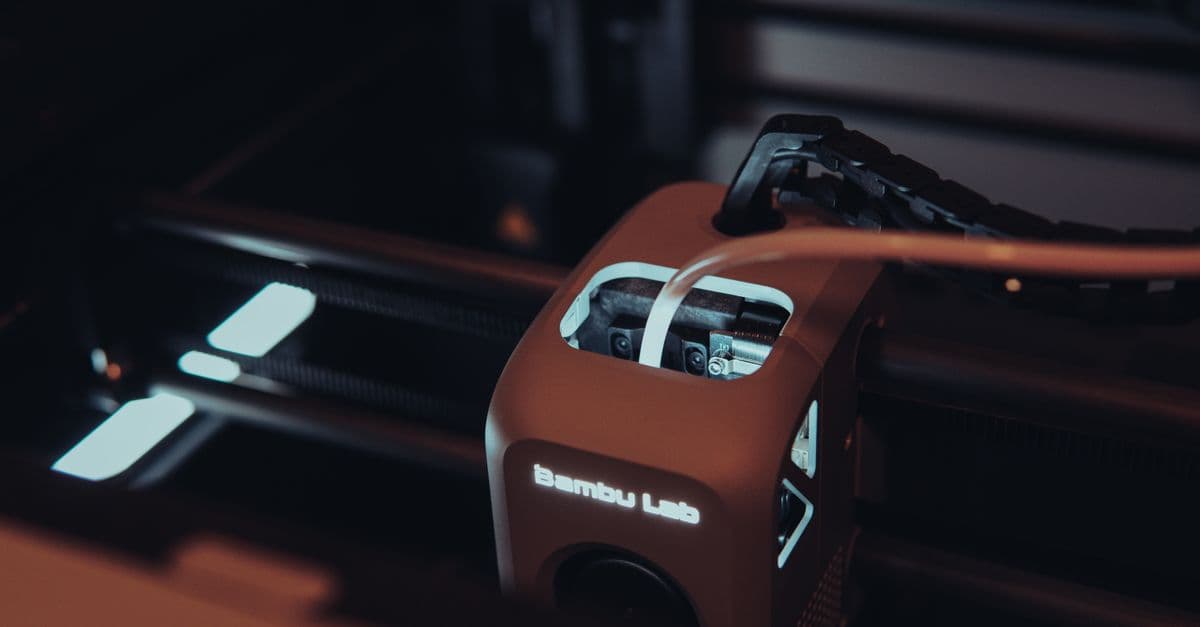
Photo: Tibor Szabo / Pexels
On March 9, 1983, a 36-year-old engineer named Chuck Hull sat alone in a small UV-lamp lab after hours at Ultra Violet Products in California and produced the first object ever built by directing a laser beam at liquid plastic. The object was a tiny eyewash cup. No mold. No machining. No raw material removed. Just a beam tracing a shape into existence, layer by layer. That cup launched a $20 billion industry — and the core physics of what Hull did that night has not fundamentally changed in four decades.
Additive manufacturing — the technical term for 3D printing — is any process that builds a three-dimensional object by depositing or fusing material layer by layer from a digital file, as opposed to subtractive manufacturing, which cuts away from a solid block.
The Night Chuck Hull Invented Stereolithography
Hull's eureka moment was not romantic serendipity. It was the product of a specific engineering frustration: he was tired of waiting months for plastic prototypes to be machined whenever his team needed to test a new part design.
His insight was to use ultraviolet (UV) light to harden photopolymers — liquid plastics that solidify when hit by UV radiation — one thin cross-section at a time. A computer would control the beam's path, essentially "printing" each layer of a 3D model in sequence. Stack enough layers, and you get a solid object.
Source: Chuck Hull filed patent application US4575330A on August 8, 1984, titled "Apparatus for Production of Three-Dimensional Objects by Stereolithography." The U.S. Patent Office granted it on March 11, 1986. (U.S. Patent US4575330A)
Hull founded 3D Systems in Valencia, California in 1986 — the same year his patent was granted — and shipped the first commercial SLA machine, the SLA-1, in 1987. The price: approximately $300,000. Early customers were aerospace and automotive companies willing to pay that sum just to speed up prototype cycles.
How Stereolithography (SLA) Works
An SLA printer holds a vat of liquid photopolymer resin. A UV laser traces the cross-section of each layer across the surface of the resin, curing (hardening) it exactly where the beam strikes. The build platform then lowers by one layer thickness — typically 25 to 100 micrometers (0.025 to 0.1 mm) — and the laser traces the next cross-section. After hundreds or thousands of passes, a solid 3D object rises from the resin like a sculpture emerging from a bath.
The analogy is a pantograph carving a relief map: instead of the stylus moving over a physical template, the laser follows a digital one. Every "slice" of a CAD (computer-aided design) file becomes one hardened layer of real plastic.
The Parallel Inventors Who Raced Hull
Hull had no idea he was in a race. Two other technologies were independently invented within three years of SLA, each solving the same problem with different physics.
Carl Deckard was a graduate student at the University of Texas at Austin when he conceived selective laser sintering (SLS) in 1984. Instead of liquid resin, SLS uses a powder — nylon, metal, ceramic — and a laser sinters (fuses) the powder grains together. No support structures needed, because surrounding unfused powder holds the part in place during printing. Deckard and his advisor Joe Beaman filed a patent application in October 1986; U.S. Patent No. 4,863,538 was issued in 1989.
Source: University of Texas at Austin Mechanical Engineering Department, "Selective Laser Sintering, Birth of an Industry." (UT Austin ME)
Scott Crump invented fused deposition modeling (FDM) in 1988 while trying to make a toy frog for his daughter by squeezing polyethylene and candle wax from a glue gun in careful layers. He and his wife Lisa patented FDM in 1989 (U.S. Patent 5,121,329) and founded Stratasys that same year. FDM became the technology that eventually powered the desktop 3D printer revolution because it was mechanically simpler and cheaper than SLA or SLS.
Source: Stratasys press release, "Inventor of FDM 3D Printing and Co-Founder of Stratasys, Scott Crump, Inducted into the TCT Hall of Fame." (Stratasys)
| Year | Inventor | Technology | Key Patent | Material |
|---|---|---|---|---|
| 1983 (filed 1984) | Chuck Hull | Stereolithography (SLA) | US4575330A | Liquid photopolymer |
| 1986 (filed) | Carl Deckard | Selective Laser Sintering (SLS) | US4863538A | Powder (nylon, metal) |
| 1989 | Scott Crump | Fused Deposition Modeling (FDM) | US5121329A | Thermoplastic filament |
Three men, three different physics approaches, all solving the same prototype bottleneck within six years of each other.
How FDM Works — The Technology in Your Desktop Printer
FDM is the method behind almost every consumer 3D printer sold today. Understanding it makes the entire field legible.
A spool of solid plastic filament — typically PLA (polylactic acid, made from corn starch) or ABS (acrylonitrile butadiene styrene, the same plastic as Lego bricks) — feeds into a heated nozzle called an extruder. The nozzle melts the plastic to roughly 200°C and deposits it in a thin bead onto a build platform, tracing the shape of the bottom layer. The platform drops slightly, the nozzle deposits the next layer on top, and the process repeats. Each bead fuses to the layer below because it's still hot when it arrives. The result looks a bit like coiled clay in a ceramics class — the layer lines are visible — but the object is structurally sound.
The analogy: imagine writing your name repeatedly with a hot-glue gun, each pass perfectly atop the last, building the letters into three-dimensional blocks of text. FDM is exactly that, but with a computer controlling every millimeter of the path.
Where FDM struggles is with overhanging geometry. Anything that juts out at a steep angle will droop before the next layer arrives to support it. Printers solve this by printing temporary support structures — thin scaffolding that holds overhangs during printing and snaps off afterward — or by using dual extruders, where a second nozzle prints a water-soluble support material that dissolves in a sink.
The Open-Source Insurgency: RepRap and MakerBot
For nearly two decades, 3D printers were industrial tools costing $30,000 to $500,000. The pivotal moment that changed this was not a corporate decision. It was a philosophy.
In 2005, Adrian Bowyer — a mechanical engineering lecturer at the University of Bath — launched the RepRap project (short for Replicating Rapid Prototyper). Bowyer's idea was radical: design an FDM printer whose parts could themselves be printed by another printer of the same type. A self-replicating machine. All designs, software, and documentation would be released under open-source licenses so anyone could build one.
Source: RepRap Project, "About RepRap." (RepRap.org)
The first working RepRap, named "Darwin," printed its first part in 2008. By 2009, the FDM patents Scott Crump held began expiring, opening the door for commercial companies to use the technology without licensing fees.
MakerBot was founded in 2009 by Bre Pettis, Adam Mayer, and Zach "Hoeken" Smith, initially building on RepRap designs. The MakerBot Cupcake CNC printer, sold as a kit for under $1,000, brought 3D printing into garages and classrooms. In June 2013, Stratasys — the company Scott Crump founded — acquired MakerBot for approximately $403 million in stock.
Source: 3D Printing Journal, "06-19-2013: Stratasys Acquired MakerBot." (3D Printing Journal)
The acquisition was a signal that desktop 3D printing had become commercially serious enough for incumbents to buy their way in rather than compete directly. By 2014, desktop FDM printers were available for under $500.
Metal, Flesh, and Concrete: Where 3D Printing Stands Today
The technology that started with a plastic eyewash cup now prints titanium jet engine brackets, living human tissue, and load-bearing concrete walls.
Aerospace and Metal Printing
Boeing has used additive manufacturing to produce over 60,000 parts for its aircraft, from cabin components to complex ducting. Airbus introduced approximately 2,700 3D-printed parts on its A350 XWB wide-body aircraft. The advantage in aerospace is not primarily speed; it is part consolidation — replacing an assembly of 20 bolted components with a single printed piece of equivalent strength but 40% less mass.
Source: Fortune Business Insights, "Aerospace 3D Printing Market." The global 3D printing market in aerospace and defense was valued at $2.71 billion in 2024 and is projected to reach $21.82 billion by 2033. (Fortune Business Insights)
Metal printing uses either selective laser melting (SLM) — essentially SLS with metal powder and enough energy to fully melt rather than just sinter — or directed energy deposition (DED), where metal powder or wire is fed into a laser or electron beam melt pool. Titanium, Inconel (a nickel superalloy used in jet engines), and stainless steel are the most common metals printed.
Bioprinting
Bioprinting — the use of 3D printing to deposit living cells into scaffold structures — is perhaps the most consequential application still in its early stages. Instead of plastic filament, a bioprinter uses bioink: a gel containing living cells suspended in a hydrogel medium. Structures like skin patches, cartilage, and simple vascular channels have been printed and tested.
Source: A 2023 review in PMC titled "Trends in 3D Printing Processes for Biomedical Field: Opportunities and Challenges" covers the state of the field. (PMC)
No functioning transplantable organ has been printed as of 2025 — the vascularization problem (how to thread working blood vessel networks through a thick printed structure) remains unsolved. But printed skin grafts are in clinical use for burn victims, and cartilage scaffolds are in late-stage trials.
Construction
Mighty Buildings, a California company, uses large-format 3D printing to produce modular housing panels from a proprietary stone polymer composite. The panels cure under UV light — the same physics Chuck Hull exploited in 1983, scaled up by a factor of 100,000. In 2021, Mighty Buildings completed its first fully permitted 3D-printed homes in the United States.
Chinese companies, notably WinSun, have printed multi-story apartment buildings using concrete extrusion printers, though regulatory acceptance varies by country.
The Patent Disputes That Shaped the Industry
Patents have been the most consequential legal force in 3D printing's development, both enabling and restricting it.
Hull's original SLA patent expired in 2006, triggering a wave of SLA companies and driving resin printer prices from tens of thousands of dollars to under $500 by 2015. Crump's FDM patents began expiring in 2009, directly enabling RepRap and MakerBot.
The pattern is consistent across technology sectors: foundational patents protect early investment but suppress competition. When they expire, prices drop and adoption surges.
Stratasys has been aggressive with its FDM trademark. The company trademarked "FDM" specifically, which is why competing manufacturers refer to their equivalent technology as "FFF" — fused filament fabrication — even though the two terms describe identical processes. It is the same technology with a different name, a linguistic quirk born entirely from trademark law.
Source: Wevolver, "FFF vs FDM: Is There Any Difference?" (Wevolver)
A less-told story involves the Deckard SLS patents — which the University of Texas held — generating the highest royalty revenues of any UT Austin intellectual property for years. Carl Deckard himself received a fraction of that revenue, a tension common in university-inventor patent arrangements.
The Unintended Consequences Nobody Predicted
When Hull filed his 1984 patent, nobody at Ultra Violet Products anticipated three downstream effects that have since become defining challenges.
Untraceable firearms. The 2013 publication of downloadable design files for the "Liberator" — a single-shot plastic pistol printable on any FDM machine — demonstrated that additive manufacturing could produce functional weapons outside any regulatory framework. The U.S. State Department demanded the files be removed from the internet; they had been downloaded 100,000 times in two days before removal, and have circulated widely since.
Supply chain disruption and dependency. During the COVID-19 pandemic, hospitals in Italy, Spain, and the United States used consumer 3D printers to produce ventilator valves and face shield frames when supply chains collapsed. This demonstrated the technology's resilience — but also highlighted how brittle global medical supply chains had become.
Counterfeit parts. Precision 3D scanning combined with printing enables the manufacture of physically indistinguishable counterfeit components. The aerospace industry has identified printed counterfeit brackets and fittings that pass visual inspection but lack the material properties of certified parts. Aviation regulators now require material certification traceable to feedstock source for printed flight-critical components.
Where 3D Printing Stands Today
The global 3D printing market across all sectors was valued at approximately $20 billion in 2024 and is projected to exceed $80 billion by 2030, driven primarily by industrial metal printing in aerospace, medical implants, and automotive.
Source: Raise3D, "3D Printing History: A Complete Timeline of Additive Manufacturing Technologies." (Raise3D)
The consumer desktop printer market has arguably peaked. The real action is industrial: GE Aviation prints fuel nozzles for its LEAP jet engines using SLM — a single printed nozzle replaces 20 welded parts, weighs 25% less, and lasts five times longer. NASA prints rocket engine components for the Artemis program. Dental and orthopedic implants are now routinely printed to patient-specific geometry from CT scans.
Chuck Hull, now in his eighties, holds 93 U.S. patents and 20 European patents. He received the European Inventor Award in 2014. The eyewash cup he printed in that UV lab in 1983 sits in his office. He keeps it as a reminder that the most consequential inventions begin with the smallest, most ordinary objects.
Source: European Patent Office, European Inventor Award 2014, Non-European countries category. (EPO)
Metal 3D Printing and the Aerospace Revolution
For the first two decades of additive manufacturing, metal printing was a research curiosity. The materials were too porous, the tolerances too loose, and the cost-per-part too high to compete with forged or machined components in any safety-critical application. That changed in 2015 when GE Aviation received Federal Aviation Administration (FAA) certification for a 3D-printed fuel nozzle used inside its LEAP jet engine — the first flight-critical metal part ever cleared by the FAA for use in a commercial aircraft engine.
The nozzle is the clearest single example of what additive manufacturing actually offers industry. The old nozzle was an assembly of 20 separate parts, brazed and welded together. The printed replacement is a single piece — same geometry, same function, but with internal cooling channels too complex to machine conventionally. It is 25% lighter than the assembly it replaced, and GE reports it is five times more durable.
Source: GE Aviation, "GE Aviation's Advanced Technology LEAP Fuel Nozzle Tip Receives FAA Certification." (GE Aerospace)
Boeing followed a parallel path. In 2017, the FAA approved titanium structural brackets for the Boeing 787 Dreamliner produced by Norsk Titanium using a directed-energy deposition process — essentially feeding titanium wire into a plasma arc to build up solid geometry layer by layer. The approval was the first for a structural metal additive part on a commercial airliner.
The two dominant industrial processes reflect different engineering priorities. Powder-bed fusion (which includes selective laser melting and electron beam melting) lays a thin layer of metal powder across a build plate and fuses it with a precisely aimed energy source, building parts with fine features and excellent surface finish — ideal for complex turbine components or medical implants. Directed-energy deposition melts metal wire or powder as it is fed into a melt pool at the deposition head, building up large volumes of material quickly but with rougher surfaces that typically require post-machining. Think of powder-bed fusion as a precise sculptor and directed-energy deposition as a fast welder.
Aerospace applications pushed the technology hardest. SpaceX uses 3D-printed components throughout its Raptor engine — including regeneratively cooled combustion chamber sections — where the internal channels that circulate supercooled methane to prevent the engine walls from melting are geometrically impossible to drill or cast. Relativity Space took the concept furthest: its Terran 1 rocket, which made its first launch attempt in March 2023, was the most 3D-printed launch vehicle ever built, with approximately 85% of its mass consisting of additively manufactured parts produced on the company's Stargate metal printing systems.
Source: Relativity Space, launch vehicle documentation and press coverage of the Terran 1 March 22, 2023 launch. (Reuters)
The institutional appetite for metal additive manufacturing reflects in market size. The global metal additive manufacturing market was valued at approximately $5.2 billion in 2023 and is projected to reach $20 billion by 2030, growing at roughly 21% annually — faster than the broader 3D printing market.
Source: GAO, "3D Printing: Opportunities, Challenges, and Policy Implications of Additive Manufacturing." (GAO-16-490SP); Fortune Business Insights, "Metal Additive Manufacturing Market." (Fortune Business Insights)
One footnote belongs to Made in Space, a California company that in 2014 installed a small FDM printer aboard the International Space Station — the first manufacturing facility off Earth. The ISS printer has since produced hundreds of plastic tools and replacement parts on demand, demonstrating a principle more significant than any single part: in space, the ability to manufacture on-site eliminates the need to launch every conceivable spare. For future lunar and Mars missions, that supply chain independence is not a convenience. It is a survival requirement.
Frequently Asked Questions
Q: Who really invented the 3D printer? A: Chuck Hull is widely credited as the inventor of 3D printing, specifically stereolithography (SLA), which he patented in 1984 and commercialized through 3D Systems starting in 1986. Scott Crump independently invented FDM in 1988, and Carl Deckard invented SLS in 1986 — three distinct technologies invented in parallel, all qualifying as "3D printing."
Q: What is the difference between SLA, FDM, and SLS printing? A: SLA cures liquid resin with a UV laser, producing very smooth, high-resolution parts. FDM melts and deposits plastic filament in layers — cheaper and more accessible but with visible layer lines. SLS fuses powder with a laser, enabling complex geometries without support structures and supports metal materials. Each technology suits different applications and budgets.
Q: Why did desktop 3D printers become cheap after 2009? A: Scott Crump's core FDM patents began expiring in 2009, allowing manufacturers to build FDM printers without paying licensing fees to Stratasys. The RepRap open-source project, founded by Adrian Bowyer in 2005, had already developed community-designed FDM printers that served as blueprints for commercial desktop machines like MakerBot.
Q: Can 3D printers print metal? A: Yes. Selective laser melting (SLM) and directed energy deposition (DED) are mature industrial processes that print titanium, stainless steel, Inconel, and other metals. Industrial metal printers cost $200,000 to $1 million or more. Companies like GE Aviation, Boeing, and Airbus routinely print metal components for aircraft.
Q: What is bioprinting and can it print organs? A: Bioprinting uses cartridges of living cells suspended in hydrogel (called bioink) to deposit cell layers that can grow into tissue structures. Printed skin grafts are in clinical use. Functional transplantable organs have not been achieved as of 2025 — the core challenge is creating an integrated vascular network that keeps thick tissue alive.
Q: Is 3D-printed food real? A: Yes, though commercially limited. Food-grade 3D printers extrude pastes — chocolate, dough, soft cheese, pureed protein — in shaped layers. NASA has funded research into printed food for long-duration space missions. Several high-end restaurants use food printers for complex edible geometries. The technology is real but not yet practical at consumer scale.
Read next:
Weekly digest
Stay ahead of the curve
Get the best science, AI, and tech stories delivered to your inbox every week. No spam — unsubscribe any time.
About the Author
SciHub101 is an independent science and technology publication founded and edited by Buğra Sözeri, a software engineer and app developer based in Türkiye. Articles are drafted against peer-reviewed literature and primary sources, fact-checked, and edited by a human before publication. Where we compare products, anything built by our own team is labelled as such — see the editorial guidelines and About page for how corrections and disclosures work.
Related Articles

The Automotive Airbag: From a Near-Miss on a Country Road to 67 Million Recalled Vehicles — SciHub101
John Hetrick patented the airbag in 1952 after swerving to avoid a deer. It took 37 more years for a US mandate—and the Takata scandal nearly destroyed trust in the device that saves 50,000 lives a year.
The Invention of the Solar Cell — SciHub101
How Bell Labs' 1954 silicon breakthrough, a 1958 satellite, and a 99.9% price collapse turned sunlight into the world's cheapest source of electricity.
How 3D Printing Works — Additive Manufacturing
How 3D printing works explained: FDM, SLA, SLS, metal printing, materials, software workflow, real applications, and what additive manufacturing is good for.
Digital Twins Explained: How Virtual Models Connect to Real-World Systems
A digital twin is a data-connected model of a physical or operational system. Learn how sensors, simulation and calibration work together, and why a dashboard or 3D model is not automatically a twin.
Countries with the Most Robots in Manufacturing (Robot Density Ranked)
South Korea has 1,012 industrial robots per 10,000 manufacturing workers — the highest robot density ever recorded for a major economy. That is more than six times the global average of 162, and more than double Germany's figure. The IFR World Robotics 2024 report shows a world where automation in factories is accelerating faster than at any point in industrial history.

Countries With the Most Industrial Robots Per Worker (2025)
South Korea deploys 1,012 industrial robots per 10,000 workers — the highest robot density on earth. See the full top 15 ranking and what it reveals about the future of manufacturing, employment, and economic competitiveness.