The Invention of the Solar Cell
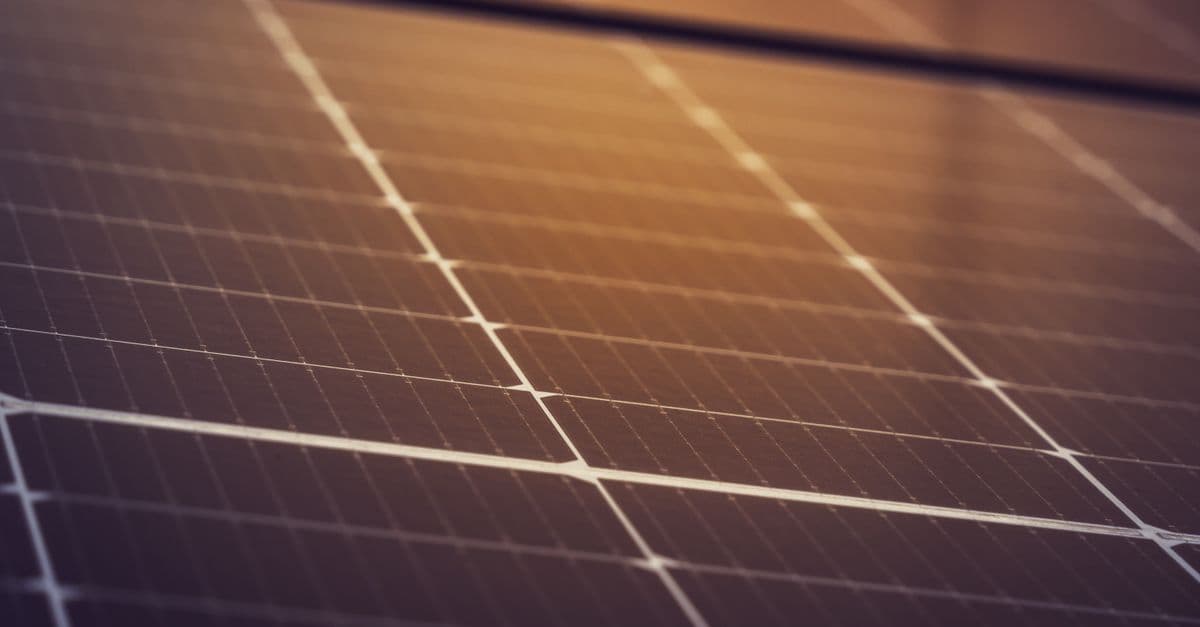
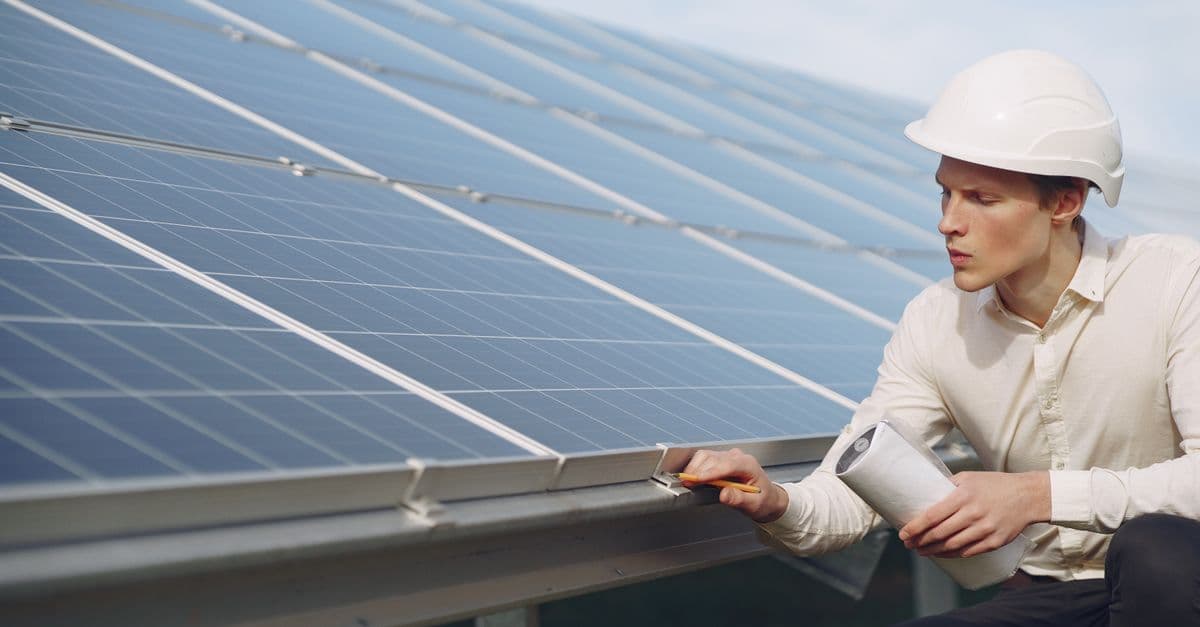
Photo: Michael Pointner / Pexels
A photovoltaic solar cell is a semiconductor device that converts light directly into electricity by using photons to knock electrons loose from their atomic bonds, creating a flow of electric current. The silicon solar cell — the device that underpins the modern solar industry — was invented at Bell Telephone Laboratories in Murray Hill, New Jersey, by Daryl Chapin, Calvin Fuller, and Gerald Pearson. Their device, demonstrated on April 25, 1954, converted about 6% of incoming sunlight into electricity — ten times more efficiently than anything that had come before. In 1956, solar panels cost $300 per watt. By 2024, the price had fallen to approximately $0.20 per watt — a 99.9% reduction. Global installed solar capacity crossed 2.25 terawatts (2,250 gigawatts) in 2024.
The Physics Behind the Effect: From Becquerel to Einstein
The story of the solar cell begins not in a semiconductor laboratory but in the basement of a Paris museum in 1839, when a 19-year-old named Alexandre-Edmond Becquerel was conducting experiments on electrochemical cells and noticed something nobody had reported before.
Becquerel was investigating whether light affected the behavior of electrodes immersed in conductive liquid. He found that when he illuminated one of his silver chloride electrodes, a voltage appeared between the two electrodes in his cell. Light was producing electricity. He published his observation that year: the photovoltaic effect had been discovered.
Photovoltaic effect — the generation of a voltage or electric current in a material upon exposure to light. Named from the Greek phos (light) and Alessandro Volta (the inventor of the battery). Becquerel observed it experimentally in 1839 but could not explain its mechanism.
The mechanism remained unexplained for 66 years, until Albert Einstein published his 1905 paper "On a Heuristic Point of View about the Creation and Conversion of Light." Einstein proposed that light consists of discrete quanta — particles we now call photons — each carrying an energy proportional to the light's frequency. When a photon strikes a material, it transfers its energy to an electron. If the photon's energy exceeds a threshold specific to the material (the work function or, in semiconductors, the band gap), the electron is freed from its atomic bonds and can flow as an electric current.
This was Einstein's Nobel Prize — not relativity, but the photoelectric effect, recognized in 1921. The paper provided the theoretical basis for understanding how light generates electricity in a solid material.
Source: Einstein, A. (1905). "Über einen die Erzeugung und Verwandlung des Lichtes betreffenden heuristischen Gesichtspunkt." Annalen der Physik, Vol. 17, pp. 132–148. The Nobel Prize-winning paper explaining the photoelectric effect.
Between Becquerel and Bell Labs, selenium was the primary photosensitive material. In 1873, Willoughby Smith discovered that selenium's electrical resistance decreases when exposed to light. Charles Fritts made the first solid-state solar cell in 1883 by coating a selenium plate with gold: it had an efficiency of about 1%, too low for any practical application. For seven decades, the solar cell was a scientific curiosity rather than a power source.
Bell Labs 1954: The Right Problem, the Accidental Solution
In 1953, Bell Labs engineer Daryl Chapin faced a practical problem that had nothing to do with solar energy. Bell Telephone operated thousands of remote switching stations in humid, tropical climates where dry-cell batteries degraded rapidly. Chapin's assignment was to find a reliable, low-maintenance power source for these stations.
He investigated several options, including thermoelectric generators and wind power, before focusing on solar energy. Initial tests with selenium solar cells were discouraging — Chapin measured their efficiency at about 0.5%, far too low to be useful. He wrote in his notebook that solar energy appeared impractical.
What Chapin did not initially know was that other work at Bell Labs was about to change the picture completely.
Calvin Fuller was a physical chemist who had been developing techniques for doping silicon — introducing trace amounts of impurity atoms into the crystal structure to control its electrical properties. Gerald Pearson was a physicist working on silicon semiconductor physics. In 1953, Fuller and Pearson had been experimenting with gallium-doped silicon bathed in lithium solution. During one experiment, Pearson measured the electrical output of one of these silicon samples while it was illuminated and found it unexpectedly high.
Pearson told Chapin about his observation. Chapin redirected his work to silicon. Within months, the three researchers had produced a silicon p-n junction solar cell that converted 6% of incoming sunlight to electricity — twelve times better than selenium, and enough to power small electrical devices.
p-n junction — the interface between two types of doped silicon. P-type silicon is doped with atoms (like boron) that create "holes" — positions where an electron is missing. N-type silicon is doped with atoms (like phosphorus) that contribute extra electrons. At the interface, electrons from the n-side diffuse into the p-side and vice versa, creating a built-in electric field across the junction.
When a photon strikes the cell and frees an electron, that built-in electric field sweeps the electron toward the n-side and the corresponding hole toward the p-side. Connect a wire between the two sides and current flows. Disconnect the wire and a voltage appears. The p-n junction is simultaneously the photon absorber, the charge separator, and the built-in power supply.
Source: Chapin, D.M., Fuller, C.S. and Pearson, G.L. (1954). "A New Silicon p-n Junction Photocell for Converting Solar Radiation into Electrical Power." Journal of Applied Physics, Vol. 25, No. 5, pp. 676–677. The original Bell Labs paper announcing the silicon solar cell.
The demonstration on April 25, 1954, used an array of strips of silicon solar cells to power a small toy Ferris wheel and a radio transmitter. The New York Times ran a front-page story the next day calling it "the beginning of a new era, leading eventually to the realization of one of mankind's most cherished dreams — the harnessing of the almost limitless energy of the sun."
How Silicon Converts Light to Current: The Full Physics
Understanding why silicon is so effective at converting light requires understanding a little semiconductor physics.
Silicon has 14 electrons arranged in shells around its nucleus. The outermost shell has 4 electrons, and silicon atoms form a crystal by sharing those 4 electrons with 4 neighboring silicon atoms in a rigid lattice — covalent bonding. In pure silicon at room temperature, virtually all electrons are locked in these bonds. The material is a poor conductor.
Silicon's band gap — the minimum photon energy required to free an electron — is 1.12 electron-volts (eV). This corresponds to infrared light at about 1,100 nm wavelength. Sunlight contains photons from the ultraviolet (high energy) through the visible to the near-infrared. Photons with energy above the band gap can free electrons; photons below it cannot and are wasted as heat. Silicon's 1.12 eV band gap is nearly optimal for the solar spectrum — detailed thermodynamic calculations (the Shockley-Queisser limit) show that a single-junction cell with a band gap of about 1.1–1.4 eV can theoretically convert at most about 33% of incident solar radiation to electricity.
In practice, the best commercial single-junction silicon cells reach about 26%. The best research cells using more complex multijunction designs reach over 47%, by stacking cells tuned to different bands of the solar spectrum.
The p-n junction's built-in electric field is the key to making the freed electrons useful. Without the field, electrons freed by photons would simply wander randomly and recombine with holes without contributing to current. The field — typically about 0.5–0.7 volts in silicon — separates them immediately: electrons go to the negative terminal, holes to the positive terminal. Connect a load and power flows.
Source: Shockley, W. and Queisser, H.J. (1961). "Detailed Balance Limit of Efficiency of p-n Junction Solar Cells." Journal of Applied Physics, Vol. 32, No. 3, pp. 510–519. The foundational paper establishing the theoretical efficiency limit for single-junction solar cells, now called the Shockley-Queisser limit.
Vanguard 1: The First Solar-Powered Satellite
In 1954, a 6% efficient solar cell was a scientific achievement with no obvious commercial path. Electricity from silicon solar cells at 1956 prices cost roughly $300 per watt — compared to about $0.10 per watt from coal. No economic application justified using them as power plants.
The exception was outer space. For satellites, weight and reliability matter far more than cost per watt. Chemical batteries are heavy and exhaust quickly. A nuclear source is expensive and complex. Solar cells, once deployed in sunlight above the atmosphere, could generate power indefinitely with no moving parts and essentially no maintenance.
Vanguard 1 was the second American satellite ever launched, placed in orbit on March 17, 1958. It was a 1.46 kg aluminum sphere six inches (15.2 cm) in diameter. Six small solar cells mounted on its surface powered a 5 milliwatt radio transmitter. The Navy's engineers were skeptical enough about the solar technology that they also installed a conventional mercury battery as backup.
The mercury battery exhausted within 20 days. The solar transmitter kept functioning for six years. Vanguard 1 is still in orbit today — the oldest human-made object in space — though its transmitter has been silent since 1964.
Source: NASA National Space Science Data Center. Vanguard 1 (1958-002B) spacecraft record. Available at nssdc.gsfc.nasa.gov.
The satellite application drove the early market for solar cells and funded the engineering improvements that would eventually reach the ground. Every major space program adopted solar power: the first NASA satellites, the International Space Station (whose solar arrays span approximately 73 meters, roughly the wingspan of a Boeing 747), and every commercial satellite launched since the 1970s.
The Price Collapse: From $300 to $0.20 per Watt
The most striking fact about photovoltaic solar cells is not their invention but their price trajectory.
| Year | Approximate Solar Module Price (per watt) |
|---|---|
| 1956 | ~$300 |
| 1970 | ~$100 |
| 1980 | ~$20 |
| 1990 | ~$6 |
| 2000 | ~$4 |
| 2010 | ~$1.50 |
| 2020 | ~$0.35 |
| 2024 | ~$0.20 |
This is a 99.9% price reduction over 68 years — far exceeding the price declines of almost any other manufactured technology. For comparison, transistors have declined in price more dramatically on a per-transistor basis, but per unit of computing power delivered, both follow similar "learning curve" trajectories.
The learning curve for solar panels — also called Swanson's Law for Stanford researcher Richard Swanson who documented it — shows that prices drop about 20% for every doubling of cumulative global production volume. Each time total installed capacity doubles, the industry learns efficiencies in manufacturing, materials handling, and installation that cut unit costs by roughly one-fifth.
Swanson's Law — the empirical observation that solar panel prices have declined by approximately 20% for every doubling of cumulative shipped volume, a relationship that has held consistently from the mid-1970s through the present. Analogous to Moore's Law for semiconductor chips.
The learning curve was fed by policy: German feed-in tariffs in the 2000s, California's renewable portfolio standards, and especially China's solar manufacturing scale-up beginning around 2009–2010. China moved from producing roughly 5% of global solar panels in 2005 to over 80% by 2023. The aggressive manufacturing investment — subsidized by the Chinese government — drove down module prices faster than any other factor. China's installed solar capacity reached an estimated 1,000 gigawatts (1 terawatt) by late 2024, accounting for roughly 45% of global installed capacity.
Source: SolarPower Europe (2025). "Global Market Outlook for Solar Power 2025–2029." The industry's primary annual market report. Additional data: U.S. Energy Information Administration, "China's solar capacity installations grew rapidly in 2024," January 2025.
The People: From Bell Labs to a Global Industry
The invention of the silicon solar cell involved more people than the three Bell Labs engineers who published the 1954 paper. The key figures in the cell's development from 1954 to global deployment:
Daryl Chapin (1906–1995) — Bell Labs engineer, originally working on power sources for remote telephone stations. His practical problem-solving orientation drove the project toward demonstrating real power output, not just measuring photocurrents.
Calvin Fuller (1902–1994) — Bell Labs physical chemist. His silicon doping techniques — developed for transistor research — were the enabling technology for a high-efficiency p-n junction. The solar cell was a byproduct of transistor physics.
Gerald Pearson (1905–1987) — Bell Labs physicist. He made the critical observation in 1953 that illuminated gallium-doped silicon produced a large photocurrent. He brought the observation to Chapin and was the experimental link between Fuller's doping chemistry and Chapin's power-source search.
Hoffman Electronics — California company that commercialized solar cells in the late 1950s, achieving 8% efficiency by 1958 and 14% by 1960 through systematic engineering improvements. Hoffman's cells went into early satellites.
Joseph Lindmayer and Peter Comeau at Comsat developed the "violet cell" in 1972, treating the front surface of silicon cells to reduce reflection and increase short-wavelength response, improving efficiency to around 15%.
Martin Green at the University of New South Wales became the world's leading researcher on silicon cell efficiency from the 1980s onward, setting world efficiency records repeatedly and training researchers who founded multiple solar companies. His PERC cell design (Passivated Emitter and Rear Cell) is the basis of most commercial cells made today.
Source: Perlin, J. (1999). From Space to Earth: The Story of Solar Electricity. Harvard University Press. The comprehensive history of the solar industry, from the Bell Labs breakthrough through the early commercial era.
Types of Solar Cells: Not All Silicon
The Bell Labs cell used monocrystalline silicon — silicon grown as a single large crystal, then sliced into wafers. This is still the dominant commercial technology, but several variants have developed:
Monocrystalline silicon (mono-Si) — highest efficiency (20–23% commercial, up to 26% research), highest cost. The silicon crystal is grown as a single cylinder (Czochralski process) and wire-sawed into thin wafers. The regular atomic arrangement maximizes electron mobility.
Polycrystalline silicon (poly-Si) — slightly lower efficiency (17–21% commercial), lower cost. Molten silicon solidifies into a block containing multiple crystal grains. Grain boundaries impede electron flow. Poly-Si dominated the market from roughly 2000–2015 before monocrystalline manufacturing costs fell enough to shift the balance back.
Thin-film cells — semiconductor material deposited in layers micrometers thick on glass, metal, or plastic. Technologies include cadmium telluride (CdTe, used by First Solar), copper indium gallium selenide (CIGS), and amorphous silicon. Lower efficiency (10–16%) but lower material costs and flexibility for unconventional mounting surfaces. First Solar is the largest thin-film manufacturer and the largest U.S. solar panel manufacturer.
Perovskite cells — named for their crystal structure, these cells use lead-halide compounds that can be solution-deposited at low temperature. Research cells have achieved over 25% efficiency in a few years of intensive development, comparable to silicon cells that took 50 years to reach that level. Commercial durability remains a challenge — perovskites degrade faster than silicon under prolonged sunlight. Perovskite-silicon tandem cells combining both in a single device have exceeded 33% efficiency in laboratory settings.
Source: NREL Best Research-Cell Efficiency Chart (2024). National Renewable Energy Laboratory. Updated continuously to show certified world records for each cell type.
Unintended Consequences: The Grid Nobody Expected
The Bell Labs team was trying to power telephone relay stations. Nobody in 1954 imagined that the silicon solar cell would become the primary driver of the global energy transition or that it would be the cheapest source of electricity in human history.
Cheapest ever — as of 2023, new solar power plants in sunny locations can generate electricity at a levelized cost of $0.02–$0.04 per kilowatt-hour (kWh) — cheaper than the operating costs of existing coal plants in many regions, and cheaper than any other new power source at comparable scale. The International Energy Agency called utility-scale solar "the cheapest electricity in history" in its 2020 World Energy Outlook.
Grid destabilization — solar power generates electricity only during daylight hours and at variable intensity depending on cloud cover. As solar penetration increases, electricity grids face new management challenges: midday surplus (the "duck curve" where grid operators must rapidly ramp up conventional plants in the evening as solar drops), frequency regulation, and voltage control. Battery storage — itself falling in price on a curve similar to solar — is the primary technical solution.
Land use — utility-scale solar farms require roughly 1–2 hectares per megawatt of capacity. At the global scale, the amount of land required to supply the world's electricity from solar alone would be large but is frequently overstated. The entire global electricity demand could theoretically be met by covering an area roughly the size of Spain, though this ignores distribution infrastructure and intermittency.
China's manufacturing dominance — the price collapse that made solar affordable was driven substantially by Chinese manufacturing scale. As of 2023, China produces over 80% of solar panels globally. This creates supply chain concentration risks: trade policy disputes, export controls, or geopolitical disruption could affect solar deployment worldwide. The United States, European Union, and India have all implemented policies to develop domestic solar manufacturing capacity.
Source: International Energy Agency (2024). Snapshot of Global PV Markets 2024. The IEA's annual review of global solar markets, deployment figures, and policy trends.
Where Solar Stands Today
Global installed solar capacity reached 2.25 terawatts (TW) — 2,250 gigawatts (GW) — by the end of 2024, according to SolarPower Europe. The world added approximately 600 GW of new solar in 2024 alone. To put that in perspective: it took the entire global solar industry until 2022 to accumulate its first terawatt. It took two years to double that.
China leads with an estimated 860 GW of installed capacity, followed by the United States at approximately 224 GW, India at approximately 125 GW, and Germany at approximately 90 GW.
The IEA projects that by 2030, solar will be the world's largest source of electricity generation capacity — not because of government mandates but because it will be cheaper to build new solar than to operate aging coal plants.
Efficiency trajectory — the best commercial panels available to consumers in 2024 achieve 22–23% efficiency. The theoretical single-junction limit is about 33%. Premium residential panels from manufacturers like SunPower (now Maxeon) reach 22.8%. Multijunction concentrator cells used in space applications routinely exceed 40%.
Emerging applications — agrivoltaics (solar panels and crops sharing the same land, with evidence that some crops benefit from partial shading), building-integrated photovoltaics (solar cells incorporated into roof tiles, windows, and facades), floating solar on reservoirs (which reduces evaporation as a side benefit), and vehicle-integrated solar are all in commercial deployment at varying scales.
The 19-year-old Edmond Becquerel observing a mysterious voltage in an electrolyte in 1839, and the Bell Labs team demonstrating that silicon could do it efficiently in 1954, set in motion a process that is now reshaping the global energy system — the most consequential applied physics transition since the steam engine.
Source: IEA (2020). World Energy Outlook 2020. International Energy Agency. The report containing the statement that solar is "the cheapest electricity in history" for new power plant investment.
The Takeaway
The solar cell is a case study in the unpredictability of basic research payoffs. Einstein explained the photoelectric effect in 1905 to solve a theoretical puzzle, not to power houses. Bell Labs funded Daryl Chapin to solve a telephone engineering problem, not to build an energy industry. The 1954 silicon cell that resulted cost $300 per watt and powered a toy Ferris wheel. Seventy years later, the same physical principle generates electricity at $0.20 per watt, powers one in ten homes in some countries, and is on track to become humanity's dominant energy source. No one planned this. The science was done for curiosity and practical necessity; the economics did the rest.
Frequently Asked Questions
Q: Who invented the solar cell? A: The photovoltaic effect was discovered by Edmond Becquerel in 1839. The first solid solar cell was made from selenium by Charles Fritts in 1883, with about 1% efficiency. The practical silicon solar cell — the direct ancestor of modern panels — was invented by Daryl Chapin, Calvin Fuller, and Gerald Pearson at Bell Telephone Laboratories, demonstrated on April 25, 1954, at approximately 6% efficiency.
Q: How does a solar cell work? A: A silicon solar cell contains a p-n junction — an interface between silicon doped to have excess electrons (n-type) and silicon doped to have electron deficiencies (p-type). When photons from sunlight strike the cell, they free electrons from their bonds. The built-in electric field at the p-n junction sweeps these electrons toward the negative terminal and holes toward the positive terminal. Connect a circuit and current flows.
Q: What was the first solar-powered satellite? A: Vanguard 1, launched by the United States on March 17, 1958, was the first satellite to carry solar cells. Six small silicon cells powered a 5 milliwatt radio transmitter. The solar transmitter operated for six years; the conventional mercury battery backup lasted 20 days. Vanguard 1 is still in orbit and remains the oldest human-made object in space.
Q: How much have solar panel prices fallen? A: Solar module prices fell from approximately $300 per watt in 1956 to roughly $0.20 per watt in 2024 — a decline of over 99.9%. The price decline follows "Swanson's Law" — prices drop about 20% for every doubling of cumulative production volume. The steepest recent decline occurred between 2010 and 2024, when Chinese manufacturing scale-up drove prices down from about $1.50/W to below $0.20/W.
Q: How much solar power is installed worldwide? A: Global installed solar photovoltaic capacity reached approximately 2.25 terawatts (2,250 gigawatts) by the end of 2024, according to SolarPower Europe's Global Market Outlook. The world added roughly 600 GW of new capacity in 2024 alone. China accounts for approximately 860 GW — nearly 40% of the global total. The IEA projects solar will become the world's largest electricity generation source by capacity before 2030.
Q: Why is China so dominant in solar panel manufacturing? A: China's solar dominance reflects deliberate industrial policy beginning around 2009–2010, when the Chinese government provided subsidized financing, land, and energy to solar manufacturers. The scale of Chinese production drove costs down through the learning curve — every doubling of production volume reduces costs by about 20%. China now manufactures over 80% of global solar panels. Western governments have responded with tariffs and domestic manufacturing incentives, but the cost advantage of Chinese production remains substantial.
Read next:
Follow new articles
Add SciHub101 to your feed reader to see new science and technology stories.
About the Author
SciHub101 is an independent science and technology publication founded and edited by Buğra Sözeri, a software engineer and app developer based in Türkiye. AI tools assist with drafting and research. Source documentation in the existing archive is uneven, and articles are being reviewed and corrected. The Editorial Team byline identifies editorial responsibility; it does not certify specialist or independent human review. Where we compare products, anything built by our own team is labelled as such — see the editorial guidelines and About page for how corrections and disclosures work.
Related Articles

The 3D Printer: How Additive Manufacturing Changed Everything
How Chuck Hull's 1984 stereolithography patent grew into a technology that builds jet engine parts, human tissue, and entire houses layer by layer.

The Discovery of Penicillin
How a contaminated petri dish in 1928 led to the world's first antibiotic, saving an estimated 200 million lives across eight decades of medicine.
Largest Solar Farms in the World
The largest solar farms rank by installed capacity, from China's Tengger park to the UAE's Al Dhafra site. Here is how capacity, land, and real output compare.
Countries That Produce the Most Solar Power (Ranked)
China installed 278 GW of new solar capacity in 2024 alone — more than the entire installed base of the United States. With 888 GW of total solar PV capacity, China now hosts nearly half of all solar power on Earth. This article ranks the top solar nations by installed capacity and explains how the global solar revolution became so geographically concentrated.
How Solar Panels Convert Light to Electricity
A photon from the sun hits silicon, kicks out an electron, and creates electricity. This simple fact is reshaping civilization.
How Do Solar Panels Work — and Are They Worth It?
Solar panels turn sunlight directly into electricity using the photoelectric effect. They're now the cheapest form of new power generation in most of the world. Here's how they work and whether they pay off.