How Fluorescence Makes Objects Glow
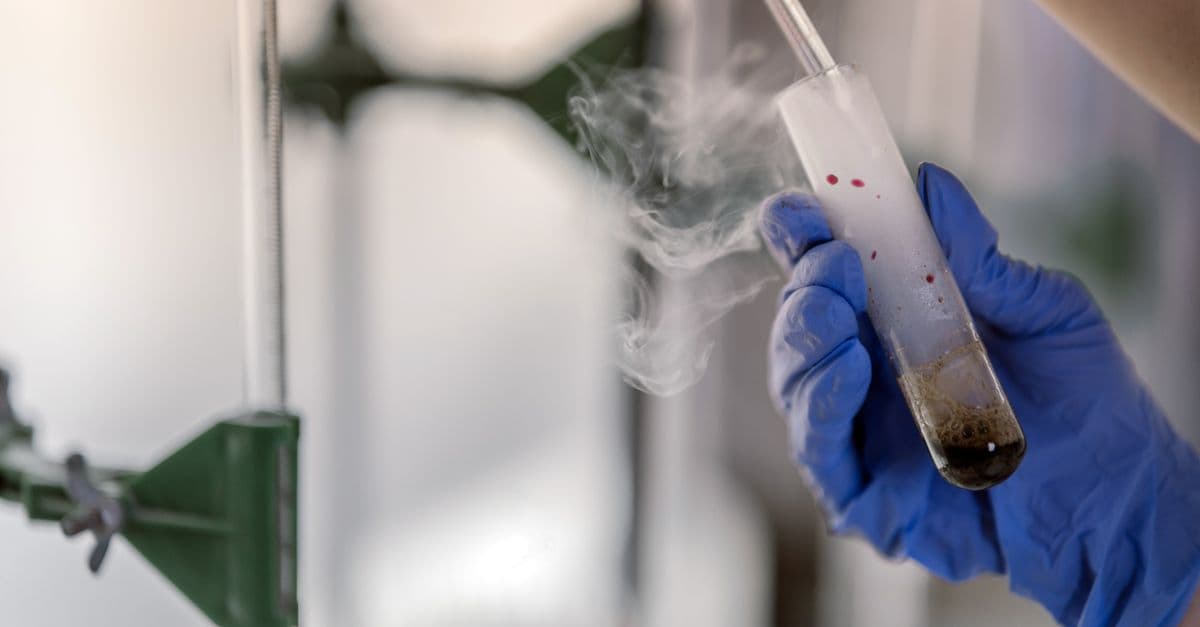
Photo: Mikhail Nilov / Pexels
Shine a UV flashlight on a highlighter mark and it bursts into a brightness that seems to come from nowhere. It isn't magic and the highlighter isn't generating its own light. It's absorbing invisible ultraviolet photons and immediately re-emitting them as visible light, a process first rigorously described by Irish-born physicist George Gabriel Stokes in 1852, who coined the term "fluorescence" in a footnote of the paper that explained it. That single observation, that certain materials convert one color of light into another, now underpins everything from crime-scene forensics to the microscopes that let biologists watch a single protein move inside a living cell.
Stokes and the discovery that named the phenomenon
In 1852, Stokes published a paper titled On the Change of Refrangibility of Light in the Philosophical Transactions of the Royal Society, one of the most influential physics papers of the nineteenth century. In it, he described what happened when he shone invisible ultraviolet light through a solution of quinine sulfate: the liquid, which looked colorless in ordinary daylight, glowed a striking blue at its surface (Stokes, 1852). Curious mineralogists of the era had already noticed something similar with fluorspar, the mineral form of calcium fluoride now better known as fluorite, which also produced a visible glow under invisible excitation.
Stokes traced the effect systematically and reached the key insight: the emitted light always had a longer wavelength, meaning lower energy, than the light that excited it. He proposed a name for the phenomenon in a now-famous footnote on page 479 of his paper: "I am almost inclined to coin a word and call the appearance fluorescence, from fluor-spar, as the analogous term opalescence is derived from the name of a mineral" (Stokes, 1852). The Royal Society later awarded Stokes the Rumford Medal for the work. That relationship he identified, between the energy lost and the wavelength gained, is now called the Stokes shift, and it remains the defining fingerprint of fluorescence in every field from astronomy to forensic chemistry.
It's worth pausing on how unusual this was for 1852. Spectroscopy, the science of analyzing light by wavelength, was barely a decade old. Nobody yet had a working model of atoms or electrons, both of which were still 50 years from formal discovery. Stokes was documenting a real, reproducible physical effect decades before anyone could explain the underlying electron mechanics that cause it. His careful measurement outran the theory that would eventually justify it, which is fairly common in the history of physics: observation frequently precedes explanation by generations.
The electron's round trip: absorption and emission
Fluorescence happens at the level of individual electrons within a molecule. Every molecule has electrons arranged in specific, quantized energy levels, think of them as rungs on a ladder rather than a continuous ramp. In a fluorescent molecule's resting state, called the ground state, its electrons sit on the lowest available rungs.
When a photon of ultraviolet or high-energy visible light strikes the molecule, and if that photon happens to carry exactly the right amount of energy, it can be absorbed, kicking an electron from the ground state up to a higher, "excited" rung. This absorption event is almost instantaneous, occurring on the order of femtoseconds (one femtosecond is one-quadrillionth of a second), making it among the fastest processes recognized in chemistry.
The excited electron doesn't stay elevated for long. Within nanoseconds, typically somewhere between 1 and 20 billionths of a second depending on the molecule, it drops back down toward the ground state. Before it fully returns, it usually loses a small amount of energy through a process called vibrational relaxation, essentially shedding a bit of energy as heat and molecular jostling while it settles onto the lowest rung of the excited state. Only then does it make the final drop back to the ground state, and it's that final drop that releases the absorbed energy as a brand-new photon of light.
Because some of the originally absorbed energy was already lost as heat during that vibrational relaxation step, the newly emitted photon necessarily carries less energy than the one that was absorbed. Photon energy and wavelength are inversely related, so lower energy always corresponds to a longer wavelength. That's the physical mechanism behind the Stokes shift Stokes observed empirically 170 years before anyone could describe electrons this precisely: fluorescent emission is always shifted toward the red, longer-wavelength end of the spectrum relative to the light that triggered it.
How fast does the fluorescence cycle actually happen?
The full cycle, from photon absorption to photon emission, typically completes within about 1 to 20 nanoseconds for common fluorescent dyes, though the initial absorption step itself takes only femtoseconds. This entire round trip is roughly a million times faster than the blink of an eye, which is why fluorescent glow appears to switch on and off instantly with the excitation light rather than fading gradually.
Why the emitted color differs from the absorbed color
Picture a ball dropped onto a trampoline from a fixed height. It doesn't bounce back to exactly the same height it fell from; some energy is lost to the trampoline's flex and to air resistance, so the rebound always falls a bit short. A fluorescent molecule behaves the same way: it "catches" a high-energy ultraviolet photon, loses a small amount of energy internally as heat, and "bounces" the difference back out as a lower-energy, longer-wavelength visible photon.
This is exactly why a highlighter looks bright yellow-green under a UV flashlight rather than glowing invisibly in the ultraviolet itself. The dye molecules in the highlighter ink absorb UV photons the human eye cannot detect at all and re-emit that energy at visible wavelengths the eye can see, effectively converting invisible energy into a visible glow. The same principle explains why some laundry detergents contain "optical brighteners," fluorescent compounds that absorb the invisible UV component of daylight and re-emit it as visible blue light, making white fabric look brighter and whiter than the fabric's natural reflectance alone would allow.
Another everyday example is the security thread embedded in many national currencies. Under normal light it's invisible or nearly so, but under UV light it fluoresces a specific color, a low-cost anti-counterfeiting feature that exploits the exact physics Stokes documented in the nineteenth century.
Fluorescence versus phosphorescence versus bioluminescence
Fluorescence, phosphorescence, and bioluminescence are frequently lumped together as "things that glow," but they are physically distinct processes with different energy sources, different timing, and different underlying mechanisms. Confusing them is one of the most common science misconceptions, and untangling the differences helps clarify what's actually happening in each case.
Fluorescence and phosphorescence both start the same way: a photon is absorbed and an electron jumps to an excited state. Where they diverge is in the electron's spin state, a quantum mechanical property that determines how quickly the electron is allowed to fall back down. In fluorescence, the excited electron retains a spin state that matches the ground state it needs to return to (called a singlet state), and that match makes the transition back down "allowed" by the rules of quantum mechanics, so it happens almost immediately, within nanoseconds. This is why fluorescent glow disappears the instant the excitation light source is switched off.
In phosphorescence, the excited electron instead crosses over into a different spin configuration called a triplet state, one that no longer matches the ground state. Quantum mechanical selection rules make the return to the ground state from a triplet state "forbidden," not impossible, but statistically unlikely to happen quickly. The electron effectively gets stuck, lingering in that triplet state before it eventually, slowly relaxes back down, releasing its energy over a much longer timescale that can stretch from seconds to minutes and, in specially engineered materials like modern glow-in-the-dark pigments, several hours. That's why glow-in-the-dark stars and watch dials keep glowing well after the lights go out, while a fluorescent highlighter goes dark the instant a UV light source is removed.
Bioluminescence is a different phenomenon entirely and doesn't require any external light input at all. It's a chemical reaction, most famously the oxidation of a molecule called luciferin by an enzyme called luciferase, that directly releases energy as light rather than converting previously absorbed light into a different wavelength. Fireflies, certain deep-sea fish, and some fungi produce light this way, generating their own photons from chemical energy rather than recycling photons they've absorbed from an outside source. Ironically, GFP itself, the fluorescent protein central to modern biology, was originally isolated from the jellyfish Aequorea victoria, an organism that actually produces its glow through a combination of a separate bioluminescent protein and GFP, which absorbs the bioluminescent light and re-emits it at a different wavelength.
| Property | Fluorescence | Phosphorescence | Bioluminescence |
|---|---|---|---|
| Energy source | Absorbed external light | Absorbed external light | Internal chemical reaction |
| Electron spin state | Matches ground state (singlet) | Differs from ground state (triplet) | Not applicable (chemical, not photophysical) |
| Emission duration after trigger removed | Nanoseconds (stops almost instantly) | Seconds to hours | Continues as long as the reaction proceeds |
| Common example | Highlighter ink, tonic water, security threads under UV light | Glow-in-the-dark stars, watch dials | Fireflies, certain jellyfish, some deep-sea fish |
Fluorescence and phosphorescence both need an external light source and differ mainly in electron spin state and afterglow duration; bioluminescence needs no external light at all because the glow comes from a chemical reaction.
Why does fluorescent light stop the instant the light source is turned off?
Fluorescence involves an electron transition that quantum mechanics classifies as "allowed," meaning it happens quickly and without obstruction, typically within nanoseconds, because the excited electron's spin state matches the ground state it's returning to. That fast, unimpeded transition means the emitted glow effectively vanishes as soon as the exciting light source is removed, unlike the slower, spin-forbidden transition responsible for phosphorescence's lingering afterglow.
Where fluorescence does real scientific work
Fluorescence isn't just a curiosity for blacklight posters and highlighters. It's a working tool across several fields of serious science, largely because fluorescent labels can be made extremely specific and extremely sensitive, letting researchers detect even tiny quantities of a target molecule against an otherwise dark background.
Fluorescence microscopy is probably the most consequential application. Researchers tag specific proteins, DNA sequences, or cellular structures with fluorescent dyes or genetically encoded markers, most famously green fluorescent protein (GFP), then illuminate the sample with light of the exact wavelength that excites the tag. Because only the tagged structures glow back, and because that glow appears sharply against a dark background, researchers can visualize individual structures inside living cells with a level of contrast that plain light microscopy simply cannot match.
GFP's story is itself a case study in how basic curiosity-driven research can eventually reshape an entire field. Osamu Shimomura first isolated the protein from the jellyfish Aequorea victoria in 1962, painstakingly extracting it from more than 10,000 jellyfish collected over a single summer on the coast of Washington State (Nobel Prize press release, 2008). Decades later, in the early 1990s, Martin Chalfie showed that the gene coding for GFP could be inserted into other organisms, such as the bacterium E. coli, and that those organisms would then glow green under UV light without needing anything else from the jellyfish. Roger Y. Tsien subsequently engineered variants of GFP that glowed more brightly and in a range of colors from blue to yellow to red, turning a single jellyfish curiosity into a whole palette of tools. In 2008, Shimomura, Chalfie, and Tsien shared the Nobel Prize in Chemistry "for the discovery and development of the green fluorescent protein, GFP" (Nobel Prize in Chemistry 2008, NobelPrize.org). Today, GFP and its engineered relatives let biologists literally watch specific proteins move, interact, and change location inside a living cell in real time, something that was essentially impossible before fluorescent tagging existed.
Fluorescence also shows up well outside the research lab. Forensic investigators use UV and alternate light sources to reveal fluorescent trace evidence, including certain bodily fluids, fibers, and residues, that are invisible under normal lighting but glow distinctly under the right excitation wavelength. Geologists and gemologists use UV lamps in the field to distinguish minerals that look nearly identical in daylight but fluoresce in characteristically different colors. Medical diagnostics use fluorescent dyes to flag specific antibodies or pathogens in a technique called immunofluorescence, and DNA sequencing machines rely on fluorescently tagged nucleotides whose distinct colors let a scanner read off a genetic sequence base by base. Even LED light bulbs and fluorescent tube lighting rely on the phenomenon directly: inside a fluorescent tube, an electrical discharge in mercury vapor produces UV light, which then strikes a phosphor coating on the inside of the glass, and that coating fluoresces to produce the visible white light the bulb is designed to emit.
How does immunofluorescence help detect disease?
Immunofluorescence attaches a fluorescent dye to an antibody engineered to bind a specific target, such as a virus protein or an autoimmune marker. When the tagged antibody locks onto its target inside a tissue sample, illuminating the sample with the dye's excitation wavelength makes only the bound locations glow, letting clinicians and researchers directly visualize where and how much of that target is present.
What people get wrong about fluorescence
A common misconception is that fluorescent materials generate their own light independent of any external source, as if the material itself were somehow a battery. That's not how it works. Fluorescence always requires an input photon to excite an electron first; the phenomenon converts light of one wavelength into light of another, it doesn't create light from nothing. That's why fluorescent objects look perfectly ordinary in complete darkness with no UV or excitation source present, and it's an easy way to distinguish a fluorescent object from a genuinely luminous one, like an LED or a firefly.
Another misconception is that anything described as "glowing" works through the same underlying process. As the comparison above shows, fluorescence, phosphorescence, and bioluminescence are physically distinct mechanisms with different energy sources and dramatically different persistence after the trigger is removed. Mixing them up matters practically, too: a phosphorescent glow-in-the-dark sticker will keep glowing for minutes after the lights go out because its electrons are quantum mechanically "stuck," while a fluorescent highlighter mark will go dark the instant a UV flashlight clicks off, because there's nothing stuck about its transition at all.
A third, more subtle misconception is assuming that fluorescence always makes an object brighter than it started out. In reality, fluorescence redirects energy, it doesn't create it, and the overall efficiency of the conversion, called the quantum yield, is always less than 100 percent because some absorbed energy is inevitably lost as heat during the process. Highly efficient fluorescent dyes used in research can have quantum yields above 90 percent, but no fluorescent material converts every single absorbed photon into an emitted one; some energy loss is a physical requirement of the process, not a manufacturing flaw.
The takeaway
Fluorescence is a fast round trip an electron takes after absorbing a photon: up to an excited state, then back down almost immediately, releasing the energy difference as a new, lower-energy photon of visible light. Stokes identified this wavelength shift in 1852 while investigating a glowing quinine solution, decades before anyone understood the electron mechanics behind it, and the same underlying principle now powers everything from highlighter pens and anti-counterfeiting currency threads to the fluorescent protein tags that let biologists watch individual proteins move inside living cells. Understanding the difference between fluorescence, phosphorescence, and bioluminescence isn't just trivia: it explains why some glowing objects switch off instantly, why others keep glowing in the dark for hours, and why a firefly needs no outside light source at all.
Read next:
- How Holograms Store Depth Information
- How Mass Spectrometry Identifies Molecules
- How Vaccines Train Memory B Cells
- How Stem Cells Know What to Become
- Why Vacuum Chambers Are Useful in Science
FAQ
Q: What is the Stokes shift?
The Stokes shift, named after George Gabriel Stokes who described it in his 1852 paper On the Change of Refrangibility of Light, is the difference between the wavelength of light a fluorescent material absorbs and the longer, lower-energy wavelength it emits. It's the defining physical signature of fluorescence and remains the property researchers measure to characterize any fluorescent dye or protein.
Q: Why does fluorescent emitted light have a different color than the absorbed light?
Some of the absorbed photon's energy is lost internally as molecular vibration or heat before the electron returns to its ground state. Since the emitted photon carries less energy than the absorbed one, and lower energy corresponds to a longer wavelength, the emitted light always shifts toward the red end of the visible spectrum relative to what excited it.
Q: What is the difference between fluorescence and phosphorescence?
Fluorescence involves a quantum mechanically "allowed" electron transition that stops within nanoseconds of the light source being removed, because the excited electron's spin state matches the ground state. Phosphorescence involves an electron trapped in a different, "forbidden" spin state that decays much more slowly, producing an afterglow that can last seconds to hours, as seen in glow-in-the-dark materials.
Q: How is fluorescence used in scientific research?
Fluorescence microscopy uses fluorescent dyes or genetically encoded proteins like GFP to tag specific structures inside cells, letting researchers visualize them with high contrast against a dark background. The discovery and development of GFP as a research tool earned Osamu Shimomura, Martin Chalfie, and Roger Y. Tsien the 2008 Nobel Prize in Chemistry.
Q: Can fluorescent objects glow without any external light source?
No. Fluorescence requires an external photon to excite an electron first; it converts absorbed light into re-emitted light of a different wavelength rather than generating light independently, which is why fluorescent materials look completely ordinary in total darkness with no excitation source present.
Q: Is bioluminescence a type of fluorescence?
No. Bioluminescence is a chemical reaction, typically the oxidation of luciferin by the enzyme luciferase, that produces light directly without needing any external light input. Fluorescence, by contrast, always requires absorbing an external photon first and simply re-emits that energy at a different, longer wavelength.
Q: Why do teeth, fingernails, and some fabrics glow under a blacklight?
Teeth and fingernails contain naturally fluorescent compounds that absorb UV light and re-emit it as visible light, producing a faint glow under a blacklight. Many white fabrics glow more strongly because manufacturers add fluorescent "optical brightener" compounds specifically to absorb invisible UV light and re-emit it as visible blue light, making the fabric appear brighter and whiter than its natural fibers alone would allow.
Follow new articles
Add SciHub101 to your feed reader to see new science and technology stories.
About the Author
SciHub101 is an independent science and technology publication founded and edited by Buğra Sözeri, a software engineer and app developer based in Türkiye. AI tools assist with drafting and research. Source documentation in the existing archive is uneven, and articles are being reviewed and corrected. The Editorial Team byline identifies editorial responsibility; it does not certify specialist or independent human review. Where we compare products, anything built by our own team is labelled as such — see the editorial guidelines and About page for how corrections and disclosures work.
Related Articles
How Bioluminescence Works in Animals: The Chemistry of Living Light
More than 76% of deep-sea animals produce their own light. Fireflies flash in coordinated sequences. A jellyfish discovered off the coast of Friday Harbor, Washington, gave biologists a tool that transformed cell biology, earned three scientists a Nobel Prize, and now glows inside cancer cells in laboratories around the world. Bioluminescence — light produced by a living organism — is one of evolution's most useful accidents, and its chemistry is surprisingly simple.
Quantum Error Correction Explained: Physical Qubits, Logical Qubits and Thresholds
Quantum error correction protects one logical qubit across many noisy physical qubits. Learn how syndromes, surface codes, and thresholds work in practice.
Sodium-Ion Batteries Explained: Chemistry, Advantages, Trade-Offs and Uses
Sodium-ion batteries move sodium instead of lithium ions. See how the cathode, hard-carbon anode and electrolyte work, the numbers, and where they fit.

Structural Battery Composites Explained: When Materials Carry Loads and Store Energy
Structural battery composites let carbon fiber carry loads and store energy. See how they work, what the lab numbers mean, and why products are still rare.