How Bioluminescence Works in Animals: The Chemistry of Living Light
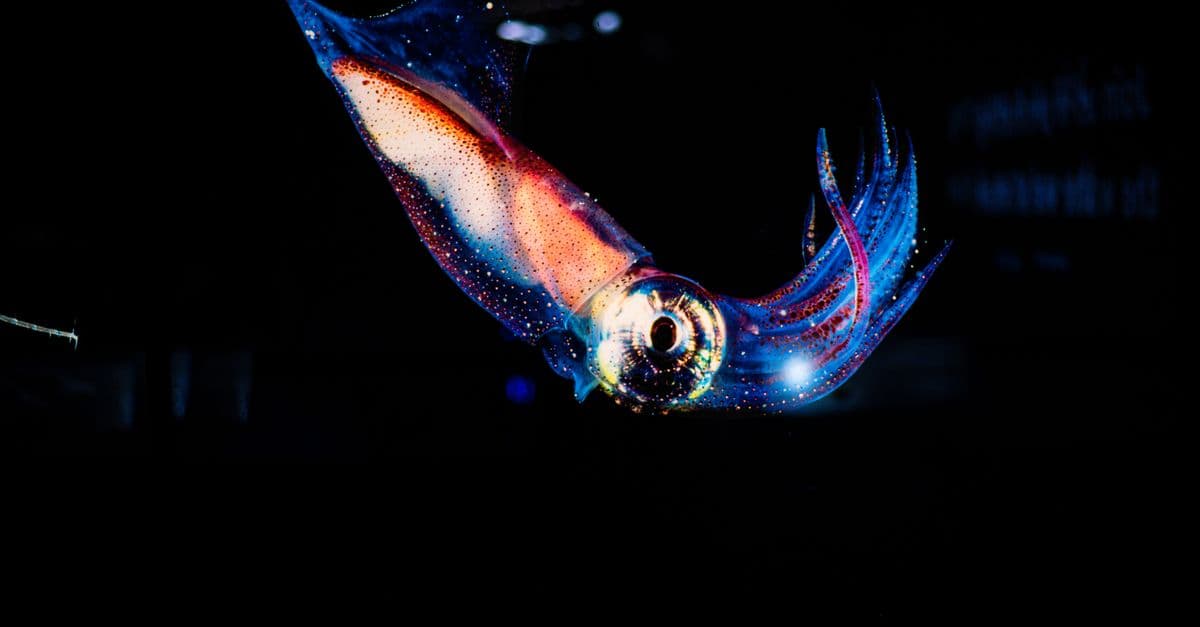
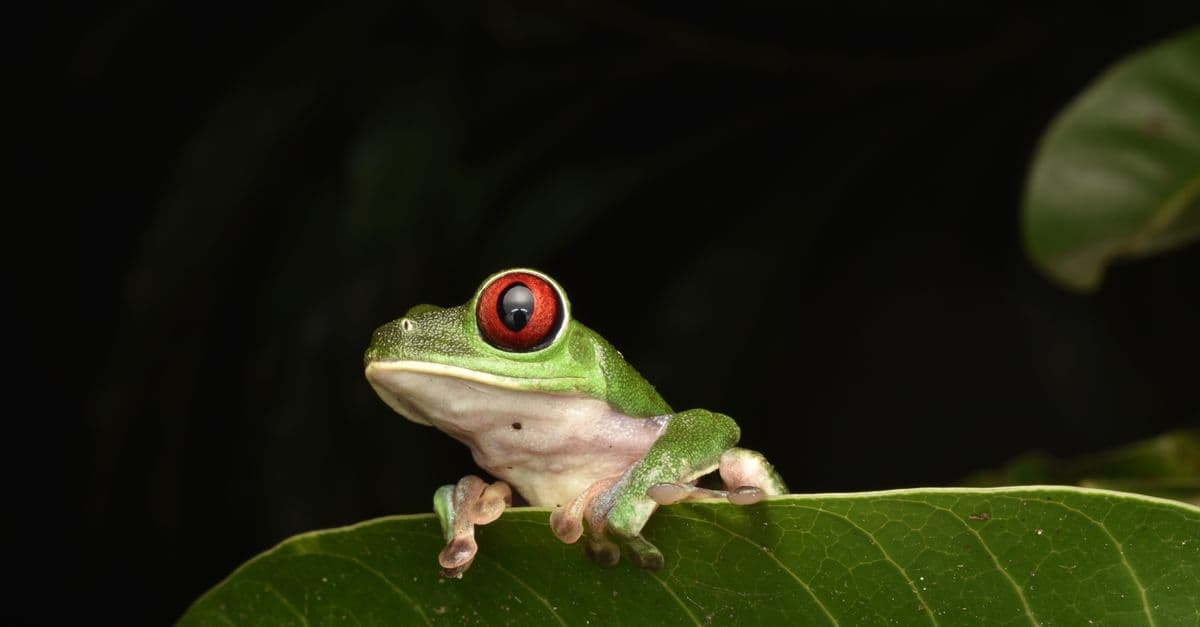
Photo: Marissa Farrow / Pexels
Over 76% of the deep-sea animals observed in a 17-year survey by the Monterey Bay Aquarium Research Institute produce their own light. Not reflected light — their own, generated internally through a chemical reaction that releases photons with near-zero heat. On land, fireflies synchronize their flashes in patterns complex enough to carry species-specific mating signals. In a New Zealand cave, thousands of glowworm larvae (Arachnocampa luminosa) coat cave ceilings with bioluminescent silk traps, creating blue-lit grottos that tourists travel hours to see. All of these organisms are running a variant of the same chemistry — and that chemistry, borrowed and engineered, now illuminates cancer cells in research laboratories.
The Core Chemistry: Luciferin and Luciferase
Bioluminescence requires two main chemical actors. The first is a small organic molecule called luciferin (from the Latin lucifer, "light-bearer"). The second is an enzyme called luciferase that catalyzes the oxidation of luciferin. When luciferin is oxidized in the presence of the right enzyme and oxygen, the reaction produces an unstable intermediate that releases energy by emitting a photon of light as it falls back to a lower energy state.
Luciferin — a general term for the small organic molecules that serve as light-emitting substrates in bioluminescent reactions. Different organisms use chemically distinct luciferins; the name describes function, not a single chemical structure.
Luciferase — the enzyme that catalyzes luciferin oxidation. Like luciferin, this is a functional term — different organisms have evolved different luciferase proteins with no evolutionary relationship to each other.
The basic reaction:
Luciferin + O₂ → Oxyluciferin + light (+ CO₂ in some systems)
In fireflies, the reaction also requires ATP (adenosine triphosphate) and magnesium ions. The ATP converts luciferin to luciferyl-AMP, which is then oxidized by molecular oxygen. The product, oxyluciferin, forms in an electronically excited state — one of its electrons has been promoted to a higher energy level. When that electron falls back to its ground state, the energy is released as a photon of yellow-green light (peak wavelength ~560 nm).
The efficiency of this reaction is remarkable. The quantum yield — the fraction of the chemical reaction's energy that ends up as light rather than heat — is approximately 41% in firefly luciferase, one of the highest known for any bioluminescent system. Incandescent lightbulbs convert less than 5% of electrical energy to visible light; the rest becomes heat. A firefly produces almost no heat from its light organ — which is why bioluminescence is described as "cold light."
Source: Seliger, H.H. and McElroy, W.D. (1960), "Spectral emission and quantum yield of firefly bioluminescence," Archives of Biochemistry and Biophysics, Vol. 88 — early characterization of firefly luciferin quantum yield and emission spectrum.
Source: Branchini, B.R. et al. (2011), "Experimental support for a single electron-transfer oxidation mechanism in firefly bioluminescence," Journal of the American Chemical Society, Vol. 133 — the mechanistic study establishing the single electron transfer pathway in firefly luciferase catalysis.
How Many Times Has Bioluminescence Evolved?
One of the most striking features of bioluminescence is how many times it has evolved independently. This is convergent evolution at its most extreme: different organisms arrived at the same functional solution — making light — using entirely different molecular tools.
A 2015 analysis by Haddock et al. estimated that bioluminescence has evolved independently at least 40 separate times across marine organisms alone. A broader 2020 analysis published in Proceedings of the Royal Society B concluded the number of independent evolutionary origins across all animals is at least 94, possibly higher as more deep-sea organisms are characterized.
This number is extraordinary. Flight has evolved independently four times (insects, pterosaurs, birds, bats). Eyes have evolved independently perhaps 50 to 100 times. Bioluminescence — at 94 or more independent origins — is one of the most frequently re-evolved traits in animal biology.
The reason it keeps evolving: light is useful. Once an organism acquires the ability to produce light, natural selection can quickly shape how, when, and why it glows. The uses are diverse enough that bioluminescence provides fitness benefits across completely different ecological contexts — which is why it keeps appearing.
Source: Davis, M.P. et al. (2016), "Repeated and widespread evolution of bioluminescence in marine fishes," PLOS ONE, Vol. 11 — phylogenetic analysis revealing 27 independent origins of bioluminescence in marine fishes alone.
Why Animals Glow: Four Ecological Functions
Bioluminescence serves different functions in different organisms, and individual species sometimes use it for multiple purposes simultaneously.
Predator Attraction: The Anglerfish Lure
The bioluminescent lure of the deep-sea anglerfish (order Lophiiformes) is the most iconic example of bioluminescence used for predation. The esca — a modified dorsal fin spine with a bioluminescent tip — dangles in front of the anglerfish's mouth. Prey attracted by the light are within striking range when they investigate.
The light in the anglerfish esca is not produced by the fish's own cells. It is produced by bioluminescent bacteria — primarily Candidatus Photodesmus — that live in a specialized organ and are housed by the fish. This is a symbiotic relationship: the bacteria get nutrients and a habitat; the fish gets light. The fish can control the light somewhat by blood flow regulation to the esca (restricting blood dims the light), but the source is bacterial.
Counter-Illumination: Hiding with Light
Open-water animals face a specific predation threat: any prey animal swimming near the surface is silhouetted against the downwelling sunlight when viewed from below. Predators hunting from below can spot a solid silhouette against the brighter water above.
Several deep-sea organisms counter this with counter-illumination: they produce bioluminescent light from their ventral (belly) surface that approximately matches the intensity and spectrum of downwelling light. From below, the animal produces light that fills in its silhouette, making it nearly invisible against the background illumination.
The firefly squid (Watasenia scintillans) of Japan and the Hawaiian bobtail squid (Euprymna scolopes) both use counter-illumination. The Hawaiian bobtail squid adjusts the intensity of its bioluminescent organ (which houses the symbiotic bacterium Aliivibrio fischeri) in real time to match changing surface light conditions — a form of active camouflage using light production rather than pigment.
Counter-illumination — the use of ventral bioluminescence to match the intensity and color of downwelling light, eliminating the silhouette that would otherwise be visible to predators hunting from below.
Communication: Firefly Flash Patterns
Fireflies (family Lampyridae) are beetles, not flies. Their flash patterns are species-specific mating signals. The male flies through the air producing a species-characteristic flash sequence — a specific number of flashes, at a specific interval, with a specific duration — while the female waits on vegetation and responds with her own flash at a precise time delay after the male's signal.
In the eastern North American firefly Photinus pyralis, the male produces a J-shaped arc of yellow light lasting approximately half a second, repeated every 5.5 seconds. The female responds approximately two seconds after the male's flash ends. Species recognition depends on the male recognizing the female's response interval — too early or too late and the male does not approach.
One genus, Photuris, has evolved a predatory mimicry strategy: the females mimic the response patterns of other firefly species, luring males of those species close enough to eat them. These "femmes fatales" are one of the better-documented examples of intraspecific bioluminescent deception.
In some locations — notably the Smoky Mountains in Tennessee — multiple male fireflies synchronize their flashes, creating sweeping pulses of light across a hillside. The synchronization mechanism involves each individual adjusting its flash timing based on neighbors' flashes, a form of coupled-oscillator dynamics similar to the spontaneous synchronization of pendulum clocks on a shared shelf. This is not organized behavior — it emerges from simple local rules applied by thousands of individuals.
Source: Lloyd, J.E. (1966), "Studies on the flash communication system in Photinus fireflies," Miscellaneous Publications, Museum of Zoology, University of Michigan, Vol. 130 — the comprehensive catalog of firefly flash patterns and their role in species-specific mating recognition.
Defense: Startling, Warning, and Distracting Predators
Several deep-sea organisms use bioluminescence defensively. The ostracod Vargula hilgendorfii (a small crustacean) squirts a cloud of luminescent secretion when attacked — the cloud hangs in the water as a glowing distraction while the animal escapes. The deep-sea shrimp Heterocarpus ensifer ejects bioluminescent fluid from its mouth toward a predator, temporarily blinding or disorienting it.
Some animals use bioluminescence as a warning signal — the same way aposematic (warning) coloration in bright terrestrial animals signals toxicity or unpalatability. The dinoflagellate Noctiluca scintillans — responsible for the ghostly blue glow sometimes seen in ocean waves at night — flashes when mechanically disturbed. This flash may attract the predators of the zooplankton that are disturbing (and eating) the Noctiluca, creating a "burglar alarm" effect: the dinoflagellate's flash draws a larger predator that interrupts the original attacker.
The Deep Sea: Where Bioluminescence Is the Rule, Not the Exception
Below about 200 m, sunlight does not penetrate in useful quantities. Animals in this zone — from 200 m to the hadal zone at 11,000 m — evolved in a world where bioluminescence is the only available light source. The result is that bioluminescence is effectively a defining feature of deep-sea ecology rather than a novelty.
The 17-year MBARI survey, published in Scientific Reports in 2017, analyzed video footage from remotely operated vehicles (ROVs) and found that 76% of all individual animals observed at depths from 200 m to 4,000 m were bioluminescent. When broken down by taxonomic group, more than 97% of cnidarians (jellyfish, siphonophores) were bioluminescent, roughly half of fish species observed were bioluminescent, and about half of cephalopods (squid and octopuses) were bioluminescent.
The colonial siphonophore Praya dubia — arguably the world's longest animal at up to 40 m (131 feet) in length — is bioluminescent throughout its colony. The comb jelly Mnemiopsis leidyi produces rolling waves of bioluminescent light that travel down its body when disturbed. The dragonfish (family Stomiidae) produces red bioluminescence from organs near its eyes — red light that its prey cannot see (most deep-sea organisms lack photoreceptors sensitive to red wavelengths), which it uses like an infrared sniper scope to locate prey in what appears, to the prey, to be total darkness.
Source: Haddock, S.H.D., Moline, M.A., and Case, J.F. (2010), "Bioluminescence in the sea," Annual Review of Marine Science, Vol. 2 — comprehensive review of marine bioluminescence ecology, chemistry, and function.
Source: Widder, E.A. et al. (2017), "Quantification of bioluminescence from the surface to the deep sea demonstrates its predominance as an ecological trait," Scientific Reports, Vol. 7 — the MBARI 17-year survey establishing 76% bioluminescence prevalence in deep-sea organisms.
Different Luciferins: Not One Chemistry But Many
Because bioluminescence evolved independently so many times, the underlying chemistry is not unified. Different lineages use chemically distinct luciferin molecules:
| Organism group | Luciferin type | Additional cofactors |
|---|---|---|
| Fireflies (terrestrial beetles) | D-luciferin | ATP, Mg²⁺, O₂ |
| Marine dinoflagellates | Dinoflagellate luciferin (tetrapyrrole) | O₂ |
| Jellyfish (Aequorea victoria) | Coelenterazine + aequorin | Ca²⁺ |
| Many marine organisms | Coelenterazine | O₂ |
| Bacteria (Aliivibrio fischeri) | FMNH₂ (reduced riboflavin) | O₂, long-chain aldehyde |
| Ostracods (Vargula spp.) | Vargulin | O₂ |
| Railroad worm beetles | Two different luciferins | O₂ |
Coelenterazine is the most widely distributed luciferin across marine bioluminescent organisms — found in radiolarians, copepods, jellyfish, ctenophores, and many decapod crustaceans. Its wide distribution across unrelated taxa has been explained by dietary transfer: organisms that eat bioluminescent prey accumulate coelenterazine in their tissues and may repurpose it for their own bioluminescence. This "chemical borrowing" across the food web means that even the chemistry of bioluminescence is not as independently evolved as the genetics would suggest.
GFP: How a Glowing Jellyfish Changed Biology
In 1961, marine biologist Osamu Shimomura was studying the bioluminescent jellyfish Aequorea victoria collected near Friday Harbor, Washington. To understand its light production, he extracted and analyzed proteins from the jellyfish's light organ — a ring around the margin of its bell. He identified a calcium-sensitive photoprotein he called aequorin, which produces blue light when calcium ions are present. But the jellyfish glows green, not blue. Something was converting the blue light to green.
That something turned out to be a second protein in the same tissue: green fluorescent protein (GFP). GFP absorbs the blue light from aequorin and re-emits it as green light — a process called fluorescence energy transfer (FRET). The protein contains its own light-emitting chemical group (a chromophore) formed by three amino acids in the protein chain spontaneously reacting with each other after the protein folds. No external cofactor is needed. GFP is a genetically encoded, self-assembling fluorescent tag.
Shimomura published the discovery of GFP in 1974. It sat relatively unnoticed until 1992, when Douglas Prasher sequenced and cloned the GFP gene. In 1994, Martin Chalfie attached the GFP gene to another gene in Caenorhabditis elegans nematode worms and showed that specific cells in the live worm glowed green — the first use of GFP as a cellular label in a living organism.
The implication was immediately clear to cell biologists: any gene could be fused to GFP. Express the fused gene in any organism, and the resulting protein would glow wherever it went. Cell biologists suddenly had the ability to tag any protein — any signaling molecule, any structural component, any enzyme — and watch it move in real time inside a living cell without killing the cell or fixing it in chemical preservative.
Green fluorescent protein (GFP) — a protein from the jellyfish Aequorea victoria that produces stable green fluorescence when excited by blue or ultraviolet light. Its gene can be fused to any other gene to create a glowing version of the encoded protein, enabling live-cell imaging.
Shimomura, Chalfie, and Roger Tsien (who engineered multiple color variants of GFP) shared the 2008 Nobel Prize in Chemistry "for the discovery and development of the green fluorescent protein." GFP and its derivatives are now used in virtually every cell biology laboratory in the world — for tracking protein localization, measuring gene expression, monitoring cell division, imaging neurons in live brains, and detecting cancer cells.
Source: Shimomura, O., Johnson, F.H., and Saiga, Y. (1962), "Extraction, purification and properties of aequorin, a bioluminescent protein from the luminous hydromedusan Aequorea," Journal of Cellular and Comparative Physiology, Vol. 59 — the original paper describing aequorin extraction and noting the presence of a green-fluorescent protein in the same extract.
Source: Chalfie, M. et al. (1994), "Green fluorescent protein as a marker for gene expression," Science, Vol. 263 — the paper demonstrating GFP as a live-cell gene expression reporter in C. elegans, launching the modern era of fluorescent protein biology.
Medical and Biotechnological Applications
GFP derivatives are the most widely deployed bioluminescence application, but the underlying luciferin-luciferase chemistry has additional uses:
Bacterial contamination detection. Firefly luciferase reacts with ATP, which all living bacteria contain. Adding luciferin to a sample produces light proportional to the bacterial ATP present. This forms the basis of rapid hygiene testing in food processing facilities — a surface swab placed in a luciferase reagent produces a reading in seconds, compared to the 24–48 hours required for culture-based tests.
Drug discovery. Reporter gene assays using luciferase allow researchers to measure whether a candidate drug activates or inhibits a specific gene's activity, in live cells, in real time. The amount of bioluminescence produced is directly proportional to gene activation.
Cancer imaging. Tumor cells engineered to express luciferase can be imaged in living mice using a sensitive camera after injecting luciferin. As tumors grow or shrink in response to treatment, the bioluminescent signal changes proportionally — a non-invasive way to track tumor progression without killing the animal.
Bioluminescence imaging (BLI) — a preclinical research technique that uses luciferase-expressing cells and injected luciferin substrate to produce images of bioluminescent signal from living animals, used to track tumor growth, infection spread, or gene expression in vivo.
Source: Contag, C.H. et al. (1997), "Visualizing gene expression in living mammals using a bioluminescent reporter," Photochemistry and Photobiology, Vol. 66 — established BLI as a technique for tracking gene expression in living mice using firefly luciferase.
Frequently Asked Questions
Q: Is bioluminescence the same as fluorescence?
A: No. Bioluminescence is light produced by a chemical reaction — the organism generates the light from chemical energy. Fluorescence is light re-emitted after absorbing other light — the organism or molecule absorbs one wavelength of incoming light and re-emits it at a longer wavelength. GFP is fluorescent, not bioluminescent, though it was discovered in a bioluminescent organism. Many deep-sea animals are both bioluminescent and fluorescent, using different structures for each.
Q: Why don't bioluminescent organisms glow all the time?
A: Most bioluminescent organisms control their light production. Fireflies produce flashes under muscular and nervous control. Deep-sea organisms regulate gland output in response to stimulus (mechanical disturbance, predator proximity). Even bacteria regulate bioluminescence through quorum sensing — they only produce significant light when their population density is high enough, which the bacteria detect by monitoring concentrations of a shared chemical signal.
Q: Does bioluminescence occur in plants?
A: True bioluminescence — light from a luciferin-luciferase reaction — is not known in land plants. However, in 2020 researchers demonstrated that mushrooms of the genus Neonothopanus are bioluminescent, and the chemical pathway involves compounds derived from caffeic acid. Some fungi have long been known to be bioluminescent ("foxfire"). No land plant species is known to be bioluminescent, though some have been engineered using fungal bioluminescence genes.
Q: Can humans see most bioluminescence in the deep sea?
A: Not easily. Much deep-sea bioluminescence is blue-green (wavelengths around 470–490 nm), which the dark-adapted human eye can detect. However, deep-sea bioluminescent flashes are typically brief and of low intensity. ROV-mounted cameras with sensitive detectors can image them clearly; a diver in a submersible might see some, but the ROV data gives a better picture of how prevalent it actually is.
Q: Why do fireflies flash in patterns rather than continuously?
A: Continuous light would not carry species-specific information, since it provides no temporal pattern to discriminate. Discrete flash sequences — number, duration, interval — allow many species using the same habitat to maintain distinct mating signals without interference. The brevity also conserves energy and reduces the firefly's visibility to predators between flashes.
Q: Are there bioluminescent mammals?
A: No bioluminescent mammals are known. Some mammals, including platypus and several marsupials, show biofluorescence — they absorb UV light and re-emit it as visible light — but this is distinct from bioluminescence (generating light chemically). The absence of bioluminescence in mammals is not fully explained but may relate to the different evolutionary pressures on warm-blooded, visually complex animals that rely on reflected light in photon-rich environments.
The Takeaway
Bioluminescence is evolution's most-repeated light-engineering experiment: at least 94 independent origins, each using slightly different chemistry, all arriving at the same outcome — a controlled, cold, chemically generated photon. In the deep ocean, where nearly every animal glows, it is not the exception but the medium through which the ecosystem operates: predators lure, hide, or hunt by light; prey startle, escape, or call for help using light; symbiotic bacteria trade light for nutrients inside their hosts. On land, a firefly's flash carries information precise enough to identify its species across a meadow. And in the laboratory, a single protein borrowed from a glowing jellyfish in 1962 became one of the most powerful tools in modern biology — a reminder that the most practically useful discoveries often come from watching the ocean at night and asking why it glows.
Read next:
Follow new articles
Add SciHub101 to your feed reader to see new science and technology stories.
About the Author
SciHub101 is an independent science and technology publication founded and edited by Buğra Sözeri, a software engineer and app developer based in Türkiye. AI tools assist with drafting and research. Source documentation in the existing archive is uneven, and articles are being reviewed and corrected. The Editorial Team byline identifies editorial responsibility; it does not certify specialist or independent human review. Where we compare products, anything built by our own team is labelled as such — see the editorial guidelines and About page for how corrections and disclosures work.
Related Articles
How Sharks Sense the World: Electroreception, Smell, and the Lateral Line
Sharks navigate a sensory world almost entirely unlike ours. They detect the bioelectric fields of a hidden flatfish buried under sand, sense water pressure waves from a struggling fish a kilometer away, and smell blood diluted to one part in ten billion. But popular culture has wildly exaggerated some of these abilities while ignoring the most extraordinary one — a sense that has no human analogue at all.
How Whales Communicate: Songs, Dialects, and Culture Beneath the Waves
Humpback whales sing songs that can last 30 hours and travel hundreds of kilometers. Fin whales produce calls at 20 Hz — below the threshold of human hearing — that propagate across entire ocean basins. Sperm whales use click-based dialects specific to family groups. Whale communication is not simple signaling. Biologists now argue it bears hallmarks of culture, the transmission of learned behaviors across generations.
Deep-Sea Creatures and Bioluminescence: Life in the Dark Ocean
Below 200 meters, there is no sunlight — yet roughly 76% of deep-sea animals produce their own light. The deep ocean is full of living lanterns.
The Deepest Sea Creatures Explained: Life at the Bottom of the Ocean
At 8,000 meters below the Pacific surface, pressure exceeds 800 atmospheres — enough to crush a submarine hull — and no sunlight has penetrated for geological eons. Yet animals live there, and not just survive: they thrive in communities as dense and diverse as any shallow reef. The hadal zone is where life tests what it can endure, and the answers have rewritten basic biology.
How Do Fireflies Glow? The Science of Bioluminescence
Fireflies produce light through a chemical reaction called bioluminescence, where the protein luciferin is oxidized by the enzyme luciferase using oxygen and ATP to emit photons with nearly zero heat loss. The insect controls flash timing by regulating oxygen flow to its light organ, and each species produces a distinct flash pattern used for mating recognition. This same light-producing chemistry has become essential to modern biology, allowing researchers to track gene expression, detect ATP in tissue samples, and study cellular processes in real time.