Why Deep Sea Fish Look So Strange
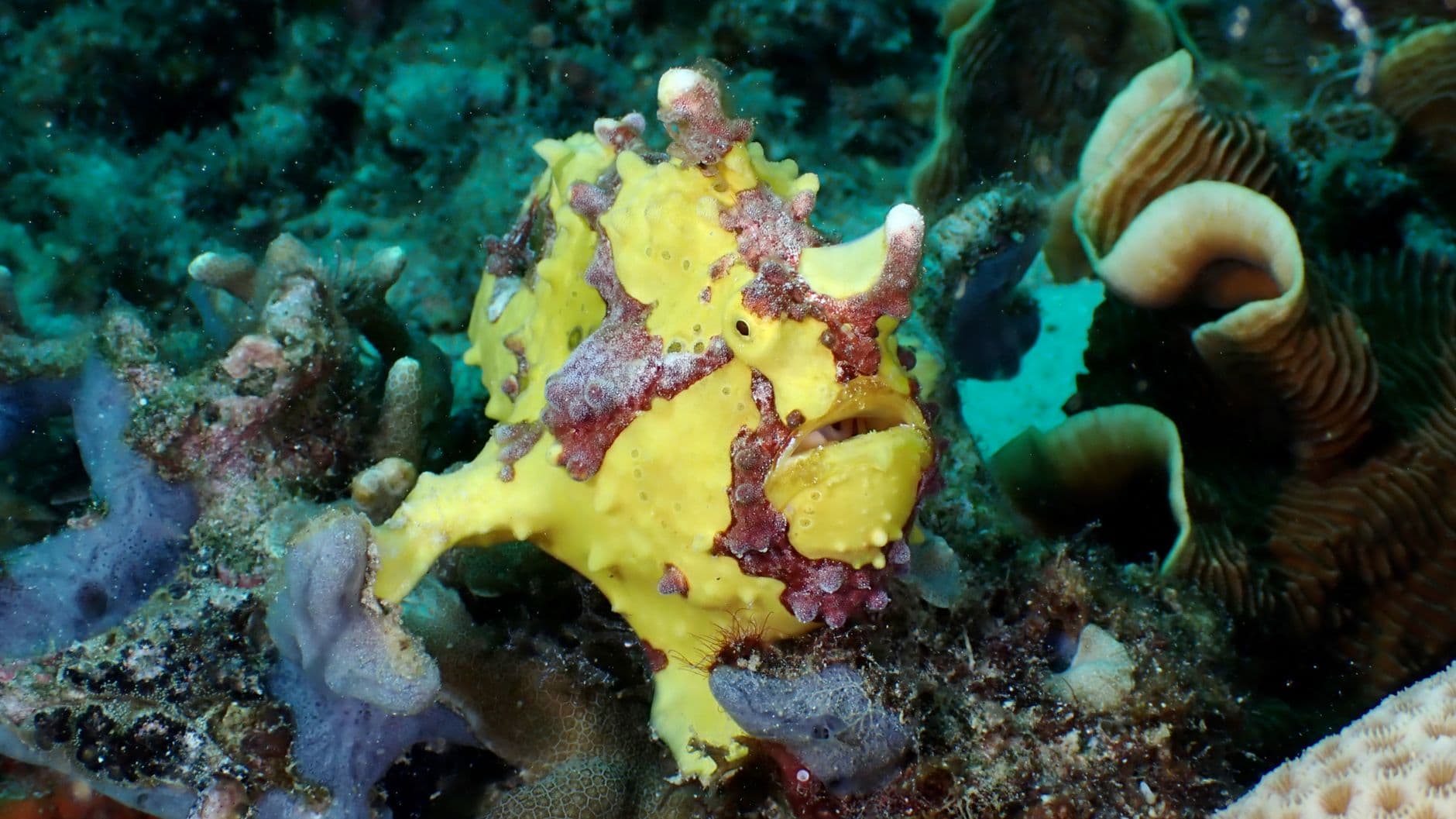
Photo: Chris Spain / Pexels
At 1,000 meters (3,280 feet) below the ocean surface, hydrostatic pressure reaches roughly 100 times what it is at sea level, sunlight has effectively disappeared, water temperature hovers near 4 degrees Celsius (39 degrees Fahrenheit), and a meal might not arrive for weeks. The anglerfish's glowing lure, the barreleye's transparent skull, and the gulper eel's cavernous jaw are not random oddities. Each is a documented evolutionary answer to one of those four constraints, and marine biologists studying the deep ocean with remotely operated vehicles have spent decades cataloguing exactly how.
How much of the ocean is actually "deep sea," and where does darkness begin
Oceanographers divide the water column into light-defined zones, and the boundaries matter more than they sound. The epipelagic zone (also called the photic or euphotic zone) runs from the surface to about 200 meters (656 feet), the depth to which enough sunlight penetrates to support photosynthesis, according to the National Oceanic and Atmospheric Administration's ocean exploration program (NOAA Ocean Exploration, 2024).
Below that sits the mesopelagic zone, often nicknamed the twilight zone, extending from roughly 200 to 1,000 meters (656 to 3,280 feet). This is officially defined as the depth range between the point where only 1 percent of surface sunlight remains and the point where no light penetrates at all (NOAA Ocean Exploration, 2024). Past 1,000 meters lies the aphotic zone, true and permanent darkness that covers more than 90 percent of the ocean's volume, since the average ocean depth worldwide is about 3,700 meters (12,100 feet).
Sunlight does not fade evenly across all colors as it travels downward. Seawater absorbs longer wavelengths, reds and oranges, within the first 10 meters (33 feet), while shorter blue wavelengths penetrate the farthest, which is why the open ocean looks deep blue from above (NOAA Ocean Service, 2024). By the time light reaches 200 meters, it is a narrow band of dim blue-green, and by 1,000 meters, it is functionally gone. That single fact, that red light disappears first and fastest, explains an enormous share of deep-sea fish coloration, which we cover in detail further down.
This zonation is not academic trivia. It is the reason a fish caught at 300 meters and a fish caught at 3,000 meters can look almost nothing alike despite being separated by only a few kilometers of water: they are living under completely different lighting, pressure, and food-supply regimes, and their bodies show it.
Pressure does not just squeeze deep-sea fish, it rewrites their chemistry
The most common misconception about deep-sea animals is that pressure "crushes" them, and that resisting it is mainly a structural problem, like building a stronger submarine hull. It is not. Water itself is nearly incompressible, so a fish's watery tissues are not being squeezed the way an air-filled space would be. The real danger of hydrostatic pressure is biochemical: pressure distorts the shape of proteins and disrupts the fluidity of cell membranes at the molecular level, and if those two things fail, so does the cell.
Hydrostatic pressure — the force water exerts on everything within it, which increases by about one atmosphere (roughly 14.7 pounds per square inch) for every 10 meters (33 feet) of depth. At 4,000 meters (13,120 feet), a fish experiences about 400 times the pressure felt at the surface.
Cell membranes are built from a double layer of fatty molecules called lipids, and under high pressure those lipid tails pack together more tightly, making the membrane stiffer and less able to let proteins move through it, a state that would eventually stop a cell from functioning. Deep-sea fish counteract this by loading their membranes with a higher proportion of unsaturated fatty acids, which have kinks in their molecular structure that keep the membrane looser and more fluid even under extreme pressure. Biochemists call this process homeoviscous adaptation, and research comparing shallow and deep-sea species has repeatedly found that the ratio of unsaturated to saturated fatty acids in fish membranes rises measurably with the depth a species inhabits (published in comparative biochemistry research summarized by ScienceDirect's homeoviscous adaptation literature, and originally demonstrated in deep-sea fish liver mitochondria studies from the 1980s).
Deep-sea fish also accumulate unusually high concentrations of a small molecule called trimethylamine N-oxide, or TMAO, inside their cells. TMAO is a piezolyte, a compound that specifically counteracts the pressure-induced distortion of proteins by helping water molecules maintain their normal structure around them. Biologist Paul Yancey's research tracking TMAO across depth gradients found that concentrations rise in an almost straight line with depth, from around 40 millimoles per kilogram near the surface to more than 250 millimoles per kilogram in fish living below 4,800 meters (15,748 feet) (Yancey et al., published in comparative physiology research reviewed by the National Center for Biotechnology Information). TMAO is also, incidentally, the compound responsible for the distinctly "fishy" smell of deep-sea and marine fish, since it breaks down into trimethylamine after death.
Why don't deep-sea fish need thick, rigid skeletons to survive the pressure?
Because water pressure acts equally on the inside and outside of a fish's body, so there is no pressure differential to resist structurally the way a submarine hull must resist an empty interior. The real threats are at the cellular and molecular level, which is why deep-sea fish typically have soft, cartilaginous, or reduced skeletons and flabby, low-muscle-density bodies rather than reinforced ones.
The swim bladder problem: why depth forces a trade-off between buoyancy and biology
Most shallow-water bony fish stay neutrally buoyant using a swim bladder, an internal gas-filled sac they inflate or deflate to control depth. That system works fine near the surface, but gas is highly compressible, and at extreme depth, maintaining a gas-filled bladder against enormous external pressure would require the fish to secrete gas against a pressure gradient hundreds of times steeper than what a surface fish deals with, which is metabolically expensive and, at sufficient depth, essentially unworkable.
Many deep-sea species solve this by abandoning gas-based buoyancy altogether. Numerous deep-sea fish either lack a swim bladder entirely or fill it with fatty, oil-based tissue instead of gas. Lipids are far less compressible than gas and provide buoyancy at a fraction of the metabolic cost required to maintain a gas bladder at depth. Species like orange roughy and many deep-sea sharks rely on oil-rich livers for buoyancy rather than a swim bladder at all, a strategy well documented in deep-sea fisheries and physiology research.
| Depth zone | Approximate range | Light condition | Pressure (relative to surface) | Typical buoyancy strategy |
|---|---|---|---|---|
| Epipelagic (sunlit) | 0–200 m (0–656 ft) | Full sunlight | 1–20 atm | Gas-filled swim bladder |
| Mesopelagic (twilight) | 200–1,000 m (656–3,280 ft) | Faint blue light only | 20–100 atm | Gas or reduced/fat-filled bladder |
| Bathypelagic (midnight) | 1,000–4,000 m (3,280–13,120 ft) | None | 100–400 atm | Fat/oil-filled bladder or none |
| Abyssopelagic | 4,000–6,000 m (13,120–19,685 ft) | None | 400–600 atm | Watery, low-density tissue |
Buoyancy strategy shifts from gas to fat to simply reduced tissue density as depth increases, tracking the rising metabolic cost of maintaining a gas-filled structure under pressure.
Bodies also tend to become softer and more gelatinous with depth, since watery, low-density flesh survives the biochemical stress of pressure better than dense, heavily muscled tissue built for the sustained swimming shallow fish need to chase prey or escape predators. A useful comparison: a firm, air-filled balloon deforms and eventually fails under mounting external squeeze, while a water balloon simply transmits the pressure through without structural damage, because it contains almost no compressible gas to begin with. Deep-sea fish bodies behave much more like the second case.
Bioluminescence: how deep-sea animals build their own light in absolute darkness
Bioluminescence — the biochemical production of light by a living organism, typically through a reaction between a light-emitting molecule called luciferin and an enzyme called luciferase. In the aphotic zone, where no sunlight reaches, self-generated light becomes the primary way animals see, hunt, hide, and communicate.
Research from the Monterey Bay Aquarium Research Institute (MBARI), using video collected from thousands of hours of remotely operated vehicle dives in Monterey Canyon, found that roughly three-quarters of the animals observed between the surface and 4,000 meters (13,120 feet) depth are capable of producing their own light (MBARI, 2020 study on the distribution of bioluminescence as an ecological trait in the deep-sea water column). That figure comes from direct visual survey data across thousands of ROV dive hours, not estimation from a handful of specimens.
The anglerfish is the best-known example. Its glowing lure, called an esca, sits at the tip of a modified dorsal fin ray called an illicium, essentially a fishing pole growing out of its head. MBARI researchers filming deep-sea anglerfish species, including the black seadevil (Melanocetus johnsonii) at roughly 580 meters (1,900 feet) and the dreamer anglerfish (Oneirodes sp.) at roughly 781 meters (2,562 feet) in Monterey Canyon, have documented the esca glowing to attract curious prey close enough for the anglerfish's oversized jaws to snap shut around it (MBARI, 2014 and MBARI dreamer anglerfish observations). In many anglerfish species, the light in the esca is not produced by the fish's own cells at all, but by colonies of bioluminescent bacteria that the fish cultivates symbiotically, effectively farming its own headlamp.
Light is used for more than luring prey. Counterillumination is a defensive strategy in which an animal produces light on its underside that matches the faint blue glow filtering down from far above, erasing its silhouette from the perspective of a predator looking upward, a strategy documented extensively across mesopelagic fish and squid species. Some deep-sea shrimp and squid instead use bioluminescence offensively or defensively, releasing sudden bright flashes or luminous "ink" clouds to startle or blind a predator during an escape.
Do all deep-sea fish glow, or is bioluminescence limited to a few species?
No. While MBARI's survey work found bioluminescence in roughly three-quarters of animals observed across the water column down to 4,000 meters, that still leaves a substantial share of deep-sea species, including some ambush predators that rely purely on stealth, camouflage coloration, and sensitive lateral-line pressure detection instead of self-generated light.
Why deep-sea fish have such enormous jaws and stomachs for their body size
Food is scarce and unpredictable at depth. There is no photosynthesis below the epipelagic zone, so nearly all deep-sea energy ultimately arrives as "marine snow," organic detritus sinking from the surface, or as the occasional larger carcass falling from above. Prey encounters can be rare enough that a fish may not get another feeding opportunity for a long stretch of time, so natural selection has favored anatomy built to seize almost anything it meets, regardless of relative size, rather than anatomy specialized for a narrow prey type.
The black swallower (Chiasmodon niger) is the extreme case. It can unhinge its jaw and stretch its highly elastic, expandable stomach to consume prey larger than its own body, occasionally so large that the swallowed fish's decomposition gases cause the swallower to float to the surface. The fangtooth (Anoplogaster cornuta) carries teeth so oversized relative to its skull that it has evolved specialized sockets on either side of its brain simply to allow its jaw to close without the teeth puncturing its own head, a structural detail confirmed in deep-sea fish morphology studies. The gulper eel (Eurypharynx pelecanoides) takes a different approach, replacing a rigid jaw with a hugely distensible mouth that can engulf prey far wider than its own narrow body, functioning something like a pelican's throat pouch adapted for open water rather than shorelines.
| Adaptation | Physical problem it solves | Example species |
|---|---|---|
| Reduced or fat-filled swim bladder | Gas-based buoyancy fails at extreme pressure | Orange roughy, many anglerfish |
| Bioluminescent esca lure | No sunlight to locate prey visually | Deep-sea anglerfish, family Ceratiidae |
| Hinged, oversized jaw + elastic stomach | Food is scarce and unpredictable | Black swallower, gulper eel |
| Fang sockets flanking the skull | Oversized teeth would otherwise pierce the brain | Fangtooth (Anoplogaster cornuta) |
| Transparent, upward-facing eyes | Maximizing sensitivity to faint downwelling light | Barreleye fish (Macropinna microstoma) |
| Elevated TMAO + unsaturated membrane lipids | Pressure distorts protein and membrane structure | Most bathypelagic and abyssal fish |
Each adaptation traces back to one of four measurable environmental pressures: crushing hydrostatic force, absent light, near-freezing cold, or unpredictable food supply.
Why sight, color, and even sexual reproduction get radically rewritten below the sunlit zone
Because red wavelengths are filtered out of seawater within the first several meters of depth, red pigmentation functions as effective camouflage below the photic zone: a red fish under blue-only ambient light reflects essentially no light back and appears black to predators and prey alike. That is why most bathypelagic and abyssal fish are red, black, or silvery rather than displaying the vivid colors common in shallow reef fish, where full-spectrum sunlight makes color a useful signal.
Eyes follow a similarly logical, if less intuitive, pattern. Since there is no sunlight to see by past roughly 1,000 meters, some deep-sea species have reduced or vestigial eyes and rely instead on other senses, particularly a pressure-sensitive lateral line that detects the movement of nearby animals through subtle water displacement. Other species go the opposite direction, evolving unusually large, light-sensitive eyes tuned to detect the faint bioluminescent flashes produced by prey, predators, or potential mates rather than sunlight. The barreleye fish (Macropinna microstoma), documented by MBARI researchers off the coast of California, carries tubular eyes housed inside a transparent, fluid-filled dome on top of its head, oriented to look straight upward and detect the faint silhouettes of prey against the residual glow from far above, while the fish's actual forward-facing "eyes" that early researchers misidentified are in fact olfactory organs.
Reproduction faces its own version of the scarcity problem: at extreme depth and low population density, finding a mate at all can be the harder survival challenge, not competing for one. Certain deep-sea anglerfish genera have evolved an extraordinary solution called sexual parasitism. A tiny, free-swimming male locates a much larger female using scent, bites onto her body, and gradually fuses permanently with her tissue, developing a shared blood supply and becoming entirely dependent on her for nutrients, essentially becoming a permanent, living sperm reservoir. Researchers from the Max Planck Institute of Immunobiology and Epigenetics and the University of Washington, publishing in the journal Science in 2020, identified the genetic mechanism that makes this possible: these anglerfish species have lost or altered core components of the adaptive immune system that would normally cause a female's body to reject fused foreign tissue, the same rejection response that complicates human organ transplantation (Swift et al., Science, 2020).
Why doesn't the female anglerfish's immune system reject the fused male as foreign tissue?
Because certain deep-sea anglerfish lineages evolved a stripped-down or altered adaptive immune system that lacks the components responsible for recognizing and attacking genetically distinct tissue, a 2020 Science study found. That immune trade-off, which would be dangerous in most vertebrates, is precisely what allows permanent tissue fusion and a shared blood supply between two individuals of the same species.
Why deep-sea fish adaptations matter beyond curiosity
Deep-sea fish demonstrate, with unusual clarity, how strongly a physical environment can shape body form independent of competition between species. Every trait that reads as alien from a surface-dweller's perspective, gelatinous tissue, self-generated light, fused mating pairs, an oversized elastic stomach, maps to a specific, measurable environmental constraint: crushing pressure, total darkness, near-freezing cold, and unpredictable food scarcity. Researchers studying these adaptations are not just cataloguing oddities. TMAO's protein-stabilizing properties are actively studied in biochemistry and cryopreservation research for their potential to protect proteins under stress conditions unrelated to the deep ocean, and the immune mechanisms behind anglerfish tissue fusion offer a naturally evolved model for studying transplant rejection.
It is also worth being direct about the limits of what is known. The deep ocean remains the least explored environment on Earth, and estimates of how many deep-sea species remain undiscovered vary widely across the scientific literature, so any claim about "typical" deep-sea fish anatomy should be read as a description of the best-documented species, filmed and sampled by institutions like MBARI and NOAA, rather than an exhaustive account of everything living below 1,000 meters.
The takeaway
Deep-sea fish do not look strange arbitrarily. Crushing hydrostatic pressure favors watery, fat-buoyed bodies and cell membranes rebuilt with unsaturated lipids and pressure-stabilizing TMAO over rigid, gas-filled, densely muscled ones. Total darkness favors self-generated light, red-black camouflage coloration, and either oversized light-detecting eyes or their near-total abandonment in favor of pressure-sensing lateral lines. Unpredictable food scarcity favors jaws and stomachs built to seize and hold almost anything edible that appears, and in the case of certain anglerfish, it has even reshaped how two individuals find each other and reproduce at all. Reading a deep-sea fish's anatomy is, in a very literal sense, reading a documented record of the specific physical pressures its environment imposes.
Read next:
FAQ
Q: Why do so many deep-sea fish produce their own light?
With no sunlight below roughly 1,000 meters, bioluminescence lets deep-sea animals attract prey, like the anglerfish's glowing esca lure, communicate, or erase their silhouette from predators looking upward through a strategy called counterillumination. MBARI's video survey research found that roughly three-quarters of animals observed between the surface and 4,000 meters produce their own light.
Q: How do deep-sea fish survive crushing water pressure?
Deep-sea fish counter pressure biochemically rather than structurally, since water pressure acts equally inside and outside the body. They load cell membranes with unsaturated fatty acids that resist pressure-induced stiffening and accumulate the piezolyte TMAO, which stabilizes proteins against pressure-driven distortion, with TMAO concentrations rising nearly linearly with depth in documented research.
Q: Why do deep-sea fish have such large mouths compared to their body size?
Because food is scarce and encounters with prey are unpredictable at depth, an oversized, hinged jaw and an elastic, expandable stomach let a fish capture and hold onto almost any prey it meets, regardless of size, maximizing the chance of a meal it may not get another opportunity for over a long stretch of time.
Q: Why are most deep-sea fish red, black, or silver instead of colorful?
Red wavelengths of light are absorbed by seawater within the first several meters of depth, so red or black coloring functions as effective camouflage below the sunlit zone, where blue-only ambient light makes red pigment appear black and reflect essentially no visible light back to a predator or prey.
Q: Do deep-sea fish need eyes if there is no sunlight?
Many species retain large, highly sensitive eyes tuned to detect faint bioluminescent flashes from prey, predators, or potential mates rather than sunlight, like the upward-facing barreleye fish, while other species living in the darkest zones have reduced eyes and rely more on pressure-sensing lateral lines instead.
Q: How do male and female anglerfish find each other in the vast, dark deep ocean?
Some deep-sea anglerfish species have evolved sexual parasitism, where a tiny male locates a much larger female by scent, bites onto her body, and permanently fuses with her tissue and blood supply. A 2020 study in the journal Science found this is possible because these species evolved an altered adaptive immune system that does not reject the fused male's tissue as foreign.
Follow new articles
Add SciHub101 to your feed reader to see new science and technology stories.
About the Author
SciHub101 is an independent science and technology publication founded and edited by Buğra Sözeri, a software engineer and app developer based in Türkiye. AI tools assist with drafting and research. Source documentation in the existing archive is uneven, and articles are being reviewed and corrected. The Editorial Team byline identifies editorial responsibility; it does not certify specialist or independent human review. Where we compare products, anything built by our own team is labelled as such — see the editorial guidelines and About page for how corrections and disclosures work.
Related Articles
Deep-Sea Creatures and Bioluminescence: Life in the Dark Ocean
Below 200 meters, there is no sunlight — yet roughly 76% of deep-sea animals produce their own light. The deep ocean is full of living lanterns.
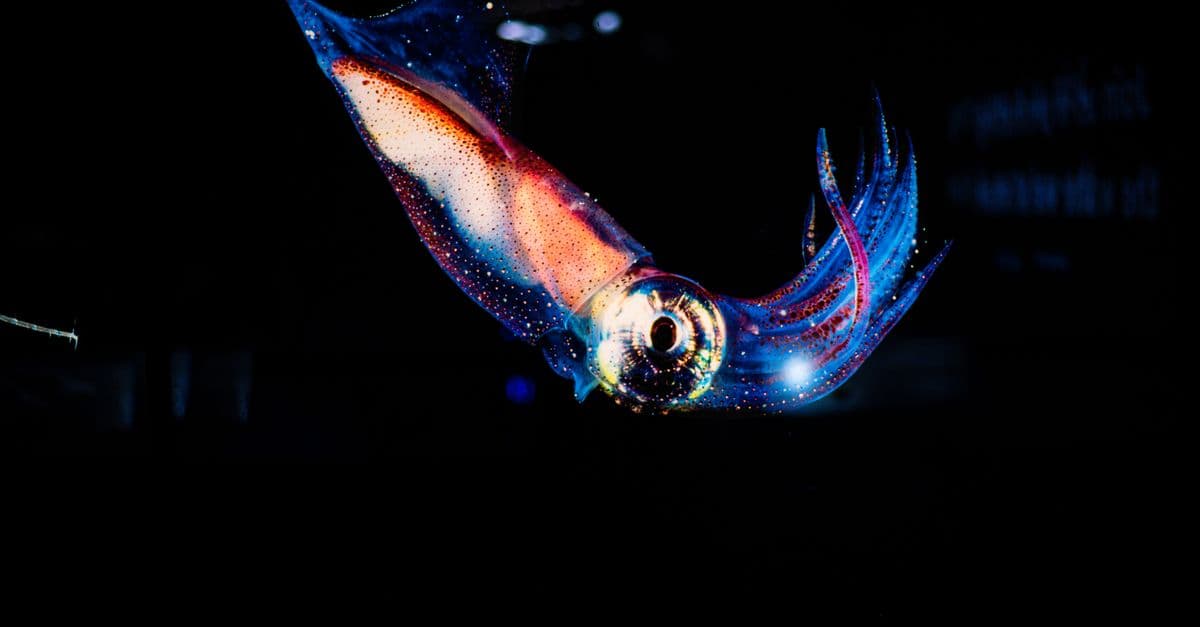
How Bioluminescence Works in Animals: The Chemistry of Living Light
More than 76% of deep-sea animals produce their own light. Fireflies flash in coordinated sequences. A jellyfish discovered off the coast of Friday Harbor, Washington, gave biologists a tool that transformed cell biology, earned three scientists a Nobel Prize, and now glows inside cancer cells in laboratories around the world. Bioluminescence — light produced by a living organism — is one of evolution's most useful accidents, and its chemistry is surprisingly simple.
The Deepest Sea Creatures Explained: Life at the Bottom of the Ocean
At 8,000 meters below the Pacific surface, pressure exceeds 800 atmospheres — enough to crush a submarine hull — and no sunlight has penetrated for geological eons. Yet animals live there, and not just survive: they thrive in communities as dense and diverse as any shallow reef. The hadal zone is where life tests what it can endure, and the answers have rewritten basic biology.
Deep Ocean Mysteries: What We Still Don't Know About Earth's Last Frontier
More than 80 percent of the ocean floor remains unmapped at high resolution. Below 6,000 meters lies the hadal zone — a world of crushing pressure, strange chemistry, and organisms that have never seen sunlight. Hydrothermal vents support entire ecosystems without photosynthesis. Bioluminescent creatures illuminate the midnight zone with cold blue fire. Scientists estimate we have catalogued fewer species from the deep sea than from the surface of Mars. The abyss is not empty. It is full of answers to questions we have barely learned to ask.