Deep-Sea Creatures and Bioluminescence: Life in the Dark Ocean
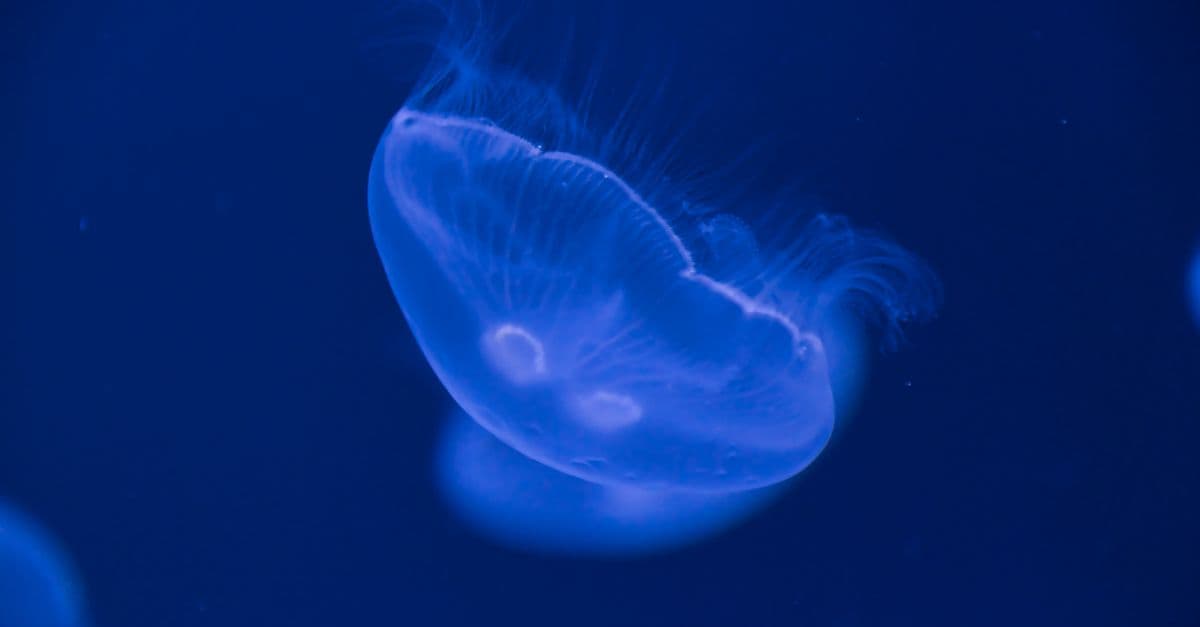
Photo: Alejandro Orozco / Pexels
Sunlight penetrates seawater to about 200 meters (656 feet). Below that — and the ocean averages roughly 3,800 meters (12,500 feet) deep — is a world of permanent darkness, crushing pressure, and near-freezing temperatures. It is the largest habitat on Earth by volume, and it is not actually dark. Researchers at the Monterey Bay Aquarium Research Institute (MBARI) tallied over 350,000 individual animals filmed on 240 remotely operated vehicle dives and found that roughly three out of four — about 76% — made their own light. In the deep sea, glowing is not the exception. It is the default.
Educational content, not medical advice. This article covers marine biology and biochemistry for general interest. It is not medical, health, or treatment guidance.
Key takeaways
- Bioluminescence has evolved independently at least 40 separate times across the tree of life, one of the most repeated "inventions" in evolutionary history.
- The 76% figure comes from a 2019/2020 quantitative video-census study by MBARI scientists Séverine Martini and Steven Haddock, the first study to actually count glowing versus non-glowing animals rather than estimate from memory.
- The core chemistry — a light-emitting molecule (luciferin) oxidized by an enzyme (luciferase) — is shared in concept but the actual molecules differ wildly between unrelated lineages.
- Deep-sea animals use light to hide (counterillumination), to hunt (lures), to communicate (species-specific flash codes), and to call for backup against predators (the "burglar alarm" defense).
- The same chemistry that lights up an anglerfish's lure now runs some of the most widely used tools in cancer research and drug development, via luciferase reporter genes and GFP.
What "bioluminescence" actually means
Bioluminescence is light generated by a living organism through an internal chemical reaction, not light that is reflected, absorbed, or re-emitted after being pumped in from outside (that second category is fluorescence, a different phenomenon that some deep-sea animals also use). The chemistry is strikingly efficient. Essentially all of the energy released by the reaction becomes visible light rather than heat, versus about 10% for an old incandescent bulb, which wastes most of its energy as heat you can feel on your hand.
The reaction needs two core ingredients: luciferin, a small molecule that gives off a photon when it is oxidized, and luciferase, an enzyme that speeds up and controls that oxidation. Add oxygen, and the luciferin briefly jumps to an "excited" higher-energy state before dropping back down and releasing the extra energy as a photon of visible light. That is the whole mechanism in outline. What makes bioluminescence so evolutionarily interesting is that dozens of unrelated groups of organisms — bacteria, dinoflagellates, jellyfish, squid, fish, insects, fungi — arrived at some version of this trick independently, using chemically unrelated luciferins each time. Firefly luciferin has nothing in common structurally with the coelenterazine used by most marine animals or the luciferin used by glowing fungi. It is convergent evolution repeated at least 40 times, according to a widely cited tally by bioluminescence researchers, making it one of biology's most reused inventions. Fireflies on land use a luciferin and luciferase reaction too, as explained in how fireflies glow.
Why deep-sea light is almost always blue
In most marine bioluminescent animals, the light produced sits in a narrow band around 440–490 nanometers, which the human eye reads as blue. That is not a coincidence of chemistry so much as a consequence of physics. Seawater absorbs red, orange, and yellow wavelengths within the first few tens of meters; blue light travels farthest before scattering and disappearing. Evolution tuned both the transmitters and the receivers to the wavelength the medium actually lets through, the same logic that makes red traffic lights visible at a distance through fog while blue headlights scatter and glare. Deep-sea eyes are typically most sensitive in that same blue window, and most photophores (light-producing organs) are built to emit squarely inside it.
That shared tuning is exactly what makes the exceptions so useful. The stoplight loosejaw dragonfish (Malacosteus niger) produces red bioluminescence from a light organ beneath its eye, a wavelength almost nothing else in the deep sea can detect, because almost nothing else there has red-sensitive photoreceptors. The dragonfish effectively hunts with a sniper scope invisible to its prey. It also carries a rare chlorophyll-derived pigment that lets its own eyes perceive that red light, a biochemical workaround borrowed, evolutionarily speaking, from photosynthetic organisms.
How efficient is bioluminescent light compared to a light bulb?
Bioluminescence converts close to 100% of the reaction's chemical energy into visible light, with almost no heat wasted. A standard incandescent bulb converts around 10% of its electrical energy into visible light and loses the rest as heat, which is why old bulbs get hot to the touch and living light never does.
Counterillumination: disappearing by glowing
In the mesopelagic zone, roughly 200 to 1,000 meters (656 to 3,281 feet) down, there is still a faint wash of downwelling sunlight filtering from above, even though it is far too dim for humans to see by. Anything swimming in that zone casts a silhouette when a predator looks up from below, the same way a fish in a lit aquarium is easy to spot from underneath. The countermeasure many mesopelagic species evolved is counterillumination: photophores on the belly that generate light matched, in real time, to the intensity and color of the downwelling glow above, erasing the silhouette.
Firefly squid (Watasenia scintillans), hatchetfish, and a long list of other mesopelagic animals carry ventral photophores under direct neural control, so they can brighten or dim within fractions of a second as ambient light shifts with depth, cloud cover, or moon phase. Firefly squid go further still: they carry three distinct photoreceptor types, an unusually elaborate visual system for an invertebrate, specifically to measure the color and intensity of the light above them precisely enough to match it. This is not the classic image of camouflage as staying hidden in shadow. It is active camouflage that requires producing light on purpose, calibrated moment to moment against a light source the animal cannot control.
The anglerfish lure: borrowed light, not homemade
The single most recognizable image of deep-sea bioluminescence is the anglerfish's esca, the glowing lure dangled just in front of its jaws. Counterintuitively, that light usually is not made by the anglerfish's own tissue at all. It comes from colonies of bioluminescent bacteria, commonly in the genus Photobacterium or related lineages, that live inside the esca in an obligate mutualism: the bacteria cannot survive or reproduce successfully outside that organ, and the fish cannot produce that light without them.
The anglerfish supplies nutrients and a sheltered, oxygenated housing; the bacteria supply constant light. The fish still controls how the light is used, adjusting blood flow to the esca and using shutter-like tissue to modulate brightness or flash pattern, essentially operating a dimmer switch on a bulb it did not manufacture. This kind of symbiotic bioluminescence, bacteria doing the actual light chemistry inside a host's dedicated organ, turns out to be more common across marine animals than light produced entirely by the animal's own cells. Flashlight fish (family Anomalopidae) and ponyfish both carry light organs packed with luminous bacteria, and several species can open and close a shutter over the organ to blink out flash patterns used for schooling cohesion or species-specific mate recognition, not unlike Morse code with a biological flashlight.
Bioluminescence as a burglar alarm
Not every glow signals for the glower's benefit in an obvious way. Deep-sea researcher Edith Widder, formerly of Harbor Branch Oceanographic Institution, proposed and tested what she called the "burglar alarm" hypothesis: many small invertebrates flash brightly when seized or disturbed not to scare off their immediate attacker directly, but to attract a larger, secondary predator to the scene. If a shrimp is grabbed by a small fish and lights up violently, the flash can draw a bigger predator that attacks the fish, giving the shrimp a chance to escape in the confusion. Widder tested the idea with deep-sea camera rigs equipped with artificial bioluminescent lures and recorded which animals the lures attracted, finding results consistent with large predators being drawn in by exactly this kind of flash. It is, functionally, a scream for help translated into photons — or a warning that says attacking this animal comes with a cost.
A field guide to the deep sea's light producers
| Organism | Where it lives | Light mechanism | Primary use |
|---|---|---|---|
| Anglerfish (Ceratioidei) | Bathypelagic, 300–5,000 m | Symbiotic bacteria in the esca | Luring prey |
| Firefly squid (Watasenia scintillans) | Mesopelagic, Sea of Japan | Own photophores, neurally controlled | Counterillumination, mating displays |
| Lanternfish (Myctophidae) | Mesopelagic; largest daily vertical migration on Earth | Ventral photophores in species-specific patterns | Counterillumination, species/mate recognition |
| Vampire squid (Vampyroteuthis infernalis) | Oxygen minimum zone, ~600–900 m | Photophores plus ejected glowing mucus | Predator confusion, defense |
| Ostracods / "sea fireflies" (Vargula, Cypridina) | Shallow to deep, worldwide | Secreted luciferin-luciferase mixed outside the body | Defense; courtship flash trains in Caribbean species |
| Comb jellies (Ctenophora) | Surface to deep sea | Photocytes along comb rows | Defense, possibly deters predators |
| Dinoflagellates (Noctiluca scintillans) | Surface waters, coastal | Luciferin-luciferase in organelles called scintillons | Startle response to wave/mechanical disturbance |
Table: Representative bioluminescent organisms across ocean depths and their primary use of light. Depth ranges and behaviors are approximate and vary by population and season.
Lanternfish: the ocean's biggest light show by biomass
If any single family embodies how normal bioluminescence is in the deep sea, it is the lanternfish (family Myctophidae). With around 252 recognized species, lanternfish are estimated to make up roughly 65% of all deep-sea fish biomass, and they carry out what is thought to be the largest synchronized biomass movement on the planet: a daily vertical migration from depths of hundreds of meters up toward the surface at night to feed, then back down before dawn to avoid daylight predators. Each species carries its own arrangement of ventral photophores, effectively a light-based barcode used to recognize others of the same species in total darkness, the marine equivalent of a uniform pattern that lets shoaling fish find their own kind without ever seeing a face.
That nightly migration is not just a biological curiosity. Because lanternfish and other vertically migrating animals feed near the surface and then carry that carbon down with them when they descend, their movement is considered a meaningful contributor to the ocean's biological carbon pump, the process that moves carbon from the atmosphere-exposed surface layer into the deep ocean, where it can stay locked away for centuries.
Sea fireflies and the "spit-and-glow" flashlight
Not every bioluminescent organism lives at crushing depths. Ostracods in the genus Vargula (formerly grouped with Cypridina), nicknamed sea fireflies, are tiny crustaceans a few millimeters long that secrete a mix of luciferin and luciferase directly into the water when disturbed, producing an external glowing cloud rather than light from inside their own tissue. During World War II, Japanese soldiers reportedly crushed dried sea fireflies and moistened them with saliva to create dim emergency light for reading maps at night, light faint enough not to give away a position but bright enough to read by, a low-tech application of exactly the same chemistry that lights up an anglerfish's lure a kilometer down. In Caribbean species of the same broad group, males release short, precisely timed pulses of light while swimming in patterns, forming synchronized "trains" of flashes that females use to identify potential mates of the correct species, a courtship display built entirely out of chemistry and timing rather than color or sound.
Comb jellies, red tides, and light you can see from a beach
Bioluminescence is not confined to the deep sea; some of the most visible displays happen in the surface waters most people can actually visit. Noctiluca scintillans, a single-celled dinoflagellate responsible for many of the world's "red tide" blooms, glows in flashes triggered mechanically, by the disturbance of a breaking wave, a boat's wake, or a swimmer's hand moving through the water, rather than glowing continuously. The flash comes from luciferin-luciferase chemistry housed in specialized organelles called scintillons, and it is gated by pH shifts inside the cell that follow the organism's own internal daily rhythm, so the same wave disturbance produces a brighter flash at night than during the day. Comb jellies (phylum Ctenophora), which are common from the surface down into the deep sea, generate light along the rows of cilia they use to swim, producing rippling blue-green light shows that are thought to startle or distract would-be predators, in addition to the shimmering rainbow effect their cilia create in daylight through simple light diffraction, a separate, non-bioluminescent optical trick that is often mistaken for the glow itself.
Can you see bioluminescence from the shore without special equipment?
Yes. Dinoflagellate blooms such as Noctiluca scintillans regularly produce visible blue sparkles in breaking waves, boat wakes, and disturbed sand at night in coastal areas worldwide, most reliably during warm months when bloom populations are dense. No equipment beyond dark-adapted eyes and a moonless night is needed to see it.
The vampire squid's glowing decoy
The vampire squid (Vampyroteuthis infernalis), which despite its name is neither a true squid nor a vampire, lives in the oxygen minimum zone roughly 600 to 900 meters (2,000 to 3,000 feet) down and has no ink sac, the defense most cephalopods rely on. In its place, it can eject a sticky cloud of bioluminescent mucus from the tips of its arms when threatened, a glowing decoy that lingers in the water and disorients a predator while the animal itself, whose body carries no light organs of its own, retreats into the darkness under cover of the light it just released. Its body is otherwise studded with photophores it can use for counterillumination, brightening or dimming to blend with the faint light above, so the same animal effectively uses two entirely different bioluminescent strategies for two different threats: subtle blending when it wants to be invisible, and a sudden glowing decoy when it needs to actively escape.
From ocean floor to lab bench: bioluminescence in medicine
The chemistry evolution built to survive in total darkness has become one of the standard toolkits of modern biology. Luciferase genes, originally studied from fireflies and later from marine organisms, are routinely spliced into cells as "reporter genes": when a gene of interest is switched on inside a cell, the attached luciferase lights up, letting researchers watch gene activity in real time rather than inferring it indirectly. Green fluorescent protein (GFP), first isolated from the jellyfish Aequorea victoria by Osamu Shimomura in the early 1960s at the University of Washington's Friday Harbor Laboratories, is a related but technically distinct tool: it does not generate its own light through a chemical reaction the way true bioluminescence does, but glows when illuminated with the right wavelength of light, a phenomenon called fluorescence. Shimomura shared the 2008 Nobel Prize in Chemistry with Martin Chalfie and Roger Y. Tsien for turning GFP into one of the most widely used tags in cell biology, letting scientists watch, for the first time, processes like nerve cell growth or the spread of cancer cells inside living tissue as they actually happened, rather than reconstructing them after the fact from fixed, dead samples.
What people get wrong about deep-sea bioluminescence
A common misconception is that all deep-sea light comes from the same basic chemical system, just installed in different animals, the way every car uses roughly the same kind of headlight bulb. In fact, the luciferin molecules used by fireflies, dinoflagellates, ostracods, and most marine animals (which mostly rely on a compound called coelenterazine) are chemically unrelated to one another. What looks like one trick is really dozens of independently evolved tricks that happen to converge on the same basic idea: oxidize a molecule, release a photon.
A second misconception is that bioluminescence and phosphorescence are the same thing. Phosphorescent materials, like a glow-in-the-dark toy, absorb light energy and slowly re-release it over minutes or hours after the light source is removed. Bioluminescence is an active, ongoing chemical reaction that requires no external light input at all and can be turned on and off by the organism, sometimes in a fraction of a second, the way a firefly squid brightens or dims its counterillumination as a cloud passes overhead far above it. A third misconception, driven mostly by pop-science coverage of the anglerfish, is that most bioluminescent animals generate their own light chemically inside their own cells. As the anglerfish, flashlight fish, and ponyfish all demonstrate, a large share of marine bioluminescence is outsourced entirely to bacterial partners housed in dedicated organs, more like running a bioreactor than flipping a switch.
FAQ
Q: How many deep-sea species are actually bioluminescent? A: A quantitative 2019 video-census study by Séverine Martini and Steven Haddock at MBARI, based on 350,000+ individual animals recorded across 240 remotely operated vehicle dives in Monterey Canyon, found that roughly 76% of animals from the surface to 4,000 meters (13,100 feet) were bioluminescent, making it the dominant mode of biology in the deep ocean rather than a rare specialty.
Q: Can bioluminescence be seen from a beach without a submarine? A: Yes. Coastal dinoflagellates such as Noctiluca scintillans produce visible blue flashes when physically disturbed by waves, boat wakes, or hands moving through the water, especially on dark, moonless nights during warm-season bloom periods, and require no equipment to observe.
Q: Why do anglerfish females carry males attached to their bodies? A: In several deep-sea anglerfish species, a tiny free-swimming male locates a female using chemical cues in the near-total darkness, bites into her body, and their tissues and circulatory systems fuse. The male eventually loses his eyes and most internal organs except his testes, becoming a permanent, parasite-like reproductive attachment; a single female can carry more than one fused male at once.
Q: Is bioluminescence used in medicine or drug development? A: Extensively. Luciferase reporter-gene assays are standard tools for measuring when and how strongly specific genes activate inside living cells, and GFP, isolated from the jellyfish Aequorea victoria and developed into a lab tool by Nobel laureates Osamu Shimomura, Martin Chalfie, and Roger Tsien, is used across cancer research, neuroscience, and drug development to make cellular processes visible in real time.
Q: What is the difference between bioluminescence, fluorescence, and phosphorescence? A: Bioluminescence is light generated by an ongoing internal chemical reaction (luciferin oxidized by luciferase) and needs no external light source. Fluorescence, as in GFP, requires the organism to first absorb light of one wavelength and immediately re-emit it at another. Phosphorescence, as in a glow-in-the-dark toy, absorbs light and slowly re-releases it over minutes to hours after the source is removed.
Q: Why is almost all deep-sea bioluminescence blue? A: Seawater absorbs red, orange, and yellow light within the first few tens of meters, leaving blue wavelengths (roughly 440–490 nanometers) as the light that travels farthest. Evolution tuned both the light-producing organs and the eyes of deep-sea animals to that same window, since light emitted or seen outside it would scatter and vanish almost immediately.
Q: What is counterillumination and how does it work? A: Counterillumination is a camouflage strategy in which an animal produces light on its underside that matches the intensity and color of the faint downwelling sunlight above it, erasing the dark silhouette a predator looking upward would otherwise see. Species like firefly squid and hatchetfish adjust this glow continuously as ambient light shifts with depth, moon phase, and cloud cover.
Q: How many times has bioluminescence evolved independently? A: Researchers who study the trait's distribution across the tree of life estimate that bioluminescence has arisen independently at least 40 separate times, in unrelated groups including bacteria, dinoflagellates, jellyfish, squid, fish, insects, and fungi, each using its own chemically distinct luciferin, a striking example of convergent evolution.
Q: Do lanternfish matter beyond being fish that glow? A: Yes. Lanternfish (Myctophidae) make up an estimated 65% of deep-sea fish biomass and carry out what is considered the largest synchronized daily vertical migration of biomass on the planet, rising to the surface at night to feed and descending by day, a movement thought to meaningfully contribute to the ocean's biological carbon pump.
The takeaway
The deep sea's darkness turns out to be one of the least accurate stereotypes in biology. Once researchers actually counted glowing versus non-glowing animals instead of estimating from memory, light turned out to be the norm, not a rare adaptation reserved for a handful of famous anglerfish. What makes the story more interesting than "the ocean floor glows" is how many completely different chemical systems, evolved independently by unrelated organisms, converge on the same basic trick of light for the same handful of reasons: to hide, to hunt, to talk, and to call for help. And it did not stay in the ocean. The same chemistry that lets an anglerfish borrow bacterial light or a jellyfish glow green under UV now sits on lab benches worldwide, watching genes switch on inside living cells in real time.
Read next:
Follow new articles
Add SciHub101 to your feed reader to see new science and technology stories.
About the Author
SciHub101 is an independent science and technology publication founded and edited by Buğra Sözeri, a software engineer and app developer based in Türkiye. AI tools assist with drafting and research. Source documentation in the existing archive is uneven, and articles are being reviewed and corrected. The Editorial Team byline identifies editorial responsibility; it does not certify specialist or independent human review. Where we compare products, anything built by our own team is labelled as such — see the editorial guidelines and About page for how corrections and disclosures work.
Related Articles

How Language Works in the Brain
Language is the most complex thing the human brain does. Understanding how neurons transform thought into speech, and speech back into thought, reveals what makes us uniquely human.
The Aging Brain: How Cognition Changes as We Get Older
Your brain peaks at different ages for different skills, and some abilities actually improve with age. The neuroscience of brain aging is far more nuanced than the simple story of decline.
How Bioluminescence Works in Animals: The Chemistry of Living Light
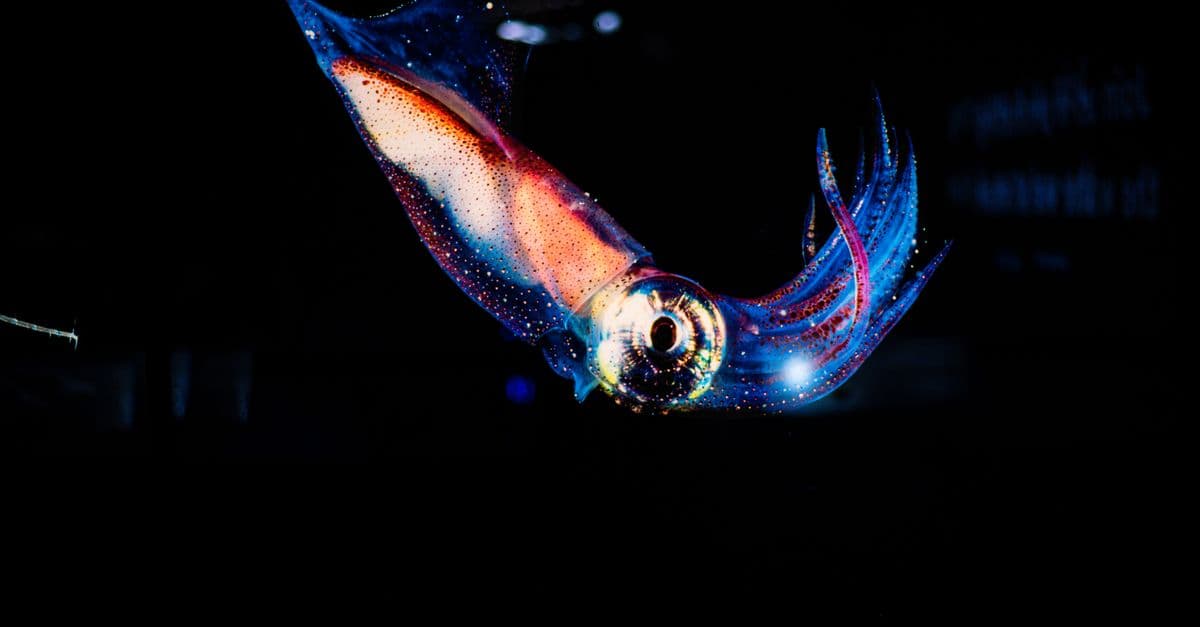
More than 76% of deep-sea animals produce their own light. Fireflies flash in coordinated sequences. A jellyfish discovered off the coast of Friday Harbor, Washington, gave biologists a tool that transformed cell biology, earned three scientists a Nobel Prize, and now glows inside cancer cells in laboratories around the world. Bioluminescence — light produced by a living organism — is one of evolution's most useful accidents, and its chemistry is surprisingly simple.
The Deepest Sea Creatures Explained: Life at the Bottom of the Ocean
At 8,000 meters below the Pacific surface, pressure exceeds 800 atmospheres — enough to crush a submarine hull — and no sunlight has penetrated for geological eons. Yet animals live there, and not just survive: they thrive in communities as dense and diverse as any shallow reef. The hadal zone is where life tests what it can endure, and the answers have rewritten basic biology.
How Do Fireflies Glow? The Science of Bioluminescence
Fireflies produce light through a chemical reaction called bioluminescence, where the protein luciferin is oxidized by the enzyme luciferase using oxygen and ATP to emit photons with nearly zero heat loss. The insect controls flash timing by regulating oxygen flow to its light organ, and each species produces a distinct flash pattern used for mating recognition. This same light-producing chemistry has become essential to modern biology, allowing researchers to track gene expression, detect ATP in tissue samples, and study cellular processes in real time.
Corvid Intelligence: Why Crows and Ravens Are Nature's Problem Solvers
Crows make tools, plan for the future, recognize 500+ human faces, and hold grudges for years. Their intelligence rivals great apes — in a 400-gram brain.