The Deepest Sea Creatures Explained: Life at the Bottom of the Ocean
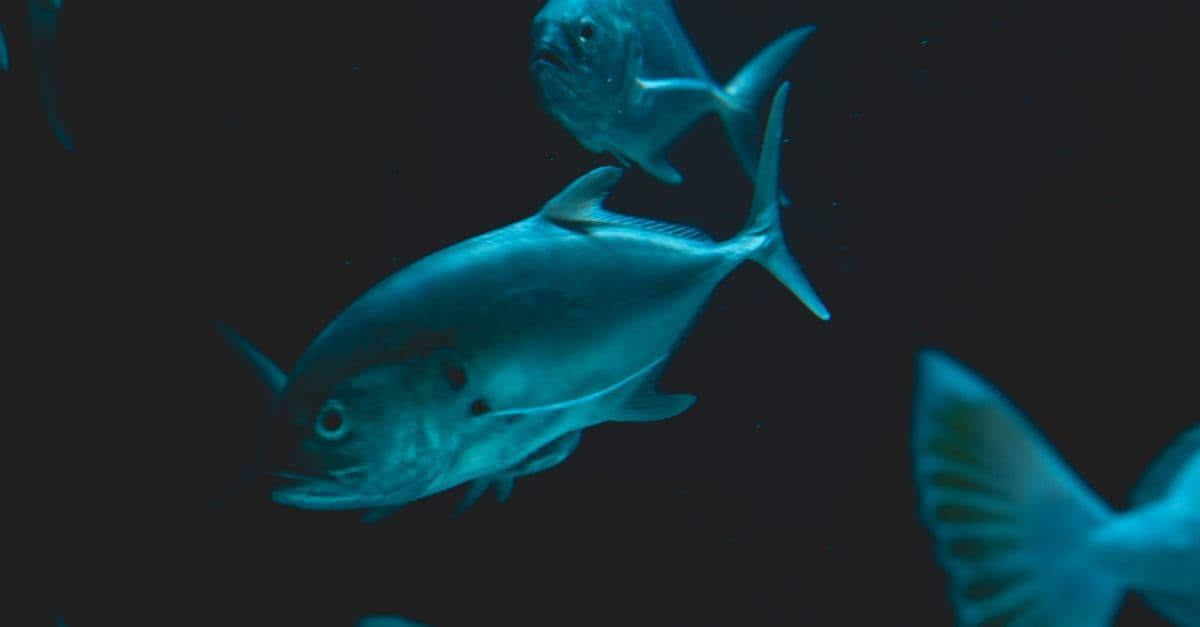
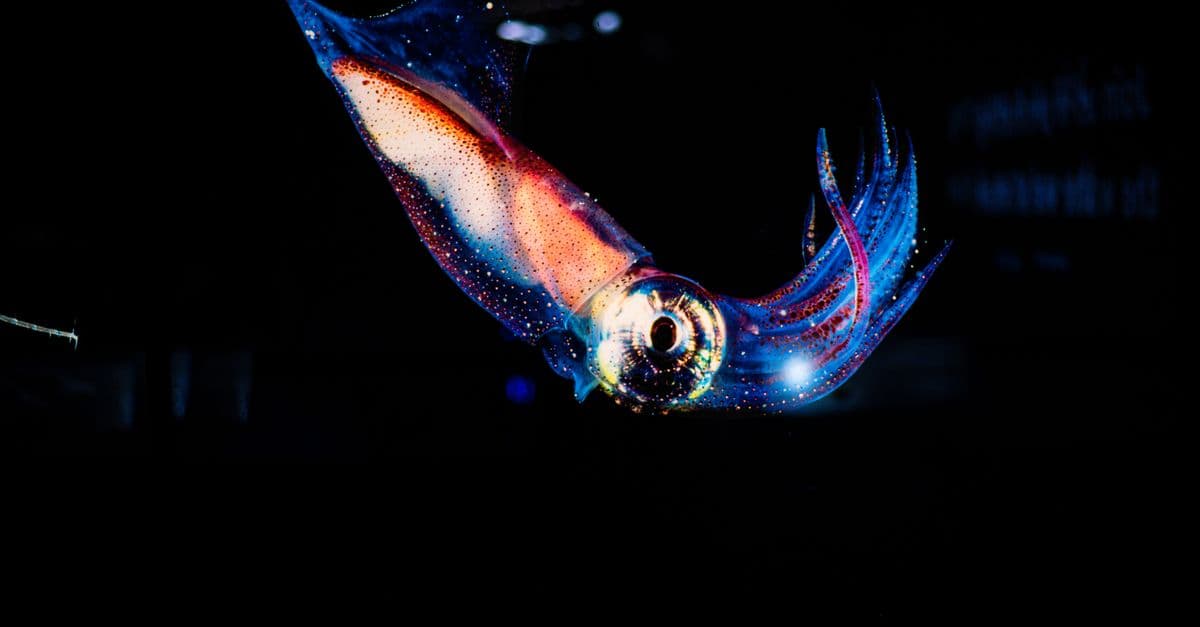
Photo: Los Muertos Crew / Pexels
At 8,000 meters below the Pacific surface, pressure exceeds 800 atmospheres — enough to crush a submarine hull and compress water itself measurably — and no photon of sunlight has ever reached the sediment. The temperature hovers just above freezing. Food arrives as occasional "marine snow," particles of organic debris drifting down from the productive surface waters above. These are not conditions that seem hospitable to complex animal life. Yet in the Mariana Trench, researchers have found crustaceans in the millions, sea cucumbers so dense they carpet the trench floor, and fish — delicate, translucent, pink fish — swimming at 8,336 meters depth, deeper than any vertebrate has been confirmed to exist. Here is how life manages it.
Defining the Zones: Where the Deep Sea Begins
Ocean scientists divide depth into discrete zones based on light penetration, temperature, and pressure.
| Zone | Depth range | Light | Pressure | Characteristic life |
|---|---|---|---|---|
| Epipelagic (sunlit zone) | 0–200 m | Full sunlight | 1–20 atm | Fish, whales, plankton, most familiar marine life |
| Mesopelagic (twilight zone) | 200–1,000 m | Dim, fading | 20–100 atm | Lanternfish, squid, vertical migrators |
| Bathypelagic (midnight zone) | 1,000–4,000 m | None | 100–400 atm | Anglerfish, viperfish, deep-sea jellyfish |
| Abyssopelagic (abyssal zone) | 4,000–6,000 m | None | 400–600 atm | Sea cucumbers, polychaete worms, amphipods |
| Hadalpelagic (hadal zone) | 6,000–11,000 m | None | 600–1,100 atm | Snailfish, amphipods, specialized bacteria |
Hadal zone — ocean depths below 6,000 meters, found exclusively in deep-sea trenches formed by tectonic subduction. There are approximately 27 such trenches globally, with the Mariana Trench reaching the deepest confirmed point: Challenger Deep at 10,935 meters (35,876 feet).
Source: Jamieson, A.J. (2015), The Hadal Zone: Life in the Deepest Oceans, Cambridge University Press — the primary reference text for hadal biology.
The hadal zone covers less than 0.3% of the ocean floor area, but it represents the extreme end of the gradient along which pressure biology, nutritional scarcity, and darkness impose increasingly severe constraints on life. Understanding it is not merely exotic curiosity: what lives in trenches tells us about the outer limits of animal physiology and, by extension, about the conditions under which life might exist elsewhere in the solar system.
The Pressure Problem — and How Cells Solve It
Every 10 meters of water depth adds approximately one atmosphere of pressure. At Challenger Deep (10,935 m), ambient pressure reaches approximately 1,100 atmospheres — about 1,100 times the pressure at sea level, or roughly 1,100 kilograms pressing on every square centimeter of surface.
For cells, pressure is not an abstract force. It acts directly on molecules. Proteins — the workhorse molecules of cellular metabolism — are three-dimensional structures whose function depends on their shape. Pressure distorts protein structure by compressing the spaces within the folded protein and altering the balance of hydrophobic interactions that hold it together. At the pressures of the hadal zone, proteins from shallow-water organisms unfold and become non-functional.
Hadal organisms solve this through piezolytes — small molecules accumulated in cell fluid that counteract pressure-induced protein destabilization. The most studied is trimethylamine oxide (TMAO) — a nitrogen-containing compound that preferentially accumulates in deep-sea fish tissues. TMAO works by stabilizing protein conformation: it preferentially excludes itself from the protein surface, shifting the thermodynamic balance toward the folded, functional state. TMAO concentration in fish tissue scales linearly with habitat depth — a remarkably clean relationship that was used to predict the maximum depth at which fish could survive before that depth was directly measured.
Source: Yancey, P.H. et al. (2001), "Living with Water Stress: Evolution of Osmolyte Systems," Science, Vol. 217 — foundational paper establishing the osmolyte/piezolyte mechanism and depth-TMAO correlation.
At depths beyond approximately 8,200 meters, TMAO concentrations would need to be so high that the fish's cellular fluid osmolarity would exceed that of seawater. At that point, water would flow out of cells by osmosis, dehydrating them. This physical-chemical constraint appears to set a hard ceiling on fish depth distribution — regardless of pressure tolerance, osmotic balance limits vertebrates to around 8,200 meters. The snailfish found at 8,336 meters is therefore pushing close to the theoretical limit.
The Mariana Trench Snailfish: The Deepest Vertebrate
The hadal snailfish (Pseudoliparis swirei), formally described in 2018, holds the confirmed record for deepest-dwelling vertebrate: specimens have been filmed and collected at depths down to 8,336 meters (27,349 feet) in the Mariana Trench. In 2023, a different snailfish species was filmed at an even greater depth — potentially 8,336 meters — in the Izu-Ogasawara Trench south of Japan.
The snailfish looks implausible as a denizen of the deep. It is small (typically 20–28 centimeters / 8–11 inches), pale or translucent-pink, with a soft body lacking the mineralized bone of most fish. Its swim bladder — the gas-filled buoyancy organ that would implode under deep pressure — is absent or vestigial. Instead, it maintains neutral buoyancy through watery, lipid-rich tissues with naturally low density.
Source: Gerringer, M.E. et al. (2017), "Pseudoliparis swirei sp. nov.: A newly-discovered hadal snailfish (Scorpaeniformes: Liparidae) from the Mariana Trench," Zootaxa, Vol. 4358 — formal species description.
Its skull bones are not fused into a rigid box as they are in shallow-water fish. Instead, they are loosely connected, allowing the skull to deform slightly under pressure rather than fracturing — think of a building designed to flex in an earthquake rather than stand rigid. The cells of hadal snailfish contain high TMAO concentrations, and their proteins show molecular adaptations (specific amino acid substitutions at key positions) that maintain function under extreme pressure.
Despite living in extreme conditions, the snailfish is apparently not food-deprived. Researchers pulling sediment traps from trench depths have found them packed with amphipod crustaceans (small, shrimp-like animals) — and snailfish cameras show the fish actively hunting these amphipods. The trenches, far from being nutrient deserts, concentrate organic matter that falls from above along sloped trench walls, creating relatively food-rich conditions compared to the flat abyssal plains surrounding them.
Bioluminescence: Making Light Without the Sun
In the midnight zone and below — roughly below 1,000 meters — no sunlight penetrates. Animals in this environment evolved to make their own light through bioluminescence — the production of light through chemical reactions within living tissue.
Bioluminescence — light produced by a biochemical reaction, typically involving a light-emitting molecule called a luciferin and an enzyme called a luciferase. The reaction is highly efficient: more than 90% of the energy goes into light production rather than heat (compare to an incandescent bulb, which converts roughly 5% of energy to visible light).
Bioluminescence evolved independently at least 40 separate times in marine organisms — one of the most striking examples of convergent evolution in biology. It has been found in bacteria, dinoflagellates, jellyfish, comb jellies, squid, shrimp, fish, and multiple other taxa. Estimates suggest that 76% or more of deep-sea animal species produce bioluminescence in some form.
Source: Haddock, S.H.D. et al. (2010), "Bioluminescence in the Sea," Annual Review of Marine Science, Vol. 2 — the most comprehensive review of marine bioluminescence distribution and function.
Deep-sea organisms deploy bioluminescence for multiple distinct functions:
Luring prey. The anglerfish is the canonical example. Female deep-sea anglerfish (order Lophiiformes) bear a modified dorsal fin spine — the illicium — that extends above the head and terminates in a glowing bulb called the esca, which harbors bioluminescent bacteria in a mutualistic relationship. The anglerfish waves this lure in the darkness; small fish and crustaceans, attracted to the light, approach and are consumed.
Counterillumination. Many midwater organisms use bioluminescence on their ventral (belly) side to match the faint downwelling light from above, making them invisible to predators looking upward. The pattern and intensity of this ventral glow can be dynamically adjusted to match ambient light conditions.
Communication. Some deep-sea squid produce species-specific bioluminescent patterns used for mate recognition. Certain comb jellies (ctenophores) produce elaborate light displays when disturbed.
Startling predators (burglar alarm). Some dinoflagellates and ostracods produce bioluminescent flashes when attacked, apparently to attract secondary predators — creating a "burglar alarm" that may draw a larger predator to the site and interrupt the attack.
The Anglerfish: Deep-Sea Specialist
The anglerfish order (Lophiiformes) contains roughly 320 species, including both shallow-water benthic forms and the extraordinary deep-sea forms adapted to the bathypelagic zone. The deep-sea anglerfish is among the most specialized predators on Earth.
The female is the predatory form most depicted in imagery — the toothy, lure-bearing hunter with the distensible jaw and expandable stomach that can accommodate prey nearly as large as itself. The female's skeleton is partly cartilaginous, allowing body expansion; her teeth angle inward, preventing prey escape once seized.
The male deep-sea anglerfish is starkly different: tiny (often less than 3 centimeters / 1.2 inches), without functional teeth, and with large olfactory organs for locating females by chemical signal. After locating a female, the male bites into her skin and physically fuses with her body — a process called sexual parasitism. The male's circulatory system connects to the female's; over time, his body degrades until he is reduced to a pair of functional gonads attached to the female's flank. A single female may carry multiple males fused to her body.
Source: Pietsch, T.W. (2005), "Dimorphism, parasitism, and sex revisited: modes of reproduction among deep-sea ceratioid anglerfishes," Ichthyological Research, Vol. 52 — comprehensive review of anglerfish reproductive modes.
This extreme system apparently evolved because meeting a mate in the three-dimensional darkness of the deep ocean is extraordinarily difficult. Rather than searching repeatedly, the male exploits the first female he finds permanently.
Chemosynthesis: Life Without Sunlight
Near the base of the ocean food chain, almost everywhere on Earth, is photosynthesis: primary producers using sunlight to convert carbon dioxide into organic matter. The deep sea is too dark for photosynthesis, so deep-sea food webs were long thought to depend entirely on organic material sinking from the productive surface waters above — marine snow, carcasses, feces.
In 1977, a Scripps/Woods Hole research team using the submersible Alvin discovered hydrothermal vents on the Galapagos Rift at approximately 2,500 meters depth — and found, to profound scientific surprise, thriving communities of tube worms, clams, and crustaceans with no access to sunlight and apparently little connection to surface productivity. The food web was instead powered by chemosynthesis — bacterial metabolism of hydrogen sulfide (H₂S) venting from the seafloor.
Chemosynthesis — the production of organic matter using chemical energy (rather than light energy) to power the fixation of carbon dioxide. In hydrothermal vent systems, sulfur-oxidizing bacteria (and archaea) use hydrogen sulfide as an electron donor, producing sulfur and energy in a process functionally analogous to photosynthesis using H₂S instead of water and chemical energy instead of light.
Source: Corliss, J.B. et al. (1979), "Submarine thermal springs on the Galapagos Rift," Science, Vol. 203 — original discovery paper for hydrothermal vent communities and chemosynthetic primary production.
The implications were fundamental: life does not require sunlight. All other life on Earth, as known at the time, was ultimately solar-powered. Vent communities demonstrated that a chemically powered biosphere was physically possible — a fact of direct relevance to the habitability of worlds like Europa (Jupiter's ocean moon) and Enceladus (Saturn's moon), both of which have subsurface liquid oceans potentially hosting hydrothermal venting.
Tube worms of the genus Riftia grow to 2 meters (6.5 feet) in length at vent sites and have no digestive system as adults. They house the chemosynthetic bacteria internally in a specialized organ called the trophosome, absorbing the organic molecules the bacteria produce directly. The tube worm's blood contains a specialized hemoglobin that binds both oxygen and hydrogen sulfide simultaneously — a molecule not found elsewhere in biology — to transport fuel to the trophosome without the H₂S poisoning the worm's own cellular metabolism.
Cold Seeps and the Methane Economy
Hydrothermal vents are not the only chemosynthesis-based ecosystems on the deep seafloor. Cold seeps — areas where methane and other hydrocarbons seep through sediments at ambient (cold) temperature — host communities powered by methanotrophy (bacterial oxidation of methane) and sulfate reduction, which produce hydrogen sulfide that fuels sulfur-oxidizing chemosynthesis.
Cold seep communities include methane ice worms (Hesiocaeca methanicola) that live directly on methane hydrate deposits — structures of methane and water ice stable at cold, high-pressure seafloor conditions. These worms graze on methane-oxidizing bacteria covering the hydrate surface.
Source: Fisher, C.R. et al. (2000), "Ice Worm Biology," in Proceedings of the Ocean Sciences Meeting, American Geophysical Union — review of methane ice worm ecology.
The Problem of Food in the Abyss
Outside of vent and seep communities, the deep sea operates on tight energy budgets. The primary food source is marine snow — a continuous but sparse rain of particles from surface waters: fecal pellets, mucus webs from filter feeders, dead plankton, and degraded organic aggregates. By the time marine snow sinks to 4,000 meters, roughly 99% of the original surface-produced organic matter has been consumed by bacteria and animals in the water column above.
The abyssal and hadal zones receive an estimated 0.5–2% of surface primary production. Animals there respond by evolving slow metabolisms (reducing energy demand), long lifespans (the orange roughy fish lives approximately 150 years — extraordinarily long for a fish), and opportunistic feeding strategies that allow rapid exploitation of large food falls (whale carcasses, sunken wood) when they occur.
Whale falls — the carcasses of whales that sink to the deep seafloor — create localized, long-lasting habitats. A large whale fall (a blue whale carcass weighs up to 150,000 kg / 330,000 lb) progresses through several successional stages: a mobile scavenger stage (sharks, hagfish, sleeper sharks consuming soft tissue over months to years), a sulfophilic stage (chemosynthetic bacteria colonizing lipid-rich bones, producing hydrogen sulfide that sustains a small vent-like community), and finally a reef stage as mineral hard substrate colonized by suspension feeders.
Source: Smith, C.R. & Baco, A.R. (2003), "Ecology of whale falls at the deep-sea floor," Oceanography and Marine Biology, Vol. 41 — comprehensive review of whale fall successional ecology.
Amphipods: The Dominant Hadal Animals
In hadal trenches, one group dominates in abundance: amphipod crustaceans of the family Lysianassidae, particularly the species Hirondellea gigas in the Mariana Trench. These shrimp-like scavengers, reaching up to 3.4 centimeters (1.3 inches), aggregate in staggering numbers around food sources. Baited traps deployed at Challenger Deep have returned thousands of individuals within hours.
H. gigas carries enzymes capable of digesting cellulose — an unusual ability for an animal, enabling it to exploit sunken wood as a food source in addition to animal remains. It can survive the osmotic challenges of the trench environment through standard amphipod osmoregulatory mechanisms, which are less dependent on TMAO than fish physiology.
Q: What is the deepest-living vertebrate?
A: The hadal snailfish (Pseudoliparis swirei) has been confirmed at depths of 8,336 meters in the Mariana Trench, making it the record holder. This is close to the theoretical depth limit for fish, which is constrained by osmotic pressure: the TMAO concentrations needed for deeper survival would cause cellular dehydration.
Q: How does bioluminescence work?
A: Bioluminescence involves a chemical reaction between a light-emitting molecule (luciferin) and an enzyme (luciferase), typically in the presence of oxygen. The reaction converts chemical energy to light with more than 90% efficiency. It evolved independently at least 40 times in marine organisms and is estimated to be present in 76% or more of deep-sea species.
Q: What do deep-sea animals eat if there is no sunlight for photosynthesis?
A: Most deep-sea animals eat marine snow — organic particles sinking from surface waters — supplemented by whale falls and occasional carcasses. Near hydrothermal vents and cold seeps, entire food webs are powered by chemosynthesis: bacteria metabolizing hydrogen sulfide or methane produce organic matter without any sunlight involvement.
Q: What is the hadal zone?
A: The hadal zone is the deepest region of the ocean, encompassing depths below 6,000 meters. It is found only in deep-sea trenches created by tectonic subduction. The deepest hadal zone is the Mariana Trench, which reaches 10,935 meters at Challenger Deep.
Q: How do deep-sea fish survive crushing pressure?
A: They accumulate piezolytes — pressure-stabilizing molecules — in their cells. The most studied is trimethylamine oxide (TMAO), which stabilizes protein structure under pressure. Deep-sea fish also lack or have reduced swim bladders (which would implode under pressure), have partially cartilaginous or loosely connected skulls that flex rather than fracture, and maintain buoyancy through lipid-rich, watery tissues.
Q: What is sexual parasitism in anglerfish?
A: In deep-sea anglerfish, the tiny male bites into the female's skin and physically fuses with her body. His circulatory system connects to hers; over time his body degenerates until he is essentially a pair of gonads attached to the female. This extreme adaptation evolved because finding a mate in the three-dimensional darkness of the deep ocean is extraordinarily difficult, so permanent attachment after the first encounter maximizes reproductive success.
The Takeaway
The deep sea represents roughly 95% of the habitable volume of Earth's biosphere by water volume, yet it remains far less explored than the surface of Mars. What systematic exploration has revealed overturns the intuition that life requires light, warmth, and an abundant food supply. Chemosynthetic communities around hydrothermal vents demonstrate that an entire parallel food web can run on chemical energy alone. The snailfish at 8,336 meters demonstrates that vertebrate physiology can adapt to pressures that would destroy any human-engineered machine without specialized reinforcement. And the ubiquity of bioluminescence in the deep reveals a world of chemical light communication that preceded electric light by hundreds of millions of years. The deep ocean is not an empty wasteland at the margin of life — it is a parallel biosphere operating under rules that challenge every assumption surface-dwellers carry about what living requires.
Read next:
Follow new articles
Add SciHub101 to your feed reader to see new science and technology stories.
About the Author
SciHub101 is an independent science and technology publication founded and edited by Buğra Sözeri, a software engineer and app developer based in Türkiye. AI tools assist with drafting and research. Source documentation in the existing archive is uneven, and articles are being reviewed and corrected. The Editorial Team byline identifies editorial responsibility; it does not certify specialist or independent human review. Where we compare products, anything built by our own team is labelled as such — see the editorial guidelines and About page for how corrections and disclosures work.
Related Articles
How Animals Navigate With a Magnetic Sense: Earth's Invisible Compass
A loggerhead sea turtle hatches on a Florida beach, swims across the Atlantic Ocean, circles the Mediterranean, and returns to within a few kilometers of its birth beach decades later — without a map, a GPS signal, or any environmental cue that a human could detect unaided. It is reading the Earth's magnetic field. Here is how that works, and why it is one of the most debated phenomena in sensory biology.

How Animals See the World Differently: UV, Infrared, and 16-Color Vision
The mantis shrimp has 16 types of photoreceptors. Pit vipers see heat. Many birds see ultraviolet colors invisible to humans and use them to choose mates. A dog's world is not black-and-white — it is dichromatic blue-yellow. Every animal lives inside a different visual universe shaped by what detecting which wavelengths was most useful for its ancestors. Here is what the science of animal vision actually reveals about perception.
Deep-Sea Creatures and Bioluminescence: Life in the Dark Ocean
Below 200 meters, there is no sunlight — yet roughly 76% of deep-sea animals produce their own light. The deep ocean is full of living lanterns.
How Bioluminescence Works in Animals: The Chemistry of Living Light
More than 76% of deep-sea animals produce their own light. Fireflies flash in coordinated sequences. A jellyfish discovered off the coast of Friday Harbor, Washington, gave biologists a tool that transformed cell biology, earned three scientists a Nobel Prize, and now glows inside cancer cells in laboratories around the world. Bioluminescence — light produced by a living organism — is one of evolution's most useful accidents, and its chemistry is surprisingly simple.
The Deepest Places in the Ocean: Inside the Mariana Trench and Challenger Deep
The deepest known point on Earth's surface sits 10,935 meters below sea level in the western Pacific — deeper than Everest is tall. At Challenger Deep in the Mariana Trench, the water pressure reaches 1,086 bar (15,750 psi), equivalent to 50 jumbo jets resting on a single square meter. Three crewed descents have reached this point, and each one found life there. The hadal zone, that alien strip of ocean below 6,000 meters, covers less than 1% of the seafloor but harbors organisms that have evolved in permanent darkness, crushing pressure, and near-freezing temperatures.