How Animals Navigate With a Magnetic Sense: Earth's Invisible Compass
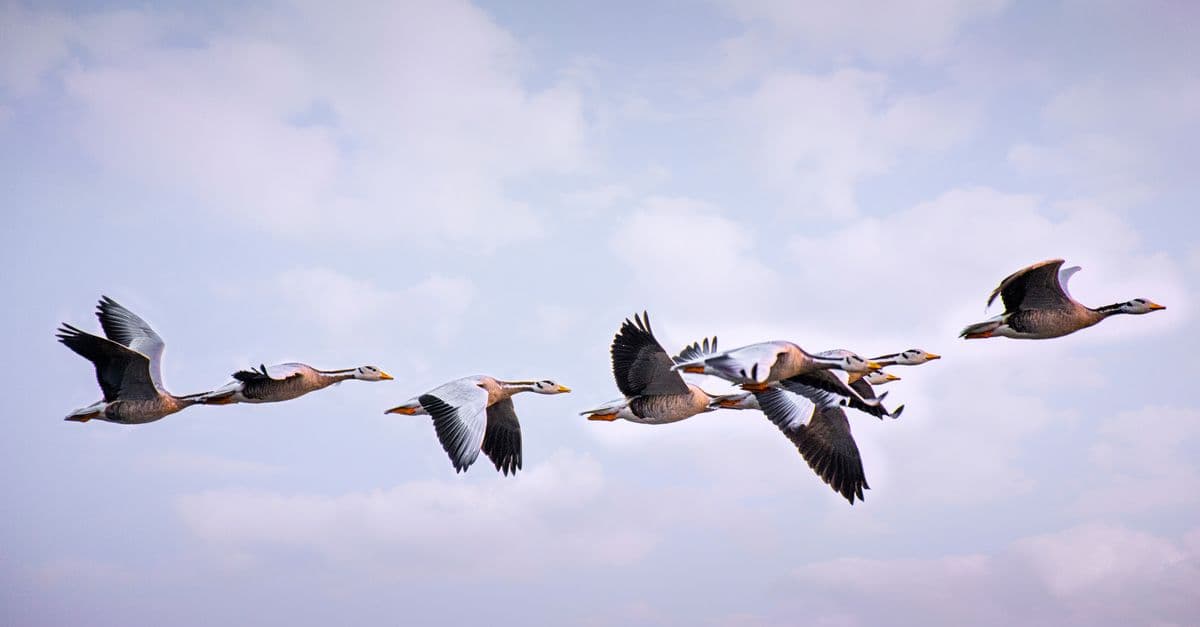
Photo: Vladimir Srajber / Pexels
A loggerhead sea turtle hatches on a Florida beach, swims across the Atlantic Ocean, circles the Mediterranean Sea, and returns decades later to nest within a few kilometers of its birth beach — without any cue that a human could detect unaided. Homing pigeons released 1,000 kilometers (620 miles) from their loft in unfamiliar territory arrive home within hours. Pacific salmon born in a small Oregon creek spend years in the open Pacific before swimming back to the precise creek where they hatched. All of these navigational feats rely, at least in part, on a sense that humans do not possess and only began to scientifically understand in the 1960s: the ability to detect the Earth's magnetic field.
What Magnetoreception Is — and Why It Is Hard to Study
Magnetoreception — the ability to sense the direction, intensity, and inclination of a magnetic field and use that information to navigate or orient behavior.
The Earth's magnetic field is a weak, invisible force produced by convection currents in the planet's liquid iron outer core. It varies predictably across the globe: field intensity increases toward the poles and decreases toward the equator; inclination angle (the angle at which field lines dip below the horizontal plane) changes systematically with latitude. Together, these two parameters form a coordinate system that, in principle, provides a unique magnetic "address" for any point on Earth.
The challenge for scientists studying magnetoreception is that magnetic fields pass through tissue without resistance. Unlike light (which requires photoreceptors) or sound (which requires hair cells that can physically bend), magnetic fields exert no obvious force on biological tissue — at the field strengths Earth produces. This makes it genuinely puzzling how any biological structure could detect it, and it also makes it extremely difficult to design controlled experiments where you can be certain the animal is responding to the magnetic field rather than some correlated cue.
Source: Lohmann, K.J. et al. (2007), "Magnetic Maps in Animals: Nature's GPS," Journal of Experimental Biology, Vol. 210 — comprehensive review of magnetic navigation across animal taxa.
Two mechanistic hypotheses have dominated the field for decades, and the evidence increasingly suggests that different animal groups may use different mechanisms — or possibly both simultaneously.
Mechanism 1: Magnetite — The Biological Compass Needle
Magnetite — a naturally occurring iron oxide mineral (Fe₃O₄) with strong permanent magnetic properties. Biologically produced magnetite is called biogenic magnetite.
In 1975, marine biologist Richard Blakemore discovered that a species of bacteria was consistently swimming toward magnetic north even in a completely dark, sealed container. When he examined these bacteria under an electron microscope, he found chains of magnetite crystals inside each cell — tiny permanent magnets strung together into a rod, aligned by the Earth's magnetic field the way a compass needle aligns. These bacteria, now called magnetotactic bacteria, were using a physical compass mechanism.
Biogenic magnetite has since been found in a remarkable range of animals: honeybees, homing pigeons, dolphins, salmon, sea turtles, and multiple species of birds. In rainbow trout, magnetite-containing cells have been identified in the lateral line (a sensory system that runs along the fish's flank), nose, and inner ear. In birds, magnetite has been found in the beak and in cells around the inner ear.
The magnetite hypothesis proposes that chains or clusters of magnetite crystals, anchored in cell membranes, physically rotate or stress receptor cells in response to changes in magnetic field direction — essentially the same principle as a compass needle, scaled to microscopic dimensions and coupled to a nerve signal.
Source: Kirschvink, J.L. et al. (2001), "Magnetite-based magnetoreception," Current Opinion in Neurobiology, Vol. 11 — review of biogenic magnetite evidence across animal taxa.
The magnetite mechanism is physically plausible and anatomically supported. Its main limitation is that disrupting magnetite-containing tissue in some animals (particularly birds) does not reliably destroy magnetic orientation, suggesting that magnetite is not the only mechanism involved.
Mechanism 2: The Quantum Compass — Cryptochrome and Radical Pairs
The second mechanism is more exotic and, in some respects, more compelling for birds: it involves quantum chemistry.
Cryptochrome — a light-sensitive protein found in the retinas of many animals, involved in circadian rhythm regulation and, in some species, proposed as a magnetoreceptor.
When cryptochrome absorbs a blue photon, it undergoes a chemical reaction that creates a radical pair — two molecules, each with a single unpaired electron. Electrons have a quantum property called spin, and the spins of the two electrons in the radical pair can be either parallel (triplet state) or anti-parallel (singlet state). The rate at which the radical pair transitions between these states — and thus the chemical products it ultimately produces — depends on the strength and direction of any external magnetic field present.
This is the radical pair mechanism: Earth's magnetic field, acting on the quantum spin states of electrons in cryptochrome, biases which chemical product is formed. If different chemical products produce different downstream signals to the nervous system, the animal has, in effect, detected the magnetic field through quantum chemistry.
Source: Ritz, T. et al. (2000), "A model for photoreceptor-based magnetoreception in birds," Biophysical Journal, Vol. 78 — foundational paper proposing the radical pair mechanism for avian magnetoreception.
The evidence that this mechanism operates in birds is substantial. Cryptochrome 1a protein (Cry1a) is expressed at high levels in the outer segments of retinal cells in European robins and other migratory birds, specifically in the cells most exposed to incoming light. Behavioral experiments with European robins show that their magnetic compass is light-dependent — they cannot orient magnetically in the dark or under wavelengths of light that do not activate cryptochrome — but they can orient under blue and green light that does. Applying radiofrequency magnetic fields that specifically disrupt radical pair dynamics (without heating tissue or producing any other physical effect) disrupts magnetic orientation in birds.
Source: Ritz, T. et al. (2004), "Disruption of magnetic compass orientation in migratory birds by very weak alternating magnetic fields," Nature, Vol. 429 — the radiofrequency disruption experiment providing strongest behavioral evidence for the radical pair mechanism.
What would it be like to perceive magnetism through the eyes? Some researchers have proposed that birds might perceive the magnetic field as a visual overlay — a pattern of brightness or color modulation superimposed on their visual field, varying with gaze direction in a way that encodes magnetic compass heading. Like a heads-up display projected onto their vision. This remains a hypothesis, not a confirmed experience description, but the anatomy of the cryptochrome system in the retina is at least consistent with it.
| Mechanism | Physical basis | Best evidence in | Light-dependent? |
|---|---|---|---|
| Magnetite crystals | Physical rotation/stress of iron particles | Salmon, dolphins, some bacteria | No |
| Radical pair (cryptochrome) | Quantum spin chemistry in retina | European robins, other migratory birds | Yes (blue/green light) |
| Combined / unknown | Both or neither | Most species still unclear | Variable |
Sea Turtles: Navigating by Magnetic Address
Loggerhead sea turtles (Caretta caretta) provide the clearest example of magnetic navigation used as a positional map rather than just a directional compass.
Magnetic map — the use of multiple magnetic parameters (intensity, inclination, or declination) to determine not just which direction to travel but where the animal currently is in geographic space.
Research by Kenneth Lohmann's laboratory at the University of North Carolina has demonstrated that loggerhead sea turtles can distinguish between different combinations of magnetic field intensity and inclination angle, and that they respond to specific magnetic signatures by shifting swimming direction in ways that would keep them within their normal oceanic range. When hatchlings encounter a magnetic field matching the conditions at the edge of the North Atlantic Gyre (the circular current system that forms their developmental habitat), they turn to keep within it. They are using magnetic parameters as positional coordinates — a true magnetic map.
Source: Lohmann, K.J. et al. (2004), "Geomagnetic map used in ocean navigation by loggerhead sea turtles," Nature, Vol. 428 — experimental demonstration of magnetic map use in sea turtles.
Adult females return to nest on or near the beach where they hatched — a fidelity called natal homing that can span decades and thousands of kilometers of open-ocean travel. The precision of this return is remarkable: genetic studies show that females consistently nest within roughly 50 kilometers (31 miles) of their birth beach. The working hypothesis is that sea turtles imprint on the specific magnetic signature of their birth beach and use that signature as a long-term navigational target, returning when their reproductive systems mature.
A genetic consequence of this system is that sub-populations nesting on different beaches remain somewhat genetically isolated, because females return to their own birth beach rather than distributing randomly across all available nesting habitat. Magnetic imprinting is, in this sense, a driver of population structure.
Salmon: Magnetic Imprinting and the River Return
Pacific salmon (genus Oncorhynchus) demonstrate a similar natal homing mechanism adapted for the transition between freshwater and oceanic environments. Salmon hatch in freshwater streams, spend one to five years growing in the ocean, then return to their natal stream to spawn — a journey that can exceed 1,600 kilometers (1,000 miles) from open ocean to the specific tributary where they were born.
The classic explanation for salmon homing emphasized olfaction: salmon imprint on the chemical scent of their birth stream during a sensitive period as juveniles (smoltification), and use that scent gradient to navigate the final portion of their journey up the river. This is well-documented and real. But it does not explain how salmon navigate the open ocean phase, where stream scent is undetectable, to arrive at the correct coastal region in the first place.
Research by Nathan Putman and colleagues has shown that juvenile salmon imprint on the magnetic field of their birth location during the freshwater phase of their life, and use magnetic map navigation to find the correct oceanic feeding grounds and then return to the correct coastal region. In experiments, salmon exposed to magnetic fields replicating different geographic locations shifted their swimming orientation in ways consistent with navigating toward their birth region from the simulated location.
Source: Putman, N.F. et al. (2014), "An inherited magnetic map guides ocean navigation in juvenile Pacific salmon," Current Biology, Vol. 24 — experimental demonstration of magnetic map use in juvenile salmon.
The salmon case illustrates a multi-stage navigation system: magnetic map navigation positions them in the correct oceanic region; magnetic and possibly celestial cues guide coastal approach; olfactory imprinting guides the final river ascent. Multiple sensory systems provide redundancy and precision at different spatial scales.
Birds: The Intercontinental Challenge
Migratory birds cover distances that make salmon navigation look modest. The Arctic tern (Sterna paradisaea) migrates approximately 70,000 kilometers (43,500 miles) round-trip annually between Arctic breeding grounds and Antarctic wintering grounds — the longest animal migration on Earth. Bar-tailed godwits fly 11,500 kilometers (7,100 miles) non-stop from Alaska to New Zealand in about nine days. European robins, the primary model organism for cryptochrome research, migrate between Scandinavia and sub-Saharan Africa.
Source: Klaassen, R.H.G. et al. (2011), "Nonstop trans-Atlantic migration by Arctic terns," Science Advances — GPS tracking study documenting extraordinary trans-oceanic migration routes.
These migrations are partly innate and partly learned. Many migratory bird species are born with a magnetically encoded preferred compass heading and a genetically specified duration of migratory effort — a "vector" that would, if flown faithfully, carry them roughly to the appropriate wintering region. But they also update this program based on experience: young birds that survive their first migration often navigate more efficiently on subsequent journeys, suggesting some spatial learning occurs.
The magnetic compass in birds appears to be an inclination compass rather than a polarity compass. A polarity compass — like a standard human compass — distinguishes north from south by which end of the needle points toward the geomagnetic north pole. An inclination compass distinguishes "poleward" from "equatorward" based on the angle at which field lines dip. This distinction matters because it means bird compasses are not confused by magnetic anomalies that reverse polarity, and because inclination information is automatically linked to latitude — which is more useful for a migrant needing to know how far poleward or equatorward to travel.
Humans and the Lost Sense
Humans almost certainly do not have functional magnetoreception. Multiple studies attempting to demonstrate magnetic sensitivity in humans have produced inconsistent or non-replicable results when properly controlled.
One exception is a 2019 study from Caltech published in eNeuro that used an EEG to measure brainwave responses while participants sat in a rotating magnetic field. A specific drop in alpha wave amplitude was observed when the magnetic field rotated in a particular direction — a response pattern that indicates the brain registered the change, even though participants reported no conscious awareness of it. The alpha wave drop was not observed for static fields, nor for fields rotating in the opposite direction, which is consistent with a directional response rather than random noise.
Source: Wang, C.X. et al. (2019), "Transduction of the Geomagnetic Field as Evidenced from alpha-Band Activity in the Human Brain," eNeuro, Vol. 6 — the most controlled study to date suggesting subconscious human magnetosensitivity.
Whether this represents a vestigial sense that no longer reaches conscious awareness, a noise artifact, or something functionally meaningful remains unresolved. What is clear is that any human magnetic sensitivity, if it exists, does not produce the kind of reliable, high-precision navigational information that sea turtles or migratory birds clearly use.
The Open Questions
Magnetoreception is, by the standards of sensory biology, still a young field. Several fundamental questions remain genuinely open:
Which mechanism dominates in which species? Most evidence comes from a small number of model organisms. The broader distribution of magnetite versus cryptochrome mechanisms across the animal kingdom is incompletely mapped.
Where are the magnetoreceptors in most species? Despite decades of search, the precise cellular location of the magnetosensory apparatus has been confirmed in relatively few species. A 2012 paper that claimed to identify magnetite-containing cells in rainbow trout beaks was later found to have confused magnetite-containing macrophages (immune cells) for sensory cells — a reminder of how technically difficult this research is.
How is the information encoded and processed by the nervous system? Even where the receptor mechanism is fairly well understood, the neural pathway from receptor to behavioral output remains largely uncharacterized.
Q: What is magnetoreception?
A: Magnetoreception is the ability to detect the direction, intensity, or inclination of Earth's magnetic field and use that information for navigation or orientation. It has been documented in sea turtles, migratory birds, salmon, honeybees, and many other animal groups.
Q: How do birds use the Earth's magnetic field for navigation?
A: The leading mechanism involves cryptochrome proteins in retinal cells. When light activates cryptochrome, it creates radical pairs — molecules with unpaired electrons whose quantum spin states are influenced by the magnetic field. This biases which chemical products form, providing a signal that encodes magnetic field direction. Birds appear to use an inclination compass, distinguishing poleward from equatorward rather than north from south.
Q: How do sea turtles find their way back to their birth beach?
A: Loggerhead sea turtles appear to imprint on the unique combination of magnetic field intensity and inclination angle at their birth beach during hatching. They then use this magnetic "address" as a navigational target throughout their lives, returning to nest within roughly 50 kilometers of their birth location decades later.
Q: Do salmon use magnetic navigation?
A: Yes. Research shows juvenile salmon imprint on the magnetic signature of their birth location and use magnetic map navigation to guide their ocean phase, positioning themselves in the correct region before switching to olfactory (scent) navigation for the final river ascent.
Q: Can humans detect magnetic fields?
A: Not consciously, and probably not reliably. A 2019 Caltech EEG study found measurable brainwave responses to a rotating magnetic field in some human participants, but they reported no conscious awareness of it. Any residual human magnetosensitivity, if real, does not produce functional navigational capability.
Q: What is the difference between a polarity compass and an inclination compass?
A: A polarity compass (like a standard human compass) distinguishes north from south based on which direction the geomagnetic north pole lies. An inclination compass distinguishes "poleward" from "equatorward" based on the angle at which field lines dip below the horizontal. Bird magnetic compasses are inclination compasses, which is more useful for latitudinal navigation and less prone to confusion by magnetic anomalies.
The Takeaway
Magnetoreception is biology's most physically surprising sense — one that appears to work through quantum chemistry in at least some species, and through microscopic iron crystals in others. It gives sea turtles a positional system precise enough to navigate thousands of kilometers of open ocean and return to a specific beach. It gives birds a continent-spanning orienteering ability that still outperforms any GPS-free navigation technology humans have built. The field is young enough that fundamental questions remain open, which makes it one of the most active frontiers in sensory neuroscience. What is already clear is that Earth's magnetic field is not an inert backdrop — for a large portion of the animal kingdom, it is a landscape as legible and navigable as a highway map.
Read next:
Follow new articles
Add SciHub101 to your feed reader to see new science and technology stories.
About the Author
SciHub101 is an independent science and technology publication founded and edited by Buğra Sözeri, a software engineer and app developer based in Türkiye. AI tools assist with drafting and research. Source documentation in the existing archive is uneven, and articles are being reviewed and corrected. The Editorial Team byline identifies editorial responsibility; it does not certify specialist or independent human review. Where we compare products, anything built by our own team is labelled as such — see the editorial guidelines and About page for how corrections and disclosures work.
Related Articles

How Octopuses Are So Intelligent: The Animal That Thinks With Its Arms
An octopus has roughly 500 million neurons — about as many as a dog — but two-thirds of those neurons are not in its brain. They are distributed across eight arms, each of which can taste, touch, decide, and act without ever consulting the central brain. This is the story of how intelligence can evolve in a completely different shape.
The Deepest Sea Creatures Explained: Life at the Bottom of the Ocean
At 8,000 meters below the Pacific surface, pressure exceeds 800 atmospheres — enough to crush a submarine hull — and no sunlight has penetrated for geological eons. Yet animals live there, and not just survive: they thrive in communities as dense and diverse as any shallow reef. The hadal zone is where life tests what it can endure, and the answers have rewritten basic biology.
Migration Science: How Animals Navigate Thousands of Miles Without GPS
A bar-tailed godwit flies 11,000 km non-stop from Alaska to New Zealand. How animals navigate across hemispheres remains one of biology's great mysteries.
How Do Bird Migrations Work? The Science Explained
Bird migrations work through a combination of photoperiod-triggered hormonal changes, sun and star compasses, and magnetoreception — a quantum-mechanical ability to sense Earth's magnetic field using cryptochrome proteins in the eye. These overlapping systems let birds navigate thousands of kilometers with precision that rivals GPS, while extreme fat metabolism powers nonstop flights lasting more than 11 days.
How Do Birds Migrate Thousands of Miles: Navigation, Fat, and Flight
An Arctic tern chick hatches in Greenland, fledges, and within weeks makes its first 70,000 km round-trip migration to Antarctica — a journey it has never made before, with no experienced adult to follow. By the end of its 30-year life, it will have flown the equivalent of three trips to the Moon and back. The mechanisms behind this feat involve quantum physics, internal clocks, and a navigation system more sophisticated than anything human engineers have yet replicated.