How Do Birds Migrate Thousands of Miles: Navigation, Fat, and Flight
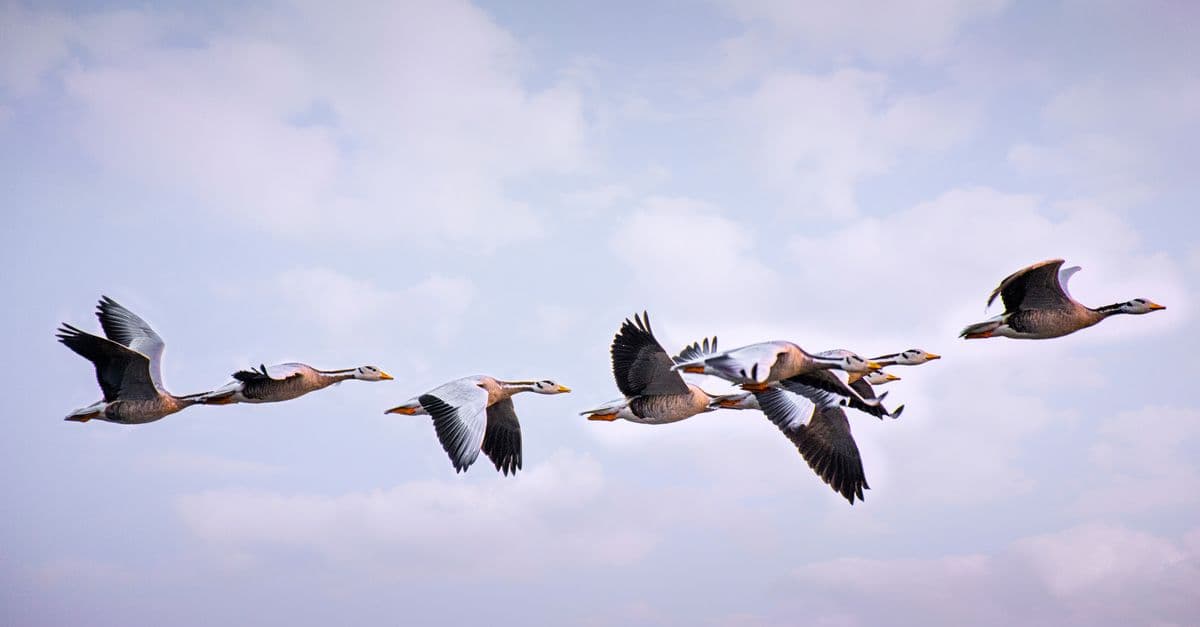
Photo: Rajukhan Pathan / Pexels
An Arctic tern weighs about 100 grams (3.5 oz) — roughly the weight of an apple. It migrates from its Arctic breeding grounds to the Antarctic and back every year, covering approximately 70,000 km (43,500 miles) — the longest migration of any known animal. Over a 30-year lifespan, a single bird accumulates roughly 2.4 million km (1.5 million miles) of migration, equivalent to three round trips to the Moon. It does this using an internal navigation system built from Earth's magnetic field, the Sun's position, star patterns, and odors — a multimodal system with so many overlapping inputs that losing any one component barely affects the outcome.
What Migration Actually Is and Why It Exists
Migration — the regular, predictable, seasonal movement of animals between two or more geographic areas that serve different ecological functions, typically breeding grounds and wintering grounds.
Migration is not simply movement in response to cold. It is a genetically encoded behavioral program timed by internal biological clocks and triggered by environmental cues — primarily day length (photoperiod) — rather than by temperature directly. Birds begin preparing for migration weeks before temperatures change, driven by the lengthening or shortening of daylight hours detected by photoreceptors in the brain.
The evolutionary logic of migration is fundamentally about resource tracking. The Arctic in summer offers extraordinary food abundance — massive insect emergences, dense fish populations, continuous daylight for foraging — but is uninhabitable in winter. Tropical regions offer year-round resources but face intense competition year-round. Migration allows a species to exploit seasonal resource pulses in multiple locations that no resident species can access, at the cost of the energetic and navigational investment the journey requires.
The evolutionary origin of migration is not settled. Current evidence favors a model in which short-distance movement behaviors were gradually extended over generations by selection, with populations pushed further by successive cycles of range expansion and contraction during glacial periods. GPS tracking has revealed that within single species, migration distances vary enormously between populations, supporting the idea that migration exists on a continuum with resident behavior.
Source: Helbig, A.J. (1996), "Genetic basis, mode of inheritance and evolutionary changes of migratory directions in Palearctic warblers (Aves: Sylviidae)," Journal of Experimental Biology, Vol. 199 — demonstrated the genetic and heritable basis of migratory direction in birds.
How Birds Navigate: A Multi-Layered System
Bird navigation is not one system. It is a redundant, multi-layered toolkit in which multiple independent mechanisms provide overlapping directional information. This redundancy is the reason birds can still navigate when any single cue is removed by experiment — and it is what makes fully understanding migration navigation so difficult.
The Magnetic Compass
The most studied navigation mechanism in birds is magnetoreception — the ability to sense Earth's magnetic field. There is no longer any scientific doubt that migratory birds have magnetoreception; the dispute is over the mechanism.
Two competing mechanisms have substantial evidence.
The first is magnetite-based sensing: deposits of the mineral magnetite (Fe₃O₄) found in the beaks, heads, and inner ears of many bird species. Magnetite crystals are permanently magnetic and can physically rotate or stress surrounding tissue in response to magnetic field direction, potentially signaling field orientation to the brain through mechanoreceptors.
The second, and currently more debated, mechanism is radical-pair magnetoreception in the eye. The photopigment cryptochrome, found in the retinas of many migratory birds, can generate radical pairs — pairs of molecules with unpaired electrons whose quantum spin states are entangled. The relative orientation of Earth's magnetic field influences the reaction rates of these radical pairs, which affects the visual signal cryptochrome produces. In this model, birds may literally see Earth's magnetic field as a visual overlay on their normal vision — a phenomenon sometimes described as a "magnetic inclination compass." This would be a biological application of quantum entanglement for a navigation function, which, if confirmed, would be one of the most remarkable examples of quantum biology known.
Source: Ritz, T., Adem, S., and Schulten, K. (2000), "A model for photoreceptor-based magnetoreception in birds," Biophysical Journal, Vol. 78 — the foundational paper proposing the radical-pair cryptochrome model for avian magnetoreception.
Source: Wiltschko, W. and Wiltschko, R. (2005), "Magnetic orientation and magnetoreception in birds and other animals," Journal of Comparative Physiology A, Vol. 191 — comprehensive review of avian magnetoreception evidence and mechanisms.
The magnetic compass in birds is an inclination compass, not a polarity compass. A polarity compass (like a human compass) distinguishes north from south by the polarity of the field. An inclination compass distinguishes the poleward direction from the equatorward direction by detecting the angle at which field lines incline into Earth's surface. In the northern hemisphere, field lines incline downward toward magnetic north; in the southern hemisphere, they incline downward toward magnetic south. An inclination compass reads "toward poles" vs. "toward equator" rather than "north" vs. "south" — which is why the avian magnetic compass is not disrupted by inverting the polarity of the experimental field, but is disrupted by inverting the vertical component.
The Sun Compass
Many migratory birds use the position of the Sun as a directional reference. Since the Sun's position changes continuously throughout the day, using it as a compass requires knowing the time — which birds do via their circadian clock. The Sun compass is therefore a learned map: birds track the Sun's position across the day and calibrate the compass accordingly against their internal clock.
Clock-shifted birds — whose internal clocks have been experimentally advanced or delayed by light exposure — navigate in systematically offset directions when using the Sun compass, exactly as predicted by the clock-shift amount. This is one of the cleanest experimental demonstrations of any navigation mechanism.
Star Patterns
Nocturnal migrants use star patterns for calibration. Young birds, before their first migration, observe the rotation of the night sky during a sensitive period and identify the axis of rotation — the celestial north pole — as their reference direction. This star compass is learned by observation rather than innate, but the capacity to learn it from sky rotation is innate. If young birds are raised under a planetarium sky rotated around a different axis, they adopt that artificial axis as north.
Olfactory Navigation
Research on homing pigeons and some seabirds has provided strong evidence for olfactory navigation — using atmospheric odor gradients as positional information. Birds that have had their olfactory nerves severed, or whose nostrils are blocked, navigate significantly less accurately over unfamiliar terrain. Shearwaters, which make impressive trans-oceanic navigation feats, appear to use olfactory gradients from ocean chemistry to build positional maps of open water where no visual landmarks exist.
Source: Wallraff, H.G. (2005), Avian Navigation: Pigeon Homing as a Paradigm, Springer — the most comprehensive analysis of olfactory navigation evidence in homing pigeons.
Fat as Fuel: The Biochemistry of Long-Distance Flight
Understanding how birds sustain multi-day non-stop flights requires understanding their fuel system, which differs fundamentally from human endurance exercise.
Humans running a marathon primarily burn a mixture of muscle glycogen (stored sugar) and fat, with glycogen typically depleted after a couple of hours of intense effort, forcing a shift to slower fat metabolism. The glycogen reserves of a typical human allow roughly 1.5–2 hours of intense aerobic exercise. Migrating birds cannot carry enough sugar to fly for days.
Long-distance migrants solve this by running almost entirely on fat oxidation. Fat has more than twice the energy density of carbohydrate per gram (~9 kcal/g vs. ~4 kcal/g) and, crucially, yields metabolic water as a byproduct of combustion — essential for birds flying over ocean with no access to fresh water. Before departure, migrants undergo hyperphagia, gorging to accumulate subcutaneous and visceral fat reserves that can double their body mass. A blackpoll warbler (Setophaga striata) weighing 11 grams in summer may reach 21 grams pre-migration, then fly 2,700 km (1,680 miles) nonstop from the northeastern United States to South America over four days without landing, arriving at about 11 grams again.
Source: Gill, R.E. et al. (2009), "Extreme endurance flights by landbirds crossing the Pacific Ocean: ecological corridor rather than barrier?," Proceedings of the Royal Society B, Vol. 276 — documented the longest known nonstop bird flights, including bar-tailed godwit flights of 11,000+ km.
The bar-tailed godwit (Limosa lapponica) holds the record for the longest confirmed nonstop flight: 11,000–12,200 km (6,835–7,580 miles) from Alaska to New Zealand in approximately 8–11 days of nonstop flight. GPS tracking has confirmed individual birds maintaining this flight without landing. The birds arrive having consumed approximately 55% of their pre-departure body mass — almost entirely fat, with some protein from organs that are catabolized mid-flight and rebuilt on arrival. Their digestive organs, which are metabolically expensive to maintain and unnecessary during flight, shrink dramatically before departure and regrow on arrival.
The bar-tailed godwit numbers:
| Parameter | Value |
|---|---|
| Departure mass | ~500 g |
| Arrival mass | ~230 g |
| Distance (nonstop) | ~11,000–12,200 km |
| Duration | ~8–11 days |
| Average speed | ~56 km/h |
| Mass lost | ~55% of departure mass |
| Fuel | Almost entirely fat |
Source: Battley, P.F. et al. (2000), "Empirical evidence for differential organ reductions during trans-oceanic bird flight," Proceedings of the Royal Society B, Vol. 267 — documented organ shrinkage and rebuilding in godwits during extreme migration.
How Birds Sleep While Flying
One of the most striking findings in recent migration research is that some birds are capable of sleeping during flight — maintaining controlled, directed flight with one or both brain hemispheres asleep.
Birds have the capacity for unihemispheric slow-wave sleep (USWS): one cerebral hemisphere enters a deep sleep state (slow-wave electrical activity) while the other remains awake, with the open eye corresponding to the awake hemisphere. This allows the bird to maintain some awareness and motor control while a portion of its brain rests. USWS is well-documented in birds resting at the water's surface, but its occurrence during active flight was long speculated and only recently confirmed.
A 2016 study in Nature Communications attached EEG recorders to frigatebirds (Fregata spp.) and tracked their brain activity during multi-day ocean flights. The birds showed clear periods of USWS during flight, predominantly at night. They also showed occasional brief periods of bilateral slow-wave sleep (both hemispheres simultaneously asleep) while flying, lasting a few seconds at a time, without losing altitude. Total daily sleep during flight was only about 42 minutes — dramatically less than the 12 hours frigatebirds sleep per day when on land — suggesting that flight sleep is maintenance-level rather than full recovery.
Source: Rattenborg, N.C. et al. (2016), "Evidence that birds sleep during flight," Nature Communications, Vol. 7 — the first direct EEG evidence of sleep during flight in a wild bird species.
Whether all long-distance migrants sleep during flight is unknown. The frigatebird finding was significant precisely because it confirmed the capacity exists, but technical limitations have prevented EEG recording in smaller migrants. The alpine swift (Tachymarptis melba) has been shown by accelerometry to remain airborne for up to 10 months continuously — something only possible if some form of sleep during flight occurs.
The Arctic Tern's Remarkable Journey
The Arctic tern's annual migration is not the most grueling by any single metric — the bar-tailed godwit flies further nonstop, and some shorebirds spend more time in the air. What makes the Arctic tern extraordinary is the cumulative distance across a long lifetime.
Satellite tracking published by researchers at Greenland Institute of Natural Resources and British Antarctic Survey revealed that Arctic terns do not take a direct north-south route. They make a looping figure-eight trajectory across the Atlantic, exploiting the two major wind systems: the North Atlantic high-pressure system and the South Atlantic high-pressure system. By flying clockwise around the North Atlantic high and counterclockwise around the South Atlantic high, the birds fly with prevailing winds for much of their journey rather than against them. The total distance — roughly 70,000–80,000 km per year — is longer than a direct route would be, but the wind assistance means the energetic cost is lower.
Source: Egevang, C. et al. (2010), "Tracking of Arctic terns Sterna paradisaea reveals longest animal migration," PNAS, Vol. 107 — first GPS tracking study to document the complete Arctic tern migration route and total distance.
Arctic terns see more daylight per year than any other creature on Earth. Their breeding grounds in the Arctic receive continuous summer daylight. Their wintering grounds in the Antarctic receive continuous summer daylight at the opposite time of year. By migrating between them, Arctic terns spend roughly eight months per year in near-continuous daylight — exploiting the most productive foraging conditions on Earth at both poles simultaneously.
How Young Birds Know Where to Go
The most counterintuitive aspect of migration is that many species migrate alone, without experienced adults, on their first journey. Young European cuckoos, for example, have never seen their parents (they are raised by foster parents of other species), are raised on different migration timing than their genetic relatives, and yet still find their wintering grounds in sub-Saharan Africa on schedule.
The answer lies in a genetically encoded migratory program — what researchers call Zugunruhe (a German compound meaning "restlessness for migration"). Captive migratory birds show intense nocturnal activity at the times they would normally be migrating, oriented in the direction of their migratory route, even when kept in controlled laboratory conditions with no directional cues available. This activity pattern is species-specific and heritable.
The migratory program encodes both direction and duration of flight — essentially a vector that tells the bird "fly in this direction for this many days." Experiments with hand-raised birds of species that migrate in two-leg journeys (a change of direction partway through) show that naive birds make the directional change at approximately the right time, encoded genetically.
This initial genetic program is then refined and updated by experience and the various navigation cues described above. After their first migration, experienced adults show more direct routes, better calibration of wind-assisted detours, and greater accuracy at the destination than on their first trip. The program provides a framework; navigation experience fills in the details.
What People Get Wrong About Bird Migration
"Birds migrate because it gets cold." Temperature is a consequence, not the trigger. Migration is initiated by day length changes detected weeks before temperatures change significantly. This allows birds to depart before conditions deteriorate, not in response to deterioration.
"Birds navigate like GPS — they know exactly where they are." True position-fixing navigation requires knowing both direction and location. Most birds appear to use a simpler vector navigation system for unfamiliar routes — essentially a preset compass bearing held for a preset duration — and reserve true position-based navigation for familiar return routes. A young bird making its first migration is essentially flying a programmed vector, not following a GPS route to a known destination.
"All birds in a species migrate the same route." Route variation within species is well-documented and genetically heritable in some cases. European blackcaps (Sylvia atricapilla) normally winter in sub-Saharan Africa, but a genetically distinct population that began wintering in Britain (where bird feeders provide food resources through mild winters) has established a different migratory route — a microevolutionary event observed in real time.
Sleeping on the Wing: How Birds Rest During Non-Stop Flights
A bar-tailed godwit flying nonstop from Alaska to New Zealand for 11 days has an obvious problem: sleep deprivation kills mammals, and birds are not exempt from the requirement for neural recovery. The solution birds evolved is one of the stranger findings in vertebrate neuroscience.
Birds possess the capacity for unihemispheric slow-wave sleep (USWS): one cerebral hemisphere enters deep slow-wave sleep while the other remains in a wakeful state, with the open eye corresponding to the awake hemisphere. This allows the bird to maintain some awareness, process visual input on one side, and sustain motor control while half its brain is resting. USWS has been documented in mallard ducks resting at the edge of a group — outer birds keep the outward-facing eye open, monitoring for predators, while the inner-facing hemisphere sleeps — and it has been recorded at the water surface in various species. The real question for migration research was whether the same capacity operates during active flight.
In 2016, a study in Nature Communications provided the first direct answer. Researchers from the Max Planck Institute for Ornithology attached miniaturized EEG recorders to magnificent frigatebirds (Fregata magnificens) and tracked both brain activity and GPS position across multi-day ocean flights. The results confirmed USWS during flight: one hemisphere showed the electrical signature of slow-wave sleep while the other remained active, predominantly during night-time flight. More surprising, the birds also showed brief episodes of bilateral slow-wave sleep — both hemispheres simultaneously in slow-wave sleep — lasting just a few seconds at a time, without any detectable loss of altitude or directional control. During these microsleeps, the birds appeared to maintain soaring behavior through what is presumably automated motor programming rather than active neural monitoring.
The total sleep logged during flight averaged only about 42 minutes per day, compared to the roughly 12 hours frigatebirds accumulate when roosting on land. Sleep during flight appears to function as metabolic maintenance rather than full recovery — enough to sustain neural function over a multi-day journey but insufficient to fully discharge the animal's sleep debt, which is repaid on landing. The alpine swift (Tachymarptis melba), tracked by accelerometry for up to 10 months of continuous flight, provides indirect evidence that in-flight sleep must occur in that species as well, since no mammal or bird is known to survive that duration without neural rest of some kind.
Source: Rattenborg, N.C. et al. (2016), "Evidence that birds sleep during flight," Nature Communications, Vol. 7, Article 12468 — the first direct EEG confirmation of sleep during flight in a wild bird, documenting both unihemispheric slow-wave sleep and brief bilateral microsleep episodes in frigatebirds.
Frequently Asked Questions
Q: How do birds know which direction to fly on their first migration?
A: Young birds have a genetically encoded migratory program — called Zugunruhe — that specifies both a compass direction and a flight duration. Captive migratory birds show intense oriented nocturnal activity at the times they would normally be migrating, even in featureless laboratory conditions. This vector is innate; experience then refines it across subsequent migrations, making routes more direct and accurate.
Q: Do all migratory birds use a magnetic compass?
A: Not exclusively. Bird navigation uses at least four overlapping systems: magnetoreception, a Sun compass calibrated by the internal circadian clock, star-pattern recognition established during a juvenile sensitive period, and olfactory gradient mapping. The redundancy means removing any single cue barely degrades navigation performance. Magnetoreception appears to be widespread among migratory species, but the exact mechanism — magnetite crystals in the beak or quantum radical-pair reactions in eye proteins — is still debated.
Q: What is the longest non-stop bird flight ever recorded?
A: A bar-tailed godwit tagged in 2022 flew 13,560 km (8,425 miles) nonstop from Alaska to Tasmania in approximately 11 days, a record confirmed by GPS tracking. The species regularly completes Alaska-to-New-Zealand flights of 11,000–12,200 km without landing. Birds achieve this by catabolizing almost all of their fat reserves and shrinking their digestive organs before departure, rebuilding them on arrival.
Q: Why do birds migrate at night?
A: Many small songbird migrants travel at night, reserving daylight hours for foraging and refueling. Nocturnal flight offers cooler air temperatures (reducing dehydration), lower predator risk from raptors, and access to star patterns for navigational calibration. Night air is also typically calmer at lower altitudes, reducing turbulence and energy expenditure. Some larger species migrate by day, exploiting thermals to gain altitude for gliding.
Q: Can migration routes change over generations?
A: Yes, and one of the clearest examples has been observed in real time. A population of European blackcaps (Sylvia atricapilla) shifted from migrating to sub-Saharan Africa to wintering in Britain, exploiting milder temperatures and garden bird feeders. This new migratory direction is heritable — offspring of British-wintering birds preferentially orient northwest rather than southwest in orientation experiments — demonstrating that migratory direction can evolve within decades under sufficient selection pressure.
Q: How do birds prepare physically for long migrations?
A: Through hyperphagia — targeted overeating that doubles body mass in fat reserves before departure. Long-distance migrants also undergo organ restructuring: digestive organs shrink dramatically (they are metabolically expensive to maintain and useless during flight), while flight muscles and heart may enlarge. Some species show neurological changes, growing new neurons in hippocampal regions associated with spatial memory in the weeks before migration. The preparation begins weeks before departure, triggered by day-length changes rather than temperature.
The Takeaway
Bird migration is the integration of physics, biochemistry, quantum biology, and evolutionary programming in a system no engineer has come close to replicating. The animal that evolved to cross ocean basins on 100-gram fat reserves, navigate by quantum-entangled eye proteins, and sleep with half its brain while flying is not doing anything simple. Each of these mechanisms represents an independent evolutionary innovation, and their combination creates a navigation system so robust that removing any single component barely degrades performance. Migration is what happens when selection pressure is intense enough, for long enough, to solve genuinely hard problems.
Read next:
Follow new articles
Add SciHub101 to your feed reader to see new science and technology stories.
About the Author
SciHub101 is an independent science and technology publication founded and edited by Buğra Sözeri, a software engineer and app developer based in Türkiye. AI tools assist with drafting and research. Source documentation in the existing archive is uneven, and articles are being reviewed and corrected. The Editorial Team byline identifies editorial responsibility; it does not certify specialist or independent human review. Where we compare products, anything built by our own team is labelled as such — see the editorial guidelines and About page for how corrections and disclosures work.
Related Articles
The Science of Animal Regeneration: How Axolotls, Planarians, and Starfish Rebuild Themselves
An axolotl can regrow an amputated limb — including bones, nerves, blood vessels, muscle, and skin — in perfect working order within six weeks. It can also regrow portions of its brain, heart, and spinal cord. A planarian flatworm cut into 200 pieces will grow 200 new worms, each complete. The genetics behind these abilities are not alien to mammals; we have most of the same genes. The question is why we stopped using them.
How Do Animals Hibernate: The Science of Nature's Most Extreme Survival State
A hibernating ground squirrel can drop its body temperature to -3°C, slow its heart to one beat per minute, and stop breathing for up to an hour at a time — then wake up three months later with no organ damage and no muscle atrophy. Understanding how they pull this off is one of the most medically important questions in biology.
Migration Science: How Animals Navigate Thousands of Miles Without GPS
A bar-tailed godwit flies 11,000 km non-stop from Alaska to New Zealand. How animals navigate across hemispheres remains one of biology's great mysteries.

Animal Sleep: How Different Species Sleep (And Why Some Barely Sleep at All)
Elephants sleep 2 hours a night. Koalas sleep 22 hours. Dolphins sleep with one eye open. Sleep is stranger across the animal kingdom than you imagined.
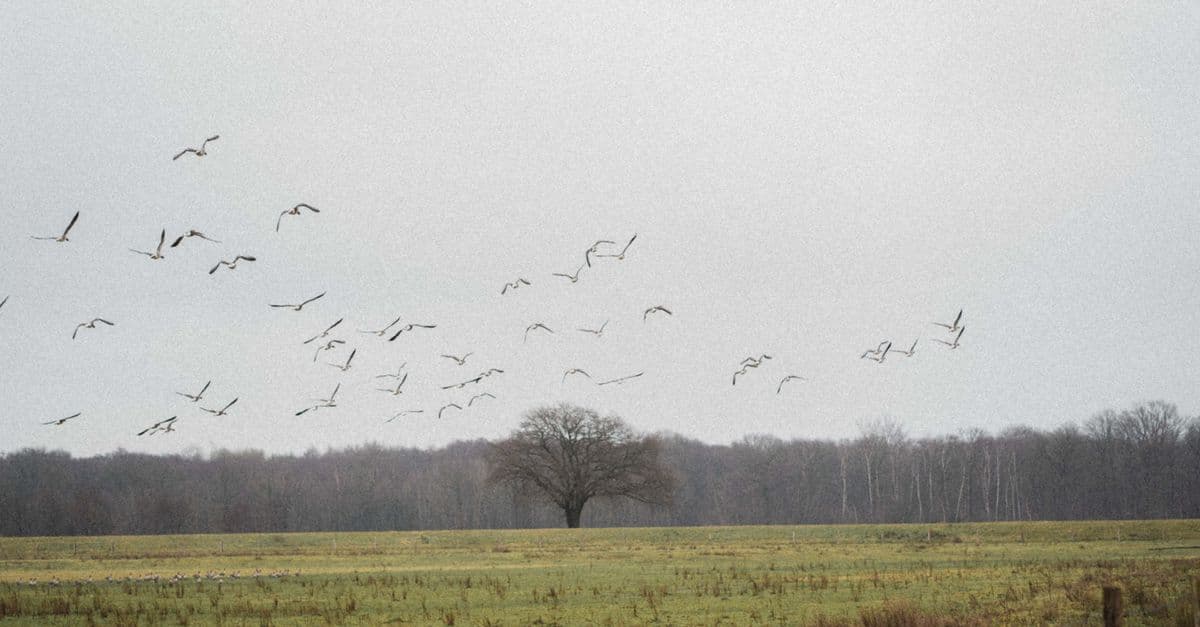
How Do Bird Migrations Work? The Science Explained
Bird migrations work through a combination of photoperiod-triggered hormonal changes, sun and star compasses, and magnetoreception — a quantum-mechanical ability to sense Earth's magnetic field using cryptochrome proteins in the eye. These overlapping systems let birds navigate thousands of kilometers with precision that rivals GPS, while extreme fat metabolism powers nonstop flights lasting more than 11 days.
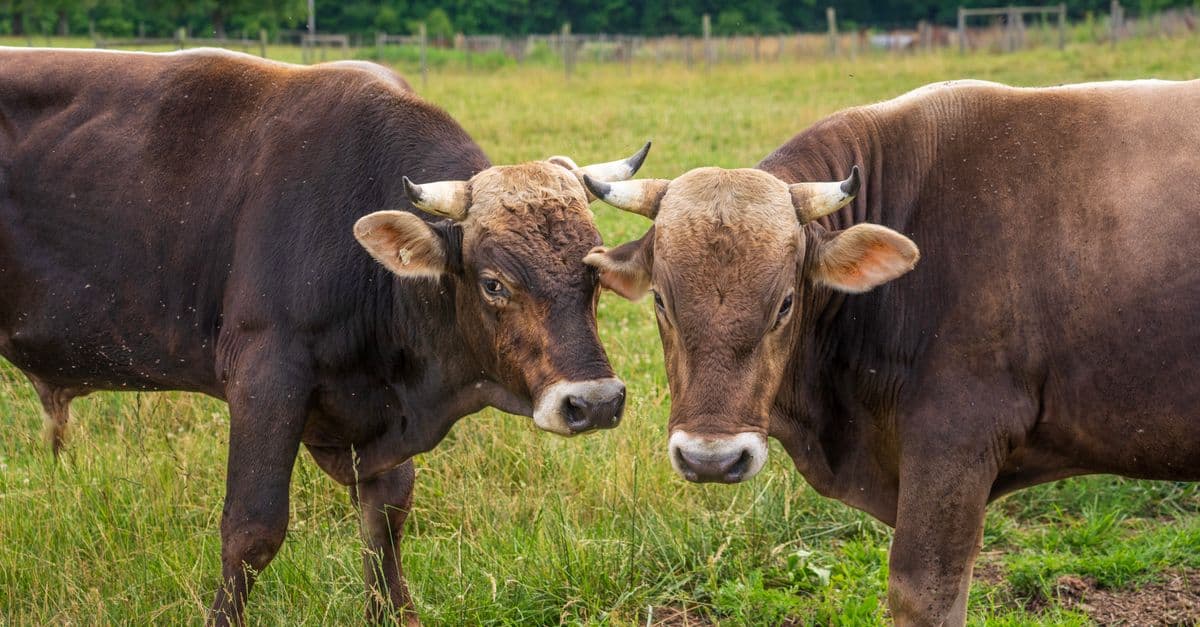
How Animals Were Domesticated: Genetics, Behavior, and the Domestication Syndrome
Dogs diverged from wolves at least 15,000 years ago — possibly 40,000 years ago — and the transformation involved not just behavioral tameness but a cascade of physical changes no one selected for: floppy ears, piebald coats, shortened snouts, reduced brain volume. The same cluster of traits appears in domesticated cattle, pigs, horses, and foxes bred in a 60-year Russian experiment. This pattern has a name, a mechanistic explanation, and implications for understanding a transition that reshaped the human species.