How Animals Were Domesticated: Genetics, Behavior, and the Domestication Syndrome
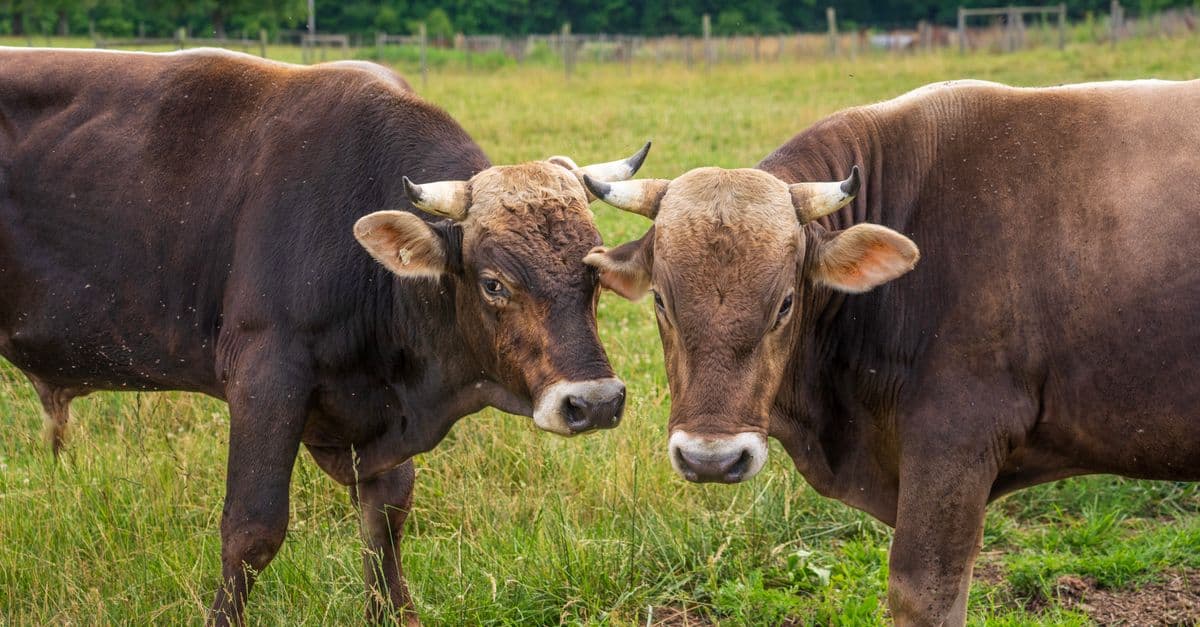
Photo: Mark Stebnicki / Pexels
Dogs diverged from wolves at least 15,000 years ago — some genetic analyses suggest 40,000 years or earlier — and the transformation involved not just behavioral tameness but a cascade of physical changes that no one deliberately selected for: floppy ears, piebald coats, shortened snouts, curled tails, reduced brain volume, extended juvenile appearance into adulthood. The same cluster of traits appears in domesticated cattle, pigs, horses, rabbits, and in a population of foxes bred in a 60-year Russian experiment that selected only for approach behavior toward humans. This pattern is called the domestication syndrome, and its explanation lies in developmental biology: the traits are not independent targets of selection, but side effects of a single developmental change.
What Domestication Actually Is
Domestication is frequently conflated with taming. A tame animal — one that tolerates or seeks human presence — may simply be an individual raised in close contact with people from an early age. A tame lion raised from a cub is not a domesticated lion. Domestication is a population-level, multi-generational phenomenon that produces heritable changes: the offspring of domesticated animals are born behaviorally and physiologically different from their wild counterparts, even if raised without human contact.
Domestication — an evolutionary process in which a wild population undergoes heritable changes in morphology, physiology, and behavior as a result of artificial selection (or selection imposed by the human environment), producing a population that is reproductively and behaviorally adapted to life with humans.
Tameness — a learned or ontogenetically induced reduction in fear response toward humans in an individual animal, not heritable and not involving population-level genetic change.
The distinction matters because it tells us what we need to explain. Taming explains an individual's behavior. Domestication requires an explanation for why populations change genetically, what selection pressures drive those changes, and why those changes so consistently include the same suite of physical traits across phylogenetically distant species.
Neoteny — the retention of juvenile physical characteristics into adult life. Domesticated dogs have flatter faces, rounder skulls, and more juvenile body proportions than wolves — characteristics that in wolves disappear by adulthood. Selection for behavioral juvenility (reduced fear, increased play behavior) may produce physical juvenility as a correlated response.
Source: Price, E.O. (1984), "Behavioral aspects of animal domestication," The Quarterly Review of Biology, Vol. 59 — foundational review distinguishing domestication from taming and defining the behavioral criteria for domestication, with comparative data across species.
The Domestication Syndrome: One Cause, Many Effects
The cluster of traits that appears across domesticated species — reduced fear of humans, floppy ears, piebald coloration, shortened snouts, smaller teeth, reduced adrenal gland size, more frequent estrous cycles, curled tails, and smaller brains — was first systematically described by Charles Darwin in The Variation of Animals and Plants under Domestication (1868). Darwin noted the pattern but did not propose a mechanism.
The current leading hypothesis is the neural crest cell model, proposed by Adam Wilkins, Richard Wrangham, and W. Tecumseh Fitch in a 2014 paper in Genetics. Neural crest cells are a migratory cell population that emerge from the dorsal neural tube early in embryonic development and travel throughout the body to differentiate into an enormous range of cell types: peripheral nervous system neurons, adrenal medullary cells, melanocytes (pigment cells), and cells contributing to the face, teeth, ears, and skull.
The hypothesis: selection for reduced fear (and reduced aggression) in a wild population primarily acts on adrenal function — fearful, aggressive animals have larger, more reactive adrenal glands. Because neural crest cells give rise to adrenal medullary tissue, selecting for smaller, less reactive adrenal glands selects (indirectly) for animals in which neural crest cell migration was slightly reduced or delayed during development. And because neural crest cells also give rise to ear cartilage, facial bone, melanocytes, and other structures, a slight reduction in neural crest cell numbers or migration rate produces the entire syndrome as a correlated package.
Neural crest cells — a transient, migratory cell population unique to vertebrate embryos that gives rise to an unusually diverse array of cell types, including components of the peripheral nervous system, pigment cells, skull and facial bones, and adrenal medullary cells.
| Trait | Neural crest connection |
|---|---|
| Floppy ears | Reduced ear cartilage (neural crest-derived) |
| White patches and piebald coat | Fewer melanocytes (neural crest-derived) |
| Shortened snout | Reduced facial bone growth (neural crest-derived) |
| Smaller teeth | Reduced dental mesenchyme (neural crest-derived) |
| Smaller adrenal glands | Reduced adrenal medullary tissue (neural crest-derived) |
| Reduced fear/aggression | Reduced adrenal medullary reactivity |
| More frequent breeding | Smaller adrenal glands reduce stress-induced reproduction suppression |
This does not mean every trait of every domesticated species fits perfectly into the neural crest model. Some domestication traits — increased fat deposition in pigs, wool production in sheep, increased milk yield in cattle — are clearly targets of deliberate selection not related to neural crest biology. But the core syndrome, the recurrent package across species, appears to trace to this single developmental pathway.
Source: Wilkins, A.S., Wrangham, R.W., and Fitch, W.T. (2014), "The 'domestication syndrome' in mammals: a unified explanation based on neural crest cell behavior and genetics," Genetics, Vol. 197 — the paper proposing and supporting the neural crest cell hypothesis for the domestication syndrome across mammalian species.
The Russian Silver Fox Experiment: Reproducing Domestication
In 1959, Soviet geneticist Dmitry Belyaev began an experiment at the Institute of Cytology and Genetics in Novosibirsk. His goal was to study the genetics and developmental biology of domestication in real time, using silver foxes (Vulpes vulpes) as the model species. The design was simple and brutal in its elegance: select only for one behavioral trait — willingness to approach a human hand — and observe what else changes.
Each generation, the 10% most approachable pups (those that would approach the human experimenter rather than retreat or snap) were selected as parents of the next generation. Within six generations, pups were approaching humans without prompting. By generation 10, some foxes were actively seeking human contact. By generation 20, the population was behaving like domestic dogs — tail-wagging, lick-seeking, whimpering for attention.
And the physical traits arrived uninvited. Floppy ears appeared in the fourth generation. Piebald (white-patched) coats appeared by the sixth. Shorter snouts, rolled tails, and out-of-season estrous cycles followed. These traits had never been selected for — they were correlated responses to selection on a single behavioral dimension. In roughly 40 generations — the equivalent of perhaps 800–1,000 years at fox generation time — Belyaev had reproduced what took dogs 15,000+ years, simply because the selection pressure was concentrated and consistent.
The biochemical data confirmed the neural crest model's predictions. The tame foxes had significantly lower baseline and stress-induced corticosterone and adrenaline levels than control-line foxes — smaller, less reactive adrenal glands. Their serotonin levels were elevated. The physiological changes in stress reactivity appeared before many of the morphological changes, consistent with the hypothesis that behavioral selection acts on adrenal function first.
The Novosibirsk experiment has been running continuously since 1959 under Belyaev's successor, Lyudmila Trut. A parallel line selected for aggression — foxes that snapped and lunged at humans — showed divergent trajectories in both behavior and morphology, with larger adrenal glands and none of the piebald or floppy-eared changes of the tame line.
Source: Belyaev, D.K. (1979), "Destabilizing selection as a factor in domestication," Journal of Heredity, Vol. 70 — Belyaev's own summary of the first 20 years of the experiment, describing the behavioral and morphological changes in tame-selected foxes.
Source: Trut, L., Oskina, I., and Kharlamova, A. (2009), "Animal evolution during domestication: the domesticated fox as a model," BioEssays, Vol. 31 — comprehensive update on the silver fox experiment after 50 years, including morphological, hormonal, and initial genomic data.
Dogs from Wolves: When and Where
The domestication of dogs from gray wolves (Canis lupus) is the best-studied animal domestication event and the most contested in terms of timing and geography. The behavioral and genetic divergence happened sometime between 15,000 and 40,000 years ago, with different studies reaching different conclusions depending on the genomic markers used and the fossil specimens analyzed.
The archaeological record provides a firm floor. The oldest unambiguous dog fossil — a wolf-size canid buried deliberately alongside a human, with morphological features (shorter snout, wider palate) distinct from contemporary wolves — dates to approximately 14,700 years ago from the Bonn-Oberkassel site in Germany. Earlier candidates exist: a 33,000-year-old canid skull from Altai, Russia, shows some dog-like features, but whether it represents a domestication event that later went extinct or an early domestication is debated.
Genetic studies consistently place dogs as a single domesticated lineage — not multiple independent domestication events from different wolf populations — though the precise ancestral population remains unclear. A 2021 study published in Nature by Bergström et al. analyzed 27 ancient dog genomes and concluded that dogs were domesticated at least 11,000 years ago (the most recent date compatible with the ancient genome data) from a now-extinct wolf population, possibly in Western Eurasia.
The context of domestication is also debated. The classic model holds that wolves began associating with human hunter-gatherer camps to scavenge food waste, and that the least-fearful individuals who could tolerate proximity to humans had a feeding advantage. Over generations, this self-selected for reduced fear, and humans began deliberately selecting for useful traits (tracking, guarding, herding) once a tame population existed.
An alternative model — self-domestication in the narrow sense — proposes that the initial selection was entirely driven by human food waste ecology, with no deliberate human selection at all. Wolves that tolerated human proximity ate more; their less-fearful offspring survived at higher rates; the population diverged from other wolves through natural selection imposed by the human-camp environment rather than through human intentional breeding.
Self-domestication — domestication driven primarily by the selective environment created by human presence, rather than by deliberate human selection for specific traits. The key distinction is whether humans actively chose which animals to breed.
Source: Bergström, A. et al. (2020), "Origins and genetic legacy of prehistoric dogs," Science, Vol. 370 — comprehensive ancient genomic analysis of dog origins, identifying a single domestication event with subsequent population mixing as dogs spread with humans globally.
The Genetics of Tameness
When researchers began sequencing the genomes of domesticated animals and comparing them to their wild relatives, they expected to find simple signatures: genes controlling aggression turned down, genes controlling fear response altered. The reality is more complex and more interesting.
A 2017 study comparing tame and aggressive-selected foxes from the Novosibirsk experiment identified 103 genomic regions that differed significantly between the two lines. Many of these regions contained genes involved in axon guidance, synaptic plasticity, and neurodevelopment — processes that determine how neural circuits form and connect, not simple on/off switches for individual behaviors.
In dogs, comparative genomic studies have identified multiple genes under strong positive selection that differ from wolves. Among the best-characterized are variants in AMY2B (amylase 2B), which encodes a digestive enzyme active against starch. Dogs have 4–30 copies of AMY2B; wolves typically have 2. The extra copies allow dogs to digest starch-rich human food waste more efficiently — a direct genetic signature of the garbage-dump domestication hypothesis, since wolves that could eat human starchy refuse had a caloric advantage.
Variants in WBSCR17, a gene involved in social behavior, and in several serotonin and dopamine pathway genes have also been identified as domestication candidates in dogs. Interestingly, the human genetic disorder Williams syndrome — which involves a deletion in a chromosomal region including genes related to WBSCR17 — produces hypersociability, reduced fear of strangers, and increased affiliative behavior in humans. The parallel with dog domestication has been noted and studied, though the mechanistic connection remains speculative.
Source: Carneiro, M. et al. (2014), "Rabbit genome analysis reveals a polygenic basis for phenotypic change during domestication," Science, Vol. 345 — multi-species analysis of domestication genomics, identifying common patterns (neural, adrenal, and melanocyte-related genes) across independently domesticated species.
Source: Axelsson, E. et al. (2013), "The genomic signature of dog domestication reveals adaptation to a starch-rich diet," Nature, Vol. 495 — identification of AMY2B copy number expansion and other genomic domestication signatures in dogs compared to wolves.
Other Domestication Events: Cattle, Horses, and the Unusual Cases
Dog domestication is exceptional in its antiquity, but the Neolithic period (roughly 10,000–5,000 years ago) saw a burst of additional domestication events that fundamentally transformed human subsistence.
Cattle (Bos taurus) were domesticated from the aurochs (Bos primigenius) approximately 10,000 years ago, almost certainly in the Near East, with a separate domestication event producing zebu cattle in South Asia. The aurochs was a formidable animal — standing up to 1.8 m (6 ft) at the shoulder and weighing up to 1,000 kg (2,200 lb). Archaeological evidence suggests that aurochs were kept in managed herds before domestication morphology appeared, indicating a period of proto-domestication during which behavioral selection preceded morphological divergence.
Horses (Equus caballus) were domesticated approximately 5,500 years ago on the Eurasian steppe, based on current genetic and archaeological evidence. The wild progenitor, the tarpan (Equus ferus ferus), is now extinct. Przewalski's horse (Equus przewalskii), long thought to be the wild ancestor of domestic horses, is now understood to be a feral descendant of early domesticated stock — itself a domesticated animal that returned to the wild, making it technically no longer a pure wild horse.
Cats (Felis catus) represent a domestication case that closely fits the self-domestication model. Near Eastern wildcats (Felis silvestris lybica) appear to have begun associating with early agricultural settlements approximately 10,000 years ago, where grain stores attracted rodents, which attracted cats. Unlike dogs, cats show relatively few domestication syndrome traits: their skull morphology, brain size, and reproductive physiology are largely similar to wildcats. Their primary behavioral change — tolerance of human proximity — may represent a shallow domestication event still in progress.
Chickens (Gallus gallus domesticus) were domesticated from red junglefowl (Gallus gallus) in Southeast Asia approximately 8,000 years ago, possibly initially for cockfighting rather than food production. Egg and meat production traits were apparently selected later, after the initial behavioral domestication.
| Species | Wild ancestor | Approximate domestication date | Primary location |
|---|---|---|---|
| Dog | Gray wolf (Canis lupus) | 15,000–40,000 BP | Uncertain; possibly W. Eurasia |
| Sheep | Mouflon (Ovis orientalis) | ~10,500 BP | Near East |
| Goat | Wild goat (Capra aegagrus) | ~10,000 BP | Near East |
| Cattle | Aurochs (Bos primigenius) | ~10,000 BP | Near East, S. Asia (separate) |
| Pig | Wild boar (Sus scrofa) | ~9,000 BP | Near East, China (separate) |
| Cat | Near Eastern wildcat (Felis silvestris lybica) | ~10,000 BP | Near East |
| Horse | Tarpan (Equus ferus ferus) | ~5,500 BP | Eurasian steppe |
| Chicken | Red junglefowl (Gallus gallus) | ~8,000 BP | Southeast Asia |
Source: Zeder, M.A. (2012), "The domestication of animals," Journal of Anthropological Research, Vol. 68 — comprehensive review of the archaeological and genetic evidence for major animal domestication events, their timing, geography, and sequence.
Human Self-Domestication: The Most Controversial Hypothesis
A growing body of research proposes that humans themselves underwent a self-domestication process over the past 300,000 years, producing behavioral and morphological changes parallel to those seen in other domesticated species.
The case rests on several lines of evidence. Modern humans have smaller brow ridges, smaller teeth, less pronounced sexual dimorphism, and somewhat reduced brain volume compared to archaic humans (including Neanderthals) — all traits in the domestication syndrome direction. Behavioral evidence suggests modern humans are less impulsively aggressive than archaic ancestors, with higher rates of prosocial and cooperative behavior with strangers — again, in the domestication direction.
The proposed selection mechanism is not human farmers selecting which humans to breed. Instead, proponents suggest that collective prosocial punishment — early human groups' capacity to collectively suppress and exclude hyper-aggressive individuals — acted as the analogous selection pressure. Individuals who were too aggressive to cooperate were killed, exiled, or excluded from reproduction. Over many generations, this human-imposed selection pressure could have produced changes in the HPA (hypothalamic-pituitary-adrenal) stress axis similar to those produced by deliberate selection in dogs and foxes.
The hypothesis is contentious. Critics note that the morphological changes in modern humans are modest compared to domesticated animals, and that alternative explanations (dietary changes, reduced mechanical loading) can explain bone and tooth reduction without invoking self-domestication. The behavioral claims are harder to evaluate without clear metrics for archaic human sociality.
Source: Wrangham, R. (2019), The Goodness Paradox: The Strange Relationship Between Virtue and Violence in Human Evolution, Pantheon — the book-length case for human self-domestication, drawing on the silver fox experiment, comparative primatology, and archaeological evidence.
The Takeaway
Domestication is one of the most consequential biological processes in the history of the planet, and also one of the most counterintuitive. The traits that make an animal domesticated — tameness, tolerance, sociality toward humans — are not isolated behavioral adjustments. They arrive with a package of physical changes (floppy ears, reduced adrenal glands, piebald coats, shortened snouts) that no one selected for, produced by a single underlying change in the developmental timing and migration of neural crest cells. The Russian silver fox experiment demonstrated this in real time: select only for willingness to approach a human hand, and within 40 generations you get an animal that looks and acts like a domestic dog. Domestication did not simply give humans useful animals. It gave humans partnership with animals whose biology was fundamentally restructured by the selective environment humans created — and may, if the self-domestication hypothesis holds, have restructured human biology too.
Frequently Asked Questions
Q: What is the domestication syndrome?
A: The domestication syndrome is the cluster of traits that appear consistently across domesticated mammal species even when not deliberately selected: floppy ears, piebald (white-patched) coats, shortened snout, smaller teeth, reduced brain volume, more frequent breeding cycles, and reduced fear responses. The current leading explanation is that these traits are correlated developmental consequences of reduced neural crest cell activity, which is the developmental mechanism through which selection for tameness (reduced adrenal reactivity) produces the full suite of changes.
Q: Were dogs domesticated once or multiple times?
A: Current genetic evidence favors a single domestication event, followed by subsequent mixing as domesticated dogs spread globally with human populations. The precise location of that single event — Near East, Central Asia, Europe, East Asia — remains debated, and different studies using different genomic methods have reached different conclusions. A 2020 Science paper analyzing 27 ancient dog genomes concluded the single event occurred at least 11,000 years ago, possibly in Western Eurasia.
Q: What did Belyaev actually select for in the silver fox experiment?
A: Exclusively for one behavioral criterion: whether fox pups would approach and allow contact with a human experimenter. Pups that approached without retreating or snapping were selected as breeders. No selection was applied to ear shape, coat color, skull morphology, tail shape, or reproductive timing — yet all of these changed as correlated responses within 20 generations.
Q: Is the domestication of animals complete, or ongoing?
A: Ongoing. Selective breeding of domestic animals continues to produce genetic change in all livestock and companion animal species. Some researchers argue that cats represent a relatively early-stage domestication compared to dogs, with less behavioral and morphological divergence from wild relatives. Some species — like the ostrich, farmed salmon, and red deer — are in early stages of domestication with domestication syndrome traits only beginning to appear in captive-bred populations.
Q: How did early humans domesticate large, dangerous animals like aurochs?
A: Almost certainly through a gradual process beginning with managed captivity of individuals captured in hunting contexts. Juvenile animals captured alive would be more manageable than adults. The least-fearful individuals in managed herds would survive and reproduce at higher rates than fearful ones, producing gradual behavioral change over generations. The archaeological record shows evidence of morphological domestication changes appearing 1,000–2,000 years after the first evidence of managed herding, consistent with this model.
Q: Did early humans understand what they were doing when they domesticated animals?
A: Almost certainly not in any formal genetic sense. Early domestication was almost surely a gradual, unintentional process — managing animals for food or other resources and inadvertently selecting for traits that made management easier. Only later, after domestication was established, did humans begin deliberately selecting for specific production traits. The awareness that breeding choices affect offspring is ancient, but the genetic mechanism was not formally described until the 20th century.
Read next:
Follow new articles
Add SciHub101 to your feed reader to see new science and technology stories.
About the Author
SciHub101 is an independent science and technology publication founded and edited by Buğra Sözeri, a software engineer and app developer based in Türkiye. AI tools assist with drafting and research. Source documentation in the existing archive is uneven, and articles are being reviewed and corrected. The Editorial Team byline identifies editorial responsibility; it does not certify specialist or independent human review. Where we compare products, anything built by our own team is labelled as such — see the editorial guidelines and About page for how corrections and disclosures work.
Related Articles
How Geckos Stick to Walls: Van der Waals Forces and Dry Adhesion
A gecko weighing 70 grams can hang from a ceiling by a single toe. The adhesive force available from its feet has been measured at approximately 20 Newtons — enough to support the weight of roughly 40 geckos simultaneously. No glue is involved. No suction cups. The mechanism is quantum-mechanical: trillions of nanoscale hair structures bring gecko toe pads into such intimate contact with surfaces that the quantum interactions between electrons in adjacent molecules provide enough combined force to defy gravity.
How Do Octopuses Change Color? The Science of Chromatophores and Camouflage
An octopus can match the texture and color of a rocky seafloor in under 300 milliseconds—while being completely colorblind. This paradox reveals one of nature's most sophisticated biological display systems: three layers of pigment and structural color cells controlled directly by the brain, operating faster than conscious thought.
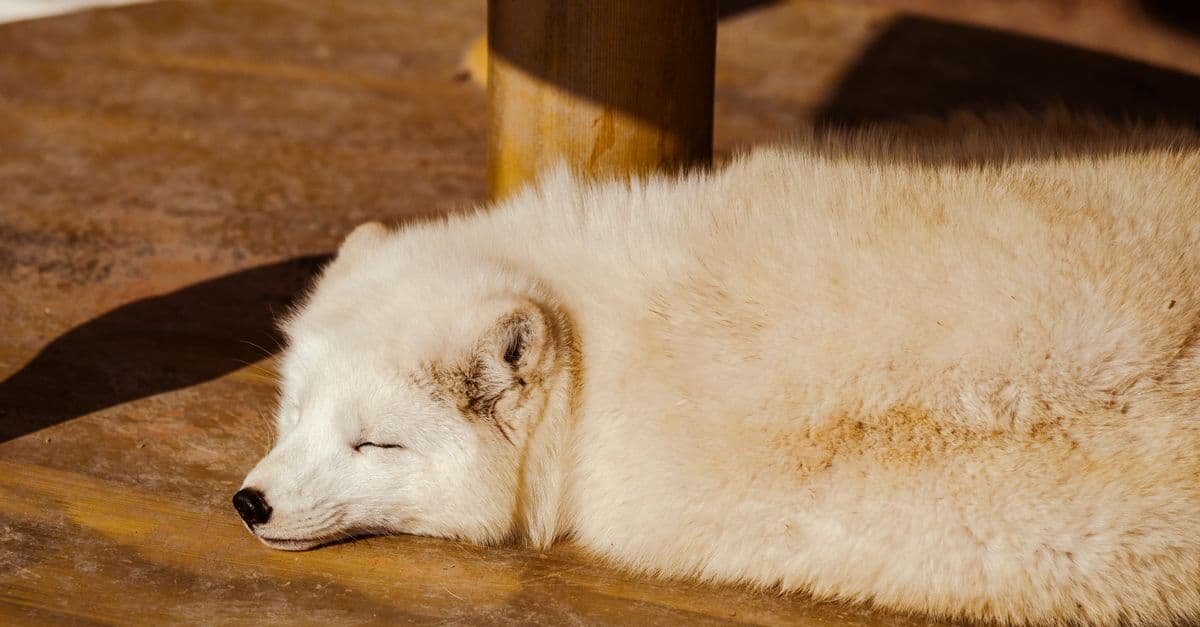
The Fox Domestication Experiment: Breeding Tameness in Real Time
Starting in 1959, Soviet geneticist Dmitry Belyaev selectively bred silver foxes for tameness alone. Within a few generations, the foxes developed floppy ears, piebald coats, and dog-like behavior.
How Dogs Understand Humans: The Science of the World's Oldest Partnership
Dogs can read human emotions, follow pointing gestures, and understand hundreds of words — abilities even our closest primate relatives often lack.
How Animal Camouflage Works: Crypsis, Mimicry, and the Biology of Invisibility
A cuttlefish can reproduce the texture of a gravel bed on its skin — in complete darkness. Chameleons change color not primarily to hide, but to communicate. A stick insect's body plan is so precise that its eggs mimic seeds, tricking ants into carrying them to new locations. Camouflage is not a coat of paint; it is a complete biological system built by evolution over hundreds of millions of years.
How Do Birds Migrate Thousands of Miles: Navigation, Fat, and Flight
An Arctic tern chick hatches in Greenland, fledges, and within weeks makes its first 70,000 km round-trip migration to Antarctica — a journey it has never made before, with no experienced adult to follow. By the end of its 30-year life, it will have flown the equivalent of three trips to the Moon and back. The mechanisms behind this feat involve quantum physics, internal clocks, and a navigation system more sophisticated than anything human engineers have yet replicated.