How Animal Camouflage Works: Crypsis, Mimicry, and the Biology of Invisibility
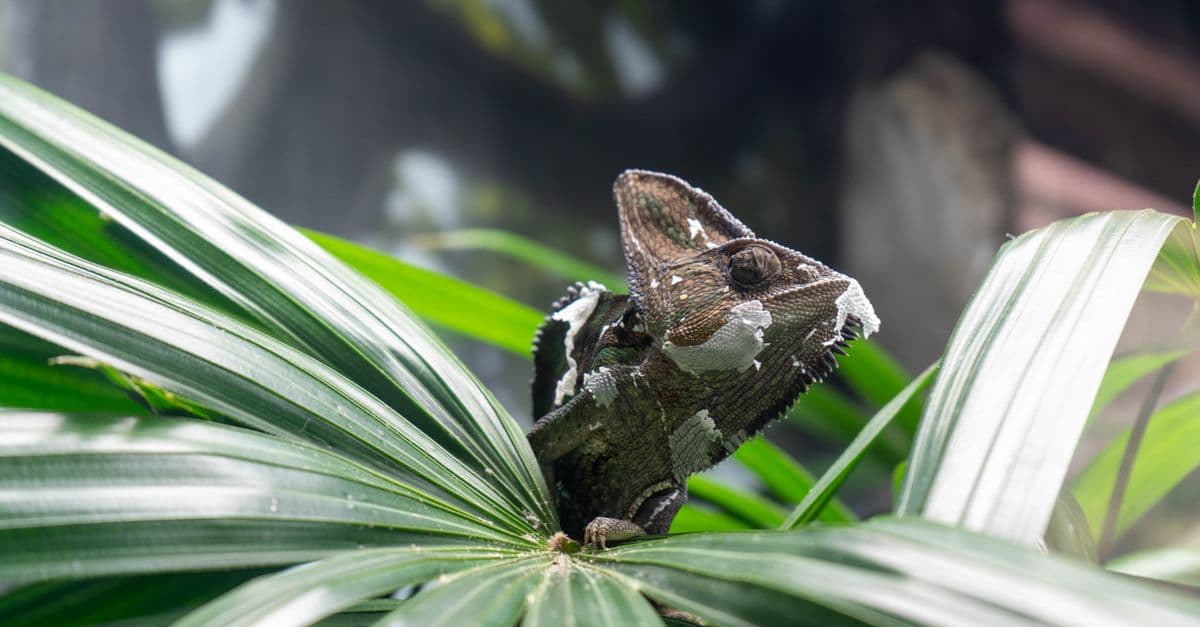
Photo: Myles Moore / Pexels
A common cuttlefish approaches a patch of rubble on the seafloor and, within 200 milliseconds, its skin shifts from a pale, featureless gray to an intricate mosaic of small dark spots on a lighter background — a near-perfect replica of the texture and color distribution of the pebbles beneath it. The cuttlefish is colorblind. Its eyes do not perceive the wavelengths it is reproducing. Yet the match is good enough to fool octopuses, fish, and marine biologists. What makes this possible is one of biology's most sophisticated sensory-motor systems — and it has almost nothing in common with how a chameleon changes color, or how a snowshoe hare turns white in winter.
What Camouflage Actually Is
Camouflage is not one thing. It is a collection of strategies that all aim at the same goal — reducing detectability — but achieve it through different biological mechanisms and exploit different properties of visual systems.
Crypsis — the ability to avoid detection by matching the visual properties of the environment. A moth resting on bark, a flounder lying on sand, a walking stick insect on a twig. True crypsis requires both the appropriate coloration or texture and, crucially, the behavioral knowledge to deploy that appearance in the right setting.
Mimicry — resembling another organism or object to gain protection. This includes Batesian mimicry (a harmless species resembling a harmful one) and Müllerian mimicry (two harmful species converging on similar warning patterns, sharing the cost of teaching predators). The hoverfly that looks like a wasp is practicing Batesian mimicry. The monarch and viceroy butterfly color convergence is a classic Müllerian case.
Disruptive coloration — patterns that break up the outline of the body, making it harder for a predator's visual system to parse the animal as a coherent object. A zebra's stripes are the most famous example; at close range they are obvious, but in a moving herd they create a confusion of edges that makes individual animals difficult to isolate and track.
Countershading — darker pigmentation on the dorsal (upper) surface and lighter on the ventral (lower) surface, canceling the shadow gradient that natural light casts on rounded objects. Without countershading, a solid-colored animal in sunlight would appear lighter on top and darker underneath — a shading gradient that immediately signals "solid, three-dimensional object" to a predator's visual system. Countershading neutralizes this cue, flattening the visual appearance. It appears in sharks, deer, penguins, most fish, and hundreds of other species.
Active camouflage — changing color or pattern in real time to match a changing background. This is where cephalopods and some lizards operate, and the biology here is the most complex and the least fully understood.
How Cephalopods Change Color: Chromatophores
Cephalopods — octopuses, squid, and cuttlefish — achieve active camouflage through a three-layer skin system that operates like a biological display panel. Understanding it requires understanding each layer.
Chromatophores — elastic sacs filled with colored pigment granules (yellow, orange, red, or brown), each sac surrounded by a ring of radial muscle cells. When the muscles contract, they pull the sac outward, expanding it from a pinpoint into a disk up to a millimeter across and making the color visible. When the muscles relax, the sac retracts by its own elasticity, and the color effectively disappears. Each chromatophore is directly innervated — connected to its own motor neuron from the brain. The cuttlefish Sepia officinalis has hundreds of thousands of chromatophores in its skin, each individually controllable.
Iridophores — cells containing stacks of thin protein plates separated by cytoplasm. These plates act as interference reflectors, generating structural color (color from physical structure rather than pigment) in blues, greens, and silvers. By changing the spacing between plates, cephalopods can shift the wavelengths of light their iridophores reflect — a process that operates on a slower timescale than chromatophore expansion but allows a far wider color range.
Leucophores — cells containing spherical protein granules that scatter all wavelengths of light equally, producing broadband white. These form the background against which the chromatophore and iridophore patterns are displayed.
The brain orchestrates all three layers simultaneously, running what is essentially a real-time texture synthesis algorithm. The cuttlefish's eyes feed visual information to the optic lobes, which extract the statistical properties of the background — not just average color, but spatial frequency, edge distribution, and texture scale — and translate those properties into motor commands to specific chromatophore populations. The output is a body-wide pattern that approximates the visual statistics of the background, not a pixel-by-pixel copy.
Source: Hanlon, R.T. and Messenger, J.B. (1996), Cephalopod Behaviour, Cambridge University Press — the authoritative reference on cephalopod skin and camouflage systems.
Source: Kelman, E.J. et al. (2023), "The dynamics of pattern matching in camouflaging cuttlefish," PNAS, published in PMC10322717 — analysis of the real-time pattern-matching process in Sepia officinalis.
The fact that cuttlefish can perform this matching in complete darkness — which has been experimentally demonstrated — reveals that the visual matching process is not the only mechanism at work. Cuttlefish may also be responding to tactile information about substrate texture, or the pattern-generation system has sufficient redundancy that tactile input can substitute for visual input in triggering appropriate camouflage patterns.
How Chameleons Change Color: A Completely Different System
Chameleons are the most culturally prominent color-changing animals, but their mechanism shares almost nothing with the cephalopod system — and serves a completely different primary function.
For most of the 20th century, chameleon color change was explained by chromatophores (the same cells cephalopods use). This explanation was wrong. In 2015, researchers at the University of Geneva published a study in Nature Communications showing that the primary mechanism in panther chameleons (Furcifer pardalis) is not pigment cells at all, but iridophore arrays: layers of nanocrystals arranged in a triangular lattice within the skin. The spacing between these crystals determines which wavelengths of light they reflect via constructive interference. When the chameleon is relaxed, the crystals are packed tightly and reflect blue and green light. When the chameleon is excited or stressed, skin cells expand, the crystal spacing increases, and the reflected wavelengths shift toward red and yellow.
Source: Teyssier, J. et al. (2015), "Photonic crystals cause active colour change in chameleons," Nature Communications, Vol. 6 — identified the iridophore crystal mechanism as primary driver of chameleon color change.
This mechanism is fundamentally different from the cephalopod chromatophore system. It does not require motor neuron control of individual cells; it responds to systemic physiological changes (stress hormones, body temperature, autonomic nervous system state) that alter tissue turgor across large skin regions.
Critically, research has shown that chameleon color change is primarily social signaling, not camouflage. Male panther chameleons perform color displays during territorial contests and courtship that are rapid, dramatic, and directed at specific individuals. Research published in PLOS Biology demonstrated that the speed and intensity of a male's color display during contests predicts the contest outcome better than body size — meaning color change is a reliable signal of competitive motivation, not a deceptive signal. The camouflage function exists but is secondary. The social signaling function drove the evolution of the system.
Source: Stuart-Fox, D.M. and Moussalli, A. (2008), "Selection for Social Signalling Drives the Evolution of Chameleon Colour Change," PLOS Biology — evolutionary analysis showing social signaling, not crypsis, as the primary selective pressure on chameleon color change.
Countershading and the Physics of Self-Canceling Shadows
Countershading is subtle but nearly universal in vertebrates that lack other forms of active camouflage, and it is worth understanding precisely because the physics behind it is clean.
Under natural lighting (sunlight from above), any rounded three-dimensional object will appear lighter on its upper surface (where it faces the light source) and darker on its lower surface (where it is in shadow). This gradient is an automatic cue to three-dimensionality that vertebrate visual systems are specifically tuned to detect — because detecting solid, three-dimensional objects is fundamental to predation.
Countershading exploits this by pre-installing the inverse gradient in the animal's pigmentation. The back is darker; the belly is lighter. When natural light hits the animal, the inherent shadow on the belly is illuminated by the paler belly pigmentation, and the inherent brightness of the back is counteracted by the darker dorsal pigmentation. The result is a flattening of the apparent contrast gradient — the animal appears more uniform in brightness from all angles, making it harder for predators to parse as a three-dimensional object against a complex background.
The degree of countershading is tuned to the direction of illumination in the animal's habitat. Species living in open water receive light from directly above, and show strong dorsal-ventral countershading. Species living under forest canopy, where light comes from multiple diffuse angles, show less pronounced countershading. Deep-sea fish that are bioluminescent themselves, or that face bioluminescent predators, sometimes show reverse countershading — darker bellies to conceal themselves against bioluminescent light rising from below.
Source: Kiltie, R.A. (1988), "Countershading: universally deceptive or deceptively universal?," Trends in Ecology and Evolution, Vol. 3 — analysis of the evolutionary ecology and physics of countershading patterns.
Batesian Mimicry and the Cognitive Arms Race
Batesian mimicry is more than a visual phenomenon — it is fundamentally a system that exploits predator cognition. The hoverfly that mimics a wasp does not need to fool every predator. It only needs to be close enough to a wasp, and the predator's learned aversion to wasp-colored insects to be strong enough, that the predator treats the hoverfly as not worth attacking.
This framing reveals why mimicry works statistically, not individually. A naive predator that has never encountered a wasp will not avoid the hoverfly. A predator that has been stung once will show avoidance. A predator that has been stung many times will show very strong avoidance. The system depends on a population of models (real wasps), a population of mimics (hoverflies), and a learning curve in the predator population. When mimics are rare relative to models, the predator's average experience is mostly model encounters and the mimicry works well. When mimics become common, a predator encounters mimics more often, the correlation between wasp-coloring and actual stings weakens, and selection on mimics to more closely resemble the model intensifies.
Aggressive mimicry inverts the typical predator-prey dynamic. The anglerfish's bioluminescent lure mimics the movement of small prey to attract fish close enough to be eaten. The alligator snapping turtle uses a worm-like appendage on its tongue to lure fish into its mouth. The mimic octopus impersonates toxic flatfish and lionfish to deter predators — but also impersonates damselfish to approach damselfish close enough to eat them.
Source: Ruxton, G.D., Sherratt, T.N., and Speed, M.P. (2004), Avoiding Attack: The Evolutionary Ecology of Crypsis, Warning Signals and Mimicry, Oxford University Press — comprehensive treatment of the evolutionary ecology of camouflage and mimicry systems.
The Evolutionary Arms Race
Every improvement in predator detection drives selection for better concealment in prey; every improvement in prey concealment drives selection for better detection in predators. This is a co-evolutionary arms race, and it has shaped entire sensory systems.
Mantis shrimp have 16 types of photoreceptor cells (humans have three). For years, researchers assumed this gave them exceptional color discrimination. Behavioral testing has shown this assumption was wrong — mantis shrimp are actually poor at discriminating between similar colors. What they appear to use their extraordinary spectral range for is rapid parallel identification of color categories — essentially running 16 simple color-presence/absence detections simultaneously rather than computing graded differences between colors. This may be an adaptation to the rapidly fluctuating colors of cephalopod camouflage displays, where speed of category identification matters more than subtle discrimination.
Predators that specialize in visually concealed prey also show specific neural adaptations. Archerfish and other piscivores that hunt from below have neural circuits tuned to detect the countershading break that reveals fish above them at the water surface. Predatory birds show enhanced edge-detection circuits in their visual systems that outperform humans at parsing disruptive coloration patterns.
The arms race is not always visual. Bats hunt by echolocation, making visual camouflage irrelevant. Moths that are preyed upon by bats have evolved acoustic camouflage: wing surfaces covered in absorptive scales that reduce ultrasound echo strength, and body shapes that return diffuse rather than specular echoes. This is the auditory equivalent of countershading — reducing the information available to the predator's detection system.
Source: Neil, T.R. et al. (2020), "Moth wings are acoustic metamaterials," PNAS, Vol. 117 — demonstrated that moth wing scales function as ultrasound-absorbing material, reducing bat echolocation detection efficiency.
What People Get Wrong About Camouflage
"Chameleons change color to hide." The primary evolutionary driver is social communication, not crypsis. A chameleon in a tree is already cryptically colored at rest. The color displays are directed at rivals and potential mates.
"Cuttlefish are copying what they see." They are not making a photographic copy — they are reproducing the statistical texture properties of the background using a pattern-generation system that works on abstract visual features. The output approximates the background without literally replicating it, which is why it works on novel substrates the animal has never encountered.
"Camouflage is always passive." Stick insects are not just shaped like sticks — they behave like sticks, swaying gently in a breeze even when there is none, moving only at night. Flounder settle on substrates matching their current pattern and remain motionless for hours. The behavioral component of crypsis is as important as the morphological component, and most cryptically colored animals have specific behavioral repertoires that complete the concealment.
| Mechanism | Example species | How it works | Speed |
|---|---|---|---|
| Chromatophore expansion | Cuttlefish, octopus | Pigment sacs expand via muscle contraction | <200 ms |
| Crystal lattice shift | Chameleon | Crystal spacing changes, altering reflected wavelength | Seconds |
| Countershading | Sharks, deer, penguins | Fixed pigment gradient counters shadow | Fixed (developmental) |
| Seasonal molt | Snowshoe hare, ptarmigan | Fur/feather pigment changes seasonally | Weeks |
| Disruptive pattern | Zebra, flatfish | Pattern breaks up body outline | Fixed (developmental) |
| Behavioral posture | Bittern, stick insect | Body alignment matches background | Real-time behavior |
Active Camouflage: How Cuttlefish Change Skin in Milliseconds
The cuttlefish skin system is worth examining in detail because it is the most sophisticated active camouflage mechanism known in biology — and because understanding its components separately makes the whole more legible.
The outer layer of cuttlefish skin contains hundreds of thousands of chromatophores. Each one is an elastic sac filled with pigment granules — yellow, orange, red, or brown — surrounded by a ring of radial muscle cells directly wired to the brain via motor neurons. When those muscles contract, they stretch the sac outward from a pinpoint dot to a disk up to a millimeter across, making the color flood into visibility. When the muscles relax, the sac snaps back by its own elasticity and the color vanishes. The entire expansion-contraction cycle takes under 200 milliseconds. Because every chromatophore has its own dedicated neuron, the brain can address them individually — like pixels on a display, but driven by muscle rather than electricity.
Beneath the chromatophore layer sit the iridophores. These cells contain stacks of thin, crystalline protein plates separated by cytoplasm. Light striking those stacked plates bounces between them, and the wavelengths that emerge through constructive interference depend on the spacing between plates. Tightly packed plates reflect blues and greens; wider spacing shifts the reflection toward red and yellow. The cuttlefish alters iridophore plate spacing by changing the osmotic pressure in surrounding tissue — a slower process than chromatophore expansion (taking seconds rather than milliseconds) but capable of producing a far wider range of structural color, including the iridescent silvers and golds that pigment alone cannot generate.
The deepest layer is the leucophores: cells packed with spherical protein granules that scatter all wavelengths of light equally, producing broadband white. These act as a reflective background, ensuring that colors from the layers above appear bright rather than muddy. The three-layer system — leucophores as white backdrop, iridophores for structural color, chromatophores for fast pigment control — is the biological equivalent of an LCD panel with a white backlight.
The neural control bypasses color vision entirely. Cuttlefish are colorblind, possessing only a single type of photoreceptor. They cannot distinguish the wavelength of the background they are matching. The leading hypothesis is that they exploit chromatic aberration — the fact that different wavelengths focus at slightly different depths in the eye — to extract spectral information by varying pupil shape and focus depth, sampling the scene across a range of focal lengths rather than using multiple receptor types. Whether this fully explains cuttlefish color matching is still debated.
One more layer adds three-dimensionality. Papillae — muscular bumps on the skin surface — can be raised or flattened within seconds, changing the skin's physical texture from smooth to warty to spiky. A cuttlefish matching a cobble seafloor raises its papillae to mimic the rounded three-dimensionality of the stones; when matching flat sand, it flattens them entirely. The camouflage is simultaneously chromatic, textural, and three-dimensional — all updated in real time.
Source: Hanlon, R.T. et al. (2009), "Cephalopod dynamic camouflage: bridging the continuum between background matching and disruptive coloration," Philosophical Transactions of the Royal Society B, Vol. 364 — comprehensive analysis of the three skin-layer system and the neural control pathways governing real-time pattern generation in cuttlefish and octopus.
Frequently Asked Questions
Q: Do chameleons change color to camouflage themselves?
A: Not primarily. Research published in PLOS Biology shows that the primary evolutionary driver of chameleon color change is social signaling — advertising competitive status and reproductive readiness to other chameleons. Their resting coloration is already cryptic in their habitat. The dramatic color shifts are directed at rivals and mates, not at predators.
Q: How can cuttlefish match colors if they are colorblind?
A: The leading hypothesis is that cuttlefish exploit chromatic aberration in their own eyes — the fact that different wavelengths of light focus at slightly different depths. By varying pupil shape and sampling the scene at multiple focal depths, they may extract spectral information that a single receptor type would normally miss. The mechanism is not fully confirmed, but behavioral experiments consistently show accurate color matching despite the absence of conventional color vision.
Q: What is countershading and which animals use it?
A: Countershading is a pigmentation pattern in which an animal's back is darker than its belly. Natural sunlight from above creates a shadow on the underside of any rounded object; the paler belly pigment illuminates that shadow, making the animal appear flatter and harder to parse as a three-dimensional target. It appears in sharks, deer, penguins, most fish, and hundreds of other species — it is one of the most widespread camouflage strategies in vertebrates.
Q: What is the difference between Batesian and Müllerian mimicry?
A: In Batesian mimicry, a harmless species resembles a harmful one to borrow its predator deterrence — the hoverfly mimicking a wasp is the classic example. In Müllerian mimicry, two genuinely harmful species converge on similar warning coloration, sharing the cost of educating predators. The monarch and viceroy butterfly color convergence is frequently cited, though recent research has complicated the original interpretation of that particular case.
Q: Can any animals camouflage themselves acoustically?
A: Yes. Certain moths have wing scales made of microscopic triangular structures that absorb ultrasound rather than reflecting it, reducing the strength of the echo that bat echolocation returns. A 2020 PNAS study showed these scales reduce echo intensity by up to 87%, making the moths effectively harder to detect by echolocating bats. It is the acoustic equivalent of countershading — reducing the information available to the predator's detection system.
Q: Why do zebras have stripes if the stripes are visible at close range?
A: Several competing hypotheses exist, and the evidence is mixed. Disruptive coloration in a moving herd makes individual outlines hard to isolate, which may reduce successful attacks by large predators tracking specific prey. More recent evidence points toward thermoregulation and fly deterrence: experiments show that striped surfaces generate different airflow patterns in direct sunlight, and biting flies land significantly less often on striped surfaces than on solid-colored ones. The stripes may serve multiple functions simultaneously.
The Takeaway
Camouflage is not one adaptation but a whole evolutionary toolkit assembled from different mechanisms, operating at different speeds, and exploiting different properties of predator sensory systems. The cuttlefish and the chameleon look like they are doing the same thing, but the biology is as different as a paint brush and a laser. What unifies these systems is not their mechanism but their target: the information-processing systems of the animals that would eat them. Every camouflage strategy is ultimately a manipulation of another animal's perception, and the sophistication of those strategies is a direct measure of the intelligence and selectivity of the visual systems they have evolved to defeat.
Read next:
Follow new articles
Add SciHub101 to your feed reader to see new science and technology stories.
About the Author
SciHub101 is an independent science and technology publication founded and edited by Buğra Sözeri, a software engineer and app developer based in Türkiye. AI tools assist with drafting and research. Source documentation in the existing archive is uneven, and articles are being reviewed and corrected. The Editorial Team byline identifies editorial responsibility; it does not certify specialist or independent human review. Where we compare products, anything built by our own team is labelled as such — see the editorial guidelines and About page for how corrections and disclosures work.
Related Articles
How Do Animals Hibernate: The Science of Nature's Most Extreme Survival State
A hibernating ground squirrel can drop its body temperature to -3°C, slow its heart to one beat per minute, and stop breathing for up to an hour at a time — then wake up three months later with no organ damage and no muscle atrophy. Understanding how they pull this off is one of the most medically important questions in biology.
Why Do Cats Purr? The Science Behind the Sound
A domestic cat produces one of the most recognizable sounds in the animal kingdom, yet scientists spent decades arguing about how it works. The mechanism turns out to involve a neural oscillator, self-sustaining vocal fold vibrations, and a frequency range that overlaps precisely with medical bone-healing equipment. Here is what the research actually shows.
How Octopuses Are So Intelligent: The Animal That Thinks With Its Arms
An octopus has roughly 500 million neurons — about as many as a dog — but two-thirds of those neurons are not in its brain. They are distributed across eight arms, each of which can taste, touch, decide, and act without ever consulting the central brain. This is the story of how intelligence can evolve in a completely different shape.
How Do Octopuses Change Color? The Science of Chromatophores and Camouflage
An octopus can match the texture and color of a rocky seafloor in under 300 milliseconds—while being completely colorblind. This paradox reveals one of nature's most sophisticated biological display systems: three layers of pigment and structural color cells controlled directly by the brain, operating faster than conscious thought.
How Animals Were Domesticated: Genetics, Behavior, and the Domestication Syndrome
Dogs diverged from wolves at least 15,000 years ago — possibly 40,000 years ago — and the transformation involved not just behavioral tameness but a cascade of physical changes no one selected for: floppy ears, piebald coats, shortened snouts, reduced brain volume. The same cluster of traits appears in domesticated cattle, pigs, horses, and foxes bred in a 60-year Russian experiment. This pattern has a name, a mechanistic explanation, and implications for understanding a transition that reshaped the human species.
How Do Birds Migrate Thousands of Miles: Navigation, Fat, and Flight
An Arctic tern chick hatches in Greenland, fledges, and within weeks makes its first 70,000 km round-trip migration to Antarctica — a journey it has never made before, with no experienced adult to follow. By the end of its 30-year life, it will have flown the equivalent of three trips to the Moon and back. The mechanisms behind this feat involve quantum physics, internal clocks, and a navigation system more sophisticated than anything human engineers have yet replicated.