Why Do Cats Purr? The Science Behind the Sound
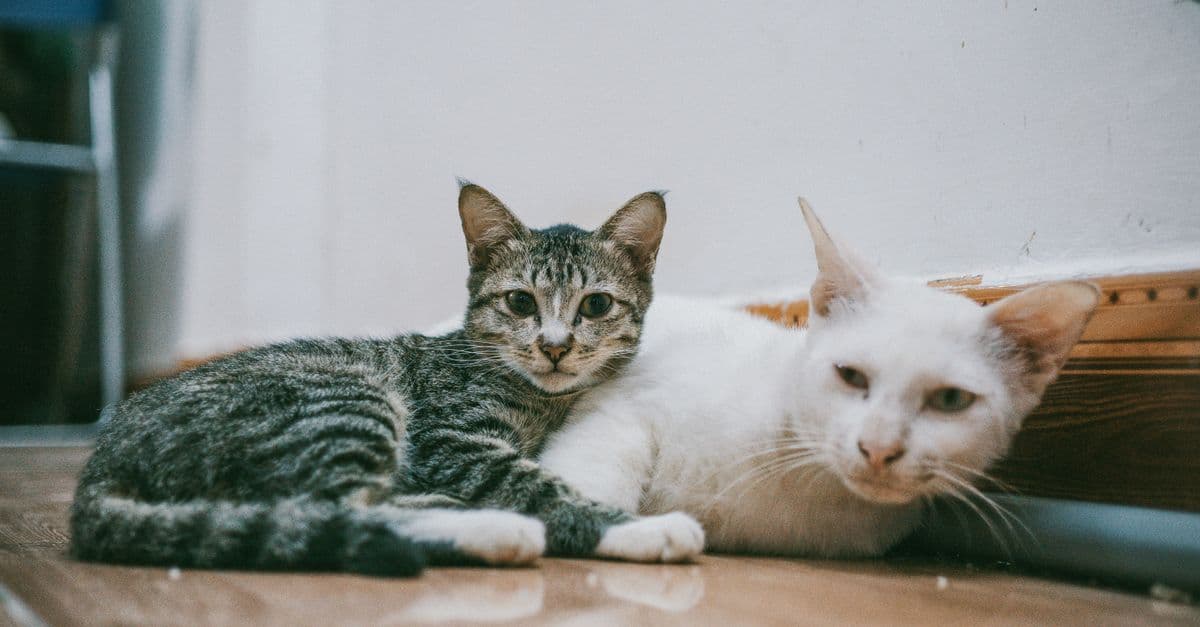
Photo: FOX ^.ᆽ.^= ∫ / Pexels
A domestic cat settles onto your lap and within seconds produces a steady, rhythmic rumble that you feel as much as hear. It sounds simple. It is not. The purr involves a dedicated neural circuit, self-sustaining tissue vibrations, and a dominant frequency band of 25 to 50 Hz that overlaps precisely with the ranges used in therapeutic bone stimulation. Understanding why cats purr — and how the sound is physically generated — reveals an elegant piece of biomechanics that researchers are still working out in detail.
What a Purr Actually Is — and Is Not
Before getting to mechanisms, one distinction matters: purring and roaring are mutually exclusive in cats. In lions, tigers, leopards, and jaguars, a segment of tough cartilage reinforces the hyoid bones connecting the tongue to the skull. That stiff cartilage gives the larynx enough flexibility to produce a full-throated roar. It also prevents the structures from vibrating at purring frequencies. Domestic cats, cheetahs, cougars, bobcats, lynxes, and ocelots have a fully ossified (bone-hardened) hyoid chain instead — which allows the precise, rapid oscillations of purring but rules out a roar.
Hyoid apparatus — the chain of small bones running from the back of the tongue to the base of the skull, which provides the structural scaffold for feline vocalizations.
The upshot: every cat species either purrs or roars. None does both.
How the Purr Is Generated: The Laryngeal Mechanism
For decades, the dominant explanation was a "neural oscillator" model: a dedicated circuit in the cat's brainstem sends rapid signals to the laryngeal muscles, causing them to contract and relax at 25 to 150 times per second. On each contraction the vocal folds adduct (come together), briefly blocking airflow; on each relaxation they abduct (spring apart), releasing air. Because cats breathe continuously through the purr cycle — unlike vocalization in most mammals, which only modulates outward breath — the result is a continuous sound across both inhalation and exhalation.
That model is mostly right. But a 2023 study published in Current Biology added a significant twist. Researchers at the University of Vienna conducted experiments on excised cat larynges — voice boxes removed from deceased cats and tested in isolation, with no neural input or active muscular contraction. The isolated larynges still produced sustained, low-frequency oscillations at typical purring rates (25–30 Hz). The key anatomical finding: cats possess embedded pads of connective tissue within their vocal folds, up to 4 mm in diameter, that are absent in most other mammals. These pads add mass and stiffness to the folds in a way that allows them to sustain oscillation passively, like a reed instrument that keeps vibrating once air moves through it.
Myoelastic-aerodynamic (MEAD) theory — the physical principle by which vocal folds vibrate: muscles set the tension and position, but the aerodynamic pressure of airflow and the elastic recoil of the tissues sustain the oscillation without requiring a muscle twitch on every cycle.
In practical terms, this means the purr is not simply a series of discrete muscle twitches wired together by a metronome in the brain. The neural oscillator initiates the rhythm, but the tissue mechanics of the vocal folds — mass, stiffness, the connective tissue pads — sustain it and establish its characteristic low frequency. It is analogous to the difference between a drummer hitting every beat individually and a vibrating string that continues to ring after a single pluck.
Source: Herbst, C.T. et al. (2023), "Domestic cat larynges can produce purring frequencies without neural input," Current Biology, Vol. 33 — demonstrated passive self-sustaining oscillation in excised cat larynges, with connective tissue pad anatomy as the structural basis.
The Frequency Range: 25 to 150 Hz
Most domestic cat purrs cluster between 25 and 50 Hz for the fundamental frequency (the base pitch), with harmonics extending up to 150 Hz. The exact range varies by individual cat and context. A cat purring contentedly at rest tends to sit toward the lower end; a cat in higher arousal states reaches further up the range.
Those numbers are not biologically arbitrary.
Fundamental frequency — the lowest frequency component of a complex sound, perceived as its base pitch. Harmonics are whole-number multiples of the fundamental.
| Frequency range (Hz) | Established therapeutic application |
|---|---|
| 25–50 | Optimal for promoting bone density and healing fractures (vibrational therapy research) |
| 50–100 | Promotes tendon and ligament repair |
| 100–120 | Used in physical therapy to promote soft-tissue healing |
| 25–150 | Full domestic cat purr range (fundamental + harmonics) |
Research on vibrational loading — applying mechanical vibration to bones and connective tissue — shows that frequencies in the 25 to 50 Hz range stimulate osteoblast activity (bone-forming cells) and can improve bone mineral density. This is not speculative; low-frequency vibration devices in this range are used clinically and in veterinary medicine. Whether the cat's purr directly produces these effects on nearby humans has not been demonstrated in a controlled clinical trial. The overlap in frequency ranges is real; the causative healing effect on humans sitting next to a purring cat is plausible but unproven.
What is more firmly established is that cats themselves may benefit. Cats are obligate sprinters and spend most of their time resting. A mechanism that promotes bone maintenance during extended inactivity would be evolutionarily sensible. Field observations of cheetahs — the fastest land mammal, under extreme skeletal stress when running — show that they purr extensively during rest periods. The "purring to maintain bone density during rest" hypothesis has been formalized by veterinary bioacoustician Elizabeth von Muggenthaler, though it remains an active research question rather than settled science.
Source: von Muggenthaler, E. (2001), "The felid purr: A healing mechanism?" Proceedings of the Acoustical Society of America — the foundational paper proposing the bone-maintenance hypothesis and mapping cat purr frequencies against therapeutic vibration ranges.
Source: Herbst, C.T. et al. (2023), "Domestic cat larynges can produce purring frequencies without neural input," Current Biology — the 2023 study providing the most complete mechanical account of purr generation.
What Triggers Purring — and What It Communicates
The popular assumption is that purring means a cat is happy. That is sometimes true and sometimes dangerously wrong. Cats purr when content, but they also purr when stressed, injured, giving birth, or dying. Veterinarians regularly encounter cats that purr loudly throughout a physical exam, not because they are comfortable but because purring appears to serve a self-soothing function under stress. Like a nervous person humming quietly, the cat may be using the rhythm to regulate its own arousal.
In evolutionary terms, purring almost certainly began as a mother-offspring communication signal. Kittens cannot meow and nurse simultaneously — the soft palate position required for suckling seals off the nasal passage needed for meow production. But kittens can purr while nursing, because the purr operates across both inhalation and exhalation continuously. The mother can monitor her kittens' wellbeing; the kittens signal ongoing contentment. This timing constraint explains why the purr — unlike almost every other cat vocalization — requires no discrete breath cycle.
Adult domestic cats extend purring well beyond this original context, a behavioral shift that likely co-evolved alongside domestication. Cats that lived near humans and could communicate their state more legibly to caregivers had a selective advantage. Which brings us to the solicitation purr.
The Solicitation Purr: Manipulation Embedded in Sound
In 2009, Dr. Karen McComb at the University of Sussex identified and described a distinct variant called the solicitation purr — the sound cats produce specifically when seeking food from humans. She recorded 10 cats purring in different contexts, equalized all recordings to the same volume, and played them to 50 human listeners. Participants consistently rated the food-solicitation purrs as more urgent and less pleasant than resting purrs, even though most could not identify why.
The acoustic analysis revealed the mechanism: the solicitation purr embeds a high-frequency component — a tonal cry at roughly 220 to 520 Hz — within the lower-frequency purr carrier. This cry component falls close to the frequency range of a human infant's cry (300–600 Hz). Human auditory systems are exquisitely sensitive to infant cries for obvious evolutionary reasons; the cry triggers an attentional and care-giving response in adults that is difficult to consciously override.
The cats in the study had individually learned — through repeated interactions with specific humans — that exaggerating this embedded cry component produced faster feeding responses. They were not consciously strategizing; they were reinforcing a behavior that worked. But from the human side, the experience was of finding the sound more urgent without knowing why.
This is, by any reasonable measure, one of the more sophisticated cases of cross-species acoustic manipulation documented in domestication research.
Source: McComb, K. et al. (2009), "The cry embedded within the purr," Current Biology, Vol. 19 — original study identifying the solicitation purr and demonstrating its manipulation of human caregivers via an embedded infant-cry frequency.
Other Purring Animals: Not Just Cats
Purring is not unique to the family Felidae. Several other mammals produce structurally similar sounds, though the mechanisms and frequency ranges differ.
| Animal | Purr-like vocalization | Notes |
|---|---|---|
| Domestic cat (Felis catus) | 25–150 Hz, both inhalation and exhalation | Passive vocal fold mechanism confirmed (2023) |
| Cheetah (Acinonyx jubatus) | ~20–40 Hz | Largest purring felid; cannot roar |
| Cougar (Puma concolor) | ~20–50 Hz | Largest purring non-felid cat |
| Raccoon (Procyon lotor) | Variable; structurally similar sounds | Not as well-studied; different anatomy |
| Ring-tailed lemur (Lemur catta) | Purr-like contact calls | Used in social bonding, not mechanically identical |
| Spotted hyena (Crocuta crocuta) | Giggle-like vocalizations share some features | Distinct mechanism; different behavioral context |
The non-felid cases are worth noting because they demonstrate that purr-like vibrations can evolve independently in different lineages when the functional pressure — low-cost, continuous contact communication — is present. Convergent evolution of similar acoustic strategies is not surprising; the physics of the problem are the same regardless of the animal producing the sound.
The Big Cat Divide: Why Lions Roar and Cats Purr
The physiological split between roaring and purring cats reflects a deeper evolutionary divergence. The subfamily Pantherinae — lions, tigers, leopards, jaguars, and snow leopards — diverged from the lineage leading to domestic cats roughly 6 to 11 million years ago. The cartilaginous hyoid modification that enables roaring evolved in this group as a solution to a specific ecological problem: long-range communication in open or dense habitat where visual signaling is limited.
A lion's roar can carry up to 8 km (5 miles) under ideal acoustic conditions. The cartilaginous hyoid allows the larynx to stretch and produce lower, louder fundamental frequencies than a fully ossified hyoid would permit. The trade-off is the loss of purring.
Purring, by contrast, is a short-range communication tool — effective over centimeters to a few meters. It requires physical proximity: mother and kittens, two bonded cats lying together, a cat on a human's lap. Its evolutionary payoff is social bonding and continuous low-cost signaling at close range, not projection across a savanna.
Pantherinae — the subfamily of large cats including lions, tigers, leopards, and jaguars, characterized by a partially cartilaginous hyoid that enables roaring.
Source: Weissengruber, G.E. et al. (2002), "Hyoid apparatus and pharynx in the lion (Panthera leo), jaguar (Panthera onca), tiger (Panthera tigris), cheetah (Acinonyx jubatus) and domestic cat (Felis silvestris f. catus)," Journal of Anatomy, Vol. 201 — comparative anatomy of the hyoid apparatus across big cats, establishing the structural basis of the roar-purr trade-off.
Common Misconceptions About Purring
The idea that purring always means happiness is the most widespread misconception, and the most practically important one. A cat that purrs throughout a veterinary examination may be masking pain. Shelter staff learn to distinguish the tight-body, low-energy purr of a stressed cat from the loose-limbed, vibrating torso of a genuinely comfortable one, because the vocalizations can be acoustically similar.
A second misconception: that the purr is produced only in the throat. The vibrations of purring are felt across the cat's torso because the airway acts as a resonating column. Place a hand on a purring cat's flank and you feel the vibration in the ribcage walls, not just the throat. The sound radiates from the whole body, not a single point source.
A third: that big cats purr "a little" while primarily roaring. They do not purr at all. No documented roaring cat has been recorded purring. The anatomical constraint is complete.
Do Big Cats Purr? The Roar-or-Purr Divide
The question sounds simple enough to be a pub quiz answer. It is not. The answer hides inside a small cluster of bones at the base of the tongue, and getting to it requires understanding one of the more elegant structural trade-offs in vertebrate evolution.
Every cat species possesses a hyoid apparatus — a chain of small bones (the epihyoid, stylohyoid, ceratohyoid, thyrohyoid, and basihyoid) that connects the back of the tongue to the base of the skull and provides the structural scaffold on which laryngeal muscles hang. What differs between roaring and purring cats is not the presence of the hyoid but its material composition at a single critical joint.
Hyoid apparatus — the horseshoe-shaped chain of bones anchoring the tongue musculature to the skull, whose stiffness or flexibility determines whether a cat's larynx can produce a purr, a roar, or neither simultaneously.
In domestic cats, cheetahs (Acinonyx jubatus), cougars (Puma concolor), bobcats, lynxes, and ocelots, the epihyoid segment is fully ossified — made entirely of rigid bone. A fully boned hyoid chain transmits mechanical vibration efficiently and resists the lateral stretching that would be needed to lower the fundamental frequency of vocalization. This rigidity is precisely what allows rapid, high-frequency oscillation of the vocal folds: the hyoid holds everything in place while the folds vibrate at 25 to 150 Hz. The trade-off is that the larynx cannot elongate enough to generate the very low fundamental frequencies — below about 10 Hz — required for a true roar.
In lions (Panthera leo), tigers (P. tigris), leopards (P. pardus), and jaguars (P. onca), a section of the epihyoid is replaced not by bone but by a thick, elastic ligament. This ligamentous segment acts as a spring in the hyoid chain, allowing the larynx to be pulled downward and stretched during exhalation. Stretching the laryngeal cavity lowers the resonant frequency of the whole system — allowing the production of vocalizations with fundamentals as low as 40 Hz that, with their powerful overtone structure, carry over 8 km (5 miles) across open savanna. Snow leopards (P. uncia) occupy an intermediate anatomical position: their hyoid is largely ossified but retains a partially cartilaginous epihyoid, and their vocalizations reflect this — they produce a non-resonant "chuff" and puffing sounds but neither a full purr nor a full roar.
The reason no cat does both comes down to incompatible mechanical demands. Purring requires rapid, self-sustaining oscillation of the vocal folds at relatively high frequencies, which demands a rigid hyoid to anchor the system and prevent damping. Roaring requires the larynx to stretch and resonate at very low frequencies, which requires a hyoid that yields under tension. You cannot design a single structure that is simultaneously rigid enough for purring and flexible enough for roaring — the two functional requirements are physically opposed. Evolution has not found a way around this constraint in roughly 11 million years of separate feline lineage history.
Source: Weissengruber, G.E. et al. (2002), "Hyoid apparatus and pharynx in the lion (Panthera leo), jaguar (Panthera onca), tiger (Panthera tigris), cheetah (Acinonyx jubatus) and domestic cat (Felis silvestris f. catus)," Journal of Anatomy, Vol. 201 — the definitive comparative anatomy study demonstrating that the ligamentous vs. ossified epihyoid distinction maps cleanly onto the roar-purr divide across Felidae.
The evolutionary trade-off has a clear ecological logic. Lions, tigers, and leopards are territorial animals operating across large home ranges in dense or open habitat where long-range acoustic signaling matters enormously — a roar advertises presence, warns rivals, and coordinates pride members across distances where visual signaling is impossible. Purring, by contrast, is a contact-range signal: it works over centimeters to a few meters. A lion that could purr but not roar would lose the long-range communication tool that underpins its social and territorial life. A domestic cat that could roar but not purr would lose the continuous, low-cost bonding signal critical to mother-offspring nursing communication and close-range social cohesion.
What is particularly striking is the categorical nature of the divide. This is not a continuum where some cats roar loudly and purr softly while others do the reverse. It is binary: fully ossified hyoid or ligamentous segment. Purr or roar. The anatomy either allows one or the other, and no individual specimen of any cat species has been documented doing both. The structure does not hedge.
Frequently Asked Questions
Q: Do cats purr on purpose, or is it automatic?
A: Both. The neural oscillator that initiates purring is under some voluntary control — cats choose when to start and stop — but the self-sustaining vocal fold mechanics that maintain the vibration operate partly automatically once initiated, requiring less continuous neural input than a deliberate vocalization like a meow.
Q: Can a cat purr and meow at the same time?
A: No. Purring operates across both inhalation and exhalation continuously, while meowing requires discrete breath control and modulation of the airstream. Cats switch between them but do not overlap them in the same breath cycle.
Q: Is there scientific proof that cat purrs heal human bones?
A: The healing frequency hypothesis is plausible but not proven in controlled human trials. The frequency overlap between cat purrs (25–50 Hz) and therapeutic vibrational stimulation protocols is real and documented. A causal link between sitting near a purring cat and measurable bone density improvement in humans has not been established in peer-reviewed clinical research.
Q: Why do cats sometimes purr when they are sick or dying?
A: Purring serves multiple functions beyond contentment signaling. It appears to function as a self-soothing mechanism under stress or pain, similar to how humans might hum or rock. Some researchers propose it also serves a self-healing function — maintaining bone and soft-tissue condition during the reduced activity of illness.
Q: How do kittens learn to purr?
A: Kittens begin purring within days of birth, before they can meow. The ability appears to be innate rather than learned — it does not require exposure to other purring cats to develop. The timing coincides with nursing, consistent with the mother-offspring communication hypothesis.
Q: Are there any non-cat animals whose purring mechanism has been studied in similar detail?
A: The 2023 Current Biology study focused specifically on domestic cat larynges. Comparative work on other small felids (cheetahs, cougars) has confirmed similar frequency ranges and continuous inhalation-exhalation production, but the connective tissue pad anatomy has not yet been documented in non-domestic species with the same resolution.
The Takeaway
The cat's purr is simultaneously simpler and more complex than it looks. Simpler, because the physics of self-sustaining vocal fold oscillation — the same principle that makes a reed instrument vibrate — does much of the work without continuous neural micromanagement. More complex, because the purr serves at least four distinct functions: mother-offspring contact signaling, stress self-regulation, social bonding, and in the solicitation variant, deliberate acoustic manipulation of human caregivers. The frequency range it occupies corresponds with therapeutic vibration ranges for bone and connective tissue, making it biologically notable even if the direct healing effect on humans remains unproven. For an animal that evolved as a solitary ambush predator, the domestic cat has developed a remarkably sophisticated acoustic toolkit for navigating close-range social life.
Read next:
Follow new articles
Add SciHub101 to your feed reader to see new science and technology stories.
About the Author
SciHub101 is an independent science and technology publication founded and edited by Buğra Sözeri, a software engineer and app developer based in Türkiye. AI tools assist with drafting and research. Source documentation in the existing archive is uneven, and articles are being reviewed and corrected. The Editorial Team byline identifies editorial responsibility; it does not certify specialist or independent human review. Where we compare products, anything built by our own team is labelled as such — see the editorial guidelines and About page for how corrections and disclosures work.
Related Articles
How Animal Camouflage Works: Crypsis, Mimicry, and the Biology of Invisibility
A cuttlefish can reproduce the texture of a gravel bed on its skin — in complete darkness. Chameleons change color not primarily to hide, but to communicate. A stick insect's body plan is so precise that its eggs mimic seeds, tricking ants into carrying them to new locations. Camouflage is not a coat of paint; it is a complete biological system built by evolution over hundreds of millions of years.
How Bees Communicate: The Waggle Dance Explained
A honeybee returning from a flower patch performs a precise figure-eight dance on the vertical comb face of its hive. The angle of her body relative to gravity encodes compass direction. The duration of the waggle run encodes distance. Her nestmates read both signals and fly directly to a resource they have never visited. This is not instinct in any simple sense — it is a symbolic language, and decoding it took a biologist decades of careful experiment.
Why Cats Purr: The Science Behind One of Nature's Most Mysterious Sounds
Cats purr when happy, but also when injured, dying, or stressed. The vibration may be self-medicating — healing bones at 25–50 Hz.
How Whales Communicate: Songs, Dialects, and Culture Beneath the Waves
Humpback whales sing songs that can last 30 hours and travel hundreds of kilometers. Fin whales produce calls at 20 Hz — below the threshold of human hearing — that propagate across entire ocean basins. Sperm whales use click-based dialects specific to family groups. Whale communication is not simple signaling. Biologists now argue it bears hallmarks of culture, the transmission of learned behaviors across generations.
Countries with the Most Pets (2025 Ranked)
The United States has more pet animals than any country — 90 million dogs and 94 million cats. Brazil is the world's second-largest pet market with 55 million dogs. China's pet ownership has tripled in a decade as the country shifts toward nuclear family structures.