How Whales Communicate: Songs, Dialects, and Culture Beneath the Waves
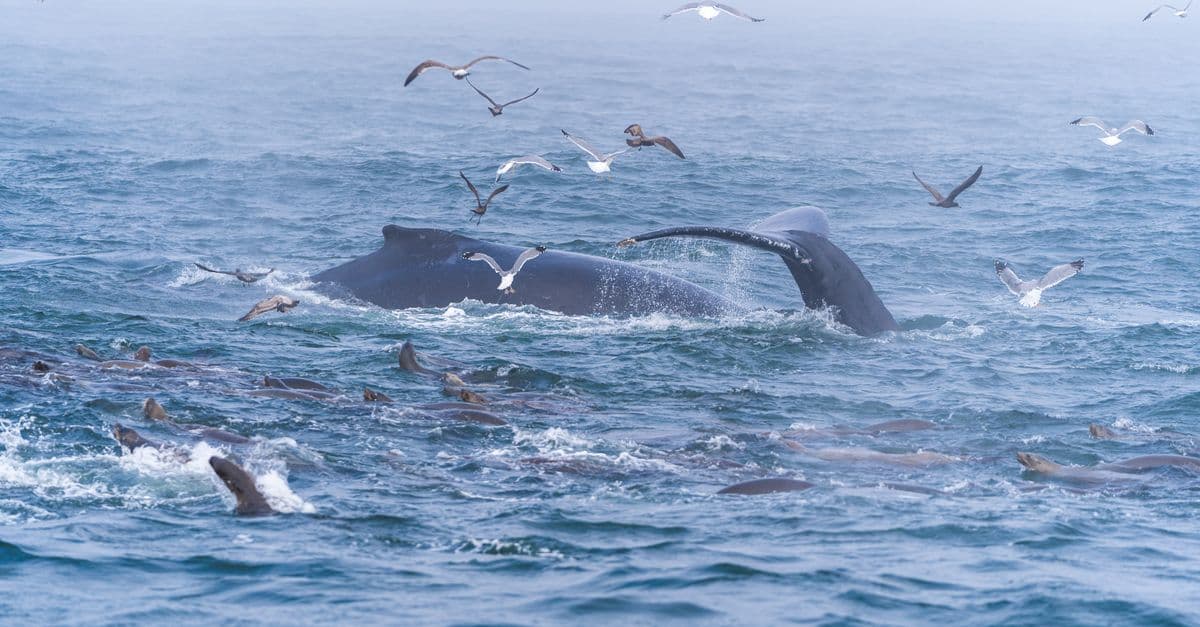
Photo: Michal Vaško / Pexels
A humpback whale off the coast of Hawaii begins a song that will last six hours. No other animal in the ocean produces anything quite like it — a structured sequence of phrases, themes, and units, repeated in a fixed order, modified incrementally over months as neighboring males pick up new elements and propagate them across ocean basins. Meanwhile, 3,000 km away in the North Atlantic, a fin whale emits a 20 Hz pulse that will still be detectable by hydrophones 2,000 km distant. These animals are not just making noise. They are doing something that, the more closely researchers study it, begins to look uncomfortably like what humans call communication.
What Sound Means Underwater
Sound travels through water at roughly 1,480 meters per second (4,856 feet per second) — about 4.3 times faster than through air. It also attenuates far less over distance. These two physical facts make acoustic communication the dominant channel for ocean life in much the way that vision dominates terrestrial communication.
Attenuation — the loss of signal energy over distance. In air, sound at 1,000 Hz loses roughly 1 decibel per kilometer due to atmospheric absorption alone. In water, at low frequencies (below 1,000 Hz), absorption is negligible over hundreds of kilometers.
The ocean also contains a natural acoustic waveguide called the SOFAR channel (Sound Fixing And Ranging channel), a depth layer — typically 600–1,200 m (2,000–3,900 ft) — where temperature and pressure combine to create a minimum sound-speed zone. Sound waves refract toward this minimum, becoming trapped and propagating with minimal loss. Fin whales, which produce calls in exactly the right frequency range, appear to exploit this channel. The US Navy's Cold War-era hydrophone arrays designed to track Soviet submarines inadvertently produced some of the first recordings of low-frequency whale calls traveling basin-wide distances.
Cetaceans (the order containing whales, dolphins, and porpoises) are divided into two suborders with fundamentally different acoustic systems. Mysticeti (baleen whales) produce low-frequency calls using structures in their larynx, though without vocal cords in the mammalian sense. Odontoceti (toothed whales) produce high-frequency clicks using a specialized structure near the blowhole called the phonic lips (formerly called "monkey lips"), then focus the sound through an oil-filled structure in the forehead called the melon. The two groups are solving different acoustic problems: baleen whales prioritize long-distance communication; toothed whales prioritize echolocation and close-range social exchange.
Source: Tyack, P.L. and Clark, C.W. (2000), "Communication and acoustic behavior of dolphins and whales," in Hearing by Whales and Dolphins, Springer — comprehensive review of cetacean acoustic mechanisms and behavioral contexts.
The Humpback Song: Architecture and Evolution
When biologist Roger Payne and Scott McVay published their 1971 paper in Science describing humpback whale (Megaptera novaeangliae) vocalizations as "songs," the word was not metaphorical. They were describing a communication system with genuine hierarchical structure.
Unit — the smallest distinct sound element in a humpback song, analogous to a phoneme.
Phrase — a sequence of units repeated in a fixed pattern, analogous to a musical bar.
Theme — a collection of similar phrases. Themes are delivered in a consistent order.
Song — a complete sequence of themes. A single song rendition lasts 6–30 minutes.
Song session — a continuous singing bout that can last many hours, produced by repeating the song with only brief pauses.
Only males sing, and they sing almost exclusively on breeding grounds and migration routes. The function is almost certainly sexual: singing is thought to attract females and signal competitive status to rival males, though the precise mechanisms of female mate choice in humpbacks remain an active research area.
What makes humpback song genuinely remarkable is that it changes. All males in a given ocean population sing essentially the same song at any given time — but the song is not static. Individual units and phrases are gradually replaced with new ones. The song of a population recorded in January may differ noticeably from its February version, and dramatically from the version recorded a year prior. The changes propagate from individual to individual through apparent learning: males that encounter a novel phrase adopt it, and the innovation spreads.
In 2011, researchers Michael Noad and colleagues at the University of Queensland documented what they called a "cultural revolution" in humpback song. Males from the Eastern Australian population (which produces a distinctive song) traveled to Western Australia. Within two years, every male in Western Australia had abandoned their established song and adopted the Eastern Australian version. This was the fastest and most complete cultural shift ever documented in non-human animals.
The directionality matters. Song innovations consistently spread westward across the Pacific — from Eastern Australia toward French Polynesia, toward the Cook Islands, toward Brazil — apparently because whales encounter and learn from males encountered during migration. This means humpback song has a cultural geography: the history of innovations can, in principle, be mapped like the spread of a musical genre across human populations.
Source: Noad, M.J. et al. (2000), "Cultural revolution in whale songs," Nature, Vol. 408 — documentation of rapid song replacement following introduction of a novel song type from Eastern to Western Australia.
Source: Garland, E.C. et al. (2011), "Dynamic horizontal cultural transmission of humpback whale song at the ocean basin scale," Current Biology, Vol. 21 — basin-scale tracking of song evolution across the South Pacific, demonstrating directional westward spread.
The 20 Hz Call: Fin Whale Long-Distance Signaling
Fin whales (Balaenoptera physalus) produce calls centered around 20 Hz at sound pressure levels reaching 189 decibels referenced to 1 micropascal at 1 meter. To translate: this is among the loudest biological sounds ever measured. For comparison, a rock concert at the front row registers around 110 dB in air. The decibel scales are not directly comparable across media, but the energy involved is extraordinary.
At 20 Hz, fin whale calls sit precisely at the lower threshold of human hearing and well within the SOFAR channel's optimal propagation band. Early Navy hydrophone operators, tasked with listening for Soviet submarines, were puzzled by repetitive, low-frequency pulses appearing in their recordings. The mystery was not resolved until the 1960s and 1970s, when the signals were traced to fin whales.
The calls are patterned. Individual fin whales produce sequences of pulses separated by intervals of 10–30 seconds, and these sequences are stereotyped enough that individual whales can be identified by their calling patterns — a discovery that has revolutionized fin whale population surveys, which can now be conducted using autonomous hydrophone arrays rather than visual surveys requiring good weather and lucky whale surfacing.
The function of fin whale calls is still debated. Males produce most of the calls, particularly during winter breeding season, which suggests a mate-attraction or male-male competition function analogous to humpback song. But fin whales are less well-studied at close range than humpbacks because they spend less time near the surface and are harder to approach. The basin-spanning range of their calls raises an intriguing possibility: males may be advertising themselves to females separated by thousands of kilometers.
Source: Watkins, W.A. et al. (1987), "The 20-Hz signals of finback whales (Balaenoptera physalus)," Journal of the Acoustical Society of America, Vol. 82 — characterization of fin whale call structure, source level estimates, and individual variation.
Sperm Whale Codas: Dialects and Identity
Sperm whales (Physeter macrocephalus) are odontocetes — toothed whales — and they produce clicks, not songs. But the click sequences sperm whales use in social contexts are as structured and culturally loaded as any humpback song phrase.
Coda — a stereotyped click pattern produced by sperm whales in social contexts, consisting of 3–40 clicks arranged in a species-specific temporal pattern.
Researcher Hal Whitehead and colleagues at Dalhousie University have spent decades cataloguing sperm whale codas in the Pacific and Atlantic. Their findings reveal a system that looks, in multiple ways, like human dialect: different groups of sperm whales use different repertoires of codas, and group membership can be identified from coda repertoire alone.
Whitehead defines sperm whale social units called clans — groups of families that share the same coda repertoire. In the Pacific, at least six distinct clans have been identified, each spanning thousands of kilometers but remaining acoustically distinct. A whale from the "Regular" clan (named for a common coda with evenly-spaced clicks) and a whale from the "Plus-one" clan (which adds a slightly delayed final click to its codas) may share the same ocean, but they use different acoustic identifiers and apparently do not interbreed readily.
The clans are maintained by females and their calves; sperm whale society is matrilineal, with female family groups remaining together for life while males disperse at adolescence. Calves learn codas from their mothers and female relatives — a direct transmission of culturally specific acoustic information. Whitehead has argued this constitutes genuine culture in the technical biological sense: behavior that is learned from others and shared within a group but not between groups.
One coda appears particularly significant: the Five Regular coda (five evenly-spaced clicks) appears in the repertoire of nearly every Pacific sperm whale clan. Whitehead and colleagues describe it as a possible identity signal — "I am a sperm whale" — that is shared across clans in a way that other, more clan-specific codas are not.
| Clan name | Typical coda pattern | Geographic range |
|---|---|---|
| Regular | Evenly spaced clicks | Eastern Pacific |
| Plus-one | Even clicks + delayed final | Eastern Pacific |
| Slow | Longer inter-click intervals | Eastern Pacific |
| 4+ | Four clicks with pause, then 1+ | Eastern Pacific |
| Atlantic Regular | Evenly spaced, distinct timing | North Atlantic |
| Caribbean | Variable, regionally specific | Caribbean/Atlantic |
Source: Whitehead, H. and Rendell, L. (2004), "Movements, habitat use and feeding success of cultural clans of South Pacific sperm whales," Journal of Animal Ecology, Vol. 73 — population-level study linking coda repertoires to movement patterns and foraging success.
Source: Rendell, L. and Whitehead, H. (2001), "Culture in whales and dolphins," Behavioral and Brain Sciences, Vol. 24 — the foundational review making the case for cetacean culture using behavioral and genetic evidence.
Dialects in Other Whale Species
Sperm whales are not alone in producing group-specific acoustic variants. Killer whales (Orcinus orca) — technically the largest members of the dolphin family — have some of the best-documented dialects in any non-human animal.
Killer whale pods produce discrete calls (stereotyped patterned vocalizations, as distinct from the echolocation clicks used for hunting) that are specific to the pod and learned by calves from adults. Each pod has a repertoire of 7–17 discrete calls. Pods that share ancestry share a subset of calls — a graduated dialect system where acoustic similarity reflects genealogical proximity. The dialects are stable over decades; a call repertoire recorded from a pod in the 1970s is still identifiable in recordings from the same pod's descendants today.
Bowhead whales (Balaena mysticetus) in the Arctic produce songs with a flexibility that surprised researchers. A 2018 study by Kate Stafford and colleagues at the University of Washington found that bowhead whales in the Fram Strait produced 184 distinct song types over three winters — more song diversity than previously known in any baleen whale. Unlike humpbacks, whose song converges within a population, bowhead song appears to be highly individualized. Why this difference exists is unknown.
Source: Stafford, K.M. et al. (2018), "Extreme diversity in the songs of Spitsbergen's bowhead whales," Biology Letters, Vol. 14 — documentation of 184 distinct song types, far exceeding previously known bowhead song diversity.
Why Whales Have Cultural Transmission
The question of why whale communication involves cultural transmission — learned, group-specific behavior — rather than purely genetically fixed signals has no single answer, but several factors seem relevant.
First, whales are long-lived and have extended periods of calf dependency. Humpbacks nurse for nearly a year; sperm whale calves remain with their mother's group for years. This creates the time and social structure for learning. Compare this to most fish, which have no parental care: there is no window for behavioral transmission.
Second, the ocean is acoustically complex and regionally variable. Different ocean basins have different background noise profiles, different competitor species, different prey distributions. Group-specific acoustic variants may be adaptations to local conditions, or they may simply be acoustic drift — the marine equivalent of how two geographically separated human populations come to speak differently over time without any particular adaptive pressure.
Third, large brains. Cetaceans have among the highest encephalization quotients (brain size relative to body size) of any non-human animals. Sperm whale brains are the largest of any animal ever known, weighing up to 9 kg (20 lb). The cognitive requirements for learning and maintaining complex acoustic repertoires may be part of what large brains are for in cetaceans, just as they are in humans.
Source: Connor, R.C. (2007), "Dolphin social intelligence: complex alliance relationships in bottlenose dolphins and a consideration of selective environments for extreme brain size evolution in mammals," Philosophical Transactions of the Royal Society B, Vol. 362 — social complexity hypothesis for large brain evolution in cetaceans.
What Whale Communication Is Not
It is tempting, given the complexity and cultural richness of whale communication, to conclude that whales have language in the human sense. This is a step further than the evidence currently supports.
Human language has several defining features that go beyond complex, learned vocalizations: displacement (the ability to refer to things not present in time or space), productivity (the ability to generate novel meaning by combining elements according to rules), and arbitrary reference (symbols whose connection to what they represent is purely conventional, not iconic or indexical).
What whale communication demonstrably has: hierarchical structure (in humpback song), group-specific learned variants (codas, killer whale calls), the ability to convey identity, and possibly the capacity to coordinate group behavior. What has not been demonstrated: the use of calls to refer to specific external objects or events in the environment, or the generation of novel meanings by rule-based combination of elements.
This does not make whale communication unimpressive. It makes the question of where "communication" ends and "language" begins more interesting than a simple yes/no answer allows.
The Takeaway
Whale communication is structured, learned, culturally transmitted, and in several species geographically variable in ways that directly parallel human dialect. Humpback songs are not random noise — they are hierarchically organized, sexually selected, and propagated culturally across ocean basins at speeds that would not surprise a music historian. Fin whale calls are engineered, apparently by natural selection, to exploit the ocean's natural acoustic waveguide. Sperm whale codas carry group identity markers that persist across generations, maintained by social learning within matrilineal family groups. Whether any of this constitutes "language" depends on how language is defined. But the question itself reveals something important: the behavioral complexity we assumed was uniquely human keeps turning up in animals that have had 50 million years of evolution to work with a medium — sound in water — that we barely began to explore within living memory.
Frequently Asked Questions
Q: How far can a humpback whale song travel?
A: Humpback songs have been detected at distances of at least 160 km (100 miles) from the singer. Low-frequency components may travel farther, though exact range depends on water temperature, depth, and background noise levels in the specific ocean region.
Q: Do female whales sing?
A: Female humpbacks do not produce the complex, long-duration songs that males sing. Most baleen whale research on song focuses on males. Female sperm whales, however, do produce codas — the click-pattern social signals — and appear to be the primary transmitters of coda culture to calves.
Q: Why are whale songs changing?
A: Humpback songs change through a process of gradual innovation and social learning. Individual males introduce new phrases; neighboring males adopt them. The direction of change is not random — innovations spread consistently westward across the Pacific from more contact-dense areas. Increasing ocean noise from shipping may also be influencing call frequencies in some species.
Q: Can whales hear each other across entire ocean basins?
A: Fin whale calls at 20 Hz can theoretically propagate thousands of kilometers via the SOFAR channel with sufficient amplitude. Whether whales actually respond to signals at such distances is harder to test. Hydrophone-based studies have tracked individual fin whales by their calls across thousands of kilometers of ocean.
Q: What is a sperm whale clan?
A: A clan is a population-level grouping of sperm whale families that share the same coda repertoire — the same set of distinctive click patterns. Clans span large ocean areas but maintain distinct acoustic identities over decades. They are the strongest evidence for cultural groupings in non-human animals defined by learned behavior rather than genetics.
Q: How do researchers study whale communication without disturbing the whales?
A: Most research uses passive hydrophone arrays — underwater microphones placed at depth, often moored to the seafloor. Autonomous hydrophone recorders can collect months of audio without human presence. Researchers also deploy suction-cup acoustic tags that temporarily attach to whales and record calls from the animal's perspective. Photo-identification from boat surveys links acoustic data to known individuals.
Read next:
Follow new articles
Add SciHub101 to your feed reader to see new science and technology stories.
About the Author
SciHub101 is an independent science and technology publication founded and edited by Buğra Sözeri, a software engineer and app developer based in Türkiye. AI tools assist with drafting and research. Source documentation in the existing archive is uneven, and articles are being reviewed and corrected. The Editorial Team byline identifies editorial responsibility; it does not certify specialist or independent human review. Where we compare products, anything built by our own team is labelled as such — see the editorial guidelines and About page for how corrections and disclosures work.
Related Articles
How Bioluminescence Works in Animals: The Chemistry of Living Light
More than 76% of deep-sea animals produce their own light. Fireflies flash in coordinated sequences. A jellyfish discovered off the coast of Friday Harbor, Washington, gave biologists a tool that transformed cell biology, earned three scientists a Nobel Prize, and now glows inside cancer cells in laboratories around the world. Bioluminescence — light produced by a living organism — is one of evolution's most useful accidents, and its chemistry is surprisingly simple.

The Longest-Living Animals Explained: Biology of Extreme Longevity
A Greenland shark alive today may have been born before the Thirty Years' War ended in 1648. An ocean quahog clam called Ming was 507 years old when researchers accidentally killed it by opening its shell. A bowhead whale carries harpoon fragments from weapons manufactured in the 1800s, embedded in its blubber for over a century. Extreme longevity in animals is not accidental — it is the product of specific biological mechanisms that researchers are now mapping in molecular detail.

Why Do Cats Purr? The Science Behind the Sound
A domestic cat produces one of the most recognizable sounds in the animal kingdom, yet scientists spent decades arguing about how it works. The mechanism turns out to involve a neural oscillator, self-sustaining vocal fold vibrations, and a frequency range that overlaps precisely with medical bone-healing equipment. Here is what the research actually shows.
How Sharks Sense the World: Electroreception, Smell, and the Lateral Line
Sharks navigate a sensory world almost entirely unlike ours. They detect the bioelectric fields of a hidden flatfish buried under sand, sense water pressure waves from a struggling fish a kilometer away, and smell blood diluted to one part in ten billion. But popular culture has wildly exaggerated some of these abilities while ignoring the most extraordinary one — a sense that has no human analogue at all.
How Bees Communicate: The Waggle Dance Explained
A honeybee returning from a flower patch performs a precise figure-eight dance on the vertical comb face of its hive. The angle of her body relative to gravity encodes compass direction. The duration of the waggle run encodes distance. Her nestmates read both signals and fly directly to a resource they have never visited. This is not instinct in any simple sense — it is a symbolic language, and decoding it took a biologist decades of careful experiment.

Deep-Sea Creatures and Bioluminescence: Life in the Dark Ocean
Below 200 meters, there is no sunlight — yet roughly 76% of deep-sea animals produce their own light. The deep ocean is full of living lanterns.