How Sharks Sense the World: Electroreception, Smell, and the Lateral Line
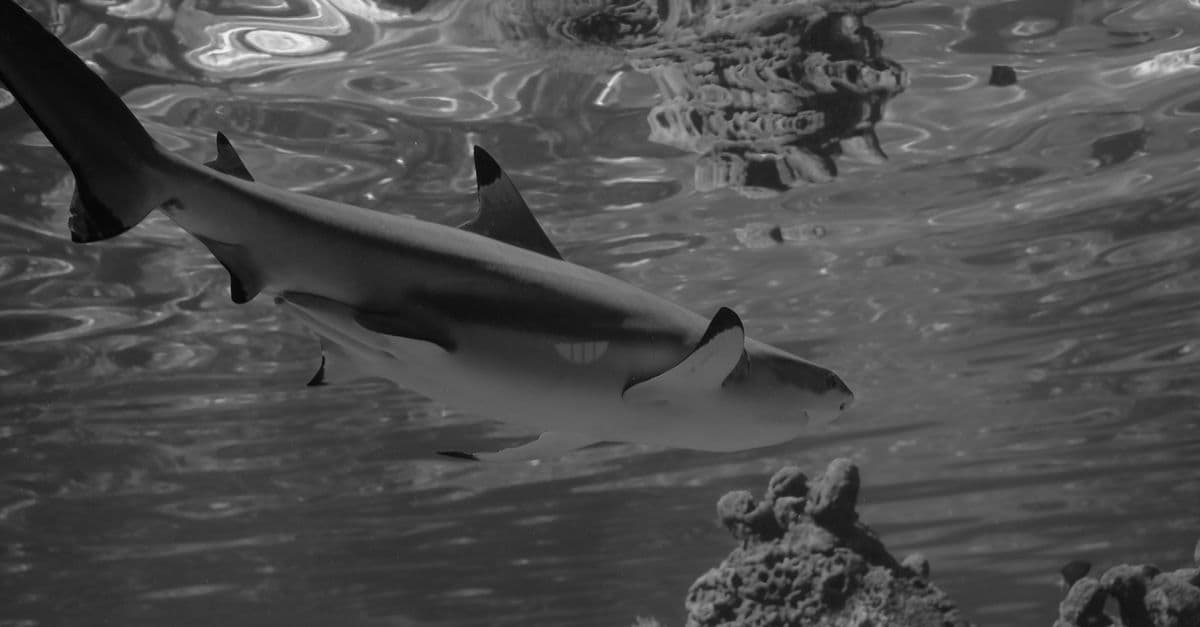
Photo: Valeriia Miller / Pexels
Bury a live flatfish under a thin layer of sand. Cover it with a layer of agar gel that is chemically identical to seawater — no scent can escape, no visible movement. A shark will still find it and attack the agar, precisely where the fish is hidden. Then substitute an electrical dipole mimicking a fish's bioelectric field under the same agar layer. No fish, no scent, no movement — but the shark will attack the electrode. These experiments, conducted by Adrianus Kalmijn in 1971, confirmed what had been suspected but never proven: sharks have a sensory system for detecting electric fields that has no analogue in the human sensory repertoire.
The Ampullae of Lorenzini: A Sixth Sense
The sensory organs responsible for shark electroreception are the ampullae of Lorenzini — named for the Italian physician Stefano Lorenzini who first described them in 1678 without understanding their function. The name persisted across three centuries while their true purpose remained unknown.
Ampullae of Lorenzini — jelly-filled pores distributed across a shark's snout and lower jaw, each connecting via a long canal to a bulb (the ampulla) containing sensory hair cells that respond to electric field gradients.
Each ampulla consists of a small bulb of sensory cells (electroreceptors) embedded in the shark's skin, connected to the surface by a long, thin canal filled with a highly conductive gel. This gel has one of the highest electrical conductivities of any biological material — comparable to seawater — which allows electric field variations at the skin surface to be transmitted with minimal distortion to the sensory cells at the bottom of the canal.
The sensory cells respond to the voltage difference between the skin surface and the base of the canal. A shark swimming through a uniform electric field produces no differential signal and does not respond. But a living fish generates a non-uniform electric field — its gills, muscles, and nerve activity all produce bioelectric currents that create a distinctive dipole pattern in the surrounding water. As the shark's snout moves through this field, different ampullae report different voltages, and the shark's brain computes the location of the field source from the spatial pattern of those differences.
The sensitivity is extreme. Great white sharks (Carcharodon carcharias) and many other elasmobranchs can detect fields as weak as 5 nanovolts per centimeter (5 × 10⁻⁹ V/cm). To put that in context: this is roughly equivalent to detecting the voltage produced by a 1.5 V AA battery with its terminals connected by a wire running from New York to Los Angeles. No other animal's electroreception has been measured at this sensitivity.
Source: Kalmijn, A.J. (1971), "The electric sense of sharks and rays," Journal of Experimental Biology, Vol. 55 — the pivotal experimental paper demonstrating that elasmobranchs use electroreception to locate prey, using the buried fish and electrode substitution experiments.
Source: Kajiura, S.M. and Holland, K.N. (2002), "Electroreception in juvenile scalloped hammerhead and sandbar sharks," Journal of Experimental Biology, Vol. 205 — quantified detection thresholds and confirmed sensitivity of approximately 5 nV/cm in juvenile sharks.
Why the Hammerhead's Head Shape Makes Sense
The hammerhead shark's distinctive cephalofoil — the wide, flat, laterally extended head — has puzzled biologists since the species was first studied. Several hypotheses have been proposed over the years: improved maneuverability, better binocular vision (the eyes sit at the extreme ends of the hammerhead), hydrodynamic lift, and enhanced electroreception.
The electroreception hypothesis has the strongest experimental support. The cephalofoil places the ampullae of Lorenzini across a much wider baseline than a conventional torpedo-shaped head would allow. Just as a wide-baseline radar or sonar array resolves target positions more precisely than a narrow-baseline system, the hammerhead's widely separated electroreceptors sample a larger patch of the electric field around a prey animal. This increases both the spatial resolution of field localization and the probability of detecting a weak, buried target.
Studies comparing hammerhead (Sphyrna lewini and Sphyrna tiburo) electroreception with similarly sized requiem sharks (family Carcharhinidae) show that hammerheads detect smaller dipole fields from greater distances than their narrow-headed relatives — consistent with the wide-baseline sampling advantage.
Cephalofoil — the distinctive hammer- or shovel-shaped lateral extension of the head in hammerhead sharks, housing the expanded sensory surface.
Source: Kajiura, S.M. (2001), "Head morphology and electrosensory pore distribution of carcharhinid and sphyrnid sharks," Biological Journal of the Linnean Society, Vol. 72 — comparative morphology and electroreceptor distribution showing wider baseline and higher pore density in hammerheads.
The Lateral Line: Feeling Water Pressure at a Distance
The lateral line is a sensory system found in all fish and sharks — a row of fluid-filled canals running along each side of the body, embedded with hair cell sensors called neuromasts. These detect mechanical disturbances in the surrounding water: pressure waves, turbulence, and particle displacement caused by moving objects.
Neuromasts — clusters of hair cells in the lateral line whose fine projections (stereocilia) are deflected by water flow, triggering nerve signals proportional to the magnitude and direction of the flow.
Where electroreception is effective at short range — typically within about a meter for most prey-sized organisms — the lateral line operates over longer distances, potentially hundreds of meters for large, rhythmically moving targets. A struggling fish produces a distinctive pattern of pressure waves that propagates through water as a traveling disturbance. The lateral line reads this pattern as a directional signal.
Think of the lateral line as the shark's ability to feel a ripple on the water surface, except instead of the 2D surface of a pond, the ripple propagates in all directions through a 3D volume of seawater, and the shark's sensors are distributed along its entire body length to sample that 3D field.
The relationship between electroreception and the lateral line in the final stages of prey capture is well-documented. At distances of tens to hundreds of meters, sharks use olfaction (smell) and sound to home toward prey. At intermediate distances (tens of meters), the lateral line detects pressure disturbances from the prey's movement. Within about a meter, the ampullae of Lorenzini take over for the final, precise strike. This sensory handoff is one reason shark attacks on stationary, non-struggling human swimmers are relatively rare: the electroreception signal from a passive human does not trigger the same attack pattern as the pressure + bioelectric combination from a struggling fish.
Smell: Exceptional But Not Mythological
The claim that sharks can smell a single drop of blood from a mile away is one of the most durable myths in popular zoology. It is a significant exaggeration on multiple dimensions.
Shark olfaction is genuinely exceptional. Nasal sacs (not connected to the breathing passage as in humans) contain folded tissue called the olfactory rosette, densely packed with sensory cells. In many shark species, roughly two-thirds of the brain's volume is dedicated to olfactory processing — an extraordinary allocation of neural real estate.
But detection thresholds and operational range are very different quantities. Research shows that sharks can detect specific chemical compounds — including amino acids found in fish blood and body fluids — at concentrations as low as one part per billion, with some studies reporting sensitivity down to one part per ten billion under optimal conditions. These are laboratory measurements of detection threshold under controlled flow conditions, with specific chemical compounds, not a practical operational range in the open ocean.
The open-ocean situation is constrained by diffusion and ocean current. A single drop of blood released into seawater does not create a uniform one-part-per-million sphere expanding at the speed of sound. It creates a concentrated plume that drifts with the current, diffuses laterally, and is diluted by mixing. The detectable portion of that plume might extend a few hundred meters downwind — not miles. Field studies of great white shark behavior in response to controlled scent releases typically show directed approach behavior within a quarter of a mile (roughly 400 m) under favorable current conditions.
Olfactory rosette — the folded, petal-like olfactory epithelium inside a shark's nasal sac, increasing surface area for odor molecule binding.
What sharks are exceptionally good at is detecting directional gradients in a diffusing scent plume — swimming toward higher concentrations in a nose-left-then-nose-right alternating pattern that effectively triangulates the scent source. This is more sophisticated than simply following a trail, and it works over larger spatial scales than the "smell the drop from a mile away" claim suggests, but it is also fundamentally different.
Source: Zeiske, E., Theisen, B., and Gruber, S.H. (1987), "Functional morphology of the olfactory organ of two carcharhinid shark species," Canadian Journal of Zoology, Vol. 65 — detailed anatomy of the shark olfactory rosette and comparative analysis of olfactory surface area.
Source: Gardiner, J.M. and Atema, J. (2010), "The function of bilateral odor arrival time differences in olfactory orientation of sharks," Current Biology, Vol. 20 — demonstrated that sharks use bilateral timing of odor arrival (left nostril vs. right nostril) to extract directional information from scent plumes.
Hearing: Detecting Sound from Far Away
Sharks hear through internal ears — no external ear structures are visible — that detect both sound pressure and particle acceleration. Two components handle these signals: the saccule and lagena (pressure-sensitive) and the utricle (particle-acceleration sensitive), all connected to the lateral line system at the structural level.
Shark hearing is tuned for low frequencies: roughly 10 to 800 Hz, with best sensitivity between 40 and 500 Hz. This range matches the sounds produced by large, struggling prey animals, boat engines, and explosions. High-frequency sounds used in human speech or sonar are generally inaudible to sharks.
Sound travels through water approximately 4.4 times faster than through air (about 1,500 m/s versus 343 m/s in air) and carries much farther without attenuation. Sharks can detect sounds produced by a struggling fish at distances of up to 1 km (0.6 miles) under good acoustic conditions — making hearing their longest-range sensory modality for prey detection. Sound is where sharks first become aware of a potential target; smell and lateral line refine the approach; electroreception closes it.
Source: Casper, B.M. and Mann, D.A. (2007), "Dipole hearing measurements in elasmobranch fishes," Journal of Experimental Biology, Vol. 210 — measured hearing sensitivity in multiple shark species using auditory evoked potential techniques.
Vision: Built for Dim Light, Not Detail
Shark eyes are anatomically similar to vertebrate eyes generally, with a cornea, lens, iris, and retina. Two adaptations distinguish them from most terrestrial vertebrate eyes.
The tapetum lucidum — a reflective layer behind the retina — bounces light back through the photoreceptors a second time, nearly doubling light sensitivity in dim conditions. This is the same adaptation responsible for the "eyeshine" seen when a flashlight is shone at a cat's eyes at night. Many sharks are effectively nocturnal or operate in low-light conditions (deep water, turbid coastal water), so the light-amplification benefit is ecologically significant.
The retina of many shark species contains a relatively high proportion of rod photoreceptors (sensitive to intensity but not color) compared to cone photoreceptors (sensitive to color). Recent research has found that many shark species may be functionally colorblind — they appear to have only a single cone type, which detects light in the blue-green range. This means they may process visual information similarly to a human with dichromacy (red-green colorblindness), seeing contrasts and motion but limited color differentiation.
For detecting prey, motion and contrast may matter more than color. A shark detecting a seal-shaped silhouette moving against a lighter background does not need to know its color.
| Sensory modality | Range | What it detects |
|---|---|---|
| Hearing | Up to ~1,000 m | Low-frequency sound from struggling prey |
| Olfaction | Up to ~400 m (plume-following) | Chemical gradients from blood, body fluids |
| Lateral line | Up to ~200 m | Water pressure waves from moving objects |
| Vision | Variable; best in low light | Motion, contrast, silhouette |
| Electroreception (ampullae of Lorenzini) | ~1 m | Bioelectric fields from nearby prey |
The Myth of the Mindless Attack Machine
The sensory profile above explains a behavioral reality that popular media has consistently obscured. Shark attacks on humans are predominantly investigatory rather than predatory in motivation. A white shark approaching a human diver typically makes one contact bite and does not continue feeding — a pattern inconsistent with mistaking the human for prey.
The investigatory bite hypothesis: sharks in novel situations use their ampullae, lateral line, and occasionally their mouths (which contain mechanical sensory cells) to sample an unfamiliar object. A human on a surfboard presents an unusual electromagnetic, mechanical, and olfactory profile — different enough from normal prey that the shark is exploring, not hunting.
This does not make investigatory bites less dangerous — a single bite from a large white shark delivers forces measured at 18,000 newtons (roughly 4,000 pounds-force) — but it does mean the behavioral model of the relentless, blood-frenzied predator is not supported by the attack data. Most shark species pose no threat to humans at all. Of the approximately 500 known species, fewer than a dozen are responsible for the majority of recorded unprovoked attacks.
Source: Myrberg, A.A. (2001), "The acoustical biology of elasmobranchs," Environmental Biology of Fishes, Vol. 60 — review of shark acoustic biology and sensory ecology.
Frequently Asked Questions
Q: Can sharks really detect one drop of blood from a mile away?
A: No. This is a popular myth. Sharks can detect blood-derived chemical compounds at extremely low concentrations (down to one part per billion or lower in controlled lab conditions), but open-ocean scent plumes diffuse and dilute rapidly. Behavioral studies show directed approach to scent sources typically within a few hundred meters under favorable current conditions, not miles.
Q: Do sharks have a magnetic sense in addition to electroreception?
A: Research suggests yes. Several shark species appear to use the Earth's magnetic field for long-distance navigation during migrations. The mechanism is not fully established — it may involve the ampullae of Lorenzini responding to the induced electric fields generated by a shark moving through the Earth's magnetic field, or it may involve separate magnetite-containing cells. A 2021 study in Current Biology demonstrated that bonnethead sharks can navigate using magnetic fields, but the receptor cells responsible have not been definitively identified.
Q: How do sharks detect prey buried under sand?
A: The buried prey generates a bioelectric field from muscle and gill activity. The shark detects this field via its ampullae of Lorenzini from up to roughly 50 cm (20 inches) above the sand surface and can pinpoint the location precisely enough to direct an attack bite. This has been demonstrated experimentally using both live buried prey and electrodes mimicking biological dipole fields.
Q: Are some sharks more sensitive to electric fields than others?
A: Yes, significantly. Species that specialize in hunting buried benthic (seafloor-dwelling) prey — such as the shovelnose ray and many nurse sharks — have higher ampullae densities and, in some studies, lower detection thresholds than pelagic (open-water) hunters like blue sharks. The hammerhead's wide cephalofoil also gives it measurably better electroreceptive performance than most comparably sized carcharhinid sharks.
Q: Can sharks see in color?
A: Most studied shark species appear to have only one type of cone photoreceptor, which would make them functionally colorblind. They detect contrast and motion well in low light but likely cannot discriminate colors the way trichromatic mammals (including humans) do. The practical consequence is that brightly colored dive equipment is no more likely to attract sharks than drab-colored gear; what matters is contrast and motion.
Q: Does the lateral line work both in water and on land?
A: No. The lateral line sensory cells require water contact to function — the hair cell stereocilia must be deflected by flowing water. Sharks and fish removed from water lose lateral line function immediately, though the cells are not permanently damaged by brief air exposure. The lateral line is a fully aquatic sense with no analogue in terrestrial animals.
The Takeaway
Sharks are not the sensory superpredators of popular imagination — they are something more interesting and more specific. Each of their major sensory systems operates over a distinct range and extracts a distinct type of information from the environment, and these systems are sequenced in a coordinated approach strategy that takes an animal from hundreds of meters away to a precise strike measured in centimeters. The most remarkable of these — electroreception via the ampullae of Lorenzini — is also the least intuitive, because no human sensory experience resembles it. The ability to feel another animal's heartbeat through the water, at a distance, without touching it, is so far outside mammalian sensory experience that it took biologists nearly 300 years after the organs were first described to figure out what they were for.
Read next:
Follow new articles
Add SciHub101 to your feed reader to see new science and technology stories.
About the Author
SciHub101 is an independent science and technology publication founded and edited by Buğra Sözeri, a software engineer and app developer based in Türkiye. AI tools assist with drafting and research. Source documentation in the existing archive is uneven, and articles are being reviewed and corrected. The Editorial Team byline identifies editorial responsibility; it does not certify specialist or independent human review. Where we compare products, anything built by our own team is labelled as such — see the editorial guidelines and About page for how corrections and disclosures work.
Related Articles
How Spiders Make Silk: Stronger Than Steel, Softer Than Thread
Spider dragline silk is five times stronger than high-grade steel by weight and three times tougher than Kevlar, the material in bulletproof vests. A strand thinner than a human hair can stop a flying insect without snapping. Spiders achieve this using a protein-spinning process so precise that engineers have spent 50 years trying to reverse-engineer it — so far, with only partial success.
How Bioluminescence Works in Animals: The Chemistry of Living Light
More than 76% of deep-sea animals produce their own light. Fireflies flash in coordinated sequences. A jellyfish discovered off the coast of Friday Harbor, Washington, gave biologists a tool that transformed cell biology, earned three scientists a Nobel Prize, and now glows inside cancer cells in laboratories around the world. Bioluminescence — light produced by a living organism — is one of evolution's most useful accidents, and its chemistry is surprisingly simple.

The Longest-Living Animals Explained: Biology of Extreme Longevity
A Greenland shark alive today may have been born before the Thirty Years' War ended in 1648. An ocean quahog clam called Ming was 507 years old when researchers accidentally killed it by opening its shell. A bowhead whale carries harpoon fragments from weapons manufactured in the 1800s, embedded in its blubber for over a century. Extreme longevity in animals is not accidental — it is the product of specific biological mechanisms that researchers are now mapping in molecular detail.

How Whales Communicate: Songs, Dialects, and Culture Beneath the Waves
Humpback whales sing songs that can last 30 hours and travel hundreds of kilometers. Fin whales produce calls at 20 Hz — below the threshold of human hearing — that propagate across entire ocean basins. Sperm whales use click-based dialects specific to family groups. Whale communication is not simple signaling. Biologists now argue it bears hallmarks of culture, the transmission of learned behaviors across generations.

How Animals See the World Differently: UV, Infrared, and 16-Color Vision
The mantis shrimp has 16 types of photoreceptors. Pit vipers see heat. Many birds see ultraviolet colors invisible to humans and use them to choose mates. A dog's world is not black-and-white — it is dichromatic blue-yellow. Every animal lives inside a different visual universe shaped by what detecting which wavelengths was most useful for its ancestors. Here is what the science of animal vision actually reveals about perception.
Deep-Sea Creatures and Bioluminescence: Life in the Dark Ocean
Below 200 meters, there is no sunlight — yet roughly 76% of deep-sea animals produce their own light. The deep ocean is full of living lanterns.