How Spiders Make Silk: Stronger Than Steel, Softer Than Thread
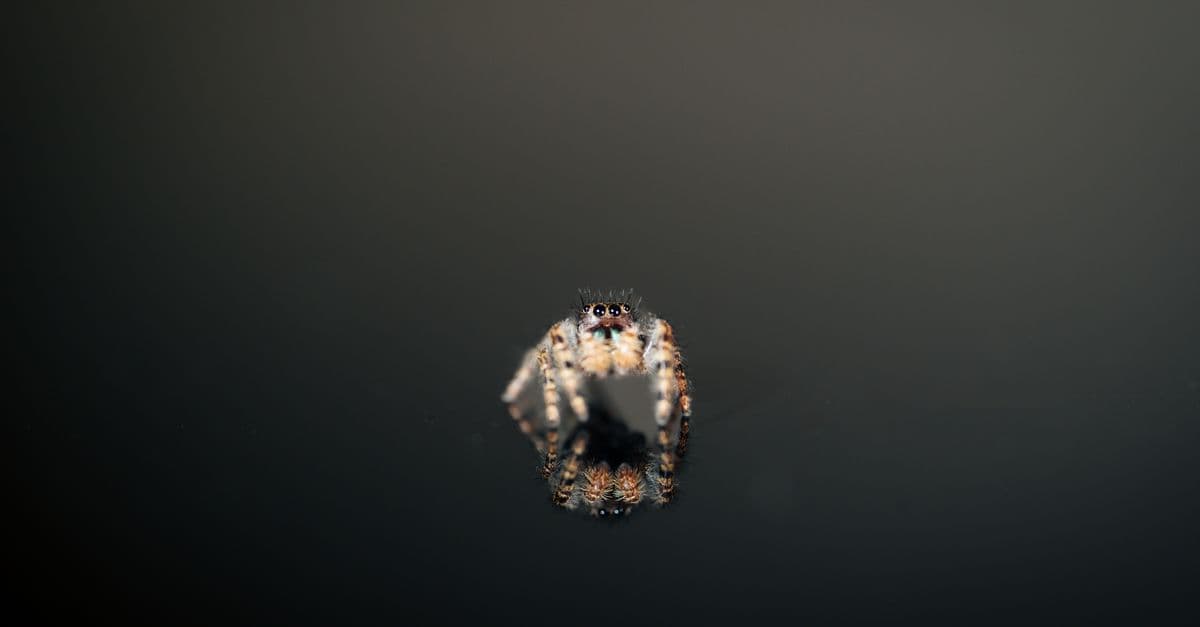
Photo: Chris F / Pexels
Spider dragline silk is five times stronger than high-grade steel by weight and three times tougher than Kevlar, the material used in bulletproof vests. A web strand thinner than a human hair absorbs the kinetic energy of a flying insect, stretching instead of snapping, then recoiling without breaking. Engineers have a name for this combination of high strength and high extensibility: toughness. Spider silk is the toughest known natural fiber, and possibly the toughest known fiber of any kind. Making it requires a biological machine that fits inside an animal the size of a thumbnail.
The Proteins: What Silk Is Made Of
Spider silk is primarily protein. The main structural proteins are called spidroins — a portmanteau of "spider" and "fibroin" (the generic name for silk proteins). Spidroins belong to a single protein family but vary considerably in their amino acid sequences depending on which gland produces them and what job the resulting silk must do.
Spidroin — any member of the spider silk protein family. Different spidroins have different amino acid compositions that produce different mechanical properties in the finished fiber.
The amino acid sequence of a spidroin follows a modular pattern. Dragline silk spidroins (the most-studied type, called major ampullate spidroins or MaSp) consist of:
- Polyalanine blocks — short runs of alanine amino acids that form tight, stacked crystal structures (beta-sheets) when the protein solidifies. These nanocrystals are the silk's primary strength elements — they resist tensile (pulling) force and are responsible for the fiber's high breaking stress.
- Glycine-rich regions — flexible, disordered segments of the protein chain connecting the crystalline blocks. These function like a spring, allowing the fiber to stretch before the crystals are pulled into alignment. They are responsible for the silk's extensibility and energy absorption.
The combination of rigid crystals embedded in a flexible matrix is the same structural principle as reinforced concrete (rigid steel rebar in flexible concrete) or bone (rigid hydroxyapatite crystals in flexible collagen). Nature repeatedly returns to this architecture for structural materials that must handle both tension and deformation.
Source: Hinman, M.B. and Lewis, R.V. (1992), "Isolation of a clone encoding a second dragline silk fibroin. Nephila clavipes dragline silk is a two-protein fiber," Journal of Biological Chemistry, Vol. 267 — first characterization of the two-component protein structure of dragline silk (MaSp1 and MaSp2).
Source: Keten, S. et al. (2010), "Nanoconfinement controls stiffness, strength and mechanical toughness of beta-sheet crystals in silk," Nature Materials, Vol. 9 — molecular dynamics simulations revealing why the nanocrystal size in spider silk is near-optimal for mechanical toughness.
The Seven Types of Silk Glands
No spider species uses all seven silk gland types simultaneously — the full complement is found in the most anatomically complex orb-weaving spiders. Different species have subsets depending on their ecological niche. But the seven types, their glands, and their functions cover the full range of spider silk's ecological applications:
| Gland type | Silk produced | Primary function |
|---|---|---|
| Major ampullate | Dragline silk (MaSp1 + MaSp2) | Structural frame, safety line during movement |
| Minor ampullate | Temporary spiral silk | Scaffold during web construction (removed when web is finished) |
| Flagelliform | Capture spiral core fiber | Extensible, elastic threads for catching prey |
| Aggregate | Adhesive coating | Sticky droplets applied over flagelliform core |
| Tubuliform (cylindrical) | Egg case silk | Tough, robust outer layer protecting eggs |
| Aciniform | Wrapping silk | Immobilizing prey; also used in sperm webs |
| Piriform | Attachment disc silk | Gluing dragline to substrate at anchor points |
The fact that an orb-web uses at least four distinct silk types (dragline for the radial spokes, minor ampullate for the temporary scaffold, flagelliform plus aggregate for the sticky capture spiral, and piriform for attachment points) reflects a level of materials engineering that biologists only fully mapped in the late 20th century.
The mechanical properties of each gland's product are dramatically different. Dragline silk has high stiffness and high breaking strength — it does not stretch much before it breaks, but it takes enormous force to break it. Flagelliform silk stretches to more than twice its resting length before breaking — the property that allows the web to absorb a flying insect's momentum without tearing the frame apart. These are not the same protein; they are different spidroins tuned by evolution for different mechanical requirements.
Source: Gosline, J.M. et al. (1999), "The mechanical design of spider silks: From fibroin sequence to mechanical function," Journal of Experimental Biology, Vol. 202 — comprehensive comparative analysis of mechanical properties across silk types from the same spider.
The Spinning Process: From Liquid to Solid
The transition from protein solution to functional fiber is where spider silk becomes genuinely extraordinary — and where every attempt to replicate it industrially has run into trouble.
Inside the major ampullate gland, spidroins are stored at very high concentration (up to 50% protein by weight) as a liquid. At this concentration in a laboratory tube, the proteins would immediately aggregate and precipitate into a useless clump. Spiders prevent this by maintaining specific conditions in the gland: slightly basic pH (around 7.2–7.6), specific ion concentrations including high concentrations of sodium and potassium, and the proteins are arranged in a way that keeps their hydrophobic regions from coming together prematurely.
The spinning duct that leads from the gland to the spinneret is not a passive tube. It is an active processing channel that changes the protein progressively along its length:
- pH drops from ~7.6 at the top of the duct to ~5.7–6.3 at the exit. This shift protonates certain amino acid residues on the spidroin chains, changing their charge and reducing electrostatic repulsion between them.
- Ion concentrations shift — sodium ions are exchanged for potassium ions, and water is reabsorbed from the forming fiber. The protein becomes more concentrated and less stable in liquid form.
- Elongational flow — as the duct narrows, the protein solution is pulled into an elongated flow regime that begins to align the protein chains along the fiber axis. This alignment is the prerequisite for the beta-sheet crystal formation.
- At the spinneret — the final valve at the exit — the spider can control fiber diameter and apply tension. The act of pulling the silk out under mechanical tension completes the crystal formation: the polyalanine blocks snap into their aligned, stacked beta-sheet geometry, and the silk solidifies.
Stop the tension and the silk does not solidify properly. Spider silk must be pulled to form. This is why you cannot squeeze silk out of a syringe and produce the same material — the mechanical drawing is part of the chemistry.
Beta-sheet — a secondary protein structure in which protein chains lie side by side and are linked by hydrogen bonds between adjacent strands, forming a rigid, flat sheet. The polyalanine nanocrystals in spider silk are tightly packed stacks of beta-sheets, which is the source of the fiber's tensile strength.
Source: Vollrath, F. and Knight, D.P. (2001), "Liquid crystalline spinning of spider silk," Nature, Vol. 410 — established the role of the spinning duct's pH and ion gradient in converting the liquid spidroin dope to solid fiber.
Comparative Mechanical Properties
The "stronger than steel" comparison requires a precise framing: spider silk is stronger than steel of the same weight, not the same cross-sectional area. By volume (cross-sectional area), steel is stronger. But the relevant metric for most biological and engineering applications is specific strength — force per unit mass — because weight matters.
| Material | Tensile strength (GPa) | Extensibility (%) | Toughness (MJ/m³) |
|---|---|---|---|
| High-grade steel | 1.5–2.0 | 0.8 | ~6 |
| Kevlar 29 | ~3.6 | 2.4–3.6 | ~50 |
| Spider dragline silk (Nephila spp.) | 1.1–1.7 | 18–27 | ~160 |
| Nylon | 0.76 | 18–26 | ~80 |
| Carbon fiber | ~3.5 | ~1.5 | ~25 |
Toughness — the area under the stress-strain curve, representing total energy absorbed before failure — is where dragline silk is most exceptional. Its combination of reasonable strength and high extensibility means it absorbs far more total energy per gram than either steel or Kevlar before breaking. This is the property that makes a web effective at stopping flying insects: the silk does not need to be stiffer than the insect's impact; it needs to absorb the insect's kinetic energy before it exceeds the silk's breaking point.
Flagelliform silk (the capture spiral) has even higher extensibility — up to 200% extension — and lower breaking strength. It is optimized for deformation, not structural load. The radial spokes (dragline silk) carry structural load; the spiral absorbs kinetic energy. The web as a system divides the mechanical job between two fundamentally different materials.
Biomimetic Research: Why Industry Has Struggled to Replicate It
The properties of spider silk have attracted intense engineering interest for applications including body armor, medical sutures, tendons, and parachute cords. The challenge: spiders cannot be farmed the way silkworms are. They are territorial, cannibalistic, and produce tiny quantities of silk per individual. One researcher calculated that harvesting silk from enough spiders to make a kilogram of raw material would require approximately one million spiders managed under controlled conditions — not a viable production method.
The alternative is producing spidroins using biological expression systems and then spinning them artificially. This has been attempted in bacteria (Escherichia coli), yeast, transgenic goats (whose milk contained spidroin proteins), transgenic silkworms, and various plant systems. These systems can produce the protein sequences. The problem is the spinning.
When artificially produced spidroins are dissolved and forced through a spinneret under standard conditions, the resulting fibers have significantly lower toughness than native silk — typically 20–30% of the natural material's performance. The pH gradient, ion exchange, and elongational flow conditions of the spider's spinning duct are extraordinarily precise, and replicating them in industrial equipment has proven difficult.
A 2012 study in PNAS from researchers at the University of Wyoming produced a notable improvement by expressing full-length spidroins in E. coli (previous attempts had used truncated protein sequences, which the bacteria could produce more readily but which lacked critical mechanical properties). The full-length proteins, spun under carefully controlled conditions, produced fibers approaching native silk performance. But "approaching" is not "matching," and industrial scaling remains unsolved.
Source: Xia, X.X. et al. (2010), "Native-sized recombinant spider silk protein produced in metabolically engineered Escherichia coli results in a strong fiber," PNAS, Vol. 107 — demonstrated that full-length (native-sized) spidroin sequences produced in bacteria yield substantially stronger fibers than truncated sequences.
Source: Heidebrecht, A. et al. (2015), "Biomimetic Fibers Made of Recombinant Spidroins with the Same Toughness as Natural Spider Silk," Advanced Materials, Vol. 27 — reported fibers with toughness comparable to native silk using engineered spinning conditions and recombinant proteins.
Medical and Defense Applications Under Development
Despite the scaling challenges, several applications are in active development or early deployment:
Medical sutures and scaffolds. Spider silk is biocompatible (non-toxic to human tissue), biodegrades predictably, and has mechanical properties close to natural tendons and ligaments. Research groups are developing silk-based scaffolds for tendon repair, where the scaffold degrades as natural tissue grows in its place.
Drug delivery. Silk's degradation rate can be tuned by adjusting the protein composition and processing conditions. Silk capsules can be engineered to release therapeutic compounds at specific rates in specific tissue environments.
Optics. Spider silk is optically transparent and can guide light in ways that are useful for fiber-optic applications at scales too small for glass fibers. This is a newer application area with active research but no commercial products yet.
Body armor. The toughness advantage of silk over Kevlar makes it attractive for ballistic protection, but the scaling problem has prevented commercial armor from being made of natural spider silk. Several companies have pursued recombinant silk approaches (Bolt Threads, Spiber) with varying degrees of success, primarily for apparel rather than ballistic protection.
How Spiders Avoid Getting Stuck in Their Own Webs
An often-raised question: if the capture spiral is coated in adhesive aggregate silk, why don't spiders stick to their own webs?
Several mechanisms operate simultaneously. Spiders move preferentially on the non-sticky radial dragline threads, not on the capture spiral. Their legs have a specialized surface chemistry — a combination of oily compounds and a claw arrangement — that reduces adhesion even when they do contact the sticky spiral. Third, the adhesive droplets on flagelliform silk are not permanently tacky in the same way as, say, tape; they are visco-elastic droplets whose adhesive properties are optimized for the brief, high-speed contact of a flying insect rather than for the slow, deliberate movement of the spider herself.
It is less that spiders are immune to the silk's adhesion and more that their movement patterns and surface chemistry are co-adapted to navigate the web efficiently under the conditions that prevail when they are moving through it.
Source: Foelix, R. (2011), "Biology of Spiders," 3rd edition, Oxford University Press — standard reference text on spider biology including detailed coverage of silk gland anatomy, behavior, and web navigation.
Why We Still Cannot Mass-Produce Spider Silk
The engineering case for spider silk is overwhelming. It is tougher than Kevlar, lighter than nylon, biocompatible with human tissue, and biodegradable on demand. If it could be produced at industrial scale, it would be the most useful structural fiber on Earth. Fifty years of serious scientific effort have produced fibers that approach — but do not match — the natural material, and no commercially viable production process exists for silk with native mechanical properties. The reasons why are instructive about both the biology and the limits of our ability to reverse-engineer living systems.
The most obvious production route — farming spiders the way silkworms (Bombyx mori) have been farmed for over 5,000 years — fails almost immediately at scale. Silkworms are herbivores, docile, and tolerant of crowding; tens of thousands can be raised in a single room on mulberry leaves. Spiders are territorial predators. Most species respond to crowding with cannibalism. The few genuinely social spider species — certain members of Stegodyphus and Anelosimus genera — produce silk cooperatively, but their silk has substantially inferior mechanical properties compared to the dragline silk of the orb-weavers that produce the material scientists actually want. There is no domesticated spider equivalent to the silkworm, and no realistic path to creating one.
The alternative is recombinant silk production: engineer a non-spider organism to produce spidroin proteins, then spin those proteins into fiber artificially. This has been attempted in more host organisms than almost any other target protein in biotechnology.
Escherichia coli bacteria can be engineered to express spidroin genes, but early attempts used truncated protein sequences — shortened versions of the native spidroin — because the full-length gene (which encodes proteins of 250,000 to 300,000 daltons, unusually large for bacterial expression) caused the bacteria to stall and produce toxic misfolded protein. Truncated spidroins produced correspondingly inferior fibers: the key structural domains at the protein termini, which regulate liquid dope stability and fiber initiation, were missing. A 2010 study from Xia et al. at the University of Wyoming achieved a significant advance by engineering metabolically modified E. coli that could express near-native-length spidroin sequences, producing fibers with substantially improved properties — but still not matching native silk in toughness.
Yeast (Pichia pastoris) and transgenic goats have also served as expression hosts. In the early 2000s, Nexia Biotechnologies spliced dragline silk genes into goats; the animals secreted spidroin proteins in their milk, which could be harvested and purified. The protein was real. The spinning was the problem. Dissolved spidroin forced through a needle under air pressure produces a fiber, but it lacks the hierarchical structure — the precisely sized nanocrystals embedded in an amorphous matrix — that gives native silk its toughness. The mechanical drawing under precise tension, the pH drop along the spinning duct, the ion exchange that dehydrates the forming fiber: none of these are replicated by pushing protein solution through a hole.
Bolt Threads, a San Francisco-based company, has taken the yeast fermentation route and achieved commercially available quantities of recombinant silk protein, branded as Microsilk. Their applications have focused on performance apparel (partnerships with Stella McCartney, Patagonia) rather than structural or ballistic applications — the fiber properties, while impressive, still fall short of native dragline silk in toughness. Spiber, a Japanese biotechnology company, has similarly focused on apparel, producing recombinant silk under the brand Brewed Protein. In 2019, Spiber partnered with The North Face Japan to release a parka jacket using recombinant silk insulation. Neither company's material, at production scale, matches the 160 MJ/m³ toughness of natural Nephila dragline silk.
The fundamental obstacle is the protein-folding and spinning-replication problem. Native spidroin molecules are stored in the spider's gland at concentrations that would cause immediate precipitation and misfolding in a laboratory vessel — the spider maintains this metastable liquid state through a precise combination of pH, counterion species, and molecular chaperone proteins that buffer the spidroins against premature aggregation. As the protein moves through the spinning duct, it passes through a gradient of decreasing pH and shifting ion composition that is active, not passive: the duct wall actively transports ions and water across its epithelium. At the spinneret, mechanical tension completes crystallization. Replicating this sequence in industrial equipment requires controlling pH, ion gradients, protein concentration, temperature, and draw speed simultaneously along the entire length of a very small channel — a manufacturing process closer to microfluidics than conventional fiber extrusion.
Source: Andersson, M. et al. (2017), "Biomimetic spinning of artificial spider silk from a chimeric minispidroin," Nature Chemical Biology, Vol. 13 — demonstrated that a synthetic miniature spidroin incorporating the natural N- and C-terminal domains, spun through a microfluidic device replicating the pH gradient of the natural duct, produced fibers with toughness values approaching native silk — the most complete artificial replication of the natural spinning process to date.
The Andersson study is notable precisely because it identified what had been missing: not just the protein sequence, but the terminal domains and the pH-gradient environment that triggers their self-assembly. When both were provided — engineered protein plus biomimetic duct — the fiber toughness improved dramatically. The remaining gap between laboratory demonstration and industrial production is one of scaling: a microfluidic spinning device producing a few centimeters of fiber per minute does not translate directly into a factory process capable of producing metric tons per year. That translation problem remains unsolved as of 2025.
Frequently Asked Questions
Q: How much silk can a single spider produce?
A: This varies considerably by species and gland type. A large orb-weaver such as Nephila clavipes can produce approximately 137 meters (450 feet) of dragline silk per day under optimal conditions. Complete web construction requires significantly less — a typical orb-web uses on the order of 20–30 meters of silk in its structural elements.
Q: Do all spiders spin webs?
A: No. All spiders produce silk, but not all build capture webs. Jumping spiders (Salticidae) use silk primarily for safety draglines and egg cases but hunt by stalking and leaping. Wolf spiders (Lycosidae) similarly do not build webs. Silk's uses — draglines, egg protection, prey wrapping, attachment — are distinct from its web-building applications.
Q: Is spider silk actually stronger than a steel wire of the same diameter?
A: Not by breaking force (stress). Steel has a higher tensile strength in absolute terms — more force per unit cross-sectional area before failure. Spider silk's advantage is specific strength (force per unit mass) and toughness (total energy absorbed). A silk fiber and a steel wire of identical diameter would both carry roughly comparable forces before breaking, but the silk fiber would weigh roughly six times less and absorb far more energy before breaking due to its extensibility.
Q: Why can't spiders be farmed like silkworms?
A: Silkworms (Bombyx mori) are social, herbivorous, and docile — easily kept in large numbers. Spiders are territorial predators. In crowded conditions, most spider species will cannibalize each other. The few exceptions (some social spider species) produce silk with different and generally inferior mechanical properties compared to orb-weavers' dragline silk.
Q: Has any synthetic material ever matched natural spider silk's toughness?
A: As of 2025, no synthetic material has matched the full combination of spider silk's specific strength, extensibility, and toughness in a commercially scalable fiber. Some recombinant silk fibers in laboratory settings have approached native silk's toughness, but industrial-scale production of equivalent material does not yet exist.
Q: What is the difference between spider silk and silkworm silk?
A: Silkworm silk (from Bombyx mori) is also a protein fiber used in textile production for millennia. Structurally, it is primarily composed of fibroin proteins with beta-sheet regions, like spider silk. But silkworm silk has lower extensibility and toughness than spider dragline silk — it is optimized for a cocoon, which needs to be tough and water-resistant but not elastic. Spider silk's properties are diverse across gland types, with some (flagelliform) far more extensible than any silkworm product.
The Takeaway
Spider silk's properties emerge from a structural architecture that operates simultaneously at three scales: the nanoscale geometry of beta-sheet crystals within individual protein chains, the mesoscale arrangement of crystalline and amorphous domains within a single fiber, and the macroscale web design that combines different silk types for different mechanical roles. The spinning process is a tightly choreographed chemical transition, driven by gradients of pH and ion concentration that the spider's body actively maintains, completed by the mechanical act of drawing. Engineering has captured the proteins. It has not yet captured the process. That gap — between knowing the recipe and replicating the kitchen — is where spider silk research currently lives.
Read next:
Follow new articles
Add SciHub101 to your feed reader to see new science and technology stories.
About the Author
SciHub101 is an independent science and technology publication founded and edited by Buğra Sözeri, a software engineer and app developer based in Türkiye. AI tools assist with drafting and research. Source documentation in the existing archive is uneven, and articles are being reviewed and corrected. The Editorial Team byline identifies editorial responsibility; it does not certify specialist or independent human review. Where we compare products, anything built by our own team is labelled as such — see the editorial guidelines and About page for how corrections and disclosures work.
Related Articles
How Bees Communicate: The Waggle Dance Explained
A honeybee returning from a flower patch performs a precise figure-eight dance on the vertical comb face of its hive. The angle of her body relative to gravity encodes compass direction. The duration of the waggle run encodes distance. Her nestmates read both signals and fly directly to a resource they have never visited. This is not instinct in any simple sense — it is a symbolic language, and decoding it took a biologist decades of careful experiment.
How Sharks Sense the World: Electroreception, Smell, and the Lateral Line
Sharks navigate a sensory world almost entirely unlike ours. They detect the bioelectric fields of a hidden flatfish buried under sand, sense water pressure waves from a struggling fish a kilometer away, and smell blood diluted to one part in ten billion. But popular culture has wildly exaggerated some of these abilities while ignoring the most extraordinary one — a sense that has no human analogue at all.
How Spiders Make Silk: The Strongest Material in the Natural World
Spider silk is tougher than steel and Kevlar by weight — yet a spider produces it from liquid protein at room temperature in milliseconds, no factory required.
How Animals Were Domesticated: Genetics, Behavior, and the Domestication Syndrome
Dogs diverged from wolves at least 15,000 years ago — possibly 40,000 years ago — and the transformation involved not just behavioral tameness but a cascade of physical changes no one selected for: floppy ears, piebald coats, shortened snouts, reduced brain volume. The same cluster of traits appears in domesticated cattle, pigs, horses, and foxes bred in a 60-year Russian experiment. This pattern has a name, a mechanistic explanation, and implications for understanding a transition that reshaped the human species.
How Geckos Stick to Walls: Van der Waals Forces and Dry Adhesion
A gecko weighing 70 grams can hang from a ceiling by a single toe. The adhesive force available from its feet has been measured at approximately 20 Newtons — enough to support the weight of roughly 40 geckos simultaneously. No glue is involved. No suction cups. The mechanism is quantum-mechanical: trillions of nanoscale hair structures bring gecko toe pads into such intimate contact with surfaces that the quantum interactions between electrons in adjacent molecules provide enough combined force to defy gravity.
How Ant Colonies Work: Superorganisms, Pheromones, and Swarm Intelligence
A single ant is close to useless. It has a brain with roughly 250,000 neurons — less than a fruit fly — and no capacity to plan, strategize, or solve multi-step problems alone. Put 500,000 of them together in a colony, and the collective builds climate-controlled fungal farms, wages organized warfare, manages waste disposal, and solves the traveling salesman problem with road networks that engineers have benchmarked against modern infrastructure. The colony is the organism.