How Bees Communicate: The Waggle Dance Explained
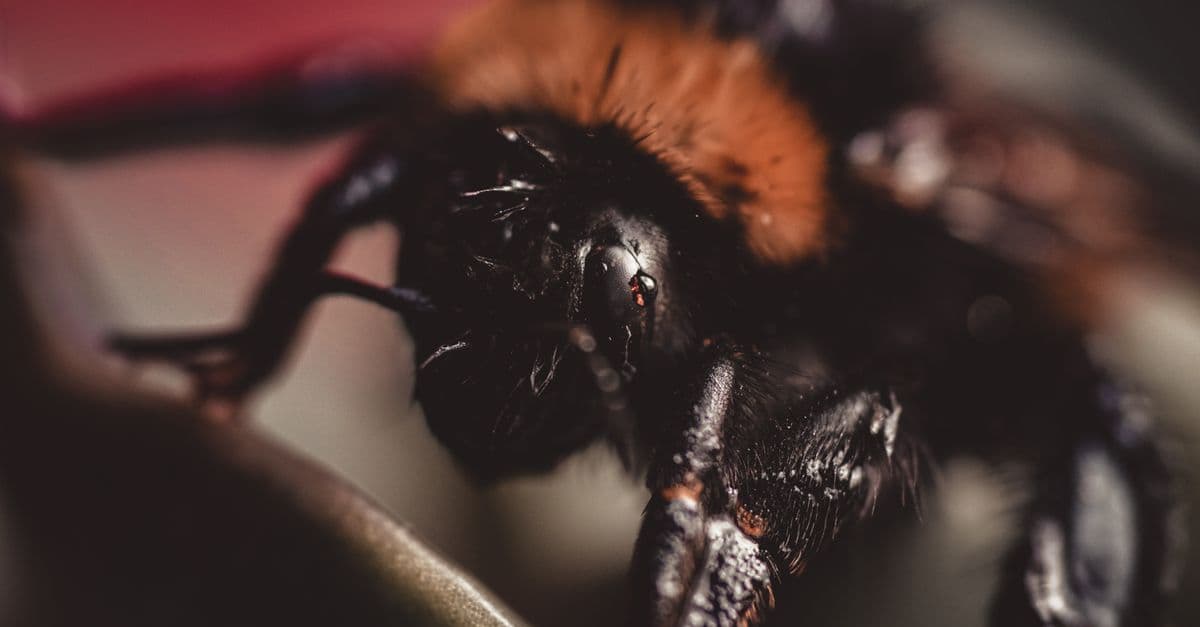
Photo: Nathan J Hilton / Pexels
A honeybee returns from a field of clover 800 m (half a mile) from the hive and begins dancing. She traces a figure-eight on the vertical wax comb, vibrating her abdomen during the central waggle run. The angle of that run — say, 40 degrees to the left of vertical — tells every bee watching that the food lies 40 degrees to the left of the sun. The run lasts 1.5 seconds, encoding roughly 800 m. Within minutes, foragers who watched the dance take off and arrive at the clover field. No map, no GPS, no central coordinator told them where to go. They read a dance.
Karl von Frisch and the Discovery That Won a Nobel Prize
The waggle dance was described in the scientific literature as early as 1923 by Austrian zoologist Karl von Frisch, but its full meaning — that it was a symbolic language encoding direction and distance — took him until the 1940s to crack. The work earned him a share of the Nobel Prize in Physiology or Medicine in 1973, alongside Konrad Lorenz and Nikolaas Tinbergen.
Von Frisch's core insight was that the dance on the vertical comb is a transposition: the sun's position in the sky, which cannot be seen inside the dark hive, is mapped onto the gravitational vertical. Straight up on the comb means "fly toward the sun." A waggle run at 30 degrees to the right of vertical means "fly 30 degrees to the right of the sun's current azimuth." The bees read angles relative to gravity and translate them into angles relative to sunlight — a cognitive operation that requires a mental model of the relationship between two external reference frames.
Azimuth — the compass bearing of a point (in this case, the sun) measured as an angle clockwise from north, used here to describe the sun's horizontal position in the sky.
This was a genuinely controversial claim. Many zoologists in the 1950s and 1960s refused to accept that an insect could communicate symbolically. A series of experiments, including work by Danish zoologist Martin Lindauer confirming that bees dancing inside a darkened hive consistently maintained the correct angular relationship to gravity, eventually settled the debate.
Source: von Frisch, K. (1967), "The Dance Language and Orientation of Bees," Harvard University Press — the comprehensive monograph documenting 45 years of waggle dance research, basis for the 1973 Nobel Prize.
How Direction Is Encoded
On a flat, horizontal surface in the open — as bees sometimes dance during swarming, when they have no vertical reference — the waggle run points directly toward the food source. The bee uses the sun directly as the reference frame.
Inside the hive, on vertical comb in total darkness, the same information is encoded via a gravity substitution rule:
- Waggle run straight up = food lies in the direction of the sun
- Waggle run 60 degrees left of vertical = food lies 60 degrees to the left of the sun's current azimuth
- Waggle run straight down = food lies directly away from the sun (i.e., fly with the sun behind you)
The sun moves roughly 15 degrees per hour across the sky. Bees compensate for this: a bee that watched a dance at noon and sets off at 2 pm adjusts her compass bearing by approximately 30 degrees to account for the sun's movement in the intervening two hours. They do this without seeing the sun during that interval, using an internal circadian clock calibrated to the sun's rate of movement.
This time-compensation ability was demonstrated by von Frisch and later confirmed by multiple research groups. It requires that bees maintain an updated model of solar position based on elapsed time — a form of dead reckoning more sophisticated than most vertebrate navigation systems.
Source: Dyer, F.C. (1998), "Spatial cognition: Lessons from central-place foraging insects," in "Animal Cognition in Nature," Academic Press — review of bee navigation with emphasis on time-compensated solar orientation and its cognitive demands.
How Distance Is Encoded
The duration of the waggle run encodes distance. A longer waggle run means a farther food source. But the encoding is not a direct measurement of physical distance — it is a measurement of the bee's own sensory experience of the flight.
Optic flow — the apparent movement of visual features across an observer's visual field as it moves through space. A bee flying through a narrow corridor between rows of flowers perceives more optic flow than a bee flying across open sky over the same distance.
Bees measure flight distance using optic flow: the rate at which the ground texture appears to move beneath them during the outbound journey. A flight over visually rich terrain (flowers, grass, varied texture) generates more optic flow per meter than a flight over a featureless lake or bare ground. As a result, bees flying over impoverished visual terrain underestimate distance and produce shorter waggle runs than the actual distance warrants. This has been demonstrated experimentally by training bees to fly through tunnels with different internal textures — the optic flow manipulation predictably distorts the reported distance in the subsequent dance.
The practical consequence: there is no universal conversion factor between waggle run duration and meters. The encoding varies by local visual terrain, by individual bee, and even by the colony's typical foraging environment. Bees are encoding their sensory experience of the journey, not the journey's physical length.
| Waggle run duration | Approximate distance indicated |
|---|---|
| 0.5 seconds | ~250 m (820 ft) |
| 1 second | ~500 m (1,640 ft) |
| 1.5 seconds | ~750–800 m (2,460–2,620 ft) |
| 2 seconds | ~1,000 m (3,280 ft) |
| 3+ seconds | >2,000 m (>1.2 miles) |
These figures are approximate and colony-specific. Individual bees within the same colony can also differ in how they calibrate distance to waggle duration — a finding that suggests the dance language, while precise, is not a rigid code but a flexible communication system with individual variation.
Source: Srinivasan, M.V., Zhang, S., Altwein, M., and Tautz, J. (2000), "Honeybee navigation: Nature and calibration of the 'odometer,'" Science, Vol. 287 — the tunnel experiment demonstrating that optic flow rather than physical distance drives waggle run duration.
Quality Signals: Enthusiasm as Information
Distance and direction are not the only information encoded. The vigor of the dance communicates the quality of the food source.
A bee that found exceptionally rich, highly concentrated nectar close to the hive dances faster, performs more waggle runs per unit time, and sustains the dance for more circuits than a bee that found dilute nectar at a greater distance. Nestmates can discriminate between enthusiastic and subdued dancers and preferentially follow the enthusiastic ones.
This creates a natural filtering mechanism. Low-quality sources attract few followers; their scouts gradually abandon the dance as they fail to recruit help. High-quality sources attract many followers quickly, which accelerates the exploitation of the resource while the colony's overall foraging effort self-organizes toward whatever the current environment offers most.
The intensity of dancing also responds to colony need. A colony low on water in summer recruits strongly to water sources; the same colony well-supplied with water responds weakly to identical water dancer displays. The dances are produced in the same physical form, but the audience's responsiveness is modulated by internal colony state — a form of collective sensory gating.
How the Hive Makes a Decision: Swarm Intelligence Without a Leader
The most remarkable demonstration of the waggle dance's computational power occurs during swarming. When a colony outgrows its hive and prepares to split, a subset of the bees — several hundred scout bees — depart to search for a new nest site. Each scout independently evaluates candidate cavities (volume, entrance size, orientation, shelter) and returns to the swarm cluster to dance.
Different scouts advertise different sites simultaneously, performing competing waggle dances on the surface of the swarm cluster. Bees watching these dances may go inspect the advertised site themselves, return with their own assessment, and either reinforce the same site's dance or switch allegiance to a better option.
The process is, in effect, a democratic vote with a twist: dancers for inferior sites gradually stop dancing (because fewer bees return to reinforce them), while dancers for the best site accumulate supporters. The quorum threshold — the number of scouts visiting a single site simultaneously — appears to be the trigger for consensus. When approximately 15 to 20 scouts are present at the same site at the same time, that site has "won." The swarm then lifts off and navigates to it.
No individual bee knows the full set of options being evaluated. No queen commands the decision. The outcome emerges from local interactions: dancing, visiting, and returning, repeated by hundreds of individuals operating in parallel.
Quorum sensing — here used informally to describe the threshold number of bees at a site that triggers the commitment to swarm to it. (Quorum sensing more formally refers to bacterial chemical signaling, but the bee mechanism has functional parallels.)
Source: Seeley, T.D. (2010), "Honeybee Democracy," Princeton University Press — the definitive account of swarm nest-site selection and collective decision-making in honeybees.
Source: Seeley, T.D. and Visscher, P.K. (2004), "Quorum sensing during nest-site selection by honeybee swarms," Behavioral Ecology and Sociobiology, Vol. 56 — identified the quorum threshold mechanism that drives consensus.
What the Dance Cannot Convey
The waggle dance is impressive but not unlimited. Several things it does not communicate:
It gives direction and distance, but not a path. If there are obstacles — a hill, a building — between the hive and the food source, the dance contains no information about them. Foragers must navigate around or over them independently after taking the initial bearing from the dance.
It encodes a snapshot in time. A bee that danced at 10 am encoded the sun's position at 10 am. She and her recruits time-compensate for solar movement, but if a storm rolls in and the visual landscape changes radically, the dance-encoded information becomes unreliable. Bees switch to learned landmark-based navigation in familiar terrain, but in novel territory they rely on the solar compass derived from the dance.
It conveys no information about the return journey. The dance is one-way. Bees leaving to forage at an advertised site must navigate back using their own path integration and landmark recognition — no dance guides them home.
The Dialects: Different Bee Species Dance Differently
The waggle dance is not a fixed universal code across all bee species. Apis mellifera (the western honeybee, the species von Frisch studied) uses one dialect. Other Apis species use measurably different calibrations.
The dwarf honeybee (Apis florea) and the giant honeybee (Apis dorsata) both dance, but their distance-to-duration conversion curves differ from A. mellifera. When researchers have cross-mixed recruits from different species, the recruits consistently fly to the wrong location — not randomly, but to the location the dance would have indicated in their own species' dialect. They are reading the dance correctly but applying the wrong conversion table.
This is one of the clearest pieces of evidence that the waggle dance is a true language — or at least a communication system with enough symbolic complexity that mismatches in convention lead to predictable errors, exactly as they would in a human translation mistake.
Source: Dyer, F.C. (2002), "The biology of the dance language," Annual Review of Entomology, Vol. 47 — review of comparative waggle dance research across Apis species, including cross-species communication experiments.
How Bees Learn the Dance
Young worker bees do not emerge from their cells already knowing how to produce and interpret the waggle dance. They learn it. Newly eclosed (freshly hatched) workers spend their first days inside the hive performing non-foraging duties. They observe dances performed by returning foragers. Evidence from studies where bees were prevented from observing dances early in life shows that naive bees produce less accurate dances on their first foraging trips, and their accuracy improves with experience.
This is not straightforward imitation — the bee does not watch a dance and then copy it. Rather, exposure during the early indoor phase appears to calibrate the neural circuits that will later generate and interpret the dance. It is closer to how a bird learns its species-specific song: a template is genetically prepared, but exposure to the species-typical example during a sensitive period refines the final performance.
Source: Bozic, J. and Valentincic, T. (1991), "Attendants and followers of honeybee waggle dances," Journal of Apicultural Research, Vol. 30 — early study on dance attendance and its role in forager recruitment and learning.
Beyond the Dance: The Hidden Channels of Hive Communication
The waggle dance is the most structurally sophisticated signal in bee communication, but it does not operate in isolation. A functioning colony integrates at least four other signaling channels simultaneously — chemical, vibrational, tactile, and glandular — and the dance itself is embedded within this richer communication environment. Remove any single channel and the colony's coordination degrades in measurable ways.
Queen mandibular pheromone (QMP) is the colony's most powerful regulatory signal. The queen secretes a blend of five core compounds — including (E)-9-oxodec-2-enoic acid and two isomers of 9-hydroxy-2-decenoic acid — from glands in her mandibles. Worker bees that contact the queen or her retinue spread QMP throughout the hive through trophallaxis (food-sharing mouth-to-mouth contact) and surface contact. The effects are wide-ranging: QMP suppresses ovary development in workers (preventing them from laying their own eggs), inhibits the construction of queen cells (thus suppressing swarming tendency when the colony is healthy), and promotes worker foraging and cohesion. A hive that loses its queen sees QMP levels drop within hours; workers detect the absence chemically before they have physically confirmed the queen is gone. The colony's behavioral response — emergency queen-cell construction — begins within 24 hours of QMP depletion.
Nasonov pheromone solves a different coordination problem: where is home? Workers exposes the Nasonov gland — a gland on the dorsal abdomen, between the sixth and seventh tergites — and fan their wings to disperse a blend of terpenoid compounds (geraniol, nerolic acid, citral, and others) that acts as a homing beacon. Foragers use Nasonov scent at the hive entrance to confirm they have returned to the right colony. During swarming, the scout bees that have committed to a new nest site release Nasonov pheromone at the entrance of the chosen cavity while other scouts perform their waggle dances on the swarm cluster — a dual-channel signal combining spatial dance information with a chemical anchor that says "here, specifically."
The stop signal — formally called the "stop" or "inhibitory" signal — is a vibrational pulse delivered by one bee headbutting another mid-dance. The signaling bee produces a brief burst of vibration (about 380 Hz, lasting 130 milliseconds on average) transmitted through physical contact with the dancer's thorax. Its effect is to interrupt the dance and reduce the dancer's enthusiasm for the advertised site. The stop signal is used most frequently when a forager from a food site has just been attacked by a predator at that location; bees returning from a dangerous site headbutt dancers advertising it, suppressing recruitment before more colony members are sent into danger. During swarm nest-site selection, stop signals are also used between scouts promoting competing sites, functioning as a dissenting vote against a proposal.
Vibrational signaling extends further than the stop signal alone. Piping — a series of "toots" at about 500 Hz produced by pressing the thorax against the comb — is used by virgin queens to signal their presence before they have emerged from their cells. A mated queen pipes to suppress rival queens; an unhatched queen pipes in response, and the workers may choose to keep a rival capped or release her depending on colony state. The comb surface acts as a vibration-transmission medium, carrying these signals to bees in contact with it up to tens of centimeters away.
Together, these channels implement something closer to a multi-layered coordination system than a simple signaling vocabulary. The waggle dance provides spatial and quality information about a resource. QMP provides continuous colony-wide information about reproductive state and social stability. Nasonov pheromone provides location anchoring. The stop signal provides a rapid veto mechanism against dangerous or inferior options. Piping provides reproductive status signaling. Each channel operates at a different range, timescale, and information bandwidth, and the colony's behavior emerges from their simultaneous integration.
Thomas Seeley's research at Cornell on swarm decision-making demonstrated that the stop signal is the mechanism by which competing dances are resolved into a quorum. As more scouts commit to the winning site, they increasingly stop-signal the dancers promoting inferior alternatives. The inferior dancers progressively fall silent — not because they evaluate the competing evidence directly, but because they receive more inhibitory signals than reinforcing return visits. The colony reaches consensus through what Seeley describes as a "cross-inhibition" network: advocates for each option suppress the advocates of other options, and the option receiving the least suppression wins.
Source: Seeley, T.D., Visscher, P.K., Schlegel, T., Hogan, P.M., Franks, N.R., and Marshall, J.A.R. (2012), "Stop Signals Provide Cross Inhibition in Collective Decision-Making by Honeybee Swarms," Science, Vol. 335 — demonstrated that stop signals function as cross-inhibition between competing site-advocates, providing the mechanism by which swarms converge on a single site without central coordination.
Frequently Asked Questions
Q: Can bees communicate anything other than food location with the waggle dance?
A: Yes. Bees use the same dance structure to advertise water sources during hot weather, new nest sites during swarming, and in some observations, propolis (plant resin) collection sites. The physical form of the dance is the same; what varies is the substance being advertised and how vigorously scouts dance for it based on colony need.
Q: How many bees typically watch a waggle dance at once?
A: Typically between one and 10 follower bees attend a single dance circuit, though this varies. A highly enthusiastic dancer advertising a rich food source may attract more followers. Most attendees follow only a few circuits before departing to the advertised location, then either return to reinforce the dance or stop dancing if the site proves disappointing.
Q: How did von Frisch prove the dance wasn't just random movement?
A: By training bees to food sources at known directions and distances, observing their dances, then placing food dishes at multiple locations and comparing where dance-following recruits actually arrived. Recruits arrived preferentially at the location matching the dance's encoded direction and distance — not at dishes placed at other angles or distances. The match was statistically unambiguous.
Q: Can bees be fooled into dancing for a non-existent location?
A: Yes, experimentally. Researchers have used robotic bee replicas performing artificial waggle dances to recruit real foragers to arbitrary locations. The recruits fly to approximately the encoded position, confirming that the dance parameters themselves — not the scent of the dancer or other cues — carry the directional information.
Q: Do solitary bees or bumblebees use a waggle dance?
A: No. The waggle dance is specific to the genus Apis (honeybees). Bumblebees (Bombus spp.) are eusocial but communicate food location primarily through excited running and scent cues, not a directional symbolic dance. The waggle dance appears to be an evolutionary innovation within Apis, possibly related to their larger colony sizes and greater foraging ranges.
Q: What is the most distant food source a honeybee has ever been documented dancing for?
A: Honeybees have been documented foraging up to approximately 13.5 km (8.4 miles) from the hive under extreme conditions, though typical foraging ranges are 1–3 km (0.6–1.9 miles). Dances for very distant sources are correspondingly long and slow-vigored, and recruits rarely follow them — the energy cost of a 13 km round trip is rarely worth the nectar gained.
The Takeaway
The waggle dance is animal communication at its most structurally sophisticated outside of human language. It encodes two independent variables — direction and distance — in a single performance using separate physical parameters (angle and duration), operates through a transposition from solar to gravitational coordinates, compensates for the sun's movement in real time, and the signal's intensity carries quality information simultaneously. At the colony level, competing dances from multiple scouts implement a weighted democratic process that reliably selects the best available nest site without any central decision-maker. Von Frisch spent four decades unraveling this. It still rewards careful attention.
Read next:
Follow new articles
Add SciHub101 to your feed reader to see new science and technology stories.
About the Author
SciHub101 is an independent science and technology publication founded and edited by Buğra Sözeri, a software engineer and app developer based in Türkiye. AI tools assist with drafting and research. Source documentation in the existing archive is uneven, and articles are being reviewed and corrected. The Editorial Team byline identifies editorial responsibility; it does not certify specialist or independent human review. Where we compare products, anything built by our own team is labelled as such — see the editorial guidelines and About page for how corrections and disclosures work.
Related Articles
Why Do Cats Purr? The Science Behind the Sound
A domestic cat produces one of the most recognizable sounds in the animal kingdom, yet scientists spent decades arguing about how it works. The mechanism turns out to involve a neural oscillator, self-sustaining vocal fold vibrations, and a frequency range that overlaps precisely with medical bone-healing equipment. Here is what the research actually shows.
How Spiders Make Silk: Stronger Than Steel, Softer Than Thread
Spider dragline silk is five times stronger than high-grade steel by weight and three times tougher than Kevlar, the material in bulletproof vests. A strand thinner than a human hair can stop a flying insect without snapping. Spiders achieve this using a protein-spinning process so precise that engineers have spent 50 years trying to reverse-engineer it — so far, with only partial success.
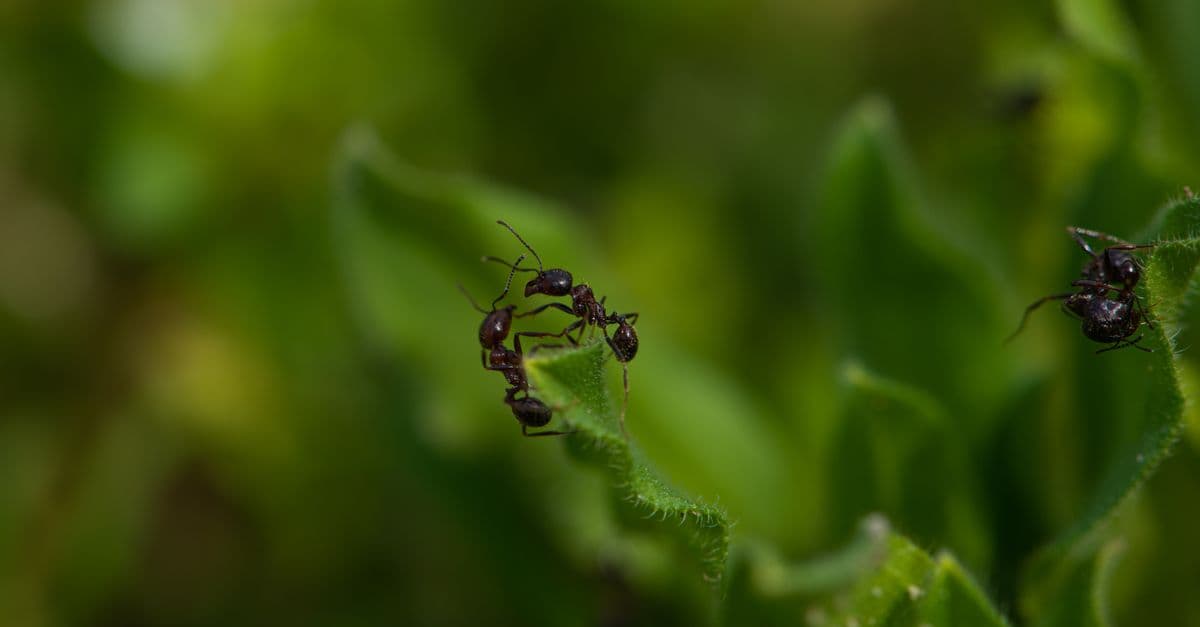
How Ant Colonies Work: Superorganisms, Pheromones, and Swarm Intelligence
A single ant is close to useless. It has a brain with roughly 250,000 neurons — less than a fruit fly — and no capacity to plan, strategize, or solve multi-step problems alone. Put 500,000 of them together in a colony, and the collective builds climate-controlled fungal farms, wages organized warfare, manages waste disposal, and solves the traveling salesman problem with road networks that engineers have benchmarked against modern infrastructure. The colony is the organism.
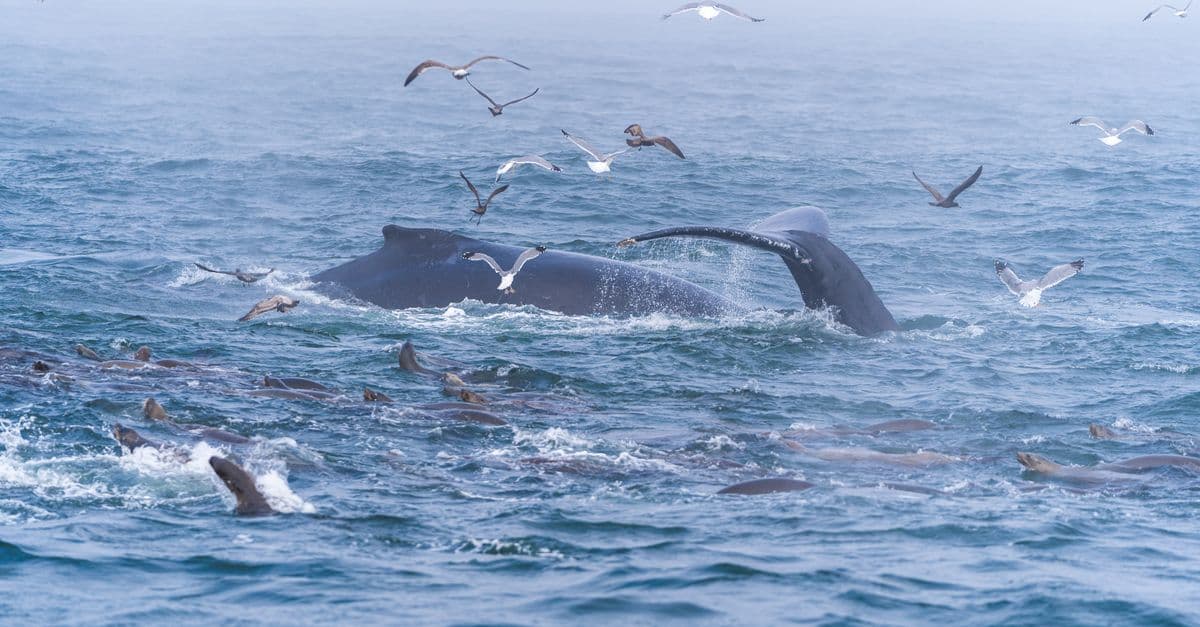
How Whales Communicate: Songs, Dialects, and Culture Beneath the Waves
Humpback whales sing songs that can last 30 hours and travel hundreds of kilometers. Fin whales produce calls at 20 Hz — below the threshold of human hearing — that propagate across entire ocean basins. Sperm whales use click-based dialects specific to family groups. Whale communication is not simple signaling. Biologists now argue it bears hallmarks of culture, the transmission of learned behaviors across generations.
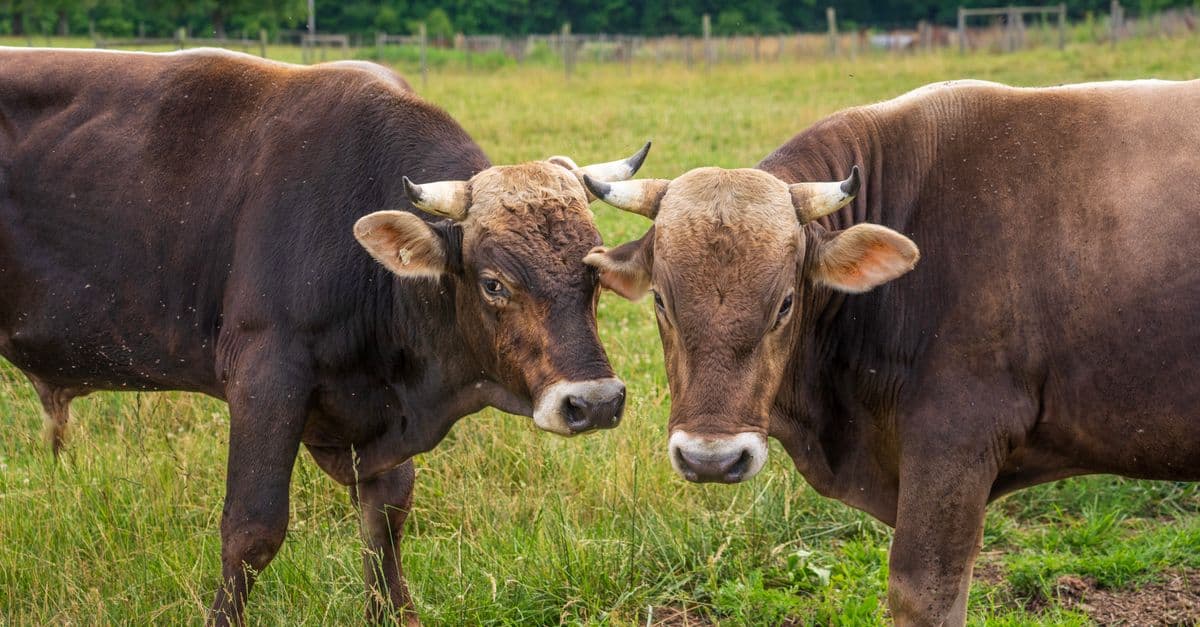
How Animals Were Domesticated: Genetics, Behavior, and the Domestication Syndrome
Dogs diverged from wolves at least 15,000 years ago — possibly 40,000 years ago — and the transformation involved not just behavioral tameness but a cascade of physical changes no one selected for: floppy ears, piebald coats, shortened snouts, reduced brain volume. The same cluster of traits appears in domesticated cattle, pigs, horses, and foxes bred in a 60-year Russian experiment. This pattern has a name, a mechanistic explanation, and implications for understanding a transition that reshaped the human species.