How Bees Communicate With Dances — The Waggle Dance Explained
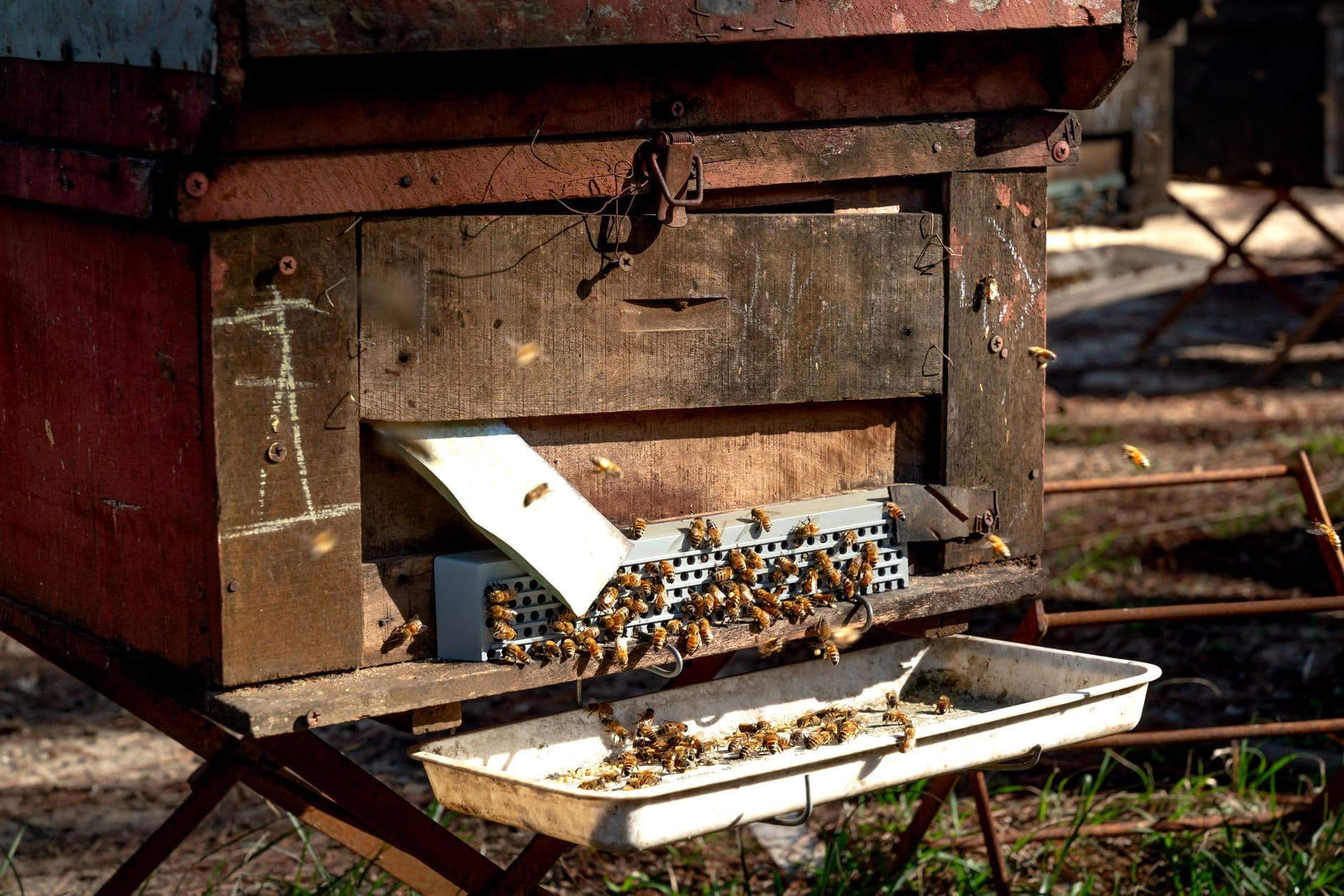
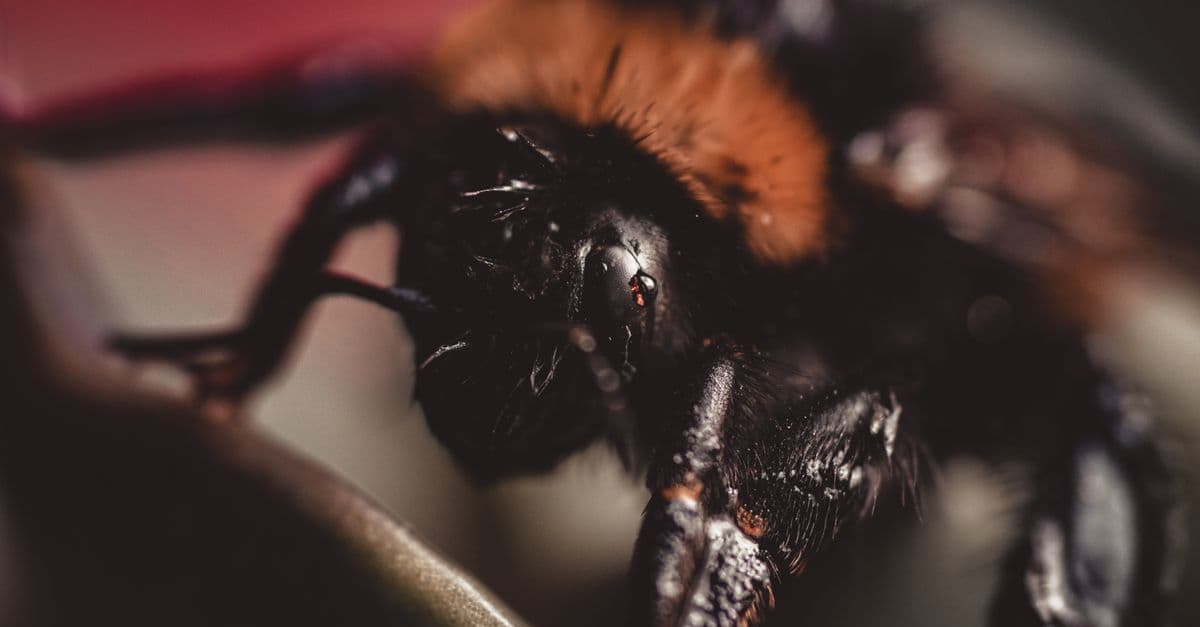
Photo: Quang Nguyen Vinh / Pexels
A forager honeybee returning to a hive with news of a flower patch 500 meters away performs a dance that encodes both direction relative to the sun and distance, conveyed entirely in the dark of the hive, in a code other bees decode by touch and vibration rather than sight. Karl von Frisch spent decades documenting this behavior at the University of Munich and shared the 1973 Nobel Prize in Physiology or Medicine for the work, alongside Konrad Lorenz and Niko Tinbergen (NobelPrize.org, 1973). It remains one of the only confirmed cases of abstract, symbolic communication in a non-primate animal — a signal that stands in for something it does not physically resemble.
For most of the twentieth century, that claim was controversial. Skeptics argued bees might simply be following scent trails left by the dancer, or scent cues carried on her body from the food source, rather than decoding a spatial message at all. It took nearly 50 years and a series of increasingly clever experiments, including one involving a robot bee, to settle the argument. This piece walks through how the dance actually encodes information, how researchers proved bees really use it, and where the current edges of the science sit.
What the waggle dance is and why it evolved
The waggle dance — a figure-eight movement pattern a forager honeybee performs on the vertical surface of the honeycomb to tell nestmates the direction and distance of a resource — solves a problem that most foraging animals never have to solve: how do you tell someone else where to go without walking them there yourself? Ants mostly rely on chemical trails laid step-by-step from the nest to the food. That works when a nest is only a few meters from the trail's end, but honeybee colonies forage over an area that can extend several kilometers in every direction, far too large for a continuous, physically-marked scent trail to be practical.
Von Frisch's basic method for cracking the code was straightforward in concept and painstaking in execution: he trained individual marked bees to visit a feeding dish at a known location and distance from the hive, then filmed and hand-recorded the movements of those bees when they returned to a glass-walled observation hive (von Frisch, The Dance Language and Orientation of Bees, Harvard University Press, 1967). By systematically moving the feeding station and comparing it against the dance, he built up the correspondence between dance geometry and real-world geography that still holds today.
The dance is not the only communication channel bees use, but it is the only one confirmed to carry quantitative spatial information — a compass bearing and a rough distance — encoded abstractly rather than demonstrated directly. A bee performing the dance never physically points at the food source or leads anyone toward it. She encodes the information as a repeatable, decodable pattern, which is why the dance is often described in the same breath as human language when biologists discuss referential communication in animals — a comparison the honeybee earns through the abstraction, not the vocabulary.
The waggle run: how direction becomes an angle
The core unit of the dance is the "waggle run," a straight-line burst in which the bee vibrates her abdomen at roughly 13 hertz while walking forward, then loops back around in alternating directions to repeat the run, tracing a rough figure-eight. What makes the waggle run informative is its angle. The angle between the straight run and vertical "up" on the honeycomb corresponds directly to the angle between the food source and the sun's current azimuth, measured outside the hive.
A waggle run pointing straight up the comb means "fly directly toward the sun." A run angled 40 degrees to the left of vertical means the food source sits 40 degrees to the left of the sun's position as the bee flies out of the hive. This works because bees have a continuously updated internal sense of solar azimuth — they track the sun's movement across the sky over the course of the day and adjust the dance angle accordingly, so a bee dancing about a fixed location at 9 a.m. and again at 2 p.m. will use a different angle both times, even though the destination has not moved.
Remarkably, this system does not require a clear view of the sun. Bees can infer the sun's position through the pattern of polarized light scattered across the sky, detected by specialized photoreceptors near the top of each compound eye. That means a dance performed under a partly overcast sky, with the sun itself obscured, can still encode an accurate bearing, as long as a patch of blue sky with a detectable polarization pattern is visible somewhere overhead.
How do bees dance in the pitch dark of the hive?
They do not need to see anything while dancing. The angle is set relative to gravity, not light, once the bee is inside the hive: "straight up the comb" substitutes for "toward the sun," a mental transposition from a celestial reference frame to a gravitational one. Follower bees read that gravitational angle purely by touch and vibration, since the interior of an active hive is functionally dark.
Distance encoded as time, not a separate signal
Distance is not represented by a distinct dance feature; it is encoded in how long the waggle run lasts. Roughly speaking, each additional 75 milliseconds of waggling corresponds to about 100 extra meters of flight distance, though this exact ratio varies somewhat between honeybee subspecies and has been refined through decades of follow-up work by researchers including James Gould and Fred Dyer, building on von Frisch's original calibration curves.
This distance code is not calibrated to an absolute, universal scale. Instead, individual bees appear to calibrate their internal sense of distance against optic flow — the rate at which the visual scene streams past them during flight — rather than pure elapsed flight time or energy expended. Harald Esch's experiments with bees walking on a treadmill inside a tunnel, versus bees flying the same route outside, showed dances calibrated more consistently with visual motion cues than with raw travel time, a finding that reframed the "odometer" question in cephalopod-free terms most people don't expect from an insect (Esch et al., Journal of Comparative Physiology A, 2001).
| Waggle run duration | Approximate distance to food |
|---|---|
| Under 1 second | Under 100 m |
| About 2 seconds | Roughly 1 km |
| About 4 seconds | Roughly 5-6 km |
Distance is read off the duration of the straight waggle portion of the run, not the whole dance cycle, and the ratio is species- and colony-calibrated rather than fixed.
Why does the distance-to-duration ratio change between bee populations?
Different honeybee subspecies forage over different typical ranges, and their waggle-duration-to-distance calibration appears tuned to that range — a bee population that normally forages closer to the hive uses a steeper duration curve than one that regularly forages several kilometers out. Researchers sometimes describe this variation loosely as a dance "dialect," though the underlying code (angle for direction, duration for distance) stays the same across subspecies.
Round dances and the near-field exception
Not every returning forager performs a full waggle dance. For very close food sources, typically under roughly 50 to 100 meters from the hive, bees switch to a simpler "round dance," circling in alternating directions without the directional waggle component. The switch-over point is not a fixed universal distance; it varies by subspecies, evidence that the whole system is tuned to a colony's ecological context rather than hardwired to one number.
The round dance still communicates something, just less: it signals that a resource exists nearby and is worth investigating, along with an odor cue carried on the dancer's body from the food itself, but it drops the precise angle-and-duration geometry that makes the full waggle dance so distinctive. This graded system — detailed spatial code for far targets, a coarser "go look nearby" signal for close ones — makes sense energetically. Precisely encoding direction for a source 30 meters away buys little, since a rough search radius around the hive will find it quickly regardless.
How researchers proved the dance actually works
For decades after von Frisch published his findings, a vocal minority of researchers argued that recruited bees were not decoding the dance geometry at all — they might simply be following the specific floral scent carried on the dancer's body, flying out, and searching semi-randomly until they found a matching smell. This is not a fringe objection; it is a serious alternative hypothesis that any communication claim needs to rule out, and it took two landmark experiments to do it.
The first came from Axel Michelsen's group in the 1990s, who built a mechanical robot bee that could be programmed to perform waggle runs of a specified angle and duration inside a live observation hive, with no scent cues of its own tied to a real food source. Recruits that followed the robot's dance flew to the location the robot's dance geometry predicted, not to a random location and not toward any scent, confirming that the dance geometry alone, decoupled from any accompanying odor, was sufficient to direct recruits.
The second came from J. R. Riley and colleagues at Rothamsted Research, who used harmonic radar — a technique that attaches a tiny passive transponder to a bee and tracks its flight path via radar reflection — to follow individual recruits after they left the hive. Recruited bees flew, on average, in a nearly straight line toward the vicinity of the advertised food source before beginning a local search, and bees displaced to unfamiliar release sites still oriented in the compass direction that would have taken them to the target had they left from the hive, correcting for wind drift along the way (Riley et al., Nature, 2005). That displacement result in particular is difficult to explain with a pure scent-following account, since a displaced bee has no scent trail to follow at all — only the dance-derived bearing.
How followers detect the dance without seeing it
Follower bees crowd close behind a dancer on the vertical comb and detect the waggle vibrations through their antennae and legs, sensing near-field air movement and substrate-borne vibration rather than watching the dancer visually. Specialized mechanoreceptors called Johnston's organs — vibration- and sound-detecting structures located in the second segment of each antenna — pick up these signals, a sensory channel entirely separate from vision and well suited to a hive interior with essentially no usable light.
This detection channel also explains why the dance works at all in a crowded, jostling hive: followers do not need a clear sightline to the dancer, only physical contact or close proximity, which a packed comb surface provides in abundance. Some researchers have also proposed that a brief pulsed sound the dancer produces during each waggle run — sometimes called the "stop signal" in other contexts, though distinct from it — carries additional information followers use to time their own attention to the dance, though this remains an active area of study rather than settled fact.
Beyond foraging: the dance as a democratic decision tool
The waggle dance is not reserved for food. When a honeybee colony outgrows its nest and swarms, several hundred scout bees fan out to search for a new home, and each scout that finds a promising cavity returns to the swarm cluster and dances for it, exactly as she would for a flower patch, with dance vigor roughly proportional to how good the site seems. Thomas Seeley's long-running research program at Cornell University showed that competing sites get competing dances simultaneously, and scouts gradually shift their allegiance toward whichever site is being danced for most vigorously and most often (Seeley, Honeybee Democracy, Princeton University Press, 2010).
The colony does not wait for unanimous agreement. Instead, it relies on what Seeley's team termed quorum sensing — scouts monitor how many other scouts are simultaneously present at a candidate site, and once that number crosses a threshold, roughly 15 to 20 bees at once, the scouts that reach quorum return and begin producing a "piping" signal that cues the swarm to prepare for takeoff, rather than continuing to solicit votes indefinitely. Individual dancers also naturally lose enthusiasm over repeated site visits, tapering off their own dancing even if they still prefer their site, which limits any one bee's influence and keeps the decision distributed across the group rather than dominated by an early, overconfident scout.
Is the swarm decision process actually similar to how brains make decisions?
Researchers have drawn a direct structural parallel: both a swarm of scouts and a primate brain accumulate evidence for competing options over time and commit once evidence for one option crosses a threshold, a general decision-making strategy sometimes called an evidence-accumulation or "race" model. The comparison is about the abstract decision architecture, not a claim that bees and neurons work through identical mechanisms.
How other bees communicate without the waggle dance
The waggle dance is a honeybee (genus Apis) specialty, not a universal bee behavior. Stingless bees — the roughly 500 species in the tribe Meliponini, common across the tropics of Central and South America, Africa, and Southeast Asia — solve the same recruitment problem with a strikingly different toolkit, and comparing the two systems shows just how unusual the honeybee's abstract, symbolic code really is.
Most studied stingless bee species rely primarily on chemical trail-marking rather than an internal spatial code. A returning forager lays a series of scent marks, drawn from labial gland secretions, at intervals between the food source and the nest, and recruits then follow that trail outward much the way many ant species do (Nieh, Apidologie, 2004). Researchers have identified specific trail-pheromone compounds in different species — hexyl decanoate in Trigona recursa and octyl decanoate in Trigona spinipes, for instance — confirming these are genuine chemical signals with species-specific composition, not just residual body odor (Jarau et al., Chemoecology, 2010). Because scent dissipates and degrades, this method works well over the shorter recruitment distances typical of many stingless bee colonies, but it does not scale to the multi-kilometer ranges honeybee dances routinely encode.
The genus Melipona is the interesting exception, and the one that first drew direct comparison to honeybees. Melipona foragers do not lay a continuous scent trail from nest to food. Instead, back inside the nest, a returning forager performs pulsed thoracic vibrations combined with brief running-and-bumping movements directed at other workers, and experiments varying the direction and distance of a feeding station have shown these vibration bouts change measurably with both variables (Nieh, Apidologie, 2004). Whether Melipona vibrations encode a true directional bearing the way a honeybee's waggle angle does, or mainly signal urgency and rough distance while recruits then search using an odor cue from the food source itself, has been debated since the 1970s and remains only partly resolved — a live reminder that the honeybee's fully abstract angle-and-duration code, confirmed by robot bee and radar, is still the most completely decoded system of its kind, not simply typical of bees in general.
Why don't more bee species use a dance-based spatial code?
A precise symbolic code like the honeybee waggle dance is metabolically and cognitively expensive to produce and decode, so it likely evolved because honeybee colonies forage over unusually large areas where a chemical trail would be impractical to lay and maintain. Species that forage closer to the nest gain less from the extra precision, which may explain why chemical trail-marking remains the more common strategy among social bees generally.
What this means
The waggle dance is not one signal but a two-channel code — angle for direction, duration for distance — layered onto a graded system that drops the directional component entirely for very close targets, all of it transmitted through touch and vibration rather than sight inside a dark hive. It took a robot dancer and a radar tracker, decades apart, to rule out the simpler alternative explanations and confirm that bees are genuinely decoding an abstract spatial message rather than following scent or memory. The same dance vocabulary, reused for choosing a new home during a swarm, shows the system was never just about flowers: it is a general-purpose tool a colony with roughly one million neurons total across all its workers uses to make coordinated group decisions, a scale of coordinated behavior that has nothing to do with any individual bee's small brain and everything to do with how the colony processes information collectively. A companion explainer covers how bees communicate through the waggle dance.
Read next:
- How Bats Hunt With Echolocation
- How Mantis Shrimp See So Many Colors
- Why Crows Remember Human Faces
- How Octopuses Are So Intelligent
FAQ
Q: What does the angle of a bee's waggle run actually mean?
The angle between the waggle run and straight up on the vertical honeycomb equals the angle between the food source and the sun's current position in the sky outside the hive, letting recruited bees translate a dance angle directly into a flight bearing without ever seeing the food source themselves.
Q: How do bees signal distance to a food source?
Distance is encoded by how long the bee waggles during each straight run of the figure-eight pattern; longer waggle runs signal farther food, with roughly 75 extra milliseconds of waggling per additional 100 meters of flight distance, though the exact ratio is calibrated per subspecies and appears tied to visual motion cues rather than pure elapsed time.
Q: Can bees find food on cloudy days without seeing the sun directly?
Yes. Bees detect the polarization pattern of scattered skylight through specialized photoreceptors near the top of their compound eyes, letting them infer the sun's position even when it is hidden behind clouds, as long as some patch of blue sky remains visible.
Q: Who first decoded the waggle dance and how was it confirmed?
Karl von Frisch documented the dance's meaning through decades of hive observation and shared the 1973 Nobel Prize in Physiology or Medicine for the work. The interpretation was confirmed decisively decades later when Axel Michelsen's team built a robotic bee that performed programmed waggle dances and successfully recruited live foragers, and again when Riley and colleagues used harmonic radar to track individual recruits flying directly toward dance-indicated locations.
Q: Do all bee species perform the waggle dance the same way?
No. The precise duration-to-distance ratio and the distance threshold for switching from a round dance to a full waggle dance both vary across honeybee subspecies, suggesting the dance is calibrated to each population's typical foraging range rather than fixed as one universal code.
Q: Do bees use the waggle dance for anything besides finding food?
Yes. Scout bees use the same dance vocabulary to advertise candidate nest sites when a colony swarms, and competing scouts effectively "vote" through dance vigor until one site accumulates enough support at the site itself — a quorum, typically around 15 to 20 scouts present simultaneously — to trigger the swarm's move.
Q: Do stingless bees perform a waggle dance too?
No, not in the same form. Most stingless bee species recruit nestmates using chemical trail-marking, laying scent cues at intervals between the food source and the nest rather than encoding direction and distance abstractly. Melipona, one genus of stingless bee, uses pulsed thoracic vibrations instead of a scent trail, but whether those vibrations encode a true directional bearing the way a honeybee's waggle angle does is still debated among researchers.
Q: How was the waggle dance's meaning finally proven, not just theorized?
Two independent experiments closed the case decades after von Frisch's original work: a robotic bee built by Axel Michelsen's team performed programmed waggle runs with no food-based scent attached and still recruited real foragers to the correct location, and harmonic radar tracking by Riley and colleagues showed displaced recruits flying in the compass direction the dance predicted even with no scent trail available to follow, evidence that rules out scent-following as the real mechanism.
Follow new articles
Add SciHub101 to your feed reader to see new science and technology stories.
About the Author
SciHub101 is an independent science and technology publication founded and edited by Buğra Sözeri, a software engineer and app developer based in Türkiye. AI tools assist with drafting and research. Source documentation in the existing archive is uneven, and articles are being reviewed and corrected. The Editorial Team byline identifies editorial responsibility; it does not certify specialist or independent human review. Where we compare products, anything built by our own team is labelled as such — see the editorial guidelines and About page for how corrections and disclosures work.
Related Articles
How Bees Communicate: The Waggle Dance Explained
A honeybee returning from a flower patch performs a precise figure-eight dance on the vertical comb face of its hive. The angle of her body relative to gravity encodes compass direction. The duration of the waggle run encodes distance. Her nestmates read both signals and fly directly to a resource they have never visited. This is not instinct in any simple sense — it is a symbolic language, and decoding it took a biologist decades of careful experiment.
Why Do Cats Purr? The Science Behind the Sound
A domestic cat produces one of the most recognizable sounds in the animal kingdom, yet scientists spent decades arguing about how it works. The mechanism turns out to involve a neural oscillator, self-sustaining vocal fold vibrations, and a frequency range that overlaps precisely with medical bone-healing equipment. Here is what the research actually shows.