How Octopuses Are So Intelligent: The Animal That Thinks With Its Arms
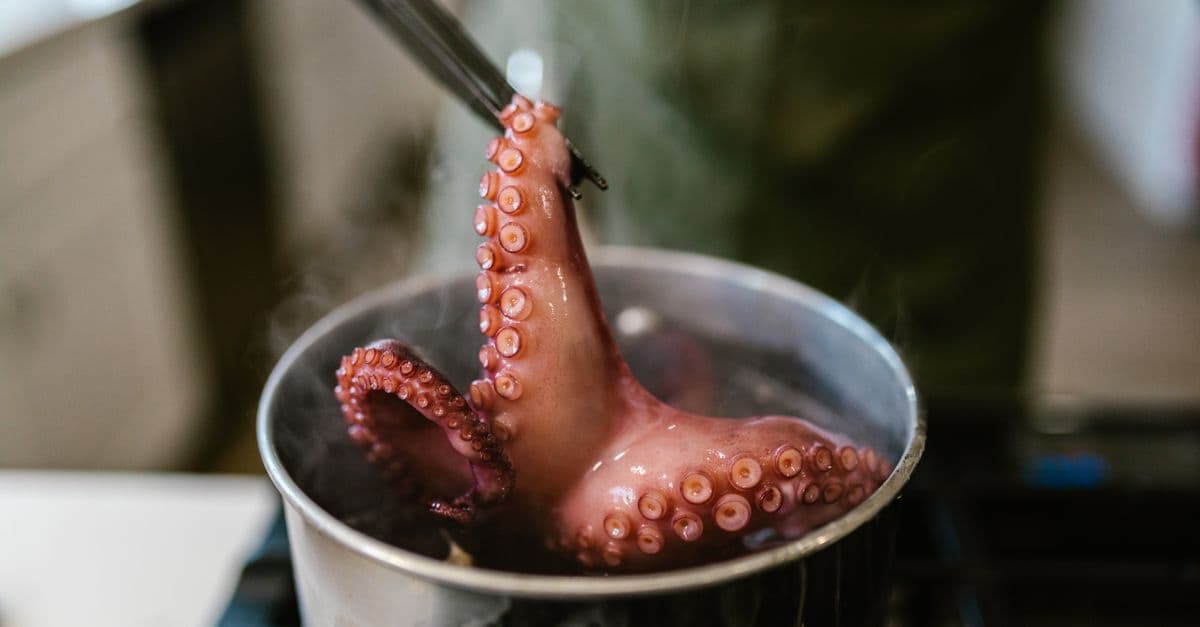
Photo: RDNE Stock project / Pexels
An octopus has no skeleton, no social group to learn from, and a lifespan of one to three years — conditions that make complex intelligence seem unlikely. Yet it can unscrew a jar lid, navigate mazes, recognize individual human faces, use coconut shells as portable shelters, and change the texture and color of its skin in under 300 milliseconds. The key is architecture: octopus intelligence is not organized the way vertebrate intelligence is, and that difference reveals something fundamental about what intelligence actually requires.
What Makes a Nervous System "Distributed"
Centralized nervous system — a nervous system where most neural processing happens in one structure (such as a brain), with the body acting as a receiver and effector of those central decisions.
Distributed nervous system — a nervous system where significant neural processing occurs throughout the body, in multiple semi-autonomous regional networks that can act without instructions from a central processor.
Human nervous systems are heavily centralized. Your brain sends commands to your hand; the hand executes them. The hand itself has no capacity to decide independently what to do. The octopus operates on a fundamentally different principle.
An octopus has approximately 500 million neurons total — comparable to a dog and more than 40 times the neuron count of a honeybee. Of those 500 million neurons, roughly 167 million reside in the central brain, and about 333 million are distributed across the eight arms, with approximately 40 million per arm organized into a sophisticated axial nerve cord running the arm's length from base to tip.
Source: Hochner, B. (2012), "An Embodied View of Octopus Neurobiology," Current Biology, Vol. 22 — foundational paper establishing octopus arm neural autonomy and the distributed cognition model.
Each arm's neural cord is not just a relay cable. It processes sensory information locally, coordinates the arm's muscular contractions into coherent movements, and can initiate and complete actions — reaching for food, retracting from a threat, exploring a crevice — without any signal traveling to the central brain. Think of it less like a puppet controlled by strings and more like a loose federation of eight problem-solving agents each capable of acting on local information, coordinated by a central executive that sets broad goals rather than micromanaging each motion.
How the Arms Think on Their Own
In 2019, researchers at Hebrew University of Jerusalem published a study in Cell demonstrating that isolated octopus arms — surgically severed from the body — continue to respond to stimuli, reach toward objects resembling food, and retract from threats for up to an hour after separation. The arm's local neural circuits are sufficient to produce these behaviors without any input from the central brain.
This is not analogous to the reflexive twitching of a severed lizard's tail. The arm's responses are contextual and directional: it reaches toward food-like stimuli and avoids threat-like ones. The local neural network is making discrimination decisions.
Source: Gutnick, T. et al. (2019), "Octopus vulgaris uses a pocket-like space for navigation memory," Current Biology — see also related work from the Hochner Lab on arm autonomy.
During normal behavior, the central brain appears to set a goal — "reach toward that crab" — and then delegates execution entirely to the arm's local circuitry. The brain does not send step-by-step movement instructions; it sends something closer to a high-level directive, and the arm figures out the motor details itself. Neuroscientists call this an embodied cognition model: intelligence is not located in one place but is distributed across the body in a system where flesh itself computes.
This has a practical benefit. An octopus arm has roughly 240 suckers, each capable of independent movement and each containing chemoreceptors that can taste-by-touch simultaneously with mechanical manipulation. Processing all of that sensory data centrally would require enormous bandwidth and introduce latency. By processing it locally, the arm can respond to texture, chemical signals, and physical obstacles in real time, without bottlenecking through the central brain.
| Neural structure | Neurons (approx.) | Primary function |
|---|---|---|
| Central brain (lobes) | ~167 million | Goal setting, learning, memory, coordination |
| Each arm nerve cord | ~40 million | Local movement, sensory processing, autonomy |
| Optic lobes | ~120 million total | Visual processing |
| Total | ~500 million | Full behavioral repertoire |
Problem-Solving and Tool Use: What the Brain Does
When the central brain is engaged, octopuses demonstrate cognitive abilities that overlap significantly with those of vertebrates far older in evolutionary terms — mammals and birds.
Octopuses in the wild have been observed collecting coconut shell halves discarded by humans, carrying them beneath their bodies while walking awkwardly on two arms, transporting them up to 20 meters (65 feet), and then assembling the shells into a shelter. This satisfies the criteria for tool use: selecting an object, transporting it away from the acquisition site for future use elsewhere, and deploying it for a specific function. Reporting this observation in 2009, researchers from Museum Victoria described it as the first evidence of invertebrate tool use.
Source: Finn, J.K. et al. (2009), "Defensive tool use in a coconut-carrying octopus," Current Biology, Vol. 19 — first documented invertebrate tool use in wild populations.
In laboratory settings, octopuses have solved multi-step puzzles to access food, learned to open childproof bottles, and demonstrated something resembling play — repeatedly releasing objects into a water current and catching them, with no food reward. Play behavior, in vertebrate cognition research, is associated with flexible learning and brain development.
Face recognition in octopuses was documented at a Seattle aquarium where Pacific giant octopuses consistently directed water-squirting behavior (a form of displeasure expression) at a specific keeper but not others — distinguishing one human face from multiple others. An octopus's visual system, while fundamentally different from a vertebrate's, is capable of sophisticated object discrimination.
Camouflage: Intelligence Expressed Through Skin
An octopus can match a pebbled seafloor, mimic a floating piece of algae, and render itself nearly invisible against coral in under 300 milliseconds. This is not a slow color-wash — it is a full update of skin color, pattern, and three-dimensional texture (achieved through structures called papillae — muscular skin projections that can be raised or retracted to simulate bumpy or smooth surfaces).
Chromatophores — pigment-containing cells in the skin that expand or contract via muscular action to show or hide pigment. Octopus skin contains millions of them across three distinct types organized in layers.
The three skin layers work together:
- Chromatophores (top layer): contain yellow, orange, red, and brown pigments. Muscle fibers pull them open or closed in milliseconds.
- Iridophores (middle layer): structural cells that reflect light through thin-film interference, producing iridescent blues and greens.
- Leucophores (bottom layer): broadband reflectors that scatter white light, providing contrast backdrop.
The brain controls this entire display directly via a dedicated visual-motor circuit that takes in what the eyes see and translates it into chromatophore instructions — a real-time image processing and skin-rendering system. What makes this remarkable is that octopuses are colorblind: their eyes have only one type of photoreceptor and cannot distinguish wavelengths the way vertebrate eyes can. Yet they produce color-matching displays that fool the human eye. The leading hypothesis, proposed by University of California Santa Barbara researcher Christopher Stubbs and colleagues, is that octopuses may use pupil shape as a form of spectral sampling — gathering chromatic information through chromatic aberration (the way lenses focus different wavelengths at slightly different distances) and encoding it in brightness information rather than color channels.
Source: Stubbs, A.L. & Stubbs, C.W. (2016), "Spectral discrimination in color blind animals via chromatic aberration and pupil shape," PNAS, Vol. 113 — proposes mechanism by which colorblind octopuses achieve color matching.
The Convergent Evolution Puzzle
The most scientifically striking fact about octopus intelligence is when it evolved and from what. Vertebrate intelligence — including mammals, birds, and fish — traces to a common ancestor roughly 500 million years ago. Cephalopods (octopuses, squids, cuttlefish) diverged from the vertebrate lineage at approximately the same point, and their last common ancestor with vertebrates was almost certainly a simple, flatworm-like creature with no centralized nervous system to speak of.
Convergent evolution — the independent evolution of similar traits in lineages that do not share a recent common ancestor possessing those traits. The shared trait evolved separately, in response to similar environmental pressures.
Octopus brains and vertebrate brains are built from completely different cell types organized in completely different anatomical arrangements. Yet both produce learning, memory, problem-solving, and behavioral flexibility. This is the strongest evidence that intelligence is not a single invention that spread through the tree of life — it is a solution that evolution discovers independently whenever the selective pressure for flexible behavior is high enough.
The molecular evidence reinforces this. In 2018, researchers discovered that transposable elements called LINEs (long interspersed nuclear elements), which are active in the hippocampus of mammals during learning and memory formation, are also highly active in the vertical lobe of the octopus brain — the structure responsible for octopus learning and memory. Two organisms separated by 500 million years of evolution are using the same molecular mechanism in analogous brain regions for analogous cognitive functions.
Source: Palazzo, A. et al. (2018), "Highly repetitive elements and their contribution to the genome composition," Frontiers in Genetics — related work on transposable element activity in cephalopod cognition cited in subsequent reviews in Nature.
Why the Short Lifespan Raises Questions
One feature of octopus biology that sits in uneasy tension with their cognitive complexity is their lifespan. Most octopus species live one to three years. The common octopus (Octopus vulgaris) rarely exceeds two years. The giant Pacific octopus (Enteroctopus dofleini), the largest species, lives three to five years.
In vertebrates, longer lifespan and complex intelligence tend to correlate: elephants, great apes, cetaceans, and corvids all live decades. Long life provides time to accumulate learned knowledge that enhances survival. Short-lived animals tend to rely more heavily on instinct.
The octopus seems to break this correlation. It has high intelligence but essentially no time to benefit from accumulated life experience, no extended juvenile learning period taught by parents, and no social transmission of knowledge. Each octopus must, within a year or two, figure out its world largely from scratch.
The current hypothesis is that octopus intelligence is not primarily about accumulating experience over a lifetime — it is about rapid, flexible within-lifetime learning that allows a soft-bodied, solitary animal to adapt quickly to the specific, unpredictable microenvironment it occupies. An octopus cannot evolve a different body plan for each new habitat it colonizes within its lifetime. Instead, it learns its specific patch of seafloor in fine detail and exploits it with precision.
Source: Packard, A. (1972), "Cephalopods and fish: the limits of convergence," Biological Reviews, Vol. 47 — foundational work on cephalopod-vertebrate cognitive comparison still widely cited.
Memory, Sleep, and Possible Dreaming
Octopuses have two identifiable memory systems: a short-term working memory for immediate task execution, and a long-term memory that persists for months. In laboratory studies, octopuses trained on a discrimination task (pressing one shape for food, avoiding another) retained the learned discrimination for at least three months — a substantial portion of their total lifespan.
The octopus brain contains a dedicated memory consolidation structure, the vertical lobe, that functions analogously to the vertebrate hippocampus. Damage to the vertical lobe impairs long-term memory formation while leaving short-term memory intact — the same dissociation seen in vertebrates with hippocampal damage.
In 2021, researchers at the University of Okinawa published footage in iScience showing octopuses in apparent REM-like sleep states during which their skin displayed rapid, dynamic color and pattern changes — cycling through camouflage displays while the animals were clearly unconscious. This behavioral pattern during sleep resembles what happens in mammals during REM sleep when dream activity activates the brain regions responsible for waking behavior.
Source: Medeiros, S.L.S. et al. (2021), "Cyclic alternation of quiet and active sleep states in the octopus," iScience, Vol. 24 — first formal documentation of active sleep states with skin patterning in cephalopods.
Whether this constitutes dreaming in any meaningful sense is a philosophically and empirically complex question. What it does establish is that the octopus nervous system engages in off-line neural activity during sleep that targets the same systems used in waking behavior — which is precisely what dreaming is, functionally, in mammals.
The Octopus Mind Problem: Can a Soft-Bodied Mollusk Be Conscious?
Whether an octopus is conscious — whether there is something it is like to be one — is not a question most biologists entertained seriously before the 2010s. The traditional view held that consciousness required a vertebrate brain: a cortex, a thalamus, at least something resembling the centralized neural architecture that produces awareness in mammals. Octopuses have none of that. What they have instead is a distributed, heavily modified molluscan nervous system that arrived at comparable behavioral outputs by a completely different cellular and anatomical route.
Recoding transcriptomes through RNA editing — rather than encoding flexibility in the genome itself, octopuses recode approximately 60% of their neural mRNA transcripts post-transcriptionally through a process called A-to-I RNA editing, in which adenosine residues in messenger RNA are chemically converted to inosine before translation. The effect is that the same genomic DNA can produce functionally different proteins in neural tissue depending on environmental conditions, without any change to the underlying DNA sequence.
In 2017, researchers at the Marine Biological Laboratory in Woods Hole and Tel Aviv University published a study in Cell showing that octopuses and cuttlefish edit their neural transcripts at rates far exceeding any other animal studied — over 60% of transcripts in the nervous system, compared to under 1% in most mammals. The trade-off is precise: high RNA editing rates correlate with dramatically reduced rates of genomic DNA evolution in the same genes. Octopuses appear to have struck a different evolutionary bargain than vertebrates — trading genomic change for real-time, temperature-sensitive, experience-modulated neural plasticity. The same ion channel protein can be tuned differently in a warm-water octopus versus a cold-water one, without any mutation occurring.
Source: Liscovitch-Brauer, N. et al. (2017), "Trade-off between transcriptome plasticity and genome evolution in cephalopods," Cell, Vol. 169 — documents the high RNA editing rates in octopus neural transcripts and the inverse relationship with genomic evolution rates.
This discovery reframes what octopus intelligence is doing at the molecular level. Where vertebrate nervous systems accumulate adaptive variation across generations through mutation and selection, the octopus nervous system adapts within the lifetime of a single individual, at the level of which proteins its neurons express. The implication for consciousness is unsettling: if octopuses are adjusting their neural machinery in real time in response to experience, the substrate for whatever internal states they have is more plastic and environmentally coupled than any vertebrate nervous system.
Callout: An octopus edits over 60% of its neural RNA transcripts — effectively rewriting the functional instructions its neurons follow without touching a single letter of its DNA.
The behavioral evidence for something beyond reflexive response is substantial. Multiple labs have documented what can reasonably be called play in octopuses — repeated interaction with objects that yield no food reward, including manipulating floating pill bottles in a current, releasing and recapturing them in patterns suggesting exploration rather than goal-directed behavior. Individual personality differences have been formally documented: in a 1999 study at the Seattle Aquarium, octopuses reliably differed from one another in boldness, activity level, and reactivity to novel stimuli in ways that persisted across repeated tests over weeks. These are not population-level statistical tendencies — they are individual signatures, consistent enough to label specific animals as bold or retiring.
The policy community took notice. When the United Kingdom passed its Animal Welfare (Sentience) Act in 2022, it explicitly extended legal recognition of sentience — and the animal welfare protections that follow from it — to cephalopods including octopuses and squid, based on a review commissioned by the London School of Economics that evaluated 300 scientific studies. This made the UK one of the first jurisdictions to treat the possibility of invertebrate sentience as a practical policy concern rather than a philosophical curiosity.
Source: Birch, J. et al. (2021), "Review of the Evidence of Sentience in Cephalopod Molluscs and Decapod Crustaceans," London School of Economics — the commissioned review that directly informed inclusion of cephalopods in the UK Animal Welfare (Sentience) Act 2022.
The lifespan problem makes all of this stranger. An animal with apparent individual personality, RNA-level neural plasticity, documented play behavior, and a nervous system complex enough to prompt national legislation protecting its welfare — lives for nine months to three years and then, in the case of females, often dies shortly after their eggs hatch, without ever meeting their offspring. Most large-brained animals transmit learned knowledge across generations either through parental care or through social groups. The octopus transmits nothing. Each individual's hard-won neural model of its world — its specific patch of reef, the particular jar-opening technique it mastered, its learned recognition of individual human faces — vanishes entirely at death.
This is what makes octopus intelligence genuinely puzzling rather than merely impressive. It is a form of cognitive investment with no multigenerational return. Evolution typically rewards complexity when it compounds across generations. The octopus gets one lifetime to build its brain, use it, and then lose it forever — and the brain it builds is still good enough to trouble philosophers about whether it experiences anything at all.
What Octopuses Cannot Do
Balancing the picture matters. Octopus intelligence has real limits, and understanding those limits clarifies what the distributed architecture is and is not good for.
Octopuses show very limited social cognition. Because they are solitary and cannibalistic, they have not evolved the theory-of-mind capabilities (the ability to model another individual's mental state) that appear in social vertebrates like primates and corvids. They do not appear to use insight learning (solving a problem through mental simulation before physically attempting it) in the way chimpanzees do.
Their problem-solving is rapid and flexible, but tends to operate through active physical exploration rather than mental modeling. An octopus placed in a maze does not pause and survey the maze before moving — it explores physically, learns through tactile and visual feedback, and optimizes over trials.
This is not a lesser form of intelligence. It is a different form — one optimized for a different ecological niche and a different body plan. For an animal with a soft, highly deformable body that must squeeze through crevices, explore unstructured three-dimensional environments, and manipulate objects of unpredictable geometry, active physical exploration with intelligent limbs is arguably more useful than mental simulation.
Q: How many neurons does an octopus have?
A: Approximately 500 million neurons, with about two-thirds (roughly 333 million) distributed across the eight arms rather than in the central brain. Each arm contains around 40 million neurons organized in a sophisticated axial nerve cord capable of semi-autonomous processing.
Q: Can octopus arms really act independently of the brain?
A: Yes. Research has shown that severed octopus arms continue to respond to stimuli, reach toward food-like objects, and retract from threats for up to an hour post-separation. During normal behavior, the central brain sends high-level goal directives; the arm's local neural circuits handle all motor execution details.
Q: How do colorblind octopuses match colors so precisely?
A: One leading hypothesis is that they exploit chromatic aberration — different wavelengths of light focus at slightly different distances through their pupils. By adjusting pupil shape (which is unusually irregular and complex), they may sample spectral information through brightness differences rather than dedicated color channels.
Q: Do octopuses actually dream?
A: In 2021, researchers documented that octopuses in sleep enter active states during which their skin cycles through rapid, dynamic camouflage patterns — the same systems used during waking. Whether this constitutes dreaming is uncertain, but it is functionally analogous to what happens in mammals during REM sleep.
Q: Why are octopuses so smart if they only live one to three years?
A: Their intelligence appears optimized for rapid within-lifetime learning rather than multigenerational knowledge accumulation. A short-lived, solitary, soft-bodied animal benefits more from fast, flexible adaptation to its immediate microenvironment than from the kind of social knowledge transmission that drives intelligence in long-lived social species.
Q: Are octopuses the most intelligent invertebrates?
A: Among invertebrates, octopuses and their cephalopod relatives (cuttlefish, squid) are generally considered the most cognitively sophisticated. Cuttlefish have passed versions of the marshmallow test (delayed gratification). Honeybees demonstrate impressive collective intelligence but not individual problem-solving at the same level. The comparison is complicated because invertebrate intelligence takes many forms.
The Takeaway
An octopus is the most convincing evidence we have that complex intelligence is not a vertebrate invention but a general biological solution — one that evolution finds through multiple independent routes when the environment demands flexible behavior from a mobile predator. Its distributed nervous system challenges the assumption that cognition requires a centralized brain. Its camouflage challenges the assumption that color vision requires color perception. Its tool use and problem-solving challenge the assumption that high intelligence requires a long lifespan or a social group. The octopus is not an honorary vertebrate with a weird body. It is something stranger and more illuminating than that: a parallel solution to the problem of being intelligent in a complex world.
Read next:
Follow new articles
Add SciHub101 to your feed reader to see new science and technology stories.
About the Author
SciHub101 is an independent science and technology publication founded and edited by Buğra Sözeri, a software engineer and app developer based in Türkiye. AI tools assist with drafting and research. Source documentation in the existing archive is uneven, and articles are being reviewed and corrected. The Editorial Team byline identifies editorial responsibility; it does not certify specialist or independent human review. Where we compare products, anything built by our own team is labelled as such — see the editorial guidelines and About page for how corrections and disclosures work.
Related Articles
How Animals Navigate With a Magnetic Sense: Earth's Invisible Compass
A loggerhead sea turtle hatches on a Florida beach, swims across the Atlantic Ocean, circles the Mediterranean, and returns to within a few kilometers of its birth beach decades later — without a map, a GPS signal, or any environmental cue that a human could detect unaided. It is reading the Earth's magnetic field. Here is how that works, and why it is one of the most debated phenomena in sensory biology.
How Octopus Intelligence Works: The Alien Mind Living in the Sea
Octopuses have nine brains, blue blood, and three hearts — and their intelligence evolved completely independently from ours.
How Do Octopuses Change Color? The Science of Chromatophores and Camouflage
An octopus can match the texture and color of a rocky seafloor in under 300 milliseconds—while being completely colorblind. This paradox reveals one of nature's most sophisticated biological display systems: three layers of pigment and structural color cells controlled directly by the brain, operating faster than conscious thought.
How Animal Camouflage Works: Crypsis, Mimicry, and the Biology of Invisibility
A cuttlefish can reproduce the texture of a gravel bed on its skin — in complete darkness. Chameleons change color not primarily to hide, but to communicate. A stick insect's body plan is so precise that its eggs mimic seeds, tricking ants into carrying them to new locations. Camouflage is not a coat of paint; it is a complete biological system built by evolution over hundreds of millions of years.
Why Do We Get Hiccups? The Neuroscience of Involuntary Spasms and Evolutionary Mysteries
A hiccup is one of the most peculiar and involuntary motor acts in the human behavioral repertoire. The diaphragm, the muscle responsible for drawing air into the lungs, suddenly contracts involuntarily, causing an abrupt inhalation. The vocal cords snap shut milliseconds after the inhalation begins, blocking airflow and producing the characteristic 'hic' sound. The entire sequence lasts roughly 35 milliseconds and repeats in regular intervals (typically 5–60 times per minute), often continuing for seconds or minutes despite your conscious desire for them to stop. Hiccups are triggered by a variety of stimuli: sudden temperature changes in the stomach (hot or cold food/drink), gastric distension, swallowing irritating substances, sudden emotional changes, or no obvious trigger at all. The neural circuit underlying hiccuping involves the phrenic nerve (controlling the diaphragm), the vagus nerve (carrying sensory information from the stomach), and brainstem centers regulating respiration, suggesting that hiccups represent a malfunction or partial dysfunction of normal respiratory control. The evolutionary function of hiccups is obscure; some researchers propose that hiccups are an evolutionary vestige of amphibian breathing mechanisms, retained in mammals but serving no current function. Other researchers propose that hiccups may serve to clear the esophagus or coordinate swallowing, though evidence is limited. What is clear is that hiccups are involuntary, difficult to consciously control, and generally self-limited, resolving within minutes to hours.