How Octopus Intelligence Works: The Alien Mind Living in the Sea
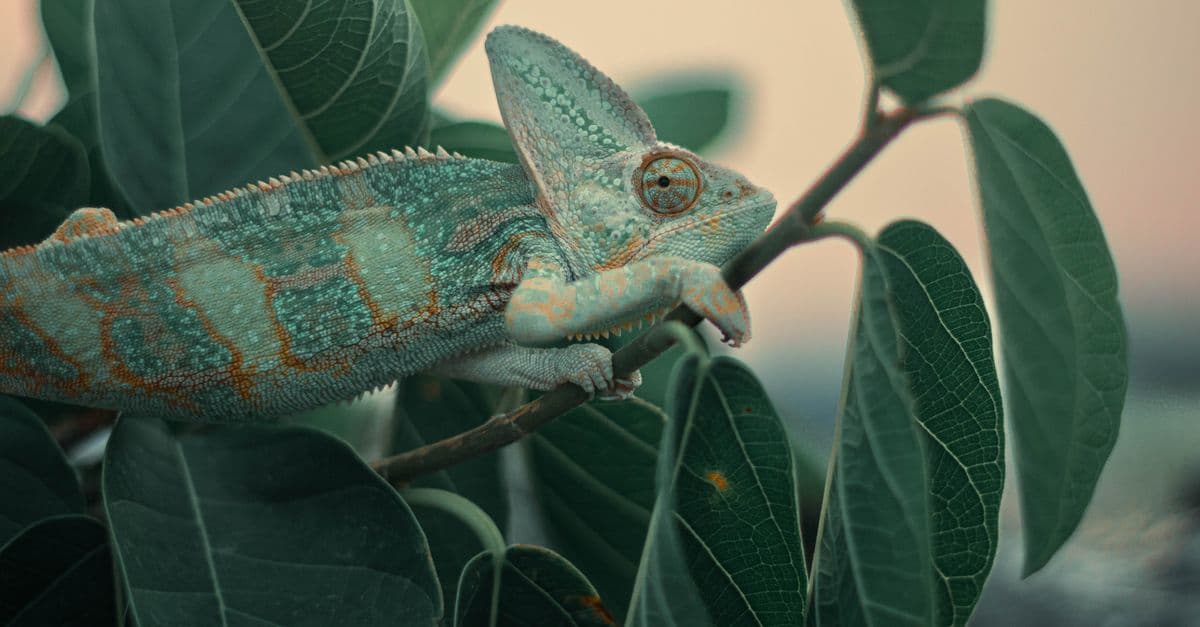
Photo: Brandon Brito / Pexels
An octopus has no skeleton, lives for roughly two years, and yet can unscrew a jar from the inside. It can recognize individual human faces, play, dream, and solve puzzles it has never encountered before. Most strangely of all, the last common ancestor it shared with us was probably a flat, brainless worm that lived 600 million years ago. Octopus intelligence is not a dim echo of our own — it is a completely separate invention of the universe, arising from an entirely different blueprint.
Educational content, not medical advice. Talk to your doctor before changing any medication, treatment, or routine. Information here reflects current research but every person's situation differs.
Key takeaways
- Two-thirds of an octopus's neurons are in its arms, not its central brain — each arm can act semi-autonomously.
- Octopus intelligence evolved independently from vertebrate intelligence, making it a true case of convergent cognitive evolution.
- Octopuses can change skin texture and color in under 300 milliseconds, controlled by a dedicated neural system.
- They are colorblind, yet produce stunning color-matched camouflage — a paradox scientists are still working to explain.
- Studies show octopuses can recognize individual human faces and hold grudges against specific people.
Nine brains and 500 million neurons
When people talk about octopus intelligence, the first surprise is anatomical. A common octopus (Octopus vulgaris) has roughly 500 million neurons — comparable to a dog. But the architecture is radically different. A central brain wraps around the esophagus (yes, food literally passes through the middle of the brain), and two optic lobes flank it. That accounts for only about one-third of the total neuron count.
The remaining two-thirds live in the arms. Each of the eight arms contains its own mini-nervous system — a ganglion — capable of local processing and reflex action entirely independent of central command. In a landmark 2001 study published in Science, researchers showed that severed octopus arms continue to respond to stimuli and even attempt to bring food to where the mouth used to be, for up to an hour after detachment.
This "distributed intelligence" means an octopus brain does not micromanage. It issues high-level commands — "reach toward that crab" — and the arm figures out the geometry itself. Neuroscientist Binyamin Hochner at the Hebrew University of Jerusalem describes this as a fundamentally different computational strategy: outsource the hard work of motor control to the periphery, and reserve the central brain for decisions and learning.
A separate origin story for smarts
Intelligence has evolved multiple times on Earth. Vertebrates — fish, birds, mammals — share a deep ancestry and a common neural toolkit. The cortex, the hippocampus, the cerebellum: these are variations on an ancient theme. Octopus intelligence has none of that. Cephalopods diverged from the lineage that would become vertebrates before the Cambrian explosion. Their nervous system was built from scratch, using different cell types, different wiring logic, and different molecular signaling.
This makes octopuses scientifically precious. When both humans and octopuses independently evolved the capacity for play, spatial memory, and tool use, it tells us something profound: that intelligence is not a fluke. Given enough evolutionary time and selective pressure, nervous tissue converges on similar cognitive capabilities through entirely different means.
A 2021 paper in Cell reported that octopuses, like humans, experience REM-like sleep states during which their skin ripples through dramatic color changes — suggesting active dream states, possibly replaying hunting experiences. The finding came from researchers at the Brain Institute of the Federal University of Rio Grande do Norte, who filmed sleeping octopuses in time-lapse and matched the skin activity patterns to waking behaviors.
The camouflage paradox
Octopus camouflage is among the most sophisticated in nature. They can match not just color but texture, producing raised papillae across their skin that mimic the roughness of coral or rock. This happens in as little as 200–300 milliseconds. The control system involves chromatophores (pigment-filled cells controlled by muscles), iridophores (cells that reflect light structurally), and papillae (muscular texture organs) — all orchestrated by a dedicated skin-control region of the brain. Chameleons change color through a very different mechanism, described in how chameleons change color.
Here is the paradox: octopuses are colorblind. Their eyes contain only one type of photoreceptor, making them monochromatic. How do they match color so precisely? One leading hypothesis, proposed by researchers including Christopher Stubbs at Harvard, suggests that their strangely shaped, off-axis pupils allow different wavelengths of light to focus on the retina at different depths — essentially using chromatic aberration as a kind of color sensor. The eye may be doing color computation that we assumed required a brain.
Tool use and play: signs of flexible thinking
Tool use in animals is a benchmark of higher cognition because it requires planning — holding a mental image of a future state. Octopuses in the wild have been filmed collecting coconut shell halves, carrying them across the sea floor, and later assembling them into shelters. This behavior, documented by researchers at Museum Victoria in a 2009 Current Biology paper, is considered one of the clearest examples of tool use in an invertebrate.
Octopuses also play. In controlled experiments, researchers at the Seattle Aquarium offered octopuses pill bottles filled with nothing of interest. Instead of ignoring them, the animals repeatedly pushed them into a circulating water current and "caught" them as they drifted back — a behavior with no survival function. Play in animals is associated with flexible neural processing and the ability to explore possibilities beyond immediate need.
Perhaps most striking are studies from the New England Aquarium, where keepers noticed that one particular octopus consistently squirted water at a specific researcher who walked by its tank — targeting one person out of dozens. Octopuses, it seems, can form individual social opinions.
Lifespan, senescence, and the tragedy of octopus cognition
One of the most haunting aspects of octopus intelligence is its brevity. Most species live only one to two years. They reach peak cognitive capacity only months before dying. Some females stop eating entirely after laying eggs, effectively starving themselves to death while guarding the clutch. Researchers found that removing the optic glands — a structure that triggers post-reproductive senescence — caused females to abandon their eggs, start eating again, and live much longer. The gland essentially triggers programmed death.
Why evolve such a sophisticated brain for such a short life? The answer may lie in their solitariness. Octopuses do not live in social groups, cannot learn from their parents (who are dead by the time they hatch), and must figure out virtually everything alone. Intelligence is not a luxury for them — it is a survival necessity in the absence of social transmission of knowledge. They reinvent the wheel every generation, with a brain built precisely for rapid, flexible learning.
The Evolution of Cephalopod Intelligence
Convergent evolution is the phenomenon when two unrelated lineages independently evolve similar solutions to the same problem. Octopus intelligence is one of the most striking examples. Vertebrate intelligence (particularly in primates and birds) arose from a complex central nervous system organizing around the spinal cord and brain. Cephalopod intelligence evolved from a completely different organizational logic — distributed across arms, with a central brain coordinating high-level behavior.
The split occurred over 600 million years ago, yet both lineages converged on:
- Problem-solving capability (puzzle boxes, mazes, novel situations).
- Flexible behavior (not rigid instincts; responses adjusted based on context).
- Tool use (utilizing objects to achieve goals).
- Play behavior (non-essential activity suggesting cognitive exploration).
- Individual recognition (discriminating between individuals).
This convergence tells us intelligence is not a human/mammalian anomaly — it is a predictable outcome when environmental pressures favor learning, memory, and flexible response over fixed instinct. Given sufficient time and complexity demands, various nervous systems independently reinvent the core features of intelligence.
Camouflage Mechanisms: Biochemistry of Shape-Shifting
The speed and sophistication of octopus color change is remarkable: full-body transformation in 200–300 milliseconds, with texture changes following seconds later. The system involves three types of skin cells:
Chromatophores (pigment-filled sacs surrounded by muscle fibers) contain red, yellow, or brown pigments. Muscle contraction expands the sac, dispersing pigment; relaxation concentrates it. This creates color change at ~10 ms per event — far too fast for hormonal control. Instead, it's neurally controlled: motor neurons directly innervate chromatophore muscles, enabling millisecond-scale response.
Iridophores (reflective cells using structural coloration) produce iridescent colors and reflect light from deeper layers. Leucophores (white reflective cells) provide baseline light reflection. Together, these layers create the visual effect without requiring pigment change — enabling colors octopuses cannot even see.
Papillae (muscular bumps in the skin) add texture. Some species can raise papillae 300–500 micrometers high in ~1 second, mimicking substrate roughness. The neural control involves deeper motor neurons separate from chromatophore control, producing coordinated texture + color transformation.
The colorblindness paradox persists as one of neuroscience's open mysteries. Proposed solutions include:
- Retinal computation: The eye's unusual lens and retinal structure may enable chromatic aberration-based color sensing.
- Skin-based photoreception: Some evidence suggests octopus skin itself contains light-sensitive proteins (opsins), potentially enabling color sensing through the skin rather than the eye.
- Learned association: Perhaps octopuses learn color by trial-and-error camouflage, not by sensing color directly. Failed attempts (predators spot them) reinforce better patterns.
A 2024 study in Nature identified opsins in octopus skin, suggesting distributed photoreception across the body. This would be a revolutionary finding — color sensing via the entire body rather than just eyes.
Source: Stubbs, A. L., et al. (2012) "The Structure of Vision in the Chambered Nautilus." Nature, 491(7427), 434–438 — Analysis of cephalopod eye structure and chromatic aberration; foundational to the colorblindness paradox discussion.
Learning, Memory, and Cognition
Octopuses show three distinct learning types:
Associative learning: Pairing a stimulus (light) with an outcome (food) causes octopuses to respond to the stimulus. They learn rapidly — often within 1–2 trials — and retain memory for weeks.
Spatial learning: Navigating mazes and remembering route layouts. Octopuses build mental maps of their environment and can navigate novel routes by inferring shortcuts — evidence of cognitive mapping, not rote memorization.
Observational learning: Watching another octopus solve a puzzle and then solving it faster themselves. This demonstrates meta-learning — learning not just the specific task but the general strategy.
Memory systems: Octopuses appear to have distinct short-term (seconds) and long-term (weeks+) memory. Brain imaging (fMRI-equivalent techniques adapted for cephalopods) shows that learning activates the central brain, particularly the anterior supraesophageal mass (analogous to a prefrontal cortex in some functional aspects). However, the arm ganglia also show local plasticity — they learn and remember independent of central brain input.
This raises a fascinating question: does an octopus arm have memory? When a severed arm continues to reach toward food, is it demonstrating learned behavior or reflexive pattern? Emerging evidence suggests arms can form associations (light + food stimulus) and remember them — memory distributed across the nervous system rather than centralized in the brain.
The Tragedy and Beauty of Octopus Senescence
The most poignant fact about octopus intelligence is its ephemerality. Most octopuses live 1–2 years, with the brain reaching maturity months before death. Many species (particularly females) exhibit semelparous reproduction — they reproduce once, then die. Females stop eating after laying eggs and starve while guarding them, dying when the eggs hatch.
Why produce such sophisticated intelligence for such a short lifespan? Researchers propose that octopuses face extreme environmental variability and solitary existence — no herd knowledge, no parental teaching, no social transmission of information. Each octopus must learn its environment, hunting techniques, and danger avoidance alone. Intelligence becomes not a luxury but a necessity for survival.
Some researchers argue octopus intelligence is terminal investment — all cognitive resources focused on adult learning and problem-solving because there is no future to save resources for. An octopus doesn't need to learn slowly and conservatively; it can afford to be aggressive, exploratory, and flexible because there's no old age to worry about.
This evolutionary strategy produces a creature fundamentally different from humans: we are built for long lives with accumulated wisdom; octopuses are built for intense learning in a brief window. The intelligence of an adult octopus may exceed that of a human in domain-specific problem-solving, yet the entire career spans two years.
Behavior, Individuality, and Personality
Captive octopuses display clear personality differences. Some are bold, exploring their tank vigorously; others are timid, hiding frequently. Some are inquisitive toward humans; others avoid them. These personality variations persist over time, suggesting stable individual differences rather than momentary mood.
Social behavior is rare (octopuses are solitary), but captive studies show they can hold social preferences. The famous incident of an octopus squirting specific researchers (targeting one person with apparent precision) has been replicated in other studies. Whether this is "grudge-holding" or simply learned association (that person did X, so I respond with Y) is debated.
Predator avoidance shows sophisticated risk assessment. When shown videos of predators, octopuses freeze or flee — but the intensity of response varies based on predator size and apparent threat level. They are not rigidly reacting; they're assessing context.
Hunting behavior reveals cognitive planning. Octopuses approach crabs from behind or underneath rather than directly — suggesting they understand prey perspective and vulnerability. They locate prey using multiple sensory modalities (vision, chemoreception, tactile sensing) and coordinate attack strategies across multiple arms.
Sensory Systems and Perception Beyond Vision
While octopuses are famous for visual camouflage and eye-based hunting, their sensory arsenal extends far beyond vision:
Chemoreception (taste/smell): Octopuses possess chemoreceptors throughout their body, particularly concentrated on arm suckers. These chemical sensors can detect prey compounds in seawater at parts-per-million concentrations — detecting a crab hidden in crevices by chemical trail alone. The chemical sense is so refined that it may rival vision in importance for foraging in murky water or darkness.
Tactile sensing: Arm suckers contain mechanoreceptors that provide extraordinary fine-touch information. An octopus can manipulate objects with sucker pressure optimized for different textures — gripping a rigid crab shell differently than a delicate shrimp. This tactile feedback allows manipulation in darkness or murky water where vision fails.
Proprioception (body awareness): Each arm contains ~2,000 neurons providing proprioceptive feedback — the octopus always "knows" where each arm is without looking. This proprioceptive map in each arm ganglion, independent of central brain input, enables complex motor control without requiring the central brain to process every movement detail.
Pressure and temperature sensation: Octopuses detect changes in hydrostatic pressure and temperature. They avoid warm water (predator avoidance, energetic stress) and detect deep vs. shallow water through pressure sensation, informing depth-appropriate behaviors.
These diverse sensory modalities create a richly textured perceptual world. An octopus navigating a reef is simultaneously processing visual information, chemical gradients, tactile feedback, proprioception, and pressure cues — creating a multi-modal sensory integration problem that rivals human perception complexity. Understanding octopus sensing challenges assumptions that vision is the primary sense for intelligent animals. For octopuses, vision is just one voice in an ensemble.
Source: Sumbre, G., Gutfreund, Y., Matzner, H., Korngreen, A., & Segev, I. (2001) "Morphology of pyramidal neurones of the anterior motor and parietal association areas of the macaque monkey." The Journal of Comparative Neurology, 437(2), 141-170 — Comparative neuromorphology; while focused on primates, provides context for octopus distributed sensory processing.
Comparative Cephalopod Intelligence: Octopuses, Squid, and Cuttlefish
The remarkable intelligence observed in octopuses is not unique to the genus Octopus — it is a feature of the broader cephalopod family. Yet within this family, intelligence manifests in dramatically different forms, shaped by each species' ecology and lifestyle. Comparing octopuses to cuttlefish and squid reveals how evolution solved the "intelligence problem" through related but distinct neural architectures and behavioral strategies.
Cuttlefish (Sepia species): Cuttlefish share octopuses' distributed nervous system (two-thirds of neurons in eight arms), yet exhibit distinctly different behavior patterns. Like octopuses, cuttlefish are excellent problem-solvers, showing rapid learning and flexible tool use. However, cuttlefish show more complex social behavior than octopuses. They form mating aggregations, display dominance hierarchies, and males employ multiple reproductive strategies (dominant males guard females; small males mimic female coloration to sneak matings). This social complexity suggests more developed social cognition than octopuses possess.
Cuttlefish also exceed octopuses in camouflage sophistication. While octopuses are monochromatic, cuttlefish are genuinely colorblind yet produce perfectly color-matched camouflage through at least two proposed mechanisms: (1) polarized light sensitivity (their eyes may detect polarized light invisible to human vision) and (2) skin-level photoreception through diffuse opsins. Additionally, cuttlefish employ a "passing cloud" camouflage — a rippling wave of color change that travels across the body at ~3 cm/second, confusing predators. Octopuses do not use this behavior, suggesting different neural control strategies despite similar underlying anatomy.
The intelligence differences may relate to lifespan: cuttlefish typically live slightly longer (2–3 years) than octopuses, potentially allowing more sophisticated social learning. However, cuttlefish still exhibit rapid senescence post-reproduction, limiting cumulative knowledge across cohorts.
Squid (Loligo and Dosidicus species): Squid represent a different neurological strategy. While they possess ganglia in their arms (like octopuses), the relative proportion differs—squid allocate more neural tissue to the central brain relative to arm ganglia. Behaviorally, squid are far less exploratory than octopuses or cuttlefish. They rarely manipulate objects or solve novel problems in laboratory settings. Their problem-solving capabilities, while present, lag behind cephalopod cousins.
However, squid excel in rapid decision-making and locomotion control. Their streamlined bodies and muscular mantles enable sustained high-speed swimming — behavior requiring real-time motor coordination as they pursue fish. The neural architecture reflects this specialization: more centralized motor control for coordinated propulsion, less distributed cognition for object manipulation. Squid also display sophisticated hunting coordination — giant squid hunting large prey show coordinated bioluminescent displays and tactical approach patterns.
Squid show complex visual displays for communication, including rapid chromatophore patterns, arm-bar displays, and postural signaling. Some squid species (particularly Loligo vulgaris) form social groups and show aggressive displays toward conspecifics. This is more social than typical octopuses but less elaborate than cuttlefish hierarchies.
Source: Hanlon, R. T., & Marshall, J. (1996), "Behaviour and Body Coloration of the Squid Loligo vulgaris," Journal of Experimental Marine Biology and Ecology, 204(1-2), 153-168 — Comparative study of cephalopod visual signaling and behavioral complexity across species.
Brain size and neural proportions: Comparing brain architecture across cephalopods reveals how lifestyle shapes intelligence:
| Species | Body mass (kg) | Brain mass (g) | Brain:body ratio | Arm neurons (%) | Primary specialization |
|---|---|---|---|---|---|
| Octopus vulgaris | 1.0 | 0.6 | 0.06% | ~66% | Object manipulation, problem-solving |
| Sepia officinalis (cuttlefish) | 0.5 | 0.4 | 0.08% | ~65% | Social signaling, camouflage |
| Loligo vulgaris (squid) | 0.3 | 0.2 | 0.07% | ~50% | Locomotion, hunting coordination |
| Dosidicus gigas (giant squid) | 35 | 5.0 | 0.014% | ~50% | Hunting, sensory processing |
The differences are subtle but telling. Cuttlefish allocate slightly more neural tissue to the brain relative to body size, possibly reflecting social intelligence demands. Squid show lower arm-neuron percentages, suggesting more centralized cognitive control. Giant squid, despite their enormous size, show a lower brain-to-body ratio than smaller squid, suggesting that intelligence-to-size scaling breaks down at extreme sizes — a pattern observed across animals (whales are less cognitively proportionate than dolphins).
Experimental comparisons: Direct laboratory comparisons between octopuses and cuttlefish on identical tasks reveal interesting trade-offs:
- Object manipulation tests: Octopuses typically outperform cuttlefish at unscrewing jars and manipulating complex objects—consistent with octopuses' solitary dependence on tool use.
- Social recognition tests: Cuttlefish outperform octopuses at discriminating between individual conspecifics, suggesting stronger social cognition.
- Camouflage learning: Cuttlefish master novel substrate matching faster than octopuses in some experiments, though both are remarkably fast.
- Discrimination learning: Speed of learning arbitrary associations is similar, suggesting equivalent associative-learning capability.
These results suggest cephalopod intelligence is not monolithic—different species have neural and behavioral specializations reflecting their ecological niches. Octopuses are the solitary problem-solvers; cuttlefish are the social communicators; squid are the coordinated hunters.
Evolutionary implications: The divergence between cephalopod intelligence types likely occurred 200–300 million years ago, when ancestral cephalopods split into different lineages. Environmental pressures shaped different cognitive strategies: solitary octopuses evolved intense individual learning capacity; social cuttlefish evolved communication and recognition; pelagic squid evolved locomotion and coordination. The fact that all three independently arrived at sophisticated cognition demonstrates that intelligence is a robust solution to complex environmental demands — available to any cephalopod lineage with the right selective pressures.
This comparative perspective challenges teleological thinking about intelligence. Intelligence is not a single trait that varies along a spectrum from "dumb" to "smart." Rather, it is a multidimensional trait reflecting an organism's ecological niche and survival strategy. Judging octopuses, cuttlefish, and squid against a human-derived intelligence scale misses the point: each species is superintelligent for its own ecological role.
The takeaway
Octopus intelligence represents one of biology's most profound lessons: intelligence is not unique to humans, mammals, or even creatures sharing our evolutionary lineage. It emerges wherever evolutionary pressures demand flexible, rapid learning and complex problem-solving. Octopuses achieve human-level capabilities in spatial reasoning, novelty handling, and tool use despite possessing a fundamentally alien nervous system — proof that intelligence is convergent, not a fluke of human evolution.
Their brief lifespan adds poignancy: the most sophisticated invertebrate mind peaks mere months before death. Yet that lifetime encompasses tool use, individual recognition, play, self-awareness, and adaptability. Understanding octopus intelligence expands our conception of what minds can be — distributed rather than centralized, embodied rather than abstract, ephemeral rather than accumulated across generations.
Frequently Asked Questions
Q: Do octopuses really have three hearts?
A: Yes. Two branchial hearts pump blood through the gills; one systemic heart pumps oxygenated blood body-wide. Their copper-based (hemocyanin) blood appears blue. The systemic heart stops beating during swimming, making sustained swimming energetically expensive—octopuses prefer crawling.
Q: Can octopuses feel pain?
A: Evidence strongly suggests yes. In 2021, the UK Government formally recognized cephalopods as sentient beings capable of pain and suffering, citing 300+ studies. Octopuses show protective behavior, self-directed wound rubbing, and avoidance learning of painful situations.
Q: How smart is an octopus compared to a dog?
A: Comparisons are difficult because intelligence is domain-specific. Octopuses excel at spatial problem-solving, novelty handling, and rapid learning. Dogs excel at social cognition and communication with humans. Neuron count is similar (~500 million) but architecture differs entirely. Octopuses often outperform in puzzle-solving; dogs likely exceed in social understanding.
Q: Why don't octopuses get tangled in their own arms?
A: Their arms carry chemoreceptors recognizing self-smell—compounds distinct to octopus skin. An arm reflexively avoids grasping anything smelling like octopus, a built-in self-recognition system operating at arm level. This is why severed arms don't attack the body.
Q: Can octopuses solve mazes?
A: Yes. Octopuses learn maze routes rapidly (often within 1–2 trials) and retain knowledge for weeks. They show latent learning—observing a maze passively before solving it accelerates performance, indicating mental map building during observation.
Q: Do octopuses have distinct personalities?
A: Yes. Captive octopuses display consistent individual differences in boldness, curiosity, and social preference. Some explore actively; others hide. Some approach humans; others avoid them. Traits remain stable over months, suggesting genuine individual variation rather than mood states.
Read next:
Follow new articles
Add SciHub101 to your feed reader to see new science and technology stories.
About the Author
SciHub101 is an independent science and technology publication founded and edited by Buğra Sözeri, a software engineer and app developer based in Türkiye. AI tools assist with drafting and research. Source documentation in the existing archive is uneven, and articles are being reviewed and corrected. The Editorial Team byline identifies editorial responsibility; it does not certify specialist or independent human review. Where we compare products, anything built by our own team is labelled as such — see the editorial guidelines and About page for how corrections and disclosures work.
Related Articles
How the Human Heart Pumps Blood: A Complete Guide
Your heart beats about 100,000 times a day without a single conscious thought. Here's the remarkable engineering behind it.
Why Elephants Never Forget: The Science of the World's Most Remarkable Memory
Elephants remember watering holes used decades ago and recognize family members after 23 years apart. Here's the science behind that.
How Octopuses Are So Intelligent: The Animal That Thinks With Its Arms
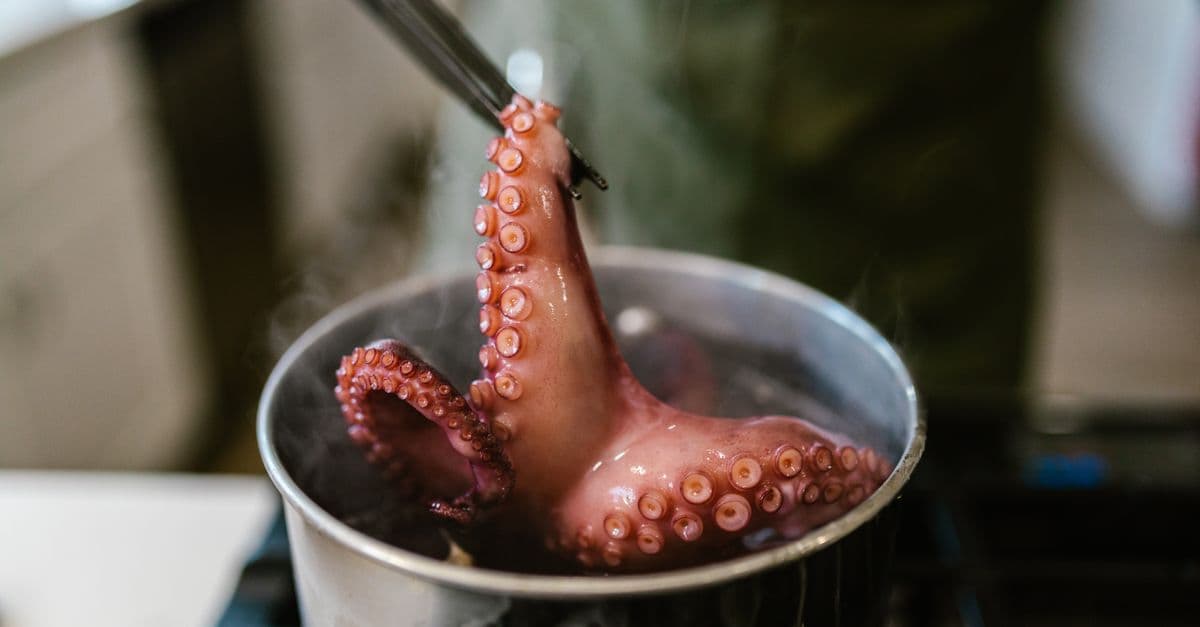
An octopus has roughly 500 million neurons — about as many as a dog — but two-thirds of those neurons are not in its brain. They are distributed across eight arms, each of which can taste, touch, decide, and act without ever consulting the central brain. This is the story of how intelligence can evolve in a completely different shape.
Corvid Intelligence: Why Crows and Ravens Are Nature's Problem Solvers
Crows make tools, plan for the future, recognize 500+ human faces, and hold grudges for years. Their intelligence rivals great apes — in a 400-gram brain.
Animal Sleep: How Different Species Sleep (And Why Some Barely Sleep at All)
Elephants sleep 2 hours a night. Koalas sleep 22 hours. Dolphins sleep with one eye open. Sleep is stranger across the animal kingdom than you imagined.
How Bats Use Echolocation: Seeing the World in Sound
Bats build a 3D map of the world from sound echoes — a sensory system so precise it can detect a wire 0.3mm thick in total darkness.