The Smartest Animals Explained: How Science Measures Animal Intelligence
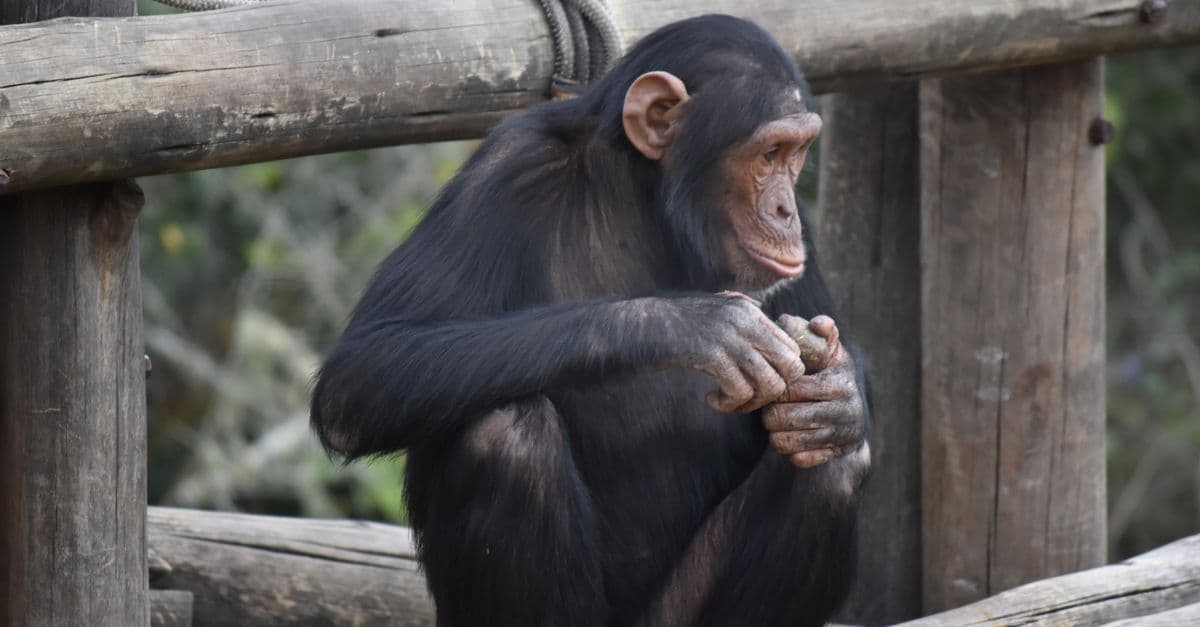
Photo: Didac Amat iPuigsech / Pexels
A raven, presented with a hanging piece of meat on a string, cannot reach it by pulling once. But it can solve the problem — by holding the string under its foot, pulling up a loop, stepping on it, pulling up another loop, repeating until the meat arrives — a multi-step physical reasoning task it figures out without any training. The raven's brain weighs about 15 grams (0.5 oz). The human brain weighs 1,400 grams (49 oz). The raven is nonetheless doing something that would challenge a three-year-old child. Understanding why requires rethinking what intelligence actually is.
The Problem With Asking "Which Animal Is Smartest"
Intelligence is not a single quantity like height or body temperature. In humans, intelligence researchers have spent a century arguing about whether it is one thing, several things, or an entire ecosystem of loosely correlated cognitive abilities. The same complexity applies to animals — but with an additional layer of difficulty: we cannot ask them questions or give them IQ tests. We can only design experiments that force them to solve problems and observe what they do.
Comparative cognition — the scientific field that studies the evolution and mechanisms of intelligence across species — defines cognitive ability not as a score but as the repertoire of problems an animal can solve, the strategies it uses, and the conditions under which those strategies emerge. This framing immediately changes the conversation. Asking which animal is "smartest" is roughly as useful as asking which tool is "best." The better question is: what cognitive problems does this animal solve, and how?
Encephalization quotient (EQ) — a ratio of actual brain mass to the brain mass predicted for an animal of that body size — was once the standard proxy for intelligence across species. Humans have the highest known EQ (~7.4–7.8). Dolphins are second (~4–5). Chimps are around 2.5. But EQ has serious limits: corvids have low EQs because birds are small, yet they outperform many mammals with higher EQs on cognitive benchmarks. The structure of the brain matters as much as its size.
Source: Roth, G. and Dicke, U. (2005), "Evolution of the brain and intelligence," Trends in Cognitive Sciences, Vol. 9 — comprehensive analysis of the relationship between brain morphology, EQ, and measured cognitive performance.
Corvids: The Birds That Rival Apes
The family Corvidae — ravens, crows, magpies, jays, rooks, and jackdaws — has produced more cognitive surprises per research paper than almost any other animal group. What makes them extraordinary is not just what they can do, but the brain architecture they use to do it.
Birds do not have a neocortex — the layered outer structure of the mammalian brain that is conventionally associated with higher cognition. For decades, the absence of a neocortex was taken to mean that birds could not achieve mammal-level reasoning. This view has been comprehensively overturned. Corvids and parrots have a dense, highly connected neural structure in the forebrain called the nidopallium caudolaterale that performs analogous functions to the mammalian prefrontal cortex — planning, working memory, flexible decision-making — without sharing its architecture. It is a different solution to the same problem, evolved independently in a completely different brain structure.
New Caledonian crows (Corvus moneduloides) manufacture tools from plant material and use them to probe for insect larvae in tree bark. This is well-documented in wild populations. But lab experiments have gone further. In one study at Oxford University, a crow named Betty was given a straight piece of wire and a transparent tube with food at the bottom. The crow bent the wire into a hook on its first attempt and used it to retrieve the food — a solution it invented spontaneously to a problem involving a material it had never encountered. Tool manufacture from novel materials, without training, crosses into territory that had previously been considered uniquely human.
Source: Weir, A.A.S., Chappell, J., and Kacelnik, A. (2002), "Shaping of hooks in New Caledonian crows," Science, Vol. 297 — the original Betty study establishing spontaneous hook tool manufacture.
Ravens demonstrate future planning — arranging tools or tokens in the present to solve a problem they will face at a later time. A 2017 study in Science showed ravens could plan for a future exchange, selecting a tool they would not need for a day but which would be required for a later task, passing up immediately available food rewards in order to retain the planning token. This kind of delayed gratification tied to future-state modeling had been demonstrated in great apes but was considered beyond non-primate birds.
Source: Kabadayi, C. and Osvath, M. (2017), "Ravens parallel great apes in flexible planning for tool-use and bartering," Science, Vol. 357 — established future planning in ravens at a level comparable to great apes.
Magpies (Pica pica) are the only non-mammal known to pass the mirror self-recognition test — the standard behavioral assay for self-awareness.
What the Mirror Self-Recognition Test Actually Measures
The test works like this: a mark is placed on an animal's body in a location it can only see in a mirror. The animal is then exposed to its reflection. If it uses the mirror to investigate or remove the mark from its own body — rather than treating the reflection as another individual — it demonstrates that it understands the reflection is itself. This requires a mental model of one's own body in space — what psychologists call self-concept.
Animals that have passed the test include chimpanzees, bonobos, gorillas, orangutans, bottlenose dolphins, orcas, elephants, and magpies. Dogs do not pass. Monkeys (unlike apes) generally do not pass, which is one of the most counterintuitive findings in the field — our closer relatives fail where a bird succeeds.
The test has significant limitations. Some researchers argue it is culturally biased toward animals that use vision as their primary sense and have the motor capacity to investigate a mirror-revealed mark. Dogs, with exceptional olfactory cognition, may have forms of self-recognition that the visual mirror test simply cannot detect. A dog given a "smell test" — discriminating between its own urine and modified versions of it — shows evidence of olfactory self-recognition.
Source: Plotnik, J.M., de Waal, F.B.M., and Reiss, D. (2006), "Self-recognition in an Asian elephant," PNAS, Vol. 103 — the elephant mirror test study that extended self-recognition beyond primates and cetaceans.
Dolphins: Social Intelligence and Language-Like Systems
Bottlenose dolphins (Tursiops truncatus) have brains that are, in absolute terms, larger than human brains. A large adult bottlenose has a brain mass of roughly 1,500–1,700 grams (53–60 oz) compared to the human average of ~1,350 grams (47 oz). EQ-adjusted, they rank second only to humans among non-human animals. But the architecture of that brain is strikingly different — the dolphin neocortex is extremely thin relative to its large surface area, organized differently from primate cortex in ways researchers are still characterizing.
What dolphins do with that brain is extraordinary. Each individual bottlenose dolphin develops a unique signature whistle — a frequency-modulated sound that functions like a name. Dolphins copy each other's signature whistles to address specific individuals, a capacity for referential labeling that parallels naming in human language. Calves learn their own signature whistles by modifying the mother's, and signature whistles are stable across decades.
Source: Janik, V.M. et al. (2006), "Signature whistle shape conveys identity information to bottlenose dolphins," PNAS, Vol. 103 — demonstrated that signature whistles encode individual identity and are used for specific address.
Dolphins also show cultural transmission of foraging techniques. A population of bottlenose dolphins in Shark Bay, Australia, learned to use marine sponges as nose-guards while probing the seafloor for fish — protecting their beaks from abrasion. This technique spread from a single individual (dubbed "Sponging Eve" by researchers) to her female offspring, and then through the female-biased social network over decades. It is a learned cultural behavior passed between generations through observation, not genetics — the same mechanism that transmits human culture.
Source: Krützen, M. et al. (2005), "Cultural transmission of tool use in bottlenose dolphins," PNAS, Vol. 102 — established the cultural, non-genetic spread of sponge tool use in wild dolphins.
Dolphin social cognition is also notable for strategic alliance formation. Male bottlenose dolphins in Shark Bay form alliances at three levels: pairs, teams of pairs, and super-alliances of up to 14 individuals who coordinate to herd females and compete with rival alliances. Tracking and managing these layered relationships requires a social intelligence that mirrors the complexity of human political and alliance-based cognition.
Elephants: Memory, Empathy, and Grief
African and Asian elephants have the largest brains of any land animal — an African elephant brain can reach 5,000 grams (176 oz). More relevant than raw mass, the elephant cerebral cortex has a degree of folding (gyrification) comparable to humans, and their brains contain a cell type called spindle neurons (von Economo neurons), previously thought to be exclusive to humans, great apes, and cetaceans. These neurons are implicated in social intelligence, empathy, and rapid social decision-making.
Elephants' famous memory is not myth. Studies tracking individual elephants in Amboseli National Park, Kenya, over decades show that elephants remember the locations of water sources visited years earlier, the identities of hundreds of individuals across multiple family groups, and the emotional contexts of encounters with specific humans. Matriarchs with longer memory — older females — lead groups with higher survival rates during droughts, because their memory of previously reliable water sources that the younger individuals have never seen is literally life-saving.
Source: McComb, K. et al. (2001), "Matriarchs as repositories of social knowledge in African elephants," Science, Vol. 292 — showed that matriarch age correlates with group survival outcomes, demonstrating the survival value of long-term social memory.
Elephants show behaviors that researchers interpret as grief responses to death. Elephant groups return repeatedly to the bones of deceased members, touching them with their trunks, carrying bones, and remaining at the site for extended periods. This behavior occurs specifically with elephant bones — not the remains of other species — suggesting that the animals recognize the remains as belonging to a conspecific and respond specifically to that recognition. Whether this constitutes "grief" in any human-equivalent sense is impossible to confirm, but the behavioral specificity is striking.
They also pass the mirror test. In 2006, Asian elephants at the Bronx Zoo, tested with a large mirror and standard mark protocol, touched the mark on their own faces while observing their reflection — behavior that fulfilled the criteria for self-recognition.
Great Apes: Our Cognitive Relatives
Chimpanzees, bonobos, gorillas, and orangutans occupy a special position in animal intelligence research because their cognitive abilities are the easiest to interpret by human researchers — they are our closest relatives and share much of our neural architecture. This makes them the benchmark against which other animals are compared, though it also introduces a risk of anthropocentric bias.
Chimpanzees use over 20 distinct tool types in the wild, including stone hammers and anvils for cracking nuts, leaf-sponges for collecting water, and grass probes for extracting termites from mounds. Tool sets vary between populations — West African chimps crack nuts; East African chimps generally do not, despite having access to the same nuts and stones — demonstrating that tool use in chimps is cultural, not purely instinctive.
Theory of mind — the ability to model other individuals' mental states, to understand that others have beliefs, intentions, and knowledge different from one's own — is the cognitive capacity most closely associated with complex social behavior in humans. Tests of theory of mind in chimps show that they can track what another individual can and cannot see, adjust their behavior based on a competitor's knowledge state, and deceive competitors more effectively when the competitor has less information. They understand, in some sense, that others have minds with contents different from their own. The degree to which this equals human theory of mind is actively debated.
Source: Hare, B. et al. (2000), "Chimpanzees know what conspecifics do and do not see," Animal Behaviour, Vol. 59 — foundational study establishing knowledge-state tracking in chimpanzees.
What We Get Wrong About Animal Intelligence
"Intelligence scales linearly." The implicit assumption behind ranking animals by intelligence is that more neurons equals more intelligence. This fails consistently. New Caledonian crows outperform monkeys with far larger brains on causal reasoning tasks. The architecture and connectivity of neural circuits matter more than their absolute size.
"Tool use is the benchmark." Tool use was once considered a uniquely human hallmark. It is not — it occurs in crows, dolphins, elephants, chimps, otters, certain fish, and even some insects under specific conditions. Using tools is one expression of cognitive flexibility, not cognition itself. What matters is the generality and transferability of the cognitive mechanisms underlying tool use.
"Failing a test means lacking the ability." Many cognitive tests used on animals are designed for animals with different sensory systems or body plans. Dogs have been underestimated on spatial cognition tasks because they were given tasks designed for primates. Asking a fish to press a button may miss the cognitive abilities the fish actually has.
| Animal | Mirror test | Tool use | Future planning | Cultural transmission |
|---|---|---|---|---|
| Chimpanzee | Yes | Yes (20+ types) | Yes | Yes |
| Bottlenose dolphin | Yes | Yes (sponge tools) | Limited evidence | Yes |
| Asian/African elephant | Yes | Limited | Limited evidence | Yes |
| Raven | Not conclusive | Yes (manufactured) | Yes | Yes |
| Magpie | Yes | Limited | Limited evidence | Yes |
| New Caledonian crow | Not conclusive | Yes (manufactured) | Yes | Yes |
| Dog | No (standard test) | Limited | Limited evidence | Yes |
How Researchers Actually Test Animal Intelligence
Cognitive testing of animals is more constrained than it might appear. Animals cannot be given verbal instructions, told the rules of a task, or asked to explain their reasoning. Every test must be designed so that the behavioral output is unambiguous.
The object permanence test checks whether an animal understands that an object continues to exist when it is hidden — a capacity Piaget showed human infants develop in stages. Animals are shown a food item, which is then hidden under one of several containers. Dogs perform well. Most fish do not.
Analogical reasoning tasks present patterns like "A is to B as C is to ?" and test whether an animal can identify relational similarities between pairs of objects. Chimps and to some extent baboons show analogical reasoning. Pigeons have recently been shown to solve simplified versions.
Delay of gratification tests — giving an animal a smaller immediate reward or the option to wait for a larger later reward — test impulsivity and future-state modeling. Great apes, corvids, and dolphins show extended delay of gratification. Most rodents do not, though they show some capacity.
The field has also moved toward studying animals in their ecological context rather than purely in laboratory settings, recognizing that intelligence is always an adaptation to specific problems an animal faces in its environment. A star-nosed mole may have extremely limited visual cognition but extraordinary somatosensory and spatial mapping intelligence — intelligence precisely calibrated to navigating tunnels in the dark by touch. Ranking it against a chimpanzee tells you nothing useful about either animal.
Source: Shettleworth, S.J. (2009), Cognition, Evolution, and Behavior, Oxford University Press — the standard reference on comparative cognition methodology.
How Animal Intelligence Is Actually Tested
Designing a cognitive test for a non-verbal animal is harder than it sounds. The animal cannot be told the rules, cannot be asked to explain its reasoning, and may have sensory systems or body plans that make a human-designed task trivially easy or impossibly awkward. Every benchmark in comparative cognition has to be rebuilt from scratch for each species, and the results are only valid when the task is ecologically sensible for the animal being tested.
One classic paradigm is string-pulling, in which food is attached to a dangling string and the animal must work out that pulling the string retrieves the food. Ravens, keas, and several parrot species solve this spontaneously. More revealing than simple string-pulling is the multi-loop variant: the string is looped so that the animal must pull up a segment, hold it under one foot, pull up the next segment, and repeat — a multi-step sequence requiring the animal to maintain a goal state across several actions. Great tits can solve three-loop versions; ravens manage five or more without prior training.
Delayed gratification tasks — sometimes called the marshmallow test after the famous human study — offer an animal a small immediate reward or the option to wait for a larger later reward. Great apes and corvids show extended delay capacities, sometimes waiting several minutes for a preferred food item. What makes the corvid results particularly striking is that the tasks require the bird to maintain a mental representation of a future state and suppress an immediate impulse — both functions associated with the prefrontal cortex in primates. Corvids achieve this with the nidopallium caudolaterale, a structurally different but functionally analogous brain region.
The Aesop's fable task — named after the fable of the crow dropping stones into a pitcher to raise the water level — tests causal understanding of physical displacement. In the experimental version, food floats on water inside a tube too narrow for the animal to reach into. Dropping objects into the tube raises the water level and brings the food within reach. Rooks and New Caledonian crows solve this readily, selecting solid sinking objects over hollow floating ones and ignoring a tube with a hole in the bottom. Chimpanzees also pass. Orangutans solve a version involving spitting water into a tube — a different motor solution to the same causal problem.
Theory of mind experiments test whether one animal can model another's beliefs and knowledge. The standard paradigm places food where one competitor can see it and another cannot, then measures whether the subordinate animal adjusts its strategy based on the dominant's knowledge state. Chimpanzees do this reliably — they preferentially approach food that the dominant individual did not see hidden. Ravens show a striking variant: they behave as though they are being watched even when no competitor is visible, apparently modeling the possibility of an unseen observer, which requires representing absent mental states.
Source: Shettleworth, S.J. (2009), Cognition, Evolution, and Behavior, Oxford University Press, 2nd ed. — the standard reference on comparative cognition methodology, covering string-pulling, delay tasks, causal reasoning, and theory of mind paradigms across species.
Frequently Asked Questions
Q: What is the single smartest animal after humans?
A: There is no consensus answer because intelligence is not a single measurable quantity. On multi-step reasoning and future planning, ravens and New Caledonian crows rival great apes despite brain sizes a hundred times smaller. On social cognition and cultural complexity, chimpanzees and bottlenose dolphins rank highest. The question is only answerable if you specify which cognitive domain you are measuring.
Q: Do corvids really outsmart chimpanzees?
A: On specific tasks, yes. A 2017 Science study showed ravens perform flexible future planning — selecting and saving a tool for a later task, passing up immediate food rewards — at a level comparable to great apes. New Caledonian crows manufacture novel hooked tools from unfamiliar materials without training, something not documented in wild chimpanzees. On tasks requiring large-scale social intelligence or abstract language-like systems, chimps have the advantage.
Q: How do we know if an animal is self-aware?
A: The standard behavioral test is mirror self-recognition: an animal is marked on a body part visible only in a mirror, then exposed to its reflection. If it uses the mirror to investigate the mark on itself rather than treating the reflection as another individual, it passes. Animals that have passed include chimpanzees, dolphins, elephants, and magpies. The test has limitations — it favors visually oriented species and may miss self-recognition in animals that rely on other senses.
Q: Can animals understand that others have different beliefs?
A: Great apes show clear evidence of tracking what a competitor can and cannot see, and adjusting their behavior accordingly — a basic form of theory of mind. Ravens show a version involving unseen observers. Whether any non-human animal has a full human-equivalent theory of mind — understanding false beliefs — remains actively debated, with recent evidence from chimpanzee anticipatory looking tasks suggesting a partial capacity.
Q: Are domestic dogs as intelligent as wolves?
A: Dogs score higher than wolves on tasks requiring reading human social cues — following a human pointing gesture, for example — even when raised in identical conditions. Wolves outperform dogs on independent problem-solving tasks that do not involve human input. Dogs have been selectively bred for tens of thousands of years to cooperate with and read humans, which has augmented social-reading intelligence at the possible expense of independent cognition.
Q: Does brain size predict intelligence in animals?
A: Poorly, on its own. Encephalization quotient — brain mass relative to body mass — correlates loosely with cognitive performance across broad taxonomic groups, but fails for corvids (small EQ, exceptional cognition) and some cetaceans (large EQ, variable performance). Neural density, connectivity patterns, and the presence of specific cell types like von Economo neurons are better predictors than raw volume. Architecture matters more than size.
The Takeaway
The smartest animals are not the ones with the biggest brains or the most human-like behaviors. They are the ones that have evolved the cognitive machinery their ecological circumstances demanded — and those circumstances are so varied that intelligence has been reinvented in radically different forms dozens of times across the tree of life. A crow solving a multi-step hook puzzle with a walnut-sized brain is not a lesser version of chimpanzee intelligence. It is a different implementation of the same general capacity, arrived at through a completely separate evolutionary path. The real insight from comparative cognition is not a ranked list. It is the discovery that minds are far more varied, far more capable, and far more widespread across nature than anyone suspected.
Read next:
Follow new articles
Add SciHub101 to your feed reader to see new science and technology stories.
About the Author
SciHub101 is an independent science and technology publication founded and edited by Buğra Sözeri, a software engineer and app developer based in Türkiye. AI tools assist with drafting and research. Source documentation in the existing archive is uneven, and articles are being reviewed and corrected. The Editorial Team byline identifies editorial responsibility; it does not certify specialist or independent human review. Where we compare products, anything built by our own team is labelled as such — see the editorial guidelines and About page for how corrections and disclosures work.
Related Articles
The Most Venomous Animals Explained: How Venom Works and Why It Evolved
The geography cone snail moves at walking pace, cannot bite or scratch, and looks harmless enough to pick up from a beach. Its venom can kill an adult human within hours, and there is no antivenom. Venom is not a single thing — it is a convergently evolved chemical toolkit, independently invented more than 100 times across the animal kingdom, that does radically different things in different species. Here is what venom actually is, how it works at the molecular level, and why the most dangerous molecules on Earth are also among the most medically promising.
The Science of Animal Regeneration: How Axolotls, Planarians, and Starfish Rebuild Themselves
An axolotl can regrow an amputated limb — including bones, nerves, blood vessels, muscle, and skin — in perfect working order within six weeks. It can also regrow portions of its brain, heart, and spinal cord. A planarian flatworm cut into 200 pieces will grow 200 new worms, each complete. The genetics behind these abilities are not alien to mammals; we have most of the same genes. The question is why we stopped using them.
Corvid Intelligence: Why Crows and Ravens Are Nature's Problem Solvers
Crows make tools, plan for the future, recognize 500+ human faces, and hold grudges for years. Their intelligence rivals great apes — in a 400-gram brain.
Why Elephants Never Forget: The Science of the World's Most Remarkable Memory
Elephants remember watering holes used decades ago and recognize family members after 23 years apart. Here's the science behind that.
How Octopuses Are So Intelligent: The Animal That Thinks With Its Arms
An octopus has roughly 500 million neurons — about as many as a dog — but two-thirds of those neurons are not in its brain. They are distributed across eight arms, each of which can taste, touch, decide, and act without ever consulting the central brain. This is the story of how intelligence can evolve in a completely different shape.
How Dogs Understand Humans: The Science of the World's Oldest Partnership
Dogs can read human emotions, follow pointing gestures, and understand hundreds of words — abilities even our closest primate relatives often lack.