Skip to content
ISSUE 10.29.26/24 CATEGORIES

cognition

24 articles tagged with #cognition

Woman with closed eyes holding head, conveying stress and emotions against a plain white background.
Psychology

Why Do Songs Get Stuck in Our Heads? The Science of Earworms

An earworm — scientifically termed involuntary musical imagery (INMI) — is a short, catchy melodic fragment that loops involuntarily in consciousness without deliberate effort or intention. They arise from how auditory memory and the brain's phonological loop rehearse simple, repetitive hooks, and are triggered by recent exposure, stress, and idle mind-wandering. Research shows certain musical features — simple rhythmic patterns, unexpected melodic intervals, and familiarity — make songs more prone to earworm status. Understanding the cognitive machinery behind them reveals how memory, attention, and prediction interact in the brain.

Editorial Team·June 26, 2026·21 min
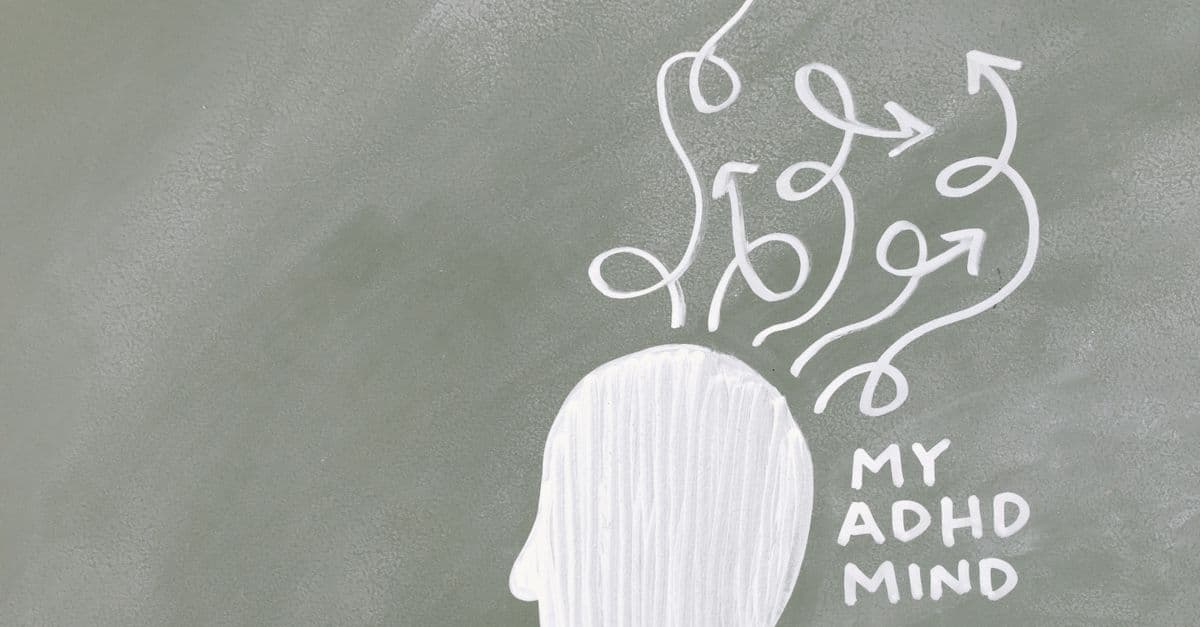
Creative depiction of the ADHD mind with chalk arrows on a green board.
Psychology

Why Do We Experience Déjà Vu? The Science of the Already-Seen

Déjà vu—the uncanny sense of having already experienced a present moment—occurs in roughly 60% of people at least once in their lifetime. The phenomenon is not a supernatural gift or sign of precognition, but rather a temporary glitch in the brain's memory and perception systems. Leading theories propose that déjà vu arises from a mismatch between memory familiarity and recollection: the brain perceives current sensory input as familiar but cannot retrieve the source or details. This can occur through multiple mechanisms, including delayed signal transmission between perceptual and memory regions, retrieval of similar (but different) memories, or the hippocampus signaling familiarity without context. The phenomenon declines with age, occurs more frequently in people who travel and experience novel environments, and in rare cases can signal temporal lobe epilepsy. Understanding déjà vu reveals how memory familiarity and conscious recollection are distinct neural processes that can become dissociated.

Editorial Team·June 10, 2026·24 min
Boy in yellow shirt reading in a classroom with books and plants around.
Blog

The Complete Guide to Speed Reading: What Science Says About Reading Faster and What Actually Works

Speed reading is often promoted as a way to consume books and articles in minutes instead of hours. The science, however, is clear: you cannot read faster without losing comprehension. This article examines what cognitive research reveals about the limits of reading speed, which techniques have evidence support, and which speed-reading claims are pure marketing. Most speed-reading methods fail or trade comprehension for speed. What actually works: identifying the purpose of your reading, skimming for structure before deep reading, and eliminating actual time-wasting habits.

Editorial Team·June 4, 2026·16 min
A person walking on a treadmill in a modern gym setting, focusing on fitness.
Blog

The Case for Walking: Why the Simplest Exercise Is the Most Underrated

Walking is the most underrated exercise in health discourse, overshadowed by high-intensity training, resistance work, and achievement-oriented fitness. Yet the evidence associates regular walking with cognitive benefits, cardiovascular health, mental health, and longevity gains. A 2022 meta-analysis linked daily walks of 7,000-8,000 steps to 40% lower mortality compared to sedentary lifestyles. Walking boosts BDNF (brain-derived neurotrophic factor), supporting memory and cognitive function. Moderate-paced walking improves creative problem-solving compared to seated work. Walking is sustainable: 80% of people maintain a regular walking habit after one year, compared to 20-30% for gym memberships. This guide covers the research on walking's cognitive and physiological effects, honest discussion of effect sizes, and why accessibility beats intensity for population-level health. Walking is not the most intense exercise; it is among the most valuable.

Editorial Team·June 4, 2026·15 min
A focused young girl writing at her desk, absorbed in her homework task at home.
Blog

Why You Should Write Online Even If Nobody Reads It: The Learning Engine of Public Writing

Writing for an audience of zero sounds like vanity. But research on learning and cognition shows that the act of writing for public consumption — even if nobody reads it — strengthens understanding more than private journaling, reading, or thinking alone. This is because public writing imposes rigor: vague ideas become impossible to hide from yourself once you have committed them to prose. The external validation (likes, comments, shares) is secondary; the primary benefit is the cognitive forcing function of organizing thoughts clearly enough for a stranger to understand. This essay explores the research on writing-to-learn, the network effects of sharing, and why the decision to write publicly is one of the highest-leverage investments a person can make in their own learning.

Editorial Team·June 4, 2026·15 min
A stressed man and woman therapist in a modern consultation room.
Psychology

Why Do We Forget? The Science of Memory Decay and Forgetting

Forgetting is not a failure of memory but an adaptive feature of the mind. Information is encoded in the brain through synaptic strengthening, stored in distributed patterns across neural networks, and retrieved by reconstructing those patterns. Forgetting occurs through two mechanisms: decay (the gradual weakening of memories over time if unused) and interference (new information competing with or overwriting old information). The forgetting curve, first measured by Hermann Ebbinghaus in 1885, shows that memories fade rapidly at first, then stabilize. Motivated forgetting — the intentional suppression of unwanted memories — involves the prefrontal cortex inhibiting memory retrieval circuits. Understanding forgetting reveals that memory loss can be adaptive: it reduces cognitive clutter and allows the mind to prioritize relevant, recent information.

Editorial Team·June 4, 2026·19 min
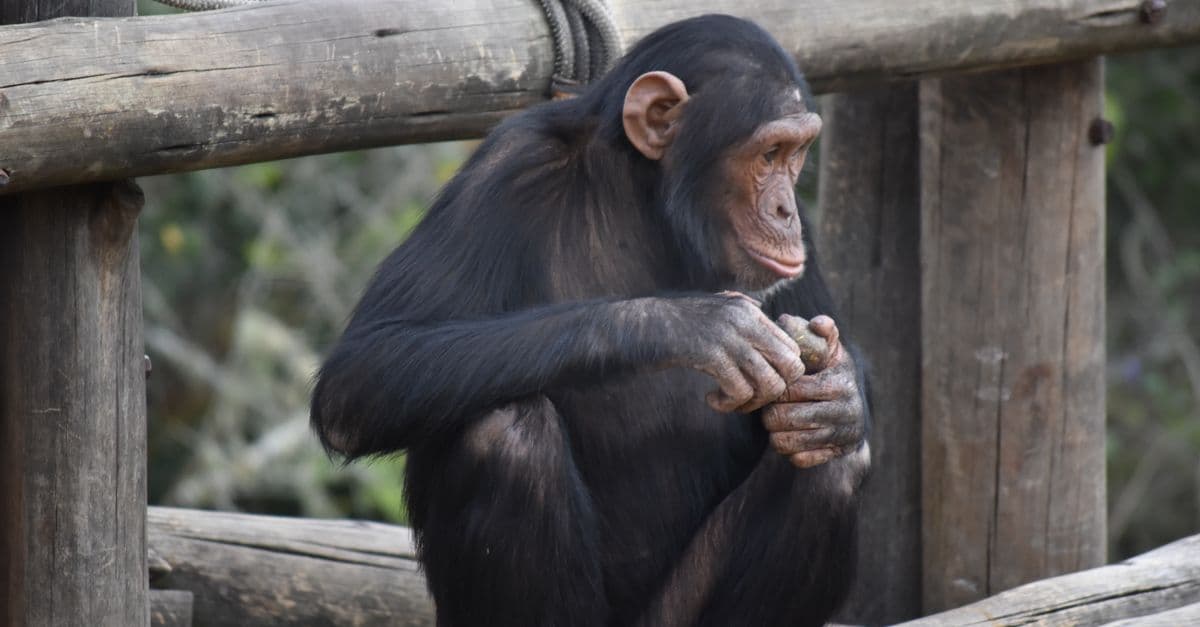
Close-up of a chimpanzee sitting on wood, South Africa. Captured outdoors.
Animals

The Smartest Animals Explained: How Science Measures Animal Intelligence

A New Caledonian crow can manufacture a hooked tool from a strip of wire it has never encountered before to retrieve food from a tube. A bottlenose dolphin calf recognizes itself in a mirror at seven months — something a human child cannot do until age two. Defining animal intelligence turns out to be one of the most revealing questions in all of science.

Editorial Team·June 2, 2026·19 min
Page 1 of 2Next →