How Chameleons Change Color: The Physics Inside Living Skin
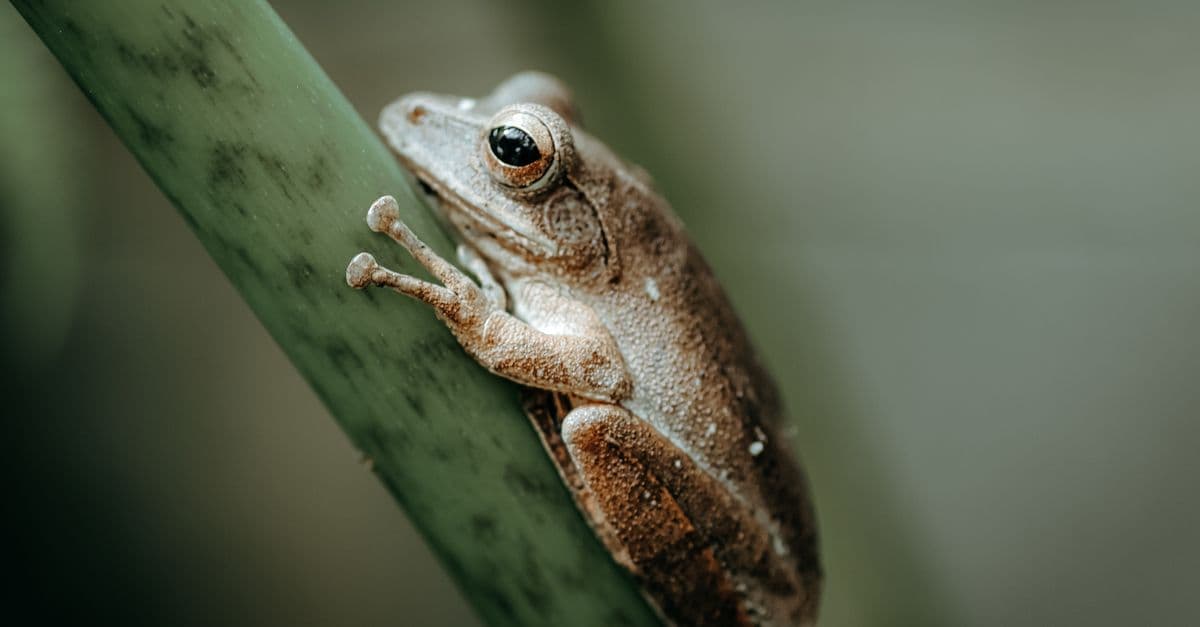
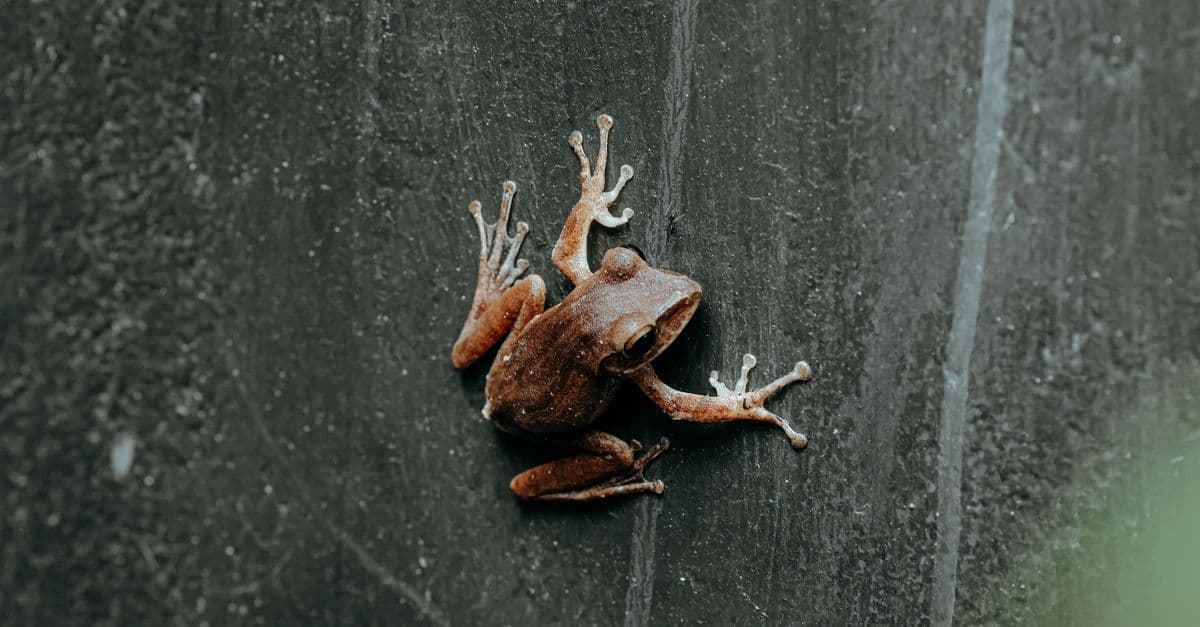
Photo: 🇻🇳🇻🇳Nguyễn Tiến Thịnh 🇻🇳🇻🇳 / Pexels
For decades, scientists assumed chameleons changed color the same way squid and cuttlefish do — by expanding or contracting pigment-containing cells until pigment granules become visible or hidden. In 2015, a team at the University of Geneva showed that assumption was wrong for the group's most spectacular color-changers. Panther chameleons don't move pigment to change color. They rearrange photonic nanocrystals — structures that behave more like the inside of a gemstone than anything in a standard biology textbook — to tune which wavelengths of light bounce back to your eye. A chameleon isn't primarily a pigment system. Across the parts of its body doing the fastest, most dramatic color-shifting, it's closer to a living optical device, built from the same molecule that spells out your genetic code.
Educational content, not medical advice. Talk to your doctor before changing any medication, treatment, or routine. Information here reflects current research but every person's situation differs.
Key takeaways
- Chameleons change color primarily by altering the spacing of guanine nanocrystal lattices inside specialized skin cells called iridophores — not by releasing or hiding pigment.
- The lattice works as a photonic crystal: a structure with periodically alternating refractive index that reflects specific wavelengths through interference, the same physics behind opal, soap-bubble color, and butterfly-wing iridescence.
- Panther chameleon skin has two stacked iridophore layers: a superficial layer (S-iridophores) tuned for rapid visible-light color change, and a deeper layer (D-iridophores) that reflects near-infrared radiation for passive thermal protection.
- Color change is driven mostly by social signaling — male contests and courtship — not camouflage, which is a secondary and often overstated function.
- Not every chameleon species changes color the same way or for the same reason; species with intense male-male competition show far more dramatic shifts than species under weaker sexual selection.
- The same structural-color principle — periodic nanostructures bending light rather than pigments absorbing it — appears independently in peacock feathers, morpho butterfly wings, and mother-of-pearl, and is now being copied in synthetic photonic materials.
The wrong explanation that lasted decades
The textbook explanation for animal color change, for most of the 20th century, involved chromatophores — pigment-bearing cells that expand or contract to expose or conceal the pigment granules inside them. This mechanism is real, and it operates in fish, amphibians, and cephalopods. A cuttlefish, for instance, changes its appearance in under a second by contracting or relaxing tiny muscles attached to sac-like chromatophores, stretching a disc of pigment wide or squeezing it down to a dot.
Early herpetologists studying chameleons assumed something similar was happening. They watched a chameleon flush from green to yellow to a mottled orange-red in under a minute, saw pigment-bearing cells in cross-sections of chameleon skin, and reasonably concluded chromatophore expansion explained it. For a long time, that explanation went mostly unchallenged. But it never quite fit under close inspection. Chromatophore-based pigment movement in fish and amphibians is limited in the range of hues it can produce and tends to shift brightness and pattern more than it shifts hue itself. Chameleons were doing something that looked mechanically different: full hue reversals, executed with a speed and vividness that pigment redistribution alone struggled to explain.
The correction came from a team led by Jérémie Teyssier and Michel C. Milinkovitch at the University of Geneva, working with Suzanne V. Saenko and Dirk van der Marel. Their study, "Photonic crystals cause active colour change in chameleons," was published in Nature Communications in March 2015 Teyssier et al., Nature Communications 6, 6368 (2015). Using transmission electron microscopy, photometric video analysis, and photonic band-gap modeling on male panther chameleons (Furcifer pardalis) from Madagascar, the team found that the cells actually responsible for the dramatic color shifts were not classic pigment chromatophores. They were iridophores, packed with ordered arrays of guanine crystals — the same nitrogen-containing molecule that forms one of the four bases of DNA, but here functioning not as genetic information but as a light-bending building block, stacked into a precise three-dimensional lattice.
Photonic crystals: nature's nanotechnology, running live in skin
To understand what a photonic crystal is, it helps to start with something more familiar: a soap bubble. A soap film is a thin layer with a slightly different refractive index (a measure of how much a material bends light) than the air around it. Light bounces off the front and back surfaces of that thin film, and those two reflected waves interfere with each other — reinforcing some wavelengths and canceling others, depending on the film's thickness. That's why a soap bubble shows shifting rainbow bands instead of a flat, single color: as the film's thickness varies slightly across the bubble, the wavelength that survives the interference varies too.
A photonic crystal extends that idea into a repeating, three-dimensional structure instead of a single thin film. When a material has a periodic pattern of alternating high and low refractive index — repeating layers, or in the chameleon's case, repeating rows of guanine crystals separated by cytoplasm — certain wavelengths of light get reflected strongly through constructive interference while others pass through or cancel out. Which wavelength wins depends on the spacing between the repeating units. Change the spacing, and you change the color that bounces back. This is the same underlying physics that produces the fixed, permanent blue of a morpho butterfly's wing scales and the shifting colors of an opal, both of which rely on ordered nanostructures rather than pigment. Opals lock their lattice spacing in place once they crystallize; chameleon skin does not.
In the panther chameleon's relaxed state — a calm, resting animal — the guanine crystal lattice in the superficial iridophore layer sits close together, with a small inter-crystal spacing. That tight spacing selectively reflects short wavelengths: blues and greens. When the animal becomes aroused — challenged by a rival male, courting a female, or startled — the Geneva team's imaging showed the lattice spacing increasing measurably within the same cells. Larger spacing shifts the reflected wavelength toward the long end of the visible spectrum: yellows, oranges, and reds. The chameleon isn't painting itself a new color. It's re-tuning a light filter it's already wearing.
The speed and reversibility of that re-tuning are what make it functionally different from a chromatophore system. A male panther chameleon can visibly shift from a resting green baseline toward a vivid red-and-white contest display in well under two minutes, and the same lattice can be relaxed and re-tightened repeatedly across a lifetime without any evident structural degradation — a mechanically reversible nanoscale tuning system, sitting inside living tissue that also has to keep growing, healing, and shedding.
This matters because it is a fundamentally different category of color mechanism than the one operating in a cuttlefish or an octopus. It's a structural color: the hue arises from the physics of interference and diffraction acting on an ordered nanostructure, not from a chemical pigment selectively absorbing certain wavelengths of light and reflecting the rest. Structural colors can be more saturated, more directional (changing appearance with viewing angle, an effect called iridescence), and, crucially for the chameleon, far more rapidly tunable than anything a pigment-synthesis pathway could match. Building a new vivid red pigment from scratch, on demand, in under two minutes, isn't metabolically realistic. Mechanically shifting the spacing between crystals you already have is.
Why can't chameleons just use pigment like everyone else?
Pigments absorb specific wavelengths and reflect the rest, and producing a new pigment or moving a large reservoir of it is comparatively slow and metabolically costly. A photonic crystal lattice, once built, can be re-tuned mechanically in seconds by changing spacing, which is why chameleons pair this structural system with slower pigment-based cells for baseline coloration and reserve the crystal lattice for rapid social signaling.
Two layers for two very different jobs
One of the more overlooked findings in the 2015 paper is that panther chameleon iridophores aren't a single, uniform sheet of cells. Teyssier and colleagues identified two stacked populations. The upper population — the superficial (S-) iridophores — has small, closely packed, geometrically regular guanine crystals arranged in a triangular lattice, and it's this layer that does the fast visible-light tuning behind social displays. Beneath it sits a second, deeper population — the deep (D-) iridophores — with larger, less regularly organized crystals. This deep layer reflects a substantial share of incoming solar radiation, especially in the near-infrared band, which carries a large fraction of the sun's thermal energy but isn't visible to human eyes.
That near-infrared-reflecting layer does a completely different job than social signaling: passive thermal protection. Chameleons are ectotherms, meaning they rely on external heat sources — sunlight, warm surfaces — to regulate body temperature rather than generating their own metabolic heat the way mammals do. Left with no defense, an animal basking in direct tropical sun would absorb a large amount of incident solar infrared energy and risk overheating quickly, since chameleons in Madagascar's forest canopy are frequently exposed to strong, unfiltered sunlight for extended periods. By reflecting a portion of that near-infrared load before it's absorbed as heat, the deep D-iridophore layer functions as a passive heat shield sitting directly underneath the display layer that everyone actually notices.
Put together, panther chameleon skin isn't doing one job. In a stack of tissue only a few tens of micrometers thick, it's simultaneously running a rapid social-communication display, a slower background-matching camouflage system built from separate pigment cells (xanthophores and melanophores sitting even deeper), and a thermal-management system, all layered on top of each other and all independently tunable.
The mechanism behind the tuning: what actually moves
The Geneva team's follow-up work and subsequent physiological studies point to active cell-volume changes as the driver of lattice spacing shifts, rather than the crystals themselves moving independently. When an S-iridophore cell swells — likely through changes in intracellular osmotic pressure triggered by neural and hormonal signaling tied to the animal's excitement state — the cell's cytoplasm expands, pushing the embedded guanine crystals farther apart from one another. A relaxed, unstimulated cell keeps its crystals close together, favoring short-wavelength reflection. An excited, swollen cell spreads them out, favoring long-wavelength reflection. The trigger cascade runs from the chameleon's autonomic nervous system and stress/arousal-linked hormones down to individual iridophore cells within roughly a minute, a chain that behaves less like conscious decision-making and considerably more like the involuntary vasodilation that makes a human face flush red with anger or embarrassment.
This is a useful analogy for readers trying to picture the process: think of the crystal lattice less like a color palette the chameleon selects from and more like a set of adjustable window blinds. The slats (crystals) don't change what they're made of. Tilting or spacing them differently changes which light gets through and which gets bounced back, and the chameleon's nervous system is the hand adjusting the blinds based on what it's feeling in the moment, not what it's deciding to display.
What chameleons are actually communicating
The popular image of the chameleon as nature's ultimate camouflage artist isn't entirely wrong — many species do shift toward duller, background-matching tones at rest, and some studies show a real, if modest, capacity to adjust toward specific backgrounds. But camouflage is not the primary evolutionary driver behind the dramatic, rapid color-shifting ability that makes chameleons famous. Field and lab studies of panther chameleons in Madagascar consistently find that the fastest, most saturated color changes happen during male-male confrontations and courtship displays — precisely the contexts where an animal benefits from standing out, not blending in.
Research by Devi Stuart-Fox and Adnan Moussalli, published in PLOS Biology in 2008 under the title "Selection for Social Signalling Drives the Evolution of Chameleon Colour Change," compared color-change capacity across multiple dwarf chameleon (Bradypodion) lineages in southern Africa Stuart-Fox & Moussalli, PLOS Biology, 2008. They found that the degree of color-change ability correlated strongly with the intensity of sexual selection and predation-driven signaling pressure a species experiences, not with habitat complexity or camouflage need. Species where males compete intensely for mates and territory show far more dramatic color change than closely related species under weaker sexual competition. The interpretation the authors offer is that color-change ability itself is a trait that evolved as a communication tool — closer to how a peacock's tail evolved for display than to how a stick insect's shape evolved for concealment.
Within a contest, male panther chameleons typically escalate through recognizable stages: a baseline resting color, a heightened threat display (often a darker base tone crossed with vivid contrasting stripes), and, if the confrontation continues, physical posturing. Research tracking these encounters has found that the male producing the faster, more saturated, more contrast-rich color shift is frequently the one that wins the standoff without an actual physical fight ensuing — meaning the color-change system functions as an honest, hard-to-fake signal of vigor or resource-holding potential, similar in concept to antler size in deer, but settled in seconds instead of over a season's growth. Courtship displays draw on a different visual vocabulary again, generally brighter and higher-contrast than threat patterns, while females in many species signal reproductive receptivity or rejection through their own distinct color shifts — a dark base crossed with pale or blue spotting is a commonly documented rejection signal in captive and field-observed panther chameleons.
Do chameleons change color to match their surroundings?
Sometimes, but background-matching is secondary to social signaling for the fastest-changing species. A 2025 Biology Letters study on flap-necked chameleons (Chamaeleo dilepis) found they could adjust brightness to better match dark backgrounds and shift toward some hues, especially yellow, when placed on standardized colored surfaces — real camouflage ability, but modest next to the dramatic hue reversals male panther chameleons perform during social contests Royal Society Publishing, Biology Letters, 2025.
Not all chameleons do this the same way
It's easy to talk about "the chameleon" as if the roughly 200-plus known chameleon species are interchangeable, but color-change capacity varies enormously across the family Chamaeleonidae, and the differences track closely with each species' social and ecological pressures rather than with taxonomy alone. The table below summarizes documented differences across some of the most-studied genera and species.
Table: Color-change capacity across chameleon genera, based on published research
| Genus / species | Typical color-change range | Primary driver (per research) | Notes |
|---|---|---|---|
| Furcifer pardalis (panther chameleon) | Very high — full hue reversals, green to red in under two minutes | Male-male contest and courtship signaling | The species studied in the 2015 Nature Communications photonic crystal discovery |
| Chamaeleo calyptratus (veiled chameleon) | High — broad range of greens, yellows, blues, and patterned displays | Social signaling and mild thermoregulation | Common in the pet trade; frequently used in captive behavioral studies |
| Chamaeleo dilepis (flap-necked chameleon) | Moderate — brightness shifts and some hue-matching to backgrounds | Mixed camouflage and signaling | Subject of the 2025 Biology Letters background-matching study |
| Bradypodion spp. (southern African dwarf chameleons) | Variable across ~21 studied lineages, correlated with sexual selection intensity | Social signaling, strength varies by lineage | Core dataset behind the 2008 Stuart-Fox and Moussalli PLOS Biology study |
Sources: Teyssier et al., Nature Communications (2015); Stuart-Fox & Moussalli, PLOS Biology (2008); Royal Society Publishing, Biology Letters (2025).
Structural color versus pigment color: how chameleons compare to other color-changers
Chameleons are often mentioned in the same breath as cuttlefish, octopuses, and squid as nature's great color-changers, but the underlying mechanisms differ sharply, and the comparison is useful for understanding what makes the chameleon's system distinctive rather than just another version of the same trick. Octopuses rely on a different set of skin layers, explained in how octopuses change color.
Cephalopods like cuttlefish rely primarily on chromatophores — pigment sacs surrounded by radial muscles that, when contracted by direct neural signaling, stretch the pigment disc wide and expose it, and when relaxed, let it shrink back to nearly invisible. This gives cephalopods extraordinary speed (color pattern changes in well under a second) and fine spatial control, since each chromatophore is independently and directly wired to the nervous system, allowing complex, moving patterns across the skin. But it's fundamentally a pigment-exposure system layered with a separate structural iridophore layer of its own for the blues and greens pigment can't easily produce. Chameleons, by contrast, lean on structural color as the primary engine of their fastest, most visible-spectrum-spanning changes, with pigment cells handling the slower, more static baseline coloration underneath.
This distinction also explains a common misconception worth addressing directly: chameleon skin does contain pigment cells (melanophores carrying dark melanin, and xanthophores carrying yellow/orange carotenoid and pteridine pigments), and those cells do contribute to overall appearance. But the fastest, most attention-grabbing hue reversals — the green-to-red flush during a contest — are driven by the photonic crystal iridophore layer, not by those pigment cells moving or synthesizing new pigment on the fly.
What people get wrong about chameleon color change
The single most persistent misconception is that color change exists mainly to help chameleons hide. It's an intuitive assumption — chameleons do rest in muted, bark- or leaf-matching tones much of the time, and popular culture (cartoons, idioms about people who "blend in") has reinforced camouflage as the headline explanation for decades. But the research consistently places social signaling, not concealment, as the dominant selective pressure behind the trait's most dramatic expression, particularly in species like the panther chameleon where the changes are fastest and most visually extreme.
A second common mix-up is treating "chameleon" as a single mechanism rather than a family with real variation. Because panther and veiled chameleons dominate both scientific study and the pet trade, media coverage tends to generalize their dramatic photonic-crystal-driven color changes to the whole group, when dwarf chameleon lineages and other genera show a much wider and more modest spread of ability, some closer to ordinary reptile pigment-based color shifts than to the Geneva team's crystal-lattice mechanism.
A third misconception, understandable given how the discovery is often summarized in headlines, is the idea that chameleons abandoned pigment entirely in favor of "crystal skin." They didn't. Melanophores and xanthophores are still doing real work in chameleon skin, particularly for slower background-matching and for absorbing ultraviolet radiation. What changed with the 2015 discovery isn't the existence of pigment in chameleons — it's the identification of a second, independent, and previously unappreciated structural mechanism working alongside it, and the recognition that this structural mechanism, not pigment movement, drives the fastest and most visually dramatic transformations.
Is the color change under conscious control?
Only partially. Color change is triggered by the chameleon's emotional and physiological state — arousal, stress, temperature, and perceived threat — which drives autonomic nervous system and hormonal signals down to individual iridophore cells. It resembles blushing in humans far more than it resembles deliberately picking a shirt color.
Why don't most other lizards do this?
Many lizard species have iridophores containing guanine crystals, since these cells are broadly distributed across reptiles and contribute to the silvery or metallic sheen seen in many species. What's distinctive to chameleons, and especially to genera like Furcifer and Chamaeleo, is the specific mechanical adaptation that lets S-iridophore cells actively swell and reorganize their lattice spacing on demand, a derived trait that evolved within this lineage rather than being shared broadly across lizards.
Engineering applications: copying the chameleon's trick
The chameleon's photonic crystal system has become a genuine reference point in materials science, not just a curiosity. Researchers working on stimuli-responsive photonic materials — structures that change color in response to mechanical strain, temperature, humidity, or chemical exposure rather than requiring a new dye or paint layer — cite chameleon iridophores directly as a biological proof of concept that tunable structural color is mechanically achievable at room temperature in a flexible substrate. Published work in materials science journals has explored printable photonic polymers and biomimetic photonic crystal films aimed at applications including strain and pressure sensors, tamper-evident packaging, and adaptive camouflage coatings, drawing explicitly on the chameleon's guanine-lattice mechanism as inspiration [ACS Applied Materials & Interfaces; Frontiers in Materials, 2021]. The appeal for engineers is the same appeal biology already exploited: mechanically shifting a structure's periodicity is faster, more reversible, and often more energy-efficient than synthesizing or degrading a chemical pigment to achieve a similar color shift.
The takeaway
The chameleon's color change turned out to be less about pigment and more about geometry: a living crystal lattice, built from guanine, that the animal tunes in real time by swelling the very cells that hold it, layered over a separate infrared-reflecting shield and a slower pigment system underneath. The trait evolved primarily as a communication channel for social contests and courtship, not as camouflage, and it varies enormously across the roughly 200 chameleon species depending on how intense that social competition has been over evolutionary time. What looks like a party trick is, mechanically, closer to nanotechnology that predates human engineering by tens of millions of years — and one that materials scientists are now actively trying to copy.
FAQ
Q: Can all chameleons change color? A: All chameleons can change color to some degree, but the range and speed vary enormously between species. Species under weaker sexual selection pressure, like many Bradypodion dwarf chameleon lineages, show modest shifts. Panther and veiled chameleons show the most dramatic changes and are the species most often studied in research and kept as pets.
Q: Do chameleons change color to match their background? A: Sometimes, but it's not their primary use of color change. At rest, many chameleons adopt a muted, cryptic base color, and a 2025 study on flap-necked chameleons documented real background-matching ability. But the fastest, most dramatic color changes occur during social interactions, where the goal is standing out, not blending in.
Q: Is the color change under conscious control? A: Only partially. Color change is triggered by emotional and physiological state — arousal, stress, and temperature — which drives hormonal and neural signals to the iridophore cells. The chameleon doesn't "decide" to turn red the way a person decides to raise a hand; it's closer to blushing than to deliberate action.
Q: Why don't other lizards have this ability? A: Many lizards have iridophores containing guanine crystals, but the specific mechanical trait that lets the crystal lattice spacing be actively and rapidly tuned by cell swelling is a derived feature of the chameleon lineage, particularly genera like Furcifer and Chamaeleo.
Q: What discovered that chameleons use crystals instead of pigment? A: A team led by Jérémie Teyssier and Michel C. Milinkovitch at the University of Geneva, publishing in Nature Communications in 2015. They used electron microscopy and photonic band-gap modeling on panther chameleons to identify the guanine nanocrystal lattice mechanism.
Q: How fast can a chameleon change color? A: Male panther chameleons have been documented shifting from a resting green baseline to a vivid red-and-white contest display in well under two minutes, driven by cell-volume changes that alter guanine crystal spacing in the superficial iridophore layer.
Q: Do chameleons use color for temperature regulation too? A: Yes. A separate, deeper layer of iridophores (D-iridophores) with larger, less regular crystals reflects a substantial share of incoming near-infrared solar radiation, functioning as a passive heat shield that helps ectothermic chameleons avoid overheating in direct sun.
Q: Is chameleon color change the same mechanism as an octopus or cuttlefish changing color? A: No. Cephalopods rely primarily on chromatophores, pigment sacs stretched open or closed by neurally controlled muscles, giving them sub-second speed and fine spatial patterning. Chameleons rely primarily on a structural photonic crystal mechanism for their fastest changes, with separate pigment cells handling slower, more static coloration.
Q: Could this discovery lead to new materials or technology? A: Yes. Researchers in materials science have already used the chameleon's guanine-lattice mechanism as a reference model for developing stimuli-responsive photonic polymers, aimed at applications like strain sensors, tamper-evident coatings, and adaptive camouflage materials.
Read next:
Follow new articles
Add SciHub101 to your feed reader to see new science and technology stories.
About the Author
SciHub101 is an independent science and technology publication founded and edited by Buğra Sözeri, a software engineer and app developer based in Türkiye. AI tools assist with drafting and research. Source documentation in the existing archive is uneven, and articles are being reviewed and corrected. The Editorial Team byline identifies editorial responsibility; it does not certify specialist or independent human review. Where we compare products, anything built by our own team is labelled as such — see the editorial guidelines and About page for how corrections and disclosures work.
Related Articles
Why Cats Purr: The Science Behind One of Nature's Most Mysterious Sounds
Cats purr when happy, but also when injured, dying, or stressed. The vibration may be self-medicating — healing bones at 25–50 Hz.
AI Meets CRISPR: How Machine Learning Is Supercharging Genetic Engineering
Machine learning is making CRISPR more precise and predictable, designing better guide RNAs and anticipating off-target edits before they happen.
Corvid Intelligence: Why Crows and Ravens Are Nature's Problem Solvers
Crows make tools, plan for the future, recognize 500+ human faces, and hold grudges for years. Their intelligence rivals great apes — in a 400-gram brain.
How Spiders Make Silk: The Strongest Material in the Natural World
Spider silk is tougher than steel and Kevlar by weight — yet a spider produces it from liquid protein at room temperature in milliseconds, no factory required.
Animal Sleep: How Different Species Sleep (And Why Some Barely Sleep at All)
Elephants sleep 2 hours a night. Koalas sleep 22 hours. Dolphins sleep with one eye open. Sleep is stranger across the animal kingdom than you imagined.
How Dogs Understand Humans: The Science of the World's Oldest Partnership
Dogs can read human emotions, follow pointing gestures, and understand hundreds of words — abilities even our closest primate relatives often lack.