How Ant Colonies Work: Superorganisms, Pheromones, and Swarm Intelligence
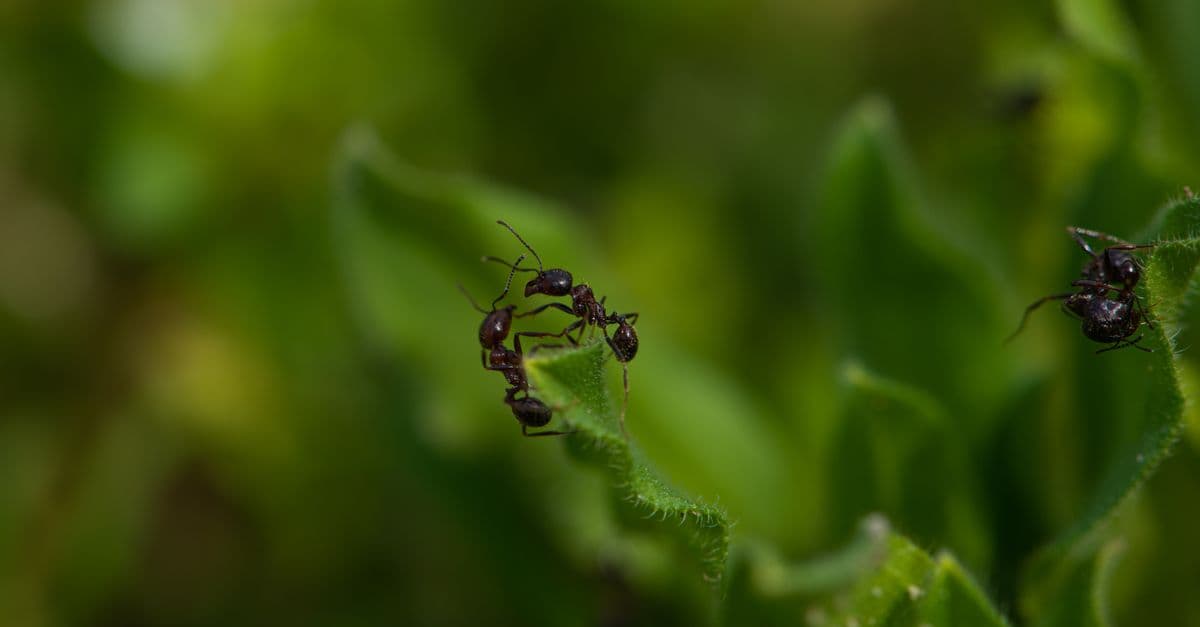
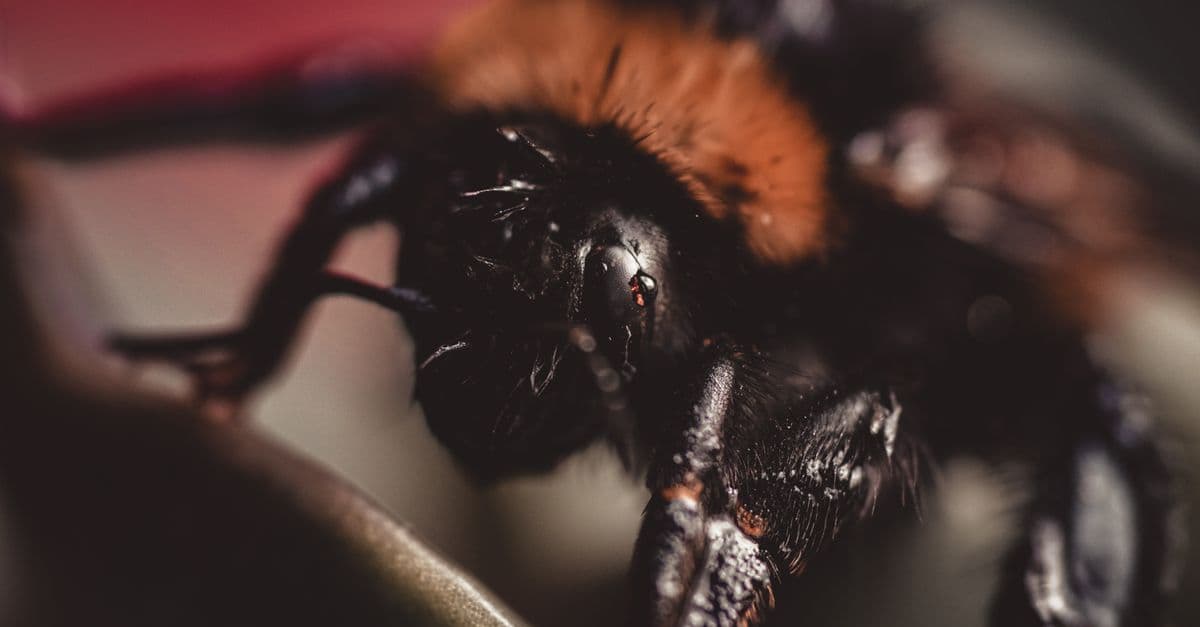
Photo: Павел Хлыстунов / Pexels
A single ant is close to useless. It has a brain with roughly 250,000 neurons — less than a fruit fly — and no capacity to plan, strategize, or solve multi-step problems alone. Put 500,000 of them together in a colony, and the collective builds climate-controlled fungal farms, wages organized warfare, manages waste disposal, and solves the traveling salesman problem with road networks that engineers have benchmarked against modern highway systems. The colony is the organism. The individual ant is something closer to a cell — functional in the right context, meaningless in isolation.
The Superorganism: A Unit of Selection Above the Individual
The concept of the superorganism has a contentious history in biology, but its modern usage refers to a specific, measurable claim: in some social insect colonies, natural selection operates primarily at the colony level rather than the individual level. The colony lives, reproduces, and dies as a unit. Individual workers are more analogous to somatic cells than to independent reproductive individuals.
Superorganism — a collection of individual organisms that function together as a single biological unit, with division of labor, coordinated behavior, and reproduction occurring at the group level rather than the individual level.
This is not just a metaphor. In ant colonies, the workers are usually sterile. Their inclusive fitness — the measure of evolutionary success that accounts for effects on genetically related individuals — is maximized not by personal reproduction but by maximizing the reproductive success of the queen, who shares roughly 75% of their genes in haplodiploid species. Worker behavior is shaped by selection for colony-level outcomes in exactly the way that the behavior of liver cells is shaped by selection for organism-level survival.
Haplodiploidy — the sex-determination system in Hymenoptera (ants, bees, wasps) where females develop from fertilized (diploid) eggs and males develop from unfertilized (haploid) eggs. This produces workers that are more closely related to sisters (sharing 75% of genes) than to their own potential offspring (sharing 50%), which explains the evolution of sterile worker castes.
The queen does not command the colony. This is the most important misconception to dispel first. The queen's role is reproduction — she is an egg-laying machine, producing thousands of eggs per day in mature colonies. She receives food and care from workers, but she does not direct the activities of nurses, foragers, soldiers, or waste-handlers. There is no central coordinator. The colony's sophisticated behavior emerges from the local interactions of many individuals following simple chemical rules.
Source: Wilson, E.O. and Hölldobler, B. (2009), The Superorganism: The Beauty, Elegance, and Strangeness of Insect Societies, Norton — the definitive synthesis of superorganism theory in social insects, covering the genetic, ecological, and behavioral evidence.
How Pheromones Coordinate Everything
If the queen is not giving orders, what is? The answer is chemistry. Ant colonies operate primarily through pheromones — volatile chemical signals that alter the behavior and physiology of receiving individuals. Ants produce pheromones from at least 10–20 different glandular sources on their bodies, and they respond to pheromone signals with consistent, stereotyped behaviors. The colony's "intelligence" is, in a real sense, written in chemistry.
Pheromone — a chemical signal produced by one individual that changes the behavior or physiology of another individual of the same species. Unlike hormones (which act within one body), pheromones act between bodies.
The most studied ant pheromone system is the trail pheromone used for foraging. When a foraging ant finds food, it returns to the nest while periodically depositing small amounts of pheromone from its gaster (abdomen) onto the substrate. Other ants encountering this trail follow it. If they reach the food and return, they reinforce the trail with their own pheromone deposits. If the food is exhausted, returning ants stop reinforcing the trail, and the volatile pheromone evaporates within minutes to hours.
This creates a self-regulating system with a beautifully simple logic. The best trails — those leading to large, nearby food sources — are reinforced most heavily, because more ants use them and each round-trip is faster (allowing more pheromone to be deposited per unit time). Poor trails — leading to small or distant food — receive fewer deposits, evaporate faster, and attract fewer ants. The colony automatically allocates foraging effort to the best current food sources without any individual ant knowing anything about the distribution of food sources as a whole.
This algorithm is, structurally, identical to ant colony optimization (ACO), a computational method developed by Marco Dorigo in 1992 that mimics trail pheromone dynamics to solve combinatorial optimization problems. ACO has been used to find near-optimal solutions to the traveling salesman problem, network routing, and logistics scheduling — problems that are computationally intractable by brute force. The ants' solution predates the computer science formalization by approximately 100 million years.
Source: Deneubourg, J.L. et al. (1990), "The self-organizing exploratory pattern of the Argentine ant," Journal of Insect Behavior, Vol. 3 — experimental demonstration of trail pheromone dynamics producing optimal foraging decisions at the colony level.
Source: Dorigo, M. and Gambardella, L.M. (1997), "Ant colony system: a cooperative learning approach to the traveling salesman problem," IEEE Transactions on Evolutionary Computation, Vol. 1 — introduction of ant colony optimization as a computational algorithm based on trail pheromone dynamics.
Division of Labor: Castes Without Ambiguity
Ant colonies divide labor through a caste system that is, depending on the species, either morphologically fixed or behaviorally flexible. Understanding both types is essential to understanding how colonies manage complex tasks without management.
Morphological Castes
In some species — leafcutter ants, army ants, driver ants — workers are not identical. Different developmental pathways produce individuals with dramatically different body sizes and physical structures.
In leafcutter ants (Atta and Acromyrmex species), four worker castes exist:
| Caste | Head width | Primary function |
|---|---|---|
| Minima (gardeners) | ~0.8 mm | Tend fungal garden, tend larvae |
| Minor workers | ~1.0–1.6 mm | General colony tasks, guard hitchhikers on leaves |
| Media workers | ~1.6–2.2 mm | Cut and carry leaf fragments |
| Major workers (soldiers) | ~2.2–3.0+ mm | Colony defense, cut tough plant material |
The size differences are not trivial. A major worker has a head 300 times the volume of a minima worker's head, and a mandible bite force proportionally greater. The major worker's jaws can cut through material that would be physically impossible for smaller workers. These are genuinely different phenotypes produced from genetically nearly identical individuals, the difference determined largely by larval nutrition.
Behavioral Castes and Age Polyethism
In species without strongly differentiated morphological castes — including many common pavement ants and harvester ants — labor division is behavioral and age-dependent. Young workers perform nest maintenance and nurse duties in the protected interior. As workers age, they gradually shift toward more dangerous surface activities: foraging, defense, waste disposal. This pattern is called age polyethism.
Age polyethism — the systematic change in task assignment as a worker ant ages, progressing from interior nest tasks (lower risk) to exterior foraging (higher risk). Because older workers have lower residual reproductive value to the colony, it is adaptive to allocate them to higher-risk tasks.
The shift is not rigid. Colonies regulate caste ratios dynamically. Remove all foragers from a colony, and interior workers accelerate their behavioral development and begin foraging earlier than they otherwise would. Remove all nurses, and foragers return to nursing. The colony self-regulates its labor allocation through feedback signals — some of which are pheromone-based, some of which are contact-dependent (the rate at which a worker encounters particular types of sisters serves as an information signal about which tasks are under-supplied).
Source: Gordon, D.M. (1996), "The organization of work in social insect colonies," Nature, Vol. 380 — review of the mechanisms by which ant colonies regulate task allocation without central control, emphasizing local interactions and feedback.
Swarm Intelligence: How Local Rules Produce Global Solutions
The phrase "swarm intelligence" describes a specific phenomenon: when individuals following simple local rules produce coordinated global behavior that no individual could produce alone, and that often solves problems optimally or near-optimally. Ant colonies are the canonical biological example.
Consider nest construction. Ant colonies build architecturally sophisticated structures — multi-chamber nests with ventilation systems, dedicated nursery rooms, food storage chambers, and waste disposal areas — without any individual ant holding a blueprint. How?
Researchers have shown that ant nest construction follows a stigmergic process: individuals respond to the current state of the structure they are building, not to instructions from other workers or from central command.
Stigmergy — a mechanism of indirect coordination where actions of individuals modify the shared environment in ways that trigger further actions, producing coordinated outcomes without direct communication. Like writing "do this next" on a wall — the message is in the environment, not spoken.
An ant carrying a grain of sand is more likely to deposit it where other sand grains have already been deposited. This simple rule, applied by thousands of workers simultaneously, produces stable structural features — arches, chambers, walls — because deposit probability correlates with existing deposit density. The structure "tells" the next worker what to do through its own geometry.
Army ants (Eciton species) take swarm construction further: they build bivouac structures entirely from their own bodies, interlocking legs and mandibles to form living walls, floors, and tunnels. A bivouac containing 100,000–700,000 workers can form and dissolve in hours, with the shape determined entirely by local pull forces on individual ants. The structure regulates its own temperature and humidity through the behavior of individual ants that respond to local conditions — clustering more tightly when cold, loosening when warm.
Source: Theraulaz, G. and Bonabeau, E. (1999), "A brief history of stigmergy," Artificial Life, Vol. 5 — theoretical and empirical review of stigmergic construction in social insects, with emphasis on ants and termites.
Leafcutter Ants: 50 Million Years of Agriculture
Leafcutter ants do not eat the leaves they cut. They eat a fungus — Leucoagaricus gongylophorus — that they cultivate on a substrate of chewed leaf material inside their nests. This is agriculture: the deliberate cultivation of another species for food, preceded by the human development of agriculture by approximately 49.7 million years.
The ant-fungus relationship is an obligate mutualism: neither partner survives long without the other. The ants provide a controlled environment with stable temperature and humidity, a steady supply of leaf substrate, protection from competing fungi, and active weeding with chemical secretions. The fungus provides gongylidia — swollen hyphal tips rich in lipids and carbohydrates, produced specifically for the ants and consumed as primary food.
The degree of co-evolution is striking. The fungal cultivar cannot survive in the wild — it has lost the ability to produce its own reproductive structures (mushrooms) and exists only within ant colonies. The ants cannot survive on leaf material alone. Each new queen carries a pellet of fungal material in her infrabuccal pocket when she leaves the colony to found a new nest, essentially inoculating her new garden with the cultivar from her mother colony. The fungus is transmitted vertically, like a cultural inheritance.
But the fungal garden also faces threats — primarily from the parasitic fungus Escovopsis, a specialist pathogen that attacks the cultivar and can devastate a garden within days. Leafcutter ants counter this with a third mutualist: Pseudonocardia bacteria, grown in white patches on the ants' cuticles, which produce antifungal compounds that suppress Escovopsis. Some leafcutter colonies also carry additional bacterial species on their bodies, further supplementing their antibiotic arsenal.
The result is a four-way system: ants, fungal crop, parasitic fungus, and antibiotic bacteria — a community that has co-evolved for 50 million years and operates more like an ecosystem than a feeding strategy.
Source: Mueller, U.G. et al. (1998), "The origin of the attine ant-fungus mutualism," Science, Vol. 281 — phylogenetic analysis placing the origin of ant fungiculture at approximately 50 million years ago and describing the co-evolutionary relationships among ants, cultivars, and parasites.
Source: Currie, C.R. et al. (1999), "Fungus-growing ants use antibiotic-producing bacteria to control garden parasites," Nature, Vol. 398 — discovery of Pseudonocardia bacteria on ant cuticles producing antifungal compounds against Escovopsis.
Communication Beyond Pheromones
Pheromones are the dominant information channel in ant colonies, but not the only one. Ants also communicate through stridulation — vibrations produced by rubbing a specialized abdominal file against a scraper. These vibrations travel through solid substrates (nest walls, soil) and can be detected by other ants through organs in their legs and feet.
Stridulation in ants produces signals that convey at least two types of information: alarm (distress signals from buried or trapped individuals, which trigger excavation behavior in nestmates) and identity (queen stridulation signals appear to suppress worker reproduction and reinforce the queen's status as sole reproductive in some species).
Recent research has revealed that stridulatory signals from queens differ measurably from those of workers, and that workers respond differently to queen vs. worker signals — suggesting a signaling system that helps maintain the reproductive hierarchy without any physical enforcement.
Ants also exchange chemical information through trophallaxis — the mouth-to-mouth transfer of liquid food that is ubiquitous in ant colonies. Originally studied purely as a food-sharing mechanism, trophallaxis is now understood to transfer chemical signals including queen pheromones throughout the colony, keeping workers informed of the queen's presence and reproductive state. A worker that has not received a trophallactic contact from a queen-associated individual recently may begin activating its own reproductive potential — a safeguard against queenlessness that must be continuously suppressed.
Source: Boulay, R. et al. (2017), "Social transfer of pathogen mimics between ant workers creates a collective immune memory," Nature Communications, Vol. 8 — study demonstrating that trophallaxis transfers immune-priming molecules, showing the communication channel does double duty as both information and immunological network.
The Colony Life Cycle: Founding, Growth, and Death
An ant colony is not permanent. It begins with a single mated queen and ends, typically, with her death. The arc of a colony's life is as structured as that of an individual organism.
Colony founding: A virgin queen leaves her natal colony on a mating flight, mates with multiple males (storing sperm in her spermatheca for use over her entire reproductive life), then lands, removes her wings, and begins excavating a founding chamber alone. She raises the first worker brood entirely on her own, metabolizing her flight muscles and stored fat reserves. These first workers — smaller than subsequent generations because the queen had limited resources — are called nanitics.
Growth phase: Once workers are present, the queen focuses entirely on laying eggs. Colony size grows exponentially in favorable conditions. The colony allocates increasing resources to foragers and soldiers as worker numbers grow.
Mature colony: At maturity, ant colonies produce alates — winged reproductive males and females — which leave on mating flights to found new colonies. This is the colony's primary reproductive output, equivalent to a mammal's offspring.
Colony death: Most ant colonies die with the queen. Worker bees and other social insects live weeks to months; queens of many ant species live 10–30 years. Pogonomyrmex owyheei (Western harvester ant) queens have been documented living up to 30 years, and their colonies persist accordingly. When the queen dies, workers continue their tasks for a period — sometimes weeks — but without new brood, the colony gradually declines and dies.
Like all complex living systems, the colony is more vulnerable to failure at transition points — founding and early growth — than at maturity. The majority of new colonies fail within the first year, before worker numbers are sufficient to buffer environmental variation.
The Takeaway
An ant colony operates by a principle that runs counter to human institutional intuition: coordination without command. The queen is not an executive. There is no planning department. What produces the complex, adaptive, apparently intelligent behavior of the colony is a set of chemical feedback loops, behavioral rules, and evolved morphologies that collectively solve resource allocation, construction, defense, and reproduction at the colony level. The swarm is smarter than any ant in it — not because of any mysterious collective consciousness, but because of the information-processing power that emerges from millions of simple local decisions. Engineers, computer scientists, and roboticists have spent the last three decades trying to reverse-engineer this architecture. The ants have been running it for 130 million years.
Frequently Asked Questions
Q: Does the queen ant control the colony?
A: No. The queen's role is to lay eggs. She does not direct worker behavior, assign tasks, or make strategic decisions. Colony coordination emerges from local chemical interactions among workers. The queen does produce pheromones that suppress worker reproduction and signal her presence, but these are physiological signals, not instructions.
Q: How do ants find the shortest path to food?
A: Through trail pheromone reinforcement. Ants depositing pheromone on a shorter route complete round trips faster, depositing more pheromone per unit time. Shorter trails therefore accumulate stronger pheromone concentrations faster and attract more ants, which reinforces them further. The system is a chemical implementation of positive feedback that naturally selects for shorter routes.
Q: Why do leafcutter ants carry leaves if they don't eat them?
A: Leafcutter ants use cut leaf fragments as a substrate for cultivating their fungal food source, Leucoagaricus gongylophorus. They chew the leaves into a paste, inoculate it with fungus, and eat the swollen hyphal tips (gongylidia) that the fungus produces specifically for them. The leaf is a raw material, not food.
Q: How large can an ant colony get?
A: It varies enormously by species. Common garden ant colonies may contain 5,000–15,000 workers. Leafcutter ant (Atta species) colonies can exceed 8 million workers. Argentine ant (Linepithema humile) supercolonies — networks of interconnected nests that behave cooperatively — have been measured at billions of individuals spanning thousands of kilometers across California, Southern Europe, and Japan.
Q: Do ants sleep?
A: Workers in most ant species do not sleep in the way mammals sleep. Instead, they take many short rest periods (under a minute each) distributed throughout the day. Queens, however, show longer, deeper rest periods. Research on fire ant queens found they averaged 90 sleep episodes per day averaging 6 minutes each — for a total of about 9 hours of rest, interspersed throughout the 24-hour cycle.
Q: How do ants recognize nestmates from intruders?
A: Through cuticular hydrocarbons — a species-specific and colony-specific mixture of waxy molecules coating the exoskeleton. Ants detect these hydrocarbon profiles through their antennae during brief contact. Workers whose hydrocarbon profile does not match the colony's current blend are identified as foreign and attacked. The colony's profile changes over time with diet and environment, meaning nestmate recognition is continuously updated.
Read next:
Follow new articles
Add SciHub101 to your feed reader to see new science and technology stories.
About the Author
SciHub101 is an independent science and technology publication founded and edited by Buğra Sözeri, a software engineer and app developer based in Türkiye. AI tools assist with drafting and research. Source documentation in the existing archive is uneven, and articles are being reviewed and corrected. The Editorial Team byline identifies editorial responsibility; it does not certify specialist or independent human review. Where we compare products, anything built by our own team is labelled as such — see the editorial guidelines and About page for how corrections and disclosures work.
Related Articles
The Longest-Living Animals Explained: Biology of Extreme Longevity
A Greenland shark alive today may have been born before the Thirty Years' War ended in 1648. An ocean quahog clam called Ming was 507 years old when researchers accidentally killed it by opening its shell. A bowhead whale carries harpoon fragments from weapons manufactured in the 1800s, embedded in its blubber for over a century. Extreme longevity in animals is not accidental — it is the product of specific biological mechanisms that researchers are now mapping in molecular detail.
How Geckos Stick to Walls: Van der Waals Forces and Dry Adhesion
A gecko weighing 70 grams can hang from a ceiling by a single toe. The adhesive force available from its feet has been measured at approximately 20 Newtons — enough to support the weight of roughly 40 geckos simultaneously. No glue is involved. No suction cups. The mechanism is quantum-mechanical: trillions of nanoscale hair structures bring gecko toe pads into such intimate contact with surfaces that the quantum interactions between electrons in adjacent molecules provide enough combined force to defy gravity.
How Ant Colonies Work: The Science of Swarm Intelligence
No ant understands the colony. Yet together, millions of them build cities, fight wars, farm crops, and solve optimization problems that stump computers.
How Bees Communicate: The Waggle Dance Explained
A honeybee returning from a flower patch performs a precise figure-eight dance on the vertical comb face of its hive. The angle of her body relative to gravity encodes compass direction. The duration of the waggle run encodes distance. Her nestmates read both signals and fly directly to a resource they have never visited. This is not instinct in any simple sense — it is a symbolic language, and decoding it took a biologist decades of careful experiment.
How Animals Were Domesticated: Genetics, Behavior, and the Domestication Syndrome
Dogs diverged from wolves at least 15,000 years ago — possibly 40,000 years ago — and the transformation involved not just behavioral tameness but a cascade of physical changes no one selected for: floppy ears, piebald coats, shortened snouts, reduced brain volume. The same cluster of traits appears in domesticated cattle, pigs, horses, and foxes bred in a 60-year Russian experiment. This pattern has a name, a mechanistic explanation, and implications for understanding a transition that reshaped the human species.
How Whales Communicate: Songs, Dialects, and Culture Beneath the Waves
Humpback whales sing songs that can last 30 hours and travel hundreds of kilometers. Fin whales produce calls at 20 Hz — below the threshold of human hearing — that propagate across entire ocean basins. Sperm whales use click-based dialects specific to family groups. Whale communication is not simple signaling. Biologists now argue it bears hallmarks of culture, the transmission of learned behaviors across generations.