How Language Works in the Brain
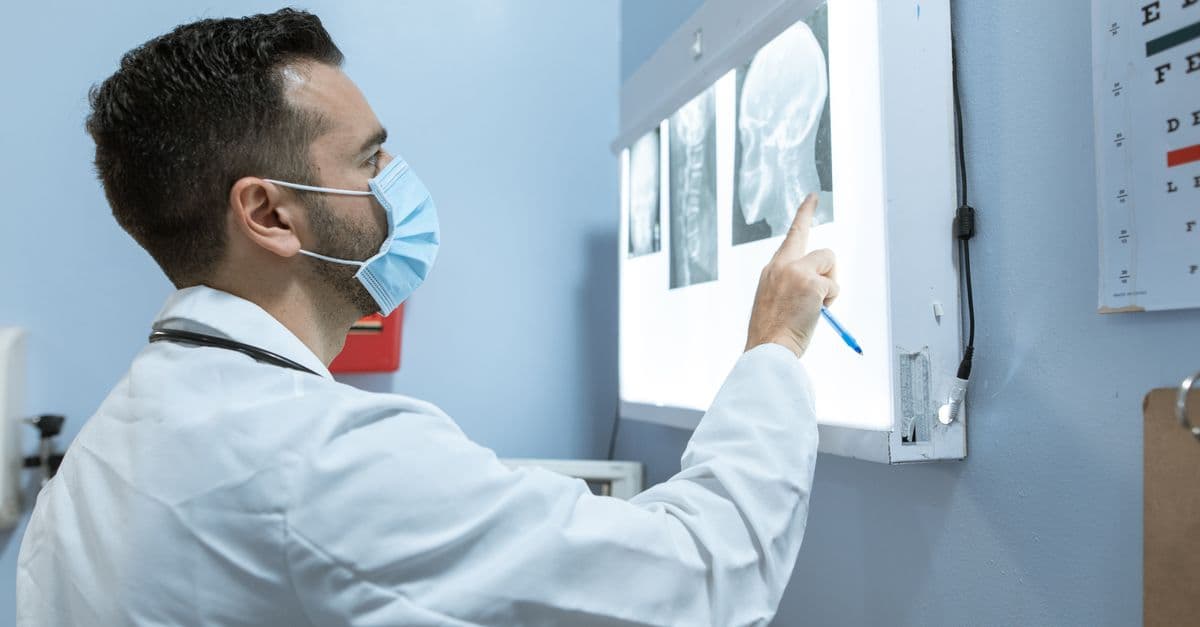
Photo: RDNE Stock project / Pexels
When you understand this sentence, your brain converts patterns of light into letters, letters into words, words into grammatical structure, and structure into meaning, and it does so faster than you can notice the steps. Speech adds the opposite journey: an intention becomes words, words become sounds, and sounds become precisely timed muscle movements. This article follows both journeys through the brain, from the 19th-century lesion studies that started the field to the implants that now decode attempted speech, and explains why the old two-center picture of language has been replaced by a network.
Educational content, not medical advice. Talk to your doctor before changing any medication, treatment, or routine. Information here reflects current research but every person's situation differs.
Key Takeaways
- The classical Broca-Wernicke model is a useful starting point but is incomplete; language engages a distributed network, mostly in the left hemisphere.
- Two processing streams are widely used to organize the network: a dorsal stream for linking sounds to speech movements and a ventral stream for linking sounds to meaning.
- The brain predicts upcoming words. Electrical signals called the N400 and P600 track violations of meaning and grammar.
- Aphasia, language loss after brain damage, affects about 2 million people in the United States, and stroke is the leading cause.
- Reading relies on a left-hemisphere region that humans did not evolve specifically for text.
- Brain implants have decoded attempted speech at 62 to 78 words per minute in 2023 studies, a step toward restoring communication.
The classical model: two patients and a cable
Neuroscience of language started with two people who lost their words. In 1861, the French physician Pierre Paul Broca reported on Louis Victor Leborgne, known as "Tan" because that was the one syllable he could say repeatedly. A second patient, Lazare Lelong, could say only five words: "yes," "no," "three," "always," and "lelo." Both had damage in the left frontal lobe, and Broca concluded that this region was critical for producing speech.
The region is now called Broca's area. It is typically defined as the pars opercularis and pars triangularis of the inferior frontal gyrus, which correspond to Brodmann areas 44 and 45 (a numbered map of cortical territories drawn by Korbinian Brodmann in the early 20th century). The preserved brains of both patients were scanned with high-resolution MRI and reported in 2007 by Nina Dronkers and colleagues in the journal Brain. The scans suggested that other areas had also contributed to the patients' reduced speech, so the region Broca considered critical is not precisely what neuroscientists now label Broca's area.
In 1874, the German neurologist Carl Wernicke proposed the mirror-image deficit. He described patients whose speech was fluent but empty, and whose comprehension was poor, after damage to the left posterior superior temporal gyrus. That region, traditionally placed in Brodmann area 22, is Wernicke's area, and some sources date his publication to 1875. Wernicke reasoned that the two areas must be wired together, and the fiber bundle later called the arcuate fasciculus was identified as the likely link.
What "area" means here
Think of the classical model as a map that shows two cities and one highway. It is accurate about where the damage tends to be, and it still teaches well. But modern lesion data show it is a rough sketch. Lesions confined to Broca's area do not reliably cause Broca's aphasia, and some people with Broca's aphasia lack lesions there. Isolated lesions in that region can cause a transient mutism that resolves within three to six weeks. The more durable deficits tend to come from larger lesions that also take out white matter pathways and neighboring cortex.
The modern view: a network with two streams
Functional MRI (fMRI, which tracks blood-oxygen changes as a proxy for neural activity), MEG (which records magnetic fields from neurons), and recordings made directly on the cortex during surgery have shown that language recruits far more territory than two patches. Wernicke's area is now described more broadly, extending into the angular gyrus and parts of the parietal lobe, and experts still disagree about its borders. Comprehension is better described as depending on a network than on two isolated centers.
A popular way to organize the network is the dual-stream model, proposed by Gregory Hickok and David Poeppel in 2007 by analogy to the visual system. It describes two pathways leaving auditory cortex:
| Feature | Dorsal stream | Ventral stream |
|---|---|---|
| Route | Auditory cortex, parietal lobe, then inferior frontal gyrus | Auditory cortex, middle temporal gyrus and temporal pole, then inferior frontal gyrus |
| Core job | Linking sounds to speech movements | Linking sounds to meaning |
| Supports | Speech production, repetition, phonological working memory | Sound recognition and a store of word meanings |
| Analogy | A conveyor belt that hands sounds to the mouth | A lookup service that hands sounds to the dictionary |
| Typical damage pattern | Trouble repeating words, as in conduction aphasia | Trouble understanding words |
The ventral route is sometimes called the auditory "what" pathway. Its middle temporal gyrus and temporal pole form what researchers describe as a "semantic lexicon," a long-term store of audio-visual representations linked by meaning. Patients with semantic dementia or with herpes simplex encephalitis, which damages these anterior temporal regions, make errors in describing objects and substitute related words.
Recordings and electrical stimulation during surgery give a more direct view. Neural discharge in the middle temporal gyrus correlates with comprehension of intelligible sentences. The left anterior superior temporal gyrus is more active for a native language than for an unfamiliar foreign one. Stimulating the anterior superior temporal gyrus impairs speech perception, stimulating the posterior part interferes with sentence comprehension, and stimulating the inferior parietal lobule interferes with naming objects. Those are causal results, since stimulation disrupts the function, and they are more convincing than correlations from imaging alone.
The cable, revisited
The arcuate fasciculus is a white matter tract, a bundle of axons that carries signals between regions, much as a fiber-optic trunk line connects data centers. It has a ventral branch linking Wernicke's and Broca's areas and a dorsal branch linking the posterior temporal region with the middle frontal gyrus. Performance on phonological working memory tasks correlates with the left dorsal branch. The current view is that it mainly connects posterior receptive regions with premotor and motor cortices rather than linking Wernicke's and Broca's areas directly.
Why the left hemisphere, and what the right one does
Language is lateralized to the left hemisphere in roughly 96% of right-handers. Among left-handers the share is lower and estimates differ by method, commonly landing between 60% and 70%. The relationship between handedness and brain organization is explored in why some people are left-handed.
The right hemisphere is not idle. Emotional prosody, the melody and emphasis of speech, is often described as right-lateralized, although that account has been questioned, and word meanings are processed in both hemispheres. Sound recognition appears to be bilateral, based on evidence from Wada procedures (a test in which one hemisphere is briefly anesthetized), intracortical recordings, and split-brain studies. In one split-brain study, the right hemisphere's vocabulary was roughly comparable to that of an 11-year-old child. Damage to the right hemisphere can impair the emotional tone of speech and the grasp of connected discourse even when grammar and word choice survive.
How the brain understands speech
Hearing begins in the ear, which converts air vibrations into neural signals (see how hearing works). Those signals reach primary auditory cortex in a fold of the temporal lobe called Heschl's gyrus. Histology shows two separate auditory fields there. The anterior field projects mainly toward the middle and anterior superior temporal gyrus, and the posterior field projects mainly toward the posterior superior temporal gyrus and the planum temporale. In one study the anterior field was more selective for heard syllables than the posterior one.
From there, the brain does several things at once. It identifies speech sounds, matches them to stored word forms, retrieves meanings, and builds a grammatical structure. Subregions of Broca's area contribute differently. Brodmann area 44 has been linked to phonological processing, syntactic structure building, and sequencing of speech movements, and Angela Friederici's 2002 proposal assigns it working memory for sound patterns and then for syntax. Brodmann area 45 is associated with controlled semantic retrieval, and its activity rises when a person must choose among several words with similar meanings. Peter Hagoort's 2014 account widens the "Broca's region" to include the pars orbitalis and part of premotor cortex.
A garden-path sentence
Read this: "The horse raced past the barn fell." Most people stumble at "fell," because they parsed "raced" as the main verb. The sentence is grammatical: it means a horse that was raced past the barn fell. The stumble shows that the brain commits to a likely structure before the sentence ends, and it pays a processing cost when forced to revise. That is evidence for prediction, discussed next.
Prediction: the brain reads ahead
Language comprehension is not passive. The brain generates expectations about what comes next from context, grammar, and knowledge, and it reacts when the expectation fails. Two electrical signals recorded from the scalp with EEG (electroencephalography) mark these failures.
The N400 is a negative deflection that peaks about 400 milliseconds after a word begins, within a window of roughly 250 to 500 milliseconds. Marta Kutas and Steven Hillyard discovered it in 1980. They expected a different response, a P300, to unexpected sentence endings but instead saw a large negativity. Their examples contrasted a sentence like "He returned the book to the library" with the anomalous "I take coffee with cream and dog." The N400 reflects processing of meaning, and one account holds that it indexes prediction error or surprisal.
Grammatical violations do not produce a large N400. They produce a positive wave from about 500 to 1,000 milliseconds, the P600. The two signals together suggest the brain keeps at least partly separate accounts for "does this fit what I expected to mean?" and "does this fit the grammar?" The split is not perfectly clean, and researchers continue to refine what each component reflects, including a recent proposal that predictability effects appear early in the N400 and plausibility effects later.
If this sounds like how large language models predict the next word, the resemblance is real at the level of the task and much weaker at the level of mechanism. Models are trained on text alone, while the human brain learns language from speech, gesture, and a body in a world.
How the brain produces speech
Speaking runs in the opposite direction. You begin with a message, select concepts and words, retrieve their sound forms, plan the articulatory movements, and then execute them. The stages overlap in time, which is why a speaker can start a sentence before finishing planning it.
Left inferior frontal regions, including Broca's area, support planning. Subregions of the cortex that control movement, together with the supplementary motor area, help start speech, and the motor cortex sends commands to the tongue, lips, jaw, larynx, and breathing muscles. The cerebellum is thought to contribute to timing and coordination, and cerebellar damage can produce slurred, irregular speech called ataxic dysarthria. The basal ganglia, a set of deep structures involved in starting and sequencing movement, are also implicated in speech initiation and fluency. Parkinson's disease, which affects that circuitry, often changes the loudness and rhythm of speech.
Restoring speech with implants
The most direct test of what the speech-motor cortex encodes comes from brain-computer interfaces. In 2021, a paralyzed man with anarthria, the loss of the ability to articulate, communicated at 15 words per minute using an implant that recorded from neurons controlling the vocal tract. In 2023, two studies using recurrent neural networks decoded attempted speech at record rates of 62 and 78 words per minute. For comparison, natural conversation is much faster, so these systems are far from natural speech, but they are a large step beyond what was possible a few years earlier. The engineering side is covered in brain-computer interfaces and AI.
Aphasia: when the network breaks
Aphasia is a language disorder caused by damage, usually from a stroke or traumatic brain injury, to brain areas responsible for language. It most often follows left-hemisphere damage and can impair speaking, understanding, reading, and writing. The National Aphasia Association estimates that about 2 million people in the United States live with it, and approximately one third of stroke survivors have aphasia. Head injury, brain surgery, tumors, and infections can also cause it, and progressive dementias, such as Alzheimer's disease, can produce it as they advance.
The main subtypes show how different components of the system can fail independently:
| Type | Speech | Comprehension | Typical lesion |
|---|---|---|---|
| Broca's (nonfluent) | Short, effortful, small words often omitted | Relatively better; people are usually aware of their difficulty | Frontal lobe |
| Wernicke's (fluent) | Flows easily but often has little meaning; paraphasias and neologisms | Poor; people are often unaware of errors | Posterior temporal lobe |
| Global | Severely limited | Severely limited | Extensive damage to language areas |
| Conduction | Fluent | Good | Linked to the arcuate fasciculus and parietal-temporal junction |
| Anomic | Fluent, with word-finding difficulty | Good | Varies |
| Primary progressive | Language is the first and most noticeable symptom of a progressive dementia | Worsens as the disease advances | Degenerative |
The NIDCD notes that many people improve substantially in the first few months, even without treatment, and that some aphasia often remains, called chronic aphasia. Speech-language therapy helps at every stage, and improvement can continue for years. Therapy aims to use remaining abilities, restore language where possible, and teach alternatives such as gestures, pictures, or electronic devices. Family communication training is a key part of care.
Aphasia is not a loss of intelligence. People with Broca's aphasia generally understand that their speech is faulty, which is part of why it is so frustrating. Anyone who suspects aphasia in themselves or someone else needs urgent medical attention, since sudden speech trouble can signal a stroke.
Learning language: critical periods and a second tongue
The idea that there is a window for language learning is old. Eric Lenneberg popularized the critical period hypothesis in his 1967 book Biological Foundations of Language, proposing that if no language is learned by puberty, it cannot be learned in a normal, functional sense. He tied this to the development of left-hemisphere specialization, a link that has been largely discredited, since lateralization does not neatly track age.
The evidence that remains is subtler. Genie, a girl isolated from social interaction from birth and discovered at 13, still lacked linguistic competence after seven years of rehabilitation, but critics argue that her abusive environment, not only the lack of language exposure, confounds the case. Isabelle, who was isolated with her deaf-mute mother until about six and a half, acquired normal language with specialist training. Newport and Supalla's studies of deaf children learning American Sign Language by age of first exposure found performance declining in a steady line with later exposure, not a sudden drop at puberty. For second languages, Bialystok and Hakuta conclude that learning is not subject to a hard biological cutoff, but that on average there is a continuous decline in ability with age. About five percent of adult bilinguals are described as mastering a second language, per David Singleton.
Two languages, one brain
Bilingual speakers keep both languages active. Research summarized in reviews finds that when bilinguals use only one language, both are simultaneously active in sound and meaning. To pick the right word, the brain uses inhibition: global inhibition suppresses a whole language, and local inhibition suppresses a specific competing word. This constant management is the basis of the hypothesis that bilingualism improves executive control, the set of mental skills used for attention and switching tasks.
Whether it does is contested. Bialystok and others report greater executive control in bilinguals in some studies. Lehtonen and colleagues (2018) found no compelling evidence of an advantage in healthy adults, and Donnelly and colleagues (2019) raised publication bias as a concern. A 2007 review of hospital records by Bialystok, Craik, and Freedman found bilinguals were diagnosed with dementia about three to four years later on average, which suggests delayed symptoms, not prevention of disease. Treat the executive-function advantage as an open question, not a settled benefit.
Reading and writing: cultural add-ons
Writing is a recent invention, only a few thousand years old, which is far too short for natural selection to have built dedicated hardware. Yet reading reliably recruits a patch of the left fusiform gyrus, the visual word form area (VWFA). Surgical lesions there impair reading without affecting object, face, or name recognition, and electrical stimulation causes reading-specific disruptions.
What the VWFA computes is debated. Cohen and colleagues' 2000 hypothesis says its neurons respond to letter combinations and work before word meaning is accessed. Kronbichler and colleagues (2004) found that its activity decreases as word frequency rises, which suggests it matches letter strings to stored word representations. A timing study found early activity, about 100 to 250 milliseconds after a word appears, that looks pre-lexical, and later activity, around 300 to 500 milliseconds, that looks lexical, which may reconcile both. Others argue the region is where visual form meets meaning and sound. It also responds to other complex shapes, such as line drawings and Amharic characters.
Because alphabets are too new to have shaped the genome, a leading proposal is that reading borrows visual circuits that evolved for recognizing natural shapes and repurposes them for letters. Meta-analyses link underactivation in the left occipitotemporal region, particularly the VWFA, to the difficulty with fluent reading seen in dyslexia. Hyperlexia, reading far ahead of training, is linked to autism spectrum disorders and may involve heavier reliance on visual areas. For the neural basis of autism more generally, see autism spectrum disorder: the neuroscience.
How language connects to memory, learning, and the rest of the brain
Language is not a sealed module. Learning new words depends on the same memory systems described in how memory works, and the structural changes that follow practice are covered in neuroplasticity. Recovery from aphasia is itself a case of plasticity, as surviving tissue takes on functions lost to damage, although the extent and mechanism differ across patients.
Language networks are also studied alongside the rest of the brain's large-scale systems, such as the resting-state circuitry described in the default mode network. For a tool-focused view of how such networks are mapped, see brain mapping.
The history of the field also shows how much a single case can teach. The case of Phineas Gage is best known for personality change, but it belongs to the same tradition of inferring function from injury that produced Broca's and Wernicke's findings.
Common misunderstandings
"Language lives in Broca's and Wernicke's areas." These regions matter, but comprehension and production rely on a distributed network. A small lesion to one area does not reliably produce the textbook syndrome.
"The right hemisphere is silent." It contributes prosody and discourse-level meaning, and it can handle word meanings and sound recognition.
"Aphasia means the person has lost their thoughts." The difficulty is in turning thoughts into words or words into meaning. Many people with aphasia retain reasoning and awareness, which is why communication-focused therapy matters.
"Learning a language after puberty is impossible." The evidence points to a steady decline with age, not a cliff, and individual differences are large.
"Bilingualism makes you smarter." The claim of a general executive-function boost is contested, and the evidence for delayed dementia symptoms does not show that bilingualism prevents the disease.
"Reading is natural, like speech." Children acquire speech without formal instruction, but reading must be taught, and it works by recruiting circuits that evolved for other purposes.
FAQ
Q: Is language really left-lateralized? A: For most people, yes. Roughly 96% of right-handers have left-hemisphere language dominance, and among left-handers the figure is lower, commonly 60% to 70% depending on the method. The right hemisphere contributes to prosody, to word meaning, and to following connected discourse.
Q: What is the arcuate fasciculus? A: It is a white matter tract, a bundle of nerve fibers, that curves around the lateral fissure and connects temporal regions with frontal ones. It was once thought to link Wernicke's and Broca's areas directly. Current descriptions say it mainly connects posterior receptive regions with premotor and motor cortices, and it is associated with the dorsal stream and with repeating words.
Q: Are there critical periods for language learning? A: There are sensitive periods in which learning is easier, but the evidence does not show a sharp cutoff at puberty. Studies of deaf children learning sign language find a steady decline with later exposure, and reviews of second-language learning describe a continuous decline with age. The cases of Genie and Isabelle are informative but confounded by abuse and isolation.
Q: What are the N400 and P600? A: They are electrical signals recorded from the scalp during reading or listening. The N400 peaks about 400 milliseconds after a word and is larger when a word does not fit the meaning of the sentence. The P600 is a positive wave from about 500 to 1,000 milliseconds that follows grammatical violations.
Q: How many people have aphasia? A: The National Aphasia Association estimates about 2 million people in the United States, according to the NIDCD. About one third of stroke survivors have aphasia. Many improve substantially in the first few months, and speech-language therapy can help at every stage.
Q: Can implants restore speech? A: Experimental ones can partly do so. In 2021, a man with anarthria communicated at 15 words per minute through an implant, and in 2023 two studies reported rates of 62 and 78 words per minute. These are research systems, not routine treatments, and they decode attempted speech from motor-cortex activity.
Q: Is sign language processed differently from speech? A: Sign languages are complete natural languages with their own grammar and vocabulary. American Sign Language, for example, is not based on English and is not mutually intelligible with British Sign Language. Whether signing and speaking share the same cortical network in detail is a topic for specialized reviews.
What this means
The story of language and the brain is a story of maps getting more detailed. Broca and Wernicke located two hot spots by studying people who lost their words, and the modern view keeps those hot spots but embeds them in streams that move sound toward movement and toward meaning. The brain's habit of predicting what comes next explains why we stumble over garden-path sentences and why a single odd word produces a measurable electrical response. The same research now has practical consequences, from therapy for aphasia to implants that turn attempted speech into text. What remains open is how the networks represent meaning, and how much of language is specialized machinery versus general-purpose circuitry that has been repurposed.
References
Sources consulted for dates and figures (accessed October 22, 2026):
- Broca's area (Wikipedia)
- Wernicke's area (Wikipedia)
- Language processing in the brain (Wikipedia)
- Lateralization of brain function (Wikipedia)
- N400 (Wikipedia)
- Visual word form area (Wikipedia)
- Critical period hypothesis (Wikipedia)
- Cognitive advantages of bilingualism (Wikipedia)
- Brain-computer interface (Wikipedia)
- NIDCD: Aphasia
Read next:
Follow new articles
Add SciHub101 to your feed reader to see new science and technology stories.
About the Author
SciHub101 is an independent science and technology publication founded and edited by Buğra Sözeri, a software engineer and app developer based in Türkiye. AI tools assist with drafting and research. Source documentation in the existing archive is uneven, and articles are being reviewed and corrected. The Editorial Team byline identifies editorial responsibility; it does not certify specialist or independent human review. Where we compare products, anything built by our own team is labelled as such — see the editorial guidelines and About page for how corrections and disclosures work.
Related Articles

Consciousness Explained: The Hard Problem
Why does anything feel like anything at all? The hard problem of consciousness may be the deepest unsolved question in all of science — and neuroscience is just beginning to grapple with it.

Deep-Sea Creatures and Bioluminescence: Life in the Dark Ocean
Below 200 meters, there is no sunlight — yet roughly 76% of deep-sea animals produce their own light. The deep ocean is full of living lanterns.
How the Brain Works — Neuroscience Overview
Neurons, action potentials, brain regions, plasticity, and the science behind consciousness — a clear neuroscience primer.
The Aging Brain: How Cognition Changes as We Get Older
Your brain peaks at different ages for different skills, and some abilities actually improve with age. The neuroscience of brain aging is far more nuanced than the simple story of decline.
How Sleep Affects the Brain: The Science of Why You Need It
Sleep feels passive, but your brain is doing some of its most critical work while you're unconscious — consolidating memories, regulating emotion, and possibly clearing waste.
How the Human Brain Actually Works — Neurons, Networks, and Consciousness
Your brain has 86 billion neurons firing at 1,000 trillion connection points. Here's a tour of how it actually generates everything you think, feel, and remember.