The Default Mode Network — Brain at Rest
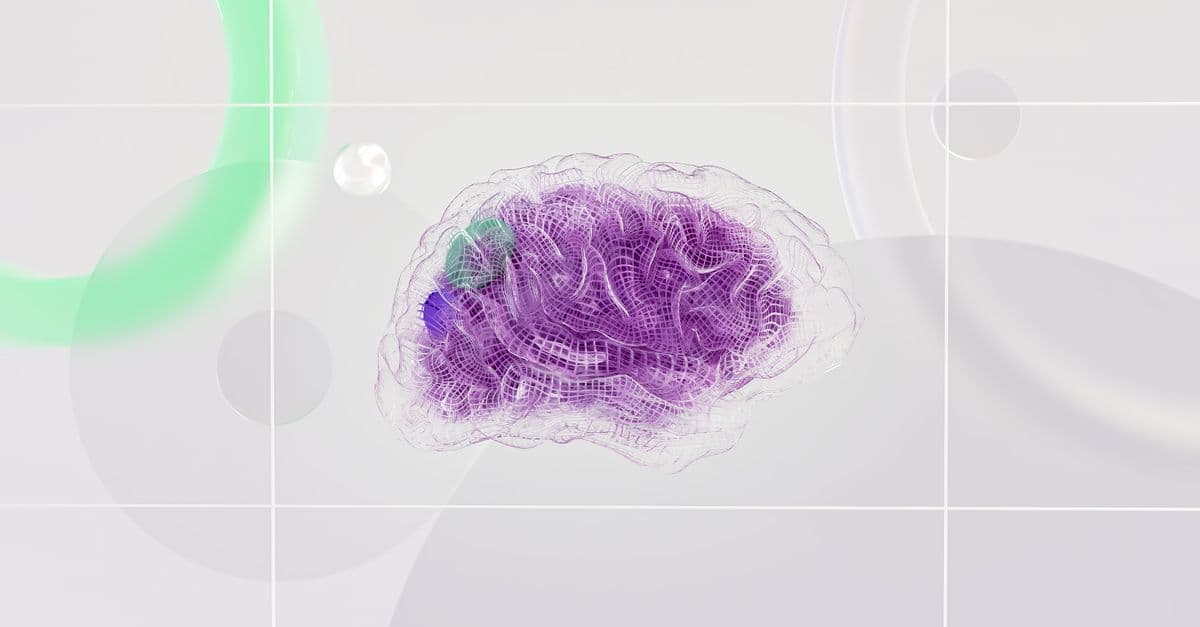
Photo: Google DeepMind / Pexels
In 2001, neurologist Marcus Raichle at Washington University in St. Louis noticed something strange. When subjects lay in an fMRI scanner doing nothing — no task, no stimulus, eyes closed or staring at a fixation cross — a specific set of brain regions lit up more, not less, than during demanding cognitive tasks (Raichle et al., PNAS 2001).
The brain at rest, it turned out, wasn't resting. It was running a different program. Raichle called this network the Default Mode Network (DMN) — the system the brain falls into by default whenever it isn't busy with the outside world. A quarter-century later, the DMN sits at the center of research into consciousness, depression, Alzheimer's disease, autism, aging, and the therapeutic action of psychedelics.
The Anatomy of a Network, Not a Spot
One of the most common misconceptions about the DMN is that it's a single brain region, like a "self module" tucked somewhere behind the forehead. It isn't. The DMN is a distributed circuit — several regions, spread across the front, back, and sides of the brain, that fire in coordinated rhythm whenever attention turns inward.
The core hubs, established across hundreds of resting-state fMRI studies and summarized in the field's most cited review (Buckner, Andrews-Hanna & Schacter, Annals of the NY Academy of Sciences, 2008):
- Medial prefrontal cortex (mPFC) — handles self-referential thinking, the mental loop of "what do I think, what do I want, am I a good person."
- Posterior cingulate cortex (PCC) — the network's most metabolically active hub, involved in integrating autobiographical memory into an ongoing sense of self.
- Precuneus — supports mental imagery and shifting perspective, including imagining yourself in a scene from the outside.
- Angular gyrus (bilateral) — draws on semantic memory and theory of mind, letting you model what another person believes or wants.
- Hippocampal formation — pulls episodic memories (specific remembered events) into the network's ongoing simulations.
- Lateral temporal cortex — supports narrative and conceptual processing, threading memories into a coherent story.
Think of the DMN less like a single organ and more like a jazz ensemble. No one instrument is "the melody" on its own; the sound comes from mPFC, PCC, precuneus, and angular gyrus playing in sync, trading the lead depending on what kind of inward thought is happening — memory, planning, or self-narration.
These regions share one more property: unusually high baseline metabolic activity. Even doing nothing, they burn more glucose than most of the rest of the cortex, which is partly why they stood out so clearly in Raichle's original PET and fMRI data.
What the DMN Actually Does
When you stop paying attention to the outside world, the DMN doesn't go quiet. It takes over, running several distinct kinds of internal cognition:
| Function | What it looks like | Primary regions involved |
|---|---|---|
| Mind-wandering | Thoughts drifting without a task to anchor them | mPFC, PCC, precuneus |
| Autobiographical memory | Replaying yesterday's conversation or an old memory | Hippocampus, PCC, mPFC |
| Future simulation | Rehearsing tomorrow's meeting or a hypothetical scenario | mPFC, hippocampus |
| Self-referential thinking | Narrating "who I am" and evaluating your own traits | mPFC (especially ventral) |
| Theory of mind | Modeling what someone else is thinking or feeling | Angular gyrus, mPFC |
| Moral reasoning | Running ethical "what would I do" simulations | mPFC, temporoparietal junction |
| Rumination | Looping on a worry or a regret without resolution | mPFC, PCC (hyperconnected) |
Table: Core cognitive functions attributed to the Default Mode Network, drawn from Buckner et al. 2008 and subsequent meta-analyses of resting-state and task-based fMRI.
These are not fringe activities. Matthew Killingsworth and Daniel Gilbert's landmark 2010 study, which used an iPhone app to sample over 2,250 adults in real time, found that people's minds wander during roughly 47% of their waking hours regardless of what activity they're doing (Killingsworth & Gilbert, Science, 2010). The same study found something less comfortable: people reported being less happy when their minds were wandering than when they were focused on a task, even when the wandering thoughts were pleasant. A wandering mind, the authors wrote, is an unhappy mind.
That doesn't mean the DMN is a design flaw. It means the network is doing expensive, useful work — memory consolidation, social rehearsal, planning — that doesn't always feel good in the moment but pays off later.
The Task-Positive Network: The DMN's Mirror Image
The DMN has an anticorrelated partner in the brain, often called the task-positive network (TPN) or the frontoparietal control network. It includes the dorsolateral prefrontal cortex, the intraparietal sulcus, and the frontal eye fields — regions that activate when you focus outward on a concrete task, like solving a math problem or catching a ball.
When TPN activity rises, DMN activity falls, and vice versa. It's a seesaw: focus on the world, and the self-referential machinery quiets down. Let your mind drift, and the outward-focused machinery goes idle. A healthy brain moves fluidly between the two states dozens of times an hour without you noticing the switch.
| Network | Active when | Key regions | Function |
|---|---|---|---|
| Default Mode (DMN) | Resting, mind-wandering | mPFC, PCC, precuneus, angular gyrus | Self, memory, simulation |
| Task-Positive (TPN) | External focus | DLPFC, IPS, FEF | Goal-directed cognition |
| Salience Network | Detecting what matters | Anterior insula, ACC | Switching between DMN and TPN |
| Sensorimotor Network | Moving, perceiving | M1, S1 | Body and motor control |
Table: The four large-scale resting-state networks most commonly discussed alongside the DMN in network neuroscience.
A third network, the salience network (anchored in the anterior insula and anterior cingulate cortex), acts as the referee. It decides, moment to moment, whether an incoming stimulus is important enough to kick the DMN offline and pull the TPN online, or whether nothing demands attention and the DMN can keep running. Damage or dysfunction in the salience network is one leading explanation for why some people struggle to disengage from internal rumination even when the outside world is demanding their attention.
Can the DMN and TPN be active at the same time?
Usually not strongly. The anticorrelation between the two networks is one of the most replicated findings in resting-state fMRI, though it isn't absolute — some studies find brief windows of co-activation during tasks that require both self-referential judgment and external focus, such as deciding whether a plan matches your personal values.
The DMN and Mental Health
Depression: A Network Stuck in the "On" Position
In major depressive disorder, imaging studies consistently show the DMN behaving like a stuck switch: hyperactive and poorly able to disengage even when a task starts. Yvette Sheline and colleagues, using resting-state fMRI in medicated and unmedicated depressed patients, found increased functional connectivity within DMN hubs and abnormal coupling between the DMN and the subgenual cingulate, a region tied to mood regulation (Sheline et al., PNAS 2009). A later meta-analysis by Hamilton and colleagues extended the finding across multiple cohorts, describing depression's signature as a DMN that fails to quiet down during effortful cognition, correlating with the subjective experience of rumination (Hamilton et al., Biological Psychiatry, 2015).
This matches the lived description many people give of depressive rumination: being trapped inside your own head, replaying the same negative self-assessment on a loop, unable to redirect attention outward even when you want to. For more on how working memory and attention interact with this kind of intrusive thinking, see how working memory limits thinking.
It's worth being precise about what the evidence shows and doesn't show. DMN hyperconnectivity is an association found across many depression studies, not proof that DMN dysfunction causes depression on its own. Depression is a heterogeneous condition with contributions from genetics, life stress, inflammation, and other systems beyond the DMN; the network is one well-studied piece of a larger picture, not the whole explanation.
Alzheimer's Disease: The DMN as an Early Warning System
DMN regions are among the first to show measurable decline in Alzheimer's disease, years before a clinical diagnosis. Amyloid-beta plaques, the hallmark protein deposits of the disease, accumulate preferentially in DMN hubs such as the posterior cingulate cortex and precuneus. One leading hypothesis is that this isn't a coincidence: regions with the highest baseline metabolic activity may generate more amyloid byproducts over a lifetime, making them the first to accumulate damage (Buckner et al., Journal of Neuroscience, 2005).
Reduced connectivity between the PCC and the hippocampus shows up on resting-state scans well before memory symptoms are clinically apparent, which has made DMN connectivity a candidate early biomarker in Alzheimer's research, though it isn't yet a standalone diagnostic tool used in clinics.
Autism Spectrum Disorder: Underconnected, Not Just Different
Multiple studies report reduced functional connectivity between DMN hubs in individuals with autism spectrum disorder, particularly between the medial prefrontal cortex and posterior cingulate cortex, and this reduced connectivity has been shown to correlate with the severity of social-cognitive symptoms (Jung et al., PLOS ONE, 2014). Because theory of mind — modeling what someone else believes or feels — depends heavily on DMN regions like the angular gyrus and mPFC, weaker connectivity in this circuit is one plausible contributor to the social-cognitive differences seen in autism. Some researchers have proposed DMN connectivity patterns as a potential neural marker to aid diagnosis, though this remains a research tool rather than a clinical test.
Schizophrenia and ADHD
In schizophrenia, DMN over-activation that persists into task performance correlates with positive symptoms such as intrusive thoughts and, in some studies, hallucinations — consistent with a network that fails to hand control over to task-focused circuits when it should. In ADHD, the opposite failure shows up: an inability to suppress the DMN during externally focused tasks correlates with attention lapses and mind-wandering intrusions during work that requires sustained focus.
Aging: The DMN Doesn't Decline in a Straight Line
For a long time, researchers assumed DMN connectivity simply eroded with age, in step with general cognitive decline. Longitudinal data tell a more nuanced story. A seven-year study published in the Journal of Neuroscience tracked DMN connectivity in healthy older adults and found a trend toward increasing connectivity between ages 50 and 66, followed by significantly accelerating declines after age 74 — a nonlinear trajectory rather than a steady slide (Ng et al., Journal of Neuroscience, 2018).
Within that broader pattern, the connection between the medial prefrontal cortex and posterior cingulate cortex weakens disproportionately in older adults, especially under cognitive load, and the rate of loss in functional separation between the DMN and the executive control network has been linked to age-related slowing in processing speed. One protective factor stands out across studies: years of formal education appear to moderate the effective connectivity decline, suggesting cognitive reserve built over a lifetime may partly buffer DMN aging (Staffaroni et al., NeuroImage, 2024).
Psychedelics and the Entropic Brain
The most striking modern finding in DMN research involves psilocybin, LSD, and DMT. Under the influence of classic psychedelics, the DMN's tightly coordinated activity temporarily collapses.
Robin Carhart-Harris and colleagues at Imperial College London, in a series of studies from 2012 through 2019, used fMRI to show that psilocybin dramatically reduces connectivity within the DMN while simultaneously increasing communication between networks that normally stay segregated — the brain becomes, in their language, more globally interconnected and less compartmentalized (Carhart-Harris et al., PNAS, 2012; Carhart-Harris et al., Frontiers in Human Neuroscience, 2014). Subjective reports of "ego dissolution" — the felt sense of a boundary between self and world dissolving — correlated tightly with the degree of DMN disintegration measured on the scans.
Carhart-Harris's entropic brain hypothesis proposes that consciousness becomes more entropic, meaning more disordered and less constrained by habitual patterns, when the DMN's normal grip loosens. This offers one candidate explanation for psychedelics' therapeutic effects being studied in treatment-resistant depression: if depression involves a DMN stuck in rigid, self-critical loops, a psychedelic-induced disruption may create a temporary window of cognitive flexibility in which entrenched thought patterns can be interrupted and, with the right therapeutic support, re-patterned.
The FDA designated psilocybin a "breakthrough therapy" for treatment-resistant depression in 2018, a status meant to speed the review of drugs showing substantial improvement over available therapies in early trials. Phase 3 clinical trials have continued reporting results through 2025 and 2026, though psilocybin therapy for depression is still investigational and not an FDA-approved treatment as of this writing. It's important to separate the neuroscience, which is genuinely well established, from the clinical status, which is still in trials.
Is DMN disruption why psychedelics feel like ego dissolution?
The correlation between DMN disintegration and reported ego dissolution is one of the most consistent findings in psychedelic neuroimaging, but correlation across a handful of imaging studies isn't the same as a fully proven causal mechanism. It's the leading hypothesis, supported by multiple independent labs, not a settled fact.
Meditation, Creativity, and Quieting the Inner Narrator
Judson Brewer and colleagues compared experienced meditators to novices during meditation practice and found that experienced meditators showed reduced activity in core DMN regions, including the mPFC and PCC, along with altered DMN connectivity even at rest, outside of active meditation (Brewer et al., PNAS 2011). This lines up with a common introspective report among long-term meditators: that sustained practice quiets the "inner narrator," the constant self-referential commentary the DMN generates by default.
Some neuroscientists have proposed that meditation and psychedelics act on overlapping neural territory — the self-referential machinery of the DMN — through very different routes, one gradual and trained, the other pharmacological and acute.
The DMN isn't only a liability to be tamed, though. A growing body of research links DMN activity to creativity, particularly the early stages of divergent thinking — generating multiple possible answers to an open-ended problem. A 2015 study found that stronger coupling between the DMN and the executive control network predicted better performance on creative idea generation tasks (Beaty et al., Scientific Reports, 2015), and more recent intracranial recordings in humans found that DMN activity peaks early during divergent thinking tasks, with disruption of the network via direct cortical stimulation reducing the number of ideas people could generate — direct, causal evidence that an intact DMN supports creative output (Kucyi et al., Brain, 2024).
How Scientists Measure the DMN
Studying a network that only shows up when someone is doing "nothing" required new methods. The main ones:
- Task-based fMRI: compares blood-oxygen-level-dependent (BOLD) signal during rest periods against signal during demanding cognitive tasks, looking for regions that consistently deactivate during tasks — the original method Raichle used.
- Resting-state fMRI: measures spontaneous correlations in BOLD signal between brain regions over a 5 to 10 minute scan while the subject does nothing in particular, revealing which regions fire in sync without any task to anchor them.
- EEG and MEG: capture the brain's fast electrical and magnetic signals; DMN activity correlates with specific oscillation patterns, particularly in the alpha and theta frequency bands, and offers far better time resolution than fMRI, at the cost of coarser spatial detail.
- PET (positron emission tomography): an older technique, still used to measure glucose metabolism directly, which is how Raichle's team first noticed the DMN's unusually high baseline energy use.
- Intracranial stereo-EEG: used in select patients undergoing epilepsy monitoring, offering the most precise spatial and temporal window into DMN activity, at the cost of being possible only in rare clinical circumstances.
Common Misunderstandings About the DMN
"The DMN is where consciousness lives." No single network produces consciousness. The DMN is implicated specifically in the self-referential aspects of conscious experience — the felt sense of being a continuous "you" — but perception, emotion, arousal, and awareness draw on many other systems working together, including the thalamus, brainstem arousal networks, and sensory cortices.
"A quiet DMN is always good." Reduced DMN activity shows up in meditation and in the acute effects of psychedelics, both generally viewed positively, but DMN suppression isn't automatically therapeutic. Some clinical conditions, including certain dissociative states, also involve unusual DMN suppression. Context and degree matter more than a simple "more activity bad, less activity good" framing.
"Mind-wandering is wasted time." Killingsworth and Gilbert's data show wandering minds report lower momentary happiness, but the DMN's mind-wandering activity also supports memory consolidation, future planning, and — per the creativity research above — the early stages of idea generation. The tradeoff is real: it may feel worse in the moment while still being cognitively useful.
"You can permanently shut off your DMN." You can't, and wouldn't want to — the network supports memory retrieval, how memory works in the brain, and social cognition that operate continuously in the background of daily life. What varies is how strongly it's engaged and how easily it hands control back to task-focused networks, not whether it's present at all.
Evolutionary Purpose: Why Pay for an Expensive Idle Mode
Running a network this metabolically costly during "downtime" only makes evolutionary sense if it's doing something valuable. The leading hypotheses, none mutually exclusive:
- Memory consolidation — replaying and integrating the day's events into longer-term storage, a process that appears to lean on some of the same circuitry involved in sleep-related memory processing.
- Social simulation — keeping mental models of allies, rivals, and family members updated, which mattered enormously for a species that survived through cooperation and alliance-tracking.
- Future planning — mentally rehearsing upcoming scenarios before they happen, letting an organism prepare responses in advance rather than improvising from scratch.
- Self-model maintenance — sustaining a coherent internal narrative of who you are across time, which underlies long-term goal pursuit and identity stability.
Whatever the ultimate evolutionary answer, the DMN's energy cost is a genuine signal of its importance. Brains don't maintain expensive circuitry for regions of the body evolution treats as optional. It's the same logic that also explains why caffeine, which blocks the adenosine signaling that would otherwise push the brain toward rest, has such an outsized effect on attention and the DMN-TPN seesaw — see why caffeine keeps you awake for the mechanism.
Frequently Asked Questions
Q: When was the DMN discovered? A: Marcus Raichle's lab formalized the concept in a 2001 PNAS paper, though earlier PET studies, including work by Gordon Shulman and colleagues in 1997, had already hinted at the same pattern of regions that consistently deactivate during externally focused tasks.
Q: Is the DMN bad for you? A: No. It's essential for memory, planning, and social cognition. Problems arise when it gets stuck in an "on" position, as in depressive rumination, or when the brain struggles to switch out of it for tasks that require sustained external focus, as in some presentations of ADHD.
Q: Can I turn off my default mode network? A: Not entirely, and you wouldn't want to. You can quiet it: focused external tasks, flow states, meditation, and, in clinical research settings, psychedelics all measurably reduce DMN activity for a period of time.
Q: Do animals have a default mode network? A: Yes. Rodents, macaques, and other mammals show DMN-like resting-state networks on fMRI, though the human version appears more elaborate, particularly in the medial prefrontal cortex, which is thought to support more complex self-referential and social cognition.
Q: Is the DMN where consciousness comes from? A: No single network produces consciousness on its own. The DMN is tied specifically to self-referential aspects of experience, while perception, emotion, and general awareness draw on the thalamus, brainstem arousal systems, and sensory cortices working together.
Q: Does sleep affect the DMN? A: Yes. The network reorganizes across sleep stages, staying relatively preserved during REM sleep, which is consistent with vivid, self-involving dream content, and decoupling more substantially during deep NREM sleep.
Q: Does the DMN change with age? A: Yes, and not in a straight line. Longitudinal research found DMN connectivity trending upward between ages 50 and 66, followed by an accelerating decline after age 74, with education level appearing to moderate the rate of decline.
Q: Is DMN research used in autism diagnosis? A: Not clinically yet. Studies consistently find reduced connectivity between DMN hubs in autism, and some researchers have proposed connectivity patterns as a potential biomarker, but this remains an active research question rather than a standard diagnostic test.
Q: Does a strong DMN make you more creative? A: Evidence suggests DMN activity, particularly its coupling with the executive control network, supports the early idea-generation stage of divergent thinking. Direct cortical stimulation studies have found that disrupting the DMN reduces the number of ideas people generate on creativity tasks.
Q: Is psilocybin approved to treat depression through DMN effects? A: No, not yet. Psilocybin holds FDA "breakthrough therapy" status for treatment-resistant depression, which speeds up trial review, and Phase 3 trials have reported results through 2025 and 2026, but it remains an investigational treatment, not an FDA-approved therapy.
The takeaway
The Default Mode Network is what your brain runs by default, not what it runs instead of thinking. It builds your sense of self, replays your memories, rehearses your future, and models other people's minds, and it does all of this while consuming a disproportionate share of the brain's energy budget. What separates a healthy DMN from a struggling one usually isn't whether it activates, but whether it can hand control back to the outside world when the outside world needs your attention. Depression, Alzheimer's, autism, and ADHD each show a different flavor of that handoff breaking down, while meditation and, under careful clinical study, psychedelics show what happens when the network's grip loosens on purpose.
Read next:
Follow new articles
Add SciHub101 to your feed reader to see new science and technology stories.
About the Author
SciHub101 is an independent science and technology publication founded and edited by Buğra Sözeri, a software engineer and app developer based in Türkiye. AI tools assist with drafting and research. Source documentation in the existing archive is uneven, and articles are being reviewed and corrected. The Editorial Team byline identifies editorial responsibility; it does not certify specialist or independent human review. Where we compare products, anything built by our own team is labelled as such — see the editorial guidelines and About page for how corrections and disclosures work.
Related Articles
Why Do We Blush? The Biology of Embarrassment
Blushing is involuntary facial reddening from sympathetic vasodilation. Only humans blush in response to social embarrassment; it evolved as an honest apology signal.

Why Do We Shiver? Body's Heat-Making Reflex
Why do we shiver when cold? Inside the hypothalamus, muscle thermogenesis, brown fat (BAT), fever shivers, and what infants do instead.
Psychedelics and the Brain: The Neuroscience of Psilocybin
How psilocybin acts on the brain: 5-HT2A receptors, the default mode network, plasticity, and what clinical trials in depression, PTSD, and addiction show.

What Happens to Your Brain When You Meditate
In 2005, Sara Lazar at Harvard found that experienced meditators had measurably thicker cortex in regions associated with attention and interoception — and that the thickness correlated with years of practice, not age. A year later the same group confirmed the finding with a larger sample. Since then, hundreds of neuroimaging studies have examined meditation's effects on brain structure and function, with results that are genuinely interesting, frequently overstated, and worth reading carefully. The brain does change. The question is how much, in whom, through what mechanism, and whether those changes explain the psychological effects people report.
How the Brain Works — Neuroscience Overview
Neurons, action potentials, brain regions, plasticity, and the science behind consciousness — a clear neuroscience primer.

Depression: The Neuroscience Behind It
Depression is more than low serotonin. A look at the brain biology behind it: the serotonin debate, stress hormones, inflammation, neuroplasticity and new treatments.